Osaka Shoin Women’s University Study-abroad
Programs 2017 : Overview and Analysis
著者(英)
Polona FRAS
journal or
publication title
Shoin ELTC Forum
number
8
page range
48-55
year
2019-03
Osaka Shoin Women’s University Study-abroad
Programs 2017 - Overview and Analysis
Polona Fras International Exchange Programs Desk
Students at Osaka Shoin Women’s University can choose from a number of study-abroad programs, where they can not only improve their English skills and learn about other cultures, but also do a practicum or audit university lectures. This paper introduces the programs offered in academic year 2017, analyses data about the participants and presents the results of a partial analysis of a questionnaire the students are required to fill out after they return to Japan. The aim of this analysis is to help with development of new study-abroad programs in the coming years.
Introduction
Osaka Shoin Women’s University offers several study-abroad programs to its students. In 2017, students could choose between 4 short-term (3 to 6 weeks), 2 medium-term (4 months) and 1 long-term program (10 months) in 4 different countries at 6 partner universities; Canada: The University of British Columbia, New Zealand: The University of Auckland, Poland: Adam Mickiewicz University, USA: Portland State University, California State University Fresno, Fresno Pacific University (Table 1). All programs offered an English language course, while at some universities students also had the option of undertaking a kindergarten (The University of Auckland) or Japanese language teaching practicum (Adam Mickiewicz University, California State University Fresno), to take a food study
Table 1
Study abroad programs in 2017
Type of program Duration University (Country) Short-term
3 weeks Portland State University (USA) 3 weeks The University of British Columbia (Canada) 4 weeks Adam Mickiewicz University (Poland) 6 weeks The University of Auckland (New Zealand) Medium-term
4 months California State University Fresno(USA) 4 months The University of Auckland (New Zealand) Long-term
10 months Fresno Pacific University(USA)
2017 Participants’ Profile
In 2017, students participated in 5 of the 7 programs offered. The total number of participants was 20. Sixty per cent of the students participated in short-term programs, and 40% in medium-term programs (Table 2). The vast majority of the participants were 1st and 2nd year students (Table 3), and half of the participants were
Table 2
Number of participants per program
Program No. of participants Portland State University (short) 5 The University of British Columbia (short) 2 Adam Mickiewicz University (short) 0 The University of Auckland (short) 5 California State University Fresno (medium) 1 The University of Auckland (medium) 7 Fresno Pacific University (long) 0 Table 3
Number of participants per year
Year No. of participants
1st 9
2nd 10
3rd 1
4th 0
Table 4
Number of participants per department
Department No. of participants Japanese Language and Literature 0 English as an International Language 10
Psychology 1
Satisfaction with the Programs
After the conclusion of each program, students were asked to fill out a comprehensive questionnaire regarding their experiences in the program. In this paper, only questions pertaining to the satisfaction with the program (cost and duration of the program, opportunities to use and improve their English skills, general satisfaction) have been considered. The response rate to the questionnaires was 100%. In cases where a student skipped a question, their answer was marked as ‘N/A’ (no answer). All questions considered in this analysis were multiple choice questions, with the exception of a question regarding the student’s self-evaluation of improvement in different English language skills, which was a multiple response question. There was also one open-ended follow-up question regarding the desired length of the program. The results are presented in Figures 1-6.
Figure 4. Response: How many opportunities did you have to speak to foreigners
in English?
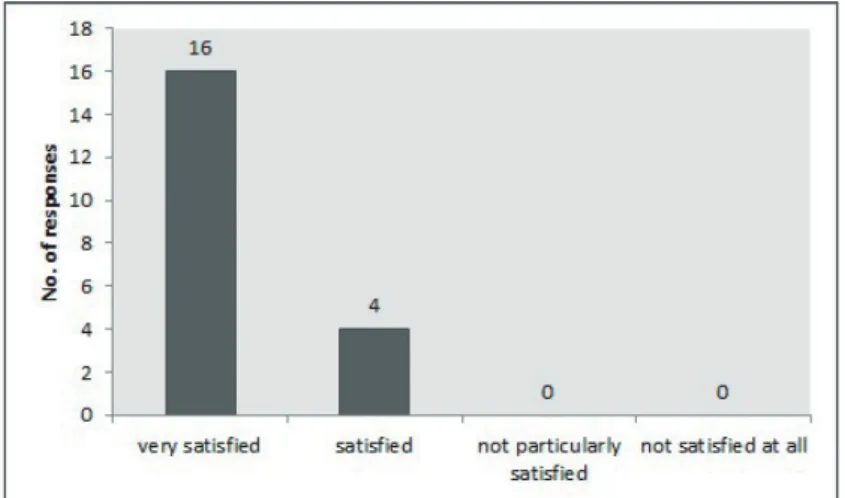
Figure 6. Response: How satisfied are you with the program?
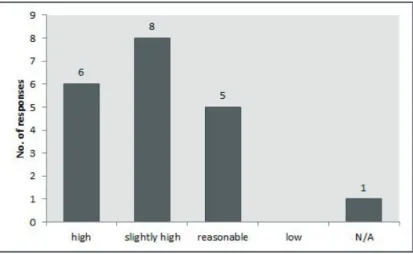
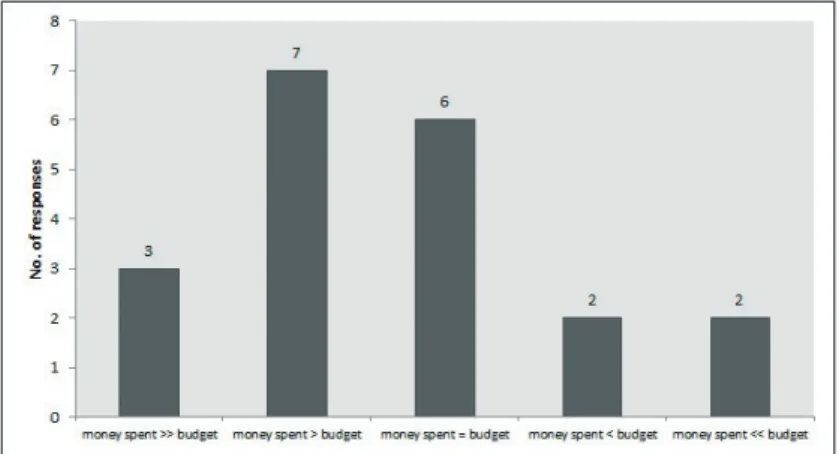
The majority of the students (70%) thought that the cost of the program was very high or high (Figure 1). When asked how much money they spent compared to their budget, 50% of the students responded that they spent more money than expected, 30% that they spent just as much as they thought they would, and 20% that they still had some money left over after the program (Figure 2).
Regarding the length of the program, the majority of the students (65%) felt that the program was too short (Figure 3). When asked in a follow-up question how long the program should have been, the students participating in the short-term programs answered, “1-1.5 months” for 3-week programs and “2-3 months” for the 6-week program. The students participating in medium-term programs wished for the program to be between 6 months and 1 year long.
speaking (Figure 5).
Lastly, the students were asked about their overall satisfaction with their respective programs. All students were satisfied with them (Figure 6).
Conclusion
The students seem to be generally satisfied with the programs, despite the majority feeling that the programs are expensive and too short. The reason for this is probably the high content quality of the programs, with many opportunities to practise English (especially listening and speaking) and making friends from all around the world.
However, the number of students participating in the programs the university offers is very low; in 2017, it did not even reach 1%. Starting in 2018, all 2nd year
students majoring in English as an International Language are required to participate in a 4-month study-abroad program, with the option of an additional month to do an internship abroad, which might elevate this number slightly. While the faculty is working on developing more programs (there are plans for academic cooperation with 2 additional universities in 2019), it might also be a good idea to conduct a survey among all students to get a better picture of what kind of programs they might be interested in.
References
Osaka Shoin Women’s University. (n.d.). International Exchange Programs 2017. [Pamphlet]. Osaka: Osaka Shoin Women’s University.