Studies on the Marine Bacteria II : On the
Specificity of Mineral Requirements of Marine
Bacteria
著者
HIDAKA Tomio
journal or
publication title
鹿児島大学水産学部紀要=Memoirs of Faculty of
Fisheries Kagoshima University
volume
14
page range
127-180
別言語のタイトル
海洋細菌に関する研究II : 海洋細菌の特異的無機
塩要求性について
Vol. 14, pp. 127^180(1965).
Studies on the Marine Bacteria—II.
On the Specificity of Mineral Requirements of Marine Bacteria* Tomio Hidaka**
Abstract
This study was undertaken to test the requirement of marine bacteria for inorganic salts,
with an attempt to establish a reliable criterion to distinguish true marine bacteria from ter restrial ones.
In this paper the author deals with the results of morphological and physiological tests, with
special emphasis on the requirement of inorganic salts in sea water, of several hundred strains of aerobic, heterotrophic bacteria isolted from various sources. Of the organisms used in this work, 275 cultures were isolated from sea water in the northern part of the North Pacific and the Bering Sea. In addition 13 cultures isolated from the surface of fishes, 7 strains from the National Collection of Marine Bacteria, 18 strains of Vibrio parahaemolyticus and similar strains, and 37 of other named strains of terrestrial bacteria were employed in the experiments.
The results obtained from comparative observations on the mineral requirements of marine and terrestrial bacteria were as follows.
1. These microorganisms showed different mineral requirements. This was demonstrated in experiments with a basal medium which contained only 0.05 per cent of polypeptone and 0.01 per cent of yeast extract as organic matter.
2. All the strains were tested for their growth capacity in the following five types of defined media during six days incubation at 25°C. The media (pH 7.8) contained, common to all, 0.05
per cent of polypeptone and 0.01 per cent of yeast extract, which were dissolved in; (a) pure water, (b) 0.5 per cent NaCl solution, (c) 3 per cent NaCl solution, (d) Herbst's artificial sea water diluted six-fold, and (e) Herbst's artificial sea water.
3. The results above mentioned tell us that one is able to group the test organisms into three patterns by growth capacity manifested in these media. One of them, which includes terrestrial
bacteria, is characterized by the capacity to grow in five types of defined media. Another
group lacks the capacity to grow in (a) medium or both (a) and (b) media. The last one, to
which the majority of marine isolates belong, is characterized by incapability to grow in the media (a), (b), and (c). Each of the three types were designated as Terrestrial (T-) type,
Halophilic (H-) type, and Marine (M-) type bacteria.
4. Terrestrial type bacteria showed a moderate growth without any supplement of in
organic salts to the basal medium and ones who did not take special requirements of mineral
salts. Most of them grew best at 0.5 per cent of salt concentration, and tolerated some growth in 5 to 7 per cent NaCl. They could grow at 37 °C.
5. Halophilic type bacteria were ones which required to NaCl, but did not require to the other minerals in sea water. They grew best in 3 per cent of salt concentration and tolerated some growth at 12 per cent NaCl. And about half of were able to grow in 37°C. Their NaCl requirement could be partialy replaced with other salts. In other words, V. parahaemolyticus
only requires NaCl, and concerning the V. parahaemolyticus^ growth, NaCl has a function like
osmolar control.
6. Marine type bacteria have special requirement for minerals. Not only NaCl but also
* From a thesis submitted for the degree of Doctor of Fishery Science at the University of Hok kaido, June, 1965. A part of this work was published at the General Meeting of Japanese Society of Scientific Fisheries, Otaru, October, 1963.
128 Mem. Fac. Fish., Kagoshima Univ., Vol. 14(1965)
other minerals such as K-, Mg-, and Ca-salt in sea water are needed for their growth. Most
of them were able to grow in the artificial sea water media with a salt concentration ranging
from 0.5 to 12 per cent. In the majority of the strains, the salt concentration optimum for growth was found to be 3 to 7 per cent. But they could not grow at 37°C. They also grew in NaN03 or Na2S04 medium underthe existence of K-,Mg-, and Ca-salt. Na+ was indispensable
for their growth, and it could not be replaced with any other cations. Theyspecially required
Na+ and the othersalts in seawatercontrasting with other types of bacteria. In other words, the sea water has a role of nutritional supply rather than that of osmotic regulation on the growth of Marine type bacteria.
7. Of 275 strains isolated from sea water in the northern part of the North Pacific and the Bering Sea, about 32 per cent were Marine type, about 50per cent were Terrestrial type, and
about 18 per centwere Halophilic type. It had been known that approximately 95 per cent of the bacteria occurring in thesea areGram-negative. Most bacteria of Gram-negative flagel
late rods belonged to the Marine type.
8. Although organisms belonging to these three groups have been found widely in the sea,
the author believes that only the Marine type bacteria in three types should be designated
"marine bacteria" in the strict sense. And other types of bacteria which occurred there were
in the main composed of the survivors of thecontinental flora. The V. parahaemolyticus also did
not belong to marine bacteria
9. True marine bacteria could best be distinguished from land contaminants present in sea
water by their growth capacity manifested in the five types of defined media established.
10. The Marine type bacteria wereshown to require a relativelyhigh concentration of Na+
for their optimal growth and metabolic activity, andalso other inorganic salts such as K-, Mg-,
and Ca-salt in sea water for their growth. In the investigation on the effects of NaCl and these other inorganicsalts on the metabolism of intact cells of Marine type bacteria, it was revealed that NaCl had a specific, positive effect on their enzymic systems, while the other salts had cytological effects on their cell structure, particularly on the structure of cell walls, rather than
the effect on their metabolic activity.
Contents
Page
Introduction 129
Experiments 130
I. General character of test microorganisms 130
1. Sourceof materials, isolation of strains and pure culture derivation 130
2. Media and cultural conditions 132
3. Locality of isolation and main characters of some selected marine isolates 134 II. Survey of mineral requirementsof test microorganisms 139 1. Growth responses of test microorganisms in five types of defined media 139 2. Influence of temperature and pH upon the growth of microorganisms in the
five types of defined media 141
3. Salt tolerances of test microorganisms in the diluted nutrient medium 144 4. Grouping of microorganisms on the basis of their growth capacity manifested
in the five types of defined media 146
III. Distributions of microorganisms belonging to Marine, Halophilic, and Ter
restrial type 149
1. Distribution of microorganisms belongingto M-, H-, and T-type in different
origins and morphologies 149
2. Vertical and horizontal distribution of marine isolates belonging to M-, H-, and T- type in the northern part of the North Pacific and the Bering Sea
IV. On the specificity of mineral requirements of Marine type bacteria 155 1. Influence of anions on the growth of test microorganisms 155
2. Limiting concentrtion of inorganic salts for the growth of test microorganisms
in diluted nutrient medium 155
3. Bacterial growth in the media prepared with various combinations of mineral
salts contained in artificial sea water 162
4. Effects of the salts contained in agar media on the bacterial growth 166 V. Physiological meanings of specific mineral requirements for growth of the
Marine type bacteria 169
1. Effect of various kinds and concentrations of salt on biochemical activity of
the strains selected from M-, H-, and T-type 170
2. Effect of various salts and their concentration on the osmotic fragility of
strains selected from M-, H-, and T-type 172
General discussion and conclusion 174
Acknowledgements 177
References 178
Introduction
Investigations into the microorganisms in the sea have started in the last cen tury, but the earlier work was almost limited to the findings of abundance and
distribution of bacteria and bacterial make-up in the sea. Microorganisms are
regarded as an important group in marine communities, since they play a signi ficant role in the formation and transformation of organic matter in the sea. They
attack dead organic matter and regenerate it into inorganic matter which is in dispensable for the growth of marine plants. In recent years marine microbiology
has been extended to cover the studies on their function in the cycle of organic
and inorganic matter in the sea, and it is becoming one of the essential part of oceanography, especially in the study of the productivity of the sea. The litera ture on marine bacteriology is adequately reviewed by ZoBell (1946) and Kriss
(1963).
The sea is a specific environment for microbial life. Compared with terra and
fresh-water, the sea as a habitat of microbes can be characterized by the high concentration of salts, relatively constant low temperature, general paucity of
organic matter and great hydrostatic pressure in deep water. It is known that some land and fresh-water bacteria are remarkably tolerable to considerably high
salinity. When those tolerable species are carried into the sea by agencies, such as rivers, sewage outfalls, wind, birds, and so on, they can survive long in the new habitant, appearing as common inhabitants in the sea, sometimes even in the off-shore region. However, these species should be defined as adventitious con
taminants, differing from the truly marine species which are originally distributed
in the sea. The term, marine bacteria, has been used rather ambiguously. Species occurring in the sea, both those originally inhabiting the sea and those of ter restrial origin, are called marine bacteria inclusively.
non-130 Mem. Fac. Fish., Kagoshima Univ., Vol. 14 (1965)
marine bacteria on the basis of their salt tolerance. However, some of the ter
restrial and fresh-water bacteria are known to be tolerant to high salinity in
culture, so that adventitious species cannot be effectively separated from true
marine species by this method. ZoBell and Upham (1944) defined marine bacteria as those requiring a medium containing sea water at the initial stage of growthin culture. This method again can not be employed for the separation of adve
ntitious species from marine forms, because some terrestrial and fresh-water
species begin to grow in a saline medium.
MacLeod and Onofrey (1954, 1956,
1957) mentioned that effectiveness of sea water in stimulating the growth ofmarine species are mainly due to the supply of inorganic ions derived from sea water. They found that such bacteria as those growing in a sea water media
require specifically Na+ and suggested that the requirement of Na4" can be a point
defining the nature of true marine bacteria. Halophilic bacteria have been isola ted from fresh-water and soil, and these halophiles have been reported to have specific requirements for Na+ (Larsen, 1962). It is evident that a specific need for Na+ is not a characteristic unique for bacteria marine origin was previously
imagined.
This study was undertaken to test the requirement of bacteria occurring in the
sea for several kinds of salts in sea water, i. e., Na-, K-. Mg- and Ca-salt, with
an attempt to establish a reliable criterion to distinguish true marine bacteria from halophilic bacteria originating from land or fresh-water. Several hundred strains of aerobic-heterotrophic bacteria isolated from sea water in the northern part of the North Pacific and the Bering Sea were tested. This paper deals with the results of morphological and physiological tests of those strains, with special reference to their mineral requirements.
Experiments
I. General character of test microorganisms
Several hundred strains of aerobic-heterotrophic bacteria isolated from various sources were studied morphologically and physiologically.
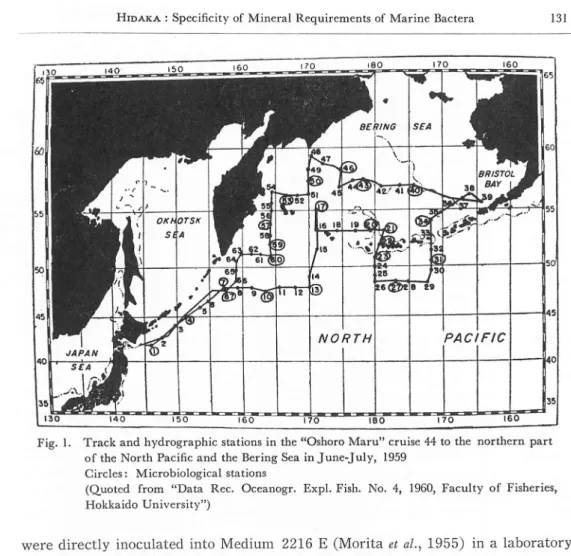
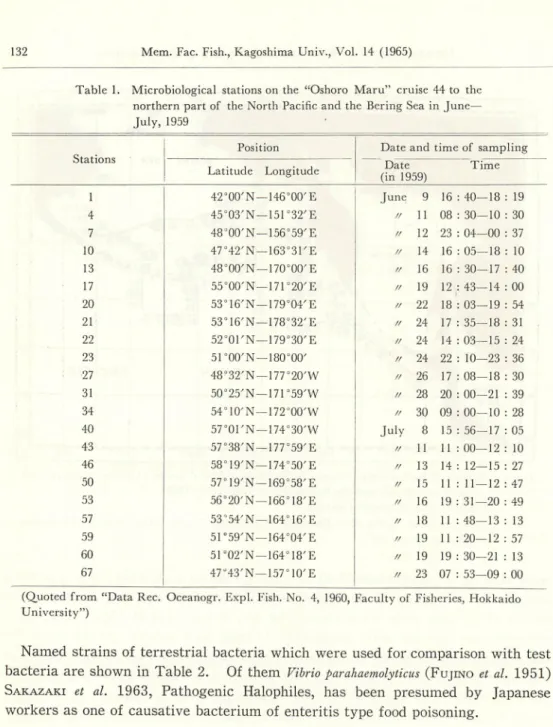
2. Source of materials, isolation of strains and pure culture derivation During cruise 44 of the M. S. Oshoro Maru, Training Ship of the Faculty of Fisheries, Hokkaido University, in the northern part of the North Pacific and the Bering Sea during the period from June 8 to July 27, 1959, Mr. T. Kimura and Mr. T. Matsuura of that university carried out bacteriological samplings at 22 stations, by the instruction of Dr. M. Sakai, Professor of Microbiology. The
samplings were made with sterile bacteriological J-Z water samplers (ZoBell, 1946) from 12 depths from the surface to about 1,000 meters of depth at each station (Fig. 1, Table 1). Immediately after the samplings, the water samples
Fig. 1. Track and hydrographic stations in the "Oshoro Maru" cruise 44 to the northern part
of the North Pacific and the Bering Sea in June-July, 1959 Circles: Microbiological stations
(Quoted from "Data Rec. Oceanogr. Expl. Fish. No. 4, 1960, Faculty of Fisheries, Hokkaido University")
were directly inoculated into Medium 2216 E (Morita et al., 1955) in a laboratory aboard. The cultures were incubated at 25°C for 6 days, and then colonies grown on and in the agar plate were counted by Mr. Kimura and Mr. Matsuura. The cultures were then put into a refrigarator to bring back to land. At the university
laboratory representatives of various colonies were transferred to agar slopes of
the same composition. Two-hundreds seventy-five isolates thus obtained were
placed at the author's disposal through the courtesy of Dr. Sakai. The strains were: 47 negative non-motile rods, 94 negative motile rods, 54 Gram-positive non-motile rods, 5 Gram-Gram-positive motile rods, and 75 Gram-Gram-positive cocci.
These strains were numbered 1001-1 to 1253-6 according to the order of locality of collection.
In addition, 13 cultures isolated from fish bodies were used in this study. They were isolated from several species of fish caught in Kagoshima Bay in February, 1962. The isolation was made in the manner described by Shewan et al. (1960).
Seven strains of agar-digesting marine bacteria were provided for the author for this study from the National Collection of Marine Bacteria, Torry Research
Station, Aberdeen, Scotland. They had been listed as NCMB No. 800, 803, 805,
132 Mem. Fac. Fish., Kagoshima Univ., Vol. 14 (1965)
Table 1. Microbiological stations on the "Oshoro Maru" cruise 44 to the
northern part of the North Pacific and the Bering Sea in June— July, 1959
Stations
Position Date andtime of sampling
Latitude Longitude Date (in 1959) Time 1 42°00'N — 146WE June 9 16 : 40—18 : 19 4 45°03'N —151°32'E / / 11 08 : 30—10 : 30 7 48°00'N — 156°59'E / / 12 23 : 04—00 : 37 10 47°42'N — 163°31'E ff 14 16 : 05—18 : 10 13 48°00'N—170°00'E / / 16 16 : 30—17 : 40 17 55°00'N—171°20'E / / 19 12 : 43—14 : 00 20 53°16'N — 179°04'E / / 22 18 : 03—19 : 54 21 53016'N —178°32'E / / 24 17 : 35—18 : 31 22 52°01'N—179°30'E / / 24 14 : 03—15 : 24 23 51°00'N —180°00' / / 24 22 : 10—23 : 36 27 48°32'N — 177°20'W / / 26 17 : 08—18 : 30 31 50°25'N —17r59'W / / 28 20 : 00—21 : 39 34 54°10'N—172WW / / 30 09 : 00—10 : 28 40 57°01'N — 174°30'W July 8 15 : 56—17 : 05 43 57°38'N—177°59'E / / 11 11 : 00—12 : 10 46 58°19'N—174°50'E / / 13 14 : 12—15 : 27 50 57°19'N —169°58'E / / 15 11 : 11 — 12 : 47 53 56°20'N-166°18'E / / 16 19 : 31—20 : 49 57 53'54'N —164°16'E / / 18 11 : 48—13 : 13 59 51°59'N—164°04'E / / 19 11 : 20—12 : 57 60 51°02'N —164°18'E / / 19 19 : 30—21 : 13 67 47°43'N — 157°10'E / / 23 07 : 53—09 : 00
(Quoted from "Data Rec.
University")
Oceanogr. Expl. Fish. No. 4, 1960,Faculty of Fisheries, Hokkaido
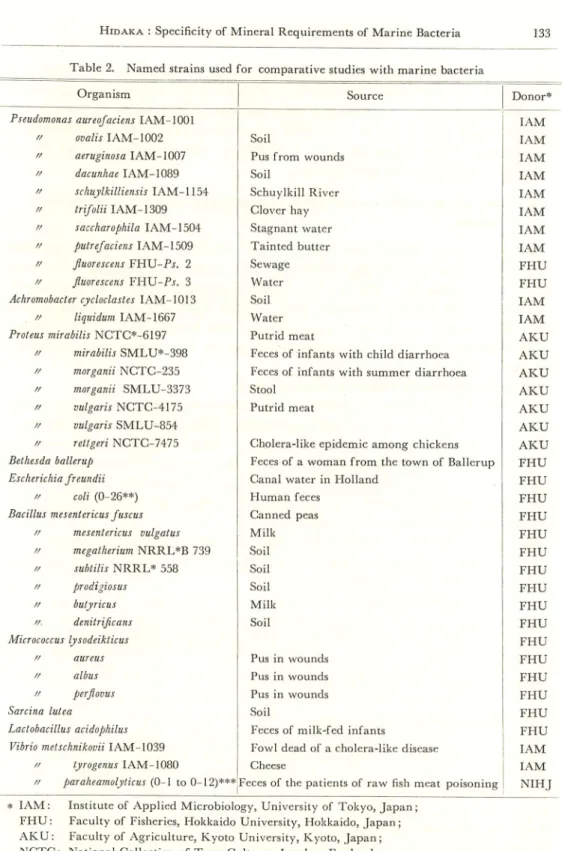
Named strains of terrestrial bacteria which were used for comparison with test
bacteria are shown in Table 2. Of them Vibrio parahaemolyticus (Fujino et al. 1951) Sakazaki et al. 1963, Pathogenic Halophiles, has been presumed by Japanese workers as one of causative bacterium of enteritis type food poisoning.
2. Media and cultural conditions
The microorganisms from marine origin were cultivated on slants of a modified
Medium 2216 E at 25°C for 6 days. The medium was prepared with the follow ing constituents: polypeptone (Daigo Eiyo Kagaku Co., Ltd., Japan), 5g; yeast extract (Daigo Eiyo Kagaku Co., Ltd., Japan), lg; ferric phosphate, O.Olg; agar
(Nissui Seiyaku Co., Ltd., Japan), 15g; and Herbst's artifical sea water, 1 liter;
the pH was adjusted to 7.6-8.0; and then autoclaved at 15 lbs pressure.
The named strains of terrestrial bacteria, with the exception of V. parahaemoly
Table 2. Named strains used for comparative studies with marine bacteria
Organism Source Donor*
Pseudomonas aureofaciens IAM-1001 IAM
/ / ooaftf IAM-1002 Soil IAM
/ / aeruginosa I AM-1007 Pus from wounds IAM
/ / dacunhae IAM-1089 Soil
IAM
/ / schuylkilliensis IAM-1154 Schuylkill River IAM
/ / fr»yW» IAM-1309 Clover hay IAM
/ / saccharophila IAM-1504 Stagnant water IAM
/ / putrefaciens IAM-1509 Tainted butter IAM
/ / fiuorescens FFIU-Pj. 2 Sewage FHU
/ / fluoresces FHU-P.T. 3 Water FHU
Achromobacter cycloclastes IAM-1013 Soil IAM
/ / liquidum IAM-1667 Water IAM
Pro/ewmirabilis NCTC*-6197 Putrid meat AKU
/ / mirabilis SMLU*-398 Feces of infants with child diarrhoea AKU
// morganii NCTC-235 Feces of infants withs u m m e rdiarrhoea AKU
t t morganii SMLU-3373 Stool AKU
// vulgaris NCTC-4175 Putrid meat AKU
/ / vulgaris SMLU-854 AKU
// rettgeri NCTC-7475 Cholera-like epidemicamong chickens AKU
Bethesdc ballerup Feces of a woman from the town of Ballerup FHU
Escherichia freundii Canal water in Holland FHU
/ / coli (0-26**) Human feces FHU
Bacillus mesentericus fuscus Canned peas FHU
// mesentericus vulgalus Milk FHU
/ / megatherium NRRL*B 739 Soil FHU
/ / subtilis NRRL* 558 Soil FHU
// prodigiosus Soil FHU
/ / butyricus Milk FHU
//. denitrificans Soil FHU
Micrococcus lysodeikticus FHU
/ / aureus Pus in wounds FHU
/ / albus Pus in wounds FHU
/ / perfiovus Pus in wounds FHU
Sarcinalutea Soil FHU
Lactobacillus acidophilus Feces of milk-fed infjnts FHU Vibrio melschnikovii IAM-1039 Fowl dead of a cholera-like d s e a s e IAM
/ / tyrogenus IAM-1080 Cheese IAM
// paralieamolyticus (0-1 to 0-12)*** Feces of the patients of raw fish meat poisoning NIHJ
* IAM: Institute of Applied Microbiology, University of Tokyo, Japan; FHU: Faculty of Fisheries, Hokkaido University, Hokkaido, Japan; AKU: Faculty of Agriculture, Kyoto University, Kyoto, Japan; NCTC: National Collection of Type Cultures, London, England; SMLU: Strich School of Medicine, Loyola University, U.S.A;
NRRL: Northern Utilization Research Branch, U.S. Dept. of Agriculture, Peoria, U.S.A.;
NIHJ: National Institute of Health, Tokyo, Japan. ** Serotype
134 Mem. Fac. Fish., Kagoshima Univ., Vol. 14 (1965)
culture of V. parahaemolyticus was carried out on agar slants prepared by solidifying
nutrient broth containing 3 per cent NaCl with 1.5 per cent agar. L. acidphilus, onthe other hand, was cultivated in a milk medium.
The stock cultures of or
ganisms were maintained at laboratory temperature (15° to 20°C) renewing the
culture media every three months. L. acidophilus alone was maintained by
tra-nsfering it weekly to the milk medium.
3.
Locality of isolation and main characters of some selected marine
isolates
Morphological, cultural, and physiological characters of the organisms were tested employing the following techniques: All media were prepared using three
solutions as a diluent. One of them, artificial sea water (full or half strength),
was used for the strains of marine origin. Each 3 per cent and 0.5 per cent of NaCl solution were used for V. parahaemolyticus and terrestrial bacteria. Unless special mention is made, the cultures described in this paper were always in cubated at 25°C.
Morphological and cultural characteristics
Organisms were stained by Hucker's modification of Gram's stain after incuba
tion for 1 to 2 days on the nutrient agar slants. Their motility was examined on similar cultures by hanging-drop preparation. Motile ones alone were stained
for flagella; the technique was based on a method employing Fisher and Conn's
modification of Bailey's flagella stain. And handling cultures for strains of marine origin were maintained with 2 to 3 ml of sterile artificial sea water (half strength) (Manual of microbiological method, 1957).
Pigment. Strains had grown on nutrient agar at the optimal temperature for
2 days and were then kept at room temperature for a week in diffuse daylight. Pigment was recorded as yellow or orange.
Pyocyanin and fluorescein. Cultures were streaked on the two media (King A
and B) recommended for maximum producing media of pyocyanin and fluores-cescein by King (1954), and each of them was examined in daylight and ultraviolet
light after an incubation period of 1, 3, and 6 days.
Luminescence. The test organisms were incubated on a medium composed of
1 per cent polypeptone, 0.2 per cent yeast extract, 0.3 per cent glycerine, and 1.5 per cent agar in artificial sea water, and the luminescence was examined on the
culture with completely dark-adapted eyes after 2 days incubation.
Relation to oxygen. Duplicate tubes containing semisolid nutrient agar (0.3
per cent agar) were used, and test organisms were inoculated by stabbing. After inoculation one of the paired tubes was coverd with a layer of sterile melted
petrolatum to a depth of 2 cm. Then the growths in the sealed and unsealed tubes were observed after 6 days.
Sensitivity to a 'vibriostatic* compound (0/129). The cultures were tested
for sensitivity to a vibriostatic compound (2, 4-diamino 6, 7-di-wopropyl pteridine) as described by Shewan et al. (1954). Inhibition of growth after 24 to 48 hours was
tested using paper disks impregnated with the agent.
Growth at 37°C was observed in the nutrient broth for 6 days. Physiological tests
Gelatin hydrolysis was carried out by adding using 0.5 per cent (W/V) gelatin in nutrient agar and flooding 5 to 6 days growth with acid mercuric chloride.
Action on litmus milk. The cultures were incubated in litmus milk medium for 6 days, and the changes in appearance were noted at definite intervals.
Hydrolysis of starch was tested on 6 day cultures grown in nutrient agar
containing 0.2 per cent (W/V) soluble starch by flooding with iodine solution.
Indole formation was determined by Ehrlich-Bohme's reagent after incubation
for 6 days in peptone water.
Hydrogen sulphide formation was detected by using strips of filter paper im pregnated with lead acetate on cultures incubated for 6 days in nutrient broth.
Reduction of nitrate to nitrite. Nitrite was tested by the Griess-Ilosvay re agents after incubation for 6 days in peptone water containing 0.1 per cent (W/V)
KN03. Powdered zinc was used to test false negatives.
Ammonia production was tested by Nessler's reagent after incubation for 6
days in peptone water.
Methylene blue reductase. One drop of 1 per cent (W/V) aqueous methylene
blue was added to 5 ml broth culture, the tube was well mixed and incubated at 37°C for 2 hours. Complete decolorization below the top a half cm was recoreded
as positive.
Voges-Proskauer test.
Cultures were tested after incubation for 6 days in
medium with (^, W/V): polypeptone, 0.5; glucose, 0.5; dipotassium phosphate,0.5. In this procedure, the test reagent added to the culture was 0.3 per cent
creatine in 40 per cent KOH solution.
Methyl-red test was read after 6 days incubation in glucose phosphate peptone
medium.
Growth in Koser^s citrate medium was read after incubation for 6 days. Strains which showed growth after twice serial subcultures were recored as posi tive (in Skerman, 1959).
Hydrolysis of urea. Cultures were incubated for 6 days on slants of urea agar
medium (in Skerman, 1959). To ensure whether the alkalinity produced was due
to urea hydrolysis or not, the urease-positive strains were inoculated in a control
medium without urea. Only those strains which gave a markedly more alkaline
reaction in the urea medium were considered to be true positives.
Catalase formation.
Catalase was determined by addition of commercial 40
per cent hydrogen peroxide 1:20 (V/V) with pure water to agar slant cultures.Oxidase test. Kovacs's (1956) method was used in cultures grown on solid
medium for either 24 or 48 hours.
Glucose utilization. The methods of Hugh and Leifson (1953) and Leifson
fermenta-136 Mem. Fac. Fish., Kagoshima Univ., Vol. 14 (1965)
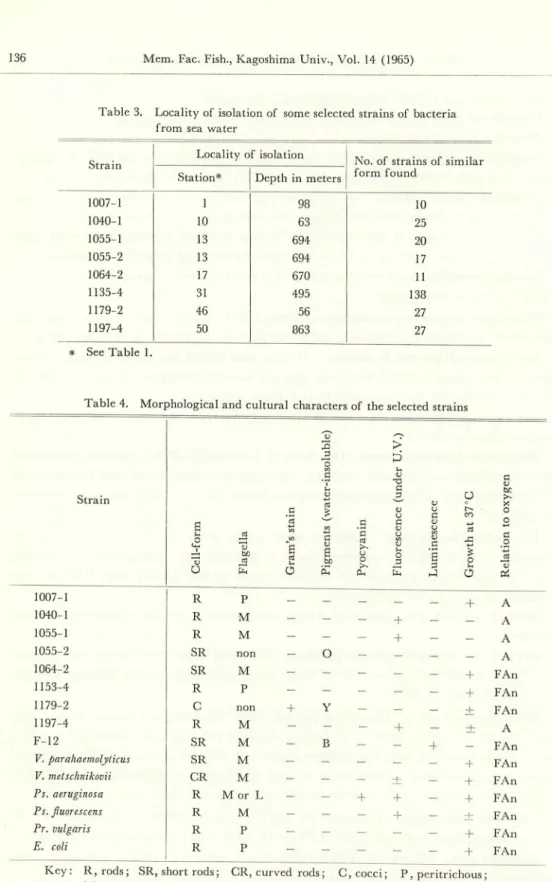
Table 3. Locality of isolation of some selected strains of bacteria
from sea water
Strain
Locality of isolation
No. of strains of similar Station* Depth in meters form found
1007-1 1 98 10 1040-1 10 63 25 1055-1 13 694 20 1055-2 13 694 17 1064-2 17 670 11 1135-4 31 495 138 1179-2 46 56 27 1197-4 50 863 27 * See Table 1.
Table 4. Morphological and cultural characters of the selected strains
Str 6 u o 1) O in s u o -o > 3 13 M V "f •a fc c 3 3 o 1007-1 1040-1 1055-1 1055-2 1064-2 1153-4 1179-2 1197-4 F-12 V. parahaemolyticus V. metschnikovii Ps. aeruginosa Ps. fluorescens Pr. vulgaris E. coli R R R SR SR R C R SR SR CR R R R R P M M n o n M P n o n M M M M Mor L M P P o + + + + + A - A - A - A + FAn + FAn -h FAn + A - FAn + FAn + FAn + FAn + FAn + FAn + FAn
Key: R,rods; SR, short rods; CR, curved rods; C, cocci; P, peritrichous; M, monotrichous; L, lophotrichous; O, orange; Y, yellow; B,buff; A, aerobic; FAn, faclutatively anaerobic; —, negative; fc, weak
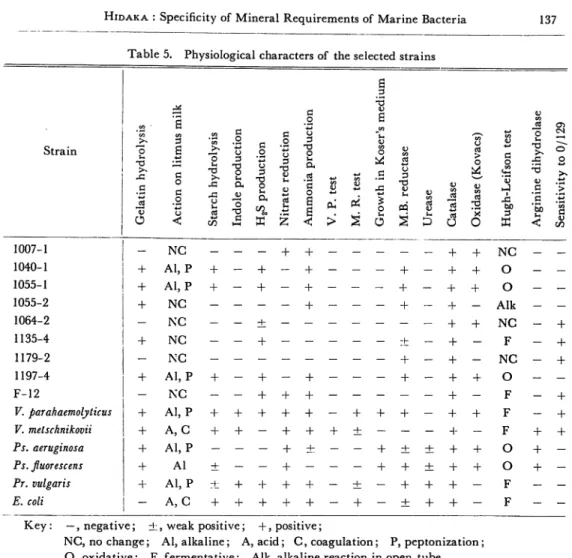
Table 5. Physiological characters of the selected strains m B .2 -5 Strain CO ' CO CO CO "co >> .2 o .2 o 3 13 o <u CO O V CO O CO c o • bo M "o u o -a c 13 O o a u < O U -v -G o $-1 £ co 3 2 a 'o C 1—1 o 3 O a CO 3 2 a 'S o a s < <u Oh' > co I o J-O o 3 u PQ 5 CO u 1) u o CO o .s s '5b u < o >-*> "eo c CO 1007-1 - NC - - - + + — - - — — + + NC — — 1040-1 + Al, P + - + - + - — — + - + + O — — 1055-1 + Al, P + - + - + - - — + — + + o — — 1055-2 + NC - - - - + — - — + — + — Alk — — 1064-2 - NC + + + NC — + 1135-4 + NC - - + - - - ± - + - F — -f 1179-2 - NC - - - + - + - NC — + 1197-4 + Al, P + ~ + - + - - - + - + + O - -F-12 - NC - - + + + - - - + - F - + V. parahaemolyticus + Al, P + + + + + - + -f + - + + F - + V. metschnikovii + A, C + + - + + + + - - - + - F + + Ps. aeruginosa + Al, P - ~ - + ± - - + ± ± + + O + -Ps. fuorescens + Al ± - - + - - - + + ± + + O + -Pr. vulgaris + Al, P + + + + 4- - + - + + + - F - -E. coli - A, C + + + + + - + - + + + - F -
-Key: —, negative; ±, weak positive; +, positive;
NC, no change; Al, alkaline; A, acid; C, coagulation; P, peptonization; O, oxidative: F, fermentative; Alk, alkaline reaction in open tube.
tively. Controled tests without glucose were also done.
Arginine metabolism. The mode of action on arginine was studied by means
of the semisolid medium of Thornley (1960).
Production of acid and gas from carbohydtates
Cultures were incubated for 6 days in a medium composed of (96, W/V):
Bact-peptone, 0.02; dipotassium phosphate, 0.03; bromthymol blue, 0.003; agar, 0.3; test carbohydrate, 1.0. Each tube of the semisolid medium was inoculated by
stabbing and was examined regularly for acid and gas prodution. The following
carbohydrates were used: glucose, xylose, arabinose, rhamnose, galactose, fractose, sucrose, lactose, maltose, raffinose, glycerine, and mannit. Controled tests without carbohydrate were also done.
Details of results
The majority of the strains used in this study were subjected to morphological and physiological tests. The complete details on experimental results of all the
138 Mem. Fac. Fish., Kagoshima Univ., Vol. 14 (1965)
Table 6. Utilizationof carbohydrates of the selected strains
Production of acid and gasfrom**
Strain V o u 3 3 X CD 8 a u < V 8 a JS V CO O t> O V CO O t> 2 2 o 3 CO V 8 o a 8 V 8 m U V o 3
i
1007-1 ± ± * + * * + + - - - - ± ± 1040-1 + — — — + + + + + — + + * * * * * * * * 1055-1 + * * * * + + * " + * 1055-2 — — — — — + — — — — — — 1064-2 ± + - - + + + ± + ± - + 1135-4 + - -* - - ± - - ± - -1179-2 + - - - - + — - - - + + * * * * * * * * 1197-4 + — — — — — + — + — ± — F-12 + * -* + + * * * + * + -V. parahaemolyticus + — + — -f- + — — + — + + * * V. metschnikovii + ~ " * + + ± * + * + + * + + Ps. aeruginosa + + + " + ± ~ * " * + + Ps. fluorescens + + + — + ± — — — — ± ± Pr. vulgaris e + - - e © © - © + + -E. coli e + e * e © + © © © + ©**: —, non acidity in 6 days; ±, weak acidity; +, acid produced ; 0, acid and gas produced; —, alkaline reaction.
and in all subsequent work are detailed on 15 strains which were selected as re presentatives of mineral requirement groups among all tested microorganisms
were labelled as follows: 1007-1, 1040-1, 1055-1, 1055-2, 1064-2, 1135-4,
1179-2, and 1197-4 each strain from marine isolates; F-12 strain from the surface
of squid; and Vibrio parahaemolyticus (0-5), Vibrio metschnikovii IAM-1039, Pseudomonas
fluorescens FHU-P*. 3, Proteus vulgaris NCTC-4175 and Escherichia coli (0-26) from
named strains of terrestrial bacteria.
The localities of isolation and the results of morphological, cultural, and phy siological tests of the selected strain are in Tables 3 to 6.
The tests might be inadequate to distinctly classify the isolates, but they will serve to practically define them. When the nine strains selected from marine isolates is classified according to the system outlined in Bergey's Manual of
1040-1, 1055-1040-1, and 1197-4 strain, Pseudomonas; 1007-1 and 1135-4 strain Achromobacter; 1055-2 strain, Flavobacterium; 1062-2 strain, Vibrio; 1179-2 strain, Micrococcus;
and F-12 strain, Photobacterium.
II.
Survey of mineral requirements of test microorganisms
Generally, the inorganic salt requirements of bacteria are not well understood.
The chief obstacle in the work of this nature is the difficulty of obtaining a
sufficient medium, free from inorganic contaminants to permit accurate observa
tions.
In the previous paper (Hidaka, 1964), the author had been tried to design a
common basal medium for various bacteria isolated from different origins, and
established a basal medium for comparison of mineral requirements and salt
tolerance of the microorganisms. It is a diluted nutrient medium containing 0.05
per cent of polypeptone and 0.01 per cent of yeast extract in pure water.
Poly
peptone was used to provide amino acids, small amount of sugar, and phosphates
for the medium, and yeast extract was used to provide an array of vitamin and
trace elements.
Although most media for the growth of heterotrophic bacteria
contain from 0.1 to 1.0 per cent of organic matter, it is generally claimed that the minimum concentration required for their multiplication ranges between 0.001and 0.01 per cent (in ZoBell and Grant, 1942). As stated in the previous paper,
the polypeptone and yeast extract included some inorganic contaminants.
The
contaminants were reluctuntly put in media prepared with the organic matter,and the accurate results were lost in special experiments concerning mineral re
quirements and salt tolerance. Therefor the author had been designed the diluted
nutrient medium to reduce the inorganic salt contaminants from polypeptone and
yeast extract by dilution of the organic matter concentration in the media.
The
test organisms grew satisfactorily in the diluted nutrient medium.
Moreover, It
was found that application of the medium may give more correct results than in
the ordinary media in experiments concerning mineral requirements.Here, the mineral requirement and salt tolerance were observed on the cultures
grown in basal medium adding various inorganic salts and have various salt con
centrations.1. Growth responses of test microorganisms in five types of defined media
In this experiment, pure water, 0.5 per cent NaCl solution, 3 per cent NaCl
solution, artificial sea water diluted six-fold, and artificial sea water were used
for dilution of the diluted nutrtrient broth. The artificial sea water (A. S. W.)was prepared according to Herbst's formula with the following contituents (g per
liter): NaCl, 30.0 (0.51 M); KC1, 0.7 (9.8 mM); MgCl2-6H20, 10.8 (0.052 M);
MgS04-7H20, 5.4 (0.021 M); CaCl2-2H20, 1.0 (7.3 mM), the final pH was adjusted
to 8.0 (in Galtsoff et ah, 1937).140 Mem. Fac. Fish., Kagoshima Univ., Vol. 14 (1965)
The author found the following correlations between supplementary roles of
salts by the diluents, that pure water does not supply minerals. Both 0.5 and 3 per cent NaCl solutions supply only NaCl of its own concentrations, both one-six fold and full strength artificial sea water each supply concentrations of its own minerals, and 0.5 per cent NaCl solution make a medium similar to the salt con
tent of ordinary broth. On the other hand, the osmotic action of 0.5 per cent
NaCl solution and 3 per cent NaCl solution are isotonic to that of artificial sea water diluted six-fold and artificial sea water.
Experimental methods
The media employed in this experiment were composed of 0.05 per cent poly peptone and 0.01 per cent of yeast extract, and these ingredients were dissolved in the diluents of five types, and all media were adjusted at pH 7.8 with NH4OH
solution. In this case, the five types of defined media means the five media, and
each medium of these were designated as (a), (b), (c), (d), and (e) medium.
Inocula. Media consisting of 0.5 per cent polypeptone and 0.1 per cent yeast
extract were found to be suitable for the growth of test organisms. For the
marine isolates, artificial sea water, for the terrestrial bacteria, 0.5 per cent NaCl
solution, and for V. parahaemolyticus, 3 per cent NaCl solution were used as the
diluent of culture medium. Inocula were made from cultures at 25°C for 24 to
48 hours on the above mentioned agar slants, and the cultures were transferred to each assay tube with a platinum wire giving an initial poputlaion of 103-104 cells per ml.
Assay procedure. The cultures inoculated in test media were incubated at 25°C
for 6 days. Growth in test media was measured turbidimetrically in an AKA
model No. 5, D colorimeter at 630 mA. Some of the organisms incubated in the
diluted nutrient media began to autolyse after completing their growth. Con
sequently, unless otherwise indicated, the author observed the growth exent of
each bacterium every day duiing the entire incubation period, and their results
were described with maximum turbidity. The culture tubes were pyrex test
tubes (outer diameter, 18 mm) selected to fit into the colorimeter.
Experimental results
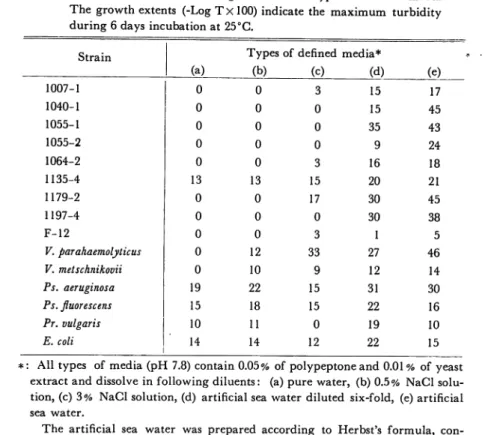
The results obtained are given in Table 7.
As shown in Table 7, terrestrial bacteria are able to grow in all types of de fined media. In the case of terrestrial bacteria, to grow in the basal medium [(a) medium] means to require less minerals, and as a result, they are able to grow in nutrient broth without any supplement of inorganic salts, because in such medium, accountable inorganic salts needed for their growth are usually con
tained as contaminants of organic matter. And then most terrestrial bacteria also grew in salty media similar to sea water in their concentrations.
V. parahaemolyticus, V. metshnikovii, 1007-1, 1064-2, 1179-2, and F-12 strains each
lack in the capacity to grow in the (a) or (a) and (b) medium. They seemed to require NaCl for their normal growth. The majority of marine isolates did not
Table 7. Growth extents of test organisms in five types of defined media The growth extents (-Log TxlOO) indicate the maximum turbidity
during 6 days incubation at 25°C.
Strain Types of defined media*
(a) (b) (c) (d) (e) 1007-1 0 0 3 15 17 1040-1 0 0 0 15 45 1055-1 0 0 0 35 43 1055-2 0 0 0 9 24 1064-2 0 0 3 16 18 1135-4 13 13 15 20 21 1179-2 0 0 17 30 45 1197-4 0 0 0 30 38 F-12 0 0 3 1 5 V. parahaemolyticus 0 12 33 27 46 V. metschnikovii 0 10 9 12 14 Ps. aeruginosa 19 22 15 31 30 Ps. fluorescens 15 18 15 22 16 Pr. vulgaris 10 11 0 19 10 E. coli 14 14 12 22 15
: All types of media (pH 7.8) contain 0.05% of polypeptone and 0.01 % of yeast extract and dissolve in following diluents: (a) pure water, (b) 0.5% NaCl solu tion, (c) 3% NaCl solution, (d) artificial sea water diluted six-fold, (e) artificial
sea water.
The artificial sea water was prepared according to Herbst's formula, con stituents are as follows (g per liter): NaCl, 30.0 (0.51 M); KC1, 0.7 (9.8 mM); MgCL6H20, 10.8 (0.052 M); MgS04.7H20, 5.4 (0.021 M); and CaCl2.2H20, 1.0 (7.3 mM), the final pH was 8.0.
grow in the medium (a), (b), and (c).
They require not only NaCl but also K-,
Mg-, and Ca-salt contained in sea water. It is ascertained that marine isolates have a strong requirement for many salts contained in sea water.
According to these results, growth effect of minerals on many bacteria appear
markedly in diluted nutrient media, and such media are recommended as one of
the useful media in this experiment.
2.
Influence of temperature and pH upon the growth of microorganisms
in the five types of defined media
In order to elucidate the effect of the temperature and pH upon the bacterial
growth in the five types of defined media, each growth of test organisms in the
defined media was observed at various temperatures or at differerent pH values.
The growth extents of test organisms incubated at different temperatures 6,
15, 20, 25, 30, and 37°C for 6 days were measured by the previously described
procedure.
The results obtained are shown in Table 8.
In this experiment, the
following results were obtained; that in both groups marine isolates andterres-Table 8. Growth extents of test organisms in five types of defined media during 6 days incubation at various temperatures (Maximum tubidity: -Log Tx 100)
V^--Incubation temperature (°C) \ Types of " ^, \defined media* ~\^ 6 15 20 25 30 37 strairi ~ __ (a) (b) (c) (d) (e) (a) (b) (c) (d) (e) (a) (b) (c) (d) (e) (a) (b) (c) (d) (e) (a) (b) (c) (d) (e) (a) (b) (c) (d) (e) 1007-1 0 0 0 3 11 0 0 11 21 22 0 0 13 17 22 0 0 3 15 17 0 0 3 12 14 0 0 0 0 13 1040-1 0 0 0 3 40 0 0 0 35 54 0 0 0 34 45 0 0 0 15 45 0 0 0 0 40 0 0 0 0 0 1055-1 0 0 0 9 42 0 0 2 31 53 0 0 0 42 46 0 0 0 35 43 0 0 0 1 34 0 0 0 0 0 1055-2 0 0 0 0 3 0 0 0 17 28 0 0 0 22 23 0 0 0 9 24 0 0 0 0 24 0 0 0 0 0 1064-2 0 0 0 0 1 0 0 0 13 9 0 0 0 23 25 0 0 6 16 18 0 0 0 20 12 0 0 0 0 15 1135-4 10 0 11 4 10 0 13 19 7 12 0 5 25 13 13 15 20 21 10 8 7 15 18 13 5 0 11 9 1179-2 0 0 0 3 6 0 1 10 23 33 0 6 8 41 41 0 0 17 30 45 0 0 19 24 42 0 0 0 0 10 1197-4 0 0 0 5 27 0 0 0 34 48 0 0 0 43 39 0 0 0 30 38 0 0 0 0 38 0 0 0 0 0 F-12 0 0 0 11 0 0 0 2 0 0 0 0 3 2 0 0 3 15 0 0 0 0 3 0 0 0 0 0 V. parahaemolyticus 0 0 0 12 0 0 15 20 28 0 31 30 32 45 0 12 33 27 46 0 26 30 30 45 0 0 17 24 32 V. metschnikovii 0 0 0 0 0 0 16 22 15 23 0 10 9 12 14 0 10 9 12 14 0 15 14 22 19 0 0 4 5 6 Ps. aeruginosa 0 0 0 0 0 15 15 16 21 13 32 13 38 23 38 19 22 15 31 30 25 18 32 17 30 20 16 17 13 19 Ps. fluorescens 0 0 0 2 1 12 10 17 29 6 19 25 19 51 17 15 18 15 22 16 18 18 17 31 22 0 12 7 18 7 Pr. vulgaris 13 0 0 0 9 26 2 18 8 15 18 0 23 13 10 11 0 19 10 12 14 0 22 8 0 0 0 11 0 E. coli 0 0 0 0 0 12 15 4 20 18 21 17 13 22 15 14 14 12 22 15 15 19 10 20 14 10 10 7 12 9 *: See Table 7. 3 p p sr 3 <* < o
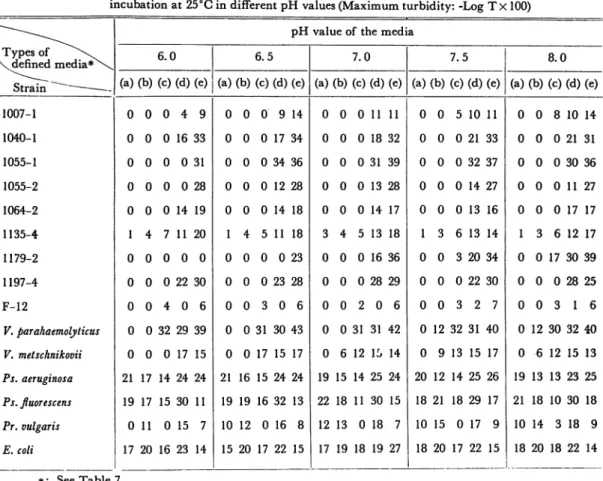
Table 9. Growth extents of test organisms in five types of defined media during 6 days incubation at 25°C in different pH values (Maximum turbidity: -Log Tx 100)
\ Types of ^^\
Xdefined media*\
pH value of the media
6.0 6.5 7.0 7.5 8.0
Strain ~~~~~~~———— (a) (b) (c) (d) (e) (a) (b) (c) (d) (e) (a) (b) (c) (d) (e) (a) (b) (c) (d) (e) (a) (b) (c) (d) (e)
1007-1 0 0 0 4 9 0 0 0 9 14 0 0 0 11 11 0 0 5 10 11 0 0 8 10 14 1040-1 0 0 0 16 33 0 0 0 17 34 0 0 0 18 32 0 0 0 21 33 0 0 0 21 31 1055-1 0 0 0 0 31 0 0 0 34 36 0 0 0 31 39 0 0 0 32 37 0 0 0 30 36 1055-2 0 0 0 0 28 0 0 0 12 28 0 0 0 13 28 0 0 0 14 27 0 0 0 11 27 1064-2 0 0 0 14 19 0 0 0 14 18 0 0 0 14 17 0 0 0 13 16 0 0 0 17 17 1135-4 1 4 7 11 20 1 4 5 11 18 3 4 5 13 18 1 3 6 13 14 1 3 6 12 17 1179-2 0 0 0 0 0 0 0 0 0 23 0 0 0 16 36 0 0 3 20 34 0 0 17 30 39 1197-4 0 0 0 22 30 0 0 0 23 28 0 0 0 28 29 0 0 0 22 30 0 0 0 28 25 F-12 0 0 4 0 6 0 0 3 0 6 0 0 2 0 6 0 0 3 2 7 0 0 3 1 6 V. parahaemolyticus 0 0 32 29 39 0 0 31 30 43 0 0 31 31 42 0 12 32 31 40 0 12 30 32 40 V. metschnikovii 0 0 0 17 15 0 0 17 15 17 0 6 12 11, 14 0 9 13 15 17 0 6 12 15 13 Ps. aeruginosa 21 17 14 24 24 21 16 15 24 24 19 15 14 25 24 20 12 14 25 26 19 13 13 23 25 Ps. fluorescens 19 17 15 30 11 19 19 16 32 13 22 18 11 30 15 18 21 18 29 17 21 18 10 30 18 Pr. vulgaris 0 11 0 15 7 10 12 0 16 8 12 13 0 18 7 10 15 0 17 9 10 14 3 18 9 E. coli 17 20 16 23 14 15 20 17 22 15 17 19 18 19 27 18 20 17 22 15 18 20 18 22 14 *: See Table 7.
trial bacteria optimal temperature for maximal growth extent measured every day for 6 days, may be lower in temperature than those measured with genera
tion times.
Really, marine isolates grow well at temperatures from 15° to 25°C
and the terrestrials from 20° to 30°C. It has been known that the salinity optima
for marine fungi and some halophilic bacteria were affected by cultural tempera ture (Ritchie, 1957; Gibbons et al, 1961). In this result, optimal temperature for growth extents of tested organisms changed in each type of the defined media. And growth extents of test bacteria in each of defined media were changed by
incubation temperature. For example, 1055-1, 1055-2, and 1197-4 strains grew
in both medium (d) and (e) at 15° to 25°C but did not grow in (d) medium at
30°C. Such a tendency was ascertained in most bacteria tested.
The effect of pH on growth extents is shown in Table 9. Adjustments in pH of media were made simply by adding NH4OH or HCl. Ascertainment of pH
was made with a glass electrode pH meter model HM-5A (Toa Denpa Kogyo Co., Ltd., Japan). In this cultural condition, most organisms tested, uniformly grew
144 Mem. Fac. Fish., Kagoshima Univ., Vol. 14 (1965)
growth was not detectable in either the marine isolates or the terrestrial bacteria. The pH encountered in the sea ranges from 7.5 to 8.5. When the water is in
equilibrium with the C02 of the atmosphere, the pH of sea water ranges from 8.1
to 8.3.
In the euphotic zone photosynthetic plants may reduce the C02 content
of the water until the pH reaches 8.3 to 8.5 during the hours of intense sunlight.
Below the euphotic zone the pH generally decreases with depth to a minimum of
7.5 at depths exceeding 1,000 meters.
Therefore, it is generally thought that in
the sea water the pH cannot be a limiting factor for the development of micro
organisms.The growth extents of test bacteria in each of the five types of defined media
were changed by pH values of the media.
Many bacteria cultured in denned
media (a), (b), (c), (d), and (e) have a special pH-sensitivity to their growth. They
grow well in wide extent in the alkali side, while they grow in a narrow extent
in the acid side.
As shown in the results of Tables 7, 8 and 9, tested bacteria are grouped into
the following three types by means of their mineral requirement.
Bacteria of the first type are ones growing in all five defined media (a), (b), (c),
(d), and (e). As they have only a few requirement for minerals, they are able
to grow easily in the five defined media.
Such types are the same as land types
of bacteria. Bacteria of the second type grow in either of the defined media (b),
(c), (d), or (e) except (a), or either (c), (d) or (e) except (a) and (b).
Such types
are the same as NaCl requiring bacteria.
Bacteria of the last type grow in both
of the defined media (d) and (e) excepting the other three.
Such bacteria have
specially require to minerals.
Not only NaCl but also the major minerals in sea
water are needed for their growth.As previously mentioned in this chapter, if one trys to decide the mineral re
quirements of microorganisms using the defined media, he must keep the culture
condition especially pH and temperatures correct.
Bacause, in this experiment
using the defined media, it is presumed that the questionable result is obtained by
differences of culturing temperatures and adjusted pH.
For the purpose of this
experiment, the author proposed that recommended culture conditions are as fol
lows: Incubation temperature is 25°C; adjusted pH is 7.8.
3.
Salt tolerances of test microorganisms in the diluted nutrient medium
The ability of multiplication on test organisms was tested in different salt con
centrations.
In this test, NaCl was used in 0, 0.5, 1, 3, 5, 7, 10, 12, 15, and 20
per cent (W/V), and the other minerals (KC1, MgCl2, NgS04, and CaCl2) were also
added to artificial sea water levels.
The 3 per cent NaCl solution mixed with
the other minerals equal to the composition of artificial sea water, and at the same
time 0.5 per cent NaCl with the other minerals equal to the composition of
artificial sea water diluted six-fold.
Above 3 per cent NaCl solution with the
other minerals increase only NaCl concentration and uniformly contained mixture
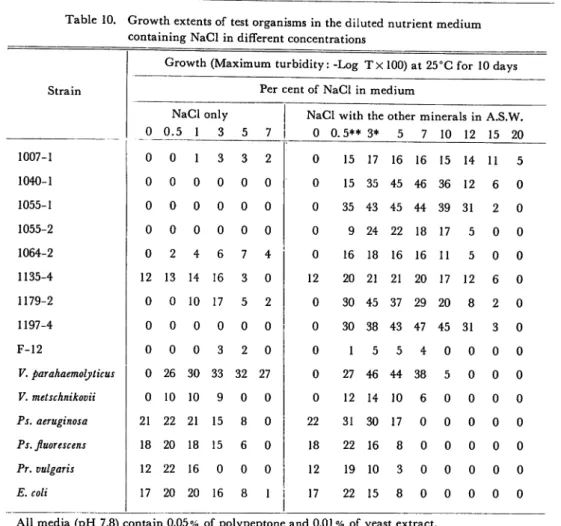
Table 10. Growth extents of test organisms in the diluted nutrient medium
containing NaCl in different concentrations
Growth(Maximum turbidity -Log TxlOO)at 25°C for 10 days
Strain Per cent of NaCl in medium
NaCl only NaCl with the other m nerals inA.S.W. 0 0 0.5 1 3 5 7 0 0.5** 3* 5 7 10 12 15 20 1007-1 0 1 3 3 2 0 15 17 16 16 15 14 11 5 1040-1 0 0 0 0 0 0 0 15 35 45 46 36 12 6 0 1055-1 0 0 0 0 0 0 0 35 43 45 44 39 31 2 0 1055-2 0 0 0 0 0 0 0 9 24 22 18 17 5 0 0 1064-2 0 2 4 6 7 4 0 16 18 16 16 11 5 0 0 1135-4 12 13 14 16 3 0 12 20 21 21 20 17 12 6 0 1179-2 0 0 10 17 5 2 0 30 45 37 29 20 8 2 0 1197-4 0 0 0 0 0 0 0 30 38 43 47 45 31 3 0 F-12 0 0 0 3 2 0 0 1 5 5 4 0 0 0 0 V. parahaemolyticus 0 26 30 33 32 27 0 27 46 44 38 5 0 0 0 V. metschnikovii 0 10 10 9 0 0 0 12 14 10 6 0 0 0 0 Ps. aeruginosa 21 22 21 15 8 0 22 31 30 17 0 0 0 0 0 Ps. fluorescens 18 20 18 15 6 0 18 22 16 8 0 0 0 0 0 Pr. vulgaris 12 22 16 0 0 0 12 19 10 3 0 0 0 0 0 E. coli 17 20 20 16 8 1 17 22 15 8 0 0 0 0 0
All media (pH 7.8) contain 0.05% of polypeptone and 0.01 % of yeast extract. * This is equal to the composition of artificial sea water.
** The artificial sea water diluted six-fold, accordingly NaCl concentration is 0.5%.
of the other minerals in artificial sea water levels. Inocula were prepared and
used as described in the examination in Section 1. The cultures incubated at
25°C, were observed every day for 10 days for growth extent.
The data are shown in Table 10. It was apparent that a majority of marine isolates could not multiply in the medium containing only NaCl the sole source of salts, even 3 per cent or more concentration of NaCl was not available for such bacterial growths of marine isolates. In the media containing NaCl in different
concentrations prepared with ordinary mineral constituted artificial sea water, it was found that many marine isolates multiply in the medium containing 15 per cent NaCl, but the majority could not grow in 20 per cent NaCl medium. For the exception of marine isolates and terrestrial bacteria could grow in media contain ing only NaCl for their mineral source. These organisms grew better in the me dium containing the major minerals in sea water than in the medium containing NaCl only, even NaCl concentrations are similar in levels. In this case, the effect
146 Mem. Fac. Fish., Kagoshima Univ., Vol. 14 (1965)
of artificial sea water means the effect of other minerals except NaCl. Growth
of most terrestrial bacteria was not affected by using artificial sea water, because
these bacteria grew similarly in the same NaCl concentrations in the culture me
dium, whether artificial sea water is supplemented or not. Pr. vulgaris is an
exceptional one, it could not grow in the medium containing 3 per cent NaCl only,
but grew in the same concentration of NaCl supplementing the other minerals in artificial sea water. It is known that the other minerals (i. e. KC1, MgCl2, MgS04, and CaCl2) in artificial sea water alleviate the interference of NaCl in
growth of microorganisms.
In the majority of marine isolates, the optimum salt concentrations for growth was found to be 3 to 7 per cent. Terrestrial bacteria, on the other hand, showed a moderate growth without any supplement of inorganic salts to the basal me dium, and the growth was almost entirely suppressed in a salt concentration of 5 to 7 per cent, the optimum is in 0.5 per cent.
4.
Grouping of microorganisms on the basis of their growth capacity
manifested in the five types of defined media
In this chapter, the author examined growth responses of test organisms in the
five types of defined media (Table 7), growth at 37°C (Table 8), salt tolerance,
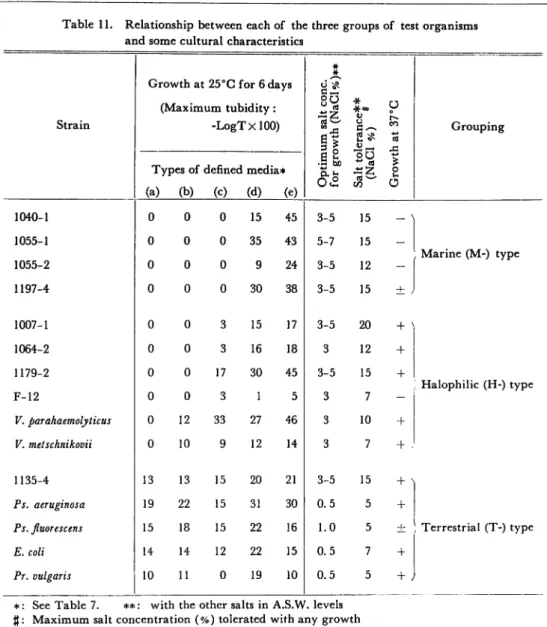
and optimum salt concentration for their growth (Table 10). In the experiments, the author found that results obtained have some correlation with one another. The relationships are briefly noted in Table 11.
The results above mentioned tell us that one is able to group the tested or
ganisms into three patterns by growth extent in five defined media. The first is
the most popular group to which most marine isolates belonged. The speciality
of this group is explained by the organisms not grown in either (a), (b), or (c)
medium. The speciality of the second group is explained by the organisms not
grown in (a) medium or both (a) and (b). Bacteria grown in all five defined media
belong to the last group, and also terrestrial bacteria are one of this type. Each
of the three groups were designated as Marine (M-) type bacteria, Halophilic (H-)
type bacteria, and Terrestrial (T-) type bacterria.
Most Marine type bacteria grew best in a concentration of NaCl and other minerals in the culture medium, the former is from 3 to 5 per cent and the latter
is the same as in the artificial sea water levels. Some of them grew best at 5 to 7 per cent. The maximum salt concentration tolerated in any growth was 12 to
15 per cent. A very few of them grew at 37°C. Of 89 strains of Marine type bacteria, 7 strains were grown at 37°C.
Some of terrestrial and marine isolates are classified in the group, Halophilic
type. The majority of the Halophilic type grew best in a 3 per cent salt con centration. Salt tolerances of Halophilic type varied by the origin of each strain.
In general, the strains of marine origin tolerated any growth in 12 to 15 per cent of salt concentration, and the terrestrial ones tolerated their growth in 7 per cent.
Table 11. Relationship between each of the three groups of test organisms and some cultural characteristics
* *
Growth at 25°C for 6 days cis
Strain (Maximum tubidity: -LogTxlOO) 8^ •5 to *** o U CO OS % o u o Grouping
Types of defined media* (a) (b) (c) (d) (e) 1040-1 0 0 0 15 45 3-5 15 _ \ 1055-1 0 0 0 35 43 5-7 15 1055-2 0 0 0 9 24 3-5 12 -. Marine (M-) type 1197-4 0 0 0 30 38 3-5 15 ± , 1007-1 0 0 3 15 17 3-5 20 + ] 1064-2 0 0 3 16 18 3 12 + 1179-2 0 0 17 30 45 3-5 15 + F-12 0 0 3 1 5 3 7 -Halophilic (H-) type V. parahaemolyticus 0 12 33 27 46 3 10 + V. metschnikovii 0 10 9 12 14 3 7 + . 1135-4 13 13 15 20 21 3-5 15 + > Ps. aeruginosa 19 22 15 31 30 0.5 5 +
Ps. fluorescens 15 18 15 22 16 1.0 5 ± Terrestrial (T-) type
E. coli 14 14 12 22 15 0.5 7 +
Pr. vulgaris 10 11 0 19 10 0.5 5 + y
*: See Table 7. **: with the other salts in A.S.W. levels J: Maximum salt concentration (%) tolerated with any growth
Nearly all strains of terrestrial bacteria belonging to Halophilic type grew at
37°C, but about half the number of marine isolates of Halophilic type could not grow at 37°C. Terrestrial bacteria belonging to Terrestrial type grew best in
0.5 per cent of salt concentration, and marine isolates of the type grew at 1 to 3 or
3 to 5 per cent. The former tolerated their growth at 5 to 7 per cent, and the
latter tolerated their growth in 12 to 15 per cent. Nearly all strains of this type
could grow at 37°C, without distinction between terrestrial and marine isolates. The surface temperatures of sea water vary with season and latitude. Tropical
waters in the open sea may have surface temperatures as high as 28° to 30°C,
while in polar sea water temperatures approximate the freezing point of the
148 Mem. Fac. Fish., Kagoshima Univ., Vol. 14 (1965)
small contrasted with the range of air temperatures, —65° to 65°C. The tem
perature range of water exceeding 1,000 meters in depth is 5° to —1.5°C. Thus, about 90 per cent of the marine environment is perpetually colder than 5°C (in
ZoBell, 1946). And as shown by ZoBell and Conn (1940), most marine bacteria could not grow at temperatures as high as 30°C, and 37°C may be lethal.
According to Sverdrup et al. (1949), unless diluted by heavy rainfall, melting
ice, or rivers, the salinity of surface sea water generally ranges from 33 to 37 per
mill. The salinity of deep or bottom water of the oceans varies within narrow
limits, approximately 34.6 to 35 per mill. Sea water is a physiologically balanced salt solution containing more than half of the known elements. It is a diluted solution of several salts with some dissolved gases and trace of a vast number of
orgainc compounds. Except for a few constituents which are produced or con sumed by biological agencies, the composition of sea water is relatively constant.
The chlorine and bromine in sea water occur almost exclusively as chloride
and bromide anions. Similarly sodium, magnesium, calcium, potassium, and
strontium occur as cations. The ratios of the three principal anions of sea water,
i. e., carbonates, sulfates, and chlorides in sea water are the reverse of the ratios of these anions in river water:
% Carbonate %Sulfate % Chloride
River water 80 13 7
Sea water 1 11 88
Similarly the ratios of cations particularly sodium and calcium, are different in
sea water and in river water:
% Calcium ^Sodium % Magnesium % Potassium
River water 57.7 26.8 9.5 6.0
Sea water 3.2 83.7 10.1 3.0
The ratios are calculated from data by Clarke (1924) on the analysis of river water and sea water (in ZoBell, 1946).
Therefore, the author takes care under due consideration on effect of the specific
marine environment to the multiplication or growth of microorganisms, and he
knows that most of the bacteria exclusive of adventitious contaminants found inthe sea are specifically marine type bacteria. This conclusion is substantiated by
the fact that commonly known species of terrestrial bacteria such as members of
the coli-form, bacilli, or Gram-positive cocci groups have been found in the sea relatively near land, and a few been found in open oceans.