-第2報:傳
熱 面 の 條 件 を 変 え た 場
合*-中 川 有 三**・ 吉 田 哲 夫**・ 神 谷 幸 一** 梗 概:高 温 物体 が核 状 沸 騰お よび 自然 対 流 に よつ て冷 却 す る場 合 に つ いて,第1報1)に お い て は 物体 側 の條件 を一 定 に して冷 却 液側 の 條件 をか え た場 合 につ い て論 じた が,今 回 にお い て は冷 却 模 樣(す な わ ち熱 傳導 率 α)が 高温 物 体 側 の條 件(す なわ ち傳 熱 面 の條 件)に よつ て どの よ う な影 響 を うけ る も ので あ るか を考 究 す る。 緒 言 赤 熱 物 体 を低 温 液体 中に投 入す る と,何 れ の場 合 に お い て も膜 状沸 騰,核 状 沸騰,自 然 対 流 の三 過 程 を た ど つ て冷 却 し,膜 状沸 騰 か ら核 状 沸 騰へ 移 り変 る点(臨 界 点)に 於 て最 も高 い熱 伝達 率 αmaxを 示 し,か つ ま た核 状 沸騰 か ら自然 対流 へ 変 化す る時 に も,一 つ の移 行点 が 現 れ る。第1報1)に おい て は核 状 沸騰,並 び に 自然対 流 の部 につ いて,物 体 側 の 条件 を一 定,す な わ ち加 熱温 度 720℃,直 径2cm,長 さ12cmの 丸 鋼 棒 の表 面 状態 を 一定 に して冷 却 液 の条 件 を変 化 させ た場 合,熱 伝達 率 α が 冷却 液 の物 理的 性 質 等 の相 違 に よつて い かに 変 化す る か を述 べ たが,本 論文 に お いて は や は り核状 沸 騰 並 びに 自然 対 流 の部 分 に つ いて,丸 鋼 棒 の直 径 を変 えた 場合, お よび 表 面状 態 を変 化 させ た場 合,並 びに冷 却 液 へ の投 入温 度 を変 え た場 合,い か に熱 伝達 率が 変 化す る もの で あ るか を考 究 す る。 本 実 験 は次 の ご とき順序 に よつ て 行 わ れ た。 す なわ ち, 高温物体側の条件 冷 却 液 と し て 投 入 温 度 の 変 化 20℃ の水(靜 止),25℃ のモビール油(靜 止) 表 面 状 態 の 変 化 60℃ の水(靜 止),25℃ の燈油(靜 止) 直 径 の 変 化 60℃ の水(靜 止),25℃ の燈油(靜 止) 急 冷 却 時 に お い て 投 入 温 度 を 変 化 さ せ た場 合,核 沸 騰 並 び に 自 然 対 流 の 両 期 の 熱 伝 達 率 に つ い て 論 じ た 文 献 は 全 くな い よ う に 思 わ れ る 。 し か し 単 な る 沸 騰 試 験 に 於 て 試 験 片 の 表 面 状 態,お よ び 直 径 の 変 化 に つ い て 論 じた 論 文 は 種 々 あ り,前 者 に つ い て はMcAdams and Saueretc.,2) Jakob and Fritz,3) Jakob and Linke4)ら の 論 文 あ り,後 者 に つ い て はMcAdams and Kenel etc.5), Cry-der and Gilliland6)ら の 論 文 が 参 考 文 献 と して 価 値 あ る
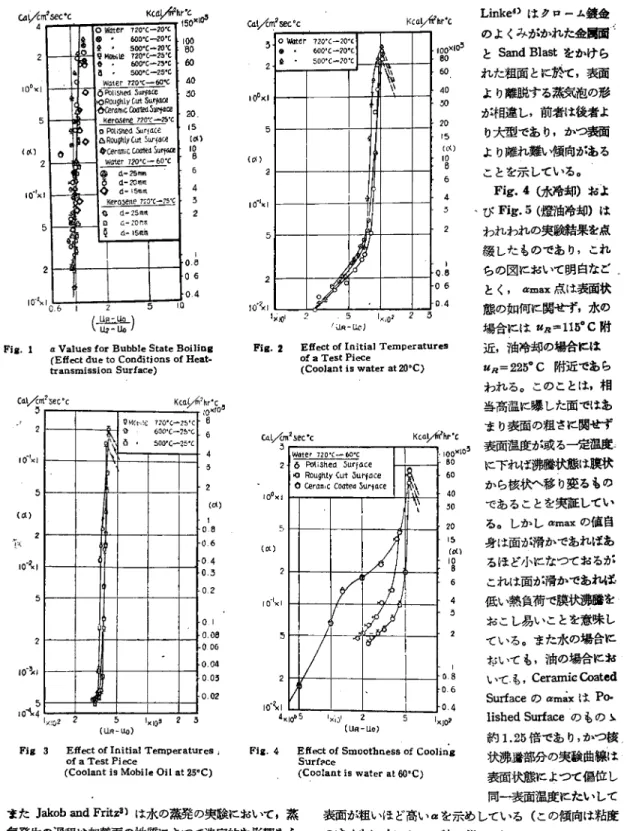
も の と 思 わ れ る 。 實 験 結 果 (a) 核 状 沸 騰 部 分 (i) 冷 却 液へ の投 入温 度 を変 え た場 合 の影響 物 体 を冷 却 液 に投 入 す る時 の物体 の 温度 を変 えた場 合 の冷 却 状態(す な わ ち αの変 化)を 調 べ た の であ るが,こ の 実 験結 果 はFig. 2, Fig. 3に 示 め され てい る。 す なわ ち 冷却 状 態 が膜 状 沸騰 か ら核状 沸 騰へ の移 り変 る時 に あ らわれ る αmaxの 値 は冷 却液 が 水 で あつ て も油 で あつ て も投 入温 度 が 小 な る程 大 とな る。 これ は投 入温 度 が 低 い と物体 の表 面 にお け る蒸 気膜 の附 着度 合 が 弱 い た め,冷 却 速 度が 速 い こ とに原 因が あ る。αmaxが あ らわれ る時 に お け る物 体 の表 面温 度uRは 両 図 面 に 見 る ご と く,水 にお い てはuR≒120℃,油 に おい て はuR≒435℃ で あ り,い ず れ も冷却 液 の 沸騰 温 度u2よ りも10°∼20℃ 高 い(因 に水 に お いて はu2=100℃,モ ビール 油 で は u2=425℃7))。 核 状 沸 騰 部分 の α は冷 却 液 の最 初 の温 度 をu0と す れ ば第1報1)で の べ た ご と く α=0.0504[(uR-u0)/(u2-u0)]20.2 (1) であ らわ され,Fig. 1に お い て この こ とが 明 瞭 に 示 め され て い る。 (ii) 物 体 の表 面 状 態 に よ る影 響 わ れ わ れ は試 験 片 の表面 を滑 か に仕 上 げ た時(Polished Surface),荒 仕
上 げ した時(Roughly Cut Surface),お よび表 面 に 粘 土
と金 剛砂 の混 合物 を塗 付 した時(Ceramic Coated
Sur-face)の 三 つ の場 合 に つ いて,膜 状 沸騰 に よ る冷 却 状 態
を曩 に8)報 告 した が,今 回 は この 三つ の場 合に お け る冷 却 状況(α の変 化)が 核 状沸 騰 の 時 に は どの よ うに な る
もので あ るか に つ いて 考 察 す る。
McAdams and Sauer etc.2)は 沸 騰 水 にお け る熱 伝達
の実 験 に おい て,加 熱 体 の表 面 が 薄 い ス ケー ル層 で す こ し荒 され るこ とは熱 伝達 に 有益 な效果 を あ た え る こ とを 示 し,Polished Surfaceの 場 合 よ りも核 状沸 騰 部 分 に お い て1.5∼2倍 の熱 伝達 率を 記録 してい る。 か つαmax の値 はPolished Surfaceの 場 合 の約1 .2倍 で あつ た。 * 昭和26年10月 関 西連合工学講演会にて講演 昭和27年2月20日 受理 ** 京都大学工学部
Fig. 1 a Values for Bubble State Boiling (Effect due to Conditions of Heat-transmission Surface)
Fig. 2 Effect of Initial Temperatures of a Test Piece
(Coolant is water at 20•Ž)
Fig 3 Effect of Initial Temperatures of a Test Piece
(Coolant is Mobile Oil at 25•Ž)
Fig. 4 Effect of Smoothness of Cooling Surface
(Coolant is water at 60•Ž)
ま たJakob and Fritz3)は 水 の蒸 発 の実 験 に お い て,蒸 気 発 生 の過 程 は加 熱 面 の性 質 に よつ て決 定 的 な影 響 を う け,粗 い加 熱 面 にお い て は,滑 か な加 熱 面 に お け る よ り も遙 に 少 い熱 負荷 に お いて 蒸 発 がお こ り,か つ 蒸 発 個 処 の数 も非 常 に多 い こ とを認 め て い る。 なおJakob and Linke4)は ク ロー ム鍍 金 の よ くみ が か れ た金 属面 とSand Blastを か け ら れ た粗 面 とに於て,表 面 よ り離 脱 す る蒸 気 泡 の形 が 相違 し,前 者 は 後者 よ り大 型で あ り,か つ表 面 よ り離 れ難 い傾 向 が あ る こ とを 示 して い る。 Fig. 4(水 冷却)お よ びFig. 5(燈 油冷 却)は わ れ われ の実 験結 果 を点 綴 した もの であ り,こ れ ら の 図 に お いて 明 白 なご と く,αmax点 は表 面 状 態 の 如 何 に 関せ ず,水 の 場 合に はuR=115℃ 附 近,油 冷却 の場 合に は uR=225℃ 附 近 であ ら わ れ る。 この こ とは,相 当 高 温 に 曝 した面 では あ ま り表 面 の粗 さに関 せず 表 面 温 度 が 或 る一 定 温度 に下 れ ば沸 騰 状 態 は膜 状 か ら核状 へ移 り変 る もの で あ る こ とを実 証 して い る。 しか し αmaxの 値 自 身 は面 が 滑 か で あ れば あ る ほ ど小 にな つ て お るが これ は 面 が 滑 か で あれ ば 低 い熱 負荷 で膜 状 沸騰 を お こ し易 い こ とを意 味 し て い る 。 また 水 の場 合に お い て も,油 の場 合 に お い て も,Ceramic Coated Surfaceの αmaxはPo-lished Surfaceの も の ゝ 約1.25倍 で あ り,かつ 核 状 沸 騰 部 分 の実 験 曲線 は 表 面 状 態 に よつ て偏 位 し 同一 表 面 温 度 に た い して 表 面 が 粗 い ほ ど高 い αを示 め して い る(こ の 傾 向 は粘 度 のす くな い 水 に お いて 特 に著 しい)。 (iii) 直 径変 化 に よ る影響 直 径 変 化 に よ る影響 を 知 るた め にそ れ ぞ れ 直 径25mm,長 さ150mm;直 径 20mm,長 さ120mm;直 径15mm,長 さ90mmの 414 (18)
化 学 機 械
Fig. 5 Effect of Smoothness of Cooling Surface
(Coolant is Kerosene at
25•Ž)
Fig. 6 Effect of Sizes
(d=Dia-meter) of Test Piece
(Coolant is Water at
60•Ž)
Fig. 7 Effect of Sizes
(d=Dia-meter) of Test Piece
(Coolant is Kerosene at 25•Ž) 三 種 の丸 鋼棒 を,そ れ ぞれ720℃ に加 熱 し,60℃ の 水 道 水,25℃ の 燈 油中 に 冷 却 した 場合,α が 直径 変 化 に よつ て どの よ うに影 響 され るか に つ いて 考察 す る。 Fig. 6, Fig. 7は 著者 らの行 つ た実 験 結果 であ るが, αmax値 は直 径が 大 とな るほ ど高 く測 定 され た。 ま た核 状沸 騰 部 分の αは直 径 変 化 の影 響 を うけ るこ とす くな く (1)式に よつ て規 制 され る。 なおαmaxに 対 す る表 面 温度 は共 に60℃ の水 ではuR=115℃, 25℃ の燈 油 では 共 にuR=225℃ で あ り,直 径 の大 小 に は関 係 が ない 。 (b) 移 行 点 (i) 冷 却 液へ の投 入温 度 を変 え た場 合 の影 響 移 行 点 は高 温物 体 を冷却 液 へ投 入す る時 のそ の物 体 の温 度 に関せ ず 物体 の表 面 温 度(uR)が 冷 却 液 の沸 点(u2)に 降 下 した瞬間 に あ らわれ るの が理 想的 で あ るが(例 え ば
Fig. 2に お いて はu2=100℃, Fig. 3に お いて はu2=
425℃7)),わ れ わ れ の実 験 にお い て は,液 中 に 含有 さ
れ てい る空気 並 に 分解 ガ ス等 の影 響 を うけてFig. 2の
水 の場 合 にはuR=90∼95℃(た だ しu0=20℃), Fig.
3の 潤滑 油 の場 合 にはuR=400℃(た だ しu0=25℃)
で あ らわれ て い る。 いず れ に して も投 入温 度 の 如 何に よ つて移 行 点 が変 動 す る こ とは ほ とん どな い。
(ii) 物 体 の表 面 状 態 に よる影 響 60℃ の水 に 冷
却 した場 合 にお い て は(Fig. 4)移 行 点 はPolished
Sur-faceで は約uR=100℃ で あ らわ され理 論 値 に近 い が,
面 が粗 い ほ ど,沸 騰状 態 は永 く継 続 し移 行 点 はuR=100 ℃ 以 下 にな る傾 向が 強 く,Ceramic Coated Surfaceで
は実験曲線の形が他の二者 と全 く相違 し,移 行点を把握
す る こ とが 困難 とな る。 ま た25℃ の 燈 油に 冷 却 した 場 合 に おい て は(Fig. 5) 約uR=200℃ であ らわ れ,理 論 値 に 近 いが(燈 油 では u2=200℃ と考 える7)),面 が 粗 い ほ どuR=200℃ 以 下 に な り,こ の点 に関 して も水 の場 合 と同様 であ る が,燈 油 の場 合に おい て はCeramic Coated Surfaceの もの
に つ いて も実 験 曲線 上 で移行 点 の存 在 をみ とめ る こ とが で き る。 これ は燈 油 の場 合は 水 よ りも粘 度 が約12.5倍 大 であ るため,冷 却 液 が 攪拌 され る程 度 が水 の場 合 よ り 弱 い こ とに主 な る原 因 が あ る もの と思 わ れ る。 (iii) 直 径 変 化 によ る 影響 直径 の大 小 に か ゝわ ら ず試 験 片 の表 面温 度 が 沸 騰温 度 に 到達 し た時 に 移 行点 が 現 われ る筈 であ る。 す な わち60℃ の水 の 場 合 に はuR =100℃ の時 に移 行点 が 存在 す る こ とに な る。Fig. 6 に おい てd=25mm以 外 の もの は この 考 え に合 致 して い る。 ま た25℃ の 燈 油 ではFig. 7に 見 る ご と く,三 者 ほぼ 燈 油 の平 均 沸騰 点 とみ な され る温 度,す なわ ち, 200℃ にuRが 来 た時 に移 行 点 が 存在 して い る。 (c) 自 然 対 流 部 分 冷 却 液側 の 条件変 化 に よつ て 自然 対流 部分 の αが い か に影響 され るか とい う実 験(第1報)1)に よつ て得 られ た実 験式(2)は物 体側 の条 件 を変 化 させ た今 回 の実 験 に お
い て もCeramic Coated Surface以 外 の もの に つ い て は
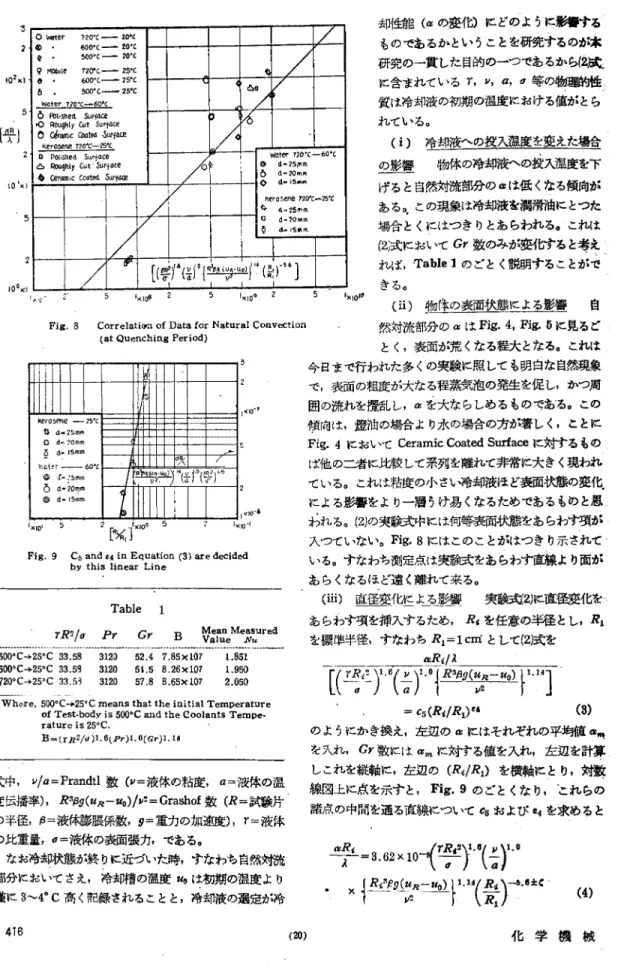
Fig. 8 Correlation of Data for Natural Convection (at Quenching Period)
Fig. 9 C5 and ƒÃ4 in Equation (3) are decided
by this linear Line
Table 1 式 中,ν/a=Prandtl数(ν=液 体 の 粘度,a=液 体 の温 度 伝播 率),R3βg(uR-u0)/ν2=Grashof数(R=試 験 片 の半 径,β=液 体膨 脹 係 数,g=重 力 の加 速 度),γ=液 体 の 比 重 量,σ=液 体 の表 面 張力,で あ る。 な お 冷却 状 態 が終 りに近 づ い た時,す な わ ち 自然 対 流 部 分 に おい て さえ,冷 却 槽 の温 度u0は 初 期 の温 度 よ り 僅 に3∼4℃ 高 く記 録 され る こ と と,冷 却液 の選 定 が冷 却性 能(α の変 化)に ど の よ うに 影響 す る もの で あ るか とい う こ とを研 究 す るのが 本 研究 の一 貫 した 目的 の一 つ であ るか ら(2)式 に含 まれ て い る γ, ν, a, σ 等 の物 理 的性 質 は冷 却 液 の初 期 の温 度 に お け る値 が と ら れ てい る。 (i) 冷 却 液 へ の投 入温 度 を変 え た場 合 の影 響 物 体 の冷 却 液 へ の投 入温 度 を下 げ る と自然 対 流 部 分 の αは 低 くな る傾 向が あ る 。 この 現 象 は冷 却 液 を潤 滑 油 に とつ た 場 合 と くに は つ き りとあ らわ れ る 。 これ は (2)式に お いてGr数 のみ が 変化 す る と考 え れ ば,Table 1の ご と く説 明 す る こ とが で き る。 (ii) 物 体の 表面 状 態 に よ る影 響 自 然 対 流 部 分 の α はFig. 4, Fig. 5に 見 るご と く,表 面 が荒 くな る程 大 とな る。 これ は 今 日ま で行 わ れ た 多 くの実 験 に照 して も明 自な 自然 現 象 で,表 面 の 粗 度 が大 な る程 蒸 気泡 の発 生 を促 し,か つ周 囲 の流 れ を攪 乱 し,α を 大 な ら しめ る も の であ る。 この 傾 向 は,燈 油 の場 合 よ り水 の場 合の 方 が 著 し く,こ とに
Fig. 4に お い てCeramic Coated Surfaceに 対 する もの
ば他 の二者 に比 較 して系 列 を離 れ て非 常 に大 き く現 わ れ て い る。 これ は粘 度 の小 さい 冷却 液 ほ ど表 面 状 態 の変 化 に よ る影響 を よ り一 層 うけ易 くな るた め で あ る もの と思 わ れ る。(2)の実 験 式 中 に は何 等 表 面状 態 を あ らわ す項 が 入 つ で い な い。Fig. 8に は この こ とが は つ き り示 され て い る。 す な わ ち測 定 点 は実 験 式 をあ らわ す直 線 よ り面 が あ ら くな るほ ど遠 く離 れ て来 る。 (iii) 直 径 変 化 に よる影 響 実 験式(2)に直 径 変 化 を あ らお す項 を挿 入す るた め,Riを 任 意 の 半径 と し,R1 を標 準半 径,す な わ ちR1=1cmと して(2)式を
(3)
の よ うにか き換 え,左 辺 の α に はそ れ ぞれ の 平 均 値 αm を入 れ,Gr数 に は αmに 対 す る値 を入 れ,左 辺 を 計 算 し これ を縦 軸 に,左 辺 の(Ri/R1)を 横 軸 に と り,対 数 線 図 上 に点 を示 す と,Fig. 9の ご と くな り,こ れ ら の 諸 点 の中 間 を通 る直 線 に つ い てc5お よび ε4を求 め る と(4)
416 (20)化 学 機 械
とな る。Fig. 8に しめ され て い るよ うに水,燈 油両 者 共 ほ ぼ(4)であ らわ され て い る。 今 日ま での研 究5)6)で は直 径 が小 に なれ ば,α は 大 とな る よ うにあ らわ され て い る が,わ れ われ の 研究 では直 径 変 化 の範 囲 が狭 いた め か(4) 式 の最 後 の因 子 の羃 数 はほ とん ど-5.6に 近 くな り,従 つ てRiに よ る影 響 は す くない とい う結 果 にな る。Fig. 6, Fig. 7に み る ご と く,自 然 対 流 部 分 の α は 直径 変 化 に よつ て相違 して い るが,直 径 の減 少 につ れ て αは必 し も増 大す る もの では ない 。 それ 故 に(4)式に お け る ζの決 定 に は,さ らに広範 囲 の研 究 を行 わ ね ばな らぬ こ とに な る。 實験 結 果 の要 約 (1) 核 状 沸騰 極 大 点 は沸 点 よ り10∼20℃ 高 い と ころ であ らわ れ る。 この温 度 は伝 熱 面 の条 件 に よつ て 支 配 されな い 。 αmaxの 値 は投 入温 度 が 小 な るほ ど大, 表 面 状態 が 粗 くな るほ ど大 とな る。沸 騰 過程 にお け る α は あ ま り表 面状 態 が荒 され な い限 り,大 約(1)式に よつ て あ らわ され る。 (2) 移 行 点 移 行点 は投 入温 度 お よび 直径 の大 小 に よつ て影響 され ず,お お む ね冷 却液 の沸 点附 近 に あ る が 表 面 状態 が あ ら くな るに 従 つ て沸 点 よ り低 い温 度 で あ らわ れ る。 (3) 自 然 対 流 投 入 温 度 が 低 く な れ ば α は 小 と な り,表 面 状 態 が あ ら く な る ほ ど 大 と な る 。 試 験 片 の 直 径 変 化 の α へ の 影 響 を 確 定 す る こ と は で き な か つ た 。 記 號 uR… 物 体 の 表 面 温 度[℃];u0… 周 囲 の 冷 却 液 の 温 度 [℃];u2… 冷 却 液 の 沸 騰 温 度[℃];α … 熱 傳 達 率 [cal/cm2sec℃];R… 試 驗 片 の 半 徑[cm];λ … 冷 却 液 の 熱 傳 導 率[cal/cmsec℃];γ … 冷 却 液 の 比 重 量[gr /cm3];σ … 冷 却 液 の 表 面 張 力[gr/cm];ν … 冷 却 液 の 粘 度[cm2/sec];a… 冷 却 液 の 温 度 傳 播 率[cm2/sec] 文 献 1) 中 川,吉 田,神 谷:化 学 機械,16卷12号, p. 405 2) McAdams, Sauer, Cooper and Akin: Trans. of A.S.M.
E. Vol. 80, 1938,
3) Jakob and Fritz: Forschung, Bd. 2, Heft 12, 1931 (De-zember)
4) Jakob and Linke: Phys, Z. Bd. 36, 1935
5) McAdams, Kenel etc.: Ind. Eng. Chem., 1949, Sep-tember
6) Cryder and Gilliland: Refrig. Engg. Vol. 25, 1933. p. 78,
7) 中 川,吉 田:化 学 機械,16卷,3号 8) 中 川,吉 田:化 学 機 械,16卷,4号
Quenching
Phenomena
in Bubble State Boiling
and Natural
Convection.
Part 1: -Effect
due to the conditions
of
coolants-Yuzo Nakagawa,* Tetsuo Yoshida* and Koichi Kamitani*
When a red heated body was quenched into any cooling liquid, the body would cool through three
processes, namely film state boiling, bubble state boiling and natural convection.
In our previous papers1) cooling phenomena by film state boiling due to quenching from high
tem-perature were biscussed. Now in this paper we intend to report the results of investigation for the
process of two stages, bubble state boiling and natural convection. The series of experiments
were carried out keeping all the initial condition of a test body constant under the various
condi-tions of cooling media.
Arranging the data of the experiments we came to the following conclusions.
(1) In the process of bubble state boiling the values of transfer coefficient are dominated by the
initial temperature u0 and the boiling temperaturet u2 of coolants, and our experimental data can
be generally put into order by using the equation (1) which shows that they are not influenced by
the physical properties of coolants.
ƒ¿=0.0504(ƒ¢u1/ƒ¢u2)20.2 (1)(2) A transition point appears as soon as cooling phenomena changes from boilling state to that of natural convection. The more the coolant is deairated, the more the transition point appears at
hight temperature, and the much the coolant has air and gas, the more the point appears at low temperature.
(3) In the natural convection process, the coefficient ƒ¿ rises up according to the increasing of temperature of cooling liquid and if the temperature is increased over a limit, the coefficient ƒ¿ shows its decreasing. The coefficient ƒ¿ is greatly controled by Gr number as shown in the equ-ation (2) and the smaller the viscosity ƒË is, the more the coefficient ƒ¿ is developed, in addition, it was confirmed by this experiment that the coefficient ƒ¿ raises itself easily, according to decreas-ing of the value of surface tension ƒÐ.
(2) In the equation (1) and (2)
Δu1=uR-u0, Δu2=u2-u0, uR=surface temperature of test body (℃): Nu=Nusselt Number, Pr=Prandtl Number, Gr=Grashof Number, γ=specific weight of coolant (gr/cm3), R=radius of
test body (cylinder) (cm)
Bibliography
(1) Y. Nakagawa and T. Yoshida: Chem. Engg. in Japan, Vol. 16, No. 3. Y. Nakagawa and T. Yoshida: Chem. Engg. in Japan, Vol. 16, No. 4.
Part
2: -Effect
due to Conditions
of Heat-transmission
Surface-Yuzo Nakagawa,* Tetsuo Yoshida* and Koichi Kamitani.*
The authors intend to report in the present paper the results of investigation as to the process of the latter stage of rapid cooling, the bubble state boiling and natural convection due to quench-ing of a red heated body. The series of experiments were carried out keeping the conditions of coolants constant in spite of the variations of conditions of a body.
Variety of the conditions was excecuted by changing the initial temperature, surface smoothness or diameter of the test cylinder. Arranging the data of the experiments the authors came to the next conclusion.
(1) Bubble State Boiling
The points indicating the max. value, ƒ¿max of heat transmission coefficient appear 10•`20•Ž higher than the boiling points of coolants, notwithstanding the degree of smoothness of the cooling surface. The higher the quenching temperature and the more rought the conditition of surface is, the larger the ƒ¿max value is. ƒ¿ values at the period of bubble-state boiling are put into order by arranging in the equation (1), so far as the condition of surface is not too rough.
α=0.0504(Δu1/Δu2)20.2 (1)
(2) Transition Point
The transition point appearing at the moment when cooling phenomena change from boiling state to that of natural convection exists close to the boiling point of a coolant, in spite of the varia-tion of initial temperature and the diameter of test cylinder. But the temperature for the tran-sition point is lower than the boiling point as the condition of surface is much more rough .
(3) Natural Convection
The decreasing of the quenching temperature or the smoothness of the surface lowers the value of ƒ¿. Authors could not confirm how the value of ƒ¿ is influenced by the size of test cylinder .
In the equation (1):
Δu=uR-u0, Δu2=u2-u0, uR=surface temperature of test bady (℃)
, u2=boiling point of co-olant (℃), u0=initial temperature of coolant (℃)
* Kyoto University .
418 (22)