Study on prevention of sinking death
in the fingerling production of Pacific bluefin tuna
Michio Kurata
クロマグロ仔魚に多発する沈降死の防除に関する研究 倉 田 道 雄
Contents
General introduction ・・・・・・・・・・・・・・・・・・・・・・・・・ 3 Chapter 1: Flow control by aeration to prevent sinking death in Pacific bluefin tuna,
Thunnus orientalis, larvae
1.1 Introduction ・・・・・・・・・・・・・・・・・・・・・・・ 9 1.2 Materials and methods ・・・・・・・・・・・・・・・・・・・ 10 1.3 Results ・・・・・・・・・・・・・・・・・・・・・・・・・ 15 1.4 Discussion ・・・・・・・・・・・・・・・・・・・・・・・ 22 Chapter 2: Influence of initial swimbladder inflation (ISI) failure on survival and
vertical distribution in Pacific bluefin tuna, Thunnus orientalis, larvae 2.1 Introduction ・・・・・・・・・・・・・・・・・・・・・・・ 25 2.2 Materials and methods ・・・・・・・・・・・・・・・・・・・ 26 2.3 Results ・・・・・・・・・・・・・・・・・・・・・・・・・ 33 2.4 Discussion ・・・・・・・・・・・・・・・・・・・・・・・ 37 Chapter 3: Promotion of initial swimbladder inflation (ISI) in Pacific bluefin tuna,
Thunnus orientalis, larvae
3.1: Conditions of water surface and optimal period to promote ISI in Pacific bluefin tuna, Thunnus orientalis, larvae
3.1.1 Introduction ・・・・・・・・・・・・・・・・・・・・・・ 42 3.1.2 Materials and methods ・・・・・・・・・・・・・・・・・ 44 3.1.3 Results ・・・・・・・・・・・・・・・・・・・・・・・・ 50 3.1.4 Discussion ・・・・・・・・・・・・・・・・・・・・・・ 59
2
3.2: Optimal timing in the day to promote ISI in Pacific bluefin tuna, Thunnus orientalis, larvae
3.2.1 Introduction ・・・・・・・・・・・・・・・・・・・・・・ 66 3.2.2 Materials and methods ・・・・・・・・・・・・・・・・・・ 67 3.2.3 Results ・・・・・・・・・・・・・・・・・・・・・・・・ 72 3.2.4 Discussion ・・・・・・・・・・・・・・・・・・・・・・・ 79 Chapter 4: Influence of swimbladder inflation failure on mortality, growth and
development of lordotic deformity in Pacific bluefin tuna, Thunnus orientalis, postflexion larvae and juveniles
4.1 Introduction ・・・・・・・・・・・・・・・・・・・・・・・ 85 4.2 Materials and methods ・・・・・・・・・・・・・・・・・・・ 86 4.3 Results ・・・・・・・・・・・・・・・・・・・・・・・・・ 92 4.4 Discussion ・・・・・・・・・・・・・・・・・・・・・・・ 99 General discussion ・・・・・・・・・・・・・・・・・・・・・・・・・ 105 Summary ・・・・・・・・・・・・・・・・・・・・・・・・・・・・・ 114 Acknowledgments ・・・・・・・・・・・・・・・・・・・・・・・・・ 126 References ・・・・・・・・・・・・・・・・・・・・・・・・・・・・ 128
3
General introduction
Three species of bluefin tuna, Thunnus thynnus, Thunnus orientalis, Thunnus maccoyii, are pelagic scombroid species distributed in the Atlantic, Indian, and Pacific Oceans (Collette and Nauen 1983). Expanding demand for these high economic value tunas has increased their natural resource utilization, which has led to the rapid reduction of their resources (Ottolenghi 2008; Kumai 2012). Recently, strengthened measures have been enacted to restrict the capture of both Atlantic (ICCAT 2009) and southern bluefin tuna (CCSBT 2009) by the international tuna resource conservation committees.
To stabilize and control tuna supply, bluefin tuna aquaculture has been developed an economically important industry in Mediterranean countries for Thunnus thynnus, Australia for Thunnus maccoyii, Mexico and Japan for Thunnus orientalis targeting mainly the Japanese market (Hidaka 2008; Ono 2012). Despite the importance in industry, disputes have arisen with respect to natural resource management due to the reliance of tuna aquaculture on wild-caught fish for its seedling fish supply (Ottolenghi 2008). Therefore, development of full-life cycle aquaculture technology of bluefin tunas, which does not rely on their natural resources, is necessary for their sustainable aquaculture (Miyashita 2002; Sawada et al. 2005; Kumai 2012). Attempts at developing such technology have actively been made in the area of tuna bloodstock management and larviculture technique in recent years in some countries (Kinki University 2009; Anonymous 2010; Mylonas et al. 2010).
The fingerling production technology for Pacific bluefin tuna (PBT), Thunnus orientalis (Temminck and Schlegel), has been developed for a long period, since the
4
first natural spawning of the brood stock cultivated at the Fisheries Laboratories, Kinki University (FLKU) in 1979 (Harada et al., 1971; Kumai 1997, Miyashita 2002; Ishibashi 2012). In 2002, the FLKU have achieved the landmark to complete PBT full-life cycle under aquaculture conditions (Sawada et al. 2005; Ottolenghi 2008). Thereafter, the FLKU have developed particularly important and practical fingerling production technologies which enabled to start supplying mass-produced PBT fingerlings to the Japanese tuna aquaculture industry in 2008 (FLKU 2008; Normile 2009). In 2009, FLKU successfully produced over 40,000 fingerlings for domestic tuna aquaculture industry (Kumai 2012).
Although the technologies developed at the FLKU is promising, the efficiency in PBT fingerling production is still low (Kumai 2012; Sawada 2012; Ishibashi 2012). The survival in mass fingerling production was 2.35% during hatchery phase, 21.3% during intervening culture, and consequently 0.5% from egg to the shipment in the 2009 year group, whereas the survival from eggs to juveniles of other species with well-developed technologies has the efficacy of several tens of percent (Kumai 2012; Ishibashi 2012).
Poor PBT survival in their fingerling production is considered to be due to various causes, including surface and sinking death of early larvae during the first 10 days-post-hatch (dph), aggressive behavior and cannibalism after approximately 10 dph, and trauma due to contact or collision with rearing tank wall or sea cage netting after approximately 30 dph, heavy damage due to skin injuries during transport from hatchery to sea net cages at approximately 30 dph and iridoviral infection, blood fluke infection in sea cages (Miyashita et al. 2000, Munday et al., 2003; Sawada et al., 2005, Ishibashi et al., 2008; Ishibashi 2012; Shirakashi et al. 2012). Among these, mass
5
mortality by both surface death and sinking death during the early larval stage has been serious since the early stage of PBT fingerling production, and it still largely affects the present PBT aquaculture operations (Sawada et al. 2005; Takashi et al. 2006; Tanaka et al. 2009; Nakagawa et al. 2011; Kumai 2012).
Surface death, which has been reported in several other marine fishes, is a phenomenon where larvae become trapped by surface tension of the rearing water and the trapped larvae consequently die (Battaglene et al. 1994; Sawada et al. 1999; Yamaoka et al. 2000; Kaji et al. 2003; Fui et al. 2012). Concerning its mechanism, it has been suggested that mucus secretion from larval skin is promoted by the contact with water surface, and the mucus functions as a glue to trap larvae at the water surface in kelp grouper, Epinephelus bruneus (Bloch), red spotted grouper, Epinephelus akaara (Temminck and Schlegel) and striped bonito, Sarda orientalis (Temminck and Schlegel) (Sawada et al. 1999; Yamaoka et al. 2000; Kaji et al. 2003). It has been reported that oil film, which is supposed to inhibit contact by larvae with the water surface and/or reduces surface tension, prevents surface death in red spotted grouper and striped bonito (Yamaoka et al. 2000; Kaji et al. 2003). In the PBT larviculture, surface death has been reported to occur between 1 and 4 dph (Takashi et al. 2006), and making oil film on the water surface is also carried out in practical PBT larviculture to prevent surface death on an empirical basis (Munday et al. 2003).
Sinking death is a phenomenon where larvae sink to the bottom of rearing tanks mainly during the nighttime when larvae cease swimming. Consequently, larvae die due to the damage suffered by the contact with tank bottom. This has been identified as a particularly serious problem causing mass mortality in the PBT larviculture (Sakamoto et al. 2005; Miyashita 2006; Tanaka et al. 2009). PBT larval body density is
6
greater than that of rearing water, even when larvae possess an inflated swimbladder, and this larval greater body density is considered to be the primary cause of sinking death during the night-time on ceasing swimming (Takashi et al. 2006). Sinking death of larvae have also been reported in various other marine fish species; amberjack, Seriola dumerili (Risso), barfin flounder, seven-band grouper, kelp grouper, where it has also been suggested that sinking has had a relationship with larval body density or sinking velocity (Teruya et al. 2009; Kayaba et al. 2003; Shiotani et al. 2003; Sakakura et al. 2006; Hirata et al. 2009; Fui et al. 2012).
Flow control of rearing water by aeration has been reported to prevent larval sinking death effectively in other fishes, for barfin flounder, and seven-band grouper, kelp grouper (Kayaba et al. 2003; Shiotani et al. 2003; Sakakura et al. 2006; Fui et al. 2012). Flow control in larval rearing tanks by overnight aeration has also been applied in PBT mass-scale larviculture in the hatchery of Kinki University to prevent larval sinking death on an empirical basis; however, it has not yet been examined in detail its enhancement effect of survival in PBT.
Regarding fish body density, swimbladder is an important organ which controls buoyancy by reducing fish body density relative to that of surrounding water (Magnuson 1978; Itazawa 1991; Alexander 1993). In the larviculture of some fishes, it has been reported that swimbladder inflation failure results not only in poor survival, but also in growth and/or vertebral deformity, such as lordosis from larval to juvenile stage (Spectorova and Doroshev 1976; Kitajima et al. 1981, 1994; Chatain 1989; Chatain and Dewavrin 1989; Goolish and Okutake 1999; Jacquemond 2004; Trotter et al. 2005a). Therefore, swimbladder inflation success during larval stage and subsequent normal swimbladder development are considered to be important biological
7
factors capable of contributing to larval survival improvement by prevention of sinking death via control of body density. Moreover, the poor growth and vertebral deformity, such as lordosis due to swimbladder inflation failure often negatively affect the production efficiency in other aquaculture fish species; therefore, also in PBT, it has the possibility to reduce production efficiency. However, the definite relationships not only between swimbladder inflation failure and larval survival but also between swimbladder inflation failure and growth, vertebral deformity have not yet been investigated in PBT.
Physoclistous-swimbladders in fishes are transiently connected to the digestive tract via a pneumatic duct during early larval stages (Itazawa 1991; Alexander, 1993). During this period, air gulping at the water surface is required in order to achieve initial swimbladder inflation (ISI; Kitajima et al. 1981; Chatain 1989b; Chatain and Ounais-Guschemann 1990; Kitajima et al. 1994). Presence of a film on the water surface composed of oil, protein and other materials originating from live feeds, larval feces, and other organic substances (surface film) inhibits larval air gulping and subsequent ISI, and removal of this film using cleaning devices, such as surface skimmer, can effectively promote larval ISI (Kitajima et al. 1981, 1994; Chatain and Ounais-Guschemann 1990; Trotter et al. 2005a). Moreover, the period for air gulping to achieve ISI, i.e., the period when effective ISI promotion is possible (so-called “window”), is limited and species specific (Bailey and Doroshov 1995; Friedmann and Shutty 1999; Trotter et al. 2005a; Kitajima et al. 1981). The PBT belonging to the Scombridae is also a physoclistous fish, and they have a physostomous swimbladder in the early larval stage (Itazawa 1991; Alexander 1993; Kaji 2000). However, the promotional and inhibitory condition of water surface and the optimal timing for effective ISI promotion have not yet been investigated in PBT.
8
The purpose of this study is to investigate the effect of the flow control of rearing water on larval survival and larval sinking velocity to prevent sinking death (Chapter 1), the influence of ISI failure on larval vertical distribution and their survival (Chapter 2), the promotional and inhibitory conditions of water surface, the optimal timing of ISI promotion, and the relationship between ISI promotion and occurrence of surface death (Chapter 3) to improve early larval mortality due to sinking death and surface death (Fig. 1). Additionally, in this study, the influence of swimbladder inflation failure on mortality, growth and lordotic deformity in postflexion larvae and juveniles is also investigated as a series of study on the influence of swimbladder inflation failure to obtain the information for improvement of the technique of fingerling mass production (Chapter 4).
Fig. 1. Problem of low efficiency in PBT fingerling mass production and the purpose of this study to
9 Chapter 1
Flow control by aeration to prevent sinking death in Pacific bluefin tuna,
Thunnus orientalis, larvae
1.1 Introduction
PBT larval body density is greater than that of rearing water, and is believed to be the primary cause of sinking death (Takashi et al. 2006). Additionally, larvae swim in the mid-water to feed during the day after first feeding, but swimming activity decreases at night (Takashi et al. 2006). As a result, techniques to maintain larval suspension within the rearing water column during the nighttime are considered to be necessary to prevent larval sinking to tank bottom.
At FLKU, the air supply rate to PBT larval rearing tanks is increased during the nighttime to increase larval survival via prevention of sinking death on an empirical basis. However, it has not yet been examined in detail its enhancement effect of survival in PBT.
Bubbles from the aerators drag water upwards and increase water circulation. The flow pattern is typically characterized by an inner segment of relatively low flow and an outer segment of higher flow, often shaped like a doughnut. Larvae remain suspended in the water column segments where larval sinking velocity is balanced by upward flow velocity.
Although increased air supply rate likely increases larval suspension, higher air input and water flow during the nighttime may also decrease larval feeding during the day and cause skeletal deformities or injuries as a result of collisions with air bubbles
10
(Tucker 1998). However, there is no method of determining the ideal air supply rate, and control depends on staff experience. An understanding of the effects of air supply rate on water circulation and larval downward velocity would allow more accurate control of water movement in larval rearing tanks.
The aim of this study is to evaluate the effects of different air supply rate during the nighttime on larval survival and water circulation of rearing water, and to determine the larval sinking velocity, and then, based on the results, the danger zones for larval sinking were estimated and the relationship between larval survival and water circulation was determined in order to improve larval mortality due to larval sinking death.
1.2 Materials and methods
Larval rearing
Fertilized eggs were obtained from brood stock fish in a sea net-cage at the FLKU. Two trials were conducted, in which PBT larvae were reared in essentially the same conditions except for the number of eggs per tank (Table 3.1). Between 5000 and 6000 fertilized eggs were introduced into each of nine 500 l cylindrical polycarbonate tanks (diameter 100 cm, height 62 cm). Hatching rates were 92.3% in Trial 1 and 99.0% in Trial 2.
Water was replenished daily at 10% of tank volume × days-post-hatch (dph). Seawater was filtered through a high-speed fiber filter (≤2 μm) system (Unitica Co. Ltd., Osaka, Japan) and sterilized with a UV lamp.
11
lx luminance during the rearing period. PBT larvae were fed S-type rotifers (Brachionus plicatilis sp. complex) at 10:00 and 14:00 and condensed Nannochloropsis oculata (Marine Fresh, Marine Bio Co., Ltd., Yatsushiro, Japan) from 2 dph onwards. The N. oculata were added to the rearing tank before 07:00 to maintain a density of 0.75 million cells/ml.
The rotifers were enriched with commercial supplements to enhance n-3 highly unsaturated fatty acids (n-3HUFA) (Marine Gloss and Marine Gloss EX, Nisshin Marine Tech Co., Ltd., Yokohama, Japan), and taurine and vitamin content (Aquaplus ET, Marubeni Nisshin Feed Co., Ltd., Tokyo, Japan). The rotifers were supplied to maintain a density of 5–7 rotifers/ml.
In both trials, 0.1 ml of feed oil (Ueda Oils And Fats MFG, Co., Ltd., Kobe, Japan) was added to the tank from just after hatching to 3 dph to prevent surface death. To promote the larval swimbladder inflation, the surface film on the rearing water was removed from 3 to10 dph, using paper in Trial 1 and a handcrafted surface skimmer in Trial 2.
Air was supplied through a circular ceramic air stone (32mm diameter) placed 25 mm above the bottom in the centre of each tank. All tanks were supplied with air at 300 ml/min during the day between 07:00 and 19:00, using a rotameter (ModelRK1250, Kojima Instruments Inc., Kyoto, Japan). After first feeding (2 dph), air supply rate was changed to 0, 300, or 900 ml/min during the nighttime (n = 3 tanks/flow rate). During the rearing period, temperature (°C), dissolved oxygen (mg/l), pH and salinity were measured with a stick thermometer and a multiple water quality sensor (556 MPS, YSI Inc., Yellow Springs, OH, USA) at 16:00 every day. The water conditions during larval rearing are shown in Table 1.1. At the end of each trial (10 dph), and before turning on
12
the light, the flow rate in all tanks was set to 900 ml/min, except for the tanks that were set at 0 ml/min. Then, 20–30 live larvae were collected from the surface water of each tank using a 3l beaker and observed their swimbladders under a microscope. After turning on the light (10 dph), the total number of live PBT larvae in each tank was counted and survival was calculated. Because there were only low numbers of larvae in the tanks set at 0 ml/min,larvae for swimbladder observation was collected at the time of counting the total larval number in the tank. Then, the percentage of larvae with inflated swimbladder (WIS) was calculated.
Table 1.1. Rearing conditions for larviculture of Pacific bluefin tuna, Thunnus orientalis
Conditions Trial 1 Trial 2 Number of eggs introduced 6000 5000 per tank
Photoperiod 07:00–19:00
Luminance (lx) 500
Water exchange ratio (%/day) 10% of tank volume × days-post-hatch Density of Nannochloropsis 0.75 million
oculata (cells/ml )
Density of Brachionus plicatilis sp. 5–7 complex (ind./ml )
Water temperature (°C) 24.0–24.9 25.6–26.9 Dissolved oxygen (mg/l ) 6.1–8.2 5.3–6.6
pH 7.96–8.28 7.97–8.31
13 Measurements and observations
Larval sinking velocity
In Trial 2, the sinking velocity of larvae was measured at night (20:00–22:00) between 1 and 9 dph. Thirty larvae were selected at random from a rearing tank in which the air was supplied at 900 ml/min. The larvae were anesthetized with 200 ppm eugenol (FA-100, Mitsubishi Tanabe Pharma Co., Ltd., Osaka, Japan), their swimbladder inflation, standard length and total length were examined under a microscope, then each fish was dropped gently into a 2 l cylinder filled with water from the rearing tank. This sinking velocity measurement was conducted in an air conditioned room (26 °C) which was equal to the larval rearing temperature. It was assumed that terminal velocity was achieved 5 cm below the surface; therefore, the time for each larva to sink was measured from 5 to 15 cm depth.
Flow field measurements
The flow fields in a 500 l rearing tank were measured at two air supply rates (300 and 900 ml/min) with an acoustic Doppler flow meter (velocimeter, Vectorino, Nortec AS, Rud, Norway). The velocimeter was fixed to a movable trestle that allowed the sensor to take horizontal and vertical measurements. Measurements were taken in three planes: horizontal (x-, y-) and vertical (z-) axes, at 137 points at 25 and 50 mm intervals. Fossil shell powder (Fish Green, Green Culture Co., Ltd., Takaoka, Japan) was added to the test tank to improve sonic reflection. The flow rate at each point in both experiments was measured at 25 Hz for 3 min. Preliminary data suggested that the velocity reached a steady state within 2 to 3 min. For the analysis, therefore, only the
14
data over the 1 min period between 2 and 3 min was analyzed. Because air bubbles, physical structures, and the surface/air interface may interfere with measurements, all measurement points were >5 cm from the tank wall and >5 cm below the surface.
Estimated danger zone
The risk of larval sinking death is highest when the larval sinking velocity (Vl) is higher than the upward water velocity (Vz) during the nighttime. The “Estimated danger zone” (EDZ) was defined as the area within the cross-section of the rearing tank where, based on flow readings, the upward flow velocity was less than the larval sinking velocity (Vl > Vz). The EDZ between 3–9 dph was calculated daily from flow field measurements and mean larval sinking speed. The velocity at each sample point was compared with daily mean larval sinking speed between 3 and 9 dph. The EDZ was plotted as a cross-sectional spatial percentage of the vertical section of the tanks with flow rates of 300 and 900 ml/min.
Statistical analysis
The significance of differences in survival or swimbladder inflation frequency among different air supply rates were tested using one-way ANOVA followed by Scheffe’s test. Data were assumed to be normally distributed. The effect of swimbladder inflation on sinking velocity was evaluated using a t-test. The analyses were performed in Stat View (SAS Institute, Cary, NC, USA) and P < 0.05 was considered to represent a significant difference.
15 1.3 Results
Survival
In both trials, survival was higher at higher flow rates (ANOVA, Trial 1, P < 0.05; Trial 2, P < 0.05; Table 1.2). Larval survival was highest in the tanks with a nighttime air supply rate of 900 ml/min (Trial 1, 48.6 ± 4.2%; Trial 2, 43.2 ± 4.5%) (Table 1.2). In both trials, more larvae developed a fully inflated swimbladder by the final day of rearing when held at higher flow rates (ANOVA, Trial 1, P < 0.05; Trial 2, P < 0.05; Table 1.2). The swimbladder inflation frequencies of Trial 1 were higher than those of Trial 2.
Table 1.2. Survival and swimbladder inflation frequency (SB %, mean with
standard deviation) for Pacific bluefin Tuna, Thunnus orientalis, at 10 days-post-hatch in both trials
n = 3 tanks at each air supply rate.
Survival and SB% values with different superscripts are significantly different within each row (Scheffé’s test, P < 0.05).
Trial
Air supply at night time
0
300
900
(ml/ min)
(ml/ min)
(ml/ min)
Trial 1
Survival (%)
0.4 ± 0.1
a18.2 ± 13.1
a48.6 ± 4.2
bSB (%)
0
a5.0 ± 0.0
b6.7 ± 2.9
bTrial 2
Survival (%)
1.8 ± 1.0
a26.6 ± 15.7
ab43.2 ± 4.5
bSB (%)
5.6 ± 6.9
54.4 ± 23.4
21.0 ± 22.2
16 Flow field
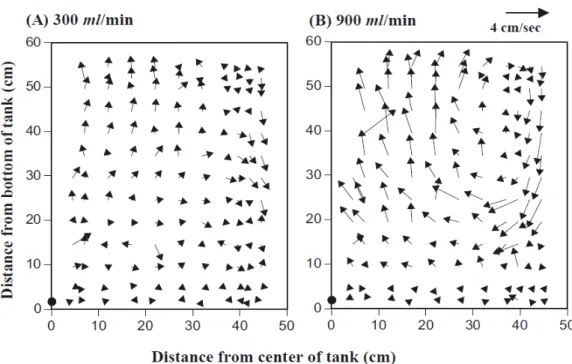
Fig. 1.1 showed the measured flow fields in a 500 l at two air supply rates (300 and 900 ml/ min).
Fig. 1.1. Half of a horizontal, cross sectional view of mean flow velocity in 500 l larval
rearing tanks at air flow rates of (A) 300 and (B) 900 ml/min. The arrows indicate mean flow velocity (length) and direction for a point in the rearing tank. The black circle indicates the location of the aerator at the bottom centre of the tank. The arrow at the top of the figure indicates the speed scale.
Vertical flows were generated as bubbles from the aerator at the centre of the tank bottom rose, dragging water upwards until the bubbles burst at the surface. At the surface, the flow direction changed from vertical to horizontal. Water flowed horizontally across the surface to the side of the tank, and then flowed down the side wall. Upon reaching the bottom, the flow moved towards the centre of the tank, completing the circulatory pattern. Circulation velocity increased and the thickness of the boundary layer between the turbulent zone and the bottom of the tank decreased at
17
higher air supply rate (Fig. 1.1). At 300 ml/min, the boundary layer was 30–40 cm above the bottom, whereas at 900 ml/min the boundary layer was 20–30 cm above the bottom.
Larval sinking velocity
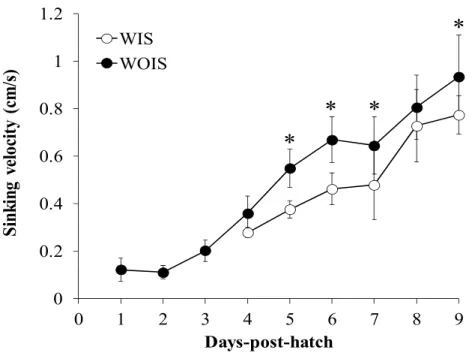
The sinking velocity of larvae increased as the larvae grew (from 0.12 ± 0.05 cm/s 1 dph to 0.20 ± 0.04 cm/s 3 dph) (Fig. 1.2).
Fig. 1.2. Average sinking velocities (cm/s) of Pacific bluefin tuna, Thunnus orientalis larvae with (WIS: white circles) or without (WOIS: black circles)
inflated swimbladder during Trial 2 between 1-9 days–post-hatch. Vertical bars indicate standard deviations. Asterisks indicate significant differences between WIS and WOIS according to age.
At 4 dph, some larvae were found to have inflated swimbladders; their mean sinking velocity was 0.28 ± 0.02 cm/s, whereas the WOIS had a mean sinking velocity
0 0.2 0.4 0.6 0.8 1 1.2 0 1 2 3 4 5 6 7 8 9 Si nk in g velo ci ty ( cm /s ) Days-post-hatch WIS WOIS
*
*
*
*
18
of 0.36 ± 0.07 cm/s (Fig. 1.2). Approximately 6.7 % of larvae completed swimbladder inflation at 4 dph (Fig. 1.3). From 5 dph, the sinking velocities of WOIS were significantly higher than those of WIS. At 9 dph, the sinking velocity was 0.77 ± 0.16 cm/s for WIS and 0.93 ± 0.14 cm/s for WOIS (Fig. 1.2), with the former accounting for 20% of the total number of larvae (Fig.1.3).
Fig. 1.3. Swimbladder inflation frequency, standard length (SL) and total length
(TL) (n=30) in Pacific bluefin tuna, Thunnus orientalis, larvae during larval sinking velocity measurements between 4–9 days-post-hatch.
Estimated danger zone
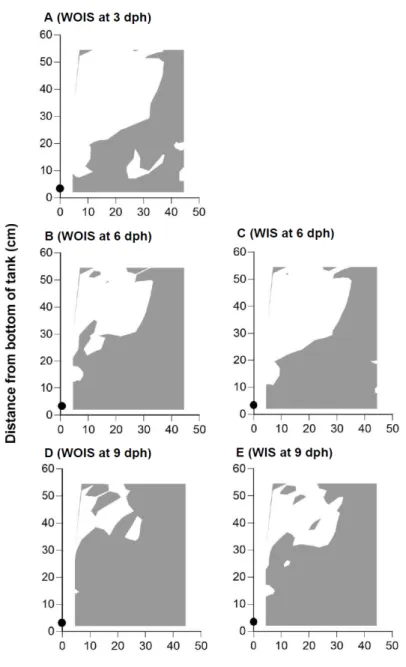
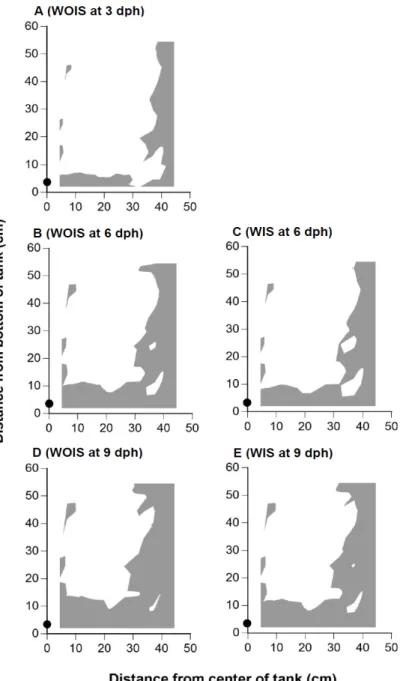
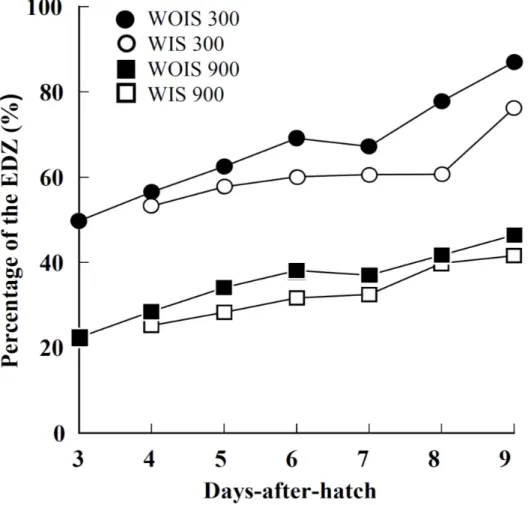
At all air supply rates, the area and the percentages of the EDZ increased with larval growth, additionally, the area and the percentages of the EDZ of WIS tended to be smaller than that of WOIS (Fig. 1.4, 1.5, 1.6). For all dph, the area and the percentages of the EDZ at 300 ml/min air supply rate were much larger than those at 900 ml/min (Fig. 1.4, 1.5, 1.6). 3.0 3.5 4.0 4.5 5.0 5.5 6.0 0 10 20 30 40 50 60 0 1 2 3 4 5 6 7 8 9
SL
a
nd
T
L
(
m
m
)
Sw im bl ad der in fl at io n freq uen cy (% ) Days-post-hatch Swimbladder inflation frequency (%) SL TL19
Fig. 1.4. Half of a horizontal, cross sectional view of the estimated
danger zone (EDZ) at 3, 6, and 9 days-post-hatch (dph) at an air supply rate of 300 ml/min. A: Pacific bluefin tuna, Thunnus
orientalis, larvae without inflated swimbladders (WOIS) at 3 dph;
B: WOIS at 6 dph; C, larvae with inflated swimbladders (WIS) at 6 dph; D, WOIS at 9 dph; E, WIS at 9 dph. Grey areas indicate the EDZ, where larval sinking velocity on each dph was higher than water upward flow velocity. The black circle at the bottom centre indicates the location of the aerator.
20
Fig. 1.5. Half of a horizontal, cross sectional view of the estimated
danger zone (EDZ) at 3, 6, and 9 days-post-hatch (dph) at an air supply of 900ml/min. A: Pacific bluefin tuna, Thunnus orientalis larvae without inflated swimbladders (WOIS) at 3 dph; B, WOIS at 6 dph; C, larvae with inflated swimbladders (WIS) at 6 dph; D,WOIS at 9 dph; E,SB at 9 dph. Grey areas indicate the EDZ, where larval sinking velocity at each dph was higher than water upward flow velocity. The black circle at the bottom centre indicates an aerator.
21
The depth of the EDZ above the tank bottom on 9 dph was 30–40 cm from the tank bottom at 300 ml/min and 10–20 cm from the tank bottom at 900 ml/min (Figs. 1.4, 1.5). There was a significant difference in larval survival between 0 and 300 or 900 ml/min in Trial 1, but not in Trial 2 (Scheffe’s test, P < 0.05).
Fig. 1.6. Percentage of the estimated danger zone (EDZ) relative to the area of the
vertical tank section under different nighttime air supply rate conditions: Pacific bluefin tuna, Thunnus orientalis larvae with inflated (WIS 300, open circle) and without inflated swimbladders (WOIS 300, closed circle) at 300 ml/min; larvae with inflated (WIS 900, open square) and without inflated swimbladders (WOIS 900, closed square) at 900 ml/min.
22 1.4 Discussion
This study demonstrated that the air supply rate during the nighttime plays a role in preventing sinking death among PBT larvae. Larval survival in both trials increased with increasing air supply rate during the nighttime (Table 1.2), although there were a few statistical discrepancies between the trials. These discrepancies may have been caused by differences in the quality of eggs or by small variations in environmental conditions, such as water temperature and dissolved oxygen concentration (Table 1.1). Despite these differences, it was concluded that both experiments demonstrated a clear relationship between PBT larval survival and characteristics of the flow field in the rearing tank.
These results are also consistent with larval survival reported for other aquaculture fish species. Kayaba (2003) reported that aeration reduced mortality in barfin flounder Verasper moseri larvae at early stage settlement. Similarly, larval sinking and survival in seven-band grouper Epinephelus septemfasciatus is related to aerator distribution and air supply rate (Shiotani et al. 2003), and to the pattern of circulation in the rearing tank (Sakakura et al. 2006). Teruya et al. (2009) quantified the flow field that prevented the sinking of amberjack larvae, and Tanaka et al. (2009) demonstrated that the number of sunken PBT larvae was decreased by vertical turbulent mixing of the rearing water through aeration.
It was surmised that higher circulation rates might retain larvae within the water column, thus reducing mortality. This may be a result of the balance between downward larval sinking and upward flow velocities. If this hypothesis is valid, it may be possible to describe typical larval movement based on flow velocity in the tank and
23
larval sinking speed in the following way. In the early stages of development, fish larvae are generally unable to maintain a single position within a water column under normal rearing conditions. Swimming ability increases as larvae grow and PBT larvae swim actively during the day (Kawamura 2003). However, larvae are less active at night and, consequently, sink (Sakamoto 2005; Takashi et al. 2006).
Larvae appear to be less active at night during early developmental stages. As a result, it may be difficult for larvae that sink into the EDZ during the nighttime to re-enter the upper layers. Because increased air supply rates reduce the depth of the EDZ, the risk of larvae sinking into the EDZ might also decrease. Further, higher air supply rates produce stronger horizontal flow, which may move larvae towards the centre of the tank and, thus, back into circulation.
Takashi et al. (2006) have shown that larvae larger than 4.6mm TL have the ability to change their density by swimbladder inflation; however, larval body density is greater than that of rearing water even in WIS. In this study, the sinking velocities of WOIS were significantly higher than those of WIS from 5 dph (4.6 mm TL), and this result are consistent with those of Takashi et al. (2006). Therefore, it follows that WOIS will sink faster, and will have greater risk of sinking death than WIS.
There was a significant difference in larval survival between 300 and 900 ml/min in Trial 1, but not in Trial 2 (Scheffe’s test, P < 0.05). In Trial 2, the higher swimbladder inflation frequency was observed (Table 1.2). Additionally, in this study, the sinking velocities of WOIS were significantly higher than those of WIS from 5 dph. Therefore, the higher swimbladder inflation frequency perhaps contributed to higher larval survival under lower flow conditions (300 ml/min) in Trial 2. Although other factors are likely to affect larval survival, it is clear that increasing the air supply rate
24
during the nighttime increases water circulation, reduces the size of the EDZ (Figs. 1.4, 1.5, 1.6), and enhances PBT larval survival. These results provide insight into the relationship between PBT larval survival and flow field characteristics, as well as techniques to prevent larval sinking death in mass production tanks. Further studies should be examined on flow field and the means of controlling flow field in larger-scale tanks to improve larval survival in mass production of PBT fingerlings.
25 Chapter 2
Influence of initial swimbladder inflation (ISI) failure on survival and vertical distribution in Pacific bluefin tuna, Thunnus orientalis, larvae
2.1 Introduction
Chapter 1 demonstrated that increased air supply rate to rearing water during the nighttime mitigate larval mortality due to sinking death in PBT larviculture. However, larval survival was still low in the experimental and especially in mass-scale PBT larviculture even when nighttime aeration is increased (Sawada 2012). Therefore, further investigation is required in order to develop a method of preventing these deaths more effectively.
PBT larval body density is greater than that of rearing water, even when larvae possess an inflated swimbladder, and is believed to be the primary cause of sinking death during the night-time on ceasing swimming (Takashi et al. 2006). On the other hand, swimbladder is an important organ which controls buoyancy by reducing fish body density relative to that of surrounding water (Magnuson 1978; Itazawa 1991; Alexander 1993). Body density of the larvae with inflated swimbladder (WIS) is lower than that of the larvae without inflated swimbladder (WOIS) at every ontogenetic stage in PBT (Takashi et al. 2006) as reported in striped trumpeter, Latris lineata (Bloch and Schneider), (Trotter et al. 2005b). Additionally, Chapter 1 demonstrated that WOIS sink faster than WIS, and suggested that WOIS have a greater risk of sinking death than WIS in PBT larvae even when the flow control to prevent the sinking death is employed during the nighttime. Therefore, success of ISI during the larval stage and subsequent
26
normal swimbladder development is considered to be important biological factors capable of contributing to larval survival improvement by prevention of sinking death via control of body density. Indeed, poor survivals in cohorts with low swimbladder inflation frequency have often been observed in PBT mass-scale larviculture in our hatchery. In addition, for all the above mentioned species with the exception of barfin flounder, a species which lacks a swimbladder, the relationship between larval swimbladder inflation and vertical distribution within rearing tanks has not yet been investigated.
In this study, the ability of two methods (Experiment 1, Experiment 2) to prevent mass mortality caused by sinking death were evaluated in order to develop more effective rearing methods for use in mass-scale larviculture. In Experiment 1, the influence of ISI failure on survival in early larval stage PBT in a mass-scale tank was examined, while in Experiment 2, whether WOIS actually had a greater tendency to sink than WIS in experimental and mass-scale tanks was determined through the examination of larval vertical distribution. In this study, the influence of ISI failure on larval growth was also examined.
2.2 Materials and methods
Eggs and larvae
Fertilized PBT eggs were obtained from the spontaneous spawning of cultivated PBT brood stock fish in a sea net-cage at the FLKU. Eggs were introduced into experimental tanks and incubated at 24°C prior to hatching. Hatched larvae were reared at 25.0°C prior to commencement of feeding at 2 days-post-hatch (dph). To
27
prevent larval surface death, approximately 1.0 to 1.5 ml of feed oil (Fish oil for fish feed: Nice Feed Oil DA-22; Ueda Oils and Fats Mfg Co. Ltd., Kobe, Japan) was deposited onto the surface of rearing water daily from the time of hatching (0 dph) up until 2 dph in order to form a surface film according to the ordinary PBT larviculture procedure in our laboratory.
Experiment 1
Experiment 1 was conducted in order to elucidate the influence of ISI failure on survival in early larval stage PBT within a mass-scale tank. During Experiment 1, two trials (Trial 1 and Trial 2), which differed with respect to tank volume and shape, were carried out using different batches of fertilized eggs at the Ohshima Hatchery, Fish Nursery Center, Kinki University.
Eggs were introduced into quadrangular concrete 20 kl tanks (4.5 m × 4.5 m × 1.0 m depth) in Trial 1, and circular fiberglass 30 kl tanks (6.0 m internal diameter, 1.1 m depth) in Trial 2 at a density of 5000 eggs/kl. Resulting larvae were subjected to rearing experiments within those tanks beginning 2 dph until the end of the experiment (9 dph in Trial 1, 8 dph in Trial 2).
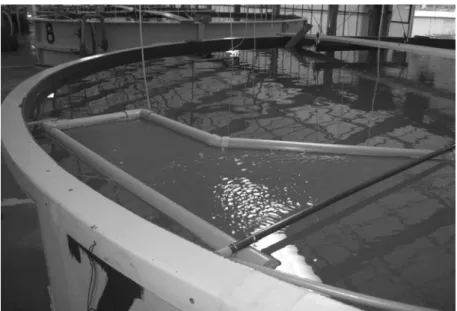
PBT larvae were reared using the following two types of treatment during both trials: one treatment in which ISI was promoted by removing the surface film on rearing water using a surface skimmer (Fig. 2.1) from the period 3 dph until the end of the experiment (PS group) and another treatment lacking ISI promotion by allowing the surface film formation on rearing water without employing the surface skimmer from 3 dph to the end of the experiment (NPS group). Swimbladder inflation frequency and larval survival were compared between PS and NPS groups.
28
Fig. 2.1. Surface skimmer for the surface film removal on
rearing water used in Experiment 1.
In Trial 1, two iterations with two replicates per treatment were carried out (n = 4) using different batches of fertilized eggs. Hatching rates of each fertilized eggs used in each iteration were 93.6% and 93.9% respectively. In Trial 2, a single iteration with two replicates per treatment was carried out (n = 2). Hatching rates of fertilized eggs used in Trial 2 was 93.2%.
Larvae were fed S-type rotifers Brachionus plicatilis sp. complex (Hagiwara et al. 2007), enriched for 18 h with Nannochloropsis oculata of 1.5 × 10⁷ cells/ml, a commercial product (Marine Glos EX, Nisshin Marinetech Co. Ltd., Yokohama, Japan), and taurine (Japan Nutrition Co., Ltd., Tokyo, Japan) of 0.4 g/l, from 2 dph onwards, and were reared under a natural photoperiod (14 h light period: 5:00 to 19:00). In addition to the N. oculata used in enrichment of rotifer, it was added to the rearing water from 2 dph to the end of experiment.
Aeration was achieved using four air stones with air-flow rates of 1.7 l/min/air stone- placed on tank bottom at the center of each tank bottom in both trials. At night
29
(19:00 to 5:00), 8 and 12 additional air stones with air-flow rates of 3.0 l/min/air stone were placed evenly at the bottom of tanks in trial 1 and 2, respectively, from 2 dph until the end of the experiment in order to prevent sinking deaths resulting in mass mortality (Tanaka et al. 2009).
Other rearing conditions employed during Experiment 1 were as follows; Trial 1: temperature, 26.5 ± 0.1°C; dissolved oxygen, 101 ± 3.5%; salinity, 31.9 ± 0.4; pH, 7. 8 ± 0.2, and Trial 2: temperature, 26.5 ± 0.1°C; dissolved oxygen, 105 ± 3.1%; salinity, 32.1 ± 0.5; pH, 7.9 ± 0.3.
Experiment 2
Experiment 2 examined the relationship between vertical larval distribution and swimbladder inflation frequency in order to determine whether WOIS have a stronger tendency to sink to tank bottom than WIS.
Swimbladder inflation frequency and distributional density of larvae within sampling water were compared among larvae sampled within the upper (Upper larvae) and middle layers of experimental tanks (Middle larvae) as well as larvae sampled at tank bottom (Bottom larvae). Examinations were taken within three circular fiberglass 1.6 kl tanks (1.4 m internal diameter, 1.0 m water depth) and a single circular fiberglass 30 kl tank (6.0 m internal diameter, 1.1 m water depth) at night (21:00) 5 dph, when density of sunken larvae at tank bottom was highest (Tanaka et al.2009).
Within three circular fiberglass 1.6 kl tanks, larvae were sampled using a siphon tube made of soft PVC hose and PVC pipe (13 mm inner diameter). Upper and Middle larvae were sampled along a tank diameter within the upper (approximate depth of 15 cm) and middle (approximate depth of 55 cm) layers of the rearing water column,
30
respectively. Bottom larvae were sampled along a line representing the diameter of the bottom face of the tank. In order to eliminate rearing water flow, aeration and sea water in letting were stopped 30 min prior to sampling within each of the three replicate tanks.
Within a 30 kl tank, larval sampling was conducted without elimination of the flow of rearing water under continuous aeration and sea water inletting. Sampling methodology was otherwise consistent with that used in the sampling of larvae within 1.6 kl tanks.
Eggs were introduced into three 1.6 kl tanks (n = 3) and a single 30 kl tank at a density of 5000 eggs/kl. Resulting larvae were reared prior to sampling at 5 dph. Rearing methodology used was the same as that used for the PS group in Experiment 1 with the exceptions being the aeration methods employed within 1.6 kl tanks and the running of a surface skimmer in both 1.6 kl and 30 kl tanks, both of which are outlined below.
In 1.6 kl tanks, aeration was provided by air stones with air-flow rates of 150 ml/min located at the center of each tank's bottom. Additionally, an air stone with an air-flow rate of 1300 ml/min was added near the center of each tank every night from 2 dph through to 5 dph in order to mitigate sinking death fatalities. A surface skimmer was employed from 3 dph through to 5 dph in order to promote ISI; however, it was used with restraint in order to generate cohorts consisting of WIS and WOIS for the experiment.
Other rearing conditions employed during Experiment 2 were as follows; 1.6 kl tanks: temperature, 26.6 ± 0.1°C; dissolved oxygen, 96.3 ± 4.2%; salinity, 32.3 ± 0.4; pH, 7.7 ± 0.1; 30 kl tank: temperature, 26.8 ± 0.2°C; dissolved oxygen, 104.3 ± 3.7%; salinity, 31.3 ± 0.1; pH, 7.9 ± 0.2.
31 Measurements and observations
Experiment 1
Thirty larvae were sampled in order to determine swimbladder inflation frequency. Larval sampling was conducted at night (21:00–22:00) because PBT larvae deflate the swimbladder in daytime (Takashi et al. 2006) and this makes it difficult to determine the correct swimbladder inflation frequency. Fifteen and twenty larvae were also sampled during Trials 1 and 2, respectively, in order to measure standard length (SL: length from the rostral tip to the end of the notochord) within each tank at 6 and 9 dph (Trial 1), and at 5 and 8 dph (Trial 2). Larval swimbladder inflation was determined through observation under a stereomicroscope. SL was measured using digital images of samples taken with a digital camera (Moticam 2000, Shimadzu Rika Corp., Tokyo, Japan) and processed using a software package developed for image analysis (Motic Images Plus 2.2s, Shimadzu Rika Corp., Tokyo, Japan).
Survival at 9 dph (Trial 1) and 8 dph (Trial 2) was estimated using the volumetric method (Abdo-de la Parra et al. 2010; Yoseda et al. 2008) with a handcrafted PVC columnar sampler (105 mm in diameter, 1200 mm in length). Larvae were sampled with the surrounding water at three points of each rearing tanks with enhanced aeration at night (21:00–22:00) and counted within sampled water. Survival rate was calculated using the following equation:
Survival rate (%) = 100 × Ls / Ws× Wt / Li
where Ls represented the number of larvae sampled by the columnar sampler, Ws represented the total volume of sampled water, Li represented the number of larvae at
32
the commencement of the rearing experiment, and Wt represented the volume of rearing water within the tank. In the present study, Li was obtained using the number of introduced eggs and the hatching rate mentioned previously.
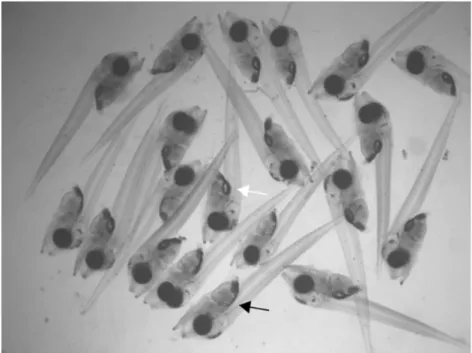
Fig. 2.2. Larvae sampled at night on 6 days-post-hatch. White and black
arrows show the larvae with and without inflated swimbladder respectively.
Experiment 2
Twenty larvae were determined for swimbladder inflation frequency, and 10 larvae were measured SL for Upper, Middle and Bottom larvae in each1.6 and 30 kl tank. Observation of swimbladder inflation and SL measurement were carried out using the methodology outlined for Experiment 1.
33 Statistical analysis
A Welch's t-test and a Wilcoxon–Mann–Whitney test were employed in order to test for significance of differences in survival and swimbladder inflation frequency between PS and NPS groups in Experiment 1.
A Tukey–Kramer test was used to test for significance in the differences of swimbladder inflation frequency among Upper, Middle and Bottom larvae, and a Steel– Dwass test was used to test for significance in the differences of larval distributional density of Upper, Middle, and Bottom larvae within sampling water in Experiment 2. The Pearson product moment correlation coefficient was used in order to measure the strength of the relationship between swimbladder inflation frequency and survival in Experiment 1. Statistical analyses were performed using statistical software (Kyplot 5.0 for Windows, KyensLab, Tokyo, Japan). In the present study, P < 0.05 was used as the criteria of significant difference in these tests.
2.3 Results
Experiment 1
In Trial 1, larval SL was significantly greater in the PS group than it was in the NPS group at 6 (P = 0.017, n = 60) and 9 dph (P = 0.009, n = 60). Swimbladder inflation frequency was 97% and 99% in the PS group at 6 and 9 dph, respectively. Results from the NPS group were significantly lower at both 6 (22%, P = 0.002, n = 4) and 9 dph (19%, P = 0.001, n = 4; Table 2.1). Survival rate at the end of experiment was significantly higher in the PS group than in the NPS group (P = 0.013, n = 4; Table 2.1).
34
Table 2.1. Swimbladder inflation frequency, growth rate and survival of Pacific bluefin tuna, Thunnus orientalis, larvae in each experimental group within 20 kl tanks (Experiment 1, Trial 1)
Values of swimbladder inflation frequency and survival rate are presented as means with standard deviation (n = 4).
Values of standard length are presented as means with standard deviation (n = 60). Different lower case letters indicate significant differences within each days-post-hatch (dph, P < 0.05).
Table 2.2. Swimbladder inflation frequency, growth rate and survival of Pacific bluefin tuna, Thunnus orientalis, larvae in each experimental groups within 30 kl tanks (Experiment 1, Trial 2)
Values of swimbladder inflation frequency and survival rate presented here were obtained from each tank (n = 2) and represent PS and NPS groups.
Values of standard length are presented as means with standard deviation (n = 40).
Different lower case letters indicate significant differences within each days-post-hatch (dph) in standard lengths (P < 0.05).
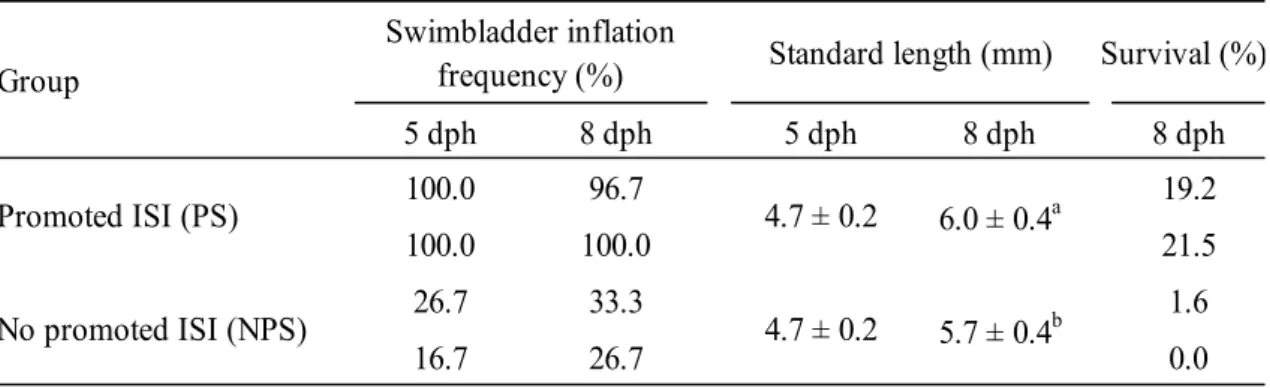
In Trial 2, SL was significantly greater in the PS group than it was in the NPS group at 8 dph (P = 0.001, n = 40), while no significant difference in SL was found between the two groups at 5 dph (Table 2.2). Swimbladder inflation frequency at 6 and Survival (%) 6 dph 9 dph 6 dph 9 dph 9 dph Promoted ISI (PS) 96.8 ± 3.7a 99.2 ± 1.7a 5.3 ± 0.3a 6.2 ± 0.4a 26.0 ± 9.1a No promoted ISI (NPS) 22.0 ± 16.6b 19.1 ± 11.5b 5.1 ± 0.3b 6.1 ± 0.3b 8.3 ± 4.7b Swimbladder inflation
frequency (%) Standard length (mm) Group Survival (%) 5 dph 8 dph 5 dph 8 dph 8 dph 100.0 96.7 19.2 100.0 100.0 21.5 26.7 33.3 1.6 16.7 26.7 0.0 Promoted ISI (PS) 4.7 ± 0.2 6.0 ± 0.4a No promoted ISI (NPS) 4.7 ± 0.2 5.7 ± 0.4b Group Swimbladder inflation
35
9 dph, and the survival rate at 9 dph were higher in the PS group than they were in the NPS group (Table 2.2).
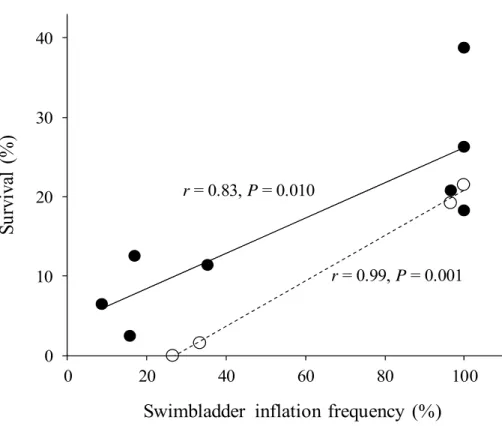
Fig. 2.3. Relationship between survival and swim bladder inflation frequency in
Pacific bluefin tuna, Thunnus orientalis, larvae within 20 kl tanks (Trial 1) and 30
kl tanks (Trial 2). Black circles along with a solid regression line, and white circles
along with a dashed regression line show the relationship between survival and swimbladder inflation frequency at 9 dph in 20 kl tanks (Trial 1, n = 8) and at 8 dph in 30 kl tanks (Trial 2, n = 4), respectively. r = Pearson's product moment correlation coefficient.
A strong significant correlation was found between swimbladder inflation frequency and survival at the end of each trial. Pearson's product moment correlation coefficient between swimbladder inflation frequency and survival was 0.83 (P = 0.01, n = 8) in Trial 1, and 0.99 in Trial 2 (P = 0.001, n = 4) (Fig. 2.3).
0 10 20 30 40 0 20 40 60 80 100 Su rv iv al ( % )
Swimbladder inflation frequency (%)
r = 0.99, P = 0.001 r = 0.83, P = 0.010
36 Experiment 2
Within the 1.6 kl tanks, larval density in the sampling water (ind./l) of Bottom larvae was greater than that of Upper and Middle larvae, although differences among larval groups were not statistically significant at night 5 dph (n = 3; Table 2.3).
Table 2.3. Swimbladder inflation frequency, larval density in sampling water, and standard length in
Upper, Middle, and Bottom Pacific bluefin tuna, Thunnus orientalis, larvae at night in 5 days-post-hatch within 1.6 kl tanks and a 30 kl tank
Upper and Middle larvae were sampled from the upper and middle layers of the rearing water column, respectively, while Bottom larvae were sampled at tank bottom.
Values of swimbladder inflation frequency and larval density in sampling water are presented as means with standard deviations for both 1.6 kl tanks (n = 3) and a values of those for a 30 kl tank (n = 1). Different lower case letters indicate significant differences (P < 0.05).
Values of standard length are presented as means with standard deviations (n = 30 for 1.6 kl tanks and n = 10 for a 30 kl tank).
Swimbladder inflation frequency of Bottom larvae was significantly lower than that of Upper (P = 0.010, n = 3) and Middle larvae (P = 0.0002, n = 3), and swimbladder inflation frequency of Middle larvae was significant higher than that of Upper larvae (P = 0.005, n = 3; Table 2.3). Patterns of larval density and swimbladder inflation frequency at 5 dph within the 30 kl tank were similar to those observed in the 1.6 kl tanks (Table 2.3). 1.6 kl 30 kl 1.6 kl 30 kl 1.6 kl 30 kl Upper larvae 42.1 ± 9.7a 45.0 1.0 ± 0.4 0.8 4.4 ± 0.2 4.5 ± 0.3 Middle larvae 81.4 ± 10.8b 50.0 0.5 ± 0.2 0.6 4.6 ± 0.3 4.5 ± 0.3 Bottom larvae 7.0 ± 7.6c 26.3 7.8 ± 2.0 4.7 4.3 ± 0.4 4.3 ± 0.4 Swimbladder inflation frequency (%) Larval density in sampling water (ind./l ) Standard length (mm)
37
No significant differences were found in SL among larval groups within the 1.6 kl tanks and the 30 kl tank at 5 dph (Table 2.3).
2.4 Discussion
This study demonstrated that larval ISI failure reduces survival in PBT larviculture in mass production tanks, even when flow field was controlled by aeration that enhanced vertical circular current in order to prevent larval sinking. This study also indicated that swimbladder inflation frequency was significantly lower at night within larvae found at tank bottom than it was within larvae in both the upper and middle layers of the rearing water column. These results suggest that reduction of larval survival due to ISI failure caused by associated increases in the sinking death ratio of larvae exhibiting incomplete swimbladder inflation.
During weaning of sea bass, Dicenrrarchus labrax (Linnaeus), juveniles, selective mortality of individuals without inflated swimbladders has been observed, and a direct relationship between swimbladder inflation frequency and survival has been shown (Chatain 1989; Chatain and Dewavrin 1989). Failure of ISI during the larval stage has also been shown to reduce survival in both Black Sea turbot, Scophthalmus maeoticus maeoticus (Pallas), and zebrafish, Danio rerio (Hamilton) (Spectorova and Doroshev 1976; Goolish and Okutake 1999).
Although PBT larval body density is greater than that of rearing water even with inflated swimbladder, it has been demonstrated that body density of PBT larvae decreases along with swimbladder inflation at every ontogenetic stage (Takashi et al.
38
2006). Moreover, Chapter 1 demonstrated that WOIS sink faster than WIS, and suggested that WOIS have a greater risk of sinking death than WIS in PBT larvae even when the flow control to prevent the sinking death is employed during the nighttime. Therefore, ISI success during the larval stage and subsequent normal swimbladder development is seem to be crucial for improvement of PBT larval survival by prevention of sinking death via low body density.
On the other hand, Tanaka et al. (2009), who have demonstrated that distributional density of sunken larvae on tank bottom peaks at 5 dph, had a converse view with ours about that the larval sinking is the ordinary event in the rearing tanks, not due to the developmental defect of swimbladder, because swimbladder volume was not correlated with larval body density due to its relatively small size at 5 dph, and the fact that this peak in distributional density coincided with the timing of the consumption of a yolk and oil globule that is known to have an effect on buoyancy. In Experiment 1 of this study, however, it was determined that survival and swimbladder inflation frequency at the end of the experiment in the NPS group were significantly lower than they were in the PS group within 20 kl tanks (Trial 1), and that a similar pattern was observed in swimbladder inflation and survival within 30 kl tanks (Trial 2). Moreover, a strong significant correlation was found between survival and swimbladder inflation frequency at the end of the experiment in both trials of this study.
Regarding on the relationship between larval simbladder inflation and their vertical distribution, in Experiment 2 of this study, larvae with low swimbladder inflation frequencies were found distributed along the tank bottom with high distributional density. This result suggests the presence of sunken larvae at tank bottom as shown by Tanaka et al. (2009). Moreover, this result demonstrates that WOIS indeed
39
have a stronger tendency to sink to tank bottom than WIS. Although body densities of the larvae sampled in Experiment 2 were not examine in this study, the greater body density and faster sinking velocity in WOIS than those in WIS described above would presumably lead to larval sinking to tank bottom in Experiment 2. The presence of sunken larvae at tank bottom with survival reduction was also observed in Black Sea turbot, and zebrafish, (Spectorova and Doroshev 1976; Goolish and Okutake 1999). These results imply that the three species mentioned above share sinking death due to ISI failure as common process of larval mortality.
Chapter 1 demonstrated that increased air supply rate to rearing water during the nighttime mitigate larval mortality due to sinking death in PBT larviculture. Tanaka et al. (2009) have also shown that distributional density of PBT sunken larvae at tank bottom was reduced significantly more during the night in a 50 kl mass-scale tank when flow was enhanced by both aeration and a water pump than it was when only a water pump was employed. These results indicate the effectiveness of flow control of rearing water in the prevention of PBT larval sinking. However, the results of Experiment 1 were obtained despite aeration being enhanced overnight through the use of 8 air stones in Trial 1, and 12 air stones in Trial 2 in mass-scale production tanks.
Based on the discussion above, it was concluded that ISI failure resulted in reduced larval survival via increases in sinking death ratio in mass-scale production tank, even if preventive measure of sinking death using flow control was employed.
Mass mortalities in PBT larviculture during the early larval stage have been considered to cause by both surface death and sinking death. Surface death can be effectively prevented by surface film such as oil film, while it is encouraged by surface film removal to promote ISI (Yamaoka et al. 2000; Kaji et al. 2003). In Experiment 1,
40
indeed, more larval surface death was observed in PS group with surface film removal than NPS group without surface film removal. Therefore, the mortality due to surface death was expected to be higher in PS group than in NPS group in Experiment 1.
However, the results of Experiment 1 showed higher survival in PS group than in NPS group. Although allocation mortality by sinking death and surface death remained unclear in Experiment1, the mortality due to sinking death via ISI failure would presumably surpassed the difference of mortality due to surface death between PS and NPS groups in Experiment 1. Other authors have same opinion that sinking death is more serious problem than surface death and largely affect survival in early stage larviculture (Sakamoto et al. 2005; Miyashita 2006; Tanaka et al. 2009).
In Experiment 1 of this study, swimbladder inflation frequency in the PS group reached a plateau of almost 100% at 6 dph in Trial 1 and 5 dph in Trial 2; however, swimbladder inflation frequency in the NPS group was approximately 22% at 6 and 5 dph in Trial 1and Trial 2 respectively. Tanaka et al. (2009) have demonstrated that the distributional density of PBT larvae settled at tank bottom is highest at around 5 dph. These results suggest that high swimbladder inflation frequency in the PS group at 6 (Trial 1) and 5 dph (Trial 2) contributed to increases in larval survival by preventing larval sinking. For PBT larvae, rapid increase in swimbladder inflation frequency towards 5 dph is likely to be important to effectively prevent larval mortality caused by sinking death.
Although further investigation is necessary to elucidate the effectiveness of flow control within mass-scale production tank on larval survival and selecting suitable tank shape in relation to ISI failure, this study suggested that larval survival should also be
41
improved by mitigation of sinking death through larval ISI success, without depending only on flow control, in mass-scale PBT larviculture.
In Experiment 1, larval SL was significantly larger in the PS group than it was in the NPS group at 6 and 9 dph in Trial 1, and at 8 dph in Trial 2; however, no difference was observed in SL between both experimental groups at 5 dph in Trial 2. In Experiment 2, no significant difference was found among SL in Upper, Middle and Bottom larvae at 5 dph within both the 1.6 kl and the30 kl tank. These results suggested that the larval growth retardation due to ISI failure appeared at 8–9 dph, although it was varied and not clear at 5 dph. Growth retardation in PBT larvae due to ISI failure may be apparent after 5 dph; however, these results should be confirmed through further investigation.
In conclusion, larval ISI failure reduces survival in PBT larviculture; therefore, more suitable method to promote larval ISI should be developed to improve larval PBT survival in the hatchery.
42 Chapter 3
Promotion of initial swimbladder inflation (ISI) in Pacific bluefin tuna,
Thunnus orientalis, larvae
3.1: Conditions of water surface and optimal period to promote ISI in Pacific bluefin tuna, Thunnus orientalis, larvae
3.1.1 Introduction
Chapter 1 demonstrated that the larvae without inflated swimbladder (WOIS) sink faster than the larvae with inflated swimbladder (WIS), and suggested that WOIS have a greater risk of sinking death than WIS in PBT larvae even when the flow control to prevent the sinking death is applied. Additionally, Chapter 2 demonstrated that larval ISI failure indeed increase larval mortality due to sinking death via contributing larval sinking to tank bottom in PBT larviculture in mass production tanks. Moreover, the results of Chapter 2 suggested that ISI failure cause larval growth retardation. Therefore, the development of suitable method to promote larval ISI is considered to be crucial to improve larval PBT survival and growth in the hatchery.
Physoclistous fishes have physostomous swimbladder in the early larval stage. Such fish larvae (transient-physostomes) are considered unable to initially inflate their swimbladder if they cannot gulp atmospheric air by swimming up to the water surface covered by surface film originating from enriched oily live feeds, larval feces, and dead larvae in the practical production and by a liquid-paraffin-layer under experimental
43
condition (Kitajima et al. 1981, 1994; Chatain and Ounais-Guschemann1990; Trotter et al. 2005a).
In the practical larviculture of various aquaculture species, the surface skimmer has also been used to remove surface film for the promotion of ISI thereby making it possible for larvae to make contact with the air (Chatain and Ounais-Guschemann 1990; Battaglene et al. 1994; Moretti et al. 1999). Additionally, the period for air gulping to achieve ISI, i.e., the period when effective promotion of ISI is possible (so-called “window”), is finite and species specific (Bailey and Doroshov 1995; Friedmann and Shutty 1999; Trotter et al. 2005a; Kitajima et al. 1981). However, suitable promotional methods and the “window” for ISI have not yet been investigated in PBT larvae.
On the other hand, making oil film on the water surface is carried out in practical PBT larviculture to prevent surface death on an empirical basis (Munday et al. 2003). Therefore, If PBT larvae require the air gulping at water surface to achieve their ISI as other fish species, the promotion measure of ISI and the prevention measure of surface death by making the surface oil film will conflict each other in larviculture. To assess this conflict, detailed information is necessary on both the promotional and inhibitory conditions of water surface for ISI and identification of the “window” for ISI i.e., optimal period for the effective promotion of ISI.
Therefore, this study aimed to verify the promoting effect of surface film removal using surface skimmers and the inhibitory effect of the coverage of water surface with liquid-paraffin-layer or oil film on ISI (Experiment 1), and to elucidate the proper day of larval age to start skimming for promoting ISI with four different periods of oil film removal (Experiment 2), and to elucidate the essential period for ISI promotion with four different periods of oil film removal (Experiment 3). Moreover, the
44
effect of oil film removal on the incidence of surface death in the PBT larviculture was investigated in relation with the window for ISI in Experiment 2. In this study, the influence of ISI failure on larval growth was also examined continuing from Chapter 2.
3.1.2 Materials and methods
Larvae and larval rearing
The PBT larvae used in the present study hatched from the eggs spontaneously spawned by cultivated PBT bloodstock fish in a sea net-cage at the FLKU. The eggs were introduced into cylindrical fiberglass tanks (1.0 kl; 135 cm in internal diameter: Fig. 3.1.1) at density of 6000 eggs per tank, and incubated in 23°C until hatching. They had a high normal hatch rate of 94.8% and 93.0% both in Experiment 1 and Experiment 2. Hatched larvae were reared at 25.0°C until the commencement of feeding on 2 days-post-hatch (dph) and were subsequently subjected to the rearing experiment in the same tanks. The dph was defined to hatching day as 0 dph.
45
The larvae were fed rotifers (Brachionus plicatilis sp. complex) enriched with a commercial product (Marine Glos, Nisshin Marinetech Co. Ltd., Yokohama, Japan) from 2 dph onwards, and were reared under natural and artificial fluorescent lighting (05:00–18:30; a 40 W lamp per tank). Air was supplied using an air stone with air-flow rate of 130 ml/min at the bottom centre of the rearing tanks. In this study, the aeration was increased to prevent sinking deaths which caused mass mortality at night
(Sakamoto et al. 2005; Takashi et al. 2006; Ishibashi et al. 2009; Tanaka et al. 2009), i.e. an air stone with air-flow rate of 1200 ml/min was added (18:00–05:30) at the bottom centre of the rearing tanks from 2 dph to the end of the experiment. Other rearing conditions in the experimental period were as follows: salinity, 31.5–33.1 (Experiment 1), 30.2–31.7 (Experiment 2), 30.5–33.0 (Experiment 3); dissolved oxygen, > 89.6% (Experiment 1), >95.2% (Experiment 2), >98.1% (Experiment 3); pH, 7.9–8.3
(Experiment 1), 7.8–8.1 (Experiment 2), 7.8–8.3 (Experiment 3); temperature, 26.5 ± 0.1°C (Experiment 1), 26.5 ± 0.1°C (Experiment 2), 26.5 ± 0.1°C (Experiment 3).
Experimental design Experiment 1
The PBT larvae were reared with the following four treatment: removing autogenous surface filmformed during larval rearing with surface skimmer (SS group), covering the water surface with liquid-paraffin layer (LP group; HI-CALL K-300, Kaneda Co., Ltd., Tokyo, Japan) and oil film (OF group; Nice Feed Oil DA – 22; Ueda Oils and Fats Mfg Co. Ltd., Kobe, Japan), and non-treatment to the water surface (NT group) as a control. The rearing experiment was carried out in triplicates from 2 to 10 dph. The SS group was designed to verify the promoting effect of removing autogenous