Community Capacity and Governance –
New Approaches to Development and
Evaluation
By
Cindy Lyn BANYAI
61107008
April 2007-March 2010
Dissertation Presented to the Higher Degree Committee
Of Ritsumeikan Asia Pacific University
In Partial Fulfillment of the Requirements for the Degree of
Doctor of Philosophy in Asia Pacific Studies
ii
Acknowledgments
There are so many people that have helped me on the journey through this dissertation, it would be impossible for me to name them all. I give my gratitude to all those who have helped me along the way at APU and elsewhere.
Specifically, I would like to start by thanking my professor, Koichi Miyoshi. Professor Miyoshi has provided me with an abundance of guidance and opportunities to grow academically and professionally. I am grateful for all that he has done for me.
Next, I would like to thank Mayor Marlon Sales and the community in Pagudpud for allowing me to explore their community. Mayor Sales gave me endless support during my field work in Pagudpud and I appreciate his willingness and openness to participate in this study. I would also like to thank the people of Pagudpud, who were warm and open to me and my ideas and who provided me with one of the most rewarding experiences of my life.
I need to also thank my parents for their support of my education from the beginning and for specifically giving me editorial guidance on this work. Like everything else that you have given me in life, I am eternally grateful.
I would like to thank my colleague, Naomi Stenning, who traveled with me on our first field work experience, worked with me, presented at conferences with me, and generally was there as a friend. I hope that we run into each other again sometime and somewhere.
Another classmate that I would like to thank is Ana Puatu. Ana assisted me with all things Filipino while we were in Japan and she connected me with an Ilocano translator. I appreciate her support.
Finally, I would like to thank my wonderful husband Andrew Banyai. Andrew helped with editing and supported my work in every way possible. Without him it would have been difficult for me to complete this daunting task and we would not have had the extra push from our lovely daughter, Ani. Thank you both and lots of love.
iii
Table of Contents
1. Introduction ... 1
1.1. Research Problem and Questions ... 1
1.2. Objective ... 3
1.3. Significance ... 3
1.4. Conceptual Framework ... 3
1.5. Outline of work ... 5
2. Development, Community, Social Capital, and Community Capacity ... 7
2.1. Development ... 9
2.1.1. Economic Development and Poverty Alleviation ... 11
2.1.2. Alternative development ... 13 2.1.3. Rural development ... 20 2.1.4. Community Development ... 23 2.2. Community ... 24 2.3. Social Capital ... 27 2.4. Community Capacity ... 34
2.4.1. Characteristics of Community Capacity ... 40
2.4.1.1. Sense of Community ... 40
2.4.1.2. Commitment ... 41
2.4.1.3. Ability to Solve Problems ... 41
2.4.1.4. Access to Resources ... 41
2.4.2. Levels of Social Agency ... 42
2.4.3. Community Functions and Other Outcomes... 42
2.4.4. Conditioning Influences ... 43
2.4.5. Importance of Community Capacity ... 44
2.5. Community Capacity Building Strategies ... 45
2.5.1. Leadership Development ... 47
2.5.2. Organizational Development ... 48
2.5.3. Community Organizing ... 50
2.5.4. Inter-organizational Collaboration ... 51
iv
3. Governance and Public Administration ... 54
3.1. Governance ... 55
3.1.1. Democracy and participatory governance ... 60
3.1.2. Local governance ... 63
3.1.3. Decentralization and localization ... 64
3.2. Public Administration ... 69
3.2.1. Public Administration Tools ... 71
3.2.1.1. The Management Cycle ... 71
3.2.2. The Logic Framework... 72
3.2.3. Evaluation ... 74
3.3. Chapter Summary ... 79
4. Data Collection Methods ... 81
4.1. Epistemology ... 81
4.1.1. Qualitative Research ... 83
4.1.2. Action Research ... 84
4.2. Data Gathering Techniques ... 87
4.2.1. Case Studies ... 87 4.2.2. Observation ... 88 4.2.3. Photography ... 88 4.2.4. Focus Groups ... 89 4.2.5. Interviews ... 89 4.2.6. Surveys ... 90 4.3. Chapter Summary ... 91 5. Conceptual Development ... 95 5.1. Community ... 95 5.2. Community Capacity ... 99
5.2.1. The A-A-A Framework... 99
5.2.2. Community Capacity Attributes ... 102
5.2.2.1. The Sense of Community of Imori-dani ... 104
5.2.2.2. The Commitment to Ajimu ... 108
v
5.2.2.4. Recognizing the Resources of Bungotakada ... 114
5.2.2.5. Community Capacity and Rural Development ... 117
5.2.3. Community Agents ... 120
5.2.3.1. Community Leadership ... 121
5.2.3.1.1. Himeshima ... 124
5.2.3.1.1.1. Before the development of Himeshima ... 125
5.2.3.1.1.2. The era of Mayor Kumao Fujimoto 1960 – 1984 ... 128
5.2.3.1.1.3. The era of Mayor Akio Fujimoto 1984 – present ... 133
5.2.3.1.1.4. Implications from Himeshima ... 138
5.2.4. Community Actions ... 141
5.2.5. Contextual Influences ... 142
5.3. Community-driven economics ... 147
5.4. Chapter Summary ... 149
6. Localization and Evaluation ... 151
6.1. Localization ... 151
6.1.1. Localization of evaluation... 152
6.1.1.1. Strengthening the Evaluation System of Nepal... 155
6.1.1.2. The Localization of Evaluation of MDGs in the Philippines ... 158
6.1.1.3. Recap of Localization... 159
6.2. Crucial Issues with Evaluation in Developing Countries ... 160
6.2.1. Evaluation Capacity ... 161
6.2.2. Evaluation and the Policy Management Cycle ... 162
6.2.3. Evaluation Culture ... 163
6.2.4. Coordination with and Involvement of Stakeholders ... 164
6.2.5. Legal Framework and Organizational Structures ... 165
6.3. Evaluation Improvements ... 166 6.3.1. Asset-based Assessment ... 166 6.3.2. Qualitative evaluation ... 168 6.3.3. Participatory Evaluation... 169 6.3.4. Concept-driven evaluation ... 171 6.4. Chapter Summary ... 171
vi
7. Pagudpud Case ... 173
7.1. Background on the Philippines ... 173
7.2. Background on Pagudpud ... 175
7.3. Pagudpud’s Policy Structure ... 176
7.4. Community Capacity Assessment ... 185
7.4.1. Focal Point Questionnaires ... 186
7.4.1.1. Focal Point Questionnaire Results ... 191
7.4.1.1.1. Attributes ... 191
7.4.1.1.2. Agents... 192
7.4.1.1.3. Actions ... 193
7.4.1.1.4. Contextual Influences ... 194
7.4.2. Interviews ... 195
7.4.2.1. Villamor Ramos Calventas... 201
7.4.2.2. Lourdes Farriano ... 204 7.4.2.3. Marlita Lagundino ... 205 7.4.2.4. Warly Manigdig ... 206 7.4.2.5. Demesthines Ravelo ... 207 7.4.2.6. Marlon Sales ... 209 7.4.2.7. Edimar Ubasa ... 210
7.4.3. Analysis of Community Capacity ... 213
7.4.3.1. Attributes ... 213
7.4.3.2. Agents... 215
7.4.3.3. Actions ... 217
7.4.3.4. Contextual Influences ... 219
7.4.4. Potential Use of Assessment Results ... 223
7.5. Chapter Summary ... 224
8. Exploring the Community Capacity of Pagudpud ... 226
8.1. Conceptual Development of Non-traditional Participatory Evaluation ... 226
8.1.1. Participatory Photo Evaluation and Participatory Video Evaluation ... 229
8.2. Pagudpud Case Trial ... 231
vii
8.2.1.1. Participatory Photo Evaluation Work Plan ... 232
8.2.1.2. Actual Process in Participatory Photo Evaluation Process ... 236
8.2.1.3. Photographs and Narratives ... 238
8.2.1.4. Community Capacity Analysis of Photos and Narratives ... 253
8.2.1.5. Participatory Photo Evaluation Trial Summary ... 255
8.2.2. Participatory Video Evaluation Trial ... 256
8.2.2.1. Actual Process in Participatory Video Evaluation Trial ... 257
8.2.2.2. Video Contents ... 260
8.2.2.3. Community Capacity Analysis of the Video ... 265
8.2.2.4. Participatory Video Evaluation Trial Summary ... 266
8.2.3. Public Exhibition ... 267
8.2.3.1. Public Exhibition Preparation ... 268
8.2.3.2. Actual Process of the Public Exhibition ... 268
8.2.3.3. Public Exhibition Summary ... 270
8.3. Implications of Findings ... 272
8.3.1. Contribution to Governance ... 272
8.3.2. Contribution to Community Capacity ... 273
8.4. Chapter Summary ... 274
9. Summary of Work ... 276
9.1. Contribution to Conceptual Development ... 278
9.2. Contribution of New Methods ... 280
9.3. Future Research and Final Thoughts ... 280
10. References ... 282 11. Appendix ... 296 11.1. FPQ Results ... 296 11.1.1. FPQ Attributes Responses ... 296 11.1.2. FPQ Agents Responses ... 298 11.1.3. FPQ Actions Responses ... 298
11.1.4. FPQ Contextual Influences Responses ... 300
11.2. IDI Results ... 301
viii
11.2.1.1. Calventas Attributes Responses ... 302
11.2.1.2. Calventas Agents Responses ... 304
11.2.1.3. Calventas Actions Responses ... 304
11.2.1.4. Calventas Contextual Influences Responses ... 306
11.2.2. Lourdes Farriano ... 309
11.2.2.1. Farriano Attributes Responses ... 310
11.2.2.2. Farriano Agent Responses ... 311
11.2.2.3. Farriano Actions Responses ... 312
11.2.2.4. Farriano Contextual Influences Responses ... 313
11.2.3. Marlita Langundino ... 316
11.2.3.1. Lagundino Attributes Responses ... 316
11.2.3.2. Lagundino Agents Responses ... 318
11.2.3.3. Lagundino Action Responses ... 318
11.2.3.4. Lagundino Contextual Influences Responses ... 320
11.2.4. Warly Manigdig ... 322
11.2.4.1. Manigdig Attributes Responses ... 322
11.2.4.2. Manigdig Agents Responses ... 324
11.2.4.3. Manigdig Actions Responses ... 324
11.2.4.4. Manigdig Contextual Influences Responses ... 326
11.2.5. Demesthines Ravelo... 328
11.2.5.1. Ravelo Attributes Responses ... 329
11.2.5.2. Ravelo Agents Responses ... 330
11.2.5.3. Ravelo Actions Responses ... 330
11.2.5.4. Ravelo Contextual Influences Responses ... 332
11.2.6. Marlon Sales ... 334
11.2.6.1. Sales Attributes Responses... 335
11.2.6.2. Sales Agents Responses ... 336
11.2.6.3. Sales Actions Responses ... 336
11.2.6.4. Sales Contextual Influences Reponses ... 338
11.2.7. Edimar Ubasa ... 340
ix
11.2.7.2. Ubasa Agents Responses ... 343
11.2.7.3. Ubasa Actions Responses... 343
11.2.7.4. Ubasa Contextual Influences Responses ... 345
11.3. Photo Project Participants ... 347
11.4. Photo Group Ilocano Narratives ... 348
11.4.1. The Long Road ... 348
11.4.2. Girl Scouts of the Philippines ... 348
11.4.3. The Boat and Shore ... 349
11.4.4. Caring and Helping One Another ... 349
11.5. Participatory Photo Evaluation Follow-up Questionnaire Results ... 349
11.6. Participatory Video Evaluation Follow-up Questionnaire Results ... 352
11.7. Public Exhibition Survey Results ... 353
11.7.1. Participatory Video Evaluation Public Response Questionnaire Results . 353 11.7.2. Video Public Response Errantly Answered on Video Follow-up Questionnaire ... 355 11.7.3. Participatory Photo Evaluation Public Response Questionnaire Results . 355
x
List of Abbreviations
Abbreviation Full Name Description
A-A-A Attributes-Agents-Actions
Cycle of community capacity
AFMA Agriculture and Fisheries Modernization Act of 1997
Agricultural development legislation in the Philippines
BWI Bretton Woods
Institutions
World Bank, International Monetary Fund
BHW Barangay Health
Workers
Local medical personnel
CNN Cable News Network International satellite news network
CSD Commission on
Sustainable Development
Organization created at the Rio Summit n 1992 charged with monitoring Agenda 21
CSR Corporate social
responsibility
Responsibility of business to promote sustainable development or mitigate their negative effects
DAC Development Assistance
Committee
OECD forum of select members to focus on aid, development, and poverty
DHAN Development of Humane Action Foundation
Community development project in India
EU European Union Assembly of European states
FPQ Focal Point
Questionnaire
Community capacity survey in Pagudpud
FPTCA Filipino Parent Teacher Cooperation Association
Parent-teacher association in the Philippines
GMA Ginintuang Masaganang
Ani
Arroyo’s addition to the AFMA
G-7 Group of Seven Association of the dominant global
economies – USA, Canada, France, Germany, Italy, Japan, United Kingdom
HDI Human Development
Index
Quality of life indicators rendered by the UNDP HIV/AIDS Human immunodeficiency virus/Acquired immunodeficiency syndrome Diseases HPCC Himeshima Prawn Cultivation Company
Prawn company on Himeshima island, Japan
IDI In-depth interview Interview technique used in Pagudpud case
study IFAD International Fund for
Agricultural
Organizations that promotes rural development
xi Development
IMF International Monetary
Fund
Bretton Woods institution overseeing the global financial system
JICA Japan International Cooperation Agency
Japan’s agency for overseas development
JTB Japan Travel Bureau Travel agency in Japan
LGU Local Government Unit Municipal administration in the Philippines
LMS Localized Monitoring
System on the
Millennium Development Goals
EU project for evaluation localization in Bohol, Philippines
MDG Millennium Development
Goals
Internationally set goals for development to be achieved by 2015
M & E Monitoring and Evaluation
Shorthand for all activities involved in monitoring and evaluation
NDI National Democratic
Institute
International organization that promotes democracy and elections
NGO Non-government
Organization
An entity that is outside of state control
NPM New Public Management Public administration reforms to make governance function more like business
ODA Overseas development
assistance
Term for formal nation to nation aid
OECD Organization for Economic Cooperation and Development
Multinational organization of big economies focusing on economics
OFW Overseas foreign worker People who leave the Philippines for work OVOP One Village One Product Develop initiative originating from rural
Japan
PATODA Tricycle drivers’ union in the Philippines
PLA Participation, Learning
and Action
Fully participatory rural planning and appraisal method
PM&E Participatory monitoring and evaluation
Using participatory methods for assessment
PPE Participatory photo
evaluation
New form of participatory evaluation introduced here
PRA Participatory Rural
Appraisal
Participatory surveys of rural poverty
PRSP Poverty Reduction Strategy Papers
Documents required by the IMF and WB before debt relief is considered
PTCA Parent Teacher
Cooperation Association
Parent- teacher association in Pagudpud
PTM Program theory matrix Policy management tool
PVE Participatory video
evaluation
New form of participatory evaluation introduced here
xii Progress
RRA Rapid Rural Appraisal Surveys of rural poverty
SANJERA Farmers’ group in the Philippines
SCOR Sense of community, commitment, ability to set and achieve
objectives, ability to recognize and access resources
Community capacity attributes
SEP Socio-Economic Profile Pagudpud government report
SK Youth organization in the Philippines
SMART Specific, Measureable, Attainable, Relevant, and Timely
Australian evaluation indicators
SME Small and medium
enterprises
Businesses that are not large firms
SMES Strengthening of Monitoring and Evaluation Systems
JICA-Nepal project to develop Nepal’s evaluation system
TQM Total Quality
Management
Management strategy that emphasizes quality at all stages
TWG Technical Working
Group
Implementing body for the Jagna MDG localization project
UN United Nations Supranational governing body
UNDP United Nations
Development Program
Agency of the UN in charge of development programs
UNICEF United Nations
International Children’s Education Fund
Agency of the UN devoted to children’s issues
WB World Bank Bretton Woods institution overseeing
banking for development
WTO World Trade
Organization
Bretton Woods institution overseeing trade
xiii
List of Figures
Figure 1 - Conceptual Framework ... 4
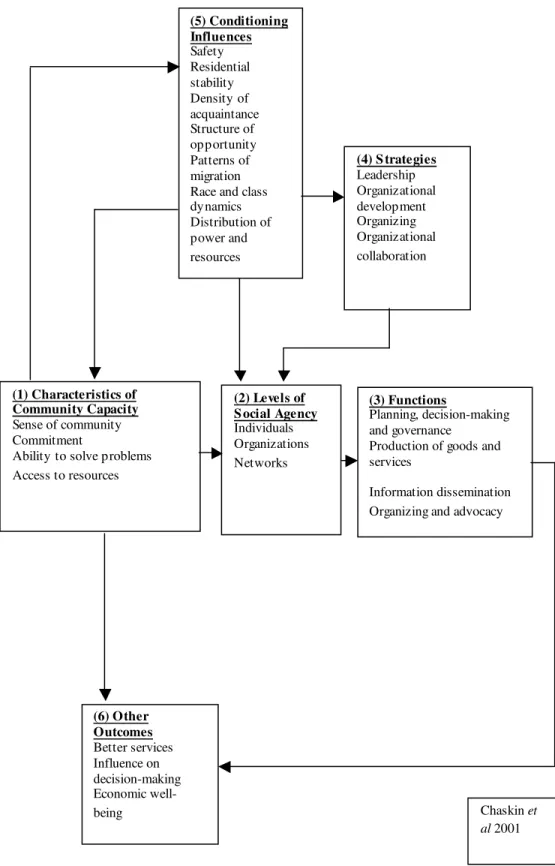
Figure 2 - The Chaskin Framework ... 39
Figure 3 - Simple model of governance ... 58
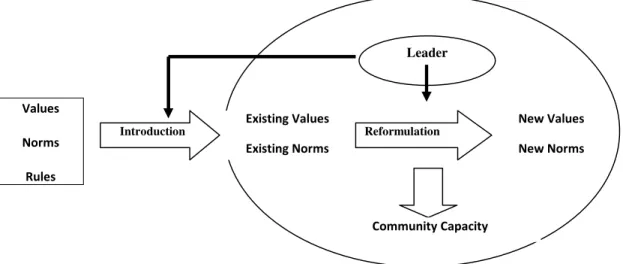
Figure 4- Social norm development in institutions ... 59
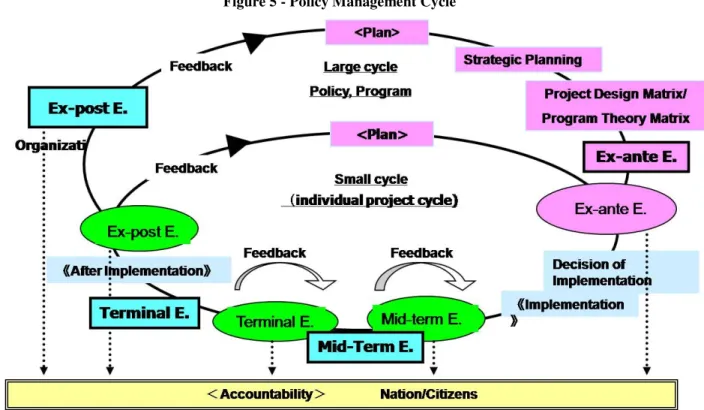
Figure 5 - Policy Management Cycle ... 72
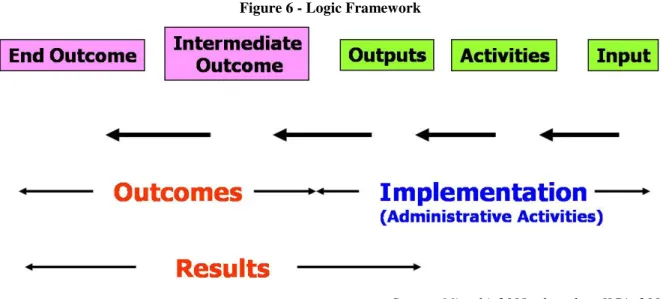
Figure 6 - Logic Framework ... 73
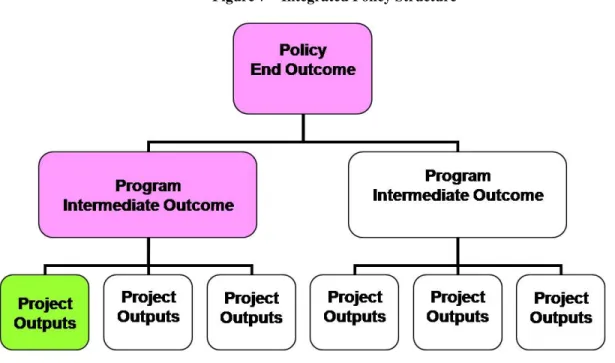
Figure 7 – Integrated Policy Structure ... 77
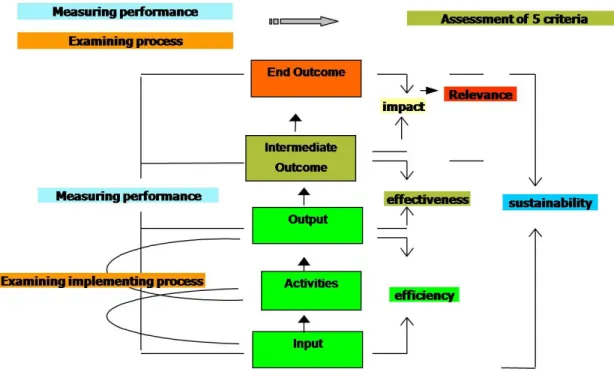
Figure 8 - Integrated logic framework and evaluation criteria ... 78
Figure 9 - Constellation of a community ... 96
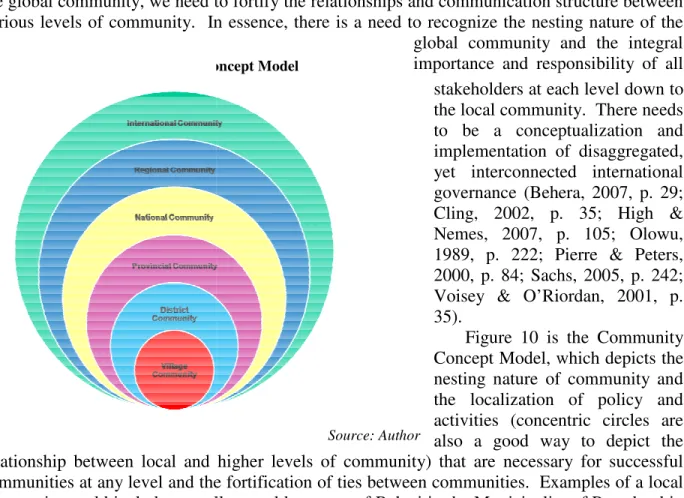
Figure 10 - Community Concept Model ... 97
Figure 11 - A-A-A cycle ... 100
Figure 12 - Fields of Imori-dani... 105
Figure 13 - Matsumoto Village Vision Building Workshop 2000 ... 106
Figure 14 - Ajimu Winery... 110
Figure 15 - Kinrinko Lake ... 113
Figure 16 - Shop in Bungotakada's Retro Modern Town ... 115
Figure 17 - Display at Bungotakada's toy museum ... 116
Figure 18 - Progression of leadership ... 123
Figure 19 - Map of Himeshima ... 124
Figure 20 - Progression toward community leadership in Himeshima... 139
Figure 21 - OVOP logos ... 148
Figure 22 - Localization of evaluation and its benefits ... 153
Figure 23 - Configuration of a localized policy structure ... 154
Figure 24 - SMES Nepal training pyramid ... 156
Figure 25 - Map of the Philippines ... 175
Figure 26 - Mayor M. Sales addressing a crowd from an arch ... 176
Figure 27 - Pagudpud Municipal Hall ... 193
Figure 28 - Photo group ... 232
Figure 29 - The Long Road ... 239
Figure 30 - Girl Scouts of the Philippines ... 240
Figure 31 - Creative Hands ... 241
Figure 32 - Weavers are Survivors ... 241
Figure 33 - Field and Sea ... 242
Figure 34 - Caring Hands ... 242
Figure 35 - The Role of Waves in a Man's Life ... 243
Figure 36 - A Time to Reap the Golden Grain ... 245
xiv
Figure 38- Rocky River ... 246
Figure 39 - Are you willing to help? ... 247
Figure 40 – The Boat and the Shore ... 248
Figure 41 - Principal Calventas' Pond ... 248
Figure 42 - Flag of the Great Leaders ... 249
Figure 43 - Caring and Helping One Another ... 250
Figure 44 - Construction on Patapat Bridge ... 251
Figure 45 - A Hard Way to Success ... 252
Figure 46- Bagong Lipunan Lodge ... 252
Figure 47 - Mr. Pedronan, Mr. Ubasa, and Ms. Montenegro (from left) at the first video group meeting ... 257
Figure 48 - Photo display at public exhibition ... 267
Figure 49 - Public exhibition participants ... 268
xv
List of Tables
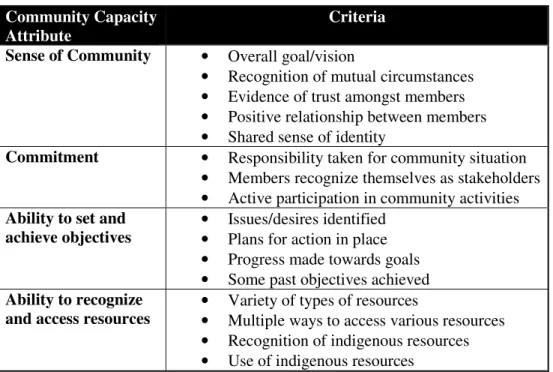
Table 1 - Indicators for community capacity attributes ... 104
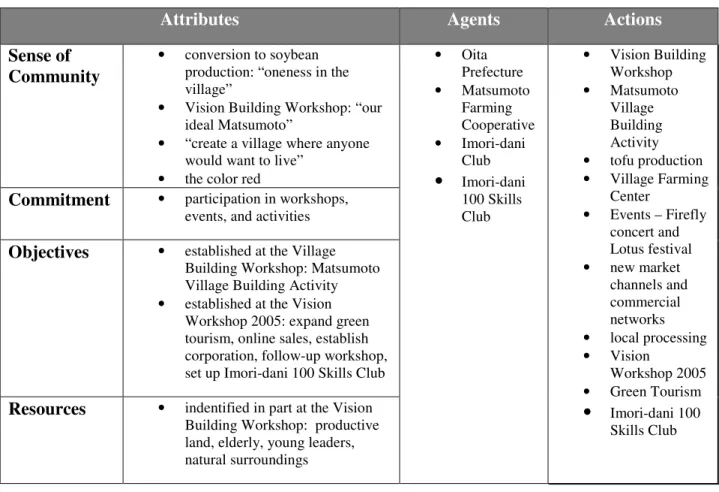
Table 2 - A-A-A description of Imori-dani... 108
Table 3 - A-A-A description of Ajimu ... 111
Table 4 - A-A-A description of Yufuin ... 114
Table 5 - A-A-A description of Bungotakada... 117
Table 6 - Japanese rural revitalization cases summary ... 119
Table 7 - Indicators for community agents ... 121
Table 8 - Himeshima's policy structure (actions) before development ... 126
Table 9 - Community capacity attributes in Himeshima before development ... 127
Table 10 - Himeshima's community agents before development ... 127
Table 11 - Himeshima's policy structure (actions) under Mayor Kumao Fujimoto ... 130
Table 12 - Himeshima’s community capacity attributes under Mayor Kumao Fujimoto ... 131
Table 13 - Community agents in Himeshima under Mayor Kumao Fujimoto ... 132
Table 14 - Himeshima's policy structure (actions) under Mayor Akio Fujimoto ... 135
Table 15 - Community capacity attributes of Himeshima under Mayor Akio Fujimoto... 136
Table 16 - Community agents of under Mayor Akio Fujimoto ... 137
Table 17 - Community action indicators ... 141
Table 18 - Indicators for the contextual influences ... 146
Table 19 - 10-K Initiative ... 177
Table 20 - Pagudpud Volunteers for Progress (PVP) ... 178
Table 21 - Waste Removal Project ... 179
Table 22 -10-K Initiative Promotion... 180
Table 23 - Barangay Health Workers (BHW) ... 180
Table 24 - K Therapists... 181
Table 25 - Training for Weavers ... 182
Table 26 - Homestays ... 182
Table 27 - Most Outstanding Barangay Evaluation ... 183
Table 28 - FPQ gender and age breakdown ... 187
Table 29 - FPQ occupation breakdown ... 188
Table 30 - FPQ breakdown by barangay ... 188
Table 31 - FPQ attribute indicators ... 189
Table 32 - FPQ agent indicators ... 190
Table 33 - FPQ actions indicators ... 190
Table 34 - FPQ contextual influences indicators ... 191
Table 35 - IDI respondents ... 196
Table 36 - IDI attributes categories, indicators and questions ... 197
Table 37 - IDI agents indicator prompts ... 198
Table 38 - IDI actions categories, indicators and questions ... 199
xvi
Table 40 – Attributes of Pagudpud ... 215
Table 41 – Agents of Pagudpud ... 217
Table 42 - Actions of Pagudpud ... 219
Table 43 - Contextual influences of Pagudpud ... 222
Table 44 - Proposed 1st Meeting Agenda ... 233
Table 45 - Proposed 2nd Meeting Agenda ... 234
Table 46- Participatory Video Evaluation Participants ... 257
Table 48- FPQ Attribute Results... 296
Table 49 - FPQ agents results ... 298
Table 50 - FPQ actions results ... 298
Table 51 - FPQ contextual influences results ... 300
Table 52 - Calventas Information ... 301
Table 53 - Calventas Attributes Responses ... 302
Table 54 - Calventas Agents Responses ... 304
Table 55 - Calventas Actions Responses ... 304
Table 56 - Calventas Contextual Influences Responses ... 306
Table 57 - Farriano Information ... 309
Table 58 - Farriano Attributes Responses ... 310
Table 59 - Farriano Agents Responses ... 311
Table 60 - Farriano Actions Responses ... 312
Table 61 - Farriano Contextual Influences Responses ... 313
Table 62 - Langundino Information ... 316
Table 63 - Lagundino Attributes Responses ... 316
Table 64 - Lagundino Agents Responses ... 318
Table 65 - Lagundino Actions Responses ... 318
Table 66 - Lagundino Contextual Influences Responses ... 320
Table 67 - Manigdig Information ... 322
Table 68 - Manigdig Attributes Responses ... 322
Table 69 - Manigdig Agents Responses ... 324
Table 70 - Manigdig Actions Responses ... 324
Table 71 - Manigdig Contextual Influences Responses ... 326
Table 72 - Ravelo Information ... 328
Table 73 - Ravelo Attributes Responses ... 329
Table 74 - Ravelo Agents Responses... 330
Table 75 - Ravelo Action Responses ... 330
Table 76 - Ravelo Contextual Influences Responses ... 332
Table 77 - Sales Information... 334
Table 78 - Sales Attributes Responses ... 335
Table 79 - Sales Agents Responses ... 336
xvii
Table 81 - Sales Contextual Influences Responses... 338
Table 82 - Ubasa Information ... 340
Table 83 - Ubasa Attributes Responses ... 341
Table 84 - Ubasa Agents Responses ... 343
Table 85 - Ubasa Action Responses ... 343
Table 86 - Ubasa Contextual Influences Responses ... 345
Table 87 - Photo Project Participants... 348
Table 88 - Participatory Photo Evaluation Follow-up Questionnaire Results ... 349
Table 89 - Participatory Video Evaluation Follow-up Questionnaire Results ... 352
Table 90 – Participatory Video Evaluation Public Response Questionnaire Results ... 353
Table 91 - Video Public Responses Errant Answers ... 355
xviii
Abstract
1This work looks at the concept of community capacity and how it can be advanced to improve governance. The main concepts explored here, related to community capacity, are community, social capital, and community capacity building.
The importance of broadening the view of development beyond economic development is discussed in this work as being both a moral imperative to reduce poverty and a smart way to approach global and local governance. The areas of economic development and poverty alleviation are addressed, as well as alternative development with a special focus on rural and community development. The main concepts are discussed in context of their relationship to human development and poverty alleviation, being most closely associated with the paradigm of alternative development.
Major components of public administration are also addressed in this work, focusing on decentralization, localization, democracy, and participatory governance. Tools to improve governance are also discussed, including the logic framework, the policy management cycle, and evaluation.
The epistemological approach employed here focuses on modernism and post-positivism and focuses highly on qualitative research. The research contained in this work is mostly derived from case study analysis and employs data gathering techniques such as interviews, surveys, focus groups, and various forms of observation.
The academic contribution of this work is twofold, concept progression and method development. First, this work develops the concept of community capacity that was introduced by Chaskin, Brown, Venkatesh, and Vidal (2001) by amending and clarifying the terminology in the framework and employing a more useable and easily understandable model called the A-A-A framework. The A-A-A framework is developed through case studies on rural revitalization in Japan and the assessment of community capacity using the framework in Pagudpud, Philippines.
The definition of community is expanded to include the local government and all stakeholders, as well as to define the parameters of larger communities, such as the international community. Additionally, two newly adapted concepts are postulated to further address alternative development and community capacity building. They are community-driven economics and community leadership.
The concept of localization is also clarified, particularly in terms of the localization in evaluation. This is done through the analysis of various efforts to localize evaluation through JICA trainings and a project for MDG localization in the Philippines. Issues with evaluation in developing countries are surveyed through analysis of the technocrats that were involved in evaluation training in Japan. The identification of these issues led to some proposals for improving evaluation including a focus on assets, qualitative measures, participation, and guiding concepts.
Regarding method development, two methods of non-traditional participatory evaluation, participatory photo evaluation and participatory video evaluation, were created to further explore community capacity. Using trial cases in Pagudpud, the methods were developed to ensure proper data gathering and to render information that is useable for local public administration. These unique methods combine action research, participatory research, concept-driven
1
xix evaluation, and the use of non-traditional media and have the benefit of providing data for better local governance and being a community capacity building tool.
1
1.
Introduction
n the wake of the industrial revolution, a vast discrepancy emerged between developed nations and those who were yet to be developed. This ever-growing discrepancy has been the source of strife and conflict across the globe and has garnered a call for the development of all nations. Development is no easy task and its paradigms, financing, and practical execution are constantly under scrutiny and up for debate. However, the demand for peace and harmony, as well as for human progress and the continued success of global economics has not ceased; thus development is continually pursued on multiple levels.
Through the pursuit of global capitalism, entrepreneurs are constantly seeking innovative products, new markets, accessible labor sources, and readily available resources. This is taking business out of the modernized world and into places that are yet to be developed. In regards to both ethics and sustained profitability, it is of interest for global capitalists to promote and otherwise be involved in the development process. This is because if a community of interest has a poor infrastructure, political strife, issues with human rights and social freedoms then extracting the desired resource, product, or service becomes difficult and ethically questionable. Therefore, business and political actors alike have an economic and moral imperative to be committed to development.
A new outlook on development began to emerge in the late 20th century, when a shift from an emphasis on economic indicators to a more comprehensive vision of social development emerged. Standard of living began to play a more important role in the formulation and execution of development initiatives at the local, national, and international levels. Examples of this trend include the adoption of the United Nations Development Program’s (UNDP) multi-indicator Human Development Index (HDI) and various commissioned Human Development Reports (HDR), as well as the ambitious and multi-sectoral Millennium Development Goals (MDG) (Anan, 2000). As Amartya Sen (1999) argues, development cannot simply be assessed by economic measures alone, and specifically not by aggregate economic figures.
Social capital can be thought of as the ‘missing link’ of development (Gittell & Vidal, 2002). It is a key component of capacity and capacity development strategies for the betterment of the community and to facilitate participatory governance. Community capacity is one way that social capital within a given area can be identified, explored, and promoted. Through identifying the characteristics of community capacity and devising strategies to build community capacity, communities can better reach their potential, leaders and residents can be better informed about their community and ownership of the community situation begins to emerge to facilitate further development.
1.1.
Research Problem and Questions
The main issues that have been identified in this work include the growing discussion on community capacity in development dialogue, a greater emphasis on a more holistic approach to development, the lagging questions about the concepts of social capital and community capacity, and the greater responsibilities for service delivery and development strategies that are being undertaken by decentralized authorities. These problems are explained more fully in the following paragraphs.
The change in development paradigms, more notably seen since the Organization for Economic Cooperation and Development’s (OECD) Development Action Committee (DAC)
2 agreed to the Paris Declaration on Aid Effectiveness (2005) and the 2008 DAC High Level Meeting where donors agreed to use local goods and service (see Managing for Development Results, 2007), has brought about greater emphasis on capacity development and localization. This work proceeds with the shared problem in mind of the international development field; there needs to be more emphasis on partnership and ownership for capacity building and the necessity for a more holistic approach to community capacity development. It is unlikely that only one universal model of poverty alleviation can be formulated (Paugam, 2002, p. 94), but the assessment of community capacity and the design of contextualized strategies to build it incorporatedinto local policy structure can add to the effectiveness of development and poverty alleviation policy.
Although social capital has been identified as the missing component of development, there is little understanding of the ways in which social capital and capacity can be identified, built, and sustained. Some progress was made by incorporating social capital considerations into a relational framework for community capacity, as seen in the book Building Community Capacity by Robert J. Chaskin, Prudence Brown, Sudhir Venkatesh and Avis Vidal (2001). However, the framework has not been fully explored in relation to rural development and its relevance in developing communities has yet to be identified. Additionally, the concept of neighborhood, the unit of analysis for community capacity for Putnam (1993, 2000) and Chaskin and colleagues (2001), is too limiting for the framework to be widely utilizable. Therefore, an expansion of the concept of community is necessary in conjunction with clarifying the components of the framework to improve its ability to analyze a community in context.
Decentralization has made the role of the lower level administrator more important, especially in relation to the involvement of the community and participatory practices. The government partnership activities that accompany participatory governance and decentralized authority rely heavily on the ability of the community to respond to these activities, indeed, it relies on the capacity of the community. According to B. Guy Peters in The Future of Governing (2001), participatory governance requires a population of clients who can articulate their demands effectively, a collection of organizations that are concerned with delivering holistic services, and relies on the willingness of the citizens to become active participants in the political and administrative processes. Building community capacity can help a community to identify the assets that they posses and facilitate participation, effectively communicate their needs and desires, provide better services, and overcome adversity.
Furthermore, decentralized authorities have a need for consistent administrative and evaluation systems in order to better serve their constituents and meet their policy outcomes. It is clear the many evaluation systems are in need of reform; however there is no consistent way to identify issues in evaluation systems.
In order to examine the problems the following questions are posed:
1. What are the conceptual components of community capacity and how can they be further developed? (Chapters Two, Chapter Five)
2. What is the relationship between community capacity and human development and poverty alleviation? (Chapter Two)
3. How is a community defined and how can it be understood practically? (Chapter Five) 4. What are some ofeffective strategies for community capacity building? (Chapters Two,
Chapter Five, Chapter Seven)
5. How can community capacity be identified in context? (Chapters Five, Chapter Seven, Chapter Eight)
3 6. In what ways can the community capacity framework be refined to better fit the situation
in developing communities? (Chapters Five, Chapter Seven)
7. How do community capacity attributes contribute to the cycle of community capacity? (Chapter Five)
8. How do community agents and their leadership contribute to the development of community capacity? (Chapter Five)
9. What is localization of evaluation and why is it important? (Chapter Six) 10. What are some ways that localization is being undertaken? (Chapter Six)
11. How can community capacity building strategies be integrated into a community-level policy structure? (Chapter Seven)
12. What does community capacity mean in the context of a developing community? (Chapter Seven, Chapter Eight )
13. Can the community capacity framework be developed into an assessment tool? (Chapters Seven, Chapter Eight)
14. How can evaluation be more participatory? (Chapters Six, Chapter Eight)
These questions are addressed throughout this work; however the most relevant chapters are noted after each question.
1.2.
Objective
The objective of this dissertation is twofold. The first goal of this work is to fortify and expand some concepts related to community, development and public administration. The main focus is on the progression of the concept of community capacity, particularly in terms of its relevance to developing rural communities in Asia. Other concepts that are expounded upon here include community, community leadership, community-driven economics, localization, and evaluation. The second aim of this work is the introduction and conceptual design of the methods of participatory photo and video evaluation, as well as the incorporation of the concept of community capacity into an assessment.
1.3.
Significance
The significance of this work in relation to its contribution to conceptual development lies in the importance of incorporating the concepts of community, community capacity, community leadership, community-driven economics, and localization into public management through evaluation and intervention strategies. By doing so, poverty alleviation, rural development, and community development initiatives become more effective and sustainable.
The contribution of this work in terms of the development of the methods of participatory photo and video evaluation is significant because of the uniqueness of combining non-traditional communication mediums with an evaluative framework and purpose, as well as their practical applications for public administration and community capacity building.
Furthermore, this work adds to the dialogue on action research, community capacity, community and rural development, evaluation, governance, and participatory methods.
4 The two main objectives of this work are interrelated as the revamped concepts lay the foundation for the development of the new methods, forming the guiding framework for their execution; thus examining them in context. Community is the unit of analysis for the case study and evaluation projects, while community capacity is the analytical framework. Below, in Figure 1, is a model to help illustrate the overall conceptual framework for this dissertation.
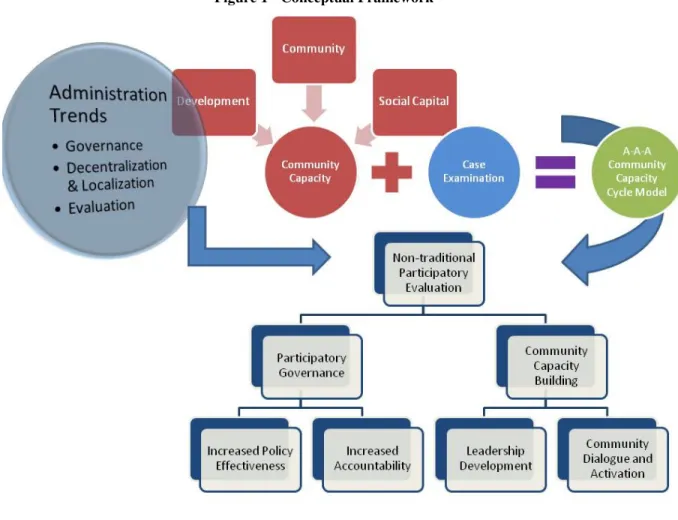
Figure 1 - Conceptual Framework
Source: Author As can be seen in the conceptual framework model, the trends in administration such as governance, decentralization and localization, as well as evaluation are the practical background of this dissertation. The theoretical background of development, community, and social capital help to contribute to the concept of community capacity. The concept of community capacity is then examined through case studies in Japan and the Philippines and modified in the A-A-A (Attributes-Agents-Action) Community Capacity Cycle Model (see Chapter Five). Considering the necessities of the current administrative trends, the A-A-A model is used to guide the development of the non-traditional participatory evaluation methods that will contribute to participatory governance in terms of increased policy effectiveness and increased accountability, and to community capacity building in terms of leadership development, community dialogue and activation.
5
1.5.
Outline of work
This work begins by a review of the relevant literature and concepts in Chapter Two. In this chapter, the overall relevance of this dissertation will be discussed followed by a look at economic development and poverty alleviation, the paradigms of alternative development, rural development, and community development. Discussions on the conceptual backgrounds of community, social capital, and community capacity will follow. The last section of Chapter Two explains some community capacity building strategies including leadership development, organizational development, community organizing, and inter-organizational collaboration.
After the introduction to the theoretical background guiding this work, the practical concepts of governance paradigms, practical formats, and trends are discussed in Chapter Three. These governance issues include democracy and participatory governance, local governance, and decentralization and localization. The public administration section of Chapter Three looks at the practical tools of the management cycle, the logic framework, and evaluation.
The fourth chapter of this dissertation covers the data collection methods used to obtain the information in this work. It outlines the research paradigms of modernism and post-positivism, as well as the reflexive and adaptive qualitative research approaches. The specific modes of information collection in Japan, the Philippines, and from other sources are detailed. Support for the various data collection methods such as case studies, participant observation, action research, the use of photography, focus groups, interviews, and surveys is offered.
Chapter Five is the academic contribution of this dissertation in terms of conceptual development. Community is suggested as a suitable unit for analysis and policy formulation, as well as an all-encompassing system with potential conceptualization on multiple levels. The community capacity framework from Chaskin and colleagues (2001) that is offered in Chapter Two is expanded and amended to be more practical, useable and adaptable to rural and developing communities. Case studies from rural Japan are examined in order to further clarify the basic component of community capacity, its attributes, agents, and actions. Through these case studies the new concepts of community leadership and cyclical community capacity emerge. These conceptual explorations formulate the impetus for community-driven economics, which is discussed at the end of the chapter.
Chapter Six, is dedicated to the conceptual and practical development of localization and evaluation. The ways in which localization can be undertaken and its benefits are examined through issues with evaluation in developing countries and case examinations of the Japan International Cooperation Agency (JICA)-Nepal Strengthening of Evaluation and Monitoring System (SMES) project and the localization of the MDGs in Jagna, Philippines.
The proceeding two chapters are dedicated to the field work and projects conducted in Pagudpud, Philippines. Chapter Seven provides an introduction to the municipality, its initial policy structure and assessment of community capacity using traditional evaluation techniques such as interview and survey.
Chapter Eight is the second important contribution of this dissertation, the introduction of the unique methods of participatory photo and video evaluation. This chapter examines the theoretical background that contributes to these methods and provides the basis for their success and contribution to governance and community capacity building, as well as their conceptual design. Then, the details of the trial cases for the methods of participatory photo and video evaluation respectively, and their subsequent public exhibition are explored. The implications of the findings from these projects helps to build the picture of community capacity in Pagudpud, as
6 well as points to the positive implications of employing these types of participatory evaluations, namely in terms of community capacity building and governance.
The last chapter of this work provides an overview of the entire dissertation, summarizing the literature review and methods, answering the research questions, reiterating the work’s contributions to academia and practice, and discusses the further implications of the material presented here and future directions of this work.
7
2.
Development, Community, Social Capital, and Community Capacity
e must rethink the financial system from scratch, as at Bretton Woods (Sarkozy, 2008).” The recent economic turmoil has brought some issues to the forefront that have been apparent in development economics for more than a decade: structural adjustment programs are deeply flawed, investment to promote production for export has had negative effects on the poor (Friedmann, 1992, p. 5), markets do not self-regulate (Greenspan, see Andrews, 2008), and government interventions are necessary to promote sectoral growth and economic stability. With these issues in mind, new economic ideologies are being discussed by leaders from around the world.
On October 8, 2008, as the world began to realize the full brunt of the financial crisis, Argentine President Cristina Fernandez de Kirchner said "the financial world crisis will need a strong regulation in the matter of financial markets and capital movements throughout the world. A new Bretton Woods will be needed." The recent financial crisis demonstrates the existence of a global economy with pervasive links and effects. As Ms. Kirchner notes, due to the links of the global economy, there is a need for new strategies for regulation and global economic infrastructure. This new thinking should be undertaken with a new emphasis on both international links and the importance of all global stakeholders, no matter how small.
The Bretton Woods Institutes (BWIs) were an important first step in bringing order to the international economy. However, they were based on a few flawed ideas and assumptions. One of the most glaring issues is its power based organization that highly favors rich nations (Sachs, 2005, p. 287), which typically leaves debtor countries virtually voiceless. As the global economy grew the BWIs have been criticized for not being inclusive or truly participatory and overly favoring rich nations.
The International Monetary Fund (IMF), a BWI, has borne criticism due to their pressure to force structural changes modeled on first world economies and the propensity to leave ill-suited governments, whom are often corrupt, debt laden at the expense of the quality of life of their constituents. IMF backed initiatives have led to riots, coups, and the collapse of public services (Sachs, 2005, p. 74). This in combination with academic and public outcry against some of the questionable practices and tactics employed by the BWIs has led to a paradigm shift and a search for more effective approaches (Sachs, 2005, p. 74).
The perspective that wealthy nations take in the BWIs separates them from other nations. The world economic system has been modeled, molded, and promoted on the ideology of the dominant economies whilst assuming a sort of cultural or systemic superiority, rather than recognizing that their dominance may most likely stem from an accident of timing or geography (Sachs, 2005, p. 39). Furthermore, economically privileged nations are concerned with preserving and promoting their economic interests, while other countries are primarily focused on development and providing basic services to their citizens. It is this vast paradigm discrepancy that contributes to the malfunction of international economic institutions. While there is much discussion on how to address the necessary changes to the international economic system from the first world perspective, this chapter seeks to offer the perspective of the challenges and necessary changes through the scope of developing nations by placing development and sustainable livelihood as the a priori issues in international economic reform.
With the ever growing trend toward fractured societies, specialized communities, the widening economic gap, and the highlighting of insiders and outsiders, something needs to change in order to save us from ourselves. The idea that capitalism or democracy will save us is
8 nearly dead; for too long we have been mired in the conversation about which political or economic paradigm is paramount, forgetting all the while about the details of human existence that make any one of the popular paradigms palatable; long life, comfort, happiness, stability. These factors, the ones that each of the megaphone-mouth demagogues of their paradigms touts as the reason they should be the dominant power, are the reasons that any of us 6 billion sheep in the herd would even dare listen to the blaring discourse. These human factors are what we all search for in our daily lives and they can be found in our communities.
It is only now that the first world is learning what the second and third world learned a long time ago: the principles of free market economics, trade imbalances and unbridled economic gains benefit few and exacerbate the income gap, leaving many dispossessed and in poverty (Collier, 2007; Friedmann, 1992; Sachs, 2005). The bulk of the poor, 67% as of 1998, live in Asia, particularly the southern and rural parts (Kanbur, Venables, & Wan, 2006, p. 1; Quibria, 1993, p. 1).
Currently, the global financial system relies on the benevolence of the Group of Seven (G-7) and developing economies are no exception. If the G-7 are doing well then there is a “permissive environment for growing economic prosperity in other countries (Cooper, 2005, p. 67).” However, if the first world has any sort of economic blip or panic then their benevolence is withdrawn, often into protectionism and economic nationalism, and “…other countries would find it difficult to sustain growing economic prosperity no matter how good their institutions and their policies were (Cooper, 2005, p. 67).” This is not a call to revert to planned economics; however, it is a referendum on the popular thinking of how both local and international economics and development should be undertaken.
Furthermore, there is a necessity to focus on poverty, and the economic development and advancement of what Collier (2007) has called “the bottom billion,” the poorest billion people in the world. Continuing to ignore this cadre of global citizens makes the entire world less secure, and more vulnerable to socio-political and economic instability (Collier, 2007, p. 3). The gap between the underdeveloped and the poorest of the poor is widening, with the average person in the poorest society having an income that is only one-fifth of that of the average person in a typical developing country (Collier, 2007, p. 10). The World Bank (WB) has established the rather arbitrary $1 a day poverty standard and later added the $2 a day indicator to describe low income around the globe (2002; 2003). There are 2.8 billion people in developing countries living on less than $2 a day (WB, 2003). However arbitrary the standard is, it helps to establish statistics and indicators in the quest to address the needs of the poor. It is worth noting that the WB and other international donors have broadened their definition of poverty to include human development and quality of life (Cling, 2002, p. 29; WB, 2002, p. 2; WB, 2003, p. 2) and this expansion of the concept has begun to help in the process of domestic and international policy making on development and poverty alleviation.
In addition to economic indicators of poverty, there are quality of life indicators that demonstrate stark contrasts in the ability of the bottom billion to escape poverty and otherwise lead lives deserving of human dignity. An example of this is can be found in the poors’ ability to access water and proper sanitation. According to the 2006 HDR, about 1.1 billion people in developing countries have inadequate access to water and 2.6 billion lack basic sanitation (Watkins, 2006, p. 7). Among those without proper access to water, two-thirds live on less than $2 a day with the remaining one-third surviving on less than one dollar a day (Watkins, 2006, p. 7). There are more than 660 million people without sanitation living on $2 a day with more than 385 million living on less than one dollar a day (Watkins, 2006, p. 7). These facts are truly
9 amazing and saddening when you consider that household water use is less than 5% of total water consumption (Watkins, 2006, p. 7), with the remainder going toward agricultural and industrial uses. Additionally, this household water consumption is inequitably distributed, with those living in high-income cities in the developing world having access to significantly higher amounts of higher quality water than people living in city slums or rural areas of the same country, often at lower prices (Watkins, 2006, p. 2). These considerations further reinforce the necessity to address poverty, particularly rural poverty, both in terms of economic and human development.
This chapter will emphasize the need for a new paradigm on economics and development and delve into the concepts that are helping to shape this new paradigm. The guiding questions for this chapter are:
(1.) What is the importance of development?
(2.) What are the current paradigms of development? (3.) What is community?
(4.) What is social capital?
(5.) What is community capacity?
(6.) What are some approaches to development and community capacity building? These questions will be addressed through a review of the relevant literature on various aspects of development, such as economic development, alternative and human development, sustainable development, rural development, and community development. The foundation concepts of community, social capital, community capacity, and community capacity building are also introduced. The first section begins with the importance of development.
2.1.
Development
For some, discussing development as an imperative for international economic reform does not seem natural. However, considering the links between nations in trade and commerce, particularly between developed and not yet developed countries, it is important to take the needs of not yet developed nations into consideration while formulating economic reforms. Since those nations are primarily concerned with development, modernization, and poverty reduction, these issues should also be prominent concerns of economic reform. This is in addition to the moral imperative that we all share to address the needs of those that are continually dispossessed by the structural inequities of our current global system.
True global economic advancement requires considering development and poverty alleviation. Sachs (2005) calls for a re-examination of what we think we know about economics and global development. “Although introductory economics textbooks preach individualism and decentralized markets, our safety and prosperity depend at least as much on collective decisions to fight disease, promote good science and widespread education, provide critical infrastructure, and act in unison to help the poorest of the poor (Sachs, 2005, pp. 2-3).” There is a definite need to construct an international sense of community and to cultivate a commitment to proactively and appropriately address poverty in all of its forms. Both of those things are related to global economic well-being.
M.C. Behera (2007) describes three levels from three areas in development discourse. First there is the policy level where international aid agencies set objectives and priorities. The second level attempts to understand development issues from various perspectives, perhaps at the state level, and comprises the conceptual level. The third is the practical level focusing on
10 methodology (Behera, 2007, p. 25). Behera’s description of the development policy structure is a good starting point for understanding the complexity and relationships between various stakeholders in development.
The United Nations (UN) has declared development and poverty alleviation top concerns and reaffirmed its commitment to these concerns in the Doha Outcomes Document in 2008 and through outcomes based objectives such as the MDGs. Even though the BWIs, particularly the WB, are interested in widespread economic development, their approach of structural adjustment programs (Cling, Razafindrakoto, & Roubaud, 2002b, p. 156; Sachs 2005, p. 81; Friedmann 1992, p. 2), “problem-solving,” and donor-led development often ignore important contextual issues (Cling, 2002, p. 34) that are key to comprehensive and sustainable development. However, there are some signals that the approach to development of international donors is changing. The Vice President of the WB’s Program for Sustainable Development notes a change in priorities for the WB, namely a refocus on poverty as an economic, social and environmental responsibility, and recognition of the growing interconnectedness of the global economy (Johnson, 2005).
Development is not a blanket term that can be tossed around to describe any sort of program, project, or larger policy. While it can be said that development is related to changes in economic and social variables associated with production increases and the improvement of the quality of life, these changes do no necessarily indicate development (Yogo, 2000, p. 19). A value judgment about these changes must be made (Yogo, 2000, p. 19) and there should be a focus on the roles of resources, organizations, and norms and their mutual interactions (Yogo, 2000, p. 20). The roles of resources, organizations, and norms and their interactions can be best understood at the community level through understanding and analysis of community capacity (which will be discussed at length in this work).
Not only does development itself need to be recognized as an important component of the global economic system, but the focus and the level of economic thinking needs to be redirected. Rural economies need to be taken into greater consideration in the global economic system because that is where the bulk of poverty lies (Cling, 2002, p. 36; International Fund for Agricultural Development [IFAD], 2001, p. 1; Quibria, 1993, p.1; Kanbur et al., 2006, p.1). Additionally, impoverished rural communities are the most vulnerable to economic shocks (IFAD, 2001, pp.4-5), and susceptible to various aspects of cyclical poverty (poverty trap, fiscal trap, demographic trap, as well as issues with geography, human capital, and empowerment, see Sachs, 2005, pp. 79-81).
Establishing that development, in its various forms, needs to be addressed is only one component to true poverty alleviation. Cling (2002) points out that “it is obviously a good thing to try to convince privileged groups of the need to attack poverty, but we should not delude ourselves: for the time being there will continue to be conflicts of interest between the rich and the poor, and even between different groups of poor people (p . 38).” These privileged groups include the G-7 and other healthy economies, as well as economically dominant and privileged groups in developing countries. Everyone needs to understand the importance of equitable development and improved quality of life for all and how it can affect their lives, particularly those who are not confronted with true poverty on a daily basis.
This section explores several components and approaches to development. First, economic development and poverty alleviation are addressed. Next, alternative development and its related development approaches, such as human development and sustainable development, are explored as the most contemporary paradigms. Finally, the specialized sectors of rural and community
11 development are examined. Through these discussions a better understanding of what development means today and how it is being undertaken will be gained.
2.1.1.
Economic Development and Poverty Alleviation
Economic development may be considered traditional development, with a focus on raising incomes and the fiscal side of poverty. Additionally, those subscribing to the paradigm of economic development feel that a lack of financial success is the root of all the problems associated with poverty. In fact, most national development strategies employ some sort of economic growth model in the form of the Poverty Reduction Strategy Paper (PRSP); a testament to how widespread the commitment to the potential benefits of economic development are.
While the benefits of economic development may not be as widespread or easily understandable as previously thought, there are undoubted advantages to it. Some have discovered that designing development strategies that focus on economic development, but incorporate social justice or environmental considerations are more palatable to participants, donors and administrators (Fleming, 2009). In any case, in order to design an effective strategy to alleviate poverty there must be a careful assessment of the widespread impact of economic policies (Cling et al., 2002a, p. 20). However, it should be noted that some of the advantages associated with economic growth are not necessarily quantifiable or dependent explicitly on a particular rate of growth or expansion of income. Some of these advantages include a user-friendly and cooperative local political climate (Gobar, 1993, p. 20).
Many authors and practitioners feel that economic growth does not explicitly lead to poverty reduction or improved quality of life for ordinary people on an equitable basis (Cling, 2002; Collier, 2007; Friedmann, 1992; Sachs, 2005; Zachariah, 1993) and many involved with development have been moving away from economic development and toward an alternative development paradigm (Behera, 2006; Pieterse, 1998). While economic growth, at any level, may not be the silver bullet of development, having greater economic capabilities does increase people’s ability to obtain resources and may even give them greater status and power within their community, as the commonly held paradigm on economic development dictates. Therefore, economic growth still plays an important role in comprehensive development policy making.
However, a focus on economic development should not replace actual strategic thinking on inclusive development and poverty reduction (Collier, 2007, p. 11). It is the magnitude of the role and the scope of growth that is currently under discussion. The remainder of this discussion on economic development will focus on the detrimental effects of poverty and the strategies that are being used to reduce it, as well as some of the positive outcomes of economic growth.
Economic development is not as straight forward as calculating growth, inflation, and unemployment. Both the costs and benefits of economic development must be considered, particularly the human and environmental costs (Friedmann, 1992, p. 9). M. G. Quibria (1993) finds that the roots of poverty lie in the interaction of sociocultural factors, the distribution of productive assets, development strategies, and the global environment for trade and finance (p. 6). Poverty can also be seen as disempowerment, with poor households lacking the social power to improve their condition (Friedmann, 1992, p. 66; Cling, 2002, p. 29). Social cohesion and the absence of striking inequalities determine the quality and level of economic growth (Cling, 2002, p. 29). Poverty alleviation is the reduction of the effects of poverty in terms of both financial and social factors.
12 Like Quibria, Friedmann and the WB, many have recognized that factors outside of economics, such as democracy, good governance, and appropriation have as much of an impact on the economic path of developing countries as traditional economic measures (Razafindrakoto & Roubaud, 2002a, p. 126). Public institutions need to take a pro-poor approach, in addition to promoting diversification of social assets and strengthening national cohesion, to make poverty reductions strategies effective (Cling, 2002, p. 31).
The 1994 HDR found a positive correlation between infrastructure networks and economic growth through facilitating competitiveness and trade (United Nations [UN], 2001, p. 1). Infrastructure development creates the macro-economic conditions for poverty reduction. The connection of vulnerable households through infrastructure development can also reduce poverty on a micro-level through better access to water, sanitation, and energy. This contributes to improved health and increased productivity, and provides better market access and income generation potential to small producers (UN, 2001, pp. 1-2).
Furthermore, a country’s economic growth can be affected by any of several poverty traps and systemic problems and failures. Jeffery Sachs, an American economist, outlines these traps and issues in his 2005 book The End of Poverty. Sachs (2005) argues that the failure to achieve economic growth is not the fault of the poor but due to the poverty trap (where poverty itself causes economic stagnation (p. 56)), the fiscal trap (where the government lacks resources to develop infrastructure and cannot collect taxes because of poverty, or inept, corrupt government or debt-ridden government (p. 59)), physical geography, governance failures, cultural barriers, geopolitics (trade barriers (p. 61)), lack of innovation, and/or the demographic trap (elevated fertility rates means families cannot afford to invest in all of their children meaning the next generation is typically impoverished and has high fertility rates (p. 65)).
Paul Collier in his 2007 book The Bottom Billion generally agrees with many of the points Sachs makes including physical geography (Collier is particularly concerned about landlocked countries (p. 53)) and bad governance (especially in small countries (p. 64)). He then adds two additional traps, the conflict trap (a pattern of violent internal challenges to government (p. 17)) and the natural resource trap (a paradoxical trap where the discovery of valuable natural resources in the context of poverty lead to increased poverty or adds to the conflict trap (p. 38)). These issues and traps all fall outside of what it typically addressed in an economic development initiative, yet have an effect on the economic development of an area. By acknowledging the importance of the varying factors that affect the economic status of a country or a community, a better, more comprehensive policy for advancement and poverty alleviation can be formulated.
In terms of interventions to deal with the various traps and issues, a few approaches have been offered. Sachs (2005) suggests what he calls “clinical economics,” which includes an understanding that economies are complex systems and implores economists to make contextual decisions offering solutions that may not be directly related to the problem at hand. Clinical economics also requires monitoring and evaluation (M & E) particularly in terms of outcomes and advocates for ethical and professional standards in the development community (requiring those involved with policy to be versed in the context of the place and to give honest advice to patrons and donors alike) (pp. 79-81).
Collier (2007) looks at four instruments of economic development: aid, security, laws and charters, and trade (p. 176). However, he advocates for all of the instruments to be used, but notes that the first instrument, aid, is being used poorly and the others are scarcely used at all to achieve economic development (p. 176). To break the resource trap, Collier (2007) would like to see a charter similar to the Extractive Industries Transparency Initiative (p. 178). For the conflict