residents: A nationwide cross‑sectional survey
著者 段 冀州
著者別表示 Jizhou Duan journal or
publication title
博士論文本文Full 学位授与番号 13301甲第4992号
学位名 博士(保健学)
学位授与年月日 2019‑09‑26
URL http://hdl.handle.net/2297/00059264
Introduction
Nursing homes (NHs) provide a range of services for residents, including nursing care and 24-hour
supervision1). Residents in NHs are frail, often with severe health problems. 96.7% of NH residents in Japan have dementia, and 73.4% of them are dependent on
Doctoral course, Health Sciences, Graduate School of Medical Sciences, Kanazawa University 1 ) Institute of Health Sciences, Kanazawa University
2 ) Japanese Music Therapy Association
Conditions of music provision for nursing home residents:
A nationwide cross-sectional survey
Jizhou Duan,Mayumi Kato1),Miho Shogenji1),Sanae Miyatani2)
Abstract
Background: Music activities enhance residents’ enjoyment and adaptation to nursing homes. Community music therapy promotes human relationships and a pleasant living environment. However, there have been few comprehensive studies focusing on the conditions of music provision. The aim of this study was to identify the conditions, problems, and staff recognition of the effects of music provision to improve its use in nursing homes through music therapy, music activities, and the concept of community music therapy based on a nationwide cross-sectional survey. Method: An anonymous questionnaire was mailed to a total of 517 randomly selected nursing homes. Questions collected data on demographic characteristics; the planners and providers of music;
objectives/ways/evaluation of music provision; respondents’ recognition of the effects of music; and conditions of music activity training. We divided the respondents into music therapy, music activity, and no music groups. Pearson’s chi-square test, Fisher’s exact test, and the Kruskal-Wallis test were used to identify differences in demographics and staff recognition among the three groups. Among the results with significant differences, the items of continuous variables were analyzed using the Steel-Dwass test, and the items of the chi-square test were further analyzed using residual analysis. Results: We collected a total of 96 completed questionnaires. Music therapy or music activity was provided by 80.2% of nursing homes. Around 50% of the nursing homes that provided music therapy had a music therapist as a planner and provider. Care workers were most often the planners and providers. The rate of evaluation of music provision was approximately 10%- 30%. The recognition of “increased staff intimacy with residents” was significantly lower in the no music group among the three groups in residual analysis (p<0.05), and was approximately 30% less than in the music activity group. Only 6.3% of the nursing homes provided music activity training. Conclusions: The findings of the present study suggested that while promoting the cultivation of music therapists, education of staff in music activities should be developed.
KEY WORDS
music, music therapy, community music therapy, training, nursing home
others to fulfill their activities of daily living (ADL) as moderate or severe2). We thought that music therapy would be a suitable intervention for such residents because music therapy, as a non-pharmacological treatment, has been identified to be effective in reducing the behavioral and psychological symptoms of dementia, including anxiety, agitation, and wandering3-4). In addition, music therapy has been identified as an appropriate method for maintaining and improving residents’ ADL abilities5). The ADL abilities of NH residents continue to decline, and one study found that dementia was the most common reason for declining abilities in ADL6). Music works on these two closely related issues. Music is also advantageous because it is a non-invasive intervention and easy for older people to accept7). However, due to a lack of budgeting and recognition of the benefits of music therapy, only 26%
of NHs provide music therapy in the USA8).
On the other hand, since a NH is the residents’ living environment, music activities as leisure or recreation are also vital in NHs. In addition to managing the health problems of residents, care for their feelings of loss should be paid more attention. Leaving families and their own home leads to problems adapting to the new environment9). Residents have to develop new behaviors and habits and manage high anxiety10). Altintas et al.
summarized the adaptation mechanisms required during older age and emphasized the importance of leisure activities for adaptation to life in a NH9). Participation in leisure activities can increase residents’ satisfaction with living in a NH and help older residents to adapt11). However, the actual conditions of music as a leisure or recreational activity in NHs remain unknown.
The broader role of music should also be explored, not just its effects upon residents. Kitwood12) defined personhood as “a standing or conditions that is bestowed upon one human being, by others, in the context of relationship and social being. It implies recognition, respect and trust.” This personhood is the basis of the care provided for people with dementia.
Indeed, in recent years, the care policies guiding the services offered to NH residents have emphasized maintaining human relationships through good communication to ensure residents are respected as equals to the people around them13). We interpreted Kitwood’s perspective on care policy as indicative that
the people around NH residents also need to change.
We expected that interaction between residents, staff, and families in NHs can be achieved through music sessions since the NH is a community. Music would then influence not only residents but also staff and families in NHs. We considered the necessity of music provision in a group setting. Music group activities can enhance people’s feelings of empathy. Ing-Randolph et al. explained that the group setting promotes feelings of belonging and provides a channel for communication and social interaction between participants with dementia14).
Community music therapy is a relatively new type of music therapy, which overcomes the medical model of traditional music therapy15). It also promotes group music activity, but the difference is that community music therapy focuses not only on people with disabilities but also on improving interaction between people and their living environment in the community16). To date, many studies have been conducted on community music therapy in communities and medical institutions but not in welfare facilities. Because NHs are a type of community, the concept of community music therapy could enhance residents’ well-being.
However, few studies have investigated the concept of community music therapy in NHs. Whether the concept of community music therapy has ever existed in NHs remains unclear.
This study aimed to identify the conditions, problems, and the effects of music provision in the following three aspects: music therapy, music activity, and the concept of community music therapy through staff’s recognition through a nationwide survey. Research questions included the following:
1 ) Was music provided in NHs? Who provided it and how was the music provided? This included an exploration of the objectives, ways, and evaluation of music provision.
2 ) What was the respondents’ recognition of the effects of music, especially the effects on people’s relationships and enhancing the community environment?
3 ) What were the problems involved and how can the provision of music be improved in NHs?
The significance of this study is to provide suggestions for ensuring the quality of music provision
in NH on the basis of survey results.
Methods 1. Design
This study was based upon a cross-sectional survey conducted in Japan. The questionnaire’s administration and collection period was from October 12 to December 31, 2016.
Operational definition:
We defined music as wholeness of music therapy, music activity, and community music therapy.
We adapted the definition of music therapy from the American Music Therapy Association, which is “the clinical and evidence-based use of music interventions to accomplish individualized goals within a therapeutic relationship by a credentialed professional who has completed an approved music therapy program.”17) It was mainly considered a treatment for health problems of NH residents in this study.
We defined music activities as leisure or recreational activities, which mainly are for enjoyment and comfort of daily living of residents in this study. Music activities include music-based activities, such as rhythm exercises, singing, watching television (TV), and listening to background music.
We defined community music therapy as one kind of music provision, which is able to primarily improve interpersonal relationships and community environment by influencing not only residents but also staff and families.
2. Subjects
Subjects were the staff who were in charge of providing music in NHs, or a chief or a manager if there was nobody providing music (one subject per NH). We estimated the sample size as 71, after calculations conducted by the G-power software (Test family: t tests; Statistical test: Means: Difference from constant, one sample case) developed by Franz Faul. We set an effect size of 0.3 with one-tailed 5%
significance level and 80% power18). Radom sampling was conducted from a list of NHs in 47 prefectures in Japan19). A random number maker was used to randomly select 11 NHs from each prefecture20). A total of 517 NHs were selected on the basis of approximately 15% of the collection rate from NHs. Instructions about purpose of this study and questionnaires were mailed to
these NHs.
3. Measurements 1) Demographic
The characteristics of NHs that were examined include number of beds, dependency stage and age of residents, and terminal care practices. The dependency stage is basic to the health care insurance system in Japan, and is counted with reference to the amount of nursing time required, as dependency stages 1-5, with 5 being the most serious stage21). The characteristics of the respondents were examined, including their occupation, experience of learning music, years of providing music, and interest in providing music.
2) Conditions and problems of music provision We asked the kind of occupations held by the planner and provider for music therapy and music activity. We also asked two sub-items, which were “have music experience” and “no music experience.” In addition, we examined the objectives, ways, and evaluation of music provision. We defined evaluation as the providers of music evaluating the effects of music using evaluation tools, recording paper, and so on. If music was not provided, the questionnaire requested the reasons as to why not. Problems were identified on the basis of the rate of provision of music, whether the music therapist was adequate, whether to evaluate the music provision, and whether to provide music activity training for staff.
3) Effects of music provision
Respondents’ recognition of the effects of three aspects of music was examined. We collected data regarding the recognition of the effects of music from the staff who are in charge of music or from managers if they did not provide music. The reason was that the recognition of people who have influence over the activities in the facility was considered to influence the quality of music provision and the decision of whether to provide music. The effects of music provision we examined were as follows: ADL and cognitive ability as the effects of music therapy; psychological conditions as the effects of music activity; and communication and interaction among residents, families, and staff as the effects of community music therapy. All items were measured using a seven-point Likert scale (1 = strongly disagree, 7 = strongly agree).
4) Music activity training
We asked whether there was any music activity
training provided to staff inside or outside NHs. If training was provided, we asked about the frequency. If it was not provided, the reasons why were requested.
4. Analysis
We divided the respondents into three groups: music therapy group, music activity group, and no music group. Music therapy and music activity groups were defined as music provision groups in this study. Tests for normality were conducted using Shapiro-Wilk test.
The date of continuous variables was non-normal distribution. Pearson’s chi-square, Fisher’s exact, and Kruskal-Wallis tests were used to identify differences in the demographic and staff’s recognition among the three groups. Among the results which had significant differences, the items of continuous variables were analyzed using Steel-Dwass test, the items of chi-square test were further analyzed using residual analysis.
Statistical significance was set at p < 0.05. IBM SPSS Statistics for Windows version 22.0 and JMP 9 was used.
5. Ethical considerations
This study was approved by the Medical Ethics Committee of Kanazawa University (No. 723-1, Date:
October 11, 2016).
Results
We collected 96 questionnaires. The collection rate was 18.6%.
1. Demographic
A total of 30 (31.2%) NHs belonged to the music therapy group, 47 (49.0%) to the music activity group, and 19 (19.8%) to the no music group. Table 1 shows the characteristics of the NHs. There were no significant differences among the three groups in this regard. The largest resident age group was 80-89 years. The dependency stage of the highest number of residents was stage 4, indicating that the amount of nursing care required every 48 hours is more than 90 minutes and less than 110 minutes21). In the no music group, 61.1% provided terminal care. Table 1 also displays the characteristics of respondents. The occupation of the highest number of respondents was a care worker in all three groups. The average number of “years of experience in occupation” of the no music group was significantly longer than the music provision groups. The “years of experience in providing music”
Table 1. Characteristics of nursing homes and respondents
Total Music therapy
group Music activity
group No music
group
n = 96 n = 30 r n = 47 r n = 19 r p-value
Nursing home
≤99 77 (80.2) 24 (80.0) 36 (76.6) 17 (89.5) 0.493a
≥100 19 (19.8) 6 (20.0) 11 (23.4) 2 (10.5)
≤89 66 (72.5) 18 (62.1) 37 (80.4) 11 (68.8) 0.207a
≥90 25 (27.5) 11 (37.9) 9 (19.6) 5 (31.3)
≤Stage 4 68 (71.6) 24 (80.0) 30 (63.8) 14 (77.8) 0.250a
Stage 5 27 (28.4) 6 (20.0) 17 (36.2) 4 (22.2)
Yes 73 (77.7) 24 (82.8) 38 (80.9) 11 (61.1) 0.169a
No 21 (22.3) 5 (17.2) 9 (19.1) 7 (38.9)
Respondents
Care worker 34 (35.4) 9 (30.0) 19 (40.4) 6 (31.6) 0.603b
Life consultant
social worker 26 (27.1) 7 (23.3) 14 (29.8) 5 (26.3)
Care manager 9 ( 9.4) 4 (13.3) 3 ( 6.4) 2 (10.5)
Nurse 8 ( 8.3) 1 ( 3.3) 4 ( 8.5) 3 (15.8)
Other 19 (19.8) 9 (30.0) 7 (14.9) 3 (15.8)
Years of experience in occupation M ± SD 12.9 ± 8.4 10.0 ± 6.5 12.4 ± 8.4 18.8 ± 8.6 0.003c 0.439d 0.002e 0.029f
Years of experience in providing music M ± SD 3.7 ± 5.2 5.9 ± 5.5 3.5 ± 5.1 0.8 ± 3.4 0.000c 0.081d 0.000e 0.029f
Yes 28 (29.2) 9 (30.0) 16 (34.0) 3 (15.8) 0.333a
No 68 (70.8) 21 (70.0) 31 (66.0) 16 (84.2)
Duration of participation in music activity training M ± SD 0.6 ± 1.3 0.5 ± 1.0 0.7 ± 1.7 0.2 ± 0.5 0.233c
Yes 4 ( 4.2) 4 (13.8) 0 0 NA
No 91 (95.8) 25 (86.2) 47 (100) 19 (100)
Yes 45 (46.9) 17 (56.7) 1.3 25 (53.2) 1.2 3 (15.8) -3.0g 0.010a
No 51 (53.1) 13 (43.3) 22 (46.8) 16 (84.2)
Yes 16 (16.7) 7 (23.3) 7 (14.9) 2 (10.5) 0.453a
No 80 (83.3) 23 (76.7) 40 (85.1) 17 (89.5)
Yes 88 (91.7) 30 (100) 46 (97.9) 12 (63.2) NA
No 8 ( 8.3) 0 1 ( 2.1) 7 (36.8)
n = 88 n = 30 n = 46 n = 12
Yes 88 (100) 30 (100) 46 (100) 12 (100) NA
No 0 0 0 0
Yes 62 (70.5) 22 (73.3) 1.2 33 (71.7) 1.1 7 (58.3) -2.8g 0.018a
No 26 (29.5) 8 (26.7) 13 (28.3) 5 (41.7)
Yes 51 (58.0) 21 (70.0) 2.2h 25 (54.3) 0 5 (41.7) -2.6g 0.012a
No 37 (42.0) 9 (30.0) 21 (45.7) 7 (58.3)
Yes 51 (58.0) 16 (53.3) 0 31 (67.4) 2.5h 4 (33.3) -3.1g 0.004a
No 37 (42.0) 14 (46.7) 15 (32.6) 8 (66.7)
Yes 34 (38.6) 14 (46.7) 16 (34.8) 4 (33.3) 0.182a
No 54 (61.4) 16 (53.3) 30 (65.2) 8 (66.7)
Yes 27 (30.7) 9 (30.0) 14 (30.4) 4 (33.3) 0.746a
No 61 (69.3) 21 (70.0) 32 (69.6) 8 (66.7)
Yes 21 (23.9) 6 (20.0) 13 (28.3) 2 (16.7) 0.299a
No 67 (76.1) 24 (80.0) 33 (71.7) 10 (83.3)
Yes 15 (17.0) 7 (23.3) 6 (13.0) 2 (16.7) 0.365b
No 73 (83.0) 23 (76.7) 40 (87.0) 10 (83.3)
Characteristic
Number of beds
Age of the highest number of residents in a yearⅰ) Dependency stage of the highest number of residents in a yearⅱ)
Occupation
Participation in music activity training
Possess music therapist certificationⅳ)
Reasons for interest in providing music Terminal care practiceⅲ)
Learning experience of music instruments Learning experience of singing Interest in providing music in nursing homes
I like music
There are many requests from residents Improves work environment
a: Pearson's chi-square test, b: Fisher's exact test, c: Kruskal-Wallis text. d: Steel-Dwass text (music therapy group & music activity group), e: Steel-Dwass text (music therapy group & no music group), f: Steel-Dwass text (music activity group & no music group). r: Chi-square residual analysis, g: p<0.01, h: p<0.05. r value greater than 1.96 is considered as p<0.05. r value greater than 2.58 is considered p<0.01. Missing value: ⅰ) 5, ⅱ) 1, ⅲ) 2, ⅳ) 1. NA: not applicable, n (%)
Residents become cheerful
Improves the living environment of residents Promotes communication between staff and residents Promotes communication among residents Improves quality of life of residents
of the music provision groups was significantly longer than that of the no music group. Regarding “learning experience of music instruments,” the no music group was significantly less in residual analysis. Regarding the reasons for interest in providing music, the music activity group was significantly more, and the no music group was significantly less in residual analysis for
“promotes communication between staff and residents.”
Table 2 shows the most often cited reason for not providing music to be “there is a shortage of staff with knowledge regarding music provision” (13, 68.4%).
2. Planner and provider for music provision
Table 3 shows that around 50% of the NHs, which provided music therapy, had a music therapist as the
planner and provider. There was no music therapist in the music activity group. Among the planners and providers, care workers were the most common in both groups.
3. Effects of music provision
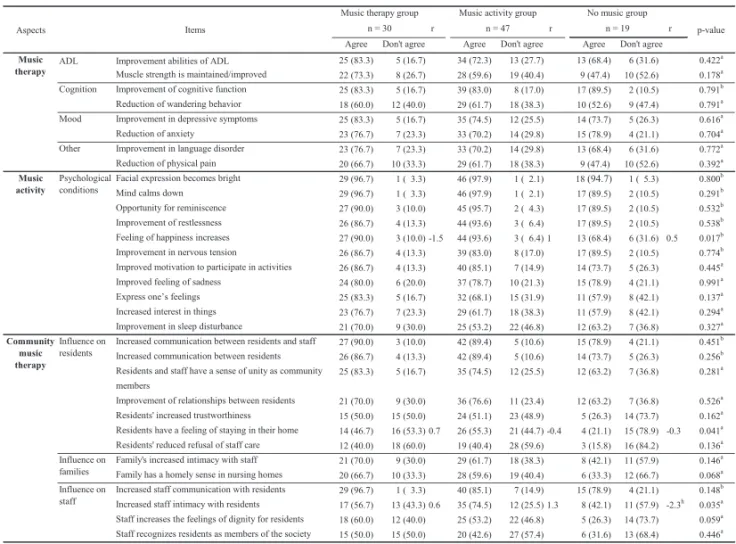
Table 4 shows that no significant difference was noted among three groups in the respondents’
recognition of the effects of music therapy. However, the music provision groups showed a significantly higher recognition of “feeling of happiness increases” and
“residents have a feeling of staying in their home” than the no music group, but no significant difference was Table 2. Reason for not providing music
n = 19 Items
There is a shortage of staff with knowledge regarding music provision 13 (68.4) There is a shortage of staff who can implement music provision 8 (42.1) There is no time (implementation and preparation) for music provision 8 (42.1) Number of residents who can participate in music provision is decreasing 7 (36.8)
Request from residents is decreasing 5 (26.3)
Implementation of music provision is expensive 4 (21.1) There is better care for residents than necessary for music provision 3 (15.8)
Other 2 (10.6)
n (%)
Table 3. Planners and providers for music provision
34
n = 77
Planner Provider Planner Provider
Music therapist 16 16 0 0
Care worker Total 35 43 55 47
Have music experience 16 17 16 12
No music experience 19 26 39 35
Music teacher/Expert 10 10 3 3
Total 5 7 19 18
Have music experience 1 1 6 7
No music experience 4 6 13 11
Occupational therapist Total 3 5 9 10
Have music experience 3 5 4 4
No music experience 0 0 5 6
Volunteer for residents 8 13 22 38
Other 3 1 10 11
Items Music therapy group
All items were multiple answers.
Have music experience means people who have learning experience of a music instrument or singing.
Music activity group
n = 30 n=47
Life consultant social worker
Table 4. Effects of music provision
Aspects r r r p-value
Agree Don't agree Agree Don't agree Agree Don't agree
ADL Improvement abilities of ADL 25 (83.3) 5 (16.7) 34 (72.3) 13 (27.7) 13 (68.4) 6 (31.6) 0.422a
Muscle strength is maintained/improved 22 (73.3) 8 (26.7) 28 (59.6) 19 (40.4) 9 (47.4) 10 (52.6) 0.178a Improvement of cognitive function 25 (83.3) 5 (16.7) 39 (83.0) 8 (17.0) 17 (89.5) 2 (10.5) 0.791b Reduction of wandering behavior 18 (60.0) 12 (40.0) 29 (61.7) 18 (38.3) 10 (52.6) 9 (47.4) 0.791a Improvement in depressive symptoms 25 (83.3) 5 (16.7) 35 (74.5) 12 (25.5) 14 (73.7) 5 (26.3) 0.616a
Reduction of anxiety 23 (76.7) 7 (23.3) 33 (70.2) 14 (29.8) 15 (78.9) 4 (21.1) 0.704a
Other Improvement in language disorder 23 (76.7) 7 (23.3) 33 (70.2) 14 (29.8) 13 (68.4) 6 (31.6) 0.772a
Reduction of physical pain 20 (66.7) 10 (33.3) 29 (61.7) 18 (38.3) 9 (47.4) 10 (52.6) 0.392a
Facial expression becomes bright 29 (96.7) 1 ( 3.3) 46 (97.9) 1 ( 2.1) 18 (94.7) 1 ( 5.3) 0.800b
Mind calms down 29 (96.7) 1 ( 3.3) 46 (97.9) 1 ( 2.1) 17 (89.5) 2 (10.5) 0.291b
Opportunity for reminiscence 27 (90.0) 3 (10.0) 45 (95.7) 2 ( 4.3) 17 (89.5) 2 (10.5) 0.532b Improvement of restlessness 26 (86.7) 4 (13.3) 44 (93.6) 3 ( 6.4) 17 (89.5) 2 (10.5) 0.538b Feeling of happiness increases 27 (90.0) 3 (10.0) -1.5 44 (93.6) 3 ( 6.4) 1 13 (68.4) 6 (31.6) 0.5 0.017b Improvement in nervous tension 26 (86.7) 4 (13.3) 39 (83.0) 8 (17.0) 17 (89.5) 2 (10.5) 0.774b Improved motivation to participate in activities 26 (86.7) 4 (13.3) 40 (85.1) 7 (14.9) 14 (73.7) 5 (26.3) 0.445a
Improved feeling of sadness 24 (80.0) 6 (20.0) 37 (78.7) 10 (21.3) 15 (78.9) 4 (21.1) 0.991a
Express one’s feelings 25 (83.3) 5 (16.7) 32 (68.1) 15 (31.9) 11 (57.9) 8 (42.1) 0.137a
Increased interest in things 23 (76.7) 7 (23.3) 29 (61.7) 18 (38.3) 11 (57.9) 8 (42.1) 0.294a
Improvement in sleep disturbance 21 (70.0) 9 (30.0) 25 (53.2) 22 (46.8) 12 (63.2) 7 (36.8) 0.327a Increased communication between residents and staff 27 (90.0) 3 (10.0) 42 (89.4) 5 (10.6) 15 (78.9) 4 (21.1) 0.451b Increased communication between residents 26 (86.7) 4 (13.3) 42 (89.4) 5 (10.6) 14 (73.7) 5 (26.3) 0.256b Residents and staff have a sense of unity as community 25 (83.3) 5 (16.7) 35 (74.5) 12 (25.5) 12 (63.2) 7 (36.8) 0.281a members
Improvement of relationships between residents 21 (70.0) 9 (30.0) 36 (76.6) 11 (23.4) 12 (63.2) 7 (36.8) 0.526a Residents' increased trustworthiness 15 (50.0) 15 (50.0) 24 (51.1) 23 (48.9) 5 (26.3) 14 (73.7) 0.162a Residents have a feeling of staying in their home 14 (46.7) 16 (53.3) 0.7 26 (55.3) 21 (44.7) -0.4 4 (21.1) 15 (78.9) -0.3 0.041a Residents' reduced refusal of staff care 12 (40.0) 18 (60.0) 19 (40.4) 28 (59.6) 3 (15.8) 16 (84.2) 0.136a Family's increased intimacy with staff 21 (70.0) 9 (30.0) 29 (61.7) 18 (38.3) 8 (42.1) 11 (57.9) 0.146a Family has a homely sense in nursing homes 20 (66.7) 10 (33.3) 28 (59.6) 19 (40.4) 6 (33.3) 12 (66.7) 0.068a Increased staff communication with residents 29 (96.7) 1 ( 3.3) 40 (85.1) 7 (14.9) 15 (78.9) 4 (21.1) 0.148b Increased staff intimacy with residents 17 (56.7) 13 (43.3) 0.6 35 (74.5) 12 (25.5) 1.3 8 (42.1) 11 (57.9) -2.3h 0.035a Staff increases the feelings of dignity for residents 18 (60.0) 12 (40.0) 25 (53.2) 22 (46.8) 5 (26.3) 14 (73.7) 0.059a Staff recognizes residents as members of the society 15 (50.0) 15 (50.0) 20 (42.6) 27 (57.4) 6 (31.6) 13 (68.4) 0.446a a: Pearson's chi-square test, b: Fisher's exact test, r: Chi-square residual analysis, h: p<0.05. r value greater than 1.96 is considered as p<0.05. r value greater than 2.58 is considered p<0.01. ADL: activities of daily living, n (%)
Music therapy
Cognition
Mood
Music
activity Psychological conditions
Community music therapy
Influence on residents
Influence on families Influence on staff
Table 4. Effects of music provision
Items
Music therapy group Music activity group No music group
n = 30 n = 47 n = 19
Table 5.Objectives, ways and evaluation of music provision
n = 77 Improvement of
ADL abilities Improvement of
dementia Improvement of
restlessness Improvement of
depression Increase of
communication Healing of
the heart Increased willingness to interact with people
Yes 48 (62.3) 46 (59.7) 47 (61.0) 27 (35.1) 54 (70.1) 65 (84.4) 34 (44.2)
No 29 (37.7) 31 (40.3) 30 (39.0) 50 (64.9) 23 (29.9) 12 (15.6) 43 (55.8)
Ways of providing music
Providing Yes 40 (51.9) 41 (53.2) 42 (54.5) 25 (32.5) 46 (59.7) 58 (75.3) 26 (33.8)
No 37 (48.1) 36 (46.8) 35 (45.5) 52 (67.5) 31 (40.3) 19 (24.7) 51 (66.2)
Evaluation Yes 29 (37.7) 25 (32.5) 28 (36.4) 14 (18.2) 30 (39.0) 41 (53.2) 13 (16.9)
No 48 (62.3) 52 (67.5) 49 (63.6) 63 (81.8) 47 (61.0) 36 (46.8) 64 (83.1)
Providing Yes 40 (51.9) 30 (39.0) 29 (37.7) 15 (19.5) 35 (45.5) 36 (46.8) 20 (26.0)
No 37 (48.1) 47 (61.0) 48 (62.3) 62 (80.5) 42 (54.5) 41 (53.2) 57 (74.0)
Evaluation Yes 24 (31.2) 18 (23.4) 15 (19.5) 7 ( 9.1) 18 (23.4) 26 (33.8) 9 (11.7)
No 53 (68.8) 59 (76.6) 62 (80.5) 70 (90.9) 59 (76.6) 51 (66.2) 68 (88.3)
Providing Yes 11 (14.3) 11 (14.3) 12 (15.6) 9 (11.7) 13 (16.9) 13 (16.9) 9 (11.7)
No 66 (85.7) 66 (85.7) 65 (84.4) 68 (88.3) 64 (83.1) 64 (83.1) 68 (88.3)
Evaluation Yes 9 (11.7) 10 (13.0) 7 ( 9.1) 5 ( 6.5) 8 (10.4) 9 (11.7) 4 ( 5.2)
No 68 (88.3) 67 (87.0) 70 (90.9) 72 (93.5) 69 (89.6) 68 (88.3) 73 (94.8)
Providing Yes 12 (15.6) 11 (14.3) 10 (13.0) 9 (11.7) 11 (14.3) 13 (16.9) 10 (13.0)
No 65 (84.4) 66 (85.7) 67 (87.0) 68 (88.3) 66 (85.7) 64 (83.1) 67 (87.0)
Evaluation Yes 7 ( 9.1) 7 ( 9.1) 6 ( 7.8) 5 ( 6.5) 7 ( 9.1) 10 (13.0) 5 ( 6.5)
No 70 (90.9) 70 (90.9) 71 (92.2) 72 (93.5) 70 (90.9) 67 (87.0) 72 (93.5)
Providing Yes 18 (23.4) 20 (26.0) 21 (27.3) 14 (18.2) 23 (29.9) 36 (46.8) 13 (16.9)
No 59 (76.6) 57 (74.0) 56 (72.7) 63 (81.8) 54 (70.1) 41 (53.2) 64 (83.1)
Evaluation Yes 9 (11.7) 13 (16.9) 11 (14.3) 9 (11.7) 12 (15.6) 18 (23.4) 7 ( 9.1)
No 68 (88.3) 64 (83.1) 66 (85.7) 68 (88.3) 65 (84.4) 59 (76.6) 70 (90.9)
Providing Yes 23 (29.9) 27 (35.1) 26 (33.8) 17 (22.1) 28 (36.4) 34 (44.2) 14 (18.2)
No 54 (70.1) 50 (64.9) 51 (66.2) 60 (77.9) 49 (63.6) 43 (55.8) 63 (81.8)
Evaluation Yes 8 (10.4) 9 (11.7) 7 ( 9.1) 7 ( 9.1) 14 (18.2) 18 (23.4) 5 ( 6.5)
No 69 (89.6) 68 (88.3) 70 (90.9) 70 (90.9) 63 (81.8) 59 (76.6) 72 (93.5)
Providing Yes 26 (33.8) 23 (29.9) 33 (42.9) 16 (20.8) 28 (36.4) 41 (53.2) 15 (19.5)
No 51 (66.2) 54 (70.1) 44 (57.1) 61 (79.2) 49 (63.6) 36 (46.8) 62 (80.5)
Evaluation Yes 11 (14.3) 10 (13.0) 17 (22.1) 10 (13.0) 14 (18.2) 24 (31.2) 7 ( 9.1)
No 66 (85.7) 67 (87.0) 60 (77.9) 67 (87.0) 63 (81.8) 53 (68.8) 70 (90.9)
Providing Yes 19 (24.7) 21 (27.3) 25 (32.5) 14 (18.2) 23 (29.9) 30 (39.0) 10 (13.0)
No 58 (75.3) 56 (72.7) 52 (67.5) 63 (81.8) 54 (70.1) 47 (61.0) 67 (87.0)
Evaluation Yes 9 (11.7) 9 (11.7) 9 (11.7) 9 (11.7) 10 (13.0) 16 (20.8) 4 ( 5.2)
No 68 (88.3) 68 (88.3) 68 (88.3) 68 (88.3) 67 (87.0) 61 (79.2) 73 (94.8)
ADL: activities of daily living. n (%)
Singing
Background music Rhythm exercise
Play intrusment
Play intrusment with help
Live performance of appreciation
Watching television music program
Appreciation of music compact disc
Objectives of providing music
Table 6. Reasons for not providing music activity training to care workers Music therapy
group Music activity
group No music
group
n = 26 n = 44 n = 19 p-value
Inside nursing home
There is no teaching person Yes 11 (42.3) 30 (68.2) 9 (47.4) 0.074a No 15 (57.7) 14 (31.8) 10 (52.6)
It is a low-priority work Yes 7 (26.9) 12 (27.3) 8 (42.1) 0.453a No 19 (73.1) 32 (72.7) 11 (57.9)
Yes 6 (23.1) 10 (22.7) 8 (42.1) 0.245a No 20 (76.9) 34 (77.3) 11 (57.9)
Staff members do not think that it is Yes 2 ( 7.7) 2 ( 4.5) 1 ( 5.3) 0.856b No 24 (92.3) 42 (95.5) 18 (94.7)
Yes 1 ( 3.8) 1 ( 2.3) 0 NA
No 25 (96.2) 43 (97.7) 19 (100)
Other Yes 6 (23.1) 3 ( 6.8) 2 (10.5) 0.131b
No 20 (76.9) 41 (93.2) 17 (89.5) Outside nursing home
Yes 5 (19.2) 19 (43.2) 9 (47.4) 0.078a No 21 (80.8) 25 (56.8) 10 (52.6)
The training place is located very far Yes 9 (34.6) 9 (20.5) 4 (21.1) 0.380a No 17 (65.4) 35 (79.5) 15 (78.9)
There are few music activity trainings Yes 3 (11.5) 10 (22.7) 2 (10.5) 0.341b No 23 (88.5) 34 (77.3) 17 (89.5)
Yes 4 (15.4) 2 ( 4.5) 2 (10.5) 0.299b No 22 (84.6) 42 (95.5) 17 (89.5)
Lack of budget Yes 2 ( 7.7) 3 ( 6.8) 1 ( 5.3) 0.949b
No 24 (92.3) 41 (93.2) 18 (94.7)
Yes 1 ( 3.8) 0 0 NA
No 25 (96.2) 44 (100) 19 (100)
Other Yes 4 (15.4) 5 (11.4) 4 (21.1) 0.602b
No 22 (84.6) 39 (88.6) 15 (78.9) All items were multiple answers. a: Pearson's chi-square test, b: Fisher's exact test. n (%) NA: not applicable.
Staff members are too busy to attend music activity training
Our nursing homes have a manual for music activities
Staff members do not think that it is necessary
Items
Staff members are too busy to attend music activity training
Our nursing homes have a manual for music activities
noted in residual analysis. Regarding the recognition of “increased staff intimacy with residents,” the scores of the no music group was significantly less among three groups in residual analysis and was distributed approximately 30% less than the music activity group.
Further, “residents’ increased trustworthiness” scored 50.0% and 51.1%, “staff recognizes residents as members of society” scored 50.0% and 42.6% in music therapy and music activity groups, respectively.
4. Objectives, ways, and evaluation of music provision Table 5 displays the conditions of music provision.
The objectives included improvement of ADL abilities and dementia symptoms, which scored approximately 60%. Ways of singing and rhythm exercises were provided approximately 50% of the time to improve ADL abilities and dementia symptoms. In addition, playing musical instruments scored about 10% for all objectives. Watching music TV programs scored approximately 35% for improving dementia symptoms and communication skills. Evaluation rates were lower than 30%.
5. Music activity training
In total, 71 (77.2%) respondents thought that music activity training was necessary for the staff. Of the NHs, 89 (93.7%) did not provide music activity training to staff at a frequency of once a year.
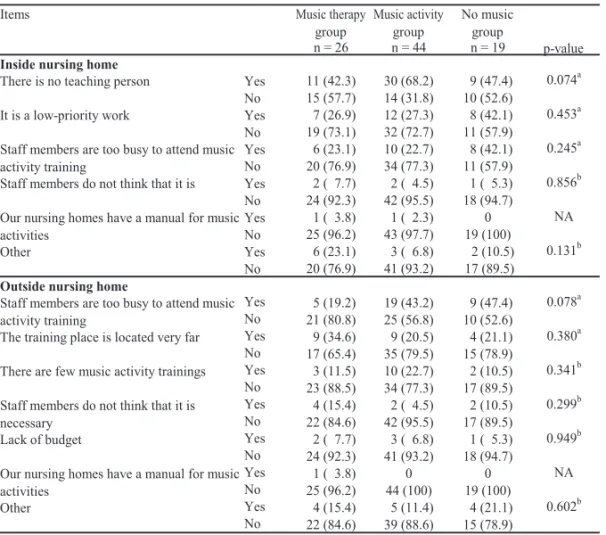
Table 6 shows that no significant difference was noted among the three groups. The most common reason for not providing training was “there is no teaching person” (50, 56.2%).
Discussion
1. Implementation rate of music provision
Of the NHs, 80% provided music therapy or music activity. Most residents had stage 4 dependency needs or more, which was close to the result of a national survey conducted on NH residents2). The beneficial effects of music on maintaining and improving residents’ ADL have been demonstrated as well as the positive effects on dementia symptoms3- 5). However, 20% of NHs did not provide music at all. “There is a shortage of staff with knowledge regarding music provision” was the reason most often given. The no music group also showed significantly less experience in music, interest of providing music, and recognition of the effects of music. This was believed to lead to a lack
of confidence of providing music. Therefore, we suggest that educating staff regarding music would increase staff confidence in providing music.
Of the no music group, 61.1% were receiving terminal care. The World Health Organization has pointed out that during the terminal period, providing holistic care for the patient’s psychological, social, and biological needs equally is very important22). When music is offered during palliative care, it contributes to the patient’s biopsychosocial well-being and is widely practiced internationally23-24). Studies evaluating the impact of music have found that it was effective in lowering pain and improving quality of life (QOL) during the terminal period25-26). Therefore, music was considered to enhance residents’ comfort during the terminal period. However, there was not enough emphasis on the link between terminal care and music in the no music group.
2. Ways for providing music
Only 60% of respondents provided music to improve ADL abilities and reduce dementia symptoms. Singing and rhythm exercises were provided by around 50%
only, while playing instruments was provided by about 10%. Singing contains both language and melody, which highly stimulates the brain27), and is connected to improvements in cognition. Exercise also improves ADL abilities in people with dementia28). Exercise with music encourages initiative and patient participation and improves depressive symptoms and cognitive function in NH residents29-30). Playing instruments, including simple instruments, for residents with high dependency needs or severe dementia helps in maintaining their cognitive function31). In addition, these ways of music provision have been classified as meaningful activities in NHs32). One study found that NH residents spent little time in meaningful activities33). We speculated that residents were considered unable to enjoy music activity due to their high dependency level. In short, a variety of music provision should be provided more often, and ways for music provision should be selected and applied according to resident’s needs and physical abilities.
Watching music programs on TV was provided in over 35% of NHs to improve dementia symptoms and communication skills. Watching TV is one kind of enjoyable activity, but it is a unidirectional
stimulation for residents, which is undesirable for improving dementia symptoms and communication.
If staff could promote conversation while residents were watching TV, interaction, human relationships, and reminiscence may be promoted. We thought that leaving the residents alone in front of the TV should be avoided. Due to residents’ high dependency levels and low physical abilities, permitting residents solo, non- interactive leisure time may lead their lives to become meaningless. Group music practices were suggested as routine activities for residents, to enhance emotional relaxation, create interpersonal interaction, and reduce agitated behavior34). We suggest that music provision in groups should be encouraged and staff support should be provided to improve the quality.
3. Effects of providing music
No significant difference was noted in the recognition of the effects of music therapy.
Table 4 shows significant recognition of “feeling of happiness increases” and “residents have a feeling of staying in their home” among three groups, but it shows no significant difference in residual analysis. Regarding the distribution of the two above-mentioned items, the music provision groups were approximately 25% and 30% more than the no music group. We concluded that many of the beneficial effects of music for residents may be generally well-known in the care field through media, but effects such as “feeling of happiness increases” are more likely to be realized from the various real-time experiences related to music such as seeing the residents smile and sing. We also concluded that the staff was more aware of the effect of music on the mentality of the residents, such as improving the sense of belonging through music provision.
In addition, regarding only the recognition of
“increased staff intimacy with residents,” no music group showed significantly less in residual analysis, and the scores were approximately 30% lesser than in the music activity group. Furthermore, as a result of the reason for interest in providing music, which is
“promoting communication between staff and resident,”
no music group was also considered significantly less, music activity group was considered significantly more in residual analysis. It was considered that the staff had difficultly in recognizing the effects of music on staff without music provision. We considered that
the importance of music activities in interactions in interpersonal relationships may be reflected on staff cognition. Since residents are separated from their own homes and the facilities become places of life, the staff are more likely to take up positions of their families.
We considered that music activity promotes this intimacy relationship by influencing on the staff. On the basis of leisure activities increasing the enjoyment of residents and helping them adjust to the facility11), we considered that music activities as leisure activities are useful for providing a place of well-being for residents by promoting fun and human relationships. Combining these results with community music therapy that everyone in the community improves and strengthens their relationships with each other through participation in music17), we recognized that the effects of community music therapy can be reflected in not only residents but also the people who participate in music activities in NHs. We considered that the effects of community music therapy have a great impact on the QOL of the residents and community music therapy can be further integrated into music activity.
On the contrary, even in the music provision groups,
“residents increased trustworthiness” and “staff recognizes residents as members of society” were recognized in approximately 50% only, and neither were found to be the significant effects. This low rate of recognition will influence the quality of care.
Person-centered care based on Kitwood’s definition of personhood can affect residents’ social being and well-being in NHs12, 35). In person-centered care, the quality and sensitivity of the interpersonal relationship process between dementia patients and caregivers is critical36). For residents, the NH is the only place where interpersonal and social relationships can occur.
However, residents often find it difficult to take the initiative due to their health problems and disabilities.
Therefore, care providers need to pay more attention to the interpersonal process between residents, families, and staff through music provision.
4. Issues encountered providing music 1) Inappropriateness in music provision
The evaluation of the therapeutic objectives, such as the improvement of ADL, was limited to 30%. We considered that the low rate of evaluation of music therapeutic objects will make music implementation
ineffective because evaluation ensures the effects of music provision become visible by providing feedback to identify improvements. The lack of a music therapist is one of the reasons given for poor evaluation. Other reasons are the high dependency needs and health problems of residents including language disorders, which result in difficulties in using evaluation tools.
Only 50% of the NHs, which provided music therapy, had a music therapist as the planner and provider. It showed that 50% of the music therapy had no quality assurance. Music therapy in NHs should be delivered based on an understanding of the physical and psychological needs and abilities of residents. The type and stage of dementia should be assessed in advance to ensure the effectiveness of music interventions; whether individual or group sessions should be offered, how the song list and safe movements are, and how to introduce topics during the introduction should be planned37). The effects of music therapy must be examined by professional evaluation tools. These things are hard to achieve without a music therapist.
On the other hand, there was no support from music therapists at all in NHs, which provided music activities only. Care workers without musical experience were most commonly the people who planned and provided music activities. Due to residents’ high dependency needs and dementia, special consideration had to be given in planning music activities. Excessive exercise must be avoided, large lyric typefaces are required, a fixed time and form are required to enable residents to feel at ease, and the tempo/volume/sound ranges should be planned carefully37). Certainly, music activities for daily enjoyment can be provided by care workers without a music therapist. However, unsuitable music may be harmful for residents. Therefore, care workers still need some knowledge and training in providing music.
2) Improvement to provide music
The lack of music therapists in NHs is not prevalent in Japan only. In the USA, a study reported that only one NH offered a full-time music therapist8).
We considered the reason that music therapists are not considered essential at NHs is that, as yet, music therapy is not a national qualification38). To promote music therapy as a nationally certified profession, it is important to clarify its usefulness and to gain recognized by society while guaranteeing the quality and professionalism of music therapy39). One difficulty indicated is that music is not considered essential to life40), such as meals. Therefore, the country should review their priorities to budget for music therapist training.
On the other hand, music activity is also valued.
The quality of music activities should be improved by providing the training for care workers because they were most commonly the people who provided music.
However, 93.7% of NHs did not provide music activity training. The reason given most often was “there is no teaching person.” Meanwhile, 77.2% of respondents made requests for the training. We advocate developing a music training program for staff.
Limitations
The collection rate was only 18%, but this was more than we expected. We recognize that the generalization is still limited. We could not examine the details of the evaluation in the ways of music.
Conclusions
A common problem noted was that music was not provided according to a resident’s needs and physical abilities because music therapists were unavailable and the available staff lacked professional knowledge of providing music. Therefore, while promoting cultivation of music therapists, education on music activity for staff should be developed.
Acknowledgments
We would like to thank Masami Takeda and Yuzou Sugayachi for confirming the reliability and validity of the questionnaire. This study received funding from the Research Foundation of Kanazawa University.
References
1 ) U.S. Department of Health and Human Services:
What is long-term care.
(https://longtermcare.acl.gov/the-basics/what-is- long-term-care.html. Accessed 2019.2.1)
2 ) Ministry of Health, Labor and Welfare: 2016 Overview of nursing care service facility.
(https://www.mhlw.go.jp/toukei/saikin/hw/kaigo/
service16/index.html. 2019.2.1)
3 ) Sonia B (2017): Using music intervention to reduce anxiety and agitation for dementia residents in long term setting. Walden dissertations and doctoral studies collection
(https://scholarworks.waldenu.edu/dissertations/3284/
Accessed 2019.6.16)
4 ) Groene RW(1993): Effectiveness of music therapy 1: 1 intervention with individuals having senile dementia of the Alzheimer’s type. Journal of Music Therapy, 30(3), 138-157
5 ) Satoh M, Ogawa J, Tokita T, et al. (2017): Physical exercise with music maintains activities of daily living in patients with dementia: Mihama-Kiho Project Part 2. Journal of Alzheimer’s Disease, 57(1), 85-96
6 ) Ang YH, Au SYL, Yap LKP, et al (2006):
Functional decline of the elderly in a nursing home.
Singapore Medical Journal, 47(3), 219
7 ) Chan MF, Wong ZY, Onishi H, et al (2011):
Effects of music on depression in older people:
a randomized controlled trial. Journal of Clinical Nursing, 21(5-6), 776-783
8 ) Greco M (2013): The status of music therapy in Florida nursing homes and assisted living facilities.
Florida State University
(http://purl.flvc.org/fsu/fd/FSU_migr_etd-7401)
9 ) Altintas E, De Benedetto G, Gallouj K (2017):
Adaptation to nursing home: The role of leisure activities in light of motivation and relatedness.
Archives of Gerontology and Geriatrics, 70, 8-13 10) Freeman S, Roy C (2005): Cognitive behavior
therapy and the Roy Adaptation Model: A discussion of theoretical integration, in: Freeman SM, Freeman A, eds. Cognitive behavior therapy in nursing practice. Springer publishing company, 3-27, USA
11) McGuinn KK, Moshler-Ashley PM (2001):
Participation in recreational activities and its effects on perception of life satisfaction in residential settings. Activities Adaptation & Aging, 25(1), 77- 86
12) Kitwood T. (1997): Dementia reconsidered. Open University Press, 8, Great Britain
13) Ministry of Health, Labor and Welfare: Care for older people: Toward establishment of care that
supports the dignity of the elderly
(http://www.mhlw.go.jp/topics/kaigo/kentou/
15kourei/3.html. Accessed 2019.2.1)
14) Ing-Randolph AR, Phillips LR, Williams AB (2015):
Group music interventions for dementia-associated anxiety: A systematic review. International Journal of Nursing Studies, 52(11), 1775-1784
15) Miyake H (2014): Bio-political perspectives on the expression of people with disabilities in music therapy: Case examples. Voices: A World Forum for Music Therapy, 14(3)
(https://voices.no/index.php/voices/article/
view/2224/1978)
16) Stige B (2002)/Sakaue Masami (2008): 文化中心音 楽療法 , Ongaku no tomo sha crop, 159-182
17) American Music Therapy Association: What is music therapy
(https://www.musictherapy.org/about/musictherapy/.
Accessed 2019.2.1)
18) Cunningham JB, McCrum-Gardner E (2007):
Power, effect and sample size using G-Power:
practical issues for researchers and members of research ethics committees. Evidence Based Midwifery, 5(4), 132-136
19) WELLNESS: Secondary medical field database system: National nursing home list data
(http://www.wellness.co.jp/siteoperation/msd/.
Accessed 2019.2.1)
20) ENESC: Random number maker
(http://mpnets.net/rand/. Accessed 2019.2.1)
21) Ministry of Health, Labor and Welfare: 2016 The system of certification of long-term care dependency.
(https://www.mhlw.go.jp/file/05-Shingikai- 1 1 9 0 1 0 0 0 - K o y o u k i n t o u j i d o u k a t e i k y o k u - Soumuka/0000126240.pdf. Accessed 2019.2.1)
22) World Health Organization: WHO Definition of Palliative Care
(https://www.who.int/cancer/palliative/definition/
en/. Accessed 2019.2.1)
23) Schmid W, Rosland JH, von Hofacker S, et al. (2018): Patient’s and health care provider’s perspectives on music therapy in palliative care- an integrative review. BMC Palliative Care, 17(1), 32 24) McConnell T, Scott D, Porter S (2016): Music
therapy for end-of-life care: An updated systematic review. Palliative Medicine, 30(9), 877-883
25) Gutgsell KJ, Schluchter M, Margevicius S, et al.
(2013): Music therapy reduces pain in palliative care patients: A randomized controlled trial.
Journal of Pain and Symptom Management, 45(5), 822-831
26) Hilliard RE (2003): The effects of music therapy on the quality and length of life of people diagnosed
with terminal cancer. Journal of Music Therapy, 40(2), 113-137
27) Jeffries KJ, Fritz JB, Braun AR(2003): Words in melody : An H215O PET study of brain activation during singing and speaking. Neuroreport, 14( 5), 749-754
28) Rao AK, Chou A, Bursley B, et al. (2013):
Systematic review of the effects of exercise on activities of daily living in people with Alzheimer’s disease. American Journal of Occupational Therapy, 68(1), 50-56
29) Spildooren J, Speetjens I, Abrahams J, et al. (2018):
A physical exercise program using music-supported video-based training in older adults in nursing homes suffering from dementia: a feasibility study.
Aging Clinical and Experimental Research
30) Cheung DSK, Lai CKY, Wong FKY, et al.
(2016): The effects of the music-with-movement intervention on the cognitive functions of people with moderate dementia: a randomized controlled trial. Aging & Mental Health, 22(3), 306-315 31) Takahashi T, Matsushita H (2006): Long-term
effects of music therapy on elderly with moderate/
severe dementia. Journal of Music Therapy, 43(4), 317-333
32) Morley JE, Philpot CD, Gill D, et al. (2014):
Meaningful activities in the nursing home. Journal of the American Medical Directors Association, 15(2), 79-81
33) Ballard C, Fossey J, Chithramohan R, et al.(2001):
Quality of care in private sector and NHS facilities for people with dementia: cross sectional survey.
BMJ, 323(7310), 426-427
34) Lin Y, Chu H, Yang CY, et al. (2011): Effectiveness of group music intervention against agitated behavior in elderly persons with dementia.
International Journal of Geriatric Psychiatry, 26, 670-678
35) Brooker D (2007)/Mizuno Yutaka (2010): VIPS で すすめるパーソン・センタード・ケア : あなたの 現場に生かす実践編 , Creates kamogawa Co., LTD, 170-216
36) McDermott O, Orrell M, Ridder HM (2014): The importance of music for people with dementia:
the perspectives of people with dementia, family carers, staff and music therapists. Aging & Mental Health, 18(6), 706-716
37) Kitamoto F (2002): 老いの心と向き合う音楽療法 , Ongaku No Tomo Sha Corp, 94-103, 26-32
38) Ministry of Health, Labor and Welfare: 143th Social Security Council, Document 2: Staffing (https://www.mhlw.go.jp/stf/shingi 2/0000171816.
html. Accessed 2019.2.1)
39) Sakashita M (2007): Specialty in music therapy and remark theory over making to qualification. Core Ethics, 3, 165-181
(http://r-cube.ritsumei.ac.jp/repo/repository/
rcube/2603/. Accessed 2019.2.1)
40) Japanese Music Therapy Association: No.8 Japanese Music Therapy Association News: Status of promotion to national qualification
(http://www.jmta.jp/association/n008/02.html.
Accessed 2019.2.1)