A Study on Development Methodology of Sustainable Solid Waste Management System by Using Multi-Objective Decision
Making Model – A case study in Hoi An City, Vietnam
September 2017
HOANG MINH GIANG
Graduate School of Environmental and Life Science
(Doctor’s Course)
Dissertation submitted to
Graduate School of Environmental and Life Science of
Okayama University
for partial fulfillment of the requirements for the degree of
Doctor of Philosophy
Written under the supervision of Professor TAKESHI FUJIWARA
and co-supervised by
Professor KATSUYA KAWAMOTO and
Professor YASUHIRO MATSUI
To Whom It May Concern
We hereby certify that this is a typical copy of the original doctor thesis of Mr. Hoang Minh Giang
Signature of the Supervisor
Professor Takeshi Fujiwara
Seal of
Graduate School of Environmental and Life Science
ABSTRACT
Solid waste generation is the result of human activities in their production and consumption cycle. Rapid development in Vietnam causes significant increases in municipal solid waste (MSW) generation and negative impacts on the Environment and human health due to the inappropriate waste management system. A sustainable waste management system which ensures environmental safety and human health becomes a critical target of Viet Nam. However, hardly any study provides holistic methods for planning a sustainable waste management that is environmentally effective, economically affordable and socially acceptable in socioeconomic conditions of developing countries. Also, study on methods for evaluating social acceptance for waste management still lagged behind environmental and economic objectives.
Thus, this dissertation aims at developing a methodology for planning a sustainable waste management system in the social-economic conditions of Vietnam including following main contents: (1) Development of useful sampling procedure and appropriate statistical analysis in waste characterization. The method is readily applicable to medium and small cities in Vietnam for waste characterization study. (2) Identification of relevant factors influencing on household waste generation as well as prediction of MSW generation using multivariate linear regression model (3) Development of Multi-objective Decision-making (MODM) models to identify the optimal solutions in the selection of MSW system. Decision variables as results of the model show the efficient waste flows, and appropriate treatment technologies to satisfy all objectives.
(4) Development of an approach to optimize the social acceptance objective in MODM techniques by using Consensus Analysis Model (CAM) and Reference Point Method (RPM).
Those help to identify compromise solution over questionnaire survey and direct discussion with related decision makers including authorities, stakeholders and citizen representatives.
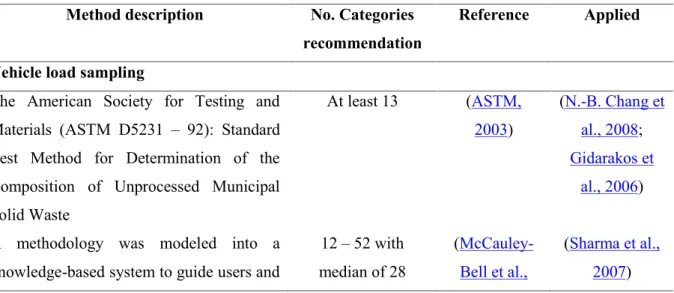
To apply these methods to actual targets, a case study was conducted in Hoi An, a well- known tourist city in Vietnam. Firstly, a sampling of municipal waste and analysis of composition and generation were carried out in 2015. To determine the waste characteristics from various sources of the city, not only waste from 321 households but also waste from tourist sources including 9 hotels (HT), 6 restaurants (RBC), and 3 streets (STR) of tourist corners were
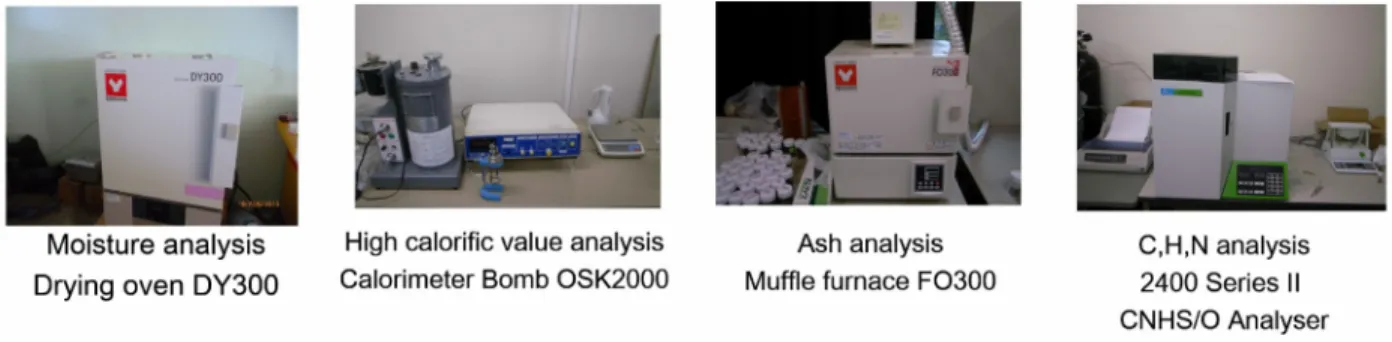
chosen. Waste collected was classified into 10 physical categories and 18 subcategories; then, 37 samples were brought to Japan for chemical analysis. The result showed that the daily per capita household waste generation was 0.223 kg capita-1 day-1. People living in rural area generated about a half of the amount of daily waste produced by residents in the urban area. Hotels generated about 0.6 kg room-1 day-1 and one restaurant in HAC produced 26.18 kg day-1 in average. Waste generation from tourist streets was 6.99 kg 100m-1 day-1 in average. The composition of municipal waste in the city had food waste as the largest proportion (42%) and hazardous waste as the smallest contributor (less than 1%). Total biodegradable waste (food and yard trimmings) was approximately 53%, and combustible waste was the second significant component of about 16% while other recyclable contributed about 20% of the municipal waste composition.
Secondly, a questionnaire survey of households (during the period of waste characterization sampling) was conducted to address the relevant factors regarding household waste generation.
The Bayesian model average method was used to identify factors significantly associated with waste generation. Multivariate linear regression analysis was then applied to evaluate the impacts of significant factors on household waste production. The model obtained from this study indicated that household location, household size, house area per person, and family economic activity are important determinants of the waste generation rate. The models could explain about 34% of the variation of the per capita daily waste generation rate. Diagnostic tests and model validation results showed that the regression model could provide reliable results of estimated household waste. The study revealed that per capita urban household waste generation is 70–
80% higher compared to a rural household. That provides a reliable information of waste generation in different areas for better calculation and arrangement of vehicles, labours, collection routes. The models also showed that if a family ran a business from home, the household waste generation rate would increase by about 35%. Thus, the waste fee for business sector might be a major factor that local authorities should take into account in waste collection and management planning. Two other significant variables (family size and house area per capita) do not contribute much (less than 20%) to waste generation. Variables accounting for household income, the presence of a garden, number of rooms in a house, and percentage of members of different ages were proven to be not significant. The study provides a reliable
method for estimating household waste generation, offer decision makers useful information for waste management policy development.
Next, a single-objective model is formulated to minimise the total cost of the system in addition to landfill waste reduction target. For sensitive analysis, various values of waste separation efficiency were employed as constraints of the model. 12 scenarios were developed using combinations of 3 waste-to-landfill targets (LT: 50%, 25% and 10%) and 4 values of waste separation rate (SE: 100%, 90%, 80%, 70%). The model identified optimal waste flows, and proper treatment options to ensure minimum cost for each scenario. As a result, they were evaluated: the influence of landfill reduction policies and waste separation efficiency to the cost, pollutants emissions ( including CH4, CO2, SO2, NOx, Heavy Metal, VOC, N2O emission) and GHG emission of the system. It is infeasible to reach 10% of waste to landfill with the separation rate of 70% (Scenario SC12). It means that to achieve the landfill reduction target to 10% as expected, the waste separation efficiency of the city should be higher than 80%. System cost is proportional with the landfill target, the higher landfill reduction target, the higher cost for the system. Also, the comparison among a group of scenarios with the same landfill target (SC1-SC4 (LT:50%), SC5-SC8 (LT:25%) and SC9-SC11(LT:10%)) shows that the separation efficiency affects significantly to the system cost. The lower rate of waste sorting at source, the higher the system cost. The Scenario SC1 (LT: 50% and SE: 100%) provided the lowest cost of about 1500 US$/day and the highest GHG emission due to the complete waste separation but the amount of waste-to-landfill is high (50% of total MSW being landfilled). The system cost and emission are increased in SC2, SC3 and SC4 because of lower separation efficiency while the GHG emission remains the same. Analyzing the results of SC5 to SC11, waste incineration is seemed an effective technology to deal with the low rate of waste separation for waste-to-landfill amount control. However, increasing of waste incineration also causes higher CO2 emission and air pollutants emission as the result of the analysis. Composting appears as a reliable technology for Hoi An due to low cost and low emission. The percentage of 25% waste to landfill is an achievable target based on the current condition of Hoi An city. Also, the model suggested that the cost is about 1800 US$ per day and the pollutant emission is 40 tonnes per day with SC5(LT:
25% and SE: 100%) in a combination of incineration, composting and landfill as main treatment technologies.
Then, a multi-objective optimization model was developed for identifying the optimal solution in selecting a sustainable waste system. Firstly, a face-to-face interview survey was conducted in 2016 with 18 local experts including authorities, stakeholders, waste managers, scientists and citizens to draw out the appropriate waste treatment technologies and priorities of waste management of the city. The result of the survey was analysed by consensus analysis model (CAM) for choosing treatment options and objective functions in optimisation models.
The consensus result (CR) of Minimising Cost (CR=0.722), Minimising Emission (CR=0.512) and Minimizing Landfill (CR=0.931) were higher than other objectives such as maximising benefit (CR=0.222) or minimising GHG emission (CR=0.271), etc. Also, the degree of consensus (DC) equalled to 0.808, 0.876 and 0.927 for Cost, Emission and Landfill respectively, which means that there was significant consensus for the objectives of the system among local experts. Also, seven waste treatment options were chosen by local experts as potential treatment alternatives for Hoi An city as the results of CAM. Thus, the model proposed accounts for the above three objectives including minimising cost, minimising emission and minimising waste to landfill with chosen treatment alternatives to achieve the goal of sustainability. An optimisation model proposes proposing the efficient waste-flow-allocation and the capacity of disposal facilities as decision variables. The reference point method (RPM) is applied for solving the model to get an optimal solution. Reference points (RP) are chosen by decision makers (DM) who present for different groups involving in waste management such as civil authority, stakeholder and residents throughout a meeting for decision making. The final solution will determine the optimal decision variables and values of objectives which can satisfy all involving DMs. An experiment of the decision-making process was conducted. Three colleagues were invited to play the role of three DMs representing the city authority, the waste management company and citizen in making decisions. Finally, a compromise solution was determined as a result of decision-making which includes intense discussion and agreement between DMs. As a consequence, a Decision Support System using Multi-Objective Decision-Making model was developed which support a variety of policy makers in making decisions. The method provides direct results of the proposed system and also the graphical visibility of chosen solution helping the DMs to discuss adjustment to the final goal. As a result, it takes a shorter time to converge to the compromise decision. The solution indicates that as a cost of about 2183 US$ per day, waste
incinerator (no energy recovery) and anaerobic digestion combined with composting plants should be applied associated with informal recycling activities and home treatment for degradable waste. The amount of waste to landfill was 20 tonnes per day ( about 29.4%) and pollution emission of 35 metric tons per day and GHG emission of 0.38 thousand tonnes CO2-eq
per day.
In conclusion, the dissertation could propose the methodology from waste sampling and characterization until decision-making process by using Multi-objective decision-making model through identification of a statistical model of waste generation. The study proposed a systematic SWM planning process supporting various decision makers including authority, business sector and residents working together to obtain compromise solution in decision-making. Also, the system model developed is reliable to apply in Viet Nam cities. In Viet Nam, such process and system are not implemented yet, and a Decision Support System which considers and optimize social acceptance is firstly proposed. Before drastically increasing of waste generation, designing sustainable SWM system which is suitable for the local condition is inevitable. The author proposed an effective approach to realise this situation in Viet Nam. The model and decision support method will be consistently improved for application in the decision-making process of waste management in different city scales in Viet Nam for our future study.
Key words:Decision-making process, Interactive method, MODM model, Optimization model, Sustainable waste management, Waste characterization, Waste generation model.
TABLE OF CONTENT
ABSTRACT... i
TABLE OF CONTENT ... 1
ABBREVIATIONS... 5
LISTS OF TABLES... 6
LIST OF FIGURES... 8
1. INTRODUCTION... 11
1.1 Background... 11
1.1.1 Problem Statements ... 11
1.1.2 Current status of Municipal waste management in Viet Nam ... 14
1.2 Research objectives... 23
1.3 Scope of study... 24
1.4 Outline of Research... 25
1.5 References... 26
2. LITERATURE REVIEW ... 29
2.1 Sustainable waste management planning... 29
2.1.1 Sustainable waste management system... 29
2.1.2 System analysis approach to Waste Management ... 30
2.1.3 Multi criteria decision making models ... 31
2.2 MSW characterization ... 32
2.2.1 Waste composition analysis ... 32
2.2.2 Prognosis waste generation modelling... 35
2.3 MSW Optimization modeling... 38
2.3.1 Optimization models ... 38
2.3.2 Solving approaches... 39
2.3.3 Gaps in sustainable waste management optimization models ... 40
2.4 Conclusions... 41
2.5 References... 42
3. METHODOLOGY AND PROPOSED CASE STUDY... 48
3.1 Methodology... 48
3.1.1 Waste generation and composition study ... 48
3.1.2 Mathematical modelling of waste generation... 49
3.1.3 Single optimization model for evaluation of alternative waste management initiatives 51 3.1.4 Multi-objective optimization model for MODM ... 52
3.1.5 Statistical analysis and computer software... 55
3.2 Case study in Hoi An, Viet Nam ... 55
3.2.1 General Introduction ... 55
3.2.2 Current status of MSW management ... 57
3.2.3 Challenges of current solid waste management ... 63
3.3 Research proposed for the case study ... 65
3.4 Reference ... 67
4. MUNICIPAL SOLID WASTE CHARACTERIZATION... 70
4.1 Introduction... 70
4.2 Methodology... 71
4.2.1 Research target areas and number of samples ... 71
4.2.2 Sampling procedures ... 73
4.2.3 Physical and chemical analysis ... 76
4.2.4 Statistical analysis ... 76
4.3 Result and discussion... 78
4.3.1 Municipal waste generation... 78
4.3.2 Municipal waste composition ... 83
4.3.3 Waste characteristics ... 87
4.4 Conclusion ... 90
4.5 Reference ... 91
5. MODELLING WASTE GENERATION PROGNOSIS MODEL... 95
5.1 Introduction... 95
5.2 Mathematical modelling of Waste generation ... 96
5.2.1 Data collection... 96
5.2.2 Variables used in modelling... 97
5.2.3 Selection of determinant variables... 98
5.2.4 Multivariate linear regression model ... 100
5.2.5 Testing model assumptions ... 101
5.2.6 Model evaluation and validation ... 102
5.3 Result and discussion... 103
5.3.1 Significant independent variables and selected models... 103
5.3.2 Multivariate linear regression models for household waste generation ... 107
5.3.3 Models analysis... 110
5.4 Conclusion ... 114
5.5 Reference ... 115
6. MODM Model ... 122
6.1 Introduction... 122
6.2 Assessment to the desires of society... 123
6.2.1 Methodologies... 124
6.2.2 Results of the expert's survey ... 127
6.3 Modeling waste management system ... 128
6.3.1 Waste flow analysis... 128
6.3.2 Waste flow modelling... 130
6.4 Single objective optimization model ... 137
6.4.1 Objective function ... 137
6.4.2 Scenarios development... 138
6.4.3 Results of Scenarios analysis by single optimization model ... 139
6.5 Multi-objectives optimization decision-making model ... 145
6.5.1 Objective functions of the model... 145
6.5.2 Decision-making process approach... 146
6.5.3 Results of MODM ... 148
6.6 Conclusion ... 156
6.7 Reference ... 157
7. CONCLUSION AND RECOMMENDATION ... 160
7.1 Summary of key findings... 160
7.2 Limitations of the study and recommendations for future studies... 166
ACKNOWLEDGEMENT ... 168
ABBREVIATIONS
BMA Bayesian model averaging
BIC Bayesian information criterion
CBA Cost – Benefit Analysis
CH4 Methane
CO2 Carbone dioxide
DSS Decision support system
EIA Environmental Impact Analysis
EU European Union
Eq. Equation
GDP Gross domestic product
GHG Greenhouse gas
HAC Hoi An city
MAE Mean absolute error
MFA Material Flow Analysis
m2 Cubic meter
MSW Municipal solid waste
MODM Multi-objective decision making NRMSE Normalized root mean square error
MSWM Municipal solid waste management
OECD Organization for Economic Co-operation and Development
P-value Probability value
% Percentage
R2 Coefficient of determination
RMSE Root mean square error
SWM Solid Waste Management
LISTS OF TABLES
Table 1.1. Waste generation in urban area ... 15
Table 1.2. Waste composition and characteristics... 16
Table 1.3. Collection rate in different urban in Vietnam... 19
Table 3.1. Waste collection schedule for Hoi An city... 60
Table 4.1. Numbers of statistical samples adopted in the survey program. ... 73
Table 4.2 Categories of waste separation in samples ... 75
Table 4.3 Means of waste generation and 95% confident interval... 78
Table 4.4 Results of variance analysis... 80
Table 4.5 Waste composition of different sources regarding tourism waste... 85
Table 4.6 Waste characterization in Hoi An city... 87
Table 5.1 Types of variables in linear regression ... 98
Table 5.2 Best models selected by Bayesian Model Average ... 107
Table 5.3 Results of model validation ... 113
Table 6.1 Experts and stakeholder groups being interviewed ... 123
Table 6.2 Degree of compromise for consensus with different number of stakeholders .... 126
Table 6.3 The CR value of general objectives for sustainable waste management... 127
Table 6.4 Consensus results and Degree of consensus for treatment options ... 128
Table 6.5 Sets, parameters and variables... 131
Table 6.6 Product and residual rate of treatment alternatives ... 134
Table 6.7 Energy consumption coefficients ... 135
Table 6.8 Emission factors p,k ... 135
Table 6.9 The capital cost and variable cost of treatment facilities... 136
Table 6.10 Scenario description ... 139
Table 6.11 Trade-off table ... 148
Table 6.12 Interactions of decision making process with Multi-objective model... 149
Table 6.13 Waste separation rate of optimal solutions... 154
LIST OF FIGURES
Figure 1.1. Common flow of solid waste and collection stakeholders in Vietnam ... 18
Figure 3.1. The location and general map of Hoi An city ... 56
Figure 3.2. MSW generation in Hoi An ... 57
Figure 3.3. Daily waste generation rate in Hoi An city (recorded in 2014) ... 58
Figure 3.4. Kerbside collection in the centre of Hoi An... 59
Figure 3.5. Current MSW management in Hoi An... 60
Figure 3.6. Targets and contents of waste data collection ... 67
Figure 4.1. Target research areas... 72
Figure 4.2. Sampling ratio ... 72
Figure 4.3. Waste sampling procedure ... 74
Figure 4.4 Physical and Chemical analysis ... 76
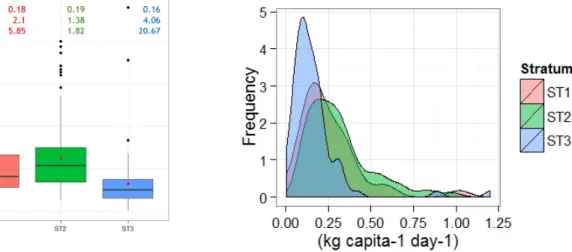
Figure 4.5 Boxplot of waste generation rate... 79
Figure 4.6 Density of waste generation rate ... 79
Figure 4.7 95% family-wise confidence level ... 80
Figure 4.8 Boxplot of waste generation from tourism sector ... 82
Figure 4.9 Correlation of mean of waste generation and number of hotel room... 82
Figure 4.10 Waste composition of household and tourism sector... 84
Figure 4.11 Household waste compositions of thee strata. ... 84
Figure 4.12 Municipal waste compositions ... 85
Figure 4.13 Hoi An MSW composition 18 sub-categories... 86
Figure 4.14 Physical and chemical characteristics of MSW in Hoi An city ... 87
Figure 4.15 Calorific value of MSW in Hoi An city ... 88
Figure 5.1 Correlation coefficients among variables... 104
Figure 5.2 Predictors being chosen for the most reliable models by BMA... 106
Figure 5.3 Fitted line plot of model with four regressors Xplc, Xsiz, Xpa, Xbus... 109
Figure 5.4 Fitted line plot of model with three regressors Xplc , Xsiz, Xbus ... 110
Figure 5.5 Tests for linear assumption of two models... 111
Figure 5.6 The relative importance of regressors for waste generation rate ... 112
Figure 5.7 Observations have high influence to the model ... 112
Figure 6.1 The degree of compromise for consensus (DC value) ... 128
Figure 6.2 The waste flow structure of the model ... 130
Figure 6.3 Total Cost and Emission fo 12 Scenarios... 139
Figure 6.4 Treatment options for 12 Scenarios ... 141
Figure 6.5 Emission of CH4, CO2, NOx, VOC, SO2, N2O and heavy metals ... 142
Figure 6.6 GHG emission of alternative Scenarios ... 142
Figure 6.7 Material Flow of Waste Management System Landfill target of 25% and separation efficiency of 100% ... 144
Figure 6.8 Decision making process... 147
Figure 6.9 MOMD model with all reference points ... 150
Figure 6.10 Pareto-Optimal solutions of decision making process ... 150
Figure 6.11 Objective values and treatment alternatives of four optimal solutions ... 151
Figure 6.12 Pollution emission of obtained Pareto-optimal solution from DMs ... 152
Figure 6.13 Material Flow of Sustainable Waste Management System of compromise solution... 153
Figure 6.14 Model behavior under uncertainty of waste separation rate ... 154
Figure 6.15 Comparision of different separation efficiency... 155
Figure 6.16 Distance and objective values associated with waste separation rate ... 155
1. INTRODUCTION 1.1 Background
1.1.1 Problem Statements
Healthy municipal solid waste management (MSW) is a pressing issue worldwide. Annually, global MSW generation is approximately 1.3 billion tonnes, and it is forecasted to increase to approximately 2.2 billion tonnes in 2025 (Hoornweg & Bhada-Tata, 2012). MSW generation is affected by economic development, the degree of industrialisation, residents’ habits, and cultures.
Income level and rate of urbanisation are highly correlated. As income and living standard increase, consumption of goods and services correspondingly increases, as the amount of waste produced. Therefore, the amount of MSW generated is expected to rise steeply in the next decades. Much of the increase coming in fast-growing cities in developing countries, will be a threat to the environment, public health and safety, so are the financial and social ramifications.
The threat of waste is an urgent issue in less developed nations. Uncollected waste due to inappropriate waste collection and management is typically heaviest near less affluent neighbourhoods and slums. The frequency of illness such as diarrhoea and acute respiratory infection, linked to water pollution and the open burning of waste respectively is much higher, especially in lower developed areas.
MSW also causes a financial burden for municipalities. In general, solid waste management is given a very low priority in developing countries, except perhaps in the capital and large cities.
Normally, cities in developing countries spend 20% to 50% of their budgets for dealing with waste management, and 90% of the annual budget provided for solid waste management was probably used up within the first six months in a developing city (Ogawa, 2008). According to Hoornweg and Bhada-Tata (2012), the cost of waste management will increase 3-4 times in developing countries from about 20 billion US$ in 2010 to approximately 80 billion US$ in 2025.
The rate of cost increase is higher in lower developed countries.
In addition, Climate change has become a matter of public concern, the concentration of CO2 and Methane (CH4) were increased 35% and 100%, respectively (ISWA, 2010). According to the report of IPCC (2007), the amount of Greenhouse gas (GHG) emission from waste sector
accounted for about 3% of total artificial GHG emission, in which 90% is methane gas (Scheutz, Kjeldsen, & Gentil, 2009). In term of Methane emission, Waste sector only contributed around 18% globally (Bogner, 2007), mainly from landfill and wastewater treatment facilities. However, MSW management is a small contributor to GHG emission, but it is becoming a significant GHG mitigator due to its potential for material and energy recovery (UNEP, 2010).
Thus, a sustainable MSW management system has become crucial for the sustainable development strategy of developing countries. To develop a sustainable solid waste management system, a variety of procedures should be conducted efficiently including sampling, surveying to address the problem and obtain waste information, modelling and simulation the reality, calculation economic and environmental impacts of potential management options, implementation of the decision-making process. However, the lack of attention in the study on how to develop a sustainable waste management has led to the improper waste management system in developing countries. The relative importance of procedures which play a major role in waste management planning are explained in the following.
Firstly, planning, design, and operation of a sustainable MSW management system require the understanding of the features the waste stream (Abu Qdais, Hamoda, & Newham, 1997;
Chang & Pires, 2015b). For integrated waste planning, accurate and reliable data on the waste composition and generation are needed for evaluation of optimal treatment options. However, physical, geographical, sociocultural, economic, and political factors may have influences on the composition and generation of municipal solid waste (MSW) (Gallardo, Carlos, Peris, &
Colomer, 2014; Gidarakos, Havas, & Ntzamilis, 2006). Especially, economic development may lead to significant influences to the environment on resource consumption as well as pollution generation. For instance, one of the major impacts of tourist development is the change in generation rate and composition of MSW as well as household waste. Some previous studies have reported the increase in MSW in the tourist areas resulting from the high number of tourists during the tourist season (Denafas et al., 2014; Espinosa Lloréns et al., 2008; Shamshiry et al., 2011; Teh & Cabanban, 2007). Thus, waste composition and waste generation rates can be different in places influenced by many relevant factors mentioned above. However, studies on waste have still lagged behind where it concerns waste arising from developing countries due to
the near absence of reliable data on MSW management and lack of attention from authorities and waste managers (Ezeah, Fazakerley, & Byrne, 2015).
Secondly, the prediction of MSW generation also plays a major role in a solid waste management planning. Apparently, predicting waste generation is increasingly essential in waste collection planning, waste treatment strategies and establishing waste policies toward a sustainable waste management system (Abbasi, Abduli, Omidvar, & Baghvand, 2012; Chen &
Chang, 2000;Thanh & Matsui, 2011). In developing world, one of the most challenges faced by local governments is the prognosis of solid waste quantities to have appropriate actions and plan (Ghinea et al., 2016). For instance, in Viet Nam, the National Technical Regulation QCVN 07:2010/BXD (MOC, 2010) provided a method to estimate waste generation for five urban types based on population and waste generation rate determined in the document. However, the results of prediction are not reliable in term of practical application for different cities because the solid waste generation is impacted not only by demographic factor but also by social, economic as well as other factors (e.g. family expense or waste prevention policies). Therefore, the later edition of this regulation, QCVN 07:2016 (MOC, 2016) uses neither this method for waste generation estimation nor any other model instead. Lack of research and method on waste generation estimation has led to a considerable challenge in municipal waste management in developing countries.
Then, the decision making process normally have been carried out by authority alone and lack of taking consideration of the opinions of involved parties such as business sectors, citizens, NGO etc. Thus, the social acceptance, which is a crucial aspects of sustainability has not been well presented in waste management plan. Different stakeholders normally require different interest from waste management system. For instance, authority might requires a low cost sytem with minimum of waste to landfill. Residents are interesting in a system with fast collection and less pollution. Meanwhile, business sectors care more about how to maximize the benefit or minimize the cost. Waste management system always has conflicts needs to be solved by all participants. Thus, a requirement of development a Decision Support System (DSS) helping a variety of decision makers from various stakeholder group participating in decision making process is essential. Especially, the decision making process needs the involvement of citizens
(people who generated waste and being directly affected from waste management system) in full-fill the meaning of sustainability.
Lastly, SWM is a significant issue in sustainable development encompassing technical, socio-economic, legal, ecological, financial, political and cultural components (Chang & Pires, 2015a). System analysis which provides unique, interdisciplinary support for strategic analysis and decision-making procedures, has been lagged behind in developing countries due to the lack of studies and knowledge of implementing system analysis in waste management. System analysis approach have been applied to analyse for SWM over the last few decades (Pires, Martinho, & Chang, 2011). Multi-Objective Decision Making approach has been developed to solve the conflict of multi-objective problems and balancing the environmental and economic goals of the system. However, previous studies in MODM models are well addressed by presenting a decision variable for the selection of technologies rather than environmental impacts.
The environmental impact should consider various of pollutants emission from variety of treatment technologies, not only take into account for GHG emission or CO2emission or only emission from incinerator, landfill. Moreover, the waste cycle from generation source to final disposal was well calculated in LCA studies but not well presented in previous MODM studies.
Thus, a MODM model which can fill those gaps mentioned above is crucial for developing countries.
1.1.2 Current status of Municipal waste management in Viet Nam
Vietnam is an S-shaped country located in the Center of South-East Asia which has 3,730 km mainland border with China in the North, Laos and Cambodia in the West. The total land area of 330,967 km2 with a population of approximately 92 million in 2015 (GSOVN, 2016).
Vietnam is developing rapidly and undergoing urbanisation with current GDP of about 193.6 billion US$.
Solid waste generation is the result of human activities in their production and consumption cycle. Rapid urbanisation and industrialisation in Vietnam have led to thousands of tonnes of municipal solid waste (MSW) generated daily. Currently, solid waste generation is assessed to be more than 24 million tonnes per year, with a likelihood of reaching 52 million tonnes by the year 2020 (T. K. T. Nguyen, 2014). Increasing MSW generation has been becoming an emerging
environmental issue for authorities in Viet Nam (D. L. Nguyen, Hoang, & Bui, 2013). The growing waste amount causes negative impacts on the environment and human health due to the inadequate disposal of waste (Ngoc & Schnitzer, 2009). Also, 80% of MSW was disposed of in landfills without being recycled, refelecting the material and energy losses of the society (Ghinea et al., 2016). Thus, Integrated waste management has become significantly important regarding recycling material and energy from MSW as well as resource conversations (van de Klundert, Anschütz, & Scheinberg, 2001;Zurbrugg, Gfrerer, Ashadi, Brenner, & Kuper, 2012).
1.1.2.1 . Waste Management in Vietnam Waste generation and composition
Table 1.1 presents the significant increase in waste generation rate and the total quantity of MSW during the period of 2007-2010 and prediction for 2020 and 2025. Annually, the average increasing rate of MSW in urban areas is 10-16% per year, and the waste generation per capita rate is much higher in the major cities such as Ha Noi, Ho Chi Minh, Da Nang. The rapid of urbanization and economic growth, as well as the increase in living standards and the changing life styles, has led to the increase in municipal waste generation, especially in urban areas.
The per capita waste generation levels generally increase, in correlation to the improvement in the standard of living. According to the data reported by provinces, the average daily generation rates in kg/person/day range from 0.8 to 1.2 kg/person.day in the major cities and from 0.35 to 0.5 kg/person.day in small towns (T. K. T. Nguyen, 2014). On average, the consumed amounts of energy, goods, and food of urban residents are about 2-3 times higher than those of rural residents in Vietnam. Thus, urban dwellers produce about twice as much waste as their rural counterparts.
Table 1.1.Waste generation in urban area
Content Unit Year
2007 2008 2009 2010 2020 2025
Urban Population million 23.8 27.7 25.5 26.22 44 52
Percentage of urban citizens % 28.2 28.99 29.74 30.2 45 50
Waste generation rate in urban kg/capita.day 0.75 0.85 0.95 1.0 1.4 1.6
Total MSW generation ton/day 17.68 20.85 24.22 26.22 61.6 83.2
Source:(MONRE, 2011) The composition of MSW in Viet Nam is diverse. It mainly consists of a large organic fraction (56-77%), followed by recyclable waste (10-14%) and paper (2-7%). The MSW contains recyclable materials (paper, plastic, glass, metals, etc.), hazardous waste (paints, pesticides, used batteries), and degradable materials (fruit and vegetable peels, food waste). Table 1.2 shows the composition and waste characteristics in some cities in Viet Nam. This suggests that there is a tremendous potential for the implementation of biological processing and recycling activities for MSW in Vietnam. Presently the solid waste generation is assessed to be more than 15 million tons per year with approximately 80 % from municipal sources, 17 % from industrial sources and the remaining 3 % from other sources. By the year 2010, the expected solid waste generation is 24 million tons per year, with a likelihood of reaching 52 million tons by the year 2020 (D. L.
Nguyen et al., 2013).
Table 1.2. Waste composition and characteristics
Composition Unit City
Hanoi Da Nang Hue Pleiku
Organic % 53.8 66 55 60.49
Plastic % 3.42 4 5.2 12.7
Paper, carton % 4.2 3.1 4.4 9.65
Metal % 1.4 4.9 7 1.16
Glass % 1 0.9 1.8 0.13
Inert % 28.18 16.4 23 12.6
Rubber % 4.9 1.6 1.5 2.8
Textile % 1.7 2.3 3 0
Hazardous % 1.4 0.8 0.8 0.4
Moisture content % 43.04 51.2 50 50.5
Ash content % 13.7 16 15.5 13.9
Bulk density ton/m3 0.41 0.4 0.4 0.38
Recyclable material % 16.62 16.8 22.9 26.51
Source:(T. K. T. Nguyen, 2014) Waste collection and transportation
In Viet Nam, private companies and informal recyclers participate partly in MSW management. On the other hand, the Urban Environment Company (URENCO) of the city has the highest responsibility to collect, transport and disposal the waste generated in the areas including residential waste, street waste, and waste from commercial areas, offices, markets, industrial zones, hospital, etc. MSW generation from different sources are normally collected to be stored temporarily in collection points. Then, it will be transported to disposal sites by transportation vehicles such as compression truck. The systematic diagram of waste collection and transportation is presented in Figure 1.2.
The average percentage of solid waste collection is about 72 % for the whole country, of which the collection rate in urban areas is increasing from 80–82 % (2008) to 83–85 % (2010) and in the countryside about 40–45 % (MONRE, 2011; T. K. T. Nguyen, 2014). The rates of collection efficiency in some Vietnamese cities are presented in Table 1.3. Open burning and illegal dumping are popular, especially in the out-of-service areas. Waste generated is dumped in garden area, by the roadside, in ditch or lake also is burnt in the area adjacent to properties or at roadside by resident and commercial waste generator. Solid waste from households is collected by handcart or waste collection vehicle running through streets according to a planned schedule, then gathering to planned collection points. In the area where the waste collection service is provided, waste is dumped in the street without any containment. It can be blown by wind or washed into the drain or ditch of the city drainage system by rainfall, thereby contributing to littering in the city and surface water pollution, respectively.
The collection time is from 10.00 p.m. to 6.00 am in order to avoid working at the high temperatures in daytime, public complaint and traffic congestion. The inapproplicate collection causes odor, air, water pollution due to waste on the streets, being blown by wind, washed into the drainage system by rainfall.
Landfill is the most popular method for MSW disposal in Vietnam at present. There are totally 98 landfills in operation in the whole country with 16 sanitary landfill sites, and the remaining are open dumping sites and unsanitary landfills. Thus, 76-82% of the total collected MSW quantity is disposed at open-dumped sites and landfills (MONRE, 2011). MSW is directly disposed of in uncontrolled and poorly managed manners such as no leachate collection system, poor design of bottom layer, no daily cover layer, and no landfill gas collection equipment, those of which lead to serious environmental problems and public health threat. In addition, illegal dumping and disposal of waste to rivers, lakes, oceans, drainage channels, empty lots and roadsides due to inefficient collection and transportation system is also a serious problem in Viet Nam.
Sources: (T. K. T. Nguyen, 2014;Thanh, 2010) Figure 1.1. Common flow of solid waste and collection stakeholders in Vietnam
SOURCES COLLECTION AND TRANSPORTATION TREATMENT AND
DISPOSAL
Collection points or waste storage
of facilities, buildings
Recycled, treated by private companies,
craft villages Handcarts,
3 wheels bike
STREET, PUBLIC FACILITIES
MARKETS, COMMERCIAL,
INSTITUTE HOUSEHOLD
HOSPITALS, HEALTHCARE
INCINERATION Transported by
specialized struck 3 wheels bike
INDUSTRY
Transported by specialized struck
3 wheels bike
LANDFILL COMPOSTING
Collected by waste pickers, scavengers,
junk buyers URENCO’s responsibility
Private companies, individuals, informal activities
Normal waste Hazardous waste
Recyclable waste 8-12%
<10%
76-82%
<1%
Composting is a useful recycling form of organic waste to produce a clean soil conditioner.
It can increase the rate of material recovery, and it is known as a cost-effective means for treatment of MSW. However, the proportion of MSW to be composted is not really high in Vietnam. The summary of the capacity of all MSW composting plants is still less than 2,500 tonnes/day which is about 10% total quantity of MSW generated (MONRE, 2011). In reality, due to the difficulty in the selling of composting products, most of composting plants are not operating at full capacity. That may be as the result of following reasons: no market survey before construction of the facilities, inadequate control of the quality and quantity of the compost, technical constraints, waste not separated at sources, etc.
Table 1.3. Collection rate in different urban in Vietnam Type of
Urban
Name Collection Rate (%)
Type of Urban
Name Collection Rate (%) Special
Urban
Hanoi 90 – 95 Type 3 Bac Giang 80
Ho Chi Minh 90 – 97 Bao Loc 70
Type 1 Hai Phong 80-90 Bac Lieu 52
Da Nang 90 Vinh Long 75
Hue 90 Type 4 Song Cong 80
Quy Nhon 61 Tu Son 51
Type 2 Thai Nguyen 80 Go Cong 60
Viet Tri 95 Cam Ranh 90
Nam Dinh 78 Type 5 Tua Chua 75
Thanh Hoa 84 Tien Hai 74
Source:(MONRE, 2011) Waste treatment and disposal
Municipal solid waste of Vietnam is usually of high moisture, and low calories (900–1,100 kcal/kg). Incineration requires substantial investment, operation and maintenance cost. Therefore the application of incineration for MSW treatment is not very much practised. However, it is applied more for treatment of the hazardous waste and the medical waste generated from hospitals in Viet Nam. Ministry of Health estimated that incinerators treated only 37 % of total health care waste and the remain was treated in inappropriate ways (T. K. T. Nguyen, 2014).
There is only one large-scale MSW incinerator with a capacity of 300 tonnes/day installed in Son Tay town and one medium scale waste-to-energy incinerator for industrial waste in Nam Son complex, Hanoi city.
Legal documents related to waste management
Decision No.2149/2009/QD-TTg dated December 17, 2009 by the Prime Minister on approving the national strategy for integrated management of solid waste up to 2025, with a vision to 2025
Decision No.1440/QD-TTg dated October 06, 2008 of the Prime Minister approving the Planning on construction of solid waste treatment facilities in three northern, central Vietnam and Southern key economic regions up to 2020;
Decision 1216/QD-TTg dated 05 September, 2012 on the National Strategy on Environment Protection to 2020, with Visions to 2030
For Landfills Management:
Joint Circular No. 01/2001/ TTLT-BKHCNMT-BXD dated January 18, 2001 by the Ministry of Construction and the Ministry of Science, Technology and Environment on guiding the regulations on environmental protection for the selection of location for, the construction and operation of, solid waste burial sites
For Power production from MSW:
Decision No. 1030/QD-TTg dated 20 July 2009 approving “Proposal for the Development of Vietnam Environmental Industry up to the year of 2015, vision to 2025”.
For Power generation from MSW:
Decision No. 249/QD-TTg dated 10 Feb, 2010 by the Prime Minister on approving the
"service project development environment 2020”
Decision No. 18/2008/QD-BCT dated July 18, 2008 of the Ministry of Industry and Trade on promulgation of regulation on avoided cost tariff and standardized electric power purchase agreement for small renewable energy power plants
Decision No. 31/2014/QD-TTg dated May 05, 2014, on supporting mechanism for development of electric power generation projects using solid waste in Vietnam
Climate change:
Decision No.2139/QD-TTg dated 5 Dec, 2011 by the Prime Minister on approving the national strategy for climate change
Decision No.130/2007/QD-TTg dated 02 Aug, 2007 by the Prime Minister on several financial mechanism and policies applied to investment projects on clean development mechanism
Decision No.1775/QD-TTg dated 21 Nov, 2012 by the Prime Minister on several financial mechanism and policies applied to investment projects on clean development mechanism
1.1.2.2 . MSW management problem identification and solutions
One of important problems that lead to inappropriate waste management in Viet Nam is that the local government are not adequately equipped to provide proper waste treatment and collection service. It is due to various reasons such as lack of resources, managerial capacity as well as financial issues. The main problems will be list as following:
Technical constraints: Waste treatment technologies such as composting, incineration, anaerobic digestion is not applied successfully in Viet Nam due to lack of technical attention. For instance, waste treatment technologies developed domestically are cheap but the technologies tend to have low-quality elements or lack of technical, environmental attention. Thus they sometimes get failed or generates much pollution in operation. The imported technologies, on the other hand, are much more expensive, but getting no attention about the feasibility for local waste and conditions such as waste characteristics, technical levels of operators, managerial capacity, economic affordability, etc. As a result, many facilities have stopped working or are working inefficiently with emitting pollution. Low implementation of waste separation at source is also a cause of ineffective treatment. Thus, improvement of waste separation activities as well as evaluating an adequate levels of waste separation rate is essential for sustainable waste management planning.
Institutional constraints:There seems to be a consensus that weak institutions are a major issue in Viet Nam as well as other developing countries (Wilson, 2007). Strengthening and capacity building should be important to develop the more efficient waste management system.
Waste policy and legal framework are required so that they should be able to set up sustainable objectives and targets in certain time. Moreover, scientific research and applied studies which can overcome the lack of attention should be encouraged to enhance the efficiency and capacity of decision makers. For example, the lack of reliable waste data and information due to poor condition of standardised methods and studies leads to uncertainty of input data for waste management planning and calculation. Thus, standardised methodologies of waste characterization study is essential to get reliable data for waste management planning, and so decision making support studies will be very beneficial for creating suitable waste management initiatives as well as applied technologies studies, which will provide more affordable and technically feasible treatment solutions. Also, awareness education for residents and authorities also need to get more attention and investment and within the environmental protection policy, the ‘‘3R Initiative’’ of Reduce- Reuse-Recycle has been raised as an important issue in need of close attention.
Financial constraints: Multiple studies on waste management in developing countries have cited financial and institutional constraints as the main reasons for inadequate disposal of waste, especially where local governments is weak at performing initiative or underfinanced even though rapid population growth continues (Zhu et al., 2008). In general, solid waste managements is given a tiny priority in developing countries. The same problem occurred in Vietnam, where limited funds were provided to the solid waste management sector by government and distribution of these limited funds were mismanaged due to low managerial capacity. Thus, the level of waste treatment service that is required for protection of public health and the environment are not attained.
Decision-making support system constraints: In Viet Nam and many other developing countries, there is lack of decision support system being developed to help decision makers in making waste management plan, especially citizens and other stakeholders are hardly to get involve in decision-making process. On the other hand, there is no MODM model study was
conducted to optimize various conflicted objectives for sustainable waste management plan.
Thus, developing a DSS using MODM model to support sustainable waste management planning is essential in Viet Nam towards sustainable development of the country.
1.2 Research objectives
The overall aim of this dissertation is to obtain the knowledge of methodologies to develop a sustainable solid waste management system which will include various steps such as waste characterization, modelling and simulation to get optimal results, and creating a framework of working with DM to obtain the final solution of waste management. The main objective is to achieve a waste management system associated with sustainable development in the social- economic conditions of Vietnam which ensure following targets: environmental effectiveness, economic affordabilityandsocial acceptance.
In this study, detail targets needed to be done as listed as follows:
(1) To obtain and analyse the waste generation and composition from various MSW sources including household, commercial, tourists to get the reliable input data for waste management modelling. In addition, a waste characterization method including sampling procedures and appropriate statistical analysis will be developed and suggested as a reference that is readily applicable to medium and small cities in Vietnam for waste characterization study.
(2) To analyse the influence of correlated factors to household waste generation by linear regression analysis and a multivariate linear regression model is developed to estimate household waste produced.
(4) To analyse the Waste management strategies of waste-to-landfill control and efficiency of waste separation at source, a single objective optimization (minimizing Cost) is proposed to compare costs, GHG emission and pollutants emission of 12 different senarios.
(3) Optimisation models to identify the optimal solutions for the sustainable waste management system is simulated to support the decision-making process. Decision variables of the optimisation model will show the efficient waste flows, and appropriate treatment technologies to reach the objectives.
(5) To find a optimal solution in minimizing Cost, minimizing Emission and minimizing Waste to landfill, an mutiple objective optimization models which uses DM’s references as input-parameter is proposed in order to achieve the best solution of waste flow allocation and treatment options and agreement of all DMs.
(6) To create a framework of decision making process based on Reference points method by experiencing meeting as well as working with related decision makers (MD) including authorities, stakeholders, and citizens representatives.
1.3 Scope of study
The study will focus on MSW management in Viet Nam, the case study is conducted in Hoi An city ,a city on the coast of the East Sea in the South Central Coast region of Vietnam, located in Quang Nam province and it is recognized as a World Heritage Site by UNESCO. The city has natural land area of 6,171.25 ha with the total population of the city in 2013 is around 93 thousands and the number population density of 1,508 people km2(HASD, 2013). It comprises 13 administrative wards including an island ward. The city is a unique urban in Vietnam which consists many types of urban including: urban and rural places and especially it is a famous touristic city (Hoi An ancient town), that can lead to great differences of waste generation from different places (Abu Qdais et al., 1997).
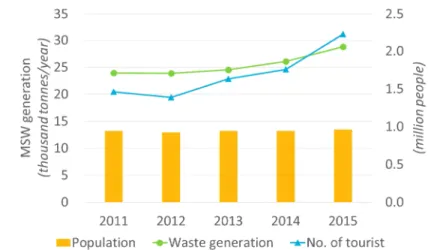
Tourism is the most dynamic industry and the biggest economic contributor of the city. In 2013, the total income of tourist service and retail sales (from restaurants only) was 1,500 and 1,100 billion VND respectively. Meanwhile, the total industrial production value of the city was only 212 billion VND (HASD, 2013). Also, the MSW generation increases associated with the growth of the number of tourists. Thus, tourist industry might has affected strongly to the variation of waste generation and composition.
In general, MSW in Hoi An is currently disposed of at an open dumping landfills without taking any operational and engineering control. Besides, one composting plant with a capacity of 55 tons per day has been operating inefficiently. The opened dump landfill and the composting plant have caused huge adverse effects on the environment and public health. Hence, MSW management is one of the most important issues of Hoi An and developing a sustainable municipal solid waste management system has become a necessity in the City.
1.4 Outline of Research
To obtain the proposed objective of the study, the dissertation contents including 6 chapters as followed:
Chapter 1, General Introduction to the study
Chapter 2, a literature review of methods and results of previous studies related to this work is reviewed. The method of MSW characterization, such as monitoring of waste generation, classification of waste composition, relevant factors of waste generation, statistical analysis, modelling is mentioned. Moreover, the optimisation model and application of MCDM is also reviewed in the literature review.
Chapter 3, explain the case study and methodologies applied in the research. After introduction of the case study, the section describes the method for waste sampling, waste characterization and statistical analysis. Then, modelling technique of optimisation model implemented in this work is presented. Lastly, the method of the multi-objective decision- making process to the optimal solution for waste management is explained.
Chapter 4 deals with the analysis of MSW characterization. It will account for the detail of household waste, hotel waste, restaurant waste and street waste generation as well as composition. Differences in waste generation and composition from different areas in the city is also examined.
Chapter 5, this chapter describes the development of a prognosis model for solid waste generation from households in Hoi An city, a famous tourism city in Vietnam. Bayesian model average method (BMA) was applied to evaluate impacts of various factors on household waste generation. Then, multivariate linear regression model is proposed for estimating waste generation.
In Chapter 6, a single optimisation model to minimise cost of waste management is proposed to evaluate the impacts of landfill target initiatives and separation efficiency. Then, it presents the results of consensus analysis model of the local expert opinion for choosing objectives and potential treatment alternatives of the system. Lastly, a multi-objective model is
proposed and an optimal solution is determined by an interactive method for discussion of decision makers. The result propose a sustainable waste management plan for the city,
Chapter 7 summarizes the main findings of this dissertation. Drawbacks of this study and recommendations for further study is also presented in this chapter.
1.5 References
Abbasi, M., Abduli, M., Omidvar, B., & Baghvand, A. (2012). Forecasting municipal solid waste generation by hybrid support vector machine and partial least square model. International Journal of Environmental Research, 7(1), 27-38.
Abu Qdais, H. A., Hamoda, M. F., & Newham, J. (1997). Analysis of Residential Solid Waste At Generation Sites. Waste Management & Research, 15(4), 395-405.
doi:10.1177/0734242x9701500407
Bogner, J., Abdelrafie, A.M., Diaz, C., Faaij, A., Gao, Q., Hashimoto, S., Mareckova, K., Pipatti, R. & Zhang. T. (2007). Waste management. Retrieved from Cambridge, UK and New York, NY, USA:
Chang, N.-B., & Pires, A. (2015a). Systems Engineering Tools and Methods for Solid Waste Management Sustainable Solid Waste Management (pp. 235-299): John Wiley & Sons, Inc.
Chang, N.-B., & Pires, A. (2015b). Technology Matrix for Solid Waste Management Sustainable Solid Waste Management (pp. 19-97): John Wiley & Sons, Inc.
Chen, H. W., & Chang, N.-B. (2000). Prediction analysis of solid waste generation based on grey fuzzy dynamic modeling. Resources, Conservation and Recycling, 29(1-2), 1-18.
doi:10.1016/s0921-3449(99)00052-x
Denafas, G., Ruzgas, T., Martuzevičius, D., Shmarin, S., Hoffmann, M., Mykhaylenko, V., . . . Ludwig, C. (2014). Seasonal variation of municipal solid waste generation and composition in four East European cities. Resources, Conservation and Recycling, 89, 22-30.
doi:http://dx.doi.org/10.1016/j.resconrec.2014.06.001
Espinosa Lloréns, M. d. C., Torres, M. L., Álvarez, H., Arrechea, A. P., García, J. A., Aguirre, S. D., & Fernández, A. (2008). Characterization of municipal solid waste from the main landfills
of Havana city. Waste Management, 28(10), 2013-2021.
doi:http://dx.doi.org/10.1016/j.wasman.2007.07.004
Ezeah, C., Fazakerley, J., & Byrne, T. (2015). Tourism Waste Management in the European Union: Lessons Learned from Four Popular EU Tourist Destinations. American Journal of Climate Change, 4(05), 431.
Gallardo, A., Carlos, M., Peris, M., & Colomer, F. J. (2014). Methodology to design a municipal solid waste generation and composition map: A case study. Waste Management, 34(11), 1920-1931. doi:http://dx.doi.org/10.1016/j.wasman.2014.05.014
Ghinea, C., Drăgoi, E. N., Comăniţă, E.-D., Gavrilescu, M., Câmpean, T., Curteanu, S., &
Gavrilescu, M. (2016). Forecasting municipal solid waste generation using prognostic tools and
regression analysis. Journal of Environmental Management, 182, 80-93.
doi:http://dx.doi.org/10.1016/j.jenvman.2016.07.026
Gidarakos, E., Havas, G., & Ntzamilis, P. (2006). Municipal solid waste composition determination supporting the integrated solid waste management system in the island of Crete.
Waste Management, 26(6), 668-679. doi:http://dx.doi.org/10.1016/j.wasman.2005.07.018
GSOVN. (2016). Area, population and population density by province. Population and Employment. Retrieved from http://www.gso.gov.vn/default_en.aspx?tabid=774
HASD. (2013). Statistical Yearbook - Hoi An city. Hoi An Statistical Department, Viet Nam.
Hoornweg, D., & Bhada-Tata, P. (2012). What a Waste : A Global Review of Solid Waste
Management. Retrieved from Washington, DC:
https://openknowledge.worldbank.org/handle/10986/17388 License: CC BY 3.0 IGO.
IPCC. (2007). Climate Change 2007: Synthesis Report. Retrieved from Geneva, Switzerland, : http://www.ipcc.ch/publications_and_data/publications_ipcc_fourth_assessment_report_synthesi s_report.htm
ISWA. (2010). ISWA White Paper: Waste and Climate Change C. F. Gary Crawford, Jens Aage Hansen, Antonis Mavropoulos (Ed.)
MOC. (2010). QCVN 07:2010/BXD National Technical Regulation Chapter 9: Solid waste collection, separation, transportation, treatment system and public toilet. Hanoi, Vietnam.
MOC. (2016). QCVN 07:2016/BXD National Technical Regulation Chapter 9: Technical Infrastructure Works, Solid Waste Treatment and Public Toilet.
MONRE. (2011). Báo cáo môi trường quốc gia 2011: Chất thải rắn (National Environment Rerport 2011: Solid Waste). Hà Nội, Việt Nam: Bộ Tài nguyên và Môi trường.
Ngoc, U. N., & Schnitzer, H. (2009). Sustainable solutions for solid waste management in Southeast Asian countries. Waste Manag, 29(6), 1982-1995. doi:10.1016/j.wasman.2008.08.031
Nguyen, D. L., Hoang, M. G., & Bui, X. T. (2013). Challenges for municipal solid waste management practices in Vietnam. Waste Technology, 1(1), 17-21.
Nguyen, T. K. T. (2014). Municipal solid waste management in Vietnam challenges and solutions Municipal Solid Waste Management in Asia and the Pacific Islands (pp. 355-377):
Springer.
Ogawa, H. (2008). Sustainable solid waste management in developing countries: waste management. Imiesa, 33(9), 57-71.
Pires, A., Martinho, G., & Chang, N.-B. (2011). Solid waste management in European countries: A review of systems analysis techniques. Journal of Environmental Management, 92(4), 1033-1050. doi:http://dx.doi.org/10.1016/j.jenvman.2010.11.024
Scheutz, C., Kjeldsen, P., & Gentil, E. (2009). Greenhouse gases, radiative forcing, global warming potential and waste management — an introduction. Waste Management & Research, 27(8), 716-723.
Shamshiry, E., Nadi, B., Bin Mokhtar, M., Komoo, I., Saadiah Hashim, H., & Yahaya, N.
(2011). Integrated models for solid waste management in tourism Regions: Langkawi Island, Malaysia. J Environ Public Health, 2011.
Teh, L., & Cabanban, A. S. (2007). Planning for sustainable tourism in southern Pulau Banggi: an assessment of biophysical conditions and their implications for future tourism development. Journal of Environmental Management, 85(4), 999-1008.
Thanh, N. P. (2010). A Study on Eveluation Methodologies for Household Solid Waste Management toward a Sustainable Society in Vietnam. (Doctor), Okayama University, Okayama, Japan.
Thanh, N. P., & Matsui, Y. (2011). Municipal solid waste management in Vietnam: Status and the strategic actions. International Journal of Environmental Research, 5(2), 285-296.
UNEP. (2010). Waste and Climate Change: Global trends and strategy framework Osaka/Shiga: UNEP.
van de Klundert, A., Anschütz, J., & Scheinberg, A. (2001). Integrated sustainable waste management: the concept. Tools for decision-makers. experiences from the urban waste expertise programme (1995-2001): WASTE.
Wilson, D. C. (2007). Development drivers for waste management. Waste Management &
Research, 25(3), 198-207.
Zhu, D., Asnani, P., Zurbrugg, C., Anapolsky, S., & Mani, S. (2008). Improving municipal solid waste management in India. World Bank, Washington, 1-8.
Zurbrugg, C., Gfrerer, M., Ashadi, H., Brenner, W., & Kuper, D. (2012). Determinants of sustainability in solid waste management--the Gianyar Waste Recovery Project in Indonesia.
Waste Manag, 32(11), 2126-2133. doi:10.1016/j.wasman.2012.01.011
2. LITERATURE REVIEW
2.1 Sustainable waste management planning 2.1.1 Sustainable waste management system
Integrated waste management is defined as a combination of combines waste stream, waste collection, recycling, treatment and disposal, in addition, other monitoring activities, risk and pollution prevention, with the objective of achieving human health and environmental protection. Generally, functional elements of waste management are generation source, storage at source and separation, collection, transfer and transport, recycling and treatment; final disposal.
The conventional waste management approach is that waste generation, collection and disposal systems are planned as independent operations. However, all elements are very closely interlinked and have interaction with each other. There are also interaction between the physical components of the system and the conceptual components that include the social and environmental spheres.
The traditional reductionist approaches of “flame, flush or fling” to waste management is unsustainable as it lacks flexibility and long term thinking (Jeffrey K, 2010). The shift to more sustainable society requires greater sophistication to manage waste. Solid waste management systems need to ensure human health and safety. According to F.R. McDougall et al. (2001), a sustainable system for solid waste management must be environmentally effective, economically affordableandsocially acceptable.
Environmental effectiveness the waste management system must reduce as much as possible the environmental burdens of waste management (emissions to land, air and water, such as CO2, CH4, SOx, NOx, BOD, COD and heavy metals).
Economic affordability: the waste management system must also operate at a cost acceptable to the community, which includes all private citizens, businesses and government.
The costs of operating an effective solid waste system will depend on existing local infrastructure, but ideally should be little or no more than existing waste management costs.