Shuttle maze test : A novel operant method to repeatedly assess
presumed nociception in freely behaving rats after nerve injury
Ken–ichiro Hayashida
Department of Neurophysiology, Akita University School of Medicine
Abstract
Operant methods that allow animals to avoid painful stimuli are interpreted to assess the aversive quality of pain, however, such measurements involve stimulation delivery by the experimenter and can induce fear, anxiety, or stress in animals, all of which can affect nociceptive threshold or mask pain behaviors. Here we developed a new operant method, the shuttle maze test, to assess the aversive quality of mecha nical stimuli in rats after L5–L6spinal nerve ligation (SNL) without externally applied stimuli by the experimenter. The shuttle maze test is based on the motiva-tion for chocolate flavor cereal as a treat, and animals ambulates back and forth between two treat feeders by taking either a short route with a prickly–surfaced arch or a longer route with a smooth floor. The preference for taking the short route is a primary outcome measure of the test. Importantly, the animals do not have any painful consequences of not performing the task in the shuttle maze. SNL reduced the preference for the short route with the arch, correlated with hypers ensitivity in the hindpaw. Oral gabapentin (30and 100mg/kg), pregabalin (100mg/kg), and duloxetine (50 mg/kg) restored the short route preference and reduced hypersensitivity in SNL rats. These results suggest that SNL injury alters behavior in the shuttle maze test and that shuttle maze test shows comparable results to reflexive hypersensitivity after SNL in response to analgesics.
Keywords
Choice behavior ; Food reward ; Neuropathic pain ; Rat
Received : 27November 2019 Accepted : 23January 2020
新規疼痛関連行動評価系(
Shuttle maze
テスト)を用いた
ラットにおける神経障害性疼痛と鎮痛剤の評価法確立
林田 健一郎 秋田大学医学部 器官・統合生理背 景 これまで多くの疼痛研究で用いられてきた痛 み刺激に対するげっ歯類の逃避行動は,痛みの 感覚面の評価に適しているが,情動面の評価は 難しく,また,痛み刺激の与え方や行動評価に 実験者の習熟度や主観が影響する。近年,げっ 歯類に痛みと光などの不快な条件のどちらかを 選ばせる,あるいは痛みのない場所を選ばせる ことなどで痛みの情動面を評価できる実験系が 用いられているが,動物が実験中に感じる恐怖, 不安,あるいは不快といった負の情動は痛み関 連行動に影響する1,8)。そこで我々は,動物への 精神的肉体的ストレスをできるだけ排除した疼 痛関連行動評価系として,Shuttle mazeを考案 した5)。Shuttle mazeテストは,摂餌制限なし の条件で,チョコレート味シリアルを得るため に痛み刺激の存在する短路または刺激の存在し ない長路のどちらかを通る,あるいは行動しな いことを動物に自由に選択させることで疼痛関 連行動を客観的に評価できる。本研究では, Spinal nerve ligation (SNL)モデルラットを用い,
Shuttle mazeテストにおける神経障害性疼痛の 影響及び神経障害性疼痛に適応のある薬剤の効 果を検討した。 方 法 1. 動物 本研究は,12 時間light–darkサイクル(light cycle :午前 7 時〜午後 7 時)及び自由飲水摂餌 条件で飼育した雄Sprague–Dawleyラット(入 荷時 5 週齢,日本SLC)を入荷 5 日後以降から 用い,すべての実験は秋田大学動物実験委員会 の承認を得た。
2. Spinal nerve ligation(SNL)と
疼痛回避閾値測定
イソフルラン麻酔下で,右側L5–L6SNLを
以前の報告通りに行った9)。疼痛回避閾値は
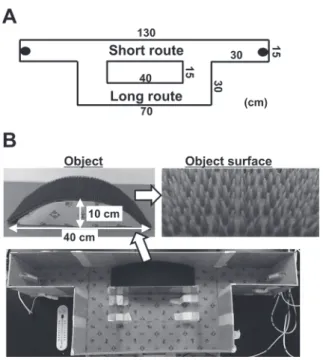
Randall–Selitto analgesimeter (Ugo Basile)を用 いPaw pressureテストにより測定し11),カット オフは 250gとした。 3. Shuttle mazeのトレーニングと実験方法 Shuttle maze装置は 2 本のアームと短路と長 路で構成され,それぞれのアームの端には装置 外からパイプを通してチョコレート味シリアル (ココチョコクリスピー,日本ケロッグ)を投下 できるTreat feederを設置した(Fig.1–A, B)。 アーチ型形状の障害物表面は,剣山状の突起を 持ったマット(サンステップマットF–131–1, 山崎産業)を敷いた。アーチ型形状を選択した 理由は,四足動物は平坦な場所では三足で容易 に歩行できるが,登り降りを伴う時は四足を使 わないと歩行困難であり,結果として障害足を 使うためである。そのため,後肢に痛覚過敏を 持った動物は短路に置いた剣山状のマットの上 を歩くことを避け,長路を選択すると我々は考 えた。装置上部にPCに接続したビデオカメラ を設置し,動物の行動を観察及び記録した。 Shuttle mazeのトレーニング(10〜12 日間) 及び実験は,我々が最近報告した通り5),30 ルーメン以下の明るさの実験室で午前 9 時〜午 後 3 時の間に 1 日 1 回行った。トレーニング セッションは 1 回 20 分間とし,アーチ型障害 物を短路または長路にランダムに置き,ラット が片方のアームのTreat feederからシリアルを 食べると対側のTreat feederにシリアルを投下 し,アーム間を移動することでシリアルが得ら れることを学習させた。実験はトレーニング最
終日に 15 回以上feeder間を移動したラットの みを使用し,ラットが 20 回feeder間を移動す る又は開始 20 分で実験を終了し,移動の際に 短路を通った比率をPreference index (%)(短路 を通った回数/総通過回数×100%)として計算 した。 4. 薬剤
Gabapentin 及 び pregabalin は Toronto Research Chemicals Inc,Duloxetine
hydrochlo-rideはEli Lillyより購入し,蒸留水に溶解また
は懸濁し,経口投与(5ml/kg)した。本研究に
使用した薬剤の用量は我々の以前の報告から決
定した3,4)。
5. 統計解析
データはMean ± SDで示し,有意差検定は
SigmaPlot software (Systat Software Inc.)を用い, 分散分析後にDunnett’s post hoc testを行い, p<0.05 を統計学的有意とした。 結 果 1. Shuttle mazeにおける SNL後のタイムコース 神経障害性疼痛モデル作成後の痛覚過敏と Shuttle mazeにおける行動のタイムコースを検 討した。SNLラットは,Paw pressureテストの 疼痛回避閾値及び短路に障害物を置いた場合の Preference indexにおいて, 正常ラットと比較 して術後 1 週から 4 週で有意に低い値を示した (Fig.2–A, B)。また,本実験の全動物は全タイ ム ポ イ ン ト に お い て 20 回 移 動 し ,SNL は Shuttle mazeにおける移動回数に影響しなかっ た。本実験の結果を基に,以後の実験をSNL 術後 2〜3 週で行うことに決定した。 2. Shuttle mazeにおける障害物の影響 Shuttle maze装置内の障害物の存在及び位置 が,移動回数及びPreference indexに影響する か検討した。障害物なし,短路に障害物有り,及 び長路に障害物有りのいずれの場合においても, 正常及びSNLラットの移動回数は影響を受け
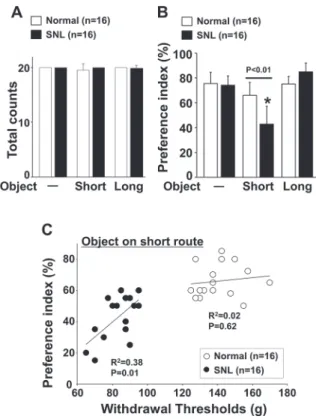
なかった(Fig.3–A)。正常ラットのPreference
indexは,障害物の有無及び位置に影響を受け
なかった(Fig.3–B)。障害物なしの場合,SNL
ラ ッ ト と 正 常 ラ ッ ト は 同 程 度 のPreference
indexを示し,短い移動距離を選ぶ動物の性質
Fig.1 Shuttle maze apparatus.
(A)Dimension of shuttle maze: The walls of the maze are 20cm high and the entire maze is covered during the experiment with an acrylic glass. Black circles at the both arms represent treat feeders. Treats are dropped from the outside of the wall into the feeder through a pipe. Animals pass through the short route or the long route when moving between the treat feed-ers. (B) Photographs of a prickly–surfaced arch object (10cm height × 40cm length) and its surface, and upper view of the maze. Adapted from ref 5.
にSNLは影響しなかった。長路に障害物有り の場合,SNLラットは正常ラットに比べて高い Preference indexの傾向を示したが有意差はな かった(p=0.06)。短路に障害物有りの場合, SNLラットは正常ラットと比較して有意な Preference indexの減少を示した。本実験の結 果から,SNLラットは痛覚過敏のため障害物が ある通路を避けるようになると考え,Preference indexと疼痛回避閾値の相関を検討したところ, SNLラットのPreference indexと疼痛回避閾値 は有意な相関を示し,正常ラットでは相関はな かった(Fig.3–C)。
3. Shuttle mazeにおけるGabapentin, Pregabalin及びDuloxetine経口投与
の効果
短路に障害物を置いたShuttle mazeテストに
Fig.3 Effects of object placement in shuttle maze test and relationship between hypersensitivity and prefer-ence index after SNL surgery.
Shuttle maze measurements were performed in nor-mal and SNL rats 2weeks after surgery for 3consecu -tive days (Day 1: no object, Day 2: Object on short route, Day 3: Object on long route). (A) Total counts and (B) preference index with or without the object on the short or long route. Preference index values are presented as the percentage of counts that animals chose short route over the total counts. *p<0.01vs. No object. (C) The relationship between withdrawal thresholds in the hindpaw ipsilateral to nerve injury and preference index values with the object on short route in normal and SNL rats 2weeks after surgery. Adapted from ref 5.
Fig.2 Time course changes in withdrawal thresholds and preference index with the object on short route after SNL.
(A)Withdrawal thresholds in the hindpaw ipsilateral to SNL were measured in normal and SNL rats 0to 4 weeks after surgery. (B) Preference index values are presented as the percentage of counts that animals chose short route over the total counts. Groups differ by 2–way ANOVA for repeated measures. *p<0.01vs. Normal. Adapted from ref 5.
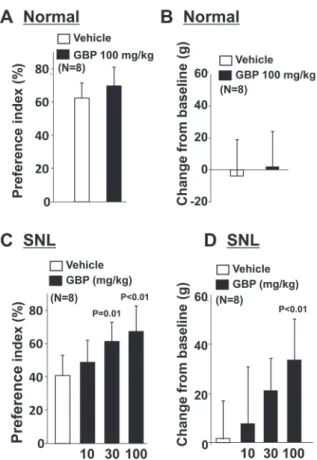
おいて,神経障害性疼痛研究で広く用いられて いるGabapentinの効果を検討した。Vehicle及 びGabapentin各投与群において,正常及び SNL動物は全て 20 回移動した。正常ラットに おいて,経口投与したGabapentin (100mg/kg) はPreference index及び疼痛回避閾値に影響し なかった(Fig.4–A, B)。SNLラットにおいて, Gabapentin (10〜100mg/kg)は用量依存性に Preference index及び疼痛回避閾値を増加させ た(Fig.4–C, D)。 次に,Gabapentinと同様な作用機序を持つ Pregabalin (100mg/kg)とセロトニン・ノルアド レナリン再取り込み阻害薬であるDuloxetine (50mg/kg)の経口投与による効果をSNLラッ
Fig.5 Effects of pregabalin and duloxetine on prefer-ence index with the object on short route and hyper-sensitivity after SNL surgery.
SNL rats 2–3weeks after surgery received an oral ad-ministration of vehicle, pregabalin (PGB, 100mg/kg), or duloxetine (DLX, 50mg/kg) 2hour prior to shuttle maze measurement with the object on short route. (A) Total counts. (B) Preference index values are presented as the percentage of counts that animals chose short route over the total counts. (C) Withdrawal thresholds in the hindpaw ipsilateral to nerve injury were meas-ured prior to the drug administration (baseline) and just after the shuttle maze measurement. Data are pre-sented as changes from the baseline.
Fig.4 Effects of gabapentin on preference index with the object on short route and hypersensitivity after SNL surgery.
(A and B)Normal and (C and D) SNL rats 2–3weeks after surgery received an oral administration of vehicle or gabapentin (GBP, 10, 30, or 100mg/kg) 2hour prior to shuttle maze measurement with the object on short route. Preference index values are presented as the percentage of counts that animals chose short route over the total counts (A and C). Withdrawal thresh-olds in the hindpaw ipsilateral to nerve injury were measured prior to the drug administration (baseline) and just after the shuttle maze measurement in nor-mal and SNL rats (B and D). Data are presented as changes from the baseline. Adapted from ref 5.
トで検討した。Vehicle及びPregabalin投与群
は全ての動物が 20 回移動したが,Duloxetine
投与群は移動回数が低下した(7.6 ±4.2 回)
(Fig.5–A)。Pregabalin及びDuloxetine投与群 はVehicle群と比較して有意にPreference index
及び疼痛回避閾値を増加させた(Fig.5–B, C)。
これらの結果は,Shuttle mazeテストはPaw–
pressureテストと同様に鎮痛剤の効果を評価で きること,そして,Shuttle mazeテストにおけ る移動回数を低下させる薬剤あるいは用量があ ることを示唆している。 考 察 げっ歯類を用いた疼痛研究で広く用いられて いる痛み刺激に対する反射的逃避行動による痛 みの感覚面の評価は,刺激の与え方や行動評価 に実験者の習熟度や主観が影響する。また, Condition place avoidance6)や Place escape avoidance paradigm10)などの痛み刺激がある (あった)場所を避ける行動は,痛みの情動面を 客観的に評価できるが,強制的に与えられる (与えられた)痛みに対する恐怖,不安,または 嫌悪を常に感じており,このような負の情動は 疼痛関連行動に影響している可能性がある1,8)。 そこで我々は,動物への精神的肉体的ストレス を軽減し,強制的な痛み刺激なしで疼痛関連行 動や鎮痛剤の効果を客観的に評価できるShuttle mazeを開発した。 本研究では動物の摂餌制限を行っておらず, チョコレート味のシリアルを行動動機としてお り,Shuttle mazeトレーニング最終日に実験か ら除外した動物(15 回未満の移動回数)は全体 の 8.4%であった5)。絶食や摂餌制限は,動物の 行動動機を強めて移動回数を増やすと考えられ るが,同時に疼痛回避閾値やストレスホルモン に影響することが報告されており2,7),本研究で はストレス要因を除外するために自由摂食状態 でトレーニング及び実験を行った。坐骨神経障 害モデルラットにおいてWheel–running行動 が減少することから12),当初我々は,SNLラッ トにおいてShuttle mazeの移動回数が減少する と予想した。しかし,本研究では予想に反して, SNLは術後 4 週までShuttle mazeの移動回数に 全く影響しなかった。この理由としては,行動 動機の種類(走ることvsチョコレート味シリア ル)による“動物のやる気”の違い,及び神経障 害部位(坐骨神経vs脊髄神経)による歩行への 影響の違いなどが関係しているかもしれない。 我々はShuttle mazeに用いる剣山状突起を表 面に持つ障害物として,平坦なマットではなく, 四足を全て使わないと登り降りが困難なアーチ 型の形状を選択した。本研究では,SNLは短い 移動距離を選ぶ動物の性質に影響しないが,短 路に障害物が存在した場合,痛覚過敏の程度に 相関してPreference indexを低下させることが 明らかになった。そして,神経障害性疼痛に適 応があるGabapentin,Pregabalin,Duloxetine
はいずれもSNL により低下したPreference index及び疼痛回避閾値を増加させた。これら の結果は,SNLによりPreference indexが低下 には障害物上で術側の後足に体重をかけること で起きる痛覚過敏への嫌悪が関与していること を示唆し,また,Shuttle mazeテストは,鎮痛 剤の効果をPaw pressureテストと同程度にかつ 客観的に測定できる方法であることも示唆して いる。さらに,Shuttle mazeテストは,薬剤に 起因した鎮静,食欲低下,あるいは意欲低下に よる移動回数への影響を観察できることから, 薬剤による動物の行動に対する副作用の有無を 観察できることが示唆された。 Shuttle mazeにおいて,痛み刺激の存在する
短路または刺激の存在しない長路のどちらを選 んでも報酬をもらえるため,動物は積極的に行 動する。また,行動しない選択をした場合でも, 動物にペナルティはない。Shuttle mazeは,動 物の精神的肉体的ストレスを軽減し,かつ,動 物に参加の自由があるため,動物実験倫理の面 でも優れている。本研究では,ガバペンチノイ ドと抗うつ剤のみを評価したが,同様に神経障 害性疼痛を改善する他の薬剤に加え,神経障害 性疼痛に効果がない薬剤(NSAIDsなど)につ いても今後検討が必要である。 謝辞 本研究は日本学術振興会科研費 16K08985 及び 19K09343 の助成を受け行われた。 文 献
1) Amit, Z., Galina, Z.H., Stress–induced analge-sia : adaptive pain suppression, Physiol. Rev., 66(4) (1986) 1091–1120.
2) Hamm, R.J,, Lyeth, B.G., Nociceptive thresholds following food restriction and return to free– feeding, Physiol. Behav., 33(3) (1984) 499–501. 3) Hayashida, K., Eisenach, J.C., Multiplicative interactions to enhance gabapentin to treat neuro pathic pain, Eur. J. Pharmacol., 598(1–3) (2008) 21–26.
4) Hayashida, K., Parker, R., Eisenach, J.C., Oral gabapentin activates spinal cholinergic circuits to reduce hypersensitivity after peripheral nerve injury and interacts synergistically with oral donepezil, Anesthesiology, 106(6) (2007) 1213– 1219.
5) Hayashida, K.I., Eisenach, J.C., Kawatani, M., Martin, T.J., Peripheral nerve injury in rats induces alternations in choice behavior associ-ated with food reinforcement, J. Physiol. Sci., 69(5) (2019) 769–777.
6) Johansen, J.P., Fields, H.L., Manning, B.H., The affective component of pain in rodents : direct evidence for a contribution of the anterior cin-gulate cortex, Proc. Natl. Acad. Sci. USA, 98(14) (2001) 8077–8082.
7) Jurcovicova, J., Stanciková, M., Svik, K., Ondrejickova, Krsova, D., Seres, J., Rokyta, R., Stress of chronic food restriction attenuates the development of adjuvant arthritis in male Long Evans rats, Clin. Exp. Rheumatol., 19(4) (2001) 371–376.
8) Keogh, E., Cochrane, M., Anxiety sensitivity, cognitive biases, and the experience of pain, J. Pain, 3(4) (2002) 320–329.
9) Kim, S.H., Chung, J.M., An experimental model for peripheral neuropathy produced by segmen-tal spinal nerve ligation in the rat, Pain, 50(3) (1992) 355–363.
10) LaBuda, C.J., Fuchs, P.N., A behavioral test para-digm to measure the aversive quality of inflam-matory and neuropathic pain in rats, Exp. Neurol., 163(2) (2000) 490–494.
11) Randall, L.O., Selitto, J.J., A method for meas-urement of analgesic activity on inflamed tissue, Archives internationales de pharmacodynamie et de therapie, 111(4) (1957) 409–419. 12) Whitehead, R.A, Lam, N.L, Sun, M.S, Sanchez,
J., Noor, S., Vanderwall, A.G., Petersen, T.R., Martin, H.B., Milligan, E.D., Chronic Sciatic Neuropathy in Rat Reduces Voluntary Wheel– Running Activity With Concurrent Chronic Mechanical Allodynia, Anesth. Analg., 124(1) (2017) 346–355.
Address for correspondence: Ken-ichiro Hayashida Department of Neurophysiology,
Akita University School of Medicine 1-1-1Hondo, Akita 010-8543, Japan