Original
Employee Turnover Rate for Persons with Mental Disabilities in the
Japanese Labor Market
Nobuyoshi Fukui1)
, Shinichi Takabatake2)
, Hironobu Nakayama1) , Tomoko Nishikawa2)
and Takuya Hashimoto1) 1)Faculty of Allied Health Sciences, Osaka Health Science University 2)School of Comprehensive Rehabilitation, Osaka Prefecture University
(Received: June 30, 2011)
Abstract
Aim: The employment statistics on persons with disabilities published by the Japanese Ministry of Health, Labor and Welfare includes the number of employed, an indicator of the employment situation, but not the em-ployee turnover rate which indicates whether emem-ployees with disabilities maintain their employment. The authors thus attempt to estimate the employee turnover rate for persons with disabilities.
Methods: The authors employ an original method using data on the annual number of employees with dis-abilities, its increase relative to the previous year, and the number of hirings.
Results: The result shows that, based on a comparison with persons with physical disabilities and those with intellectual disabilities, the employee turnover rate for persons with mental disabilities is significantly high.
Conclusion: It is considered that the employee turnover rate is important data for understanding whether persons with mental disabilities maintain their employment.
(JJOMT, 60: 55―60, 2012) ―Key words―
employee turnover rate, persons with mental disabilities, labor market
Introduction
Japan s Ministry of Health, Labor and Welfare publishes data on the hiring situation of persons with men-tal disabilities and reports that the number of persons with menmen-tal disabilities entering employment shows an increasing trend, and that the increase has been remarkable for the past several years.1)
The authors attribute this situation to the job-matching function of the Hello Work (unemployment) offices being strengthened and companies greater understanding of the employment of persons with disabilities. The authors also consider that the Levy and Grant System for Employing Persons with Disabilities, which was introduced in 2006, has had strong effects.2)
The number of persons with mental disabilities entering employment is small at present compared to persons with physical disabilities or those with intellectual disabilities, but is expected to increase further in the future.
The Ministry does not, however, publish the employee turnover rate which would indicate whether hired persons with mental disabilities retain their jobs. The authors consider that although an increasing employ-ment rate for persons with employ-mental disabilities is desirable, if the employee turnover rate were to rise at the same time, the number of persons with mental disabilities in the labor market or in companies as a whole would not change, which would necessitate a policy response to counteract employee turnover and include the introduction of a new program.
This research uses existing employment statistics on persons with disabilities published by the Ministry and discusses issues implied by the employee turnover rate and hiring rate for persons with mental disabilities
2006 193,324 25,409 −1,018 13 −1 14
2007 194,760 24,535 1,436 13 1 12
Persons with intellectual disabilities 1999 92,312 6,805 2000 92,550 7,412 238 8 0 8 2001 91,679 7,069 −871 8 −1 9 2002 90,542 7,269 −1,137 8 −1 9 2003 91,300 8,249 758 9 1 8 2004 92,555 9,102 1,255 10 1 9 2005 93,253 10,154 698 11 1 10 2006 95,447 11,441 2,194 12 2 10 2007 98,478 12,186 3,031 12 3 9
Persons with mental disabilities 1999 4,603 1,384 2000 4,851 1,614 248 33 5 28 2001 5,123 1,629 272 32 5 27 2002 5,427 1,890 304 35 6 29 2003 5,985 2,493 556 42 9 33 2004 6,616 3,592 631 54 10 44 2005 7,653 4,665 1,037 61 14 47 2006 9,136 6,739 1,483 74 16 58 2007 11,524 8,479 2,388 74 21 53
as well as the need for preventive measures against such turnover.
Methods Data
Since no data on the employee turnover rate for persons with disabilities is available, the rate is estimated with an original calculation method. The data used for calculating the rate are the annual number of employ-ees, its increase relative to the previous year, and the annual number of hirings. Based on these data, the em-ployee turnover rate is calculated for persons with physical disabilities, those with intellectual disabilities, and those with mental disabilities. The term persons with disabilities in this study means those who have a government-issued disability certificate.
Method of Calculation and Analysis for the Employee Turnover Rate (Table 1) The following is the formula for the employee turnover rate.
Employee turnover rate=Annual number of job separations!Annual number of workers
However, although data on the annual number of workers (the variable in the denominator) exists, no data on the annual number of job separations (the variable in the numerator) is available. The authors consider that the latter can be obtained as follows.
Annual number of job separations=Annual number of hirings−Increase in annual number of employees relative to previous year
Here, N is the annual number of employees,ΔN is the increase in annual number of employees relative to previous year, E is the annual number of hirings, and L is the annual number of job separations. The annual
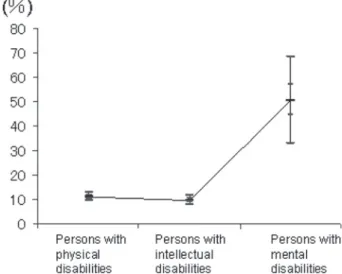
Fig. 2 Multiple Comparisons of Turnover Rates for Persons
with Disabilities (Bonferroni; P<0.05)
Fig. 1 Turnover Rates for Persons with Disabilities by Year
―▲― Persons with mental disabilities, ― ― Persons with physi-cal disabilities, ― ― Persons with intellectual disabilities
employee turnover rate is obtained with L!N=E!N−ΔN!N.
With this method, the employee turnover rate and hiring rate are calculated for persons with physical dis-abilities, those with intellectual disdis-abilities, and those with mental disdis-abilities, and differences by disability type are examined using Bonferroni s multiple comparison test. Statistical significance was set at the 5% level. The statistical analysis is based on the results obtained from SPSS 16.0.
Results
The employee turnover rate and the data used to calculate it are shown by disability type in Table 1. As an example, data on persons with mental disabilities for 2007 show that the number of employees is 11,524, the number of hirings is 8,479, and the increase in the number of employees relative to the previous year is 2,388. Using these data, the employee turnover rate is calculated. The hiring rate is the ratio of the number of hiring to the number of employees and is determined to be 74% (8,479!11,524×100). The rate of the employment in-crease is the ratio of the inin-crease in the number of employees to the number of employees and is calculated to be 21% (2,388!11,524×100). The employee turnover rate can be considered as the difference between the hir-ing rate and the rate of the employment increase and is determined to be 53% (74%―21%). Ushir-ing the same method, the employee turnover rate is calculated for persons with physical disabilities and those with intellec-tual disabilities. The average employee turnover rate for the recent eight years is 12.0% for persons with physical disabilities, 9.0% for those with intellectual disabilities, and 39.9% for those with mental disabilities. In contrast, the corresponding hiring rate is 11.1%, 9.8%, and 50.6%, respectively. Fig. 1 presents a graph of the employee turnover rates by disability type.
Multiple comparisons conducted for the employee turnover rates by disability type reveal a significant dif-ference between the rate for persons with mental disabilities and the rate for those with physical disabilities (p=0.0001) and between the rate for persons with mental disabilities and the rate for those with intellectual disabilities (p=0.0001). No significant difference is observed between the rate for persons with physical disabili-ties and the rate for those with intellectual disabilidisabili-ties (Fig. 2).
Similarly, multiple comparisons conducted for the hiring rates by disability type reveal a significant differ-ence between the rate for persons with mental disabilities and the rate for those with physical disabilities (p= 0.0001) and between the rate for persons with mental disabilities and the rate for those with intellectual dis-abilities (p=0.0001). There is no significant difference between the rate for persons with physical disdis-abilities and the rate for those with intellectual disabilities.
Turnover of Employees with Mental Disabilities
Although there are no studies in the literature on employee turnover rate for persons with mental disabili-ties, studies do appear for this group on their employment period and reasons for leaving a job. With regard to the employment period, a survey of 908 people with mental disabilities who gained employment through Hello Work offices found that 40% of all placements were still in operation one year from the date of employment starting; thus, 60% of them had quit their jobs after one year.4)
There are also reports from overseas stating that the period of time for which persons with mental disabilities work at a company is short.5)6)
As to reasons for leaving a job, it is reported that among the many factors involved are the ability to perform given tasks, the degree of mental disability, and the level of satisfaction gained from work.7)8)
Even though studies on persons with mental disabilities have revealed short employment periods in companies and reasons for their job sepa-ration, it is not easy to curb these separations. Some studies argue that pre-employment occupational rehabili-tation such as occupational assessment or training provided to persons with physical disabilities and those with intellectual disabilities is not effective for persons with mental disabilities to retain their jobs.9)10)
In the case of persons with mental disabilities, despite receiving pre-employment training, flexible measures are frequently required in accordance with their mental conditions, opinions, and needs after they start their job, which makes it difficult for them to consistently complete occupational training programs.11)
In response to such difficulties, supported employment aims at job retention for persons with mental dis-abilities has been introduced. One advantage of supported employment is personal support that is mainly pro-vided to complement their skills. This support enables them to work by providing an appropriate environment. It is reported that supported employment is more effective than the aforementioned traditional occupational rehabilitation in realizing continued employment.12)∼14)
For persons with physical disabilities, those with intellectual disabilities, and those with mental disabilities in Japan who received supported employment, the average job retention rate after one year of employment was 81.9%, which is a good result, but the rate for persons with mental disabilities was statistically signifi-cantly lower than that for persons with physical disabilities or those with intellectual disabilities.15)
Studies con-ducted overseas on supported employment report that this type of employment is not effective for persons with mental disabilities in retaining employment over the long term.16)17)
In the case of Japan, one reason why supported employment does not lead to job retention for persons with mental disabilities is that support by job trainers lasts only 2 to 4 months.
To summarize the situation of turnover of persons with mental disabilities, one reason why they face a high job separation rate would be that measures to curb employee turnover are insufficient because reasons for their leaving a job are numerous. If the current situation does not change, employment retention of persons with mental disabilities is expected to become more difficult, which will be disadvantageous to both persons with mental disabilities and their employees and will potentially become a serious social problem. The em-ployee turnover rate is an important indicator of the level of job retention and needs to be watched closely in the future. Analysis has been conducted on the relationship between the employee turnover rate for normal workers and their attributes or the business cycle;18)
likewise, the employee turnover rate for persons with dis-abilities should be analyzed and, based on such analysis, new support measures for them should be urgently developed.
The Hiring Rate for Persons with Mental Disabilities
Similarly to the case for employee turnover rate, the hiring rate for persons with mental disabilities is sig-nificantly higher than that for persons with other types of disabilities. As mentioned at the beginning of this pa-per, this is considered to be the result of the strengthened job-matching function of Hello Work offices and other institutions, companies greater understanding of the employment of persons with disabilities, and the in-troduction of the Levy and Grant System for Employing Persons with Disabilities.
Under the current system, companies that do not satisfy a statutorily required level of employment of per-sons with disabilities must pay contributions to the government according to the level of the deficiency, and companies that meet the required level receive a grant from the government according the number of employ-ees with disabilities beyond the required level.19)
The system makes it mandatory for companies to have a cer-tain number of employees with disabilities, but is not considered to be effective in promoting job retention of each worker with disabilities. The system was introduced in Japan in 1976 for persons with physical disabilities and in 1997 for persons with intellectual disabilities, and the number of persons with disabilities employed by companies has subsequently increased.20)
For persons with mental disabilities the system was introduced in 2006, and in a future research project we intend to examine its effect on the hiring rate for persons with mental disabilities.
Conclusion
In this paper, we calculated the employee turnover rate for persons with disabilities, data on which is not published domestically or internationally, using an original method. The results show that the employee turn-over rate for persons with mental disabilities is significantly high. This is considered an urgent problem that requires the development and introduction of prompt countermeasures. From a review of studies on employee turnover rate, it was found that although factors of employee turnover have been examined, effective systems to curb it have yet to be established.
As a potential future research project, we will examine factors of employee turnover in detail for different employment lengths and regions in our efforts to contribute to the creation of a system that curbs employment turnover for persons with mental disabilities.
References
1) Japan Organization for Employment of the Elderly and Persons with Disabilities: Supporting the Employment of Persons with Disabilities, Japan Organization for Employment of the Elderly and Persons with Disabilities, Tokyo, 2009.
2) Hasagawa T: Japan s employment measures for persons with disabilities: centered on quota systems of Act on Employment promotion of persons with disabilities . Japan Labor Review 7: 26―42, 2010.
3) The Japan Institute for Labor Policy and Training: Japanese Working Life Profile 2006!2007―Labor Statistics. The Japan In-stitute for Labor Policy and Training, Tokyo, 2007.
4) National Institute of Vocational Rehabilitation: A study on the employment conditions, etc., to promote employment of per-sons with mental disabilities. Research Reports 2010; 95. [Cited 1 January 2010.] Available from: http:!!www.nivr.jeed.or.jp! download!english!researches!reports!report95.pdf
5) Anthony WA, Blanch A: Supported employment for persons who are psychiatrically disabled: A historical and conceptual perspective. Psychiatr Rehabil J 11: 5―23, 1987.
6) Breier A, Schreiber J, Dyer J, et al: National Institute of Mental Health longitudinal study of chronic schizophrenia. Arch Gen Psychiatry 48: 239―246, 1991.
7) Becker D, Whitley R, Bailey EL, Drake RE: Long-term employment trajection among participants with mental illness in sup-ported employment. Psychiatr Serv 58: 922―928, 2007.
8) Anthony WA, Cohen MR, Danley KS: The psychiatric rehabilitation approach as applied to vocational rehabilitation, Voca-tional rehabilitation of persons with prolonged psychiatric disorders. Ciardiello JA, Bell MD, editors. Baltimore, Johns Hopkins University Press, 1988, pp 59―88.
9) National Institute of Vocational Rehabilitation: A Study about the Development of the Support Method Coping with the Needs and the Change of the Work Support Process for Schizophrenic Person, Survey Report 2009: 90. [Cited 1 January 2010.] Available from: http:!!www.nivr.jeed.or.jp!download!english!researches!reports!report90.pdf
10) Summers F: The effect of aftercare after one year. J Psychiatr Treat Eval 3: 405―409, 1981.
nivr.jeed.or.jp!download!english!researches!reports!report86.pdf
16) Bonds GR, Drake RE, Mueser KT, et al: An update on supported employment for people with severe mental illness. Psy-chiatr Serv 48: 335―346, 1997.
17) Crowther RE, Marshall M, Bond G, et al: Helping people with severe mental illness to obtain work, systematic review. BMJ 322: 204―209, 2001.
18) Koike K: The Economics of Work in Japan, LTCB International Library Foundation, Tokyo, 1995.
19) Tsuchihashi T, Oyama D: Disability Employment Levy-Grant Scheme from an economic viewpoint. Japan Labor Review 7: 43―53, 2010.
20) Kudo T: Japan s employment rate of persons with disabilities and outcome of employment quota system. Japan Labor Re-view 7: 5―25, 2010.
Reprint request:
Nobuyoshi Fukui
First part of the address Faculty of Allied Health Sciences, Osaka Health Science University, 1-9-27, Tenma, Kita-ku, Osaka-shi, Osaka, 530-0043, Japan.
別刷請求先 〒530―0043 大阪府大阪市北区天満 1―9―27 大阪保健医療大学保健医療学部 福井 信佳