PhD Thesis
Cultural Differences in Crisis Communication: Western Theory and the Japanese Context
*
危機コミュニケーションにおける文化間相違:
欧米理論の日本文脈への適用
Thesis submitted to
Seinan Gakuin University Graduate School for the Degree of Doctor in Philosophy
in Literature By
Katharina Barkley 17DC002
Thesis supervised by: Professor Akira Miyahara
ACKNOWLEDGEMENTS
Firstly, I would like to thank my mentor, Prof. Akira Miyahara. Without his constant encouragement and unwavering support, this thesis would not have been possible. I would also like to thank the members of my thesis committee, Prof. Chie Torigoe and Prof. Dwayne Olson, whose guidance and insights were invaluable.
To all the professors and teachers who have helped me and supported me along the way, a very heartfelt thank you.
I would also like to extend my warmest gratitude to all the students who participated in this project.
I also owe a great debt of gratitude to my parents, extended family, and all my friends, who have supported me and who have shared in my struggles.
In particular, I am deeply thankful for my parents-in-law, for their tireless help and support. I truly could not have done this without them.
Lastly, I want to thank my husband, Matthew, and my son, Liam, who have been my rock throughout this challenging process. They built me up when I was losing faith and supported me through countless sleepless nights. To them and all the ones I somehow forgot to mention a heartfelt: Thank You!
AUTHOR’S NOTE
This thesis contains materials published in:
Barkley, K. (2019). The Impact of CEO Ethnicity and Language Choice on Crisis Communication in Japan. International Journal of Business Communication.
Advance online publication. https://doi.org/10.1177/2329488419882984
Barkley, K. (2019). Dangerous Voices – Losing the Battle for Dominance in a Cross- Cultural Rhetorical Arena. Seinan Gakuin University Graduate School Graduate Studies. 9, 1-18.
TABLE OF CONTENTS
ACKNOWLEDGEMENTS ... ii
AUTHOR’S NOTE ... ii
TABLE OF CONTENTS ... iii
LIST OF ABBREVIATIONS ... vi
TABLE OF FIGURES ... vi
TABLE OF TABLES ... vii
1 Introduction ... 1
1.1 Statement of the Problem ... 1
1.2 Goals of this Thesis ... 2
1.3 Rationale ... 3
1.4 Overview of the Thesis ... 3
2 Culture and Crisis Communication ... 5
2.1 Crisis Communication ... 5
2.1.1 What Constitutes a Crisis? ... 5
2.1.2 Defining Crisis Communication ... 6
2.1.3 The Development of Crisis Communication ... 7
2.2 Crisis Communication and Culture ... 10
2.2.1 Defining Culture ... 10
2.2.2 Defining International and Cross-Cultural Crisis Communication ... 13
2.2.3 Culture and Crisis Communication: Japan vs. the West ... 15
3 Theoretical Foundations ... 17
3.1 Situational Crisis Communication Theory ... 17
3.2 Rhetorical Arena Theory ... 21
3.3 The Interplay of SCCT and RAT ... 23
4 The Japanese Context ... 25
4.1 Responsibility Attribution ... 26
4.1.1 Attribution Theory ... 26
4.1.2 Cultural Differences in Responsibility Attribution ... 27
4.2 Account Giving ... 31
4.2.1 Cultural Differences in Account Giving ... 32
4.3 High vs. Low Context Communication ... 36
4.3.1 The Apology Press Conference ... 38
4.4 In-group Loyalty ... 39
4.5 The Media Environment ... 41
4.6 Spokesperson Ethnicity ... 43
4.6.1 Source Credibility and Homophily ... 44
4.6.2 Japanese Cultural Identity and Perception of the “Other” ... 47
4.6.3 Perceptions of Non-Japanese in Japan ... 49
4.6.4 Language Choice and Language Perception ... 52
5 The Case of Olympus Corporation ... 56
5.1 The Olympus Loss Hiding Scandal ... 56
5.2 Method ... 57
5.3.1 The Pre-Crisis Phase – A Small Arena ... 61
5.3.2 The Active Crisis Phase: Part 1 – The International Arena ... 62
5.3.3 The Active Crisis Phase: Part 2 – The Arena Expands ... 67
5.3.4 The Post-Crisis Phase: The Power of Quiet Voices ... 72
5.4 Conclusion ... 77
6 The Case of McDonald’s Japan ... 79
6.1 Method and Procedures ... 79
6.2 Findings ... 83
6.2.1 Case 1 ... 83
6.2.2 Case 2 ... 87
6.3 Discussion ... 91
6.4 Conclusion ... 94
6.5 Implications of the Qualitative Research and Refinement of Research Questions ... 95
7 Testing SCCT Recommendations in the Japanese Context ... 97
7.1 Hypotheses ... 97
7.2 Design and Stimulus Materials ... 101
7.3 Participants ... 102
7.4 Measures ... 102
7.4.1 Crisis Responsibility ... 102
7.4.2 Causal Attributions ... 103
7.4.3 Company Image and Reputational Threat ... 104
7.4.4 Response Evaluation ... 104
7.4.5 Additional Measures ... 104
7.5 Procedures ... 105
7.6 Ethical Considerations ... 106
7.7 Results ... 106
7.7.1 Manipulation Checks ... 106
7.7.2 Response Match ... 107
7.7.3 Responsibility and Causal Attributions ... 110
7.7.4 Responsibility, Personal Control/Locus, External Control ... 113
7.7.5 Company Image ... 115
7.8 Discussion ... 117
7.9 Limitations ... 120
7.10 Conclusion ... 121
8 Spokespersons Ethnicity and Language Choice in a Japanese Cross- Cultural Context ... 122
8.1 Hypotheses ... 123
8.2 Design and Stimulus Materials ... 125
8.2.1 Audio Materials ... 127
8.2.2 Visual Materials ... 128
8.3 Participants ... 129
8.4 Procedures ... 129
8.5 Ethical Considerations ... 130
8.6 Data Quality ... 130
8.7 Measures ... 130
8.7.1 Spokesperson Credibility ... 130
8.7.2 Company Image ... 131
8.7.3 Similarity ... 131
8.8 Results ... 132
8.8.1 Reliability and Manipulation Checks ... 132
8.8.3 Ideological Similarity ... 141
8.8.4 Ideological Similarity and CEO Credibility ... 142
8.8.5 CEO Credibility and Company Image ... 143
8.8.6 Mediation Effect of Credibility on Company Image ... 144
8.9 Discussion ... 145
8.10 Limitations ... 149
8.11 Conclusion ... 150
9 Conclusion and Implications ... 151
References ... 154
Appendix ... 188
9.1 Appendix A1: Codebook Olympus Press Coverage ... 188
9.2 Appendix A2: Codebook Olympus Press Releases ... 190
9.3 Appendix A3: Key Press Conferences Transcripts and Videos ... 191
9.4 Appendix B1: Examples of Coding Procedure ... 192
9.5 Appendix C1: Case Scenarios: Crisis Type Research ... 196
9.6 Appendix C2: Survey Content & Questionnaire (Japanese) ... 198
9.7 Appendix D1: Sample of Visual Stimulus Materials ... 207
9.8 Appendix D2: Case Scenarios (English) ... 208
9.9 Appendix D3: Survey Content & Questionnaire (Japanese) ... 210
LIST OF ABBREVIATIONS CDSII
CEO CRS FNN IRT JNPC KMO RAT SCCT TEPCO
Causal Dimension Scale II Chief Executive Officer crisis response strategies Fuji News Network Image Restoration Theory Japan National Press Club Kaiser-Meyer-Olkin Rhetorical Arena Theory
Situational Crisis Communication Theory Tokyo Electric Power Company
TABLE OF FIGURES
Figure 5-1 Code Category: Olympus CRS – Word Percentages by Month ... 65
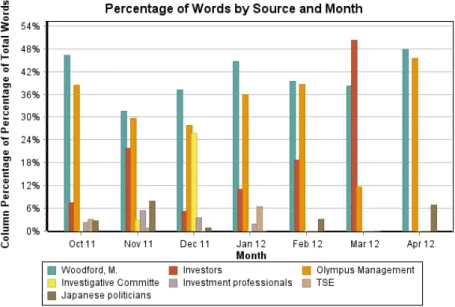
Figure 5-2 Code: Source – Word Percentages by Month ... 67
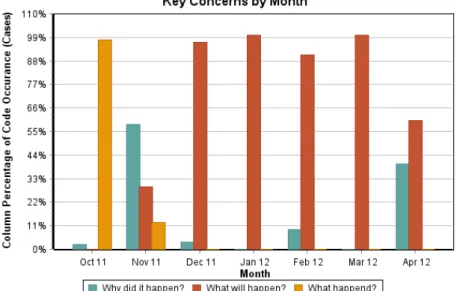
Figure 5-3 Code Category: Key Concerns – Code Occurrence per Month ... 70
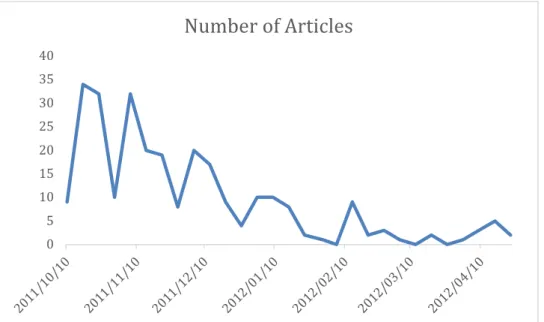
Figure 5-4 Total Articles in Corpus (N=273) per Week ... 73
Figure 5-5 Code Category: Points of Contention – Code Occurrence by Month ... 74
Figure 7-1 Estimated Marginal Means of Company Image ... 108
Figure 7-2 Estimated Marginal Means of Response Evaluation ... 110
Figure 7-3 Estimated Marginal Means of Company Image ... 116
Figure 8-1 Three-way interaction between CEO Ethnicity * Response Match * CEO Language ... 134
Figure 8-2 Three-way interaction between CEO Language * CEO Ethnicity * Response Match ... 137
Figure 8-3 CEO Credibility * Ideological Similarity ... 143
Figure 8-4 CEO Credibility * Company Image ... 144
TABLE OF TABLES
Table 2-1 Categories of International and Cross-Cultural Crisis Communication
Research based on Schwarz (2013) and Schwarz et al. (2016) ... 14
Table 3-1 SCCT CRS (Coombs, 2007a, p. 170) ... 18
Table 3-2 SCCT Crisis Response Strategy Guidelines (Coombs, 2007a, p. 173) ... 19
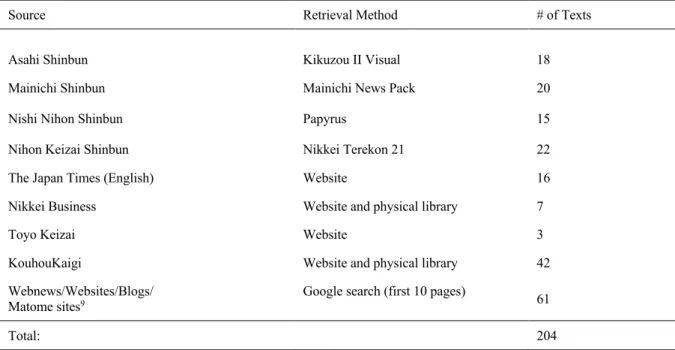
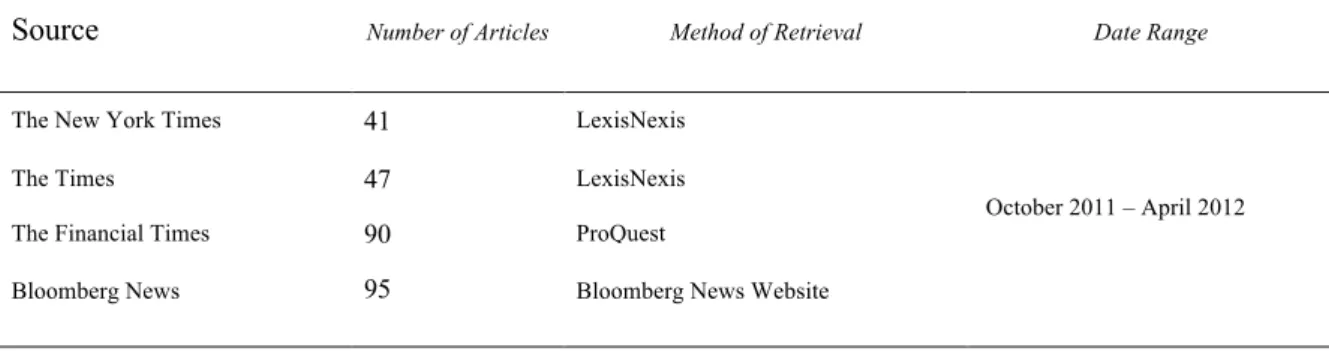
Table 5-1 Corpus of Western press coverage of Olympus crisis for content analysis 58 Table 5-2 Code: Source - Word Percentages Week 1 ... 64
Table 5-3 Code Category: Key Issues – Word Percentages by Month ... 64
Table 5-4 Code Category: Olympus CRS – Case Occurrence by Month [Olympus Press Releases] ... 64
Table 5-5 Code Category: Translation (Rotten Narrative) – Case Occurrence by Source ... 72
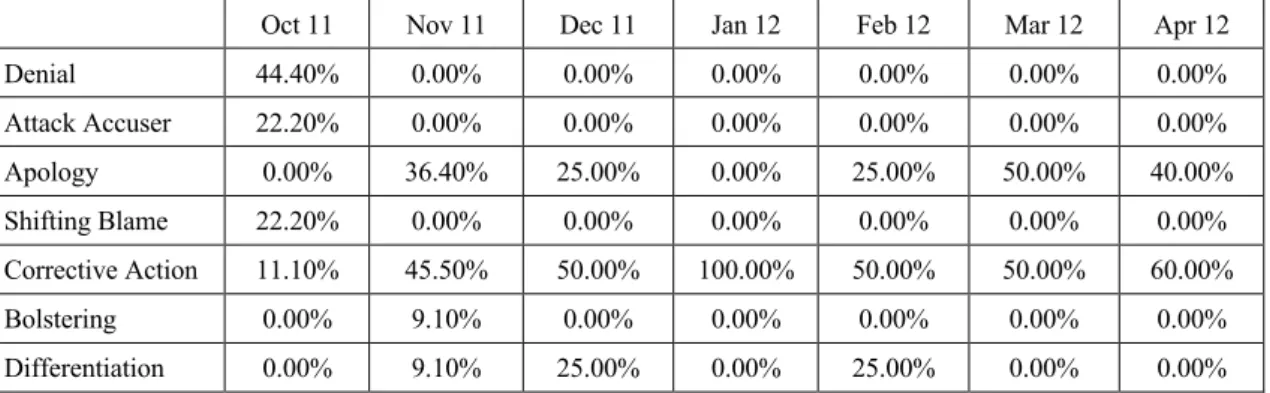
Table 5-6 Code Category: Key Messages of Olympus’s Corrective Action Strategy – Case Occurrence by Month [Olympus Press Releases] ... 74
Table 6-1 Text evidence for analysis ... 80
Table 6-2 Crisis Communication Strategies and Key Criticisms - Case 1 ... 84
Table 6-3 Crisis Communication Strategies and Key Criticisms - Case 2 ... 90
Table 7-1 Pearson Correlation Table ... 111
Table 7-2 Results of Principle Component Analysis ... 113
Table 7-3 Median Scores for Personal Control/Locus, External Control, and Responsibility ... 115
Table 7-4 Unweighted Mean Company Image Scores by Crisis Type ... 117
Table 7-5 Pairwise Comparisons Table for Company Image ... 117
Table 8-1 Tests of Between-Subjects Effects: With Outlier (N=230) ... 135
Table 8-2 Tests of Between-Subjects Effects: Without Outliers (N=229) ... 135
Table 8-3 Pairwise Comparison Table with Bonferroni Adjustment (CEO Ethnicity* Response Match* CEO Language) ... 137
Table 8-4 Pairwise Comparison Table with Bonferroni Adjustment (Response Match* CEO Ethnicity* CEO Language) ... 138
Table 8-5 Mean Company Image Table for Response Match * CEO Ethnicity * CEO Language ... 139
Table 8-6 Pairwise Comparison Table with Bonferroni Adjustment (Response Match* CEO Language * CEO Ethnicity) ... 140
Table 8-7 Independent Samples T-Test: Ideological Similarity ... 142
1 Introduction
Navigating a crisis is tough on any organization, but such troubles are only compounded when a company is operating outside its comfort zone. With more and more companies growing into multinational organizations, crises increasingly cross national borders, requiring communication with diverse audiences with divergent information needs, and culture-specific communication standards and values (Claeys
& Schwarz, 2016). Moving beyond its ethnocentric origins, the field of crisis communication has the potential to provide practitioners with a truly relevant international body of knowledge with increasing explanatory and eventually even predictive capabilities within and across a number of national contexts.
1.1 Statement of the Problem
Crisis Communication as an academic discipline has historically been a heavily Western-centric field of research, with a majority of the research coming from Europe and North America. In order to align crisis communication practice and scholarship to the reality of vast cultural differences between stakeholders across the globe, an in-depth study of crisis communication differences across cultural settings is essential. Crisis communication as a field is heeding this call, and a number of scholars have started the drive to move crisis communication scholarship beyond its Western-centric origins (Falkheimer & Heide, 2006; Schwarz, Seeger, & Auer 2016;
Ulmer & Pyle, 2016). Claeys and Schwarz (2016) recognized that any crisis communication effort in a cross-cultural setting “would need substantial research and knowledge about [stakeholder’s] information needs, communication habits, [and]
culture-specific value orientations…,” (p. 224) and emphasized the need for international comparative research. In recent years, several prominent crisis
communication failures both by Japanese organizations abroad and international organizations in Japan have shone a spotlight on the need for such research in the Japanese context. The emphasis on differences between cultural approaches is not to be taken as a dismissal of their similarities. In fact, this thesis takes the express standpoint that communication theories should be adapted to and not reinvented for different cultural contexts. Recognizing that Western theories are not universally applicable does not mean they should be categorically discarded and disregarded when considering other cultural contexts. It is, in other words, not necessary to reinvent the wheel; one merely needs to tweak it for different territories.
1.2 Goals of this Thesis
This thesis has two primary goals. Firstly, the author hopes to show how Japanese crisis communication reality differs from Western theory by focusing on the differences between crisis communication strategies described and prescribed by one of the most prominent Western crisis communication theories, Situational Crisis Communication Theory (SCCT), and the crisis communication practices and realities in Japan. Cultural differences between Japan and the West will be identified, and their impact on crisis communication practices, expectations, and outcomes will be examined. The second goal is the assessment of the impact of cross-cultural crisis communication considerations, such as spokesperson ethnicity, language choice, and message fit on crisis communication outcomes in Japan. With this thesis, the author intends to contribute to the holistic body of evidence-based knowledge about crisis communication in Japan and with Japanese audiences and aid the establishment of a truly universal theoretical crisis communication framework.
1.3 Rationale
This thesis takes a mixed methods approach to achieving these goals. The first section takes a qualitative and narrative approach to illustrate the relevance of culture to crisis communication reality in Japan and in the Japan-Western cross-cultural context. Two qualitative case studies provide real-life examples of the variable of culture and simultaneously aid in refining the research questions and hypotheses for the quantitative portion of this thesis. The second section takes a traditional quantitative approach to testing the hypotheses and answering the refined research questions established in section one.
1.4 Overview of the Thesis
Chapter 2 introduces the state of the art of crisis communication and reviews relevant cross-cultural and international aspects of the field. Chapter 3 provides an introduction to the main theories in which this thesis is grounded. SCCT and Rhetorical Arena Theory (RAT) are introduced, and their theoretical underpinnings are discussed. Chapter 4 provides an overview of the psychological, socio-cultural, and organizational context of Japan and its effects on communication practices in general. Chapters 5 and 6 constitute the qualitative section of this thesis and illustrate the impact of the cultural differences identified in chapter 4 on real-life crisis communication situations. Chapter 5 examines the case of Olympus Corporation’s struggles with cross-cultural crisis communication differences. This chapter focuses on a Japanese company communicating with a Western audience. Chapter 6 introduces the case of McDonald’s Japan, whose Western chief executive officer (CEO) encountered considerable difficulties when attempting to address two crisis situations with a Japanese audience. Chapter 7 investigates the impact of crisis type
and message content on perceived corporate reputation, while chapter 8 focuses on the influence of spokesperson ethnicity and language choice on both spokesperson and corporate reputational outcomes. Chapter 9 concludes this thesis with final thoughts and future research directions.
2 Culture and Crisis Communication
Any meaningful discussion of cultural differences in crisis communication, needs to be preceded by an attempt to define what this concept entails. This requires a closer look at the two main elements, crisis communication and culture. This chapter will provide a detailed introduction of both crisis communication in general and international and cross-cultural crisis communication in particular.
2.1 Crisis Communication 2.1.1 What Constitutes a Crisis?
A first comprehensive definition was provided by Pearson and Clair (1998) who describe a crisis as “a low-probability, high-impact event that threatens the viability of the organization and is characterized by ambiguity of cause, effect, and means of resolution, as well as by a belief that decisions must be made swiftly” (p.
60). W. Timothy Coombs (2014) describes a crisis as “the perception of an unpredictable event that threatens important expectancies of stakeholders related to health, safety, environmental, and economic issues, and can seriously impact an organization’s performance and generate negative outcomes” (p. 3). Two key features shared by several of the abundant and often diverse definitions of the term crisis are its unpredictable and non-routine nature and potential for strongly negative outcomes (For a detailed overview over the various definitions of crisis, see Pratt, 2012).
Crises have the potential to tarnish an organization’s good name and damage the relationship with its stakeholders (Coombs, 2007a). This is especially true for internationally active companies. Increased media interest in their actions, different sets of public expectations, as well as differing complex economic and political systems, expose these companies to an increased risk of experiencing a crisis. No
matter how much effort an organization puts into risk management, it is inevitable that the organization will eventually offend someone (Hearit, 2006).
2.1.2 Defining Crisis Communication
The field of crisis communication is vast and ranges from crisis communication by individuals on the one hand to the national level on the other. It covers a multitude of topics, including political crises, natural disasters, health crises, and terrorism, to name a few. This thesis will focus on the flourishing field of organizational crisis communication. Any further discussion of the term crisis communication will focus primarily on corporate aspects of the topic, and the discussion of overarching theories will be limited to their applicability to organizational crisis communication. Crisis communication is often defined as a key element of crisis management due to its essential role throughout the different stages of crisis management (Coombs, 2010a). Even before a crisis erupts, crisis communication encompasses the collection of information from various sources about potential problems, the mitigation of detected risks, and efforts to be ready if prevention fails (Coombs, 2014). Communication, once the crisis has begun, includes disseminating messages that help protect stakeholders from physical and emotional harm and mitigating the crisis fallout in terms of reputational damage. In the aftermath of a crisis, crisis communication focuses on allowing the organization to return to normal operations while attempting to learn from what has happened (Coombs, 2014). An effective crisis communication effort can aid victims and protect and restore the damaged image of the offending organization. Lackluster efforts, on the other hand, can further exacerbate the negative impact on an organization and its stakeholders (Coombs, 2006, 2010b).
Other scholars attribute an even greater significance to crisis communication.
Hearit and Courtright (2004) assert that “crises are terminological creations conceived by human agents, and consequently, are managed and resolved terminologically. As such, instead of being one component, communication constitutes the quintessence of crisis management” (p. 205). This social constructionist view of crisis communication emphasizes that crisis meaning is negotiated through communication processes between crisis actors (Frandsen & Johansen, 2017). If we see crisis meaning as socially constructed, we have to take into consideration the cultural context that defines how different audiences make sense of the world. If crisis reality is not knowable as an absolute truth but a terminological creation, then we cannot reasonably assume that all audiences will agree on causes of crises and make similar attributions of responsibility. This view of crises leads us to not only examine cultural differences in the use and evaluation of crisis response strategies (CRS) but also in the assessment of the crisis situation itself.
2.1.3 The Development of Crisis Communication
Early research in the field of crisis communication was heavily dominated by case study research (An & Cheng, 2010). Here, researchers focused on the organizations, and what and how they communicated during a crisis (Frandsen &
Johansen, 2010a). These rhetorical or text-oriented studies emerged as the most widely used approach to crisis communication during this time (Frandsen & Johansen, 2017). Application of the rhetorical approach led to the development of typologies of crisis communication strategies such as Benoit’s Image Restoration Theory (IRT;
1995) and Hearit’s (2006) work on corporate apologia. Research on account giving and apologia helped researchers identify strategies ranging from accommodative rebuild strategies (compensation and apology), over diminishing strategies (excuse
and justification), to deny strategies (attack the accuser, denial, and scapegoating;
Coombs, 2007a). More recently, primarily evidence-based studies have shifted the focus of crisis research from the organization to its stakeholders (Coombs, 2010a).
Aiming to predict audience reactions to crisis response messages and make appropriate recommendations, this more formal approach is replacing case studies with quantitative methodologies. Key questions posed are “(1) how people perceive the crisis situation, (2) how they react to [CRS], (3) how they perceive the organization in crisis, and (4) how they intend to behave toward the organization in crisis in the future” (Coombs, 2010b, p. 721). SCCT by Coombs (2007a) draws on attribution theory to match CRS with audience perceptions. For a detailed overview of SCCT, see chapter 3. Other approaches are increasingly complex. For example, an adaption of Contingency Theory to the crisis communication context (Pang, Jin, &
Cameron, 2010) utilizes a wide array of thematic contingency factors to determine organizational conflict positioning, ranging from advocacy to accommodation.
Much work has been done to create frameworks to classify the stages of a crisis. Three-stage (Coombs, 2010a; Smith, 1990), four-stage (Fink, 1986; Myers, 1993), and five-stage models (Pearson & Mitroff, 1993) have been developed. The three-stage model preferred by Coombs (2010a) will be adapted to facilitate a structured discussion throughout the qualitative section of this thesis. Coombs (2010a) views crises as consisting of three stages: the pre-crisis phase, the crisis response phase, and the post-crisis phase. During the pre-crisis stage, an organization should be ever vigilant for early warning signs of a potential crisis. Crisis management teams and crisis response plans should be prepared with the intention of preventing what can be prevented and making the best of crises that do occur. The crisis response phase takes place when the crisis manifests. This is a critical stage, and containment efforts
aim to minimize organizational and stakeholder damage (Coombs, 2014). The post- crisis phase is when the organization attempts to return to normal (Coombs, 2007d).
Here crisis managers should reflect on the lessons learned throughout the crisis (Coombs, 2014) and foster crisis resilience through organizational changes and renewal (Ulmer, Seeger, & Sellnow, 2007). An organization should emerge from the crisis having become different and better through a learning experience. These changes and improvements can be a strong signal to stakeholders and the public that the organization “gets it” (Heath, 2010), and that similar issues will not occur again.
This is especially true when corporate wrongdoing was the cause of the crisis.
While various theories exist on which crisis communication strategies best fit which situations, crisis communication scholars agree on three key guidelines for the crisis response phase: “(1) be quick, (2) be accurate, and (3) be consistent” (Coombs, 2007d, p. 6; 2014). If the organization fails to establish itself as a source of information at the onset of the crisis, the news media will quickly turn to anyone willing to speak about the crisis (Coombs, 2007d; Lerbinger, 1997). Thus, initial crisis information could be potentially inaccurate or even intentionally inflammatory (Coombs, 2006). The crucial first days or even hours of a crisis, which are when many initial opinions are formed, should see the organization fulfill the public demand for information and begin to shape audience perceptions (Sen & Egelhoff, 1991). Failure to speak up signals a lack of control and wastes an opportunity to drive the narrative (Coombs, 2014; Hearit, 1994). Overall, crisis communicators should keep in mind that unsuccessful crisis communication strategies can, in fact, exacerbate negative crisis effects, while a well-executed response effort can protect and restore a tarnished image (Coombs, 2010b).
2.2 Crisis Communication and Culture
Cultural differences can affect crisis communication efforts in several ways.
Much research has been done concerning the impact of organizational culture on how organizations and their members communicate (e.g., Pepper, 1995; Ray, 1999).
Organizational culture, and through it, national culture, influences organizations’
communication behaviors during reputational crises (A. M. George, 2011; Ray, 1999;
Yu & Wen, 2009). Culture impacts “whether an organization takes responsibility, offers an excuse, or places blame somewhere else” (Stephens, Malone, & Bailey, 2005, p. 395; Ray, 1999). Ray (1999) urges organizations to consider the “fit of the organization’s culture with the culture of its external stakeholders”, emphasizing the need for “sensitivity to cross-cultural communication differences” (p. 22).
On the message receiver side, culture can impact not only how audiences evaluate crisis communication messages (Lingley, 2006; Takaku, Lee, Weiner, &
Ohbuchi, 2005; Tyler, 1997), but also how they assess a crisis situation in the first place (Shaver & Schutte, 2001). In addition, audiences with different cultural backgrounds can have diverse needs regarding the manner and form of crisis communication messages. Conventions for media, genre, and text choices, as well as spokesperson selection, can differ vastly across cultures (Frandsen & Johansen, 2010a). Culture is clearly relevant to the field of crisis communication, but before we can engage in a more in-depth discussion about cultural differences in crisis communication, we have to tackle the task of defining the elusive term culture.
2.2.1 Defining Culture
With what seems like thousands of different definitions and delineations across and within numerous fields of research, attempting to find a universal definition for the term culture seems impossible. Alvesson (2013) succinctly
summarizes the problem with culture: “Culture is a tricky concept as it is easily used to cover everything and consequently nothing” (as cited in Frandsen & Johansen, 2017, p. 123). This inherent malleability of the term culture can be both a curse and a blessing. It allows researchers to find, within the myriad of different definitions, the one that most closely fits their needs, or even daringly add their own to the fray.
However, that same ease of choosing a good fit for one’s own study can make comparing culture-centered studies difficult. The following section provides a brief and non-exhaustive overview of how the term culture is used by crisis communication scholars, and how the term will be defined for the purpose of this thesis.
Hofstede (2001) describes culture as “the collective programming of the mind that distinguishes the members of one group or category of people from another” (p.
9). Hofstede (2001) takes a functionalist approach to culture and defines national cultures along five dimensions: (1) power distance, (2) uncertainty avoidance, (3) individualism / collectivism, (4) masculinity / femininity, and (5) long-term / short- term orientation. This approach has garnered some criticism in recent years as being methodologically flawed and suffering from “national cultural determinism”
(Frandsen & Johansen, 2017, p. 124). Nevertheless, Hofstede’s cultural dimensions are a frequent staple of crisis communication studies focusing on cultural differences (e.g., An, Park, Cho, & Berger, 2010; Haruta & Hallahan, 2003; Low, Varughese, &
Pang, 2011; Taylor, 2000).
Other scholars take an “interpretive or symbolic approach” to culture, emphasizing shared meaning construction through communication (Frandsen &
Johansen, 2017, p. 125). This perspective interprets culture as a product of communicative activities and processes within groups, which stands in contrast to the functionalist perspective and its view of culture in terms of psychological processes
(Frandsen & Johansen, 2017).
This thesis focuses on national culture as the unit for investigation. It goes without saying that any investigation of culture at the national level is inherently reductive. Nations are diverse, and even for Japan, long hailed as mono-ethnic and culturally homogeneous (tan’itsu bunka; Tsuneyoshi, 2004)1, the national culture level approach leads to an inevitable loss of nuance. However, having acknowledged its drawbacks, let us move on to the defense of the investigation of culture at the national level.
First, national culture can be seen as the background or foundation from which other cultural contexts emerge or by which other contexts are framed. This is not to dismiss the importance of organizational culture, or the often-considerable differences between disparate groups within national units; rather it means to recognize the importance of national culture as the foundation of and background for organizational culture and attitudes (A. M. George, 2012; Kim & Kim, 2010). Organizational culture, for example, is always influenced by the national culture of its leaders and employees.
Secondly, a focus on organizational culture or the specific cultural characteristics of just one stakeholder group would pose considerable methodological and practical challenges and is beyond the scope of this thesis. In conclusion, the admittedly somewhat reductive approach of focusing on national culture does not seek to dismiss
1 Japan as a mono-ethnic nation defined by cultural homogeneity is a staple of nihonjinron (see section 4.6.2. “Japanese Cultural Identity and Perception of the
‘Other’”). However, several scholars have begun to challenge the view of Japan as lacking diversity (see DeVos & Wagatsuma, 1996; Hicks, 1997; Weiner, 1997, as cited in Tsuneyoshi, 2004).
the importance of other contextual considerations but merely aims to provide a first step or rough framework from which more detailed investigations can be launched and which can be refined over time.
2.2.2 Defining International and Cross-Cultural Crisis Communication
Culture is the bedrock of human communication, yet, it has only become a true focus of communication studies within the last 50 years (Rogers, 1994). The public relations field began to embrace culture as a relevant factor around the turn of the millennium (Frandsen & Johansen, 2010a). And while it remains somewhat less ubiquitous in crisis communication research, international crisis communication and cultural context considerations are being increasingly recognized as a worthy and fertile new avenue in the field (Coombs, 2008; Falkheimer & Heide, 2006; Frandsen
& Johansen, 2010a; Lee, 2005a; Schwarz et al., 2016). In 2005, Lee (2005a) described international crisis communication as “underdeveloped, if not undeveloped, [reflecting] either insensitivity or ethnocentrism in the current crisis communication field” (p. 286). Indeed, in 2007, the second edition of one of the most influential volumes on crisis communication, Coombs’ Ongoing Crisis Communication, made only a single mention of culture (Frandsen & Johansen, 2010a).
A gradual shift in attitudes is, however, becoming evident (Frandsen &
Johansen, 2017). In 2010, Coombs, Frandsen, Holladay, and Johansen wrote: “Crises are increasingly becoming international […]. Yet we know little about the effects of the international context on crisis communication. How does the international context affect crisis communication?” (p. 343). In the same year, The Handbook of Crisis Communication (Coombs & Holladay, 2010) dedicated an entire section, “Part IV Global Crisis Communication”, to crises occurring in different cultural contexts. In 2016, Schwarz, Seeger, and Auer published The Handbook of International Crisis
Communication Research, illustrating the rising importance of cultural context in the field. However, despite the increasing interest in culture, “the state of research in international crisis communication is still limited in quantity and scope” (Schwarz et al., 2016, p. 3).
Table 2-1 Categories of International and Cross-Cultural Crisis Communication Research based on Schwarz (2013) and Schwarz et al. (2016)
Cross-national or cross-cultural crisis communication National and/or cultural
context as explaining variable
Yes No
Yes I. International-comparative or cross- cultural-comparative crisis
communication research
II. Comparative crisis communication research
No III. International or cross-cultural crisis communication as object of study
IV. Context-specific or country-specific crisis communication (research)
Schwarz (2013) classified the field of international crisis communication by taking into consideration two aspects. The first aspect is whether “national or cultural context factors [are utilized] as independent or explaining sets of variables” (Schwarz et al., 2016, p.3). The second aspect is whether a cross-national or cross-cultural component is present. Table 2-1 introduces the resulting four types of international crisis communication research. A critical view places most existing international crisis communication research squarely in category IV, being limited to a single country and primarily “using some kind of framework or theory that was developed by Western-based scholars” (Schwarz et al., 2016, p. 4). Yet, the importance of investigating the fundamental applicability of Western theories and frameworks in this way should not be underestimated. While some research in categories II and IV suggests their potentially broader applicability with some adjustments (e.g., Huang, Lin, & Su, 2005; Romenti & Valentini, 2010; Lee, 2005b), a claim to universality remains far from being well established. Some evidence points in the direction of a considerable impact of cultural differences on crisis communication (e.g., An et al.,
2010; Drumheller & Benoit, 2004; Haruta & Hallahan, 2003; Taylor, 2000) and shines a spotlight on the need for more research. In fact, a number of scholars are in the process of developing distinct crisis communication frameworks for the Chinese cultural context (e.g., Hu & Pang, 2017; Wu, Huang, & Kao, 2016).
In line with Schwarz’s (2013) typology, this thesis defines cross-cultural crisis communication as crisis communication that crosses national boundaries or involves senders and receivers of crisis messages from different national cultures. The studies in this thesis are primarily located in category IV with some cross-cultural elements but without a direct comparative component. In particular, this thesis focuses on crisis communication efforts where the senders or receivers of crisis messages are Japanese nationals and are, therefore, thought to be dominantly influenced by the Japanese national cultural context.
2.2.3 Culture and Crisis Communication: Japan vs. the West
The existence of vast literature on communication differences between Japan and the West hints at Japan being an ideal environment to examine the effect of cultural differences in crisis communication (e.g., Barnlund & Yoshioka, 1990;
Hamilton & Sanders, 1983; Ohbuchi & Takahashi, 1994; Sugimoto, 1997;
Wagatsuma & Rosett, 1986). However, research examining such crisis communication differences between Japan and Western countries remains somewhat rare. Pinsdorf (1991) and Haruta and Hallahan (2003), for example, contrasted the crisis communication strategies and public reactions for major airline disasters in Japan and the United States. Both investigations found considerable differences in account preferences, media strategies, and liability concerns between the two countries. A number of scholars examined the crisis communication efforts of Tokyo Electric Power Company (TEPCO) after the 2011 Fukushima Daiichi Nuclear Power
Plant disaster through a cultural lens or by applying Western crisis communication theories (Choi, J. & Lee, 2017; Cotton, Veil, & Iannarino, 2015; Pratt & Carr, 2017).
Other researchers took a cross-cultural approach. Drumheller and Benoit (2004), for example, found significant cultural effects on perceptions of crisis communication efforts by studying the case of the collision of the U.S. Navy submarine U.S.S.
Greenville with the Japanese fishery training boat Ehime Maru. Nine Japanese students, teachers, and crewmembers were killed in the incident. The subsequent crisis handling by the U.S. Navy and the Greenville’s commander, in particular, was deemed highly inappropriate by Japanese audiences who demanded an immediate apology. The case of the Ehime Maru is a prime example of the pitfalls of cross- cultural crisis communication and has been further examined by Hearit (2006), Takaku et al. (2005), and Lingley (2006). As an archetypical case of a Western multinational failing to take into account differing crisis communication standards in Asia, the 2006 cross-cultural crisis communication failure by the Schindler elevator company, has been examined by several researchers (e.g., Kalbermatten, 2011;
Nottage, 2006; Rothlin & McCann, 2016). Schindler’s failure to deliver an apology quickly and sincerely as well as its use of bolstering and ingratiating crisis communication strategies led to the company being perceived as self-important, unreliable, and willfully blind to Japanese cultural conventions (Kalbermatten, 2011).
However, cross-cultural crisis communication failures are not limited to Western organizations. Japanese multinationals have experienced similar challenges. A. M.
George (2012) examined communication plans implemented by Japanese automobile manufacturer Toyota during its 2009/2010 recall crisis finding cultural differences in the crisis management approach. The same case had previously been explored by Johar, Birk, and Einwiller (2010) and Neufeld (2011).
3 Theoretical Foundations
When approaching the topic of cross-cultural crisis communication, it is essential to acknowledge and take advantage of the outstanding foundation Western researchers have created in the field of crisis communication research. Existing models, born from exhaustive work by Western researchers within their own cultures, provide international scholars with an invaluable foundation from which to launch their empirical investigations. This study will ground its investigation in one of the most prominent crisis communication frameworks in the field, SCCT. The SCCT framework will serve as both the theoretical underpinnings of this study as well as the archetype of Western crisis communication practices against which the Japanese practices will be compared. In addition, the author will draw on RAT to incorporate various cultural differences into an expanded crisis communication framework.
3.1 Situational Crisis Communication Theory
Timothy W. Coombs began to develop SCCT in 1995 with the goal of illuminating “how people perceive crises, their reactions to [CRS], and audience reactions to the organization in crisis” (Coombs, 2010a, p. 38). SCCT was created to take crisis communication research beyond its descriptive beginnings and to empirically test the relationships found in case study research. SCCT also constituted a shift in perspective from a primarily sender oriented rhetorical approach to a more audience oriented social scientific approach (Coombs, 2010a). Audience oriented crisis communication research aims to examine audience “perceptions and reactions”
in crises and how these “perceptions and reactions” can be altered (Coombs, 2010a, p.
37). Grounding his work in Weiner’s (1986) attribution theory, Coombs extended previous work on crisis communication strategies based in apologia and account
giving such as Benoit’s (1995) IRT. SCCT recommends that organizations should adjust their crisis responses in accordance with how much the audience blames the organization for what has happened (i.e., perceived crisis responsibility), as crisis communication strategies are most effective when they match the perceived crisis type (Coombs & Holladay, 1996; Coombs, 1998, 2014). To determine the level of crisis responsibility likely to be attributed to the organization by its stakeholders, Coombs utilizes a two-step approach (Coombs, 2007a).
First, the theory assigns the crisis to one of three primary clusters: (1) the victim cluster (crises harming both the organization and its stakeholders and eliciting weak attributions of responsibility), (2) the accidental cluster (crises arising from unintentional actions by the organization and eliciting minimal attributions of responsibility), and (3) the preventable cluster (crises involving intentional inappropriate or illegal actions or risks for the stakeholders and eliciting strong attributions of responsibility; Coombs & Holladay, 2002; Coombs, 2007a). In the second step, touching upon Kelley’s (1973) work on covariance in attribution, Coombs (2007b) adjusts the initial responsibility assessment by incorporating the quality of the audience’s prior relationship with an organization (equivalent to Kelley’s dimension of distinctiveness) and an organization’s crisis history (equivalent to Kelley’s dimension of consistency) as intensifying factors.
After the level of perceived responsibility has been determined, CRS are matched with crisis types through their perceived level of responsibility acceptance;
higher levels of crisis responsibility require more accommodative and responsibility- accepting strategies (Coombs, 2007a). Table 3-1 provides a list of CRS utilized by SCCT, and Table 3-2 summarizes the key recommendations made by SCCT.
Table 3-1 SCCT CRS (Coombs, 2007a, p. 170)
Primary crisis response strategies Deny crisis response strategies
Attack the accuser: Crisis manager confronts the person or group claiming something is wrong with the organization.
Denial: Crisis manager asserts that there is no crisis.
Scapegoat: Crisis manager blames some person or group outside of the organization for the crisis.
Diminish crisis response strategies
Excuse: Crisis manager minimizes organizational responsibility by denying
intent to do harm and/or claiming inability to control the events that triggered the crisis.
Justification: Crisis manager minimizes the perceived damage caused by the crisis.
Rebuild crisis response strategies
Compensation: Crisis manager offers money or other gifts to victims.
Apology: Crisis manager indicates the organization takes full responsibility for the crisis and asks stakeholders
…………for forgiveness.
Secondary crisis response strategies Bolstering crisis response strategies
Reminder: Tell stakeholders about the past good works of the organization.
Ingratiation: Crisis manager praises stakeholders and/or reminds them of past good works by the organization.
Victimage: Crisis managers remind stakeholders that the organization is a victim of the crisis too.
Table 3-2 SCCT Crisis Response Strategy Guidelines (Coombs, 2007a, p. 173)
1. Informing and adjusting information alone can be enough when crises have minimal attributions of crisis responsibility (victim crises), no history of similar crises and a neutral or positive prior relationship reputation.
2. Victimage can be used as part of the response for workplace violence, product tampering, natural disasters and rumors.
3. Diminish crisis response strategies should be used for crises with minimal attributions of crisis responsibility (victim crises) coupled with a history of similar crises and/or negative prior relationship reputation.
4. Diminish crisis response strategies should be used for crises with low attributions of crisis responsibility (accident crises), which have no history of similar crises, and a neutral or positive prior relationship reputation.
5. Rebuild crisis response strategies should be used for crises with low attributions of crisis responsibility (accident crises), coupled with a history of similar crises and/or negative prior relationship reputation.
6. Rebuild crisis response strategies should be used for crises with strong attributions of crisis responsibility (preventable crises) regardless of crisis history or prior relationship reputation.
7. The deny posture crisis response strategies should be used for rumor and challenge crises, when possible.
8. Maintain consistency in crisis response strategies. Mixing deny crisis response strategies with either the diminish or rebuild strategies will erode the effectiveness of the overall response.
A critical point that suggests that cultural differences might lead to a potentially limited cross-cultural applicability of the SCCT framework is its distinctly ethnocentric origins. Grounded in two Western communication theories, apologia and attribution theory, and developed from and supported by U.S. experimental data, SCCT can be seen as an exclusively Western construct. Only a limited number of
cultural differences in the communication theories it originated from necessitate a closer examination of the framework’s cross-cultural validity (Claeys & Schwarz, 2016).
For example, SCCT makes no mention of fundamental cultural differences in responsibility attribution. Various scholars have identified significant differences in mechanisms of responsibility attribution across cultures (Choi, I., Nisbett, &
Norenzayan, 1999; Hamilton & Sanders, 1996; Shaver & Schutte, 2001; Zemba, Young, & Morris, 2006). Therefore, choosing an appropriate crisis response strategy, which matches the perceived responsibility attribution of a given audience, necessitates a clear understanding of cross-cultural variations in responsibility attributions. As SCCT was refined, key elements of attribution theory were tested and dismissed as having little influence on reputational outcomes in experimental settings.
Coombs and Holladay (2002) found the personal control dimension of attribution theory to be isomorphic with crisis responsibility and Coombs (1998) dismissed external control as not contributing significantly to explanations of crisis responsibility. This dismissal, while backed with robust findings, is a dismissal based solely on U.S. study participants and is therefore of dubitable validity when examined through a cross-cultural lens. This raises several questions. Would empirical testing with subjects from other cultural backgrounds have resulted in the same dismissal of attribution dimensions as irrelevant to SCCT? Moreover, might other non-Western responsibility attribution considerations affect SCCT? However, not only the responsibility attribution aspects of SCCT might be subject to cultural variation. A number of researchers have also found considerable cultural differences in account preferences (Hamilton & Hagiwara, 1992; Itoi, Ohbuchi, & Fukuno, 1996; Takaku, 2000). Therefore, perceptions of what are considered appropriate CRS could also be
subject to cultural variation. This poses the question: Do cultural differences in account giving necessitate adjustments to crisis response recommendations made by SCCT?
3.2 Rhetorical Arena Theory
For a well-rounded look at cross-cultural crisis communication for the Japanese context, we have to move beyond what is considered in the SCCT framework and examine how and by whom crisis messages are delivered in Japan.
Significant differences can exist across cultures in context, media, genre, and text choices, as well as spokesperson preferences (Frandsen & Johansen, 2010a). Such differences can originate from different media environments and responsibility attribution patterns, homophily and language considerations, as well as culture specific idiosyncrasies of crisis management conventions. RAT, a more recent crisis communication framework, addresses these diverse communication needs.
RAT takes a multi-vocal approach to crisis communication and explicitly recognizes the importance of cultural differences to crisis communication (Frandsen
& Johansen, 2017). When a crisis emerges, a rhetorical arena is formed, where various groups and individuals interact and communicate. RAT aims to examine the
“communicative complexity” of the crisis arena and “to identify, describe, and explain patterns within the multiple communication processes taking place” (Frandsen
& Johansen, 2017, p. 142). RAT uses the term arena to illustrate how various voices
“struggle with each other regarding interpretation of not only the crisis itself, but the handling of it.” (Frandsen & Johansen, 2017, p. 142). This terminology conjures up images of voices engaged in a metaphorical battle over definitional hegemony.
The model differentiates between two levels of analysis, the macro- and the micro-level. On the macro-level, RAT takes inventory of the various complex and divergent voices speaking up throughout a crisis, allowing an observer to construct a diagnostic map of the arena (Frandsen & Johansen, 2010a). On the micro-level, RAT examines the “individual communicative processes between a sender and a receiver in the rhetorical arena, showing how this process is mediated by four parameters: context, media, genre, and text” (Frandsen & Johansen, 2010a, p. 563).
Context “consists of a specific set of internal or psychological and external or sociological contexts that ‘filters’ each individual communicative process” (Frandsen
& Johansen, 2017, p. 150). The sociological context, in turn, consists of three sub- units, the national cultural context, the organizational context, and the situational context of the particular sender-receiver interaction being examined. The timing of the message, for example, is seen as a vital component of the situational context (Frandsen & Johansen, 2017). For the purpose of this thesis, we consider spokesperson choice a situational factor. The media parameter refers to the “carrier”
of the crisis message, which includes not only traditional media types (e.g., legacy, electronic, social) but also “the spoken and written word, even the human body, are defined as media in this context” (Frandsen & Johansen, 2017, p. 152).
The third parameter is genre. RAT defines genre as “a recognizable communicative event characterized by a set of communicative purpose(s) identified and mutually understood by the members of the discourse community(s) in which it regularly occurs” (Swales, 1999, as cited in Frandsen & Johansen, 2017, p. 153). Text genres commonly used by corporations in crisis include press releases and conferences, interviews, written communication to stakeholders, or social media posts.
The final parameter is text itself, the words and actions chosen to convey the message (Frandsen & Johansen, 2017). This can include staging, eye contact, body language, clothing, and many more minute details, which have the potential to significantly impact how a message is interpreted. In some cultures, for example, a perfectly worded apology can be ruined by not bowing deeply enough. The four micro-level parameters constitute a framework for both the creation and interpretation of crisis messages (Frandsen & Johansen, 2010b).
The micro-level of RAT is of particular interest to this thesis as it provides an excellent framework for the incorporation of cultural differences in the crisis communication process between culturally dissimilar organizations and audiences. To summarize, RAT’s micro-level takes into consideration psychological, socio-cultural, organizational, and situational contexts and emphasizes the importance of identifying the aspects of these types of contexts that will have the most substantial influence on the crisis management and crisis communication decisions of the actors involved (Frandsen & Johansen, 2010b). In addition, the micro-level accounts for cultural differences in the conventions for the selection of media (oral or written communication, electronic, print or new media channels), genre (i.e., press release, in-person address, tweet, blog, videos), and text (i.e., verbal or visual messages) (Frandsen & Johansen, 2010a, p. 563).
3.3 The Interplay of SCCT and RAT
Crises are infinitely complex. Communication during a crisis is a back and forth between crisis actors in the rhetorical arena. With the comparative simplicity of SCCT, the more nuanced view of the crisis communication process provided by RAT is undoubtedly necessary. If we consider the crisis arena as the macro view of a crisis,
we can choose to utilize SCCT as a tool on the micro-level, zooming in on both the initial assessment of the situation by the organization and the sending of that first and all-important message to stakeholders at large. An initial public reaction, by its very nature, cannot be deeply nuanced and will frequently be more reductive and generic rather than brilliant. An organization may, however, aim to make its initial communication as appropriate to its key audience as possible. Taking into consideration a target audience’s cultural background and associated expectations and communication practices can allow an accused organization to overcome the initial hurdle of, at least not making things worse with an inappropriate reaction. While SCCT, in its current form, is undoubtedly an invaluable tool in crisis communication decision making when facing a predominantly Western audience, a culturally substantially different audience is likely to need adjusted crisis response recommendations.
In addition, the-micro level of RAT can add to SCCT an awareness of crisis message form. Where SCCT recommends a general strategy, the micro-level of RAT takes into consideration the culturally appropriate packaging of that strategy. Beyond the what, we have to consider the who, when, where, and how of the message delivery (Frandsen & Johansen, 2010b).
4 The Japanese Context
This chapter will explore existing research on psychological, socio-cultural, and organizational differences between Japan and the West2 and discuss their potential impact on crisis communication. Instead of structuring this literature review by discussing typical cultural dimensions (e.g., Hofstede’s cultural dimensions), it is structured as a collection of more specific manifestations of cultural differences identified in the academic literature of a number of fields including social psychology, interpersonal communication, public relations, and media studies.
This literature review will discuss more traditional cultural dimensions and concepts as part of the psychological, socio-cultural, and organizational circumstances that have given rise to the more specific cultural differences and idiosyncrasies in responsibility attribution, account giving, and media environment, as well as issues of spokesperson and language choice. This structure allows the author to focus more succinctly on the cultural differences in the communication theories and concepts, which form the theoretical underpinnings of Western crisis communication theories and frameworks. We will begin with a discussion of the role of culture in responsibility attribution.
2 To narrow its scope, this investigation will primarily, but not exclusively, focus on comparisons between Japan and the United States, which is the birthplace of SCCT and can be considered a prime representation of Western communication practices and preferences. However, this focus is not to be mistaken as a dismissal of the often-significant cultural differences between Western nations.
4.1 Responsibility Attribution 4.1.1 Attribution Theory
Attribution theory deals with “the study of perceived causation” (Kelley &
Michela, 1980, p. 458). Attribution theory was first developed in Fritz Heider’s (1958) seminal work The Psychology of Interpersonal Relations to explain how regular people intuitively trace the causes of events. Over the years, Heider’s theory was refined by Weiner (1982, 1985, 1986, 1995a, 1995b) and Kelley and colleagues (Kelley, 1973; Kelley & Michela, 1980).
Russel (1982) and McAuley, Duncan, and Russell (1992) developed Weiner’s findings into a causal dimension scale assessing causal perceptions in terms of locus of causality, external control, personal control, and stability. While this scale was originally developed for individuals, Coombs and colleagues have demonstrated that it can be successfully applied to organizations (Coombs & Holladay, 1996). When applied to organizational actions, stability embodies whether the cause of the event is perceived as a one-time aberration or an overall pattern. If there is a pattern of similar behavior the cause is thought to be stable, but if it is a unique occurrence it is considered unstable. The personal control dimension reflects whether the cause is controllable by the organization and the external control dimension considers whether it is controllable by anyone else (McAuley et al., 1992). Locus of causality addresses whether “the event’s cause is something about the actor or something about the situation” (Coombs & Holladay, 1996, p. 281). After finding consistent similarities between the personal control and locus of causality dimensions, Wilson, Cruz, Marshall, and Rao’s (1993) recommended collapsing the two into a single measure.
However, little research has been done into the potential universality of these concepts across cultural contexts.
4.1.2 Cultural Differences in Responsibility Attribution
Western social psychologists and crisis communication scholars have found causal attributions to be an important precursor to responsibility judgments (Coombs, 2007b; Coombs & Holladay, 2002; Schwarz, 2008; Shaver, 1985; Weiner, 1986, 1995a). Legal psychologists have argued that beyond causation, the judgment that a duty has been violated is an additional predictor of responsibility attribution (Hamilton & Hagiwara, 1992). A violation of a duty is a violation of one’s role responsibility. Role responsibilities range from general behavioral expectations in society, which all individuals should adhere to, to more specific obligations such as what is expected from the leader of an organization (Hamilton & Hagiwara, 1992).
The degree to which both actual deeds and the more contextual role responsibilities factor into responsibility attributions can vary across cultures. Japanese, for example, tend to give more weight to information about what was expected of an actor (i.e., role responsibilities) while Americans emphasize what an actor actually did (i.e., deeds) (Hamilton & Sanders, 1983).
These differences in focus can be seen as linked to the fundamental differences between collectivist and individualist societies. “In individualist societies, people are autonomous and independent from their in-groups; they give priority to their personal goals over the goals of their in-groups, [and] they behave primarily on the basis of their attitudes rather than the norms of their in-groups” (Triandis, 2001, p.
909). This concept of the individual as independent and clearly separate from others leads to a self-construal that focuses primarily on internal characteristics such as personality traits, values, and abilities (Markus & Kitayama, 1991). Evaluations of the actions of others reflect this view of the self, focusing on internal aspects rather than contextual explanations when assessing perceived offenses. Collectivist societies, on
the other hand, emphasize values that serve the group and elevate group needs over personal goals (Ting-Toomey, 1999). Interdependence and harmonious relations are focal aspects of collectivism (Markus & Kitayama, 1991; Triandis, 2001). This value orientation, in turn, results in an interdependent view of the self, where “others become an integral part of the setting, situation, or context to which the self is connected, fitted, and assimilated” (Markus & Kitayama, 1991, p. 227). The individual is, therefore, seen as less separate from others and more defined by the social context resulting in evaluations of the actions of others that are primarily context dependent. This view of the self focuses not on the individual but the self as a part of a greater whole. The drive for uniqueness and distinctiveness of the independent self-construal is replaced with a desire for connectedness and interdependence. For those with an interdependent self-construal,
the unit of representation of both the self and the other will include a relatively specific social context in which the self and the other are embedded. This means that knowledge about persons, either the self or others, will not be abstract and generalized across contexts, but instead will remain specific to the focal context. (Markus &
Kitayama, 1991, p. 231)
Hamaguchi (1985, as cited in Markus & Kitayama, 1991) wrote, that for the Japanese,
a sense of identification with others (sometimes including conflict) pre-exists and selfness is confirmed only through interpersonal relationships. […] Selfness is not a constant like the ego but



![Table 5-6 Code Category: Key Messages of Olympus’s Corrective Action Strategy – Case Occurrence by Month [Olympus Press Releases]](https://thumb-ap.123doks.com/thumbv2/123deta/5645483.1004790/81.892.131.771.244.507/category-messages-olympus-corrective-strategy-occurrence-olympus-releases.webp)