Quarterly Review
ISSN 1349-3671
Science & Technology Foresight Center, NISTEP
Science & Technology Foresight Center
National Institute of Science and Technology Policy (NISTEP) Ministry of Education, Culture Sports, Science and Technology, JAPAN
Science and Technology Trends Quarterly Review 2009. 7
Sc ien ce an d T ec hn olo gy Tr en ds Sc ien ce & Te ch no log y F ore sig ht C en ter of N IS TE P N o. 3 2 J uly 2 00 9 Q ua rte rly R ev iew
N o .
2009 J u l y 32 26
Information and Communication Technologies Nanotechnology and materials
Monodzukuri (Manufacturing) technology Social Infrastructure
Frontier
Environmental Sciences Energy
Others
Life Sciences Trends and Challenges in iPS Cell Research
Trends in Research and Development of Nanoporous Ceramic Separation Membranes - Saving Energy by Applying the Technology to the Chemical Synthesis Process -
Nanotechnology and Materials
Energy Saving Lighting Efficiency Technologies Recycling Conducted by Material Industries:
Current Conditions and Hindering Factors World Research Trends in Child Health and Environment
Life Sciences
Environmental Sciences
Energy
Social Infrastructure
Trends of Technology for Observing and Forecasting Localized Rains
Current Status and Future Issues of
Volcanic Eruption Prediction Research
The Role of Operations Research to wards
Advanced Logistics
F o r e w o r d
T his is the latest issue of “ Science and Technology Trends Quarterly Review ” .
N ational Institute of Science and Technology Policy (NISTEP) established Science and Technology Foresight Center (STFC) in January 2001 to deepen analysis with inputting state-of-the-art science and technology trends. The mission of the center is to support national science and technology policy by providing policy makers with timely and comprehensive knowledge of important science and technology in Japan and in the world.
S TFC has conducted regular surveys with support of around 2000 experts in the industrial, academic and public sectors who provide us with their information and opinions through STFC ’ s expert network system. STFC has been publishing
“ Science and Technology Trends ” (Japanese version) every month since April 2001.
The first part of this monthly report introduces the latest topics in life science, ICT, environment, nanotechnology, materials science etc. that are collected through the expert network. The second part carries insight analysis by STFC researchers, which covers not only technological trends in specific areas but also other issues including government R&D budget and foreign countries ’ S&T policy. STFC also conducts foresight surveys periodically.
T his quarterly review is the English version of insight analysis derived from recent three issues of “ Science and Technology Trends ” written in Japanese, and will be published every three month in principle. You can also see them on the NISTEP website.
W e hope this could be useful to you and appreciate your comments and advices.
Dr. Kumi OKUWADA
Director, Science and Technology Foresight Center National Institute of Science and Technology Policy
NISTEP has moved to a new office
Contact
information Science and Technology Foresight Center
National Institute of Science and Technology Policy
Ministry of Education, Culture Sports, Science and Technology (MEXT) 3-2-2, Kasumigaseki, Chiyoda-ku, Tokyo 100-0013, Japan
Telephone +81-3-3581-0605 Facsimile +81-3-3503-3996 URL http://www.nistep.go.jp/index-e.html
E-mail [email protected]
E x e c u t i v e S u m m a r y
In August 2006, Professor Shinya Yamanaka of Kyoto University succeeded in generating cells with pluripotent differentiation capability by inserting four different genes into differentiated adult cells in mice, and he named these cells
“induced pluripotent stem cells” (iPS cells). As well as proving that stem cells with differentiation potential could be generated from already differentiated cells, this new phenomenon was a great discovery in the field of Biology, showing that the differentiation process of a cell was reversible and not one way as previously believed.
In November 2007, one year after the discovery of iPS cells in mice, Prof.
Yamanaka demonstrated that iPS cells could, in fact, be achieved with human cells as well. The potential that iPS cells can be generated with appropriate cell types whenever necessary brings a great hope for its applications in cell therapy, such as regenerative medicine, as well as in screening candidate drugs using human cells in the pharmaceutical industry. In addition, treatments with iPS cells may cure diseases previously regarded difficult to cure. On the other hand, much effort is still required to establish the differentiation induction methods, accumulation of information about stability and safety, foundation of a method to secure the safety, and foundation of intellectual property for industrial diffusion for their application.
“iPS cells” are a new concept in science, discovered only two years ago in Japan.
The simple generation methods and their pluripotency give us hope for great innovation and medical benefits. With their possible future impact in mind, here I discuss what iPS cells will contribute and how they may change our society as well as the challenges we have to overcome to achieve them.
Life Science
1 Trends and Challenges in iPS Cell Research p. 11
Promotional System for iPS Cell Research by the Ministry of Education, Culture, Sports, Science and Technology, aiming for the Construction of an All-Japan System
Stem Cell/Regenerative Medicine Strategy Committee, MEXT
(Member construct including program directors of practical application of a regenerative medicine project and the general research outline of a JST strategy project) Kyoto University
(Representative:
Professor Yamanaka) Research center for the development of treatment a n d d i f f e r e n t i a t i o n induction using iPS cells
• Development of the technology to generate safe and effective iPS cells, technique to control proliferation and to evaluate and establish safety for clinical application.
RIKEN (Representative:
Sasai GD) Research Center for Differentiation Induction using iPS Cells
• Development of basic technique for efficient culturing of pluripotent stem cells such as iPS cells.
• Develop treatment and technology to induce differentiation focusing on the generation of sensory organs, and establish safety.
Kyoto University iPS Cell Research Center (Research Director: Prof. Yamanaka)
Practical application of regenerative medicine project
• Research regenerative medicine using iPS cells
• Progress of the entire program is managed by the program director and program office (Foundation for Biomedical Research and Innovation)
[MEXT iPS Cell Research Network (tentative title)]
Integrative application based on common rules (research network bylaw (tentative title)) will be in effect regarding distribution of iPS cells, intellectual property and research achievement
Core research organization for iPS cells Establishment of iPS cells and improvement of culturing methods
(Organization in charge: RKEN Bioresource Center)
Keio Universit y (Representative:
Prof. Okano) Research Center for treatment development a n d d i f f e r e n t i a t i o n induction using iPS cells
• Develop treatment and differentiation induction technique for cells in the central nervous system, and establish safety.
University of Tokyo (R e p r e s e n t a t i ve:
Prof. Nakauchi) Research c ent er for treatment development a n d d i f f e r e n t i a t i o n induction using iPS cells
• Develop treatment and differentiation induction technique focusing on the generation of vascular cells, and establish safety.
JST Basic Research Programs, “ Program Stem Cell Research Strategy Project using Cellular Reprogramming of iPS Cells”
• Investigate the mechanism related to the generation of iPS cells and upgrade the technique
• Research supervisor and program office (JST) manage the entire project
Provided by reference
[20]Figure : Promotional System for iPS Cell Research by the Ministry of Education, Culture, Sports, Science and Technology, aiming for the Construction of an All-Japan System
(Original Japanese version: published in March 2009)
2 Recycling Conducted by Material Industries:
Current Conditions and Hindering Factors p. 22
Enviromental Sciences
Recycling requires a number of steps, namely collection, (dismantlement and) sorting, and the actual recycling. In particular, the major characteristic of the recycling process is that the material industries of ferrous steel, nonferrous metals, paper, and other materials play a major role in commercial recycling.
These material industries acquire substantial amounts of recyclable materials; however, the actual percentage of recycled materials found in their final products (material recycling rate) is not particularly high. For example, only about 24% of steel materials consist of scrap collected from the market. There is still a long way to go before recycled materials cover most of the demand.
Material recycling can be divided into a number of subtypes: upgrade recycling where high-grade material is reproduced from recycled material; closed-loop recycling where mostly the same material is collected for recycling; and cascade recycling where waste products are only recycled into low performance materials. Currently, cascade recycling is the most common type of recycling. However, in the future, it will be necessary to create a system where closed-loop recycling for high-grade materials is also common. It will also be essential to develop separation and production technology to make upgrade recycling possible to some extent. To do so, funding for studies to develop separation technology at universities and public research institutes is essential, and governments also need to take the initiative in encouraging companies to conduct manufacturing development.
Additionally, companies need to develop products that can be recycled easily, and, in order to make closed-loop recycling as common as cascade recycling, companies need to develop technology to be able to properly separate one material from another after dissolution or dismantling.
Recycling is an issue that concerns society as a whole, including residents, other generators of waste, the industries collecting and dismantling waste, and users of recycled materials. It is essential that governments, residents, and industries continuously discuss and do what they can. Governments also need to take the initiative in creating long-term goals and guiding the private sector towards those goals.
SigmaPlot図年度
1975 1980 1985 1990 1995 2000 2005
生産量、回収量および蓄積量(×100万トン)
1 10 100 1000
対蓄積量回収率(%)
0 2 4 6 8 10
粗鋼生産量 老廃屑回収量 累計鉄鋼蓄積量 対蓄積量回収率
Amount Produced, Collected, and Accumulated (times 1 million tons) Collection Rate vs. Cumulative Amount (%)
Fiscal Year Crude Steel Production
Scrap Collected from the Market Cumulative Amount of Steel Collection Rate vs. Cumulative Amount
●
▽■
◇
Figure : Steel Production and Recycling
Prepared by the STFC based on Reference
[2](Original Japanese version: published in February 2009)
3 World Research Trends in Child Health and
Environment p. 34
Enviromental Sciences
In recent years there has been a growing worldwide concern about the vulnerability of children to environmental changes, and studies have been conducted in countries around the world to gain an understanding of the relationship between the environment and children’s health and to protect children’s health. Children’s developmental processes and their sensitivity to environmental changes differ depending on the developmental phase. As such, it is very important to study the effects of the environment over long periods of time from before birth to youth.
In particular, in the United States the Executive Order on the Protection of Children from Environmental Health Risks and Safety Risks was issued in 1997, and an interagency research project on children’s environmental health and disease prevention was launched. In addition, in 2000 the Children’s Health Act authorized the National Institute of Child Health and Human Development to carry out research on children nationwide; preparations for that research have been progressing.
Additionally, a large epidemiological study was launched in January 2009. The study receives annual funding of more than 100 million dollars. In Japan, the Ministry of Environment has been exploring issues of children’s environmental health and is planning to carry out a study on some 60,000 children nationwide starting in fiscal 2010, aiming to follow them from before birth until age 12. There are several other studies in Japan including the First Longitudinal Survey of Babies in the 21st Century by the Ministry of Health, Labour and Welfare. However, in contrast to the studies in the United States, which are being conducted as comprehensive national projects covering all factors, the studies in Japan are being planned and conducted individually, and so there is a difference in national strategy. When considering the difficulty of carrying out a cohort study and correlating diverse factors concerning child health and development, it becomes necessary from the perspectives of scientific rationality and research efficiency to find ways to verify objectives and hypotheses in each field on a common basis.
Figure : Major Cohort Children’s Studies on the Environment and Health around the World
The reference
[3]was partly modified by STFC
(Original Japanese version: published in March 2009)
4 Trends in Research and Development of Nanoporous Ceramic Separation Membranes
- Saving Energy by Applying the Technology to the
Chemical Synthesis Process - p. 43
Nanotechnology Materials and
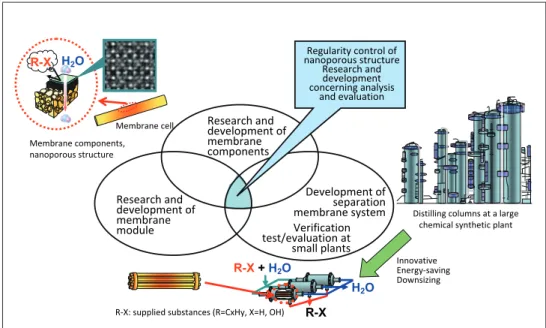
Currently, there are strong demands for energy-saving in the chemical synthesis process, including the distillation of petroleum refined products and isomeric separation, as well as for the downsizing of the synthesis process itself. Energy consumption in the chemical industry accounts for about 15% of the consumption in the entire industrial field, and about 40% of such energy consumption is accounted for by separation and refinement through distillation operations. Organic polymer separation membranes, which have so far been used in these processes, have limited heat resistance, chemical resistance, pressure resistance and mechanical strength. Through the use of nanoporous ceramic separation membranes, it could become possible to achieve groundbreaking energy-saving as well as the downsizing of space necessary for refining plants, which are both important requirements in the chemical synthesis industry. Japanese technologies related to nanoporous ceramic membranes using the typical ceramic zeolites, although still at the basic research stage, are currently at the highest level in the world. However, in order to develop a separation membrane system for practical application while also maintaining the advantage in basic technology, it is necessary to improve the structure of the R&D project. It is considered that the project structure, wherein processes including the development of membrane components and verification tests/evaluations at small plants are implemented at the same time, and wherein research and development on components, modules and system technologies are promoted simultaneously, should be made more effective so that problems in each fundamental technology necessary for practical application are shared from the beginning, and that actions are taken to address the problems in terms of practical application and commercialization through verification tests at small plants.
Development of separation membrane system Research and
development of membrane components
Research and development of membrane
module Verification
test/evaluation at small plants
R-X H
2O R-X + H
2O
R‐X: supplied substances (R=CxHy, X=H, OH)
H
2O R-X
Membrane components, nanoporous structure
Membrane cell
Distilling columns at a large chemical synthetic plant
Innovative Energy‐saving Downsizing Regularity control of nanoporous structure
Research and development concerning analysis
and evaluation
Figure 9 : Research and development topics for the application of nanoporous ceramic separation membranes system in the chemical synthesis process
Prepared by the STFC
The important topics of the research and development mentioned above include: membrane components that enable the thinning of membrane through regularity control of the shape and diameter of nano-size pores; manufacturing and processing technologies for porous ceramic support substrates that allow the relevant substances to permeate and be efficiently selected at the molecular level;
technologies related to the establishment of a module system; and the establishment of technologies to analyze and evaluate the porous structure at the atomic level, which serves as the basis for the technologies mentioned above.
5 Energy Saving Lighting Efficiency
Technologies p. 59
Energy
Japan is obligated to reduce its greenhouse gas emissions with the entry into force of the Kyoto Protocol, but in reality, emissions have increased in comparison with the base year. Stricter measures are required particularly for reducing the use of fossil fuels. Lighting, which consumes more than 10 percent of the total electricity output in Japan, is one area in which energy can be saved.
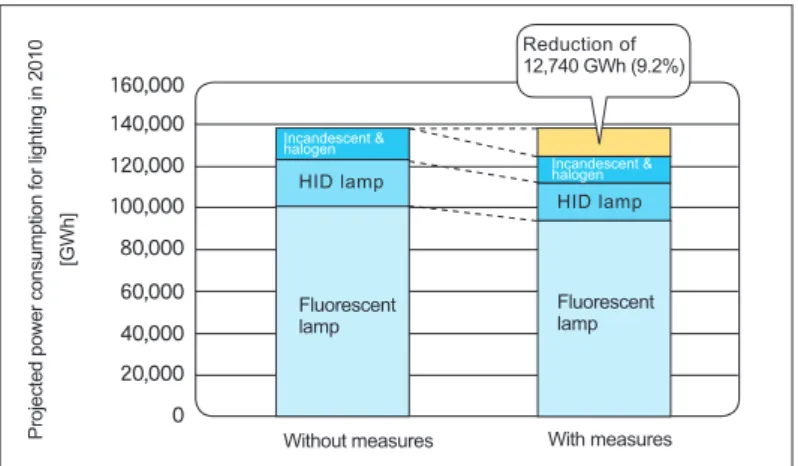
Two measures are considered for improving lighting efficiency. The first measure is to maintain the same amount of light while consuming less electricity by improving the efficiency of lighting fixtures. Efficiency has been improved in both light bulbs themselves and lighting circuits, as typically seen in fluorescent lamps. New light sources such as light-emitting diodes (LEDs) and OEL, which are expected to increase energy efficiency to a large extent, have also been developed. The second measure is to improve efficiency in lighting methods regardless of the types of lighting fixtures used. Lighting methods in which required areas are illuminated at required levels of brightness are under development.
To promote lighting efficiency, it is necessary to establish legislation and nurture engineers in addition to improving the technology of lighting elements and fixtures.
Efficient lighting is one energy-saving effort that households can achieve, but it is necessary to continuously conduct surveys and publish data on, for example, the ratio of electricity consumed by lighting to overall power consumption in order to increase the awareness of citizens and keep them informed. The need for energy-saving efforts never ends even when some targets are achieved, but should be continued towards the “zero waste” goal.
(Original Japanese version: published in February 2009)
Fluorescent lamp HID lamp Incandescent &
halogen
Reduction of 12,740 GWh (9.2%) 160,000
140,000 120,000 100,000 80,000 60,000 40,000 20,000 0
Without measures With measures Projected power consumption for lighting in 2010 [GWh]
Fluorescent lamp
HID lamp Incandescent & halogen
Figure : Energy-saving effects of replacing lamps with more efficient alternatives
Prepared by the STFC based on Reference
[4](Original Japanese version: published in January 2009)
6 Trends of Technology for Observing and Forecasting Localized Rains
Over recent years, heavy rains that are localized and last for a short time have grown more frequent in Japan, causing disasters. Cumulonimbus clouds that bring localized heavy rains are generated to trigger rainfalls in a very short time. Radars for remote sensing are an effective means for observation of rains. As nationwide radar systems, Japan has a weather radar network with the Japan Meteorological Agency to monitor rains and a radar rain gauge system from the Ministry of Land, Infrastructure, Transport and Tourism to manage rivers and roads.
Radars subject to recent research and development include multi-parameter and phased-array radars. The multi-parameter radar for accurate observation of rains and the phased-array radar for quick observation are considered effective for observing rains from fast-developing cumulonimbus clouds.
Weather phenomena can be explained by laws of physics. Numerical predictions using the laws constitute the core of weather forecasts. But actual weather phenomena depend on so many factors that it is difficult to focus forecasts on localized heavy rains as a tiny part of global atmospheric phenomena. Upgrading of numerical prediction models can contribute to improving the accuracy of forecasts. In addition, actual phenomena should be accurately reflected in numerical prediction models to build highly reproducible numerical prediction models. In this respect, it is important to find mechanisms for rains. In the future, Japan should develop highly accurate observation equipment, conduct precise observations using them, accumulate observation data and promote research and development of numerical prediction technologies that accurately represent the laws of physics based on these data.
対流セルの一生(概念図)���
1
����������数km 1
個1
個の��������生���������Rain intensity Heavy Light Altitude
Hour Development phase
(10 ~ 15 min.) Maturity phase
(15 ~ 20 min.) Occlusion Phase
(5 ~ 10 min.)
Figure 5 : Conceptual Diagram of Cumulonimbus Cloud’s Life Reference
[7]as modified partially by the STFC
(Original Japanese version: published in January 2009)
7 Current Status and Future Issues of Volcanic Eruption Prediction Research
There are 108 active volcanoes in Japan, and policies have been implemented to protect people’s lives from volcanic eruption disasters. The volcanic eruption prediction programs that have been promoted by the Geodesy Council since 1974 ended in FY2008, and, from FY2009, they will be integrated with earthquake prediction programs to launch a new observation research program for the prediction of earthquakes and volcanic eruptions. Regarding volcanic disaster prevention, the Japan Meteorological Agency began providing information on eruption warnings and
p. 72
p. 85 Social
Infrastructure
Social
Infrastructure
eruption alert levels in December 2007, which clarified not only volcanic activity status but also specific disaster prevention measures. In reality, however, volcanic eruption prediction research is still in the developmental process in terms of identifying the eruption mechanism, and is faced with two problems: low accuracy of provided information, and the vulnerability of the observation framework as well as the difficulty in maintaining standards.
For the future, it is necessary to establish an eruption prediction system that enables volcanic activity prediction by first creating eruption mechanism models and eruption scenarios based on basic research, and then linking them with high-quality data obtained from observation networks. In addition to promoting basic research, volcanic eruption prediction research is heading toward providing information that contributes to volcanic disaster prevention with higher accuracy, as well as utilizing the information.
Volcanic eruption prediction programs (first to seventh) (FY1974~2008)
The programs aim for quantitative predictions of the eruption timing, location, magnitude, type and progression after the eruption has begun, by determining the volcanic structure and deepening understanding of volcanic activities such as precursors and mechanisms of an eruption.
Volcanic eruption prediction research Current level of attainment of goals Volcanoes equipped with appropriate observation systems→ Eruption timing can be predicted to a certain extent
Promoting the observation research program for the prediction of earthquakes and volcanic eruptions (Proposal)
● Strengthen volcano monitoring observation networks and conduct focused monitoring of areas with a high probability of volcanic eruption.
Introduction of eruption alert levels (Japan Meteorological Agency) (Since December 2007)
● Prepare eruption scenarios covering precursors and progression of an eruption.
● Develop models by promoting basic research and establish a forecasting system that provides quantitative assessments of volcanic activity.
Realize a safe and secure society through the transmission of highly accurate information useful for volcanic disaster prevention.
Figure : Direction of future volcanic eruption prediction research Prepared by the STFC based on References
[2,24](Original Japanese version: published in January 2009)
8 The Role of Operations Research to wards Advanced Logistics
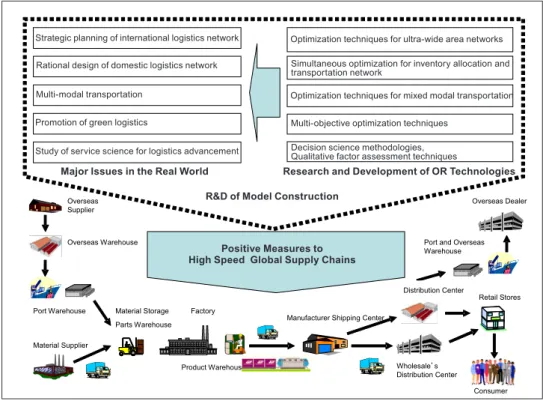
Product supply chains of recent Japanese industries are now at a major turning point as they attempt to cope with structural changes due to the globalization of industrial operations and changes in the relationships between related firms, and more advanced functional requirements, such as adaptability to volatile markets, energy conservation, response to environmental issues. Naturally, supply chain logistics of the products and services is also under pressure to reform and adopt more advanced operation technologies suited to these circumstances. In the planning and operation of complex and widely spread activities in the recent logistics, adaptation of mathematical analysis and optimization techniques by using operations research (OR) methodology is strongly required. Moreover, together with promoting application of OR, the development of more advanced OR techniques is also required.
p. 102 Social
Infrastructure
Not only through the conventional improvements in the hardware aspect, such as transportation facilities and equipment, applying OR to logistics network design and optimization problems makes it possible to realize more efficient logistics operation through optimized warehouse location and inventory allocation in the large-scale distribution and transportation networks. It would also helps prevention of global warming by efficient transportation. However, in Japan, application of OR to logistics is not as popular as in Europe and the United States, and practical research in the universities is not active.
In order to respond to the issues in today’s logistics, and to solve the problems of the future, research and development of advanced OR techniques together with research for problem solving should be essential. As a recent challenge, logistics would be an important field of the research in service science that is a hot issue in Japan to increase productivity and improve quality in the service industry, which accounts for a major part of the industrial structure. For enhancement of the research in logistics, both prioritizing science and engineering, and promotion of interdisciplinary research with fields of social science such as economics are required. It is also necessary to promote joint interagency and interregional research across the different institutions in various government offices.
(Original Japanese version: published in October 2008)
’
Strategic planning of international logistics network Rational design of domestic logistics network Multi-modal transportation
Promotion of green logistics
Study of service science for logistics advancement Major Issues in the Real World
R&D of Model Construction
Research and Development of OR Technologies
Positive Measures to High Speed Global Supply Chains
Optimization techniques for ultra-wide area networks Simultaneous optimization for inventory allocation and transportation network
Optimization techniques for mixed modal transportation Multi-objective optimization techniques
Decision science methodologies, Qualitative factor assessment techniques
Figure : Real problems requiring solution R&D on model construction methods
Prepared by the STFC
Introduction
1-1 What are iPS Cells?
Our bodies are composed of cells differentiated into each organ within the limited period after fertilization, and the process of differentiation was long believed to be irreversible.
The advancement of research in cell differentiation, however, revealed the existence of stem cells possessing multi-potency after body development with the discoveries of embryonic stem cells (ES cells) by culturing early embryo and mesenchymal stem cells, multipotent cells in our bodies. Since then, there have been extensive efforts to find and obtain these multi- potent cells.
In August 2006, Professor Shinya Yamanaka of Kyoto University succeeded in generating cells with pluripotent differentiation potential in mice by inserting just four genes (Oct3/4, Klf4, Sox2, c-Myc) into their mature skin cells, and named them induced pluripotent stem cells (iPS cells).
[1]This groundbreaking new fact, which differentiated mature cells possess pluripotency, overturned the traditional belief that differentiation after fertilization was a one- way process and proved that it was rather a plastic phenomenon. The four genes required to induce pluripotency are called Yamanaka factors. In addition, on July 20, 2007, one year after the discovery of iPS cells in mice, Prof. Yamanaka and his colleagues reported and proved that iPS cells could be generated
1
Trends and Challenges in iPS Cell Research
Yoshihiko S umi
Affiliated Fellow
1 with human cells.
[2]This, in other words, means that “a
large amount of differentiating cells with the identical genes of the patient” can be prepared whenever necessary.
Human iPS cells were produced by inserting the same four genes (Oct3/4, Klf4, Sox2, c-Myc) used for murine iPS cells. Their method was simple and required no special equipment or technique, and was thus highly versatile. In addition, Prof. Yamanaka reported that insertion of only three genes (Oct3/4.
Klf4. Sox2) could achieve iPS cells
[3]making the method safer without the use of carcinogenic c-Myc gene. Moreover, the initial method using retrovirus vectors
[NOTE 1], a possible carcinogen, is now improved with the use of plasmid vectors
[NOTE 2]with less carcinogenic risks.
[4]Plasmid vectors, with their ability to insert genes without damaging the genes of the targeting cells, are believed to be safer than retrovirus. Recently, a group from Max Plank Institute for Molecular Biomedicine in Germany succeeded in producing murine iPS cells by inserting only one gene, Oct4, with some chemical agents
[5].
1-2 Expectations for Science and Medicine The importance of the discovery of iPS cells, as mentioned above, is the demonstration that the ability to differentiate into various organs was not exclusive to fertilized oocytes, but differentiated cells could achieve pluripotency as well with gene insertion.
This proved the novel concept that pluripotency in differentiated cells could be re-set to a similar level as fertilized oocytes of early embryo. In other
[NOTE1]
Retrovirus vectors are used to carry the genes to be inserted into the target cells.
[NOTE2]
Plasmid vectors are non-viral cyclic DNA gene carriers for gene insertion.
words, it changed the entire strategy from “searching for” pluripotent cells to “generating” them with the establishment of an innovative technique that have the convenience of being able to “prepare whenever necessary,” thus providing “pluripotent cells with individually conserved genetic character” at all times.
The expected benefits of iPS cells go beyond research to applications in medicine and drug development with their potential for generating appropriate cells whenever necessary. Expectations are high especially in (1) application in drug development where evaluation of the safety and efficacy of candidate compounds can be done with human cells and tissues differentiated from human iPS cells rather than traditionally used animal tissues or cells, (2) application in regenerative medicine for patients who need repair and regeneration of tissues or function disordered in a disease by regenerating and grafting tissues and organs generated from iPS cells derived from the patients’ own cells, (3) in preparation of establishing an iPS cell bank with a collection of various types of human iPS cells, ready to provide a wide range of patients at any time, and (4) for treatments of congenital and intractable diseases
[ 6, 7].
Scientific Innovation Triggered by iPS Cells
2-1 Application for Drug Development The earliest practical application of iPS cells is expected to be in the field of pharmaceutical research for developing new drugs.
The best way to evaluate the safety and efficacy of most drug candidates is with humans, though this comes with many risks. In addition to the obvious risks, since access to human cells and human disease model cells has been widely limited, these evaluations have been conducted mostly with animal cells and animal disease models such as mice. There are many issues, however, with the evaluations using animal models, such as a long development period. In addition, there have been incidents of finding unforeseen side effects and altered efficacy after the drug had been on the market due to frequent interspecies differences between humans and the animal model, in toxicity and efficacy.
With the discovery of iPS cells, drug efficacy can be evaluated with human disease models differentiated from iPS cells derived from patients with the target
disease right from the start. In addition, this technique allows access to certain cell types that are impossible to obtain from actual humans, such as cerebral neurons and cardiac muscle cells, and use them in evaluation. The use of iPS cells is expected to speed up the drug development process as well as obtain more information about side effects due to highly accurate evaluation with human cells.
Research and development of a toxicity-evaluation tool using human cardiac muscle cells generated from iPS cells started in October 2008 as a commissioned project of the New Energy and Industrial Technology Development Organization (NEDO). This project aims to establish a technique to evaluate early cardiac toxicity using iPS cells, with their technology to measure the pulsation of cardiac muscle cells developed in the existing NEDO project
[8]. Since human myocardial cells were difficult to obtain, drug evaluation had to be conducted with animal model cells such as mice. With the available technology to generate human myocardial cells from iPS cells, efficacy and side effects of candidate drugs can be evaluated directly, enabling the development of drugs with better efficacy and fewer side effects in the future. In addition, omission of evaluation with animal cells is expected to contribute to a shortened development period and reduction of development cost.
The National Institute of Biomedical Innovation has produced iPS cells from patients with various diseases and is planning to differentiate them into cells such as hepatic cells, which are required for the evaluation of the toxicity, and metabolism of candidate drugs. This project is aiming to establish a technology for drug development by preparing iPS cells and differentiated cells derived from iPS cells of different sexes, ages, cell types and genetic backgrounds. Subsequent contribution to the improvement of drug safety (due to detailed toxicity evaluation in screening) is expected.
[9]In the future, the application of this technology will go beyond general drug development, and enable a pre-administration check of drug efficacy and toxicity with the cells differentiated from iPS cells derived from the patients’ own cells, allowing optimization of the dosage and prevention of side effects by applying it for individual administration management and detailed individual treatment.
2
Figure 1 : Conceptual Diagram of Augologous Celll Therapy (Conceptual diagram showing autologous cell therapy using iPS cells)
Prepared by the STFC
2-2 Application for Regenerative Medicine and Cellular Medicine (Treatment with Autologous Cells)
One of the biggest dreams with iPS cells is their application in regenerative medicine. This is due partly to their pluripotency. The difficulty of obtaining necessary cells for treatment has slowed down regenerative medicine as cell therapy. However, the discovery of iPS cells, cells possessing pluripotency made from skin cells, has shed hopes for abundant access to iPS cells for regenerative medicine and necessary cells and/or tissues differentiated from them for graft treatment (Figure 1).
The discovery of iPS cells has also shed special attention to autologous cell treatment, a type of treatment using patients’ own cells. This means, skin cells taken from a patient will be turned into iPS cells to obtain necessary cells and tissues via differentiation and culturing in order to use them for the treatment of the patient him/herself, the provider of the cells.
Since these cells come from the patient, they will not be labeled foreign when they are returned in the body, and thus pose no risk of immunological rejection.
iPS cells are not ideal for emergency use since it takes more than a few weeks to generate them. However, in cases where disease onset can be predicted, new medical divisions such as “emergency responsive medicine” and “preventative medicine” may now be operable. For example, for patients with high risks of cardiac infarct, preparation of myocardiac cells differentiated from iPS cells generated from their cells is now possible before the infarct attack.
A research team at the University of Tokyo, led by Professor Hiromitsu Nakauchi, has succeeded in differentiating iPS cells generated from human skin cells into thrombocytes via megakaryocytes by adding growth factors and co-culturing with bone marrow cells. This knowledge enables the generation of blood-related cells, such as white blood cells and red blood cells, and the concept of blood transfusion will be changed greatly in the future.
I n Ja nu a r y 20 09, t he Food a nd D r ugs Administration (FDA) of the United States approved Geron Corporation, an American venture company, to conduct a clinical test to treat eight to 10 patients with paraplegia
[NOTE 3]with human ES cells
[10]. This is the world’s first clinical test using human ES cells, and the United States is expected to take the lead in the field of iPS cell application as well.
iPS cells will be applied in regenerative medicine in the near future when the safety of iPS cells is verified and safe differentiated cells derived from iPS cells are established.
2-3 Use of Cell Bank (Homologous Cell Treatment)
Another approach for cell therapy using iPS cells is to make them more general by building cell banks.
This is not only for autologous cell therapy where iPS cells are used only for the provider of the cells but also for cell therapy for all patients, which is termed homologous cell therapy (human to human, using another person’s cells).
An example showing a method to use autologous cells Patient
(i.e., Hepatitis)
Somatic Cell (i.e., Skin cell)
Insertion of 3 to 4 genes
iPS cells
Differentiation
Hepatic cells for treatment
Hu m a n c el l s h ave d i f fe r e n t t y p e s of histocompatibility antigen (HLA) on the cell surface, and a mismatch in the antigen type is recognized as foreign and subsequently triggers immunological rejection and elimination. According to a calculation by Professor Norio Nakatuji and his colleagues of the Institute for Frontier Medical Sciences of Kyoto University, to eliminate a mismatch that causes the immunological rejection, preparation of 170 different types of iPS cells can be used for 80% of the Japanese population
[11, 12]. This suggests a possible use of iPS cells produced by other people’s cells in graft treatment in regenerative medicine by preparing many different HLA type cells to minimize the risks of rejection.
Treatment using this type of cell bank has been proposed by Professor Hideyuki Okano of Keio University. For cell therapy in a life-or-death emergency, such as treatment of spinal damage where grafting of nerve cells is ideally conducted on the 9th day post injury, iPS cells of the patients cannot be prepared in time. Therefore, for cases like this, it is ideal to build a bank within a cell bank for iPS cells without immunological rejection as well as a nerve cell bank using iPS cells for the treatment for spinal cord injury.
[13]One example of current progress was demonstrated by principal research associate Hajime Ogushi of the National Institute of Advanced Industrial Science and Technology, who has succeeded in producing iPS cells from mesenchymal stem cells contained in pulled wisdom teeth. Since wisdom teeth were traditionally discarded, they are regarded as a great candidate for the cellular source for building an iPS cell bank
[14]. Resources at the iPS cell bank and cell bank derived from iPS cells for treatments are now expanding from homologous to heterologous cell therapy, and they are expected to be applied for emergency treatment of frequent injuries.
2-4 Treatment of Congenital and Intractable Diseases
iPS cells are expected to open up a new way for the treatment of congenital and intractable diseases presently with no radical cure. This involves generation of iPS cells from the cells of patients with congenital diseases or genetically intractable diseases, their differentiation following the repair of damaged genes at the DNA level, and grafting them back to
the body to regenerate normally functioning tissues and/or organs. Alternatively, the treatment could be done by grafting normal healthy cells derived from iPS cells to the lesions of patients with intractable diseases. Hemophilia, congenital immunodeficiency and Parkinson’s disease are among the target diseases.
Already, a research team at Harvard University in the United States has reported that they produced iPS cells using skin or bone marrow cells of patients with 10 different diseases, such as dystrophy, Down syndrome, diabetes and Parkinson’s disease.
[15, 16]Another research team at Harvard reported a successful generation of iPS cells from elderly patients with amyotrophic lateral sclerosis (ALS) for the same purpose
[17]. The United States seems to be leading the application of iPS cells by far at the moment.
In our country, collaboration between Kyoto University and Keio University has lead to a report at a Keio University symposium on February 4, 2009, that the grafting of nerve cells differentiated from human iPS cells into mice with spinal injuries on the ninth day post injury has resulted in significant recovery of motor ability compared to mice receiving no treatment post injury. This, though a preliminary experiment using mice, is the first case to show the efficacy of iPS cells in an animal disease model.
At Osaka University, in collaboration with Kyoto University and Tokyo Women’s Medical University, a myocardiac sheet was constructed with myocardiac cells differentiated from iPS cells derived from mouse fibroblast. When this myocardiac sheet was grafted in the infarct region of a cardiac infarct model created by ligation of the left anterior descending artery in mice, improvement in cardiac dysfunction and the suppression of a left ventricle enlargement was found.
[18]2-5 Repairing Organs
Yet another new challenge has started to re-construct normally functioning organs and tissues by producing iPS cells from patients with acquired dysfunction in some parts of the body and by re-differentiating them inside the patient’s body.
Professor Nakauchi at the Institute of Medical Science of Tokyo University has cultured fertilized
[NOTE3]
Paralysis in both legs below the waist
oocytes, taken from mice with a deficit of genes to form a pancreas, to blastocyst and then injected iPS cells produced from normal mice. These blastocysts were subsequently implanted in a surrogate mother, and the resulting offspring formed pancreases with normal functions. Similarly, they have succeeded in forming kidneys, and the generation of these organs with bigger animals, such as pigs, is expected
[19]. If this method proves to be successful in pigs, kidney transplants for patients with severe kidney dysfunctions are no longer just a pipedream since kidneys can be produced from differentiated iPS cells derived from the patient and by injecting them into pig blastocysts.
Research System
3-1 National Research Collaboration System
As mentioned above, iPS cells are expected to be a source for drug development research as well as tools for frontier treatment for diseases. In addition, since this was discovered first by Prof. Yamanaka of Kyoto University, an “All Japan System” for research is now
being constructed in order to lead in basic research and their use in the industry (Figure 2).
For the “Project to Achieve Regenerative Medicine,” four organizations, Kyoto University (Representative: Prof. Shinya Yamanaka), Keio University (Representative: Prof. Hideyuki Okano), University of Tokyo (Representative: Prof. Hiromitsu Nakauchi) and RIKEN (Representative: Dr. Yoshiki Sasai, Group Director), were chosen to strengthen the research using human iPS cells. With these four core institutions, they formed a network devoted for iPS cell research using human iPS cells, with each institution progressing in the research responsibly (Table 1).
As a core institution to progress iPS cell research in our country along with the four core organizations, the Center for iPS Cell Research and Application (CiRA: Research Supervisor: Prof. Shinya Yamanaka) was founded at Kyoto University in January 2008.
CiRA is in charge of developing a safe and efficient technique to produce iPS cells, developing growth control technology, establishing safety for clinical application and developing necessary technology for the application. In details, it sets eight goals, shown
Promotional System for iPS Cell Research by the Ministry of Education, Culture, Sports, Science and Technology, aiming for the Construction of an All-Japan System
Stem Cell/Regenerative Medicine Strategy Committee, MEXT
(Member construct including program directors of practical application of a regenerative medicine project and the general research outline of a JST strategy project)
Kyoto University (Representative:
Professor Yamanaka) Research center for the development of treatment a n d d i f f e r e n t i a t i o n induction using iPS cells
• Development of the technology to generate safe and effective iPS cells, technique to control proliferation and to evaluate and establish safety for clinical application.
RIKEN (Representative:
Sasai GD)
Research Center for Differentiation Induction using iPS Cells
• Development of basic technique for efficient culturing of pluripotent stem cells such as iPS cells.
• Develop treatment and technology to induce differentiation focusing on the generation of sensory organs, and establish safety.
Kyoto University iPS Cell Research Center (Research Director: Prof. Yamanaka)
Practical application of regenerative medicine project
• Research regenerative medicine using iPS cells
• Progress of the entire program is managed by the program director and program office (Foundation for Biomedical Research and Innovation)
[MEXT iPS Cell Research Network (tentative title)]
Integrative application based on common rules (research network bylaw (tentative title)) will be in effect regarding distribution of iPS cells, intellectual property and research achievement
Core research organization for iPS cells
Establishment of iPS cells and improvement of culturing methods
(Organization in charge: RKEN Bioresource Center)
Keio Universit y (Representative:
Prof. Okano) Research Center for treatment development a n d d i f f e r e n t i a t i o n induction using iPS cells
• Develop treatment and differentiation induction technique for cells in the central nervous system, and establish safety.
University of Tokyo (R e p r e s e n t a t i ve:
Prof. Nakauchi) Research c ent er for treatment development a n d d i f f e r e n t i a t i o n induction using iPS cells
• Develop treatment and differentiation induction technique focusing on the generation of vascular cells, and establish safety.
JST Basic Research Programs, “ Program Stem Cell Research Strategy Project using Cellular Reprogramming of iPS Cells”
• Investigate the mechanism related to the generation of iPS cells and upgrade the technique
• Research supervisor and program office (JST) manage the entire project
Provided by reference
[20]Figure 2 : Promotional System for iPS Cell Research by the Ministry of Education, Culture, Sports, Science and Technology, aiming for the Construction of an All-Japan System
3
Table 1 : Four Research Centers Chosen as Human iPS Cells Research Centers and Abstracts of their Research
in Table 1, and takes charge of basic research to reveal the essence of iPS cells and to develop a safe differentiation induction technique.
Keio University is the research center for practical application of iPS cells in regenerative medicine.
They are in charge of applying their knowledge and expertise from their prior research of practical use of stem cells with ES cells and somatic stem cells before the discovery of iPS cells. In addition, in order to use iPS cells for the diseases shown in Table 1, they are aiming to achieve regenerative medicine by driving forward pre-clinical research, including tests with a primate model and confirmation of its safety.
They focus on the development of a differentiation technique (especially in the central nervous system),
confirmation of safety and research for treatment development. In addition, they have their eye on constructing iPS cell bank with many HLA type human iPS cells (goal: 200 strains) to target diseases in the central nervous system, hematopoietic system, cardiovascular system, and sensory system.
At the University of Tokyo, lead by the Stem Cell Treatment Research Center at the Institute of Medical Science Research, development of differentiation induction, safety confirmation and treatment development technology research will be undertaken.
In addition, they will investigate specific diseases shown in Table 1.
At RIKEN, the development of basic technology for efficient culturing of iPS cells, the development
Title
Title Representative Researcher Abstract
Integrative Research Center for iPS Cell Research at Kyoto University
Kyoto University Shinya Yamanaka
In order to advance human iPS cells research correctly and quickly from its initial stage for their use in regenerative medicine, we aim to contribute not only in Japan but around the world by collaborating with rich resources of researchers at the Institute for Frontier Medical Sciences, Kyoto University Hospital and the Institute for Integrated Cell-Material Sciences, as well as with organizations outside of Kyoto University, such as Osaka University, with CiRA as the core research center.
Goal: 1) To reveal the basic essence of iPS cells, 2) to develop safe and effective methods to generate iPS cells, 3) to develop technology to control proliferation and differentiation induction of iPS cells, 4) to develop treatment technology using differentiated cells in disease-related projects, 5) to establish safety and evaluation techniques for clinical application, 6) to build a system to manage and operate intellectual property related to iPS cell research, 7) to found a basis of medical ethics specialized for iPS cells, 8) to standardize an iPS cell-generation technique, and to tirelessly progress iPS cell research in Japan with effective collaboration with related organizations outside of school, active utilization of resources of researchers and by sharing information.
Research Center for Practical Application of iPS cells, ES cells and Somatic Stem cells in Regenerative Medicine
Keio University Hideyuki Okano
We aim to deepen our basic knowledge of the mechanisms of autonomous replication, differentiation and epigenetic control and culturing techniques on human iPS cells, ES cells, and somatic stem cells. In order to achieve actual practice of regenerative medicine, we aim to progress internationally top-level clinical research with primate models, to verify safety and efficacy with the use of these iPS cells, with a special focus on diseases involving the central nervous system, hepatopoietic system, cardiovascular system and sensory system. In addition, build a firm basis of human iPS cell research by generating and self-processing many different HLA types of human iPS cells.
Development of Next Generation Gene and Cell Therapy Using iPS Cells
University of Tokyo Hiromitsu Nakauchi
With the Center for Stem Cell Therapy Research at the Institute of Medical Science Research, as the core research center, organize a collaborative research system with 4 departments—the Department of Medical Research, University of Tokyo Hospital, Institute of Molecular and Cellular Biosciences and the Graduate School of Arts and Sciences—we aim to advance research in preparation of preclinical tests. As well as establishing a system to generate high quality human iPS cells derived from patients with careful consideration of safety and ethics, we aim to develop a system to regenerate a variety of organs such as blood, blood vessels, bone. cartilage, skeletal system, cardiac muscles, liver, pancreas and nerves from iPS cells. In addition, we also aim to develop new methods of gene-repair treatments using the characteristics of iPS cells for diseases such as hemophilia and congenital immunological dysfunction as well as to educate resources of researchers in regenerative medicine.
Total Center for Technological Development of Differentiation Induction/Grafting as well as Technological Support for Human Pluripotent Stem Cells
©RIKEN Yoshiki Sasai
We conduct technological development for highly efficient differentiation induction of human ES cells and iPS cells into neuronal, sensory and blood cells. At the same time, we aim to develop a culturing technique to improve safety, and to establish the basic methods for purification of generated usable cells. In addition, through grafting research using animal models, analyze their function in vivo, and establish the basis for medical application such as in cell therapy. In particular, with the goal of a practical use of human iPS cells, conduct preclinical tests on medium-sized animals for grafting of retinal cells (pigment epithelial cells), and establish a technology that is clinically applicable for age-related muscular degeneration and pigmentary retinal degeneration
Through the collaboration between the main research center (Center for Developmental Biology) and the secondary research center (Bioresource Center) as a support center, contribute to the development of technology, resources and infrastructure by providing lecturing and transferring techniques, building, banking and providing useful cell strain, and by adjusting protocol in order to apply human stem cells such as iPS cells in regenerative medicine research in Japan.
![Figure : Direction of future volcanic eruption prediction research Prepared by the STFC based on References [2,24]](https://thumb-ap.123doks.com/thumbv2/123deta/6927360.2265990/10.892.319.752.369.751/figure-direction-volcanic-eruption-prediction-research-prepared-references.webp)


![Figure 4 : Major Cohort Children’s Studies on the Environment and Health around the World The reference [3] was partly modified by STFC](https://thumb-ap.123doks.com/thumbv2/123deta/6927360.2265990/39.892.130.766.782.1133/figure-cohort-children-studies-environment-health-reference-modified.webp)