
近畿大学学術情報リポジトリ
84
0
0
全文
(2) 2.1. Materials. and methods. i. Ex perimantal. diet. ii. Fish and rearing iii. Chemical. assay and histological. iv. Spermatozoa v. Larvel. trial. motility. growth. vi. Statistical. preparation. in artificial. seminal. plasma. with various. AsA and Ag levels. performance. analysis. 2 Results i. Growth. performance. ii. Spawning. and hematology. performance. of broodfish. and egg quality. iii. Egg AsA and mineral iv. Organ. AsA. v. Spermatozoa. motility. concentration vi. Changes. AsA,. in ASP with graded. of AsA and Mg. in egg AsA during. vii. Larval. growth. viii. Histological 2.3. after incubation. embryonic. and survival. observation. development. performance. of ovary and larvae. Discussion. i. AsA requirement for striped knifejaw ii. AsA mobilization. in broodfish,. iii. AsA on egg and larval. Chapter. 3 Nutrients. for spawning. egg AsA level and spermatozoa. developments,. performance. and histological. and egg quality. abnormality. of ayu. Introduction 'I. 1. TIT -TA. 3.1.1. aril. T ?ATE. Materials. and methods. i. Experimantal. diet. ii. Fish and rearing iii. Spermatozoa 3.1.2. • trial. motility. and chemical. Results i. Growth. performance. ii. Spawning. of broodfish. performance. iii. Egg fatty and profile iv. Organ 3.1.3. fatty and profile. Discussion. 3.2 AsA and Toc 3.2.1. assay and statistical. Materials. and methods. i. Experimantal. diet. ii. Fish and rearing. • • trial. and spermatozoa. motility. motility. analysis. ••. • ••.
(3) A.S.K.Yong. iii. Spermatozoa 3.2.2. g performance. iii. Organ. levels. vitamin. dietary. and spermatozoa. Materials. •. 51 52. diet. 54 ••. 54. trial. 55. Results. 55. iv. Organ. factor,. performance. iii. Egg AsA level. GSI and HIS of female and spermatozoa. motility. prior. to ovulation. 55 56 57. AsA level. 58. Discussion. 58. 4 Egg fetty acid profiles. and AsA of the temperate. and tropical. fish. 60 60. Materials. and methods. 62. i. Egg collection ii. Chemica. 1 assay. 62 and statistical. analysis. Results i. Egg morphometric. 4.3. broodfish. •. Introduction. 4.2. 54. and methods. ii. Spawning. 4.1. 49. motility. AsA level for ayu broodstock. BW, BL, condition i.. Chapter. 49. levels. ii. Fish and rearing. 3.3.3. analysis. 53. i. Experimantal. 3.3.2. assay and statistical. Discussion. Su Suitable 3.3.1. of finfish. 49. ii. Egg vitamin. 3.3. and c hemical. and egg quality. Results i. Spawnin. 3.2.3. motility. : Spawning. 63 63. characterstics. • ••. 63. ii. Egg fatty acid profile. 64. iii. Egg AsA. 68. Discussion. 70. Summary. 71. Acknowledgements. 74. References. 74. —3 —.
(4) id-)u_KFR. General. 1 1-g-. (2 0 0 8). Introduction. Striped knifejaw. (Oplegnathus. fasciatus). and ayu (Plecoglossus. altivelis). are among the. aquaculture important fish in Japan. Striped knifejaw habitats at reef areas surrounding the coasts of Japan, Korea, Taiwan and Hawaii (Nakabo 2002). In Japan, basic biological and ecological studies on striped knifejaw had been conducted since 1930's while seedling production of this fish had started in the 1970' s (Fukusho 1979; Kumai 1984). Striped knifejaw is an iteroparous spawner that continuously produces thousands of egg during a single spawning season which usually last for weeks. In captivity, both male and female fish reach maturity at 2 years old at body weight 350 g and above, however, majority of the female mature at 3 years old at body weight 700 g and above (Kumai 1984). Spawning usually occurs in late spring or early summer when water temperature raises up to 21°C . Striped knifejaw spawn pelagic, transparent, spherical shape egg with average diameter of 0.77-0.98 mm and a single oil globule (Kumai 1984). Fertilized eggs stay buoyant in seawater and hatching starts at ca. 29 h after fertilization at water temperature 21-22°C (Kumai 1984). Ayu, known as sweet smelt is a freshwater fish. Ayu distributes from Japan to Korean Peninsular, Taiwan and China (Masuda et al. 1984). In Japan, various studies on propagation of ayu had started since the late 19th century, and larval rearing and artificial egg collection were actively pursued starting the early 1910's (Yoshizawa 2005). Ayu is an amphidromous semelparous spawner and naturally spawn once or twice during its annual life span. In the natural spawning ground ayu reach maturity at ca. 30-40 cm body length and spawning occurs in the middle of autumn when water temperature declining lower than 20°C . Most of the broodfish die shortly after spawning while some return to the sea (Chyung 1977). The egg is spherical shape with diameter of 0.95-1.0 mm. The egg also possesses adhesive filament which attached to substrate after fertilization and larvae hatch out at 10 to 20 days later depending on the water temperature (10-19°C ; Yoshizawa 2005). Both of these fish have high demand in the local market and as game fish. Nutritional studies of juveniles of these species are well documented (Kanazawa et al. 1981; Kanazawa et al. 1982; Ikeda et al. 1988; Kanazawa 1991; Ishibashi 1994; Koshio et al. 1997; Kang et al 1998; Lee et al. 2002; Kim et al. 2003; Furuhashi et al. 2004; Xie and Niu 2006). There are also reports on induced maturation of striped knifejaw and ayu broodfish by environmental factors such as water temperature or photoperiod (Shiraishi and Takeda 1961; Jeong et al. 1998; Kim et al. 2000; Kumai 2005; Yoshizawa 2005). However, information of broodfish nutritional studies on improving the egg quality and spawning performance of these fish are scanty (Takeuchi et al. 1981; Ishibashi 1994). Broodfish nutrition is one of the important factors that determine egg quality and spawning performance (Watanabe et al. 1984; NRC 1993). The egg must contain adequate amount of essential nutrient for the embryonic and larval development (Bell et al. 1997), such as fatty acids, phospholipids, vitamins, minerals and other molecules. The egg development fails at any stage if the essential nutrients are not fulfilled (Kjorsvik et al. 1990). Among the fatty acids, polyunsaturated. fatty acid (PUFA). particularly the docosahexaenoic acid (DHA) has been reported to be one of the essential fatty acids for marine fish (NRC 1993). During the embryonic stage, DHA is a dispensable nutrient compound for. —4 —.
(5) A.S.K.Yong. : Spawning. and egg quality. of finfish. neural and visual development (Bruce et al. 1999; Sargent et al. 2002) and in later stages had been found to be used as an energy source in gilthead sea bream Sparus aurata (Mourente et al. 1993) and sea bass Dicentrarchus labrax (Ronnestad et al. 1998). In striped knifejaw larvae, the importance of DHA has been elucidated in promoting growth rate, survival and vitality (Watanabe 1993). The same had also been reported in red sea bream Pagrus major, yellowtail Seriola quinqueradiata,. striped jack Pseudocaranx. dentex, flounder Paralichthys olivaceus, gilthead sea bream and bluefin tuna Thunnus orientalis (Mourente et al. 1993; Watanabe 1993; Seoka et al. 2007). Most of freshwater fish require fatty acid 18:2n-6 and 18:3n-3 (linolenic acid, LNA) as essential fatty acid. Unlike marine fish, freshwater fish has the ability to de novo biosynthesis PUFA from these fatty acids (Henderson and Tocher 1987; NRC 1993). The LNA is also an important source of energy during early larval development (Bell and Dick 2004). In ayu juvenile, LNA was reported to be one of the essential fatty acid required for promoting growth (Kanazawa et al. 1982). The reported gross deficiency sign of essential fatty acid included dermal signs, shock syndrome, myocarditis, reduced growth rate , reduced feed efficiency, increased mortality and reduced reproductive performance (NRC 1993). Several studies have demonstrated that larval and juvenile fish require phospholipids for growth (Kanazawa 1997; Seiliez et al. 2006). Utilization of phospholipids has been reported to occur during embryonic development (Tocher et al. 1985; Fraser et al. 1988), while larvae and juveniles have shown to have a definite requirement of phospholipids.. In early larval development of gilthead sea bream , higher need of phospholipids was appeared as compared with the later larval stage (Seiliez et al . 2006). Furthermore, dietary phospholipids supplementation together with DHA was reported to improve growth and tolerance under stressful conditions such as exposure to low dissolve oxygen and air , and changes in water temperature and salinity in red sea bream and flounder larvae (Kanazawa 1997) . Vitamin C, (ascorbic acid, AsA), is an indispensable dietary component for fish . Besides being important in the hydroxylation of proline and lysine in the synthesis of collagen (Chaterjee 1978; Sato 1981), AsA is a strong antioxidant, plays important role as cofactor in various metabolic reactions and maintain normal physiological functions.. This vitamin, however, can not be biosynthesised at all or. insufficiently by a few organisms includes most of the marine teleost fish; due to the lack of enzymes L-gulonolactone oxidase (EC 1.1.3.8) in the metabolic pathway that converts glucose to AsA (Roy and Guma 1958). Deficiency of AsA has been reported to reduced growth, induced morphological deformities including lordosis, scoliosis, abnormal formation of eye, gill and fins cartilage , reduced immune responses, delayed wound repair, internal haemorrhaging, anorexia and reduced reproductive performance in several species of fish (Halver et al. 1969; Sandnes et al. 1984; Soliman et al. 1986; NRC 1993). In striped knifejaw, AsA deficient signs such as reduced feed intake, retarded growth, abnormal swimming behaviour, vertebral curvature and mortality have been reported in juvenile (Ikeda et al. 1988; Ishibashi et al. 1994). Vitamin E is a group of several related derivatives known as tocopherols (Toc), being the most potent molecule of a-Toc. This lipid soluble vitamin is a strong intra and extra cellular antioxidant that maintain homeostasis of metabolites in cell and tissue plasma. This vitamin protects the biological cell membranes, lipid storage against oxidation. Fish deficient Toc showed muscular dystrophy, edema of heart, muscle and other tissues; anemia, impaired erythropoesis, depigmentation, impair gonad development ,. — 5 —.
(6) dJczkfff*. 1 1. (2008). declined eggs and larvae quality (Evan and Bishop 1922; Takeuchi et al. 1981; Waagbo et al. 1989; NRC 1993). Like AsA, Toc can not be biosynthesized by fish (Palace and Werner 2006) and must be dietary supplied. In the mutual characteristic of AsA and Toc as antioxidants, they scavenge and neutralize free radicals and minimise the oxidative damage, and has been reported to have synergetic relationship. During the oxidation process, Toc reacts with free radical and changes to Toc radical. The Toc radical can probably be regenerated to Toc by AsA and maintain the active pool of Toc (Tappel 1962; Packer et al. 1979). Studies have demonstrated the necessity and interaction of these vitamins during reproduction season in rainbow trout Oncorhynchus mykiss and yellow perch Perca flavescens (Blom and Dabroswki 1995; Lee and Dabrowski 2004). Thus, the present. series of studies. was undertaken. to determine. the effect of dietary. supplementation of DHA, phospholipids, AsA and Toc on the reproductive performance and egg quality of striped knifejaw in Chapter 1. The rearing trial revealed that AsA and DHA produced more profound effect than phospholipids and Toc on egg quality of striped knifejaw. Chapter 2 was conducted to determine the suitable level of AsA for striped knifejaw broodfish and the possible beneficial effect of higher AsA supplementation. level on improving the egg quality and spawning performance.. An almost similar. experimental design was conducted by using ayu broodfish. In Chapter 3, ayu broodfish were fed with. Ayu. Fig.. 1. Temperate. Temperate. LIAVAWAVONAWMONIMMONMWAVIWANWINAVAWMWAVAVAWNAWM Marble goby. fish and tropical. fish scale bar=s. fish.. cm, tropical. fish scale bar-10cm..
(7) diets supplemented with DHA, LNA, AsA and Toc, then followed by the determination of the suitable dietary AsA requirement of ayu broodfish. With the results obtained in Chapters 1 to 3, Chapter 4 aimed to evaluate the egg DHA and AsA status of some commercially important aquaculture temperate and tropical finfish species in Japan and Malaysia. The temperate fish includes striped knifejaw, ayu and grey large-eye bream (Gymnocranius griseus), and tropical fish includes sea bass (Lates calcarifer), blubberlip snapper (Lutjanus rivulatus) and marble goby (Oxyeleotris marmoratus), as illustrated in Fig. 1.. CHAPTER. Nutrients for spawning performance. 1. and egg quality of striped knifejaw. Introduction. A numerous of studies have been conducted on striped knifejaw juvenile related to the dietary requirement of protein, lipid, and vitamins (Ikeda et al. 1988; Ishibashi 1994; Ishibashi et al. 1994; Wang et al. 2003). However, studies on other fish species demonstrated the necessity of information on the nutrient requirement of broodfish as it may be higher or different than the requirement for juvenile (Blom and Dabrowski 1995; Bruce et al. 1999). Among the essential nutrients, DHA, phospholipids, AsA and Toc has been selected owing to their essential effects on other fish. Furthermore, limited data is yet available on the dietary supplementation of these nutrients for striped knifejaw broodfish. Thus the present study was undertaken to determine the effect of dietary supplementation of DHA, phospholipids, AsA and Toc on the reproductive performance and egg quality of striped knifejaw.. Section. 1.1.1 Materials. and. 1.1 DHA and. soybean. lecithin. methods. L Experimental diet Three experimental diets were designed as shown in Table 1.1. A control diet (ConD) was supplemented with 2% DHA (70E, Harimakasei Ltd., Osaka, Japan) and 3% soybean lecithin (SL: Tsuji oil mill, Mie, Japan) to a basal diet. The D-DHA and D-SL were prepared by the exclusion of each DHA and SL from ConD, respectively. The basal diet was consisted of white fish meal, wheat gluten, soybean oil and a-starch as protein, lipid and sugar sources, respectively (Table 1.1). All ingredients were weighed and mixed well before adding 30% tap water. Resulting dough mixtures were then passed through 10 mm die hole of an experimental pellet machine. The diets were stored in a freezer at -20°C until use and were newly prepared biweekly.. — 7 —.
(8) J71a)f. (2 0 0 8). 1 1. Proximate compositions of test diets are. Table. Dietary formulation and proximate composition (%). 1.1. Diet. shown in Table 1.1. There was no significant. Ingredients. difference in crude protein, sugar and crude. White. fish meal. 60. 60. 60. Wheat. gluten. 7. 7. 7. ash contents among the diets, except that crude. Soybean. oil. 9. 9. 9. 5. 5. 5. lipid of D-DHA and D-SL were lower than. Vitamins. mixture.'. 4. 4. 4. Minerals. mixture.'. 5. 5. 5. ConD. From dietary fatty acid profile as shown. Feeding. stimulant.'. 1. 1. 1. Cellulose. 4. 6. 7. in Table 1.2, dietary major fatty acids were. DHA.3. 2. SL. 3. 16:0, 18:1n-9, 18:2n-6 and DHA (excluding. Proximate composition (d Crude. protein. 44.87. 44.48. 44.57. D-DHA), contributing ca. 72% of the total fatty. Crude. lipid. 18.13. 15.42. 15.77. 6.78. 7.13. 6.45. acids. The 18:2n-6 was higher in ConD and. Crude. 17.03. 16.52. 16.67. D-DHA, while DHA was significantly higher in. ConD. a-Starch. D-DHA. D-SL. 2 3. weight basis). Sugar ash. Halver (1957). Feeding stimulant: taurine, 64.6%; proline, 21.8%; serine, 8.6%; and threonine 5%, (Takaoka et al 1995). .3 DHA purity 70%.. ConD and D-SL, leading to higher En-3HUFA and DHA/EPA ratio. The ConD and D-DHA. Table. contained 23.3 and 25.6% of total polar lipid,. Fatty acid. respectively, higher than 13.3% of D-SL (Table. 14. 1.3).. 16. choline. In dietary polar lipids, phosphatidyl(PC) was dominant,. followed. 16 18. by. phosphatidyl-ethanolamine (PE), phosphatidylinositol (PI) and phosphatidyl-serine (PS).. 18 18 18 18 20 20 20 22 22. ii. Fish and rearing trial Striped knifejaw broodfish used in the present study were 4-year old and provided by the Fish Nursery Center, Kinki University, Uragami. Three groups of each 6 broodfish (3 females:3 males) were anaesthetized. by 300. ppm 2-phenoxyethanol (Wako Pure chemicals, Osaka, Japan) immediately before measuring. Fatty acid profile (%) of diets ConD, D-DHA and D-SL. 1.2. 0 0 1 0 1n-9 1n-7 2n-6 3n-3 1 4n-6 5n-3 5n-6 6n-3. Diet. (LNA) (ARA) (EPA) (DHA). 0.76+0.17. 0.89=0.03. 12.04+0.26. 13.98+0.23. 11.46=0.17. 1.28+0.15. 1.50+0.18. 1.70=0.09. 3.03+0.31. 3.71+0.00. 3.38=0.01. 18.32+0.57. 20.41+0.21. 19.60=0.38. 2.47+0.08. 2.89+0.09. 2.77=0.09. 34.04±1.04b. 38.01±0.86b. 31.23+1.48'. 3.47+0.12. 3.89+0.23. 3.66+0.24. 1.73+0.13. 2.07+0.23. 2.16+0.01. 0.20+0.04. 0.23+0.04. 0.17+0.02. 2.67+0.23. 2.85+0.45. 2.63+0.23. 5.36+0.62. 3.45+0.66. 4.77+0.37. 7.94+1.221'. 0.09+0.02'. 7.85+1.12'. 16.09+0.25 23.92+0.74. 27.00=0.73. 10.61±1.38b. 2.94=0.472. En-3HUFA DHA/EPA. ratio. Table. 18.64=0.39. 2.97±0.35b. Values are meaniSEM. Mean values significantly different (P<0.05).. in the same. 0.03=0.02 row with. 16.20+0.50 26.37+0.57 10.48±0.89b 2.99±0.69b different. superscripts. Linid class. ConD. D-DHA. D-SL. 7.92=0.28. 6.17+0.57. 0.82=0.12. 1.21=0.47. 0.79+0.37. 2.96=0.79. 2.74=0.78. 0.86+0.32. PE. 5.40=1.87. 5.75=0.37. 2.12+0.25. Steroid. 8.82=0.72. 8.11=0.65. 8.07+0.81. 49.56=1.53. 50.28=0.89. 58.42+4.43. PC. 7.77=0.28. PS PI. E Polar. Sterol. ester lipid fraction. E Neutral. are. Lipid class (%) of diets ConD, D-DHA and D-SL. L3. were introduced into each of three 3 m3 circular. broodfish were ca. 855 and 1,253 g, respectively. D-SL. 0.65+0.08. EMonoenes. Triacylglycerol. Mean BW of female and male. D-DHA. ESaturates. their body weight (BW) and length (BL), and indoor tank.. ConD. linid fraction. 2.25=0.18. 2.21=0.16. 2.52+0.34. 23.33=0.74'. 25.59=0.92'. 13.27+0.19'. 76.67=0.74. 74.41=0.92. Values are mean±SEM. Mean values in the same row with significantly different (P<0.05). PC: Phosphatidyl-choline; PS: Phosphatidyl-serine; PI: Phosphatidyl-inositol; PE:Phosphatidyl-ethanolamine.. different. 86.73+0.19 superscripts. are. (Table 1.4). The gonad somatic index (GSI) of the initial female broodfish was 8.99%, while hepatic somatic index (HSI) was 2.07%. A rearing trial was conducted from 23 May until 14 August 2005. During the rearing trial, each diet was fed to broodfish in each tank until apparent satiation once daily at 09:00. The water temperature was gradually increased from 14.0 to 22.0. °C in the duration of initial 8 weeks and then maintained. constantly at 22.0-23.0°C by a heat pump system. Filtered seawater was supplied at 5 //min throughout the rearing trial. Dissolve oxygen was in the range of 7.3-11.8 mg 02//.. —8 —.
(9) A.S.K.Yong. : Spawning. During the spawning period, from the 7th week to the end of the rearing trial (1. and egg quality. Table. Initial and final BW, BL, GSI and HSI of striped knifejaw broodfish. 1.4. Variables. BW(g) Female. July to 14 August), the broodfish displayed Male. spawning. behaviour. during 18:00-22:00.. Naturally spawned eggs from each tank were. of finfish. BL (cm) Female Male. colleted daily at 07:00. Thirty buoyant eggs and 30 normal newly hatched larvae were introduced. Female GSI (%). into a 100 ml glass beaker with filtered seawater. HSI (%). Initial. D-DHA. D-SL. 853±76. 887±52. Final. 960±46. 855±73. 829±80. Initial. 1,193±53. 1,287±37. 1,280±152. Final. 1,240±80. 1,190±70.'. 1,440.2. Initial. 33.7±0.4. 34.5±0.9. 33.3±0.5. Final. 34.6±0.4. 33.8±1.1. 33.6±0.9. Initial. 36.0±0.9. 36.9±0.5. 35.5±1.7. Final. 37.0±1.0. 36.1±0.1'. Initial Final. 38.0.2. 8.99±2.1 1.98±0.35. Initial Final. and incubated at 21°C for assaying the hatching. ConD 827±46. 2.92±0.07. 3.94±3.68. 2.07±0.99 1.90±0.15. 2.04±0.18. I.84±0.27. Values are means±SEM (n=3); otherwise as indicated. " n=2 , n=1.. rate and larval survival activity index (SAI) of unfed larvae. Larval Larval SAI SAI was was determined determined by tlby the. following. equation:. k. SAI =1—E (N —hi)* i N where N: total number of larvae, hi: cumulated mortality by i-th day and k: number of the days elapsed until total larval mortality under fasting (Furuita et al. 2000). Some of the fertilized eggs from each tank were sampled at 12-15 h after spawning for chemical analysis. At the start and end of the rearing trial, female broodfish were sacrificed. Samples of ovary, liver and muscle were also taken for chemical analysis. These samples were kept in a freezer at -85°C until analysis. At the end of rearing trial, a portion of the ovary from each broodfish was preserved in 5% formalin for histological observation. iii. Chemical assay, histological preparation and statistical analysis Proximate analysis of the diets was conducted in triplicates according to modified AOAC (1984) methods: moisture (105°C ), crude protein (semi micro-Kjedahl), crude lipid (Soxhlet extraction with diethyl ether) and crude ash (550°C). Dietary sugar was assayed according to Hodge and Hofreiter (1962). Total lipid of the eggs and tissues was extracted with chloroform:methanol (2:1) by Folch et al. (1957) and determined gravimetrically. Extracted lipid was converted to fatty acid methyl ester before analysis by a gas chromatography (Hitachi G-3000, Tokyo, Japan) according to Yoshinaka and Satoh (1989). Lipid class was assayed using a high performance thin layer chromatography; one dimension development by methyl acetate:isopropanol:chloroform:methanol:0.25%. KC1 (25:25:25:10:9) and hexane:diethyl ether:. glacial acetic acid (40:10:1), dyed with cupric acetate before their quantification by a scanning densitometer (Shimazdu CS-9000, Kyoto, Japan) according to Olsen and Henderson (1989). The preserved ovary samples were dehydrated in a graded series of ethanol (70-100%), embedded in paraffin, trimmed section into 5µm and stained with hematoxylin and eosin. All data obtained were analyzed using one-way analysis of variance and further analyzed by Tukey's multiple test of comparison using the SPSS 12.0E, Windows Advanced Models package (SPSS Japan Inc., Tokyo, Japan).. —9 —.
(10) 3ft_71a)=EN. 1.1.2.. 1 1 1-1-. ( 2 0 0 8). Results. L Spawning performance and egg quality Spawning performance of broodfish fed the diets is presented in Table 1.5. The D-SL induced higher fecundity than other diets. The ConD and D-SL led to a slightly higher tendency of egg buoyancy rate, hatching rate and egg weight than D-DHA. The ConD attained the highest larval SAI, followed by D-SL and D-DHA, resulting in a significant difference between ConD and D-DHA (P<0.05). The histological observation revealed some female contained immature ovary with previtellogenic oocytes, and no mature oocytes and some showed signs of post spawning (Fig. 1.1). The actual number of broodfish that spawned during the spawning period can not be ascertained , however, it was estimated that 100, 66 and 66% of female broodfish fed on ConD, D-DHA and D-SL, respectively, actually contributed to spawning.. Table 1.5 experimental Variables. Spawning diets. performance. and. ConD. egg quality. of striped. D-DHA. knifejaw broodfish fed. D-SL. Egg fecundity (106) 3.31 7.38 12.16 Egg diameter (mm) 0.89±0.003 0.89±0.001 0.87±0.04 Egg weight (mg) 0.38±0.004b 0.34±0.005a 0.38±0.007b Oil globule (mm) 0.19±0.001 0.19±0.001 0.19±0.001 Number of spawning 21 30 38 Buoyancy rate (%)*1 93 .71±0.92 87.2±2.40 92.67±1.33 Hatching rate (%)*2 92.20±1.01 85 .93±2.93 90.30±1.62 Larval SAT 13.35±1.44b 6.40±0.89a 8.88±0.72ab Spawning female (%) 100 67 67 Values are mean±SEM. Mean values in the same row with different superscripts are significantly different (P<0.05). *1 N *2Number of buoyant egg x 100 / total number of egg. • umber of hatched larva x 100 / total number of egg.. Fig. 1.1 Ovaries of broodfish fed on Con-D (a), D-DHA (b) and D-SL (c) at the end of rearing trial. These spent ovaries contained some atretic oocytes. Scale bar=200iim..
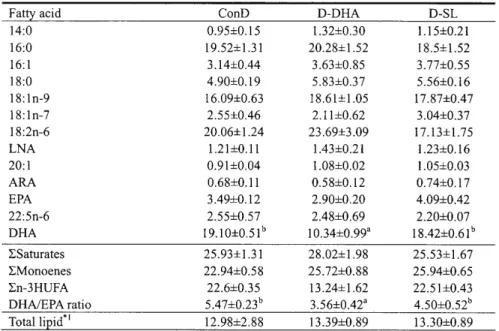
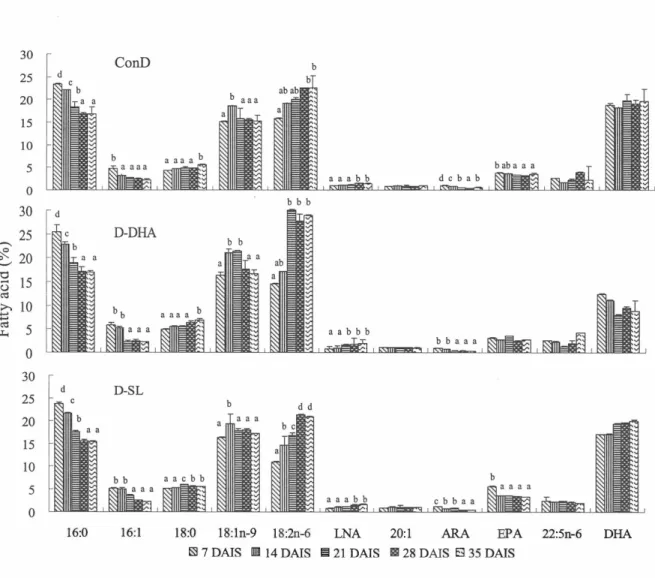
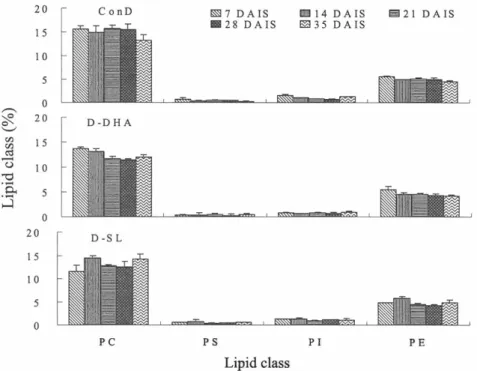
(11) A.S.K.Yong. : Spawning. and egg quality. of finfish. ii. Egg fatty acid profile and lipid class Egg fatty acid profile is presented in Table 1.6. No significant difference was observed in egg total lipid among the dietary treatments. More than 50% of egg fatty acid profile was predominantly composed of 16:0, 18:1n-9, 18:2n-6 and DHA in broodfish fed on the diets. Significantly higher egg DHA level was detected in broodfish fed on ConD and D-SL than D-DHA (P<0.05), leading a higher egg total n-3 highly unsaturated fatty acid (HUFA) and DHA/eicosapentaenoic acid (EPA) ratio. Other egg fatty acid profiles were similar among the dietary treatments.. Table 1.6 Fatty. Egg fatty acid profile (/o)of broodfish fed on ConD, D-DHA and D-SL. acid. ConD. D-DHA. 14:0. 0.95+0.15. 16:0. 19.52+1.31. 20.28+1.52. 16:1. 3.14+0.44. 3.63+0.85. 18:0 18:1n-9. 1.32+0.30. D-SL. 1.15+0.21 18.5+1.52 3.77+0.55. 4.90+0.19. 5.83+0.37. 5.56+0.16. 16.09+0.63. 18.61+1.05. 17.87+0.47. 18:1n-7. 2.55+0.46. 2.11+0.62. 3.04+0.37. 18:2n-6. 20.06+1.24. 23.69+3.09. 17.13+1.75. LNA. 1.21+0.11. 1.43+0.21. 1.23+0.16. 20:1. 0.91+0.04. 1.08+0.02. ARA. 0.68+0.11. 0.58+0.12. 0.74+0.17. EPA. 3.49+0.12. 2.90+0.20. 4.09+0.42. 22:5n-6. 2.55+0.57. 2.48+0.69. 2.20+0.07. DHA. 19.10±0.51b. 10.34±0.99a. 18.42±0.61b. ESaturates. 25.93+1.31. 28.02+1.98. 25.53+1.67. EMonoenes. 22.94+0.58. 25.72+0.88. 25.94+0.65. En-3HUFA. 22.6+0.35. 13.24+1.62. 22.51+0.43. 5.47±0.23b. 3.56+0.42'. 4.50±0.52b. DHA/EPA. ratio. 1.05+0.03. Total lipid' 12.98+2.88 13.39+0.89 13.30+0.89 Values are mean±SEM. Mean values in the same row with different superscripts are significantly *I Ddifferent (P<0.05). ry weight basis.. Egg DHA levels were remarkably higher than dietary DHA levels, irrespective of broodfish fed diets with or without DHA. Across the spawning period, egg DHA level was maintained at relatively high in broodfish fed on ConD and D-SL, while D-DHA induced a decreasing trend toward the end of spawning period (Fig. 1.2). The eggs 18:2n-6 and LNA increased toward the end of spawning, while eggs 16:0 and 16:1 tended to decrease, despite differences in dietary fatty acid profiles. Egg lipid class is shown in Table 1.7. The lipid class was composed of 19-22% of polar lipid and 78-81% of neutral lipid, irrespective of differences in the dietary treatments. In egg polar lipid, PC was commonly predominant, contributing 63-66%, and followed by PE, PI and PS. The D-DHA led significantly lower PC and PI levels than ConD and D-SL, respectively. The dietary treatments provided no remarkable changes in egg phospholipids during the spawning period (Fig. 1.3).. — 11 —.
(12) 7.1(43f*R 1 1-16-`. 16:0. 18:0. 16:1. 18:1n-9. ES7 DAIS. Fig.. 1.2. Changes. experimental. Table. diets. 1.7. of egg across. 18:2n-6. LNA. E 14 DAIS. fatty. (2 0 0 8). 20:1. E 21 DAIS. acid. profiles. the spawning. period.. ARA. 28 DAIS. EPA. ConD. PC. D-SL. D-DHA. 14.66±1.24b. 12.37±0.40a. 13.10±0.48ab. PS. 0.46±0.14. 0.44±0.08. 0.55±0.06. PI. 1.06±0.33ab. 0.73±0.05a. 1.16±0.07". PE. 4.98±0.39. 4.66±0.21. 4.73±0.25. E Polar lipid fraction. 22.33±0.84. 19.06±0.63. 20.84±0.76. 80.94±0.63. 79.16±0.76. lipid fraction. Values are mean±SEM. different (P<0.05).. 77.67±0.84 Mean. values. in the same. row with. — 12 —. DHA. (%) of striped knifejaw broodfish fed DAIS is days after initial spawning.. Egg lipid class(%) of broodfish fed on ConD, D-DHA and D-SL. Lipid class. E Neutral. 22:5n-6. El 35 DAIS. different. superscripts. are significantly.
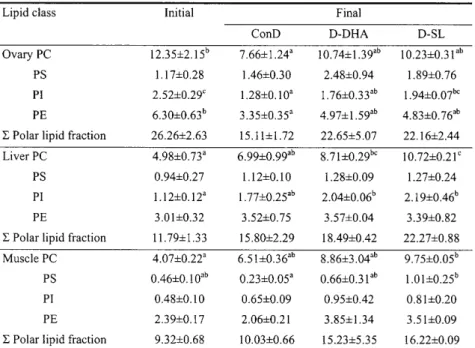
(13) A.S.K.Yong. : Spawning. PC. and egg quality. PS. of finfish. PI. PE. Lipid class Fig.. 1.3. experimental. Changes Changes of egg of egg polar polar lipid lipid of of striped striped knifejaw broodfish fed diets across. spawning. PC, phosphatidyl-choline; PI, phosphatidyl-inositol;. the spawning. period.. DAIS. is days. after. initial. PS, phosphatidyl-serine; PE, phosphatidyl-ethanolamine.. iii. Organ fatty acid profile and lipid class Initial and final HUFA of ovary, liver and muscle of broodfish fed ConD, D-DHA and D-SL is shown in Table 1.8. Total lipid of the organs showed no significant difference between the start and end of rearing trial, but D-SL induced a slight reduction as compared with other dietary treatments at the end of rearing trial. Among the dietary treatments, D-DHA induced the final lowest ovary DHA together with the lowest DHA/EPA ratio. While there were no significant differences in final ovary arachidonic acid (ARA), EPA, total saturated fatty acid, monounsaturated fatty acid, n-3HUFA and total lipids. The D-DHA also lowered muscle DHA, total n-3HUFA levels and DHA/EPA ratio. The D-SL led final higher liver EPA, DHA and total n-3HUFA levels than other dietary treatments. Initial and final ovary, liver and muscle lipid class and phospholipid profiles are shown in Table 1.9. These organs contained 10-27% of total polar lipid in total lipid regardless of the dietary treatments; slightly lower in final ovary but higher in final liver and muscle than their initial levels. The D-SL induced relatively higher final liver total polar lipid than other dietary treatments. The ConD induced significant reductions of final ovary PC, PI and PE than the initial levels, in contrast to D-DHA and D-SL indicating a similar or slightly lower level. In final liver phospholipids, a decreasing trend of PC and PI was detected in the order of broodfish fed on D-SL, D-DHA and ConD. Final muscle phospholipids also showed a decreasing trend of PC and PS in the same order obtained in the final liver PC and PI.. — 13 —.
(14) id)chcqF*. Table 1.8 and D-SL. Fatty. Ovary,. liver. and. muscle. acid. HUFA. ( 2 0 0 8). 1 1. of initial. and. Initial. final. broodfish. fed diets. on ConD,. D-DHA. Final ConD. D-DHA. D-SL. Ovary ARA. 2.18±0.16. 2.44±0.63. 3.83±1.75. 2.53±1.33. EPA. 4.91±0.41b. 3.63±0.13a. 3.08±0.23a. 3.61±0.05a. DHA. 21.32±0.91`. 15.25±0.43b. 10.06±2.45a. 17.49±1.75b. ESaturates. 33.66±0.48. 24.45±0.29. 26.91±1.58. 25.13±1.26. EMonoenes. 25.06±1.23. 22.44+0.48. 24.52±1.56. 23.88±0.11. En-3HUFA. 26.23±1.25. 18.87±0.39. 13.15±2.66. 4.34±0.26b. 4.21±0.21b. 3.26±0.58a. 4.10±0.58. 3.91±1.29. 3.43±1.55. DHA/EPA Total. ratio. linid*I. 21.10±1.78 4.85±. 0.46b. 3.77±. 1.44. Liver ARA. 0.87±0.04. 0.34±0.07. 0.50±0.15. 0.85±0.22. EPA. 2.64±0.27b. 1.54±0.15a. 1.47±0.19a. 2.22±0.06b. DHA. 7.21+0.79. 5.71±1.23. 4.48±1.31. 11.36±2.25. ESaturates. 36.24±1.28. 35.82±1.15. 28.42±2.47. 29.26±1.52. EMonoenes. 38.92±0.63. 39.10±1.30. 35.26±3.01. 34.84±3.49. En-3HUFA. 9.86±1.16. 7.25±1.38. 5.95±1.32. 13.57±2.19. 2.73±0.13. 3.71±0.37. 3.06±0.36. 5.12±1.14. 15.70±4.74. 9.35±1.05. DHA/EPA Total. ratio. linid*I. 17.44±3.57. 16.25+2.88. Muscle ARA. 0.92±0.02. EPA. 4.39±0.11b. 3.09+0.11. 7.39±0.35b. DHA. 0.44±0.02 a. 0.72±0.17. 0.79±0.15. 2.91±0.08a. 3.50±0.24a. 10.67±0.38b. 4.95±1.04a. 10.46±0.79b. ESaturates. 29.41±0.62. 23.40+0.60. 27.26±1.35. 25.52±2.11. EMonoenes. 38.40+0.55. 30.43±0.73. 35.51±0.36. 33.16+1.00. En-3HUFA. 11.78±0.47. 13.76+0.69. 7.87±1.09. 13.97±0.74. 1.69±0.05a. 3.46±0.18b. 1.70±0.40a. 2.99±0.35b. DHA/EPA. ratio. Total lipid' 5.82±0.58 5.58±0.74 5.11±1.69 3.30±0.46 Valuesare mean±SEM. Mean values in the same row with different superscriptsare significantlydifferent (P<0.05). Wet weight basis.. Table 1.9 Ovary, liver and muscle polar lipid (%)of the initial and final broodfish fed on diet ConD, D-DHA and D-SL Lipid. class. Ovary. PC. Initial. Final ConD 7.66±1.24a. D-DHA 10.74±1.3. D-SL 9ab. 10.23±0.3. 1.17±0.28. 1.46±0.30. 2.48±0.94. PI. 2.52±0.29c. 1.28±0.10a. 1.76±0.33ab. PE. 6.30±0.63b. 3.35±0.35a. 4.97±1.59ab. 26.26±2.63. 15.11±1.72. 22.65±5.07. 22 . 16±2 .44. 4.98±0.73a. 6.99±0.99ab. 8.71±0.29k. 10.72±0.21`. 0.94±0.27. 1.12±0.10. 1.28±0.09. 1.27+0.24. 1.12±0.12a. 1.77±0.25ab. 2.04±0.06b. 2.19+0.46". 3.01+0.32. 3.52±0.75. 3.57+0.04. 3.39±0.82. lipid fraction PC PS PI PE. 1.89±0.76 1.94±0.07 4.83±0.76ab. E Polar. lipid fraction. 11.79±1.33. 15.80±2.29. 18.49+0.42. 22.27+0.88. Muscle. PC. 4.07±0.22a. 6.51±0.36ab. 8.86±3.04ab. 9.75±0.05". 0.46±0.10ab. 0.23±0.05a. 0.66±0.31. PI. 0.48±0.10. 0.65±0.09. 0.95±0.42. 0.81±0.20. PE. 2.39+0.17. 2.06±0.21. 3.85±1.34. 3.51±0.09. PS. E Polar. lab. PS. E Polar Liver. 12.35±2.15b. lipid fraction. Values are mean±SEM. different (P<0.05).. 9.32±0.68 Mean. values. in the. 10.03+0.66 same. row with. — 14 —. ab. 15.23±5.35 different. superscripts. 1.01±0.25b. 16.22±0.09 are significantly.
(15) A.S.K.Yong. : Spawning. and egg quality of finfish. 1.1.3. Discussion Hierarchical conflict among male striped knifejaw broodfish caused injury and mortality in D-DHA and D-SL during the spawning period, but did not affect the spawning performance. Watanabe et al. (1991a) reported that egg fecundity may not be an appropriate measure of egg quality as it is largely dependent upon the number of spawned broodfish that could not be assured during the spawning period. In the present Section 1.1, we ascertained that D-DHA and D-SL led higher egg fecundity of female striped knifejaw broodfish than ConD. Based on the histological observation, ConD induced spawning of all female broodfish, which on the contrary did not happen in D-DHA and D-SL. Therefore, egg fecundity may not be an appropriate indicator to estimate the effects of dietary treatments on spawning performance as well as the egg quality of striped knifejaw. The ConD, likewise, promoted high egg buoyancy and hatching as well as larval SAI, however D-DHA inversely led to the reduction of these indicators.. This result depicts that DHA is not only an. essential nutrient necessary for embryonic development but also for the larval viability of striped knifejaw. In striped knifejaw, it is found that the egg fatty acid profile was similar to the dietary fatty acid profile. This is consistent with research in other fish such as gilthead sea bream (Rodriguez et al. 1998), Japanese eel Anguilla japonica (Furuita et al. 2006), sea bass (Navas et al. 1997), striped jack (Vassallo-Agius et al. 2001), white bass Morone chrysops (Lane and Kohler 2006) and yellow spotter grunt Plectorhychus cintus (Li et al. 2005). In the present Section 1.1, egg DHA, predominantly consisting total n-3HUFA, was remarkably higher than the dietary DHA, regardless the differences in dietary fatty acid profiles. Moreover, egg DHA of broodfish fed on ConD and D-SL was generally higher than their final ovary level, and this is in contrast with those fed on D-DHA showed a similar level to its final ovary level. It is also notably that D-DHA with only soybean oil has directly increased egg 18:2n-6 and LNA, but not egg n-3HUFA. Also, the final low liver and muscle DHA were obvious in broodfish fed on D-DHA. These results imply that striped knifejaw broodfish selectively accumulated DHA into the ovary and eggs, and have less or no ability to de novo biosynthesis of DHA from C18 precursors by carbon chain elongation and desaturation. Previous studies have already shown that marine fish possess low and/or limited ability to biosynthesis DHA and other HUFA from the C18 precursors (Almansa et al. 1999; Sargent et al. 2002). Therefore, during the stage of egg maturation, striped knifejaw broodfish fed on D-DHA might mainly deliver DHA from the liver to egg and ovary up to the requirement levels, which resulting in less DHA levels of muscle. Such mobilisation of DHA facilitated by internal organs would be a desirable strategy to avoid DHA deficiency in offspring. This is the first report indicating the importance of liver DHA in regulating egg DHA allowance of striped knifejaw broodfish under the situation of DHA deficiency during the spawning period. Further research is necessary to clarify on this area. The paramount importance of suitable levels of DHA and/or n-3HUFA have also been proven in several other fish species (Mourente et al. 1993; Watanabe 1993; Navas et al. 1997; Rodriguez et al. 1998; Almansa et al. 1999; Bruce et al. 1999; Vassallo-Agius et al. 2001; Li et al. 2005; Furuita et al. 2006; Lane and Kohler 2006). As ConD and D-SL had either slightly increased or maintained the initial DHA level of ovary, liver and muscle until the end of the spawning period, the dietary DHA level of 20g/kg diet may be a suitable level for striped knifejaw, and it was accordance with other marine fish (Almansa et al. 1999;. — 15 —.
(16) 1 1 '6'.. ( 2 0 0 8). Bruce et al. 1999). With reference to Salze et al. (2005), wild and cultured cod broodfish ovary displayed similar DHA and EPA levels, and ARA being one of the factors that significantly influenced the egg quality. In line with this, a mutual balance of ARA, EPA and DHA in broodfish diet was suggested as essential to promote great influence on egg and larval quality (Bruce et al. 1999; Sargent et al. 1999). In the present Section 1.1, ratio of DHA:EPA:ARA of the diets was varied among the dietary treatments. The ConD and D-SL displayed a slightly similar ratio of 28:5:1 and 25:5:1, respectively, but differed from D-DHA with a ratio of 18:5:1. This difference may also have contributed to lower larval SAI obtained from broodfish fed on D-DHA. Likewise, in egg fatty acid profile, it was found that all diets led the reduction of egg 16:0 and 16:1, but the increment of egg 18:2n-6 and LNA towards the end of the spawning period which could possibly indicate the cease of spawning in striped knifejaw. The D-SL did not have effect on egg quality and egg phospholipids, but conversely contributed to lower larval SAI, despite the higher ovary, liver and muscle phospholipids of broodfish compared to other diets. Watanabe et al. (1991a) reported that dietary krill polar and non polar lipid had enhanced egg quality of red sea bream. They identified PC and astaxanthin as effective components from the polar and non polar lipid fractions, respectively. In the present Section 1.1, dietary SL level was compatible with that of Watanabe et al. (1991b). On the other hand, Seoka (1998) demonstrated that high egg quality was obtained by feeding red sea bream with a defatted fish meal diet fortified with SL. Moreover, Kanazawa (1997) revealed the necessity of dietary phospholipids for attaining favourable growth of juvenile striped knifejaw. Phospholipids are the main bio-membrane constituents and its deficiency induces various obstructions of fatal functions (NRC 1993). In comparison to embryonic development stages, organ differentiation and development, as well as weight gain was highly accelerated in the early larval stage. The different efficacies of dietary phospholipids may be due to species specificity, or striped knifejaw broodfish can sufficiently biosynthesize phospholipids necessary for maintaining suitable egg maturation, spawning and quality.. Section. 1.2.1.. Materials. 1.2 AsA and Toc. and methods. L Experimental diet Three experimental diets were designed as shown in Table 1.10. The ConD as a control diet was supplemented with 500 mg AsA using ascorbyl-2-monophosphate-magnesium. salt (APM; Showa Denko. Co. Ltd., Tokyo, Japan) and 1,500 mg a-Toc (Wako Pure Chemical Co. Ltd., Osaka, Japan) to a kg of basal diet. The D-VC and D-VE were prepared by the exclusion of AsA and a-Toc from ConD, respectively. The preparation of basal diet and experimental diets for this rearing trial was similar to those described in the Section 1.1.1(i). Proximate compositions of test diets are shown in Table 1.10. There was no significant difference in crude protein, crude lipid, sugar and crude ash contents among the dietary. — 16 —.
(17) A.S.K.Yong. : Spawning. and egg quality. of finfish. treatments. The APM of 90-98% was recovered in ConD and D-VE; and a-Toc of 80-82% was recovered in ConD and D-VC (Table 1.10). The APM was estimated to be 43% equivalent of AsA by the relationship of their molar weights. Diets ConD and D-VE were calculated to contain ca. 468 mg AsA in kg of basal diet. The ConD and D-VC contained ca. 1,210 mg a-Toc in a kg of basal diet. Other Toc derivatives were negligible or not detected in the diets.. Table. 1.10. Dietary. formulation. (%), proximate composition (%) and vitamin content (mg/kg). Ingredients. Diet ConD. D-VC. White fish meal. 60. 60. 60. Wheat gluten. 7. 7. 7. Soybean. 9. 9. 9. 2. 2. 2. 3. 3. 3. 5. 5. 5. mixture*I. 4. 4. 4. Minerals. mixture*'. 5. 5. 5. Feeding. stimulanti2. 1. 1. 1. 3.98. 3.88. oil. DHA Soybean. lecithin. a-Starch Vitamins. Cellulose. 3.86. APM. 0.12. a-Toc. 0.15. D-VE. 0.12 0.15. com osition (dry wei ht basis). Proximate. Crude protein. 44.87. 44.48. 46.27. Crude lipid. 18.13. 18.92. 18.38. Sugar. 6.78. 7.13. 7.17. Crude ash. 17.03. 16.52. 16.55. APM recovery. 1,134.91. 0.90. 1,045.42. AsA calculated. 488.13. 0.41. 449.51. a-Toc recovery. 1,200.62. Vitamin. level. 1,220.74. 0.08. (1957); excluding APM and a-Toc. *2Halver F eeding stimulant: taurine, 64.6%; proline, 21.8%; serine, 8.6%; and threonine, 5% (Takaoka et al. 1995).. ii. Fish and rearing trial Striped knifejaw broodfish were the same batch of broodfish used in Section 1.1.1 (ii). Three groups of each 6 broodfish (3 females:3 males) were anaesthetized by 300 ppm 2-phenoxyethanol immediately before measuring their BW and BL, and were introduced into each of three 3 m3 circular indoor tank. Mean BW of female and male broodfish were ca. 867 and 1,269 g, respectively (Table 1.11). The GSI and HSI was 8.99 and 2.07%, respectively.. The experiment condition, rearing trial and the. evaluation of the spawning performance and egg quality were the same as described in Section 1.1.1(ii).. — 17 —.
(18) d-)71(k)rf*. Table 1.11. 1 1 '61-. ( 2 0 0 8). Initial and final BW and BL, GSI and HSI of striped knifejaw broodfish. Variables. BW (g) Female Male. BL (cm) Female Male. Female GSI (%). Initial. D-VC. D-VE. 907±110. 867±70. Final. 960±46. 984±204. 893±42. Initial. 1193±53. 1367±248. 1247±145. Final. 1240±80. I227±142. 1090±14*1. Initial. 33.7±0.4. 35.0±2.4. 34.7±0.4. Final. 34.6±0.4. 35.8±2.4. 34.5±0.6. Initial. 36.0±0.9. 36.7±1.3. 36.5±0.8. Final. 37.0±1.0. 37.1±1.0. 36.3±0.6* I. 1.98±0.35. 2.85±1.64. Initial Final. HSI (%). ConD. 827±46. 8.99±2.1. Initial Final. 2.91±0.88. 2.07±0.99 1.90±0.15. 2.09±0.27. 1.83±0.34. Values are means±SEM (n=3); otherwise as indicated. *1 n=2.. iii. Chemical assay, histological preparation and statistical analysis Proximate analysis of the diets was conducted in triplicates according to the method in Section 1.1.1(iii).. The dietary APM level was assayed by a high pressure liquid chromatography. (HPLC;. LaChrom, Hitachi, Tokyo, Japan) using a reversed phase column (Wakosil 5C18, 6 x 150 mm, Wako Pure Chemical, Osaka, Japan). Mobile phase was 0.1 M KH2PO4 solution at pH 2, flow rate was adjusted at 0.5 m//min, and an absorbance at 245 nm was identified as an APM peak. The APM was extracted with 5% metaphosphoric acid, and a resulting filtrate was then injected into the HPLC system. The AsA assay was performed. using HPLC according to Kodaka et al. (1985) with slight. modification. Samples were treated with 2,4-dinitrophenylhydrazine and 2-6 dicholorophenol- indopenol before injected into HPLC with a partisil column (silica 5 p.m, 4.6 x 200 mm, GL Sciences, Tokyo, Japan). Mobile phase using ethyl acetate:hexane:acetic acid (5:4:1) was applied at the flow rate of 1.0 m//min, and an absorbance at 495 nm was monitored as an AsA peak. The a-Toc assay was performed using a fluorescence. HPLC with a reversed phase column. (Nucleosil 5 NH2, 4.6 x 250mm, GL Sciences, Tokyo, Japan). After saponification with potassium hydroxide, the extraction of non-saponified compounds with ethyl acetate in hexane (Wada et al. 2000) was filtered with 45 pm-cellulose filter and injected into the HPLC system. Mobile phase was 2% iso-propanol in hexane with flow rate 1.0 m//min. The excitation and emission were set at wavelength of 297 and 327 nm, respectively. The preserved ovary samples were subjected to histological observation by the same method in Section 1.1.1(iii). All data obtained were analyzed using one-way analysis of variance and further analyzed by Tukey's multiple test of comparison described in Section 1.1.1(iii).. — 18 —.
(19) A.S.K.Yong. 1.2.2. : Spawning. and egg quality. of finfish. Results. L Spawning performance and egg quality Egg fecundity was similar among ConD, D-VC and D-VE. The ConD and D-VE showed an increasing trend in egg quality, in terms of egg diameter, weight, oil globule size, buoyancy and hatching rates than D-VC (Table 1.12). However, there were no remarkable differences in these indicators as well as larval SAI among the dietary treatments. The D-VE led a slightly lower larval SAI than other diets. The dietary treatments caused no adverse effects on broodfish morphology and behaviour or growth (Table 1.11) and no deficiency signs of AsA and Toc throughout the rearing trial.. Table diets. 1.12. Spawning performance and egg quality of striped knifejaw broodfish fed experimental. Variables. Egg fecundity (106) Egg diameter (mm) Egg weight (mg) Oil globule (mm) Number of spawning Buoyancy rate (%) Hatching rate (%) Larval SAI Spawning female (%) Values are means±SEM. Mean significantly different (P<0.05).. ConD. D-VC. 3.31. 3.31. D-VE. 2.76. 0.89±0.003. 0.87±0.001. 0.92±0.006. 0.38±0.0046. 0.36±0.005a6. 0.40±0.0086. 0.19±0.001. 0.18±0.002. 0.20±0.001. 21. 23. 93.71±0.92. 16. 86.36±2.75. 91.69±1.96. 92.20±1.01. 82.53±1.82. 90.08±0.60. 13.35+1.446. 13.11±4.796. 9.43±1.36a6. 100 values. in the. 67 same. row. with. 67 different. superscripts. alphabet. are. The ovarian histology showed that all female broodfish fed on ConD contributed to spawning in the spawning period. Two of the female broodfish fed on D-VC and D-VE actually spawned, and the rest had ovary with previtellogenic oocytes, no mature oocytes or sign of post spawning (Fig. 1.4)..
(20) idjuKFIFQ. 1 1-6-`. (2 0 0 8). ii. Egg vitamin levels Dietary AsA has clearly influenced egg AsA level than dietary a-Toc on egg Toc level (Figs. 1.5 and 1.6). Mean egg AsA of broodfish fed on ConD and D-VE were 43.3 and 36.3 lig/g, respectively, significantly higher (P<0.05) than 9.9 i_ig/gof egg from feeding on D-VC. The egg AsA levels of broodfish fed on D-VC were remarkably low throughout the spawning period, while ConD and D-VE led high egg AsA and an increasing trend towards the end of the spawning period. In the assay of Toc, only a-Toc was detected from the egg but not other Toc derivatives. The egg Toc of broodfish fed on the diets was maintained at a similar level in the range of 14.0-18.5 [tg/g, despite of the dietary treatments with or without a-Toc (Fig. 1.6). Across the spawning period, the egg Toc level was also maintained at similar level within each of the dietary treatment for broodfish.. Fig.. 1.5. experimental. 25 r. Changes diets. of across. egg. AsA. the spawning. D 7 DAIS. 0. level. of. striped. knifejaw. broodfish. fed. period.. 14 DAIS. 0 21. DAIS. x 28. DAIS. Fig. 1.6 Changes of egg Toc level of striped knifejaw experimental diets across the spawning period.. 0 35. DAIS. broodfish. fed. iii. Organ vitamin levels The ConD, D-VC and D-VE clearly influenced broodfish organ AsA levels (Fig. 1.7) as shown in egg AsA. The final ovary contained high AsA levels at the range of 160.8-364.8 [ig/g, while final liver and muscle have low AsA levels below 100 pig/g. Therefore, ConD and D-VE maintained significant higher. — 20 —.
(21) A.S.K.Yong. final ovary,. liver and muscle. : Spawning. AsA than D-VC. and egg quality. and the initial. of finfish. levels.. Organ. Fig. 1.7 Organ rearing trial.. AsA. level. of striped knifejaw broodfish at the start. and end. of. Similar with egg, only a-Toc was assayed in the organs. Higher Toc level was commonly detected in final ovary of broodfish fed on all diets than the initial level (Fig. 1.8). Whereas, final liver and muscle Toc of broodfish fed on ConD and D-VC were similar to the initial levels, but those on D-VE were lower than the initial levels.. Organ. Fig. rearing. 1.8. Organs. Toc. level. of striped knifejaw broodfish at the. start. and. end. of. trial.. 1.2.3 Discussion. In the present Section 1.2, as cited in the previous Section 1.1, hierarchal conflict among male striped knifejaw broodfish caused injury and mortality in D-VE during the spawning period. However, such behaviour did not directly affect the spawning performance. Spawning of broodfish commenced approximately the 7th week of rearing trial. Even in such a relatively short period before spawning, D-VC significantly lowered the egg and organ AsA levels of. — 21 —.
(22) 15..-t*iff*. 1 1 -1-4-. (2 0 0 8). female striped knifejaw broodfish. Inversely, ConD and D-VE increased the egg and organ AsA levels of broodfish. These results indicated that APM is one of promising AsA derivatives for maturation and egg development of striped knifejaw broodfsih. Striped knifejaw can utilize AsA-sodium (AsA-Na) and AsAcalcium (AsA-Ca) as AsA source (Ishibashi 1994), and the present study revealed that APM is another alternative source which is highly bioavailable for striped knifejaw broodfish, as shown in juvenile hybrid tilapia, Oreochromis niloticus x 0. aureus (Shiau and Hsu 1999) and grass shrimp, Penaeus monodon (Hsu and Shiau 1998). Shiau and Hsu (1999) indicated that APM was ca. 85% as effective as AsA-2monophosphate-Na in meeting the AsA requirement for the hybrid tilapia. Conversely, Hsu and Shiau (1998) reported only AsA-2-monophosphate-Na was ca. 84 % as effective in meeting the AsA requirement for the grass shrimp. These differences may be attributed to the enzymatic specificity of phosphatases in digestive and other organs, the metal element of AsA derivatives and species specificity. We ascertained that ConD and D-VE with ca. 450 mg AsA/kg diet or D-VC without AsA had no influence on egg fecundity of striped knifejaw. Likewise, D-VC induced a lower tendency of egg buoyancy and hatching rates than other diets, but no significant differences were detected among them. This may be owing to lower egg AsA from broodfish fed on diet without APM. The AsA was an essential nutrient necessary for metabolism, hormone and collagen synthesis in fish (Sato et al. 1987; Blom and Dabrowski 1995), like human beings, primates, guinea pigs and fruit bats (Murad et al. 1981; Luck et al. 1995; Brody 1999). The egg AsA deficiency naturally and basically disturbed cell division and differentiation, organ formation and morphological development of embryo in striped knifejaw. Dietary AsA fortification for striped knifejaw broodfish had improved the reproductive performance of 15-year old striped knifejaw (Ishibashi 1994), as well as rainbow trout (Blom and Dabrowski 1995), milkfish Chanos chanos (Emata et al. 2000) and yellow perch (Lee and Dabrowski 2004). It is known that broodfish need higher dietary AsA to fulfil the reproductive performance and physiological condition than juveniles (Blom and Dabrowski 1995). In the present Section 1.2, egg and organ AsA of female broodfish fed on D-VC were markedly lower than those of broodfish fed on ConD and D-VE. Moreover, broodfish fed on D-VC had higher ovary AsA than liver and muscle AsA which are in depleted state, hence resulting in similar egg fecundity and slightly lower egg buoyancy and hatchability.. These results suggested that the female striped knifejaw. broodfish have some mechanisms to fulfill ovary AsA requirement for egg maturation, spawning and development through mobilisation of AsA from liver and muscle. The muscle which is the largest organ of fish, more than the liver, has the most important role of AsA supplier for ovary and eggs. Other organs contained AsA (Agrawal and Mahajan 1980; Lee et al. 1998) may also have contributed to mobilise AsA into ovary and eggs. The D-VC induced significantly. lower egg AsA level than ConD.. The D-VE also led to a. decreasing trend of egg AsA compared to ConD. The egg AsA reduction of broodfish fed on D-VE may be attributed to the interaction between AsA and Toc; AsA can react with Toc radical and regenerate Toc to its original active form. It is possible to consider that larger amounts of egg AsA of female broodfish fed on D-VE are metabolised to eliminate various radicals and/or to protect the breakdown of Toc as an antioxidant during the embryonic development.. The interaction between AsA and Toc has already. — 22 —.
(23) A.S.K.Yong. : Spawning. and egg quality. of finfish. been reported in yellow perch (Lee and Dabrowski 2004), juvenile red sea bream and black sea bream, Acanthopagrus schlegeli (Ji et al. 2003) and Atlantic salmon, Salmo salar (Hamre et al. 1997). In scorbutic rats (Tanaka et al. 1997), Toc levels in plasma and organs, such as brain, heart, liver, lung, kidney and muscle, were significantly affected by dietary coexisting AsA on a 21-day rearing trial. Female striped knifejaw broodfish fed on D-VE did not affect egg fecundity, buoyancy and hatching rates but slightly lowered larval SAI in the present Section 1.2. The dietary treatments for broodfish displayed similar changes in egg Toc level across the spawning period. This was in agreement with some other studies that are unable to demonstrate the essentiality of Toc in improving egg and larval quality in Atlantic salmon (Eskelinen 1989), rainbow trout (King 1985), milkfish (Emata et al. 2000) or in prawn, Macrobrahium rosenbergii (Cavalli et al. 2003). With reference to King (1985), Palace and Werner (2006) reviewed that dietary a-Toc supplementation must be conducted at least three months before the start of spawning in order to enhance egg Toc deposition and spawning performance of rainbow trout. Likewise, a multi-spawner fish such as gilthead sea bream (Fernandez-Palacios et al. 1995), striped knifejaw, which possess relatively short vitellogenetic period, may readily distribute nutrients into the egg directly from the diet. Thus, future research should be endeavored into foraging whether a longer rearing trial influences the egg Toc level or maturation and egg quality of striped knifejaw. The defficient sign of Toc was first demonstrated to cause reproductive failure in both female and male rats by Evan and Bishop (1922). The requirements of Toc had been measured for improving reproductive performance on ayu (Takeuchi et al. 1981), red sea bream (Watanabe et al. 1991) and yellow perch (Lee and Dabrwoski 2004). From the present Section 1.2, the Toc requirement for inducing suitable maturation, spawning and egg quality can not be clarified; however, a similar egg Toc ca. 17 lag/g obtained in every dietary treatment for broodfish may indicate a preferable egg Toc status. In the present Section 1.2, the D-VE induced to lower liver Toc of female broodfish than other diets, while egg, ovary and muscle had similar Toc levels. These suggest that the female striped knifejaw broodfish fed on D-VE also mobilise liver Toc to support the ovary and egg Toc. High dietary a-Toc promoted Toc accumulation in rainbow trout (Palace and Werner 2006), Japanese flounder (Tokuda et al. 2000) and salmon (Lie et al. 1994). The mobilisation of Toc during spawning season has been reported in several fish (King 1985; Lie et al. 1994; Hamre et al. 1997). These studies suggested that the liver was the potential organ to supply Toc into ovary during egg maturation. However, muscle with the lowest Toc level may also be other alternative organ to redistribute Toc into ovary, as it representing 50% or more of the body mass (Lie et al. 1994). Likewise, in mammals, the accumulation of Toc in fetus was positively correlated with total lipid in the early pregnancy and thus limited transfers of Toc from the placental; this happened even under the condition of high dietary Toc intake and the increase of Toc in serum (Debier and Larondelle 2005). The Toc distributions in egg and organs differed from those of AsA; highest Toc level was detected in the liver coincided with higher lipid, while highest AsA level found in the ovary with low total lipid. However, it should not be over-looked the notion that the requirement and carcass level of Toc in fish and broodfish are also affected by several other factors, such as coexisting HUFA (Palace and Werner 2006), other vitamins (Bieri et al. 1981) and antioxidants.. Thus, further studies should be. conducted to infer the requirement and mechanism of Toc for spawning and improving egg quality of. — 23 —.
(24) 1 1 '-4-. idjczWFSK. ( 2 0 0 8). striped knifejaw.. CHAPTER. 2. Suitable dietary AsA level for striped knifejaw broodfish. Introduction. Studies have shown that striped knifejaw may have low ability to de novo synthesis up to AsA requirement (Ikeda et al. 1988; Ishibashi 1994; Wang et al. 2003). Ishibashi (1994) reported that 250 mg AsA/kg diet in the form of AsA-Na was sufficient to meet the requirement of striped knifejaw juvenile of 2.4 g BW. While Wang et al. (2003) reported that 118 mg AsA/kg diet in the form of APM was required for maximum growth of striped knifejaw juvenile (3.9 g BW). Ishibashi (1994) also reported that higher egg AsA level and larval survival were obtained from striped knifejaw broodfish fed diet fortified with AsACa salt at the level of 3,000 mg AsA/kg diet than 250 mg AsA/kg diet. With considerable vast biological functions of AsA, high AsA dose has been suggested to give beneficial and pharmacological influence for improving the reproductive performance and health (Blom and Dabrowski 1995; Luck et al. 1995; Terova et al. 1998). Blom and Dabrowski (1995) had recommended an eight times higher AsA requirement than the National Research Council (NRC) guideline of 50 mg/kg diet, improving the survival of the embryo and enhancing the tissue AsA levels in rainbow trout. Terova et al. (1998) also reported that the adequate AsA level for normal growth in sea bass and gilthead sea bream may not be sufficient for broodfish during reproductive season. These suggest that the broodfish may require larger amount of AsA for inducing reasonable reproductive function and performance. Despite all of the previous studies on striped knifejaw, however, AsA requirement of broodfish is not yet well documented. Therefore, this rearing trial was undertaken to investigate the suitable level and effect of higher dietary AsA level on the spawning performance, larval growth performance and the effect on the sperm quality.. 2.1 Materials. and methods. L Experimental diet Five test diets were designed; a control diet without APM (0-APM), while test diets 125-APM, 250-APM, 700-APM and 1,400-APM were supplemented with 125, 250, 700 and 1,400 mg APM/100 g basal diet, respectively, as shown in Table 2.1. The basal diet was consisted of white fishmeal, wheat gluten, pollack liver oil and a-starch as main constituents. Vitamin mixture excluding AsA and mineral mixture were prepared after Halver (1957). All ingredients were weighed and mixed well before adding 30% tap water. Resulting dough was formed into moist pellet with 10 mm diameter using an experimental. — 24 —.
(25) A.S.K.Yong. : Spawning. and egg quality. of finfish. pellet machine. The moist test diets were immediately stored in a freezer at -20 °C . The proximate compositions showed no significant difference among the dietary treatments (Table 2.1). The APM contents are shown in Table 2.1 and were ca. 80% of their arrangements.. Table. Dietary formulation (%), proximate composition (%) and vitamin content (mg/kg). 2.1. Ingredients. Diet 0-APM. 125-APM. 250-APM. 700-APM. 1,400-APM. White. fish meal. 65. 65. 65. 65. 65. Wheat. gluten. 2. 2. 2. 2. 2. Pollack. liver. oil. a- Starch. 5. 5. 5. 5. 5. 12. 12. 12. 12. 12. Vitamins. mixture*I. 4. 4. 4. 4. 4. Minerals. mixture. 5. 5. 5. 5. 5. Feeding. stimulant*2. 1. 1. 1. 1. Cellulose. 6. 5.88. 5.77. 5.31. 4.61. APM. 0. 0.12. 0.23. 0.69. 1.39. 1. Proximate composition (dry weight basis) Crude. protein. 51.52. 50.15. 46.82. 47.71. 52.88. Crude. lipid. 13.40. 13.66. 13.41. 13.19. 12.76. 15.50. 15.47. 14.36. 13.11. 14.06. 20.07. 16.14. 19.11. 18.68. 18.22. Sugar Crude. ash. Vitamin. level. APM. recovery. 1.2. 1,000. 2,000. 5,700. 10,600. AsA. calculated. 0.05. 440. 850. 2,400. 4,400. (1957), excluding APM. *2Halver F eeding stimulant: taurine, 64.6%; proline, 21. 8%; 1995).. serine, 8.6%; and threonine , 5%, (Takaoka et al.. ii. Fish and rearing trial Ten groups of 6 striped knifejaw broodfish, 4 females and 2 males having mean BW of 587 and 595 g, respectively, were procured from the Fish Nursery Center, Kinki University , Uragami and each group was randomly distributed into a 1.5 m3 indoor circular tank at the Fisheries Laboratory , Kinki University, Uragami. The broodfish were acclimated to rearing conditions for 10 days before the commencement of a rearing trial. Rearing trial was conducted from 17 April to 6 September 2006, and each of duplicate broodfish groups for each diet was fed until apparent satiation once daily (10:00) for 20 weeks. Filtered seawater was supplied at 5 //min and aerated continuously throughout rearing trial. Water temperature was controlled at 18-20°C in the initial 10 weeks and then maintained at 21-22°C until the end of rearing trial with a heat pump system. Broodfish began to display spawning behaviour during 20:00-24:00 from 11 June and onwards. Naturally spawned eggs from each broodfish tank were collected daily at 08:00 throughout the spawning period until 31 August. Spawning performance of broodfish and its egg quality were evaluated. -. 25 -.
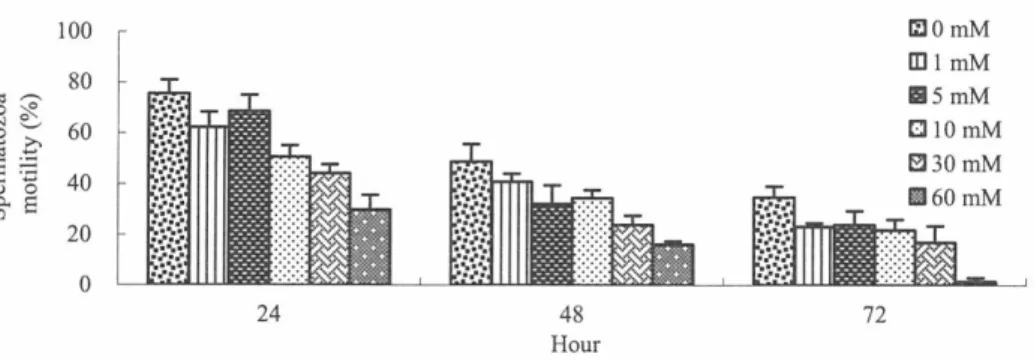
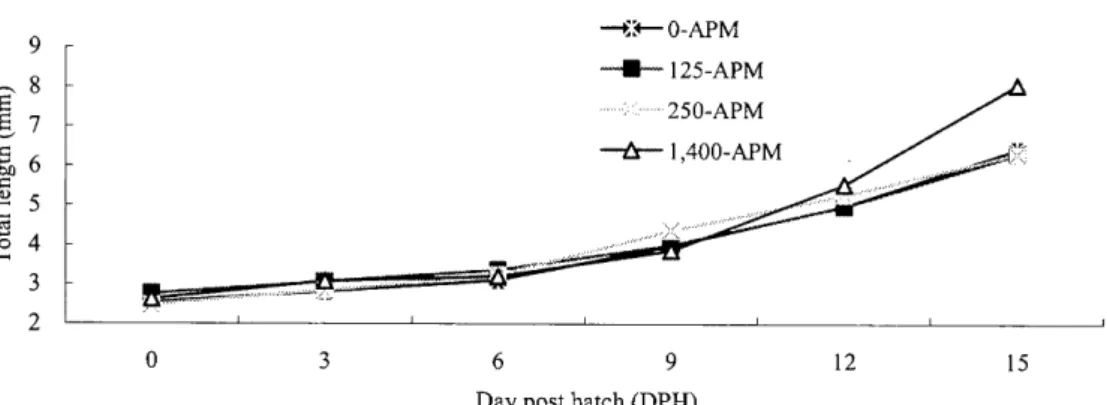
(26) idtAc'OFN. 11. ( 2008). by the methods cited in the previous Chapter 1, Section 1.1.1(ii). During the spawning period, eggs naturally spawned by each broodfish tank were also incubated and sampled at four development stages, just after fertilisation (2-4 cells; 50 min after fertilisation), gastrula (12 h after fertilisation), the appearance of Kuppfer's vesicle (15 h 40 min after fertilisation) and just before hatch (28 h after fertilisation, Kumai 1984) for assay of the AsA level changes during the embryonic development. The organs of female and male broodfish including gonad, liver, spleen, brain, kidney and muscle at the start and end of rearing trial were also sampled for AsA analysis. These samples were kept in a freezer at -85°C until assays. A small portion of the broodfish ovary at the start and end of rearing trial were also preserved in 5% formalin for histological observation.. In addition,. during the spawning period, normal larvae. obtained from broodfish fed on 0-APM, 125-APM and 1,400-APM diets and morphologically deformed larvae obtained from broodfish fed 1,400-APM at 8-12 h post hatching were fixed in 2.5% glutaraldehyde in phosphate buffer (pH 7.4) for a transmission electron microscope observation (TEM; H-800, Hitachi, Tokyo, Japan).. iii. Chemical assay and histological preparation Proximate composition, APM and AsA of the diets, carcass and organs were assayed by the same methods as described in the previous Chapter 1, Section 1.2.1(iii). Egg mineral composition were analysed by using an atomic absorption spectrophotometry. For histological observation, the ovary was processed by the same method described in Chapter 1, Section 1.1.1(iii). For larval TEM observation, larvae were post-fixed with osmic acid and followed by series of ethanol (50-100%) and propylene oxide dehydration. The samples were then embedded in epoxy resin (Epok 812; Okenshoji Co. Ltd., Tokyo, Japan), which were transversely trimmed into 100 nm thickness section with an ultramicrotome (MT-6000; Dupont, Wilmington, USA). The sections were stained with uranyl acetate and lead citrate, and observed using TEM (Ando et al. 2001).. iv. Spermatozoa motility in artificial seminal plasma with various AsA and Mg levels Fresh milt from 5 broodfish with 1.65±0.4 kg BW fed on a commercial feed was collected by gently pressing their abdomen from the anterior portion towards the genital pore. The fresh milt was placed on crushed ice until the determination of spermatozoa motility and spermatocrit. Four pi of fresh milt were diluted with 196 ix/ of artificial seminal plasma (ASP) including 0, 0.1, 0.5, 1.0, 1.5 and 2.0 mM AsA levels in a 1.25 ml microtube and stored at 4°C . The same procedure was conducted for magnesium (Mg) with 0, 1, 5, 10, 30 and 60 mM Mg in ASP with milt from another batch of broodfish. Spermatozoa motility was recorded at 24, 48 and 72 h after storage. The ASP was composed of 150 mM NaC1, 2.5 mM KC1, 2.5 mM CaC12, 1.0 mM MgC12 and 10 mM NaHCO3 with 332.5 mM osmolality.. Spermatozoa motility was measured according to Ohta. and Izawa (1996). At 24, 48 and 72 h after storage, 5µl of the milt mixture with ASP contained various. — 26 —.
(27) A.S.K.Yong. : Spawning. and egg quality. of finfish. AsA and Mg levels was diluted in 95 11/(final dilution of 1,000 times, v/v) of 450 mM NaC1 in 20 mM 2-[4-(2-hydroxyethyl)-1-piper azinyl] ethanesulfonic acid (Hepes) buffer (pH 7.5) in a polyethylene tube. Twenty la/ of the diluted milt was placed on a glass slide and the spermatozoa motility was recorded using a video tape recording device (NV-SX10; Panasonic, Japan), connected to a camera (CCD camera; ELMO Co. Ltd, Japan), video timer (VTG-22; FOR-A Co. Ltd. Japan) and microscope. The spermatozoa motility was determined by counting at least 50 spermatozoa that moved forward at 15-16 s after activation. The spermatocrit was determined by filling the microhaematocrit capillary tubes (75 mm length x 0.9mm inner diameter) with the milt and one end of the capillary tube was sealed with clay and centrifuged at 15,000 rpm for 15 min. After the centrifugation, whitish and transparent layers formed inside the capillary tubes; the spermatocrit was measured as the ratio of the whitish portion to total volume of the milt (Rakitin et al. 1999). v. Larval growth performance Hatched larvae obtained from broodfish. fed on the 0-APM and 125-APM, 250-APM and. 1,400-APM diets were separately introduced into a 5001 circular tank at stocking density of 10 larvae//. All of larvae were reared in filtered sea water system supplied at 1 //min with mild aeration. Water temperature and dissolve oxygen was 26.8+0.5°C and 7.53±0.69 mg 02//, respectively. Live feed of rotifer Brachionus plicatilis enriched with DHA was given to all groups of larvae twice daily at 08:00 and 13:00 from 3 daypost-hatch (DPH), together with a commercially available concentrated chlorella.. Larval survival and. growth rate in terms of body length were determined at 3 days intervals until 15 DPH. And larvae at 2, 10 and 21 DPH were sampled for AsA assay. vi. Statistical analysis All data obtained were analyzed using one-way analysis f variance and further analyzed by Tukey' s multiple test of comparison using the same statistical package as described in previous Chapter 1, Section 1.1.1 (iii).. 2.2 Results. L Growth performance and hematology of broodfish At the end of rearing trial, which also indicated the cease of spawning period, BW of female and male broodfish fed experimental diets decreased as compared with those of initial values (Table 2.2). No significant difference was found in feed intake among the dietary treatments, thus APM intake increased with an increasing in dietary APM levels. The GSI was ca. 2.3% in both female and male broodfish at the start of rearing trial and was 1.7-3.4% in female and 0.7-1.4% in male at the end of spawning period. The HSI of broodfish was higher in female ca. 2.5% than male ca. 1.7% at the start of rearing trial; and decreased to 1.4-1.6% in female and 1.1-1.2% in male. Haematocrit value and haemoglobin level of broodfish showed no significant differences among the dietary treatments.. — 27 —.
(28) id-7.1<ilF*. 1 11--`. (2 0 0 8). ii. Spawning performance and egg quality The spawning performance of broodfish fed on the experimental diets is presented in Table 2.3. Broodfish fed on the diets with various APM levels produced higher egg fecundity than broodfish fed on 0-APM. The diet 125-APM induced the most spawning with 52 times, but 0-APM did the least of 35 times during the 11 weeks of spawning period (11 June until 31 August). The changes in daily egg fecundity of broodfish fed on the diets throughout the spawning period are presented in Fig. 2.1. Broodfish fed on 0-APM diet experienced delayed spawning as compared with broodfish fed on diets with APM, together with a later peak of egg fecundity. Egg diameter and weight, and oil globule size had no differences among the dietary treatments. However, 0-APM induced lower egg buoyancy and hatching rates than other diets. The 125-APM promoted higher SAI of larvae, followed by diets 250-APM, 1,400-APM, 700-APM and 0-APM, without significant differences among them. On the other hand, eggs of broodfish fed on diets 700-APM and 1,400-APM induced higher incidence of morphologically deformed larvae.. Table 2.2 The BW, BL, GSI, HSI, daily feed intake, and male broodfish fed experimental diets Variables. BW(g) Female Male. BL (cm) Female Male. GSI (%) Female. 0-APM. 700-APM. 1,400-APM. 589±2. 584±9. 598±18. 595±3. 573±19. 530±30. 524±18. 505±20. 509±37. 514±27. Initial. 600±18. 593±30. 607±20. 603±10. 585±15. Final. 600±12. 585±22. 591±18. 530±45. 591±44. Initial. 23.2±0.2. 23.3±0.1. 23.4±0.1. 23.3±0.1. 23.0±0.1. Final. 22.8±0.4. 23.5±0.3. 23 .3±0.3. 23.0±0.4. 23.0±0.4. Initial. 23 .6±0.3. 23.4±0.2. 23.3±0.1. 23.8±0.1. 23.2±0.3. Final. 23.9±2.5. 23.9±0.2. 23.6± 0.2. 23.2±0.5. 23.4±0.7. 3.35±1.05. 3.04±0.45. 2.58±0.34. 1.67±0.11. 2.52±0.48. 0.78±0.19. 0.74±0.06. 1.62±0.6. 1.64±0.05. Initial. 2.45±0.18. Initial. 2.24±0.14 1.37±0.96. 0.82±0.14. 1.44±0.03. 1.40±0.13. Initial Final. Male. of female. Final. Final. HSI (%) Female. 250-APM. and haemoglobin. Initial. Final Male. 125-APM. final haematocrit. 2.46±0.18. Initial Final. 1.05±0.34. 1.51±0.13 1.66±0.12. 1.19±0.57. 1.13±0.07. Daily feed intake/ind.(g) 8.6 8.8 Final Haematocrit(%) 35.9± 1.1 36.3±2.0 Haemoglobin (%) 10.84±0.39 11.04±0.52 Values are mean±SEM. (Female n= 8, male n=4).. 1.20±0.03 7.3. 1.17±0.03 7.6. 1.36±0.04. 8.8. 35.3±1.7. 33.9±1.1. 32.0±1.6. 10.61±0.45. 10.32±0.39. 10.79± 0.60.
(29) A.S.K.Yong. Table APM. 2.3. : Sp awnin g and egg qua lity of fi nfish. Spawning performance and egg quality of striped knifejaw fed diets with graded levels of. Variables. Egg fecundity (x106) Egg diameter (mm) Egg weight (mg) Egg oil globule (mm) Number of spawning Buoyancy rate (%) Hatching rate (%) Larval SAI Larval deformity (%)*1 Values are mean ± SEM. •I N umber of deformed larva. 0-APM. 125-APM. 250-APM. 2.27+1.61. 5.54+3.6. 4.38+1.67. 3.77+3.1. 4.5+0.87. 0.97+0.002. 0.97+0.003. 0.95+0.004. 0.95+0.002. 0.95+0.003. 0.39+0.006. 0.40+0.006. 0.39+0.006. 0.40+0.007. 0.41+0.008. 0.220.001. 0.22+0.001. 0.22+0.001. 0.22+0.001. 0.22+0.001. 52. 44. 43. 35. 50. 93.49+3.78. 54.80+9.68. 89.73+2.32. 88.71+3.32. 85.03+2.95. 84.49+4.27. 12.25+1.80. 20.34+1.03. 18.16+1.09. 13.78+1.01. 17.46+0.97. 6.18±2.09. 6.62+0.89. 5.57+1.44. 10.64+2.70. 16.68±4.01. of hatched. 88.91+2.78. 1,400-APM. 62.34+7.20. x 100 / number. 90.09+3.51. 700-APM. 91.57+2.95. larva.. Fig. 2.1 Egg fecundity of striped knifejaw broodfish fed graded levels of APM across spawning period..
(30) idjvi<jf. 4R. 1 1 '61-. ( 2 0 0 8). iii. Egg AsA and mineral The dietary treatments given to broodfish resulted in various egg AsA levels as shown in Fig. 2.2. Egg AsA levels were directly reflected by the dietary AsA levels for broodfish. The 0-APM induced significantly lower egg AsA level than other diets, shapely decreased after 7 DAIS but maintained a similar level during 21 to 42 DAIS. While other diets had significantly increased egg AsA level towards the end of spawning period. On the whole, 125-APM, 250-APM and 700-APM maintained a similar egg AsA, which were slightly lower than diet 1,400-APM. Egg mineral composition of broodfish fed on test diets is presented in Fig. 2.3. The dietary treatments induced a similar egg phosphorus (P) level, while the 0-APM produced higher egg sodium (Na), Mg and calcium (Ca) levels. The 125-APM and 250-APM induced slightly lowered egg potassium (K) levels as compared with 0-APM, 700-APM and 1,400-APM.. _r. 200. 117. DAIS. 14 DAIS. 21 DAIS. n 28 DAIS. ei 35 DAIS. x 42 DAIS e. Dietary. Fig.. 2.2. experimental. Changes. in. egg. AsA. A.. group. levels of striped knifejaw. broodfish. fed. diets.. Dietary. group. Fig. 2.3 Egg mineral composition of striped knifejaw broodfish fed graded levels of APM.. iv. Organ AsA The dietary treatments also modified various organ AsA levels of broodfish as shown in Tables. — 30 —.
図

+7


関連したドキュメント
The only thing left to observe that (−) ∨ is a functor from the ordinary category of cartesian (respectively, cocartesian) fibrations to the ordinary category of cocartesian
The inclusion of the cell shedding mechanism leads to modification of the boundary conditions employed in the model of Ward and King (199910) and it will be
Keywords: Convex order ; Fréchet distribution ; Median ; Mittag-Leffler distribution ; Mittag- Leffler function ; Stable distribution ; Stochastic order.. AMS MSC 2010: Primary 60E05
We show that a discrete fixed point theorem of Eilenberg is equivalent to the restriction of the contraction principle to the class of non-Archimedean bounded metric spaces.. We
In Section 3, we show that the clique- width is unbounded in any superfactorial class of graphs, and in Section 4, we prove that the clique-width is bounded in any hereditary
Inside this class, we identify a new subclass of Liouvillian integrable systems, under suitable conditions such Liouvillian integrable systems can have at most one limit cycle, and
Answering a question of de la Harpe and Bridson in the Kourovka Notebook, we build the explicit embeddings of the additive group of rational numbers Q in a finitely generated group
Then it follows immediately from a suitable version of “Hensel’s Lemma” [cf., e.g., the argument of [4], Lemma 2.1] that S may be obtained, as the notation suggests, as the m A
