REFEREED ARTICLE
Climate Change Adaptation
for Agro-Forestry
—Sustainability and Potentials in the Tea Industry—
Fitrio ASHARDIONO
CONTENTS
Ⅰ.THE DOMAIN OF INQUIRY Ⅰ.1 Climatic Bio-Indicator Ⅰ.2 Historical Perspectives Ⅱ.THE TEA INDUSTRY
Ⅲ.IDENTIFICATION OF PROBLEMS AND POTENTIALS Ⅲ.1 Changing Climatic Conditions
Ⅲ.2 Potentials for Adaptation Ⅳ.ADAPTATION MODELS Ⅳ.1 Terroir
Ⅳ.2 Seasonal Agricultural Practices Ⅳ.3 Precision Agriculture System Ⅴ.SUMMARY AND DISCUSSION
Ⅰ.THE DOMAIN OF INQUIRY
The current rapid transformation of climatic behaviors have been directly affecting our daily life. Anecdotal indications showed that it has become more difficult to judge the changes in weather patterns and decide upon optimal times for agricultural interventions in the course of a growing season. Changes in the weather pattern can be clearly observed as the timing of wet and dry seasons are slowly shifting from their usual periods. Excessively intense rainfall is often followed by prolonged drought. Increasing occurrences of extreme weather events, such as the number of days with extreme temperatures during the summer and winter seasons have been occurring more often compared with past years.
Based on the definition by the United Nations Framework Convention on Climate Change (UNFCCC) (1994), Climate Change means a change of climate which is attributed directly or indirectly to human activity that alters the composition of the global atmosphere and which is in addition to natural climate variability observed over comparable time periods. The adverse effect of climate change is defined as changes in the physical environment or biota resulting from climate changes which have significant deleterious effect on the composition, resilience or productivity of natural and managed ecosystems or on the operation of socio-economic systems or on human health and welfare (UNFCCC, 1994).
In regard to these climatic changes, the agriculture industry is among those which are directly affected by changing climatic behavior. Agricultural crops are grown and harvested seasonally in a specific period of climatic condition to obtain the optimum desired harvest quantity and quality. Some of the crops require a certain
temperature range to grow and thus, climatic conditions directly affect harvest quality and quantity.
Changes in the climatic behavior have directly affected harvest quality and quantity of agricultural crops, especially those which are very sensitive towards changes in the climatic condition. Based on the Intergovernmental Panel on Climate Change (IPCC) (2007), climate change is expected to be manifest in increases in mean temperature, altered precipitation patterns, greater frequency of extremes, and increased climatic variability.
Ⅰ.1 Climatic Bio-Indicator
Among other agricultural process, winegrapes and tea are among those crops which are very sensitive toward changes in climatic conditions, especially at the micro climatic1) level. While winegrapes as crops are not very crucial
to human survival, the extraordinary sensitivity of the grape vine towards climate makes the industry a strong early-warning system for problems that all food crops may confront as climates continue to change (Jones & Webb, 2010). This statement is also true for the tea industry, as weather conditions greatly influenced tea yield as well as harvested tea quality (Wijeratne, 1996).
In order to achieve the desired level of harvest quality and quantity, both plants have to be grown in a suitable climatic condition, where the plant grows and develops accordingly with the gradual changes of the seasons. Both winegrape and tea plants requires a stable climatic condition towards harvest, and depending on the cultivars2) and
types of product it needs to be grown in a certain temperature regime.
Rapid transformation of climate behavior has automatically affected the winegrapes and tea cultivation, with evidence of increasing temperature as well as increasing occurrences of extreme weather events. A widespread observation shows that winegrapes harvest dates have advanced especially in the last 10-30 years (de Orduna, 2010), while in the case of Japanese tea, the harvesting period has the tendency to become later than in previous years (Kyoto Prefecture Tea Industry Research, 2012).
As stated by Jones (2005), cultivation of winegrapes (Vitis vinifera) is constrained to a narrow climatic range and consequently winegrapes are especially sensitive to climate change, with potential effects on yield, quality and, ultimately, economic viability as it is directly related with wine market. In the case of Ceylon tea, Wijeratne (1996) stated that adverse effect of climate change on to the Sri Lankan tea directly affects the earnings of the industry, leading to numerous economic problems. In summary, changes in harvest yield and quality will have direct impact on the economic value of the tea products, especially for high quality teas such as Japanese Gyokuro and Ceylon White Tea.
Ⅰ.2 Historical Perspectives
As a ritual drink as well as common consumption both wine and tea possess a very long history dating back to 10th
century BC. Throughout their history both wine and tea have become not just a mere beverages, but have become a drinking culture in their respective societies. Along with their extensive history, knowledge related to crop cultivation as well as the vinification3) process for winegrapes and tea processing have been accumulated into a
cumulative body of traditional agriculture knowledge (TAK), which has been passed down through generation of farmers as well as within the industry itself.
Winegrapes and tea cultivation methods in each growing region have developed according to the environmental conditions of each region, creating traditional agriculture practices, which have been specifically developed for the corresponding area. The inherent traditional agriculture knowledge became the main strength of the farmers, which
enable them to adapt with changes to local environmental conditions while at the same time also enabling them to maximize benefits from those natural conditions.
Winegrape and tea cultivation are part of the cultural heritage of the community where these crops are grown and their product consumed. This heritage has been accumulating knowledge and information on cultivation methods spanning several generations. Traditional agricultural knowledge encompassed information regarding the terroir of each region, the gradual changes of the climatic condition, topographical aspect and other important details from the past until the present day. This information would be necessary to understand how terroir factors have been transforming through time, as well as for understanding the special characteristics, which can be derived from a specific cultivation condition.
Ⅱ.THE TEA INDUSTRY
Tea is the second most popular drink after water and it is consumed in all parts of the world (Macfarlane & Macfarlane, 2009). The consumption of tea is especially high in Asia as currently it is the major producing region while also the largest consumer of tea drinks.
The plant itself is a native of South and Southeast Asia, and it is thought that tea was first consumed in China on the 10th century BC. Before tea introduction to Europe, tea already entered almost every household in China during
the Tang period (AD 618-907) (Liu, 2011). As one of important trade commodities tea and tea plants were spread to all parts of the world through the trade routes (The Columbia Electronic Encyclopedia, 2011).
Tea plant can be cultivated in tropical and subtropical climate region with at least 50 inches of rainfall a year. To obtained high quality tea, cultivation is done in high elevation areas up to 1,500 meters therefore the plant will grow more slowly and achieve a better flavor (Duke, 1983). Only the tip (bud) and the first two or three leaf are harvested for processing. The difference in leaf ages produce different tea quality, therefore young light green colored leaves are more preferable for harvesting. Tea leaf harvesting is done by hand picking and repeated every one to two
Figure 2.1 Major Tea Growing Regions in the World Source: FAO, 2013
weeks during period of active growth.
Generally types of tea produced can be categorized as: 1) White Tea; 2) Yellow Tea; 3) Green Tea; 4) Oolong Tea; and 5) Black Tea. Mainly the differences between each type are based on techniques in producing and processing tea leaves. The process includes controlling the leaf oxidation and fermentation process; therefore each tea types have its own flavor and characteristics.
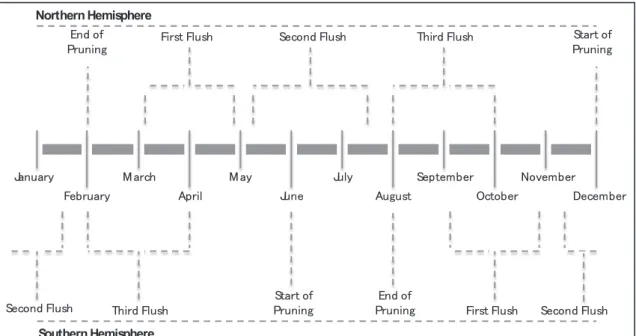
As seen in figure 2.2 generally leaf harvesting in tea cultivation are conducted three times, regardless of the nature of the final products. First flush would take place in the spring season, second flush in summer season, and third flush during the fall season. Depending on its climatic condition some places only have two harvests in a year as low temperature in the fall season prompts the tea plants to enter a dormant period.
Changes in climatic conditions, especially mean air temperature, will have a direct effect on the growth cycle of tea plant, especially on the bud break and flush harvest periods. Moreover high quality leaf can only be obtained from leaves which grow under stable climatic conditions, as the formation of leaf’s fiber and growth are influenced heavily by the climatic conditions. The textures of tea leaf fibers plays a very important role on deciding the types of tea produced from the harvested leaves, whereas leaves with smooth and soft fibers are required to produce high quality tea.
Ⅲ.IDENTIFICATION OF PROBLEMS AND POTENTIALS
The current rapid transformation of climatic behavior have been affecting tea cultivation in general and, in particular there has been several cases of decline in harvest yield as well as market value for the tea produced in well-known tea growing regions. This decline can be related with changing climatic conditions which is happening in the respective regions. Jones (2005) as well as Holland and Smit (2010) have noted that the effect of climate change is likely to be region specific, with each region receiving different effects which will result in the need for different types and levels of adaptation.
The perceived effect of climate change in a certain region can be beneficial for some, although in most cases it
Northern Hemisphere January February M arch April M ay June July August September October November December
First Flush Second Flush Third Flush Start of
Pruning End of
Pruning
First Flush Second Flush Third Flush Start of Pruning End of Pruning Second Flush Southern Hemisphere
Figure 2.2 Typical Tea Cultivation Process Diagram Source: Author, 2013
contributes negatively to the cultivation process. In the case of winegrape cultivation, Jones and Goodrich (2008) stated that natural fluctuations in the climate also had an important impact on the wine industry, where fluctuations in mean air temperature affected the harvest. In conclusion Holland and Smit (2010) summarized that the geography of present day winegrape growing regions will change due to the effect of climate change. As both winegrape and tea cultivation have many similarities in terms of climatic cultivation sensitivity, this finding would very likely be true for tea cultivation as well.
The tea cultivation process plays an important role as it directly shapes the tea industry market value, while also having a direct impact on social conditions of the tea growers especially in regions where large work forces are employed for cultivation. As mentioned, high sensitivity of the plant towards climate change could also be translated as a warning that the industry would be one of the first agricultural industries to experience the adverse effect of climate change.
With changing climatic conditions, location of the cultivation area would be likely to change in parallel with a shift in climatic conditions. This will undoubtedly bring detrimental effects to the social and economic condition of that region, as their main economic pillars are bound to disappear. In summary it would endanger the continuation of farming communities, which have been cultivating tea for generations in a particular geographic location. By application of a winegrape cultivation derived approach, a climate change adaptation framework and new cultivation methods could be constructed for tea cultivation. This in turn would also provide the data and foundation for other agricultural industries to cope with climate change effects.
Ⅲ.1 Changing Climatic Conditions
Climate changes which affect tea cultivation can be broadly categorized in general into two types: 1. Average temperature increase (warming of the climate)
2. Increasing occurrences of extreme weather events Average Temperature Increase
Climatic condition data from long term observations show that, in general average temperature in increasing in many parts of the world. Increase of average temperature might be beneficial for agricultural production as colder climate region become warmer; cultivation of crops that before was impossible becomes feasible. On the contrary currently well-known growing regions might not be suitable for cultivation in the future as the average temperature becomes too warm. This condition might trigger a shift in suitable location for some varieties of cultivation in order to obtain high quality harvest (Jones, 2007).
In the case of winegrapes cool climate regions could lead to possible ripening of warmer climate varieties, while regions with warmer growing season might become too warm for the cultivar currently grown there, furthermore hot regions might become too hot to produce high quality winegrapes of any type (Holland & Smit, 2010).
The influence of higher temperature on tea cultivation might not be as devastating as winegrapes cultivation but nevertheless, higher temperature regimes reduces tea yield (Wijeratne, 1996). Based on climatic data obtained from Japan Meteorogical Agency (2011) for 120 years period from 1891 to 2011, figure 3.1 clearly showed that the average temperature trend is increasing by 1.15oC over a 100 Year period.
Japan Meteorogical Agency (2005) has also released its projection of possible changes in Japanese climate by the end of the twenty first century.
greater at higher latitudes.
2. Increased frequency of abnormal higher temperatures. Hot days, air temperature is higher than 30oC, may
extend over almost 4 months in summer
3. Annual precipitation will increase, except for the southern Kyushu Area, while seasonal winter and spring precipitation will decrease in most regions. The number of no-rain days will increase across most of Japan, 4. Snowfall will decrease across the whole of Japan, except for the coast of the Sea of Okhost.
5. The magnitude of Typhoons will increase. Increasing Occurrences of Extreme Weather Events
In parallel with the increase of average temperature, occurrences of extreme weather events have been increasing, such as days with abnormal temperature, changing rainfall patterns or disastrous events such as hurricane and cyclones. In the case of tea cultivation, the climate events with the greatest impact are related to the mean air temperature and precipitation at macro and micro climatic scales. Mean air temperature condition is very significant, as it becomes the determinant factors for the plants to be in active growth or to enter period of inactivity.
In the tea cultivation process cycle, bud break of new leaf is one of the most important stages in cultivation, which is determined by mean air temperature condition. The seasonal changes from winter to spring and its gradual increase of mean air temperature become the natural signaling mechanism for the plants to end their dormant period and enter bud break period. In comparison with the winegrape cultivation, where Duchene and Schneider (2005) reported that under increasingly warmer conditions, bud break has been occurring earlier than before, while Jones (2005) noted increasing frost damage in the spring. However, in the case of Japanese Uji Tea cultivation, bud break has been occurring later, increasing frost damage in the spring is also clearly evident (Kyoto Prefecture Tea Industry Research, 2012).
From these research works we can conclude that in parallel with the increase in the mean air temperature, there
Figure 3.1 Japan Average Annual Temperature Deviations Source: Japan Meteorogical Agency, 2012
is also an increase in the occurrences of abnormal climate events, especially at the micro climatic scale. A frost event that happens during the spring is very detrimental to plants, as there is a sudden drop of ground temperature to below freezing point, which freezes water vapor from humid air that is especially abundant during the warm spring season.
In comparison with the increase of frost event occurrence, sudden fluctuations in the mean air temperature have been increasing more in the past years. Extreme fluctuations of mean air temperature especially those which are happening during the spring season, damages the newly sprouted bud leaf. The damage sustained from a sudden drop in mean air temperature to some extent would be disastrous, as in the case of frost event, tea leaf buds which were frosted tend to wither, resulting in the loss of harvest yield. As much as it has affected harvest quantity, extreme fluctuations of the mean air temperature are reported to affect leaf growth in tea cultivation, leading to a declining harvest quality.
As mentioned before, there is a growing awareness among tea growers that extreme fluctuation of mean air temperature might arguably alter the fiber composition of the tea leaf, which would ultimately influence the taste of the tea products. Although most of the reported frost events and extreme temperature oscillation happened in a micro climatic scale, there is a high possibility that it would happen in a meso-climatic4) scale. Based on micro
climatic data gathered by Kyoto Prefecture Tea Industry Research (2012), temperature data have shown that in the last 10 years mean air temperature fluctuation in micro climatic scale has become more apparent, especially during the period of seasonal changes. From the recorded mean air temperature data, it is shown that the fluctuations in gradual change of mean air temperature between seasons have become steeper.
As seen in figure 3.3 and 3.4, the temperature fluctuation differences between period of 2002-2006 and 2007-2012 are clearly depicted. Figure 3.3 shows that even though there are several fluctuations in the average temperature the lines are still closely aligned, while the lines in figure 3.4 showed more erratic pattern as the result of extreme temperature fluctuations.
Figure 3.2 Recorded Bud Break Timing from 2002-2012 Source: Kyoto Prefecture Tea Industry Research, 2012
Figure 3.3 Recorded Average Temperature (oC) Between January to May
(2002-2006) Source: Kyoto Prefecture Tea Industry Research, 2012
Note: 1: January; 2: February; 3: March; 4: April; 5: May; a: Beginning; b: Mid; c: Late
Figure 3.4 Recorded Average Temperature (oC) Between January to May
(2007-2012) Source: Kyoto Prefecture Tea Industry Research, 2012
Ⅲ.2 Potentials for Adaptation
Currently tea plants are cultivated all over the world, ranging from tropical to temperate regions, which have suitable environmental conditions for cultivation. Not just only consumed as a drink, tea is also often regarded to have abundant beneficial health properties.
Studies have found that tea contains a large amount of catechins, a group of very active flavonoids, which possess high anti-oxidant properties (Dufresne and Farnworth, 2001). Epigallocatechin gallate (EGCG) is the major catechin in tea accounting for more than ten percent on a dry weight basis, while Tea polyphenols (catechins) usually account for 30–42% of the dry weight of the solids in brewed green tea (Khan and Mukhtar, 2007).
A typical green tea beverage, prepared in a proportion of 1 g leaf to100 ml water in a 3-min brew, usually contains 250–350 mg tea solids, comprised of 30–42% catechins and 3–6% caffeine (Mukhtar and Ahmad, 1999). Black tea leaves contain about 2–5% caffeine, while the approximate mean percentages of components of solid extracts in black tea are: catechins (10–12%), theaflavins (3–6%), thearubigins (12–18%), flavonols (6–8%), phenolic acids (10–12%), amino acids (13–15%), methylxanthines (8–11%), carbohydrates (15%), proteins (1%), mineral matter (10%), and volatiles (b 0.1%) (Khan & Mukhtar, 2007).
As possible methods for adaptation, the potential of high polyphenol contents in tea leaf can further be utilized as a value addition to the industry. Tea cultivation can be designed to produce leaves with high phenolic content which open up new possibilities of new types of tea products as well as food supplement industry, whether it is included in tea drinks as a high polyphenol contents tea drinks, or specially cultivated for catechin extraction.
These adaptation approaches would allow the farmers to maintain the sustainability of their current cultivation area in the future by having an option to produce value added products from tea cultivation. With these approaches, accumulated local agriculture knowledge posses by the farmer community will be the key fundamental factors in constructing new cultivation methods. Tea plants have the possibility to produce secondary product out of the primary production system, and these possibilities should be explored more in detail to provide a buffer production system in the event that primary production should fall to a certain level.
Ⅳ.ADAPTATION MODELS
Based on observed records as well as anecdotal information, tea plants possess similar traits with winegrape cultivation, responding sensitively to changing micro climatic conditions. As Wijeratne (1996) has observed, increasing temperature and changing rainfall patterns are very harmful for the growth of tea plants, which ultimately affects the quality and quantity of the final tea products.
Especially for tea growing regions which are located in the temperate regions, extreme weather events such as spring frost and warm autumn have directly affected and contributed to the declining quantity and quality of tea harvest. As seen in well-known tea growing regions, local tea farmers have been practicing tea cultivation for several generations. Observations showed that there has been a knowledge transfer between generations, which are based on the understanding of the local terroir condition and the seasonal traditional agricultural practice. These understandings are very crucial to identify the changes that occurred in the region, especially the links between climatic conditions with tea production properties.
In order to develop climate change adaptation methods, it is necessary to understand the existing cultivation system, its interaction among other factors and its purposes. This is represented in the model shown in figure 4.1 here, precision agriculture system is introduced as a means to increase the efficiency of the existing system, to be
able to swiftly respond to changing climatic behavior. While countering the adverse effects of climate changes is one of the main objectives, another essential objective is to add new value to agricultural products, which ultimately will ensure the sustainability of the industry in a particular area or locality.
As a summary this adaptation model focused on three main objectives which are:
1. Developing modalities of intervention for adaptation and optimizing cultivation methods, which are capable of swiftly adapting to on-going changes in the climatic condition.
2. Developing intervention methods in the current cultivation system to maintain and provide new value to the agricultural products of that system.
3. Identifying critical elements for ensuring the sustainability of a climate change affected cultivation region from environmental and economic perspectives.
The above three objectives are formulated based on literature studies, pilot surveys and observations which are conducted in both Uji Area in Japan and Nuwara Eliya Region in Sri Lanka, both locations being well known tea production regions in the world. The preliminary researches especially in Uji Area showed a strong relation between terroir factors and seasonal agricultural practices in traditional agricultural knowledge. Preliminary observations have also shown that tea plantations in Nuwara Eliya were established mostly based on the consideration of terroir factors conditions.
By analyzing the preliminary findings it is clear that tea farmers in both locations have not yet fully utilized Precision Agriculture System for the cultivation process. Both farmers in Uji and Nuwara Eliya were mostly relying
Environmental Sustainability Economic Sustainability Climate Change Conventional Agriculture System Local Agriculture Knowledge Seasonal Agricultural Practices
Terroir
Traditional Agriculture Knowledge Countering Climate Change Effects N ew Agricultural Practices Information Gathering Tool N ew Agriculture Knowledge Adding N ew Value to Agriculture Products Policy Recommendation Precision Agriculture SystemDirect Effects
Indirect Effects
on their past experiences as well as traditional agriculture knowledge in adapting to climatic changes during the tea cultivation process.
Ⅳ.1 Terroir
Derived from viticulture, the concept of terroir has been regarded as one of the most important factors in grape growing and wine making. Van Leeuwen and Seguin (2006) explained that terroir concept describes the relationship between the characteristics of an agricultural product and its geographical origin, which influence these characteristics. In regards to the original concept and the scope of this research, the terroir concept is linked to the unique bio-physical properties of a particular area (Berard and Marchenay, 2006) which contribute to agricultural products, where as research inquiries are limited to cultivation stages only. Cultivation practices which consider the historical, cultural and social factor which shaped them will be closely examined in the seasonal agricultural practices section.
In general terms, the terroir concept consists of four main factors, which are: 1) Climate; 2) Soil; 3) Topography and 4) Cultivars. Climatic factors consist of macro climatic5), mesoclimate and microclimate condition, while soil factors
consist of soil types and soil geology. Topographical condition of the terrain is considered an important factor affecting climate, thereby contributing to the characteristics of the agricultural products. The topographical factors are contour of the terrain and location of water bodies or waterways. The last factor in terroir concept is the cultivars (varieties). This is discussed by looking at cultivated varieties in a certain area, their origins and their relation with the environmental condition of a certain area.
In the case of Uji Area, preliminary research showed that Uji Tea farmers place high importance on soil factors, whereas the survey result revealed how the tea farmers were mostly focusing on the soil condition of their tea plantations through their soil management methods during the tea cultivation process. In comparison tea farmers in Nuwara Eliya are focusing more on the topography factors such as terrain contour and aspect, especially because the tea grown in Nuwara Eliya are categorized as high grown tea. Several important points taken from this preliminary surveys and observations are tea farmers in both areas put high importance on terroir factors of soil, topography and climatic conditions.
Ⅳ.2 Seasonal Agricultural Practices
Since the beginning of civilization people has been practicing agriculture, and through the flow of time the practices have been developed to adapt with the environmental changes. As it was in the past, agriculture sector is still one of the most important sectors in human life, where a long line of generations of farmers have contributed to the development of this industry.
Throughout its continuing history, the agriculture industry has accumulated abundant knowledge on agriculture techniques and cultivation methods. As terroir indicates how the natural environmental influences agricultural knowledge, seasonal agricultural practices detail the cultivation process over a restricted period of time, which is also influenced by social and economic factors of the region. Seasonal agricultural practices in this definition are generally composed of: 1) Cultivation Method; 2) Soil Management Practices and 3) Socio-Economic Condition of an area or localities.
Berkes et. al. (2000) showed that there is a component of local observational knowledge of species and other environmental phenomena, a component of practice in the way people carry out their resource use activities, and
further, a component of belief regarding how people fit into or relate to ecosystems. In short, traditional knowledge is a knowledge-practice-belief complex (Berkes 1999). The traditional agriculture knowledge that accumulates and develops on the basis of terroir and social condition of certain area and localities can be further described as Local Agriculture Knowledge.
This knowledge is generally passed down through generations of farmers and often it includes information on past environmental conditions as it describes the methods to adapt to changing conditions (Shibusawa, 1998). Through understanding of local agriculture knowledge, the current generation of farmers would be able to come up with adaptation techniques in regards with the climatic conditions as their predecessor did. The main difficulties faced by current generation of farmers are that the climatic behavior has been transforming too rapidly for them to be able to adapt quickly to the ongoing changes.
In terms of cultivation history, tea cultivation in Uji Area started in 1191AD whereas the tea cultivation in Nuwara Eliya started almost 700 years after Uji. Nonetheless both locations have been cultivating tea for more than 100 years, therefore undoubtedly there is flow of knowledge of past generation experiences among the tea farmers. For most of the time tea farmers have been making decisions on the selection of the land, cultivars and cultivation practices based on this inherited knowledge. Through this knowledge, tea farmers were able to optimally utilize the terroir characteristics of the area for their benefit thus resulting the current production of high value teas.
Ⅳ.3 Precision Agriculture System
Precision Agriculture is conceptualized by a system approach to re-organize the total system of agriculture towards a low-input, high-efficiency, sustainable agriculture (Shibusawa, 1998). In order to swiftly adapt with the rapid changes in the climatic conditions, combination of knowledge on existing terroir condition with accumulated traditional agriculture knowledge alone would not be sufficient enough to cope with the sudden changes. Nevertheless the accumulated information and knowledge on terroir as well cultivation methods of an area are the main foundation in creating system to adapt with the climatic conditions. The current cultivation methods need to have more responsiveness towards the slightest changes in the environment, thus there is the need to maintain or even improve harvest quality and quantity.
Adopting precision agriculture system into the cultivation methods would empower knowledge possessing farmers to be more proactive towards changing climatic conditions while providing detailed information, which is necessary for quick decision making. Precision agriculture system provides support to cultivation process through two approaches: 1. It collects and gathers information on terroir conditions as its primary input, which then transmitted real-time to the corresponding farmers; 2. It provides output in the form of new agricultural practices and methodological options, which are utilized to achieve desired harvest quality and quantity on the basis of existing terroir conditions judge now by the precise nature of the input.
Tea growing regions such as Uji and Nuwara Eliya would be able to receive many benefits from the two approaches of the system. Bio-climatic monitoring stations would gather data on climate, soil and plant conditions, which will enable the farmers to analyze the on-going climatic condition as well as to forecast it. These features would help tea farmers to make quick decisions, such as activation of frost fans and water sprinklers in the event of frost in the case of Uji. The system would provide essential information needed by tea farmers in making vital decisions in the cultivation process such as harvesting and pruning.
The other approach involved careful analyzing and comprehension of the gathered data on bio-climatic conditions by the farmers. Thus by utilizing the information new methods and approaches for tea cultivation can be constructed.
These methods will ensure the tea farmers to optimally adapt with the on-going changes, while maintaining or adding new value to the tea products as mentioned previously on the adaptation potentials section. Through introduction of new cultivation methods as well as cultivation process adjustments, tea farmers would be able to have tea products, which are tailored to their expected outcome.
Ⅴ.SUMMARY AND DISCUSSION
As a summary, this research is focused on constructing a climate change adaptation model for the tea industry especially well known growing regions, which are affected by the rapidly changing climatic behaviors. The immediate objectives are: 1) To identify and develop modalities of cultivation intervention to adapt to the on going changes; 2) Developing intervention methods for tea cultivation which will optimize and add new value to product outcome; 3) Identifying critical elements which are vital to ensure the sustainability of the tea growing region.
In order to achieve the above mentioned objectives, comprehension of natural, social and technological factors in the tea cultivation is necessary, therefore by using the approach derived from the winegrape cultivation, the three highlighted factors are: 1) Terroir; 2) Seasonal Agricultural Practices; 3) Precision Agriculture System. Utilization of precision technology to monitor and maintain terroir condition on the basis of seasonal agricultural practices would be the key component to develop suitable cultivation methods that contribute to counter climate change in that particular area.
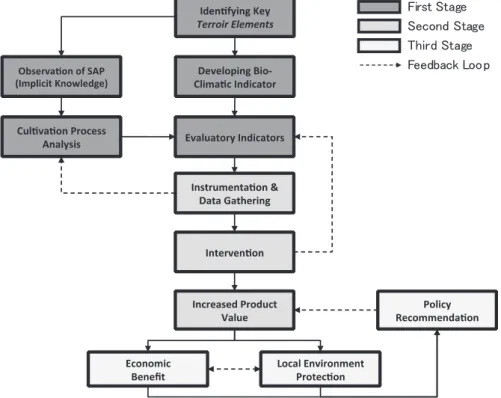
As shown in the flow chart the research will be conducted in three stages, whereas the objective of the first stage is identify important bio-climatic indicators in the tea cultivation process. The second stage is focused on utilizing the identified important bio-climatic indicators to develop intervention methods for the tea cultivation, which will enable the farmers to swiftly adapt with the on-going climatic changes and maintaining the harvested tea yield and quality, furthermore to add new value to the existing products. In the last stage, the effectiveness of the developed
First Stage Second Stage Third Stage Feedback Loop
intervention methods will be thoroughly assessed especially from economic perspective and environmental viewpoint, thus the outcome of this analysis will be formulated into a policy recommendation.
In conclusion, the objective of this research is to develop cultivation methods that can swiftly adapt with the on going climate changes. New cultivation methods would not only provide framework for climate change counter measure but also simultaneously provide advance methods to maintain and enhance the value of agriculture products. Adoption of this adaptation model will ensure the environmental and economic sustainability of the agriculture region, thus the integration of precision agriculture system into the cultivation process will be the foundation of a new local agriculture knowledge.
Based on the achieved objectives and identifiable critical elements of sustainability, evaluation and assessment of the framework will be made to understand its direct benefit to the tea industry, especially its relation with environmental and economic sustainability of the research location. The adaptation model is projected to positively affect the cultivation system, establishing new local agriculture knowledge values, which will ensure the sustainability of the tea growing region. Policy recommendation will be developed through policy assessment of existing regulation with projected environmental and economic impacts from the adaptation of this model.
Currently the research is still progressing in the first stage, which is focused on identifying key terroir factors through social surveys and observations of tea cultivation practices. Through analyses and cross-referencing of the gathered data, several bio-climatic indicators have been identified, which then leads to the next stage of research by conducting instrumentation and data gathering on the bio-climatic indicators especially the identified key indicators.
As explained previously in the research workflow, objective of the second stage is to construct intervention methods using the identified key bio-climatic indicators. Therefore this is the main focus of this research, before progressing into the third stage of economic and environmental assessment for formulating policy recommendation.
Notes
1 )Micro-climate refers to specific environment in a small area of cultivation space.
2 )Cultivar refers to a grouping of plants which is coined from the words “cultivated” and variety”
3 )Vinification can be defined as production of wine, started from grape selection and ended with bottled wine. 4 )Meso-climate refers to the climate of a particular cultivation site.
5 )Macro-climate refers to the regional climate of a broad area or region.
References
Berard, L., & Marchenay, P. (2006). Local products and geographical indications: taking account of local knowledge and biodiversity. International Social Science Journal, 187, 109-116.
Berkes, F. (1999). Sacred Ecology - Traditional Ecological Knowledge and Resource Management. London: Taylor and Francis. Berkes, F., Colding, J., & Folke, C. (2000). Rediscovery of Traditional Ecological Knowledge as Adaptive Management. Ecological
Applications, 10(5), 1251-1262.
de Orduna, R. M. (2010). Climate Change Associated Effects on Grape and Wine Quality and Production. Food Research International, 43, 1844-1855.
Duchene, E., & Schneider, C. (2005). Grapevine and limatic changes: a glance at the situation in Alsace. Agronomy for Sustainable Development(25), 93-99.
Dufresne, C. J., & Farnworth, E. R. (2001). A review of latest research findings on the health promotion properties of tea. Journal of Nutritional Biochemistry, 12, 404-421.
Duke, J. A. (1983). Camellia sinensis (L.) Kuntze.
Food and Agricultural Organization. (2013). FAOSTAT. Retrieved November 4, 2013, from FAOSTAT: http://faostat.fao.org/ Holland, T., & Smit, B. (2010). Climate Change and the Wine Industry: Current Research Themes and New Directions. Journal of
Wine Research, 21(2-3), 125-136.
Intergovernmental Panel on Climate Change. (2007). Climate Change 2007: The Physical Science Basis. Contributions of Working Group I to the Fourth Assessment Report of the Intergovernmental Panel on Climate Change. Cambridge and New York: Cambridge University Press.
Japan Meteorogical Agency. (2005). Global Warming Projection. Tsukuba: Japan Meteorogical Agency.
Japan Meteorogical Agency. (2012). 気候変動監視レポート 2012. Japan Meteorogical Agency. Japan Meteorogical Agency. Retrieved October 20, 2013, from http://www.data.kishou.go.jp/climate/cpdinfo/monitor/2012/pdf/ccmr2012_all.pdf
Jones, G. V. (2005). Climate change in the western United States grape growing regions. Acta Holticulturae, 689, 41-60.
Jones, G. V. (2007). Climate change: Observations, projections and general implications for viticulture and wine production. Climate and Viticulture Congress. Zaragoza, Spain.
Jones, G. V., & Webb, L. B. (2010). Climate Change, Viticulture, and Wine: Challenges and Opportunities. Journal of Wine Research, 21(2-3), 103-106.
Khan, N., & Mukhtar, H. (2007). Tea Polyphenols for Health Promotion. Life Sciences(81), 519-533.
Kyoto Prefecture Tea Industry Research. (2012). First Flush Harvest Report. Kyoto: Kyoto Prefecture Tea Industry Research. Liu, J. Y. (2011). Between Classical and Popular: The Book of Tea and the Popularization of Tea-Drinking Culture in the Tang China.
The Journal of Popular Culture, 44(1), 114-133.
MacFarlane, A., & MacFarlane, I. (2009). The Empire of Tea. Overlook Press.
Mukhtar, H., & Ahmad, N. (1999). Tea polyphenols: prevention of cancer and optimizing health. American Journal of Clinical Nutrition, 71, 1698-1702.
Shibusawa, S. (1998). Precision Farming and Terra-mechanics. Fifth ISTVS Asia-Pacific Regional Conference. Seoul. The Columbia Electronic Encyclopedia. (2011). The Columbia Encyclopedia. (6th).
United Nations Framework Convention on Climate Change. (1994). Full Text of The Convention. Retrieved April 25, 2012, from http://unfccc.int/essential_background/convention/background/items/1349.php
van Leeuwen, C., & Seguin, G. (2006). The Concept of Terroir in Viticulture. Journal of Wine Research, 17(1), 1–10.
Wijeratne, M. A. (1996). Vulnerability of Sri Lanka Tea Production to Global Climate Change. Water, Air, and Soil Pollution, 92, 87-94.