Disaster : Preliminary Trial and Sketch of
Connection Circle for Systems Awareness School
著者
ARIMOTO Masahiro, XU Cheng Cheng
journal or
publication title
Annual Bulletin, Graduate School of Education,
Tohoku University
volume
2
page range
7-30
year
2016-03-20
Abstract
In the aftermath of the Tohoku disaster in Japan, a heavy emphasis has been placed on schools as scenarios for, “Schools as Focused Learning Organizations” and “Schools as Core Social Centers.” Behind the scenes, however, practices of rote learning and repeated drills overburden, tense youngsters do not arise from an adequate theoretical basis for education in 21st century classrooms. Classroom teachers are required to teach much more than discipline content, they are required to “go beyond memories” by developing students’ competencies (including meta-cognition using active learning through formative assessment) and frame their teaching and learning programs in the context of a carefully moderated approach to cross-curriculum priorities, such as common issues and environmental, economic, and social risks that we face locally and globally. Stabilizing the old system, creating new systems, and bridges built between the old and the new to facilitate effective transitions. Therefore, the authors stress the importance of systems thinking for Konai-kensyu (in-school teacher training) in Jyugyo-kenkyu (lesson study) and school-based ESD (Education for Sustainable Development) curricula and assessment by reconstructing 20 doors to Japanese education using the ERIC (Education Resource and Information center) thesaurus, which is required for writing articles in English and rethinking education by systems thinking based on Japanese culture. Although the key is curriculum and assessment at various levels, the idea of three layers and loop are visualized in order to unpack the educational processes at classroom, school, and societal levels loop simultaneously to make multiple school improvements more tangible. It shall be a prerequisite to describe complex processes in schools in terms of systems awareness using the term “organization” to reflect a society that values the special qualities of homogeneity and harmony based on well-being (kofuku de kenkou na jyotai). Students develop social-emotional competencies according to the concept of the whole child. ThisScenarios of Education after the Tohoku Disaster:
Preliminary Trial and Sketch of Connection Circle for Systems Awareness School
Masahiro ARIMOTO
(Professor, Graduate School of Education, Tohoku University)Cheng Cheng XU
(Special Research Student, Graduate School of Education, Tohoku University; Doctoral Student, Institute of International and Comparative Education, Northeast Normal University, China)article delineates a preliminary model, a connection circle, for driving systems-awareness in schools.
Key words: Knowledge-creating school, learning organizations, systems thinking (process, loop, layer), Konai-kensyu, Assessment
1 Introduction
The commentary entitled “World watches amazed at survivors’ civility and patience amid
the ruins” in the article, “Awed by a nation’s quiet dignity,” in The Straight Times1 pays tribute
to the Japanese nation, saying that “Like this tsunami-hit house adrift in the Pacific, the survivors of the disaster in Japan are showing remarkable resilience in the face of adversity, displaying a stoic kind of heroism instead of the hysteria one might expect.”
At the 16th OECD/Japan Seminar held at Sendai International Center in February 2014, the
focus was on “Key Competencies and Skills for the 21st Century.” Sponsored by Fukushima University and Miyagi Education University and MEXT (Ministry of Education, Culture, Sports, Science and Technology. Japan). Andrea Schreicher showed the vision of a project named Tohoku School 2.0., at the 14th Seminar, in response to the 2011 disaster2. The author mentioned the history of the curriculum library, which was established by GHQ/ SCAP (General Headquarters) in 1947 at Tohoku University and Akita University. The 18th OECD/Japan Seminar—“Education 2030: 21st Century Competencies”—on October 23, 2015, was exciting. Originally, the competencies can be traced to OECD (1997), which indicated the limits of Asian-type achievements in the 21st century. It is relevant to lifelong learning, which does not limit PISA (Program for International Student Assessment) to assessing students’ curricular and cross-curricular competencies but also asks them to report on their personal motivations for learning, beliefs about themselves, and learning strategies. In 2006, the OECD developed a set of six scenarios for schooling up until 2020. They have been clustered into three main categories: Scenarios 1a and 1b, “Attempting to Maintain the Status Quo;” 2a and 2b, “Re-schooling;” and 3a and 3b, “De-schooling.” This categorization is slightly different from that in our 2001 publication, “What Schools for the Future?” The scenarios provide an overview of schooling in “pure form,” not according to individual schools or local developments. In reality, one would expect complex mixes to emerge between the different possible future models. By sharpening the alternatives, their value, as a heuristic tool, is to help us think about what we want and do not want, and how probable the more or less desired choices are in terms of ongoing trends and policies.
revitalized based on strong knowledge, rather than a social agenda; schools are cultures of high quality, experimentation, diversity, and innovation. New forms of evaluation and competency assessment flourish. Information and communications technologies (ICT) are used extensively alongside other learning media, traditional and new. Knowledge management rushes to the fore, and the large majority of schools justify their label as learning organizations (hence, equality of opportunity is the norm) with extensive links to tertiary education and diverse other organizations.
Systems awareness encourages the following characteristics of the learning organization: - Learning and organization: Demanding expectations for all for teaching and learning
combines with widespread development of specialties and diversity of organizational forms. Flourishing research on pedagogy and the science of learning is systematically applied.
- Management and governance: Learning organizations (schools) are characterized by flat
hierarchal structures using teams, networks, and diverse sources of expertise. Quality norms typically replace regulatory and punitive accountability approaches. Discretion is rooted strongly within schools and the profession, with the close involvement of parents, organizations, and tertiary education, and with well-developed guiding frameworks and support systems.
- Resources and infrastructure: Substantial investments are made in all aspects of schooling— especially in disadvantaged communities—to develop flexible, state-of-the-art facilities. Extensive use is made of ICT. Partnerships with organizations and tertiary education enhance the diversity of educational plants and facilities. - Teachers: Highly motivated teachers enjoy favorable conditions and a strong emphasis on R&D, continuous professional development, group activities, and networking (including international). Contractual arrangements may be diverse, with mobility in and out of teaching (OECD 2006). Regarding PISA2015, “Assessment and Teaching of 21st Century Skills” will be the focus at the University of Melbourne, providing students with skills they will need to enter the workforce, including problem solving, digital literacy, and working together in learning communities. When considering the potential value of the systems awareness perspectives on resources, teachers, and so on it worth regarding the redesigning the goals of a 21st century education as conceived by Charles Fadel, the founder of the Center for Curriculum Redesign and co-author of the upcoming book Four-Dimensional Education, mentioned focal topics of WISE 2015: Future of Education, Curriculum Design and Ecosystems, and Employment and Skills Gap.3 Many have addressed how present and future students should learn. However, few have examined what
students should learn for the 21st century. Rapid and drastic changes regarding knowledge
highlight why it is so critical to rethink the what of a 21st century education. Curricula worldwide
have often been tweaked, but they have never been redesigned completely for the comprehensive education of knowledge, skills, character, and meta-learning—the four dimensions of education defined by the Center for Curriculum Redesign. There is a feedback loop between what the future could be and what we want it to be, and we have to deliberately choose to construct the reality we wish to experience (as found in the “systems thinking” philosophy of Peter Senge). We may see global trends and their effects creating the ever-present future on the horizon, but it is up to us to engage actively in co-constructing that future. Scenarios of Education after the Tohoku disaster in Japan have been described as “Schools as Focused Learning Organizations” as well as “Schools as Core Social Centers.” Behind the scenes, rote learning and repeated drills overburden youngsters in Asia; this methodology is not adequate. Not only are teachers required to teach discipline content, they are required to “go beyond memories” to develop students’ competencies (including meta-cognition via active learning) in general capabilities; additionally, they frame their teaching and learning programs in the context of cross-curricular priorities (e.g., common issues and environmental, economic, and social risks that we face locally and globally4).
2 Importance of systems thinking at various levels inside and outside schools
2.1 A trial to describe the Japanese classroom and school
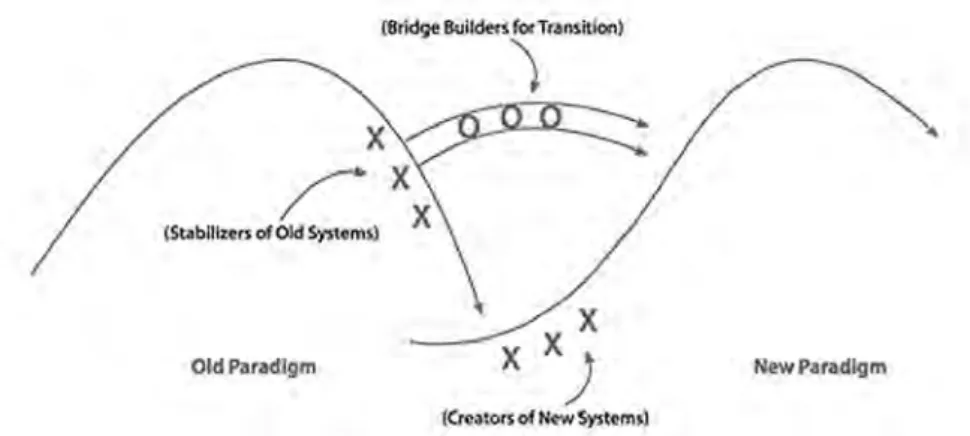
Stabilizing the old system, creating new systems, and building bridges are required components for rebuilding and improving education in Japan. Thus, the authors stress the importance of systems thinking (process, loop, layer) for Konai-kensyu (in-school teacher training) for Jyugyo-kenkyu (lesson study) and school-based ESD curricula and assessment. To cope with such a high expectation to describe and express complex education in Japanese transcendentalized society, Arimoto created “20 doors to open the capabilities for living” (Table 1). For example, to approach the matter of NEETS (Not in Education, Employment, or Training) in modern society, we should simultaneously consider the components of government and politics and the educational process: societal perspectives, labor and employment, individual development and characteristics, individuals in the social context, and instruction (Pilz et al. 2015).
Three layers of the educational process are the keys: classroom perspectives, school perspectives, and societal perspectives. Besides layers, process and loop are the keys to school improvement. We should promote knowledge-creating schools.
To tackle these issues, the authors assert the importance of systems thinking for Konai-kensyu including network of division of labor (Komu bunsho) in lesson studies5 and school-based
ESD curricula6 and assessment by reconstructing 20 doors to Japanese education using the ERIC thesaurus, which is required for writing articles in English and rethinking education based on Japanese culture. This approach follows Edward Deming’s view of wisdom. Schools manage complexity by increasing complexity (Bernard 2013). Today’s problems come from yesterday’s solutions (eg. Japanese Ijime). As a kind of active learning, Diamond 9 ranking activity was implemented, choosing nine of 20 cards. Traditional beliefs are of particular significance since they represent basic assumptions, modes of thinking, values, rituals, heroes, and symbols (Hofstede 2001, Senge 1990). The methodology inherent in conducting lesson study leads to the need for effective documentation of classroom observations. Lesson study is inherently a collaborative undertaking that Senge has identified as “involving everyone in the system in expressing their aspirations, building their awareness, and developing their capabilities together” (Senge et al. 2000, p. 5, in Arani et al. 2010).
2.2 Literature review (The rest is omitted.)
2.3 Students work: Systems thinking and connection circles Ideas were imported from Japan to the USA by Deming, an American, who worked in Japan beginning in 1950. Peter Drucker first visited Japan in the late 1950s and, like Deming, always maintained a deep love and respect for the country and its people. Morgan (1986) discusses many aspects of Japanese management as having a cybernetic quality that promotes learning through innovation and the questioning of operating norms. It is no accident, for example, that the “quality movement” first took off in Japan. Quality circles, where people come together to share issues and problems and find ways of making improvements to the overall system in which they are working, offer a perfect illustration of double-loop learning in practice. The principles are also evident in the ritual of ringi, a collective decision-making process through which companies test the robust policy document circulated among a group of managers or other personnel for approval. If a person disagrees with what is being proposed, he or she is free to amend the document, and it is circulated again. The process in effect explores the values, premises, and details relating to a project from multiple points of view until an agreed-on position that satisfies all critical concerns and parameters emerges. The process can be extremely time-consuming since a large number of people may be involved. When the decision is made, however, one can be fairly certain that key assumptions will have been challenged and that most errors will have been detected and corrected.
This is what double-loop learning is all about. The ringi serves the dual functions of allowing people to challenge core operating principles and, in both the process and the outcome, affirm and reaffirm the values that are to guide actions. Paradoxically, it is a process that mobilizes disagreement to create consensus. It is also a process that allows innovation to be driven from all directions and for “intelligence” to evolve to increasingly higher levels (Morgan 1986).
As Ikujiro Nonaka and Hiro Takeuchi have shown in their study of innovation in successful Japanese companies, genuine learning and the ability to develop breakthrough products and services have to go beyond that of insight and knowledge. Like the human brain, successful learning organizations need to be skilled in the art of representation. They need to create appropriate maps of the reality with which they have to deal. However, the process has to be active rather than passive. It has to embrace views of potential futures as well as of the present and the past (Morgan 1986).
'Learning to learn' is the final principle of holographic design brings us back to our earlier discussion of organizational learning. As has been emphasized, there is a strong tendency in most organizations to get trapped in single-loop systems that reinforce the status quo. Continuous self-organization requires a capacity for double-loop learning that allows the operating norms and rules of a system to change along with transformations in the broader environment.
The holographic design principles presented above create a potential for this process to occur, but they must be supported by appropriate managerial philosophies that promote occurrence by helping to create a context that encourages the process of “learning to learn.”
Our design principles have a circular quality. They are interconnected and blend with each other. Although presented as design principles, they do not offer a blueprint or recipe. Rather, they define a mind-set and approach through which we can mobilize key insights about the holographic qualities of the brain in organizational contexts.
Studies of organizational learning tend to build around the work of Bateson (1972). The
concept has been brought to prominence through the work of Argyris and Schön (1974, 1978), Argyris (1982, 1990, 1993, 1994), and Schön (1983). They develop the distinction between single- and double-loop learning and give considerable attention to “defensive routines” and other barriers to learning created in many conventional approaches to organization. Michael (1973), Williams (1982), and de Geus (1988) have presented comprehensive analyses of the need for learning in the planning process and indicated ways in which this might be achieved. Vickers (1965, 1972) has also given considerable attention to the kind of inquiry that provides the basis for effective learning.
Hedberg (1981), Hedberg et al. (1976), Nystrom and Starbuck (1981, 1984), Revans (1982),
de Geus (1988), Senge (1990), Pedler, Burgoyne, and Boydell (1911); Pedler and Aspinwall (1996); and Belden, Hyatt, and Ackley (1993) have also made important theoretical and practical contributions to the development of learning organizations. Senge’s approach has strong links with ideas about complex systems and mutual causality discussed in Chapter 8.
For an introduction to Revans’ approach to action learning, see Revans (1979, 1982, 1983) and Pedler (1983). For an introduction to the Tavistock approach to action learning, see Trist and Murray (1993) and Morgan and Ramirez (1984). For discussions regarding the concept of “intelligent enterprise,” see Quinn (1992), Pinchot and Pinchot (1993), and Morgan (1989, p. 115). Systems thinking can be thought of as spanning two main applications or aims. The first is efficiency. This aim was and is the main interest of the continuous improvement camp. Further, it spawned the “lean” movement. It is applied primarily in the field of production—originally manufacturing and its offshoots—and builds on the Toyota Production System, particularly the work of Taiichi Ohno. The ideas were imported from Japan to the USA by Deming, an American, who worked in Japan beginning in 1950, as mentioned previously. Another key figure at this time was Walter A. Shewhart, a statistician with whom Deming collaborated with beginning in 1938. He espoused and built on his ideas. A prime concern of the continuous improvement body is driving out unplanned and unwanted costly variations in repetitive operational systems. When
Figure 1. Connection circles made by students (Xu Chengcheng, Nishizuka Kohei, Watanabe Yuichiro)
using this method, the boundaries of the system for analysis purposes need to be tightly circumscribed (i.e., a “closed” system) in a transactional environment. The second area of interest is effectiveness. Here, systems thinking is applied mainly in the field of human (soft) systems. It is often seen as a more strategic application for which innovation may be required. A prime concern is how best to respond to natural human variation, which is inherently expensive but is what individual members of the public expect, because (unlike cars on a production line awaiting parts) their needs and wants are unique and unpredictable. In this field, a definition of the system’s boundaries can be more “open,” taking into account the influence of the socioeconomic environment. However, boundary defining is needed before the process can be properly analyzed.7 The three circular layers presented in the above figure represent the class perspective (first layer), school perspective (second layer), and social perspective (third layer). Different relevant factors can be seen from different perspectives. Further, different interactions are formed by each element. The arrows are used to indicate a causal relationship between the factors and the relevance of their interactions.
First layer: Classroom perspectives
Assessment should be the first element to notice. The purposes of assessment include “pointing out what extent should be achieved” and “promoting continuous learning.” Therefore, all the elements in the first, second, and third layers of figure 1 will eventually return to the center: “assessment”, if assessment is considered in terms of concrete results. In the narrow sense, “comprehensive assessment” refers to different ways of assessment according to all aspects of teaching and learning. Broadly, from the perspective of the “theory of Zenjin (whole person) education,” assessment is not only related to academic disciplines but also to an individual’s performance, including a child’s attitude and behavior on a daily basis. Therefore, if we can complete this comprehensive assessment, the purpose and design of the teaching plan should be aimed at promoting the comprehensive development of all children. Thus, the teacher must have a correct and fair understanding of each child, which requires lengthy contact with children and careful observation and social interaction (not intervention). Assigning homeroom teachers (especially in primary school) in Japan supports teachers’ understanding of children, who will realize that not only their academic achievements but also every aspect of their development will be their teacher’s concern. This awareness gives them reassurance, thus making classes and classrooms more stable. At the same time, teachers will notice problems from even slight changes in children. Teachers are highly sensitive to problems such as “bullying behavior” and disabilities, which are frequently mentioned in Japan. Such trust between a teacher
and children means the establishment of a class as a collective group. Schools often spend a lot of time emphasizing good teaching and learning. As previously mentioned, teaching should take place in a stable and harmonious class group. Therefore, it is very important for teachers to understand their children; the relationship between children is even more important. “Comprehensive and diverse assessment” allows children to have more individualistic development and makes them realize that everyone has his/her strengths and weaknesses. Therefore, they should form complementary relationships characterized by mutual assistance and learning instead of competition. This goal is taken into full account in the design of classroom activities. Japanese teachers have put their efforts into the design of group learning (based on the understanding of children’s development) according to differences among children and a variety of topics, instead of making decisions at random. Of course, in order to do this, teachers need to fully understand each individual child. Considering the interaction between children and classroom design will be more likely to arouse children’s intrinsic motivations for learning and development and allow them to see and set goals clearly. Therefore, through communication with teachers and classmates, self-introspection as well as adjustment of the self and their goals, children can achieve outcome equity, i.e. what they deserve. In the process of teaching, children receive guidelines for setting goals and reflecting, and teachers renew their understanding of children, and they implicitly provide feedback (i.e., assessment), which forms a loop. De-emphasizing academic scores or grades and effectively providing other forms of feedback for learning is a kind of assessment not well known to all teachers. In Japan, typical teaching situations involving active learning and learning by mutual help are carried out implicitly by teachers before they grasp relevant theories. Through constant trials and practices, many Japanese teachers compile books based on their experiences and practices, but their theoretical research on proper assessment for children is somewhat sluggish. Therefore, assessment methods must be redefined or further clarified by obtaining relevant data from numerous classroom practices and discovering common ground.
Second layer: School perspectives
From the school perspective, each child’s development and each teacher’s personality should be shown enough respect. Teachers, to some extent, need to be granted the right to make decisions on educational policies and methods in order to cater to each child’s demands, both in the design and practice of teaching. The granting of decision-making power is based on a policy that respects teachers’ judgment and enspirited leadership. With enspirited leadership, teachers’
decision-making power would give them the internal motivation to make positive efforts. Bi-directionally then, teachers’ personal goals would unite into the school’s common vision, but only when the vision is attractive to them.
When motivated internally, teachers would actively generate and apply different approaches, including learning and discussing with other teachers to achieve personal goals and the school’s vision. Moreover, collegiality is the prerequisite for effective mutual learning among teachers. Enspirited leadership places teachers in an easy work environment, and a just and equal atmosphere helps establish collegiality. This kind of school culture and atmosphere is more likely to admit and include new members, which is important for districts and schools with more part-time and young teachers. Assessment, helps to ensure that teachers break “defensive routines” in mutual learning. Multi-aspect assessment is significant, both for children and teachers. It not only evaluates teachers’ teaching achievements from different aspects, but it is also concerned with different teachers’ development and overall performance at various stages. This kind of formative assessment is conducive to teachers’ sustainable development. In addition, it encourages teachers to remove their defensive masks and reverse competitive relationships, so as to provide spiritual space for their cooperation. Finally, from the school perspective to the classroom perspective, each teacher is entitled to adopt appropriate teaching goals and designs according to practical situations of the class and children, ensuring access to new knowledge about the class and enabling adjustments through communication and discussions with other teachers. Such actions promote each teacher’s personal development and internal motivation. Additionally, mutual learning among teachers not only exerts impact on new teachers, but it also promotes mutual learning among children, which is the foundation for inheriting the culture of the school and the community it serves.
Third layer: Societal process
The education of children takes place only within schools; it also results from collaboration between parents, the community, stakeholders, and society as a whole. The activities carried out in school are built on the basis of trust and support from children’s parents and the community. Without such trust and support, a school will suffer from external constraints; however, collaboration will lead to affection toward school administrators or leadership and ensure teachers’ freedom of judgment and decision making.
Although community activities, public classes, home visits, and many other activities are held to enhance parents’ and the community’s understanding toward the school, it is the status of children that parents and the community usually use as a measure to judge the conditions of schools. However, most of the time, parents and community members are not aware of what is
happening in schools. Therefore, if children’s learning environment (school) is physically and mentally pleasing and fulfilling, they are able to fully grow. Naturally, such information should be passed on to parents and the surrounding community to construct people’s impressions of certain schools. This atmosphere will make families and communities more willing to nurture children’s growth, and the deep sense of trust between schools and teachers will improve each child’s sense of self-affirmation. It is important to have awareness of the communication and cooperation between schools— either between schools at the same level (between different primary schools or between different secondary schools) or between schools of differing levels (between primary school and secondary schools)—, collaboration between schools and a region’s cultural and educational institutions (public halls, stadiums, museums, etc.), and recent applications of social networking sites (SNSs) help teachers share and reflect on different cases and promote the development of a new kind of lesson study. Information sharing between various schools and institutions contributes to better classroom instruction and educational activities and forges a supportive network in the region.
The three layers of circles
Teachers develop teaching objectives and programs based on an assessment system-awareness and their understanding of children. Systems-thinkers obtain new information about children during and after class; then, they reflect on teaching programs and classroom assessments. Thus, a continuous loop of constant improvement is formed. However, one should be wary that the loop might become single-loop learning if an all-around and rich assessment system cannot be developed (e.g., focusing only on the development of intellectuality or scores). In this case, the final result would not be satisfying, even if the teacher prepares thoroughly for design and implementation in class. To realize double-loop learning inside a school, the situations and changes in classes, grades, schools, and even society need to be learned and rediscovered. As an invisible premise of educational activity, assessment requires constant adjustments, or even completes change. Viewing various educational activities according to systems thinking can help us discover and connect many relevant factors from different levels, and then prune away or connect relevant solutions which may then be applied to educational problems. This entails a movement away from reductionism by rejecting the idea of focusing on only one point or one part. The discussion regarding the abovementioned three layers is just one example of holistic, the multi-dimensional nature of which makes it nearly impossible to measure with any statistical accuracy. For example, the government and politics, occupation, labor, and employment, as well as people and cultures in the social layer, and education levels, degrees, configurations of teachers and local
conditions, etc. inside a school may exert different influences. For instance, the impact of the East Japan Earthquake in 2011 on Japanese society is not limited to the disaster; the educational fields also suffered greatly. According to the systems thinking theory, a solution to a problem cannot be found if the comprehensive and mutual associations of events are not grasped. How to analyze our schools, teachers, and educational system by adopting this theory are problems which need to be solved further.
2.4 Ba: Individuals, groups, and organizations
Behind the scene, there exists that Good done by stealth “He who does good by stealth, will be openly rewarded”, or “What is done by night, appears by day.”
Regarding Omoiyari no leadership,9 compassion is becoming important. Compassion is
sympathetic concern for the sufferings or misfortunes of others. Tibetan scholar Thupten Jina teaches that compassion has three components: cognitive (I understand you), affective (I feel for you), and motivational (I want to help you). The practice of compassion is moving one’s concern from self to others.10 For integrative leadership, the essence of that pebble is “informed
mindfulness”—a concept that connects mindful self-awareness and self-regulation with educated decision making. The mindful person is aware and non-judgmental of what is occurring in the present moment. In other words, he/she understands that his or her response is a choice. With informed mindfulness, as situations arise and decision points are faced, that same person is able to place what is happening in its larger context and, having clear values and being sufficiently educated, makes an informed choice within that moment. This concept—self-awareness and self-regulation coupled with knowledge, skills, values, and wisdom—forms the foundation of integrative leadership.
Figure 2. Stabilizing the old system, creating new systems, and building bridges; see spirited leadership (based on seishin)8 (Stilger 2012)
Leaders who have developed informed mindfulness are aware of how they operate in the world with according to the qualities of integrity, authenticity, compassion, courage, empathy, humility, and passion. They are committed to increasing their own capacities for these qualities, not just for self-improvement but also as a means to bring about cultural transformation and social change. Regarding a culture of commitment, a unique aspect of integrative healthcare is that the
unifying mission for all its leaders—no matter their organization—is the transformation of healthcare. An effective integrative leader understands that he or she needs to create a culture of commitment to that larger vision and inspire others to place the organizational goals over their own ambitions or short-term needs. Commitment grows when people understand the vision, when they feel they are contributing to something significant and important, when they know they are a valuable part of team, and when they see the benefit the work brings to themselves and others (Adam Perlman et al. (2014).
Table 2. Commonalities between Global Frameworks (CCR 2015)
CCR
OECD
Skills for OECDDeSeCo EU ReferenceFramework Key HewlettFoundation P21.org ATC21S innovation Competencies Deeper Learning
Competencies Knowledge Subject-based
Skills. Using tools interactively Communication in foreign languages. Mathematics, science and technology. Digital competence. Entrepreneurship. Academic content Mathematics. , Science. Language-English. Languages-World. Economics, Geography, History, Government, & Civics. Arts. Information Literacy. Media Literacy. ICT Literacy. Information literacy. ICT literacy. Skills Skills in thinking
and creativity Interacting in Heterogeneous groups.
Communication in
the mother tongue. Think critically and solve complex problems. Work collaboratively effectively. Creativity. Critical Thinking. Communication. Collaboration. Creativity and innovation. Critical thinking, problem solving, decision making. Communication. Collaboration (teamwork) Character Behavioral and social skills; also social and emotional skills. Acting
autonomously Social and civic competencies; Sense of initiative; Cultural awareness and expression.
Academic
mind-sets. Flexibility & Adaptability. Initiative & Self-direction. Social & Cross-cultural skills. Productivity & Accountability. Leadership & Responsibility Life and career. Citizenship-local and global. Cultural awareness and competence. Personal & social responsibility.
Meta-Learning Reflectiveness Learning to learn. Learning to learn. Reflect critically. Learning how to learn. Meta-cognition.
3 The importance of systems awareness from Japanese perspectives based on
four dimensions
It shall be a prerequisite to describe complex process and change in schools. In systems
awareness, organization reflects a society that values its special qualities of homogeneity and harmony based on well-being (i.e., condition of existence, or state of awareness, in which physical and/or psychological needs are satisfied), and each student develops social-emotional competencies as a whole child. A hasty or undetailed drawing or painting is made as a preliminary study of 21st century competencies and assessments (see Figure 1).
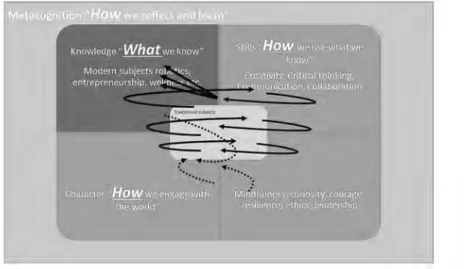
In recent environments, characterized by volatility, uncertainty, complexity and ambiguity (VUCA), information literacy, systems thinking (cf. logical thinking), design thinking, environmental literacy, digital literacy, and global literacy are becoming important. New knowledge includes wellness (i.e., the condition of physical and psychological well-being attained through deliberate pursuit of a healthy lifestyle) as well as robotics and entrepreneurship (“Snow Cutter” in Akita Prefecture, December 2015). 21st century STEM (Science, Technology, Engineering, and Mathematics) thinking skills are about the question, “how we use what we know” (e.g., teaching mathematics using data from wind power and atmospheric pressure and location) and “the barometer is —it is going to rain.” Six essential character qualities, from which numerous other related concepts are derived, are mindfulness, curiosity, courage, resilience, ethics, and leadership. Despite the formality of the public school system in Japan, Arimasa Mori differentiated
Taiken and Keiken (naiteki unagashi noaru; furikaeri). In other words, formal learning and nonformal learning should be considered.
Wenger, McDermott, and Snyder (2002) set forth seven principles for cultivating communities of practice and helping these communities gain what they call “aliveness.” These principles, with paraphrased descriptions, follow:
1) Design for evolution: As CoPs are dynamic in nature, design should reflect adaptability (or scalability). The key point is to combine design elements that help to catalyze community development. “Physical structures— such as roads and —can precipitate the development of a town. Similarly, social and organizational structures, such as a community coordinator or problem-solving meetings, can precipitate the evolution of a community.” 2) Open a dialogue for inside and outside perspectives: Wenger et al. stated that good community design requires the perspective of an insider, one who is familiar with the types of activities within. However, the perspective of an outsider may help members see the possibilities within their own mechanisms, or in adopting other tools or procedures. 3) Invite different levels of participation: In any community, different levels of participation
exist. Though those on the periphery may not participate in the same ways as those in the core, the peripheral members will still gain insights and knowledge through this type of participation. All members, regardless of participation levels, should be valued. Indeed, the notion that more accurate knowledge may occur at the periphery cannot be ignored. 4) Develop both public and private community spaces: Members of communities interact with each other in both public and private functions. Thus, the public and private dimension of a community are interrelated. The key to designing community spaces is to orchestrate activities in both public and private spaces that use the strength of individual relationships to enrich events and use events to strengthen individual relationships. 5) Focus on value: As communities are voluntary, value is key. For members and prospective members, communities must offer value or there will may not be the incentive for participation. Although value may not always be explicitly apparent, value should grow over time as the community evolves.
6) Combine familiarity and excitement: Familiarity, like the comfort of a hometown, is important for a CoP. However, excitement is also as important, but in other ways. As communities mature, they settle into familiar ways of meeting and conducting themselves. Yet, communities also need challenges and spontaneity to provide breaks from everyday occurrences. 7) Creating a rhythm for the community: Like the rhythm of an individual’s life, “vibrant” communities also have rhythm. “At the heart of a community is a web of enduring relationships among members, but the tempo of their interactions is greatly influenced by the rhythm of community events.” All alive communities have a particular rhythm or tempo, but it is important to find the “right rhythm” at each stage of a community’s development.
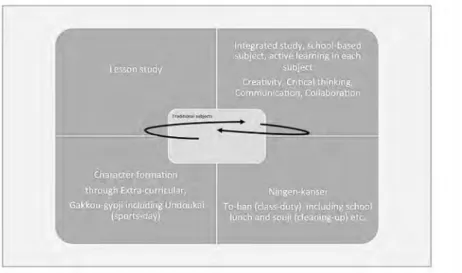
In Figure 3, character formation and lesson study are emphasized as important for stabilizing old systems. Creativity, critical thinking, communication, and collaboration are taught through integrated study, school-based subjects, and active learning in each subject.
In Figure 4, modern knowledge could be refocused and incorporated into radiology (Kyodogaku, jimoto gaku, originally jikata gaku) to redesign curricula.
We should note that if the role of intelligence in the construction of feelings is ignored, then “the belief that affectivity is the source of knowledge is a small step [away]” (Piaget, 1954/1981, p. 2). In lectures on affective development that were delivered at the Sorbonne (France) during the 1953–1954 academic year, stages of intellectual and affective development were discussed along with concepts and definitions of affectivity. In the above diagram, a feedback loop between what and how is very important. Meta-cognition is related to a number of other constructs, including critical thinking and motivation. Critical thinking may be a component of meta-cognition, or both concepts may be subsumed under the more general framework of self-regulated learning. At the very least, meta-cognition can be seen as a supporting condition for critical thinking to the extent that monitoring the quality of one’s thoughts makes it more likely that one will engage in high-quality thinking. Motivation, more specifically self-efficacy, is the set of “I believe that...” attitudes that underlie the development and expression of meta-cognition. Thus, self-regulation includes the ability to manage and regulate self-efficacious states to sustain persistence in the face of challenge, and its effect on academic success is mediated by motivation. Children with better self-regulation of emotions experience more positive social relationships at school; in turn, they tend to be more
engaged and academically motivated. This improved motivation enhances academic performance. Empirical research supports this link, as efforts to control affective states predict future SAT scores, as well as reading and math abilities. Assessment of meta-cognition is the key issue for the next 15 years. The kizuki (meta-cognition) framework from Japan (Howe and Arimoto 2015) is becoming important. Therefore, I would like to describe the seven components of the Kizuki framework from TLRP (Teaching and Learning Research Programme)’s 10 principles (see Abiko 2011).
1) Enrichment and alignment for assessment of curriculum, teaching, and learning
2. Effective pedagogy engages with valued forms of knowledge. Pedagogy should engage learners with big ideas, key skills, and processes; modes of discourse; ways of thinking and practicing; and attitudes and relationships, which are the most valued learning processes and outcomes in particular contexts. There is a need to understand what constitutes quality, standards, and expertise in different settings. 3. Effective pedagogy recognizes the importance of prior experience and learning. Pedagogy should take account of what learners know already in order for them, and those who support their learning, to plan their next steps. This includes building on prior learning and also taking account of the personal and cultural experiences of different groups of learners. 4. Effective pedagogy requires learning to be scaffolded. Teachers, trainers, and all those, including peers, who support the learning of others, should provide activities, cultures, and structures of intellectual, social, and emotional support to help learners move forward in their learning. When these supports are removed, learning needs to be secure. 5. Effective pedagogy needs assessment to be congruent with learning. Assessment should be designed and implemented with the goal of achieving maximum validity both in terms of learning outcomes and learning processes. It should help to advance learning and determine whether learning has occurred.
2) Adaptation of pedagogy to support students (kaizen)
This adapatation can be described as the Japanese cultural code of kaizen.
3) Building teacher-student relationships (kankei)
This adapatation can be described as the Japanese cultural code of kankei.
4) Motivating students’ positive attitudes toward learning (kaizen)
This adapatation can be described as the Japanese cultural code of kaizen.
5) Fostering teachers’ discretion(as individuals and in groups and organizations)
6. Effective pedagogy promotes the active engagement of the learner. A chief goal of learning should be the promotion of learners’ independence and autonomy. This involves acquiring a
repertoire of learning strategies and practices, developing positive learning dispositions, and having the will and confidence to become agents in their own learning.
7. Effective pedagogy fosters both individual and social processes and outcomes. Learners should be encouraged to build relationships and communication with others for educational purposes for the mutual construction of knowledge and achievements of individuals and groups. Consulting students about their learning and giving them a voice is both an expectation and a right.
8. Effective pedagogy recognizes the significance of informal learning, such as learning out of school or away from the workplace, as at least as significant as formal learning. Therefore, it should be valued and appropriately utilized to support 'good learning'.
6) Nurturing teachers through school life with wet ningen kankei
1. Effective pedagogy equips learners for life in its broadest sense. Learning should aim to help individuals and groups develop the intellectual, personal, and social resources that will enable them to participate as active citizens, contribute to economic development, and flourish as individuals in a diverse and changing society. Thus, a broad conception of worthwhile learning outcomes must be adopted, with serious consideration for the issues of equity and social justice for all.
7) Providing enspirited leadership
9. Effective pedagogy depends on the learning of all those who support the learning of others. The need for lecturers, teachers, trainers, and co-workers to learn continuously in order to develop their knowledge and skills and adapt and develop their roles, especially through practice-based inquiry, should be recognized and supported.
10. Effective pedagogy demands consistent policy frameworks with support for learning as their primary focus. Organizational and system level policies need to recognize the fundamental importance of continual learning—for individuals, teams, and organizational and system success—and be designed to create effective learning environments for all students.
4 Conclusion
Sugiura et al. (2015) studied personal characteristics associated with the power to survive disasters. People perceive, judge, and behave differently in disasters and in a wide range of other difficult situations depending on their personal characteristics. The power to live, as captured by characteristics that are advantageous for survival in such situations, has thus far been modeled in arbitrary ways. Conceptualizing such characteristics in more objective ways may be helpful for systematic preparations for future disasters and life difficulties. Here, we attempted to identify the major factors of the power to live by summarizing the opinions of survivors of the 2011 GreatEast Japan Earthquake disaster. We conducted personal interviews with 78 survivors about their experiences and elicited their opinions about the power to live as relevant to those experiences. We then incorporated these opinions into a questionnaire that was completed by 1,400 survivors. Factor analysis identified eight factors related to the power to live: leadership, problem solving, altruism, stubbornness, etiquette, emotional regulation, self-transcendence, and active well-being. All factors had sufficient internal construct validity, and six of them showed significant associations with one or more measures of survival success in the disaster, including immediate tsunami evacuation, problem solving in refugee situations, recovery during reconstruction, physical health, and mental health. Overall, the personal characteristics described by the eight factors largely overlap with those described in previous arbitrary models. Further research should investigate the domains, phases, and contexts in which each factor contributes to survival, address whether the factors are rooted in nature or in nurture, and explore their psychological or physiological bases. Findings could be linked to classroom and school levels in terms of curriculum and assessment.
Now, in school education, active learning is spreading throughout Japan, and the learner is the principal driving force; the instructor (if one is present) serves as the facilitator of the process. Among the many active learning approaches are experiential learning, cooperative learning, problem-solving exercises, writing tasks, speaking activities, class discussions, case-study methods, simulations, role playing, peer teaching, fieldwork, independent study, library assignments, computer-assisted instruction, and homework. Active learning through formative assessment is the urgent necessity. However, we should face the matter of assessment and tackle it with assessment systems. In anshin (security) and anzen (safety), systems thinking is very important. Thus, attention should be paid to the kizuki culture from the miracles of Kamaishi (Don’t depend too much on manuals. Do the best without fearing mistake. Take the land without wating instruction )”, the teachers’ network from top scorers in the Akita prefecture, new courses in the disaster sciences in Miyagi prefectural high school, etc. Before World War II, the Ministry of Education (monbusyo) published kyodo-tokuhon (1942). We should pursue a decentralized curriculum-assessment framework using local and indigenous assessment tasks, namely ruriology (Nitobe 1898). However, chihousousei (regional revitalization) is based on new knowledge. Fortunately, Qatar friendship fund established a science center in the Graduate School of Engineering Tohoku. Enrichment through new knowledge (of robots, entrepreneurship, wellness, etc.) in curricula and strengthening of the relationship between “curriculum and assessment” and 19 other components should be pursued in the 20 doors in the Tohoku region.
Notes 1 http://www.chinapost.com.tw/commentary/the-china-post/special-to-the-china-post/2011/03/17/294991/In-awe. htm 2 See: Review of literature of the 2011 Tohoku Earthquake Disaster 3 http://www.wise-qatar.org/21st-century-curriculum-education-Charles-Fadel 4 http://reports.weforum.org/global-risks-2014/appendix-a-definitions-of-global-risks-2014/ 5 http://www.tc.columbia.edu/lessonstudy/lessonstudy.html, http://www.lessonresearch.net/ 6 See: http://www.unesco-school.mext.go.jp, http://www.sghc.jp/en/ 7 http://www.systemicleadershipinstitute.org/systemic-leadership/theories/the-historic-link-between-systems-thinking-and-leadership/ 8 http://berkana.org/berkana_newsletters/from-disaster-to-resilience-making-new-maps-february-2012/ 9 http://www.huffingtonpost.jp/mindful-leadership-institute/story_b_5494175.html 10 http://greatergood.berkeley.edu/article/item/compassionate_leaders_are_effective_leaders. Accessed 03.07.14 Acknowledgement The authors would like to extend our thanks to Dr. Ian Clark. This work was supported by JSPS KAKENHI Grant Numbers Scientific Research (A) 25245079, Challenging Exploratory Research, and research at an early stage with highly challenging goals based on unique concepts 15K13219.
Review of literature regarding the 2011 Tohoku Earthquake Disaster
Al-Badri, D. & Berends, G. (2013). After the great East Japan earthquake: Political and policy change in post-Fukushima Japan. Copenhagen: NIAS Press. Birmingham, L. & McNeill, D. (2012). Strong in the rain: Surviving Japan’s earthquake, tsunami, and Fukushima nuclear disaster. New York: Palgrave Macmillan. Caritas Japan (2012). The Great East Japan Earthquake & Tsunami: Activity Report of Caritas Japan. Tokyo: Catholic Bishops’ Conference of Japan. Caritas Japan (2013). The Great East Japan Earthquake & Tsunami: Activity Report of Caritas Japan. Tokyo: Catholic Bishops’ Conference of Japan. Caritas Japan (2014). The Great East Japan Earthquake & Tsunami: Activity Report of Caritas Japan. Tokyo: Catholic Bishops’ Conference of Japan. Doran, R. (2013). Public health recovery after the Great East Japan Earthquake: Experiences in selected areas of Miyagi Prefecture. Sendai: Center for Community Health, Tohoku University Graduate School of Medicine. Editorial Committee in Tohoku Region for the Report of the Disaster. (2012). 3.11.2011 the Great East Japan Earthquake: The blood service response to the earthquake disaster. Reports from six Blood Centers in the Tohoku region. Morioka: JRC Six Blood Centers in Tohoku Region. Ehrlich, G. (2014). Facing the wave: A journey in the wake of the tsunami. New York: Vintage Books. Federici, S. (2011). Fukushima mon amour. New York: Autonomedia.
Fukushima Medical University. (2013). Fukushima lives on the line: A compendium of reports from the 2011 Great East Japan Earthquake and Tsunami. Fukushima: Fukushima Medical University. Funabashi, Y. & Takenaka, H. (2011). Lessons from the disaster: Risk management and the compound crisis presented by the Great East Japan Earthquake. Tokyo: Japan Times. Hindmarsh, R. (2013). Nuclear disaster at Fukushima Daiichi: Social, political and environmental issues. New York: Routledge. Immell, M. (2014). Japan’s 2011 natural disasters and nuclear meltdown. Farmington Hills, Mich.: Greenhaven Press. Kanekoa (2012). A night in Aladdin’s palace: Based on the events of the 2011 Tohoku earthquake disaster. [S.l.]: [s.n.]. Kawase, H. (2014). Studies on the 2011 off the Pacific coast of Tohoku Earthquake. Tokyo: Springer. Kingston, J. (2012). Natural disaster and nuclear crisis in Japan: Response and recovery after Japan’s 3/11. London; New York: Routledge. Luke, E. & Karashima, D. (2012). March was made of yarn: Reflections on the Japanese earthquake, tsunami, and nuclear meltdown. New York: Vintage Books. Lusted, M.A. (2012). The 2011 Japan disasters. Edina, Minn.: ABDO Pub. Co. Monma, T. et al. (2015). Agricultural and forestry reconstruction after the Great East Japan Earthquake: Tsunami, radioactive, and reputational damages. Tokyo: Springer Open.
Morse, A.N. & Havinga, A.E. (2015). In the wake: Japanese photographers respond to 3/11. Boston: MFA Publications. Nibelle, P. & Cellura, D. (2011). Journal d’apocalypse. Monaco: Rocher. Ranghieri, F. & Ishiwatari, M. (2014). Learning from megadisasters: Lessons from the great East Japan earthquake. Washington, D.C.: World Bank. Regional Office for the Western Pacific. (2012). Compilation of Japan earthquake and tsunami situations reports (No. 1–No. 24; No. 25–No. 35). Manila: World Health Organization. Samuels, R.J. (2013). 3.11: Disaster and change in Japan. Ithaca: Cornell University Press. Sendai Television Inc. (Executive Producer) (2012). Lessons from a disaster: The Great East Japan Earthquake recorded on camera [Television broadcast]. Tokyo: Fusosha Pub. Shaw, R. (2015). Tohoku recovery: Challenges, potentials and future. Tokyo: Springer. Starrs, R. (2014). When the tsunami came to shore: Culture and disaster in Japan. Leiden: Global Oriental. Sutton, G.K. & Cassalli, J.A. (2011). Catastrophe in Japan: The earthquake and tsunami of 2011. New York: Nova Science Publishers. Suzuki, I. & Kaneko, Y. (2013). Japan’s disaster governance: How was the 3.11 crisis managed? New York: Springer. The Great East Japan Earthquake and tsunami: A photojournalistic account of the first 10 days of the disaster (Tohoku Gakuin University Volunteer Station, Trans.) (2011). Sendai: Kahoku Shimpo Publishing. References Abiko, T. (2011). A response from Japan to TLRP’s ten principles for effective pedagogy, Research Papers in Education. 26(3): 357-365. DOI: 10.1080/02671522.2011.595547
Barnard, Peter A. (2013). The Systems Thinking School, New York: Rowman & Littlefield Education. Betts, Frank (1992). How systems thinking applies to education. Improving School Quality. 50(3): 38-41.
Brijnath, Rohit (2011). In awe of a nation’s quiet dignity, The Straits Times/Asia News Network. March 17, 2011, 11:05 am.
Fadel, Charles, Bernie Trilling, Maya Bialik (2015). Four-Dimensional Education: The Competencies Learners Need to Succeed. CreateSpace Independent Publishing Platform.
Goleman, Daniel & Peter Senge (2014). The Triple Focus: A New Approach to Education.
Hofstede, Geert (2001). Culture’s Consequences: Comparing Values, Behaviours, Institutions, and Organizations across Nations. 2nd ed., Sage Publications.
Howe, Edward & Masahiro Arimoto (2014). Narrative teacher education pedagogies from across the Pacific, in Cheryl J. Craig, Lily Orland-Barak (eds.) International Teacher Education: Promising Pedagogies (Part A). (Advances in Research on Teaching, Volume 22). Emerald Group Publishing Limited, pp. 213-232.
Lebra, Takie Sugiyama (2004). The Japanese Self in Cultural Logic. Honolulu: University of Hawai’i Press.
Lee, O-Young (1984). The Compact Culture: The Japanese Tradition of Smaller Is Better. Tokyo: Kodansha International. Lai, E.R. (2011). Metacognition: A Literature review - Research Report. Pearson. https://moodle.elac.edu/pluginfile. php/111973/mod_resource/content/0/Metacognition_Literature_Review_Final.pdf Lunenburg, Fred C. (2011). Systems thinking and the learning organization: The path to school improvement, SCHOOLING Volume 2, Number 1, 1-6. Morgan, G. (1986). Images of Organization. Newbury Park, CA: Sage.
Nonaka, I. & Takeuchi, H. (1995). The Knowledge-creating Company: How Japanese Companies Create the Dynamics of Innovation. New York: Oxford University Press.
O’Neil, John (1995). On schools as learning organizations: A Conversation with Peter Senge, Educational Leadership, 52: 7.
OECD (1997). Prepared for Life?: How to Measure Cross-curricular Competencies. OECD (2006). Schooling for Tomorrow Think Scenarios, Rethink Education.
Perlman Adam, Bonnie Horrigan, Elizabeth Goldblatt, Victoria Maizes, Ben Kligler, (2014). The pebble in the pond: How integrative leadership can bring about transformation. EXPLORE: The Journal of Science and Healing. Volume 10, Issue 5, Supplement, September–October 2014, pp. S1–S14. Piaget, J. (1954, 1981). Intelligence and affectivity: Their relationship during child development. Palo Alto, CA: Annual Review, Inc. Intelligence and affectivity: Their relationship during child development. (Trans. & Ed. T.A. Brown & C.E. Kaegi). Piaget, Jean (1981). Annual reviews intelligence and affectivity: Their relationship during child development. (Trans. & Ed. T.A. Brown & C. E. Kaegi). Oxford, England, pp. xiv-77.
Pike, Roberta E. (2007). Japanese Education: Selective Bibliography of Psychosocial Aspects. Fremont, Calif.: Jain Pub. Co.
Pilz, Matthias; Schmidt-Altmann, Kirsten; Eswein, Mikiko (2015). Problematic transitions from school to employment: Freeters and NEETs in Japan and Germany, Compare: A Journal of Comparative and International Education.
45(1): 70-93.
Schleicher, A. (2011). Building a High-Quality Teaching Profession: Lessons from Around the World, OECD Publishing, Paris, http://dx.doi.org/10.1787/9789264113046-en.
Schliemann, Henry (1867). La Chine et le Japon au temps present. Kessinger Publishing.
Schliemann, Heinrich (1995); aus dem Französischen von Franz Georg Burstgi Reise durch China und Japan in Jahre 1865. (Internationaler Merve Diskurs, 187) Merve Verlag.
Schreicher, Andrea (2014). Key Competencies and Skills for the 21st Century, 16th OECD/Japan Seminar, Sendai. Senge, Peter (1990). The Fifth Discipline: The Art and Practice of the Learning Organization. Currency/Doubleday. Senge, Peter, Nelda Cambron-McCabe, Timothy Lucas, Bryan Smith, Janis Dutton, and Art Kleiner (2000). Schools
That Learn: A Fifth Discipline Fieldbook for Educators, Parents, and Everyone Who Cares About Education. Currency/Doubleday.
Stigler, James W. and James Hiebert. (1999) The Teaching Gap: Best Ideas from the World’s Teachers for Improving Education in the Classroom. Free Press.
Stilger, Bob (2012). Disaster as a springboard for thriving, resilient communities, Reflections, 13(2): 26-34.
Stilger, Bob & Yuka Saionji (2014). Enspirited leadership in Japan. In Kathryn Goldman Schuyler et al. (eds.) Leading with Spirit, Presence, and Authenticity: A Volume in the International Leadership Association Series, Building Leadership Bridges. Jossey-Bass Publishers, pp. 59-76.
Sugiura, M., Sato, S., Nouchi, R., Honda, A., Abe, T., Muramoto, T., Imamura, F. (2015). Eight personal characteristics associated with the power to live with disasters as indicated by survivors of the 2011 Great East Japan Earthquake disaster. PLoS ONE. PLoS One 2015 1; 10(7): e0130349. Epub 2015 Jul 1.
Wenger, E. (1998). Communities of Practice: Learning, Meaning and Identity, New York: Cambridge University Press.