Multi-Layer Perceptron with Pulse Glial Chain for Solving Two-Spirals Problem
Chihiro Ikuta
Dept. of Electrical and Electronics Eng., Tokushima University
2-1 Minami-Josanjima, Tokushima Japan
Email: [email protected]
Yoko Uwate
Dept. of Electrical and Electronics Eng., Tokushima University
2-1 Minami-Josanjima, Tokushima Japan
Email: [email protected]
Yoshifumi Nishio
Dept. of Electrical and Electronics Eng., Tokushima University
2-1 Minami-Josanjima, Tokushima Japan
Email: [email protected]
I. INTRODUCTION
Currently, a glia which is one of nervous cell is known to have important works in a brain [1]. The glias has several ion channels, for example calcium ion Ca2+, adenosine triphos- phate (ATP), glutamine acid, and so on [2]-[4]. These ions are also used by neurons in gap junctions. Moreover, Ca2+
affect around glias’ states and neurons’ thresholds [5][6]. We consider that the glia has relationships with brain works. From these futures, we have noticed the glia works and have tried applications to artificial neural networks.
In the previous study, we proposed a Multi-Layer Percep- tron (MLP) with pulse glial chain from the features of the biological glia [7]. In that model, the glias connected neurons one-by-one in a hidden layer of the MLP. The glias are excited by huge amount of output of connected neuron. The excitation glia generates the pulse output, moreover the pulse excite the neighborhoods glias and affects the threshold of the connected neuron. We believed that the glias give the relationships of positions of neurons in hidden layer of neurons and that the glias improve the learning performance of the MLP. We confirmed that the MLP with pulse glial chain had better learning performance than the conventional MLP by learning of successive chaotic time series.
In this study, we apply the MLP with pulse glial chain to Two-Spirals Problem (TSP). The TSP is a famous benchmark for artificial neural networks. This task is known to have a high nonlinearity. We confirm that the MLP with pulse glial chain has high solving ability as nonlinear problem.
II. PROPOSEDMETHOD
The MLP is the most famous feed forward neural network.
This network is composed of layers of neurons and its outputs are controlled by the weights of connections. In general it is learned by Back Propagation algorithm (BP) which was proposed by D.E. Rumelhart [8]. We connect the glias to the neurons in hidden layer. We show the proposed MLP in Fig. 1.
A. Glial Pulse
The neuron is investigated by many researchers and its applications are proposed. However, the glia is not investigated
…
Neuron
Glia
Fig. 1. MLP with pulse glial chain.
details, because this cell was know to static cell in the brain. Currently, the glia attracts researchers attentions in the biological or the medical fields. Because, the glia actually has several important works in the brain. The glia has several ions channels. Especially, the glia can change the Ca2+density and this Ca2+ density become pulse response [5][6]. The Ca2+
change the threshold of the neuron. Moreover, this influence propagates wide range in the brain.
We have proposed the pulse glial chain which is inspired from these features of biological glia. All glias connect the neurons in the hidden layer and generate pulses by the outputs of connected neurons. We define an output function of the glia in Eq. (1).
ψi(t+ 1) =
{ 1, {(θn < yi∪ψi+1,i−1(t−i∗D) = 1)
∩(θg> ψi(t))} γψi(t), else,
, (1)
whereψ is an output of a glia,γ is an attenuated parameter, y is an output of a connecting neuron, θn is a glia threshold of excitation, θg is a period of inactivity, and D is a delay time of a glial effect. The glias do not learn by BP algorithm, however, the neurons are learned by BP algorithm. Thereby, the generation pattern of glial pulse is dynamically change
- 51 -
IEEE Workshop on Nonlinear Circuit Networks December 9-10, 2011
during MLP learning.
B. Updating Rule of Neuron
The neuron has multi-inputs and single output. We can pro- cess the neuron output by the changing weights of connections.
The standard updating rule of the neuron is defined by Eq. (2).
yi(t+ 1) =f
∑n
j=1
wij(t)xj(t)−θi(t)
, (2)
where y is an output of the neuron, w is a weight of connection, xis an input of the neuron, and θ is a threshold of neuron. In this equation, the weight of connection and threshold of neuron are learned by BP algorithm. Next, I show a proposed updating rule of the neuron. We add the glial effect to the threshold of neuron. This updating rule is used to neurons in hidden layer. It is described by Eq. (3).
yi(t+ 1) =f
∑n
j=1
wij(t)xj(t)−θi(t) +αψi(t)
, (3)
whereαis weight of glial effect. We can control the glial effect by change of α. In this equation, the weight of connection and the threshold are learned by BP algorithm as same as the standard updating rule of the neuron. However, the glial effect does not learn. It is updated by Eq. (1).
Eqs. (2) and (3) are used sigmoidal function to activating function which is described by Eq. (4).
f(a) = 1
1 +e−a (4)
whereais an inner state.
III. SIMULATION
In this section, we confirm the learning performance of the proposed MLP and generalization ability. We use five kinds of MLPs for a comparison of the performance as follows.
(1) The conventional MLP
(2) The MLP adding random timing pulses (3) The MLP adding same timing pulses
(4) The MLP with pulse glial chain (one direction) (5) The MLP with pulse glial chain
In the MLP adding random timing pulses, this MLP is given the pulses to the thresholds of neurons at random timing.
The random timing pulses are decorrelation each other. The MLP adding same timing pulses is given the pulses which are generated at same timing.
A. Simulation Task
We use the TSP for simulation task. It is a famous bench- mark of the neural networks and is known to high nonlinearity problem. In this task, the MLP learns the classifications of two different spirals which are composed of many points. The MLP is inputted the coordinates of spiral points, and is learned by ideal classifications.
B. Simulation results
In this simulation, we use three layers MLPs which are composed of 2-40-1. The MLPs learn the 50000 times during the one trial. We obtain results from 100 trials. We use a Mean Square Error (MSE) to the major of performance. It is described by Eq. (5).
M SE= 1 N
∑N n=1
(Tn−On)2, (5)
whereN is a number of learning data,T is a target value, and O is an output of MLP.
We show the learning performance of the MLPs from learning 98 points in Table I. The learning performance of MLP with pulse glial chain is the best of all as the average of error. The learning performance of the conventional MLP is the worst, this because of the TSP has the high nonlinearity, thus this task has many local minima. We consider that the conventional MLP is trapped the local minimum. The MLP with pulse glial chain (only one direction) becomes second winner from the comparison of the averages. From these results, we can say that the pulse glial chain is more effective than the pulse glial chain (one direction). We consider that the pulse glial chain give more relationships of position of neurons to the MLP.
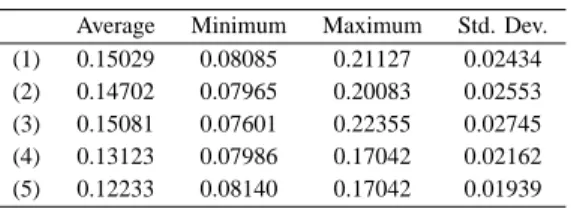
Table II is the classification results. It means the gen- eralization ability of the MLPs. This table shows that the performance of the generalization ability is similar to the learning performance. In general, when the MLP becomes over learning, its generalization ability is decreased. However, in this result, the generalization ability of the MLP pulse glial chain is the best of all. Thereby, the MLP with pulse glial chain does not become over learning. An example of the classification results as around average are shown in Fig. 2.
TABLE I LEARNING PERFORMANCE.
Average Minimum Maximum Std. Dev.
(1) 0.04153 0.00017 0.18387 0.02637 (2) 0.03666 0.00015 0.08208 0.02195 (3) 0.03873 0.00022 0.17335 0.02632 (4) 0.03178 0.00024 0.07186 0.01986 (5) 0.02072 0.00011 0.08192 0.01782
TABLE II
CLASSIFICATION PERFORMANCE. Average Minimum Maximum Std. Dev.
(1) 0.15029 0.08085 0.21127 0.02434 (2) 0.14702 0.07965 0.20083 0.02553 (3) 0.15081 0.07601 0.22355 0.02745 (4) 0.13123 0.07986 0.17042 0.02162 (5) 0.12233 0.08140 0.17042 0.01939
- 52 -
(a) Conventional. MLP (b) MLP adding random timing.
(c) MLP adding same timing. (d) Proposed MLP (one direction).
(e) Proposed MLP.
Fig. 2. Examples of classification results.
IV. CONCLUSIONS
In this study, we have investigated the learning performance of the MLP with pulse glial chain using by the TSP. The pulse glial chain is inspired from features of biological glia.
All glias generate the pulse output when the glias are excited by output of connecting neurons. The pulses are propagated by glia, after that, the pulses influence to the threshold of neurons. We connected the glias to the neurons in hidden layer of MLP. We confirmed that the MLP with pulse glial chain had better learning performance than the conventional MLP. From the simulations, we showed that the MLP obtained the high learning performance by to be given relationships of position of neurons. Moreover, we investigated generalization ability of the MLPs by classification of two spirals. We show that the MLP with pulse glial chain has the high generalization ability and can represent the spirals. From this study, we confirmed that the MLP with pulse glial chain was suitable for use the high nonlinearity tasks.
REFERENCES
[1] P.G. Haydon, “Glia: Listening and Talking to the Synapse,” Nature Reviews Neuroscience, vol. 2, pp. 844-847, 2001.
[2] S. Koizumi, M. Tsuda, Y. Shigemoto-Nogami and K. Inoue, “Dynamic Inhibition of Excitatory Synaptic Transmission by Astrocyte-Derived ATP in Hippocampal Cultures,” Proc. National Academy of Science of U.S.A, vol. 100, pp. 11023-11028,
[3] S. Ozawa, “Role of Glutamate Transporters in Excitatory Synapses in Cerebellar Purkinje Cells,” Brain and Nerve, vol. 59, pp. 669-676, 2007.
[4] G. Perea and A. Araque, “Glial Calcium Signaling and Neuro-Glia Communication,” Cell Calcium, vol. 38, 375-382, 2005.
[5] S. Kriegler and S.Y. Chiu, “Calcium Signaling of Glial Cells along Mammalian Axons,” The Journal of Neuroscience, vol. 13, 4229-4245, 1993.
[6] M.P. Mattoson and S.L. Chan, “Neuronal and Glial Calcium Signaling in Alzheimer’s Disease,” Cell Calcium, vol. 34, 385-397, 2003.
[7] C. Ikuta, Y. Uwate and Y. Nishio, “Multi-Layer Perceptron with Pulse Glial Chain,” Proc. NOLTA’11, pp. 435-438, Sep. 2011. 2003.
[8] D.E. Rumelhart, G.E. Hinton and R.J. Williams, “Learning Represen- tations by Back-Propagating Errors,” Nature, vol. 323-9, pp. 533-536, 1986.
- 53 -