Comparisons of Diagnostic and Treatment Modalities including Sodium Bicarbonate for Acute Vertigo Care Between Otolaryngologists and Non-otolaryngologists in Japan.
Kenji Numata
St Luke’s International University
Author Note
Kenji Numata, Candidate for master’s of public health, St Luke’s International University, Graduate School of Public Health.
Program
Correspondence concerning this article should be addressed to Kenji Numata, Candidate for master’s of public health, St Luke’s International University, Graduate School of Public Health.
Contact: [email protected]
Abstract
Acute vertigo is a common emergency problem in any department. However, in Japan clinical strategies for acute vertigo are diverse and vary among care providers especially in diagnostic tests and the treatment including sodium bicarbonate. Sodium bicarbonate is widely used in Japan specifically for the treatment of vertigo, yet there are no reviews of vertigo treatment in other countries and research about sodium bicarbonate in
relationship to acute vertigo in Japan or other countries was limited to nonexistent.
We investigated whether there were differences of acute vertigo diagnosis (Dix-Hallpike test, Head-Impulse-Nystagmus-Test of Skew exam, CT, MRI) or treatment (Metoclopramide, antihistamine, sodium bicarbonate, Epley maneuver) between otolaryngologists and non-otolaryngologists (emergency medicine [EM] and internal medicine [IM]). This was a multi-center case-based survey. Four clinical vignettes of acute vertigo (benign paroxysmal positional vertigo [BPPV], vestibular neuritis, Meniere disease, and nonspecific vertigo) were employed in this survey.
Participants were 151 physicians from study sites. In the diagnostic domain, otolaryngologists preferred to employ less CTs for BPPV (OR=0.39, p < 0.01).
Otolaryngologists tended to order more MRIs for vestibular neuritis (OR=3.27, p <
0.01). In the treatment domain, at least 20% of physicians willing to prescribe sodium
bicarbonate for vertigo patients, and otolaryngologists preferred to prescribe more sodium bicarbonate for vestibular neuritis (OR= 26.05, p < 0.01). There were significant practice differences in acute vertigo care between otolaryngologists and
non-otolaryngologists. To detect efficacy of sodium bicarbonate and standardize acute vertigo care, we need random controlled trials.
Keywords: Acute vertigo, Comparing acute vertigo treatments, Sodium
Bicarbonate, Otolaryngologist
Comparisons of Diagnostic and Treatment Modalities including Sodium Bicarbonate for Acute Vertigo Care Between Otolaryngologists and Non-otolaryngologists in Japan.
Vertigo is a common and challenging problem in any department of
otolaryngology or Emergency medicine (EM) or Internal medicine (IM). Wipperman, (2014) noted that more than one-third of Americans see a health care provider for dizziness during their life-time, and it is one of the most common principal complaints in the emergency department (ED).
However, in Japan clinical strategies for acute vertigo might are diverse and vary among care providers especially in the use of diagnostic tests and the treatment of sodium bicarbonate.
Literature Review
Diagnostic tests.
There is some possibility that unnecessary diagnostic tests are done in Japan.
Lee & Kim, (2015) suggested that most vertigo was due to benign causes, but critical causes, such as a stroke or intracranial mass, also needed to be excluded. Vascular vertigo mostly presents as acute or episodic vestibular syndrome, and rarely as a positional vestibular syndrome. Misdiagnosis of acute stroke can result in significant
morbidity. Therefore, it is important to differentiate isolated vertigo of a vascular cause from other benign disorders. Cheng, Wu, Syue, Yen & Wu (2014) commented that considering the consequences of a misdiagnosis of critical causes, physicians might lower the testing threshold for brain imaging. However, it should be noted that unnecessary imaging tests like head CT and brain MRI were done for benign paroxysmal positional vertigo [BPPV] patients (Polensek & Tusa 2009). These findings led us to also suspected excessive tests might be done in Japan.
Treatment domain using sodium bicarbonate.
Sodium bicarbonate is used for the treatment of vertigo in Japan (Aoki, 2016).
However, in the review by Pelensek & Tusa, (2009), sodium bicarbonate was not mentioned as a treatment option. As far as we know, Hasegawa (1948) provided the earliest report about the efficacy of sodium bicarbonate. He gave sodium bicarbonate to 20 soldiers at risk for sea-sickness who were returning from China to Japan. They failed to get sea-sick during the very turbulent trip and most other passengers were very sea-sick; thus, he showed efficacy for the treatment. He also observed that sodium bicarbonate could melt otoliths in an animal-based study in addition to treating various types of vertigo.
Matsunaga, Inatome, Kubo, & Sano (1977) discovered that 7% solution of sodium bicarbonate could reduce nystagmus by increasing the blood flow to the
vestibular nerve in animal experiments study. They hypothesized that these mechanisms could be the basis of vertigo treatment. Kawabata, Kishimoto, Ujihara, Sasa, & Takaori (1990) found in their animal-based study that intravenous injection of the 7% sodium bicarbonate solution at 1, 2 and 4 ml/kg every 10-minutes was dose-dependently for inhibited rotation and glutamate-induced firing of type I neurons, although a low dose of the drug enhanced in a few neurons. They suggested that the intravenous injection of sodium bicarbonate directly inhibits the neuronal activity of the medial vestibular nucleus neurons, although the lower dose may enhance neuronal activity by acting on the peripheral vestibule. The research about sodium bicarbonate in relationship to acute vertigo was limited.
Despite of limited evidence, a review by an otolaryngologist in Japan recommended using sodium bicarbonate (Aoki, 2016). This recommendation might have encouraged otolaryngologists to prescribe sodium bicarbonate.
There is variation in the way physicians practice medicine. For example, Lerang, Gilboe, & Gran, (2012) reported that testing and treatment of rheumatoid arthritis was significantly different between rheumatologists and non-rheumatologists.
Therefore, we considered that there might be large differences in practice between otolaryngologists and non-otolaryngologists (EM and IM). However, there is little scientific evidence describing type and quality of care for acute vertigo among care providers in Japan.
We aimed to investigate whether there are differences of acute vertigo
diagnostic tests or treatments between otolaryngologists and non-otolaryngologists, and if physicians used sodium bicarbonate as a treatment.
Method
Study design
This was a multi-center survey. We chose a convenience sample of six teaching hospitals (Tokyo Bay Urayasu/Ichikawa Medical Center, Jikei University Hospital, Koshigaya Hospital, Fukui Prefecture Hospital, University of Fukui Hospital, Tokyo Medical Center) from the Hokuriku and Kanto areas (Fukui, Tokyo, Saitama) in Japan.
All hospitals were more than 200 beds. We included Japanese-speaking postgraduate year (PGY) three or more physicians in the department of otolaryngology, EM and IM.
Exclusion criteria was unfilled questionnaire by the participating physician. We sent the seven-page questionnaire to the director of each hospital who dispersed the questionnaire.
Consent was returning the questionnaire. The Ethical Committee at Tokyo Bay Urayasu/Ichikawa Hospital approved this study (approved number: 226) Data collection and assessment of outcome
The questionnaire consisted of two sections. In the first section, data collected included gender, PGY, specialty, and hospital name. Physicians were also asked about their clinical practice, knowledge, utility and any restrictions of testing in their hospital.
Questionnaire section about physician’s background.
Clinical practice was assessed by the following question: “How many vertigo patients do you see in a month?” for assessing the experience of vertigo care.
Respondents were given five response options: 1 = 0/month, 2 = 1-5/month, 3
=6-10/month, 4 = 11-20/month, and 5 = 21/month or more.
Knowledge about the cost of brain MRI and detectability of head CT was assessed by asking, “How much does do you assume is the cost of a brain MRI?”
Response choices were 1= 5000 yen ($44), 2=15000 yen ($133), 3=50000 yen ($444), and 4=80000 yen ($710) (based on the exchange rate on 1/9/2018). Lawhn-Heath, Buckle, Christoforidis, & Straus, (2013) reported that head CTs ordered in the ER for acute dizziness was low (2.2%). Because of the low sensitivity of CTs for detecting central causes, we needed to determine the physician’s knowledge about this. We asked, “What
percent can you expect that the head CT can detect vertigo due to cerebral disease?”.
There were five response options: “1 (1%), 2 (2%), 3 (5%), 4 (10%), and 5 (30%)”.
Policies governing the use of brain MRI were assessed. Due to the time and
effort to take a brain MRI, some hospitals in Japan restricted it’s use. We asked two questions to detect any restriction: “Do you have any rules about taking a head CT before taking a brain MRI?” and “Does your hospital have any restriction on taking a brain MRI?” Responses were: 1 (available for 24 hours), 2 (some restriction but available for
24 hours), 3 (no restriction but cannot take MRI at night), 4 (only take MRI in daytime with some restriction), 5 (without MRI).
Development of questionnaire about diagnostic and treatment domain.
In the second part of the questionnaire there were four clinical vignettes of acute vertigo employed. They were prepared by two board-certified EM, two board-certified IM and two board-certified otolaryngologists and based on real patient situation. The clinical vignettes included 40 clinical questions regarding diagnosis and treatment of acute vertigo. The final diagnoses of four vignettes were BPPV, vestibular neuritis, Meniere disease, and nonspecific vertigo.
Scenario based questionnaire.
Diagnostic domain.
Physicians read the scenario about each of the four types of vertigo patients but without the diagnosis information and were asked if they would be inclined to perform the Dix-Hallpike test, head-impulse-nystagmus-test of skew (HINTS) exam, imaging
modalities such as CT or MRI, and using a visual analog scale (0 = no possibility; 100 = total possibility) mark each case’s possibility of having central causes.
Treatment domain.
Physicians read the same scenario with specific disease names and were asked if
they would prescribe the following for each case: metoclopramide, antihistamine, sodium bicarbonate and perform an Epley maneuver for each case, and “If the symptom is not
diminished after treatment, do you recommend the patient be admitted?” Response options were 1 = yes and 2 = no.
Statistical analysis
The data, analyzed categorically as two groups (otolaryngologist vs
non-otolaryngologist), were compared using the Fisher’s exact test or Mann-Whitney-U test. We investigated the associations between the physicians’ specialty and diagnostic or treatment option using a multiple logistic regression analysis and multiple linear
regression analysis, that was adjusted for physicians’ gender and PGY. We used
STATA/MP 15.1 (StataCorp LLC). A probability value of <0.05 was considered significant.
Results
Characteristics of study subjects
During the study period, 151 physicians completed the survey. There were 84
non-otolaryngologists (48 EM and 36 IM), and 67 otolaryngologists.
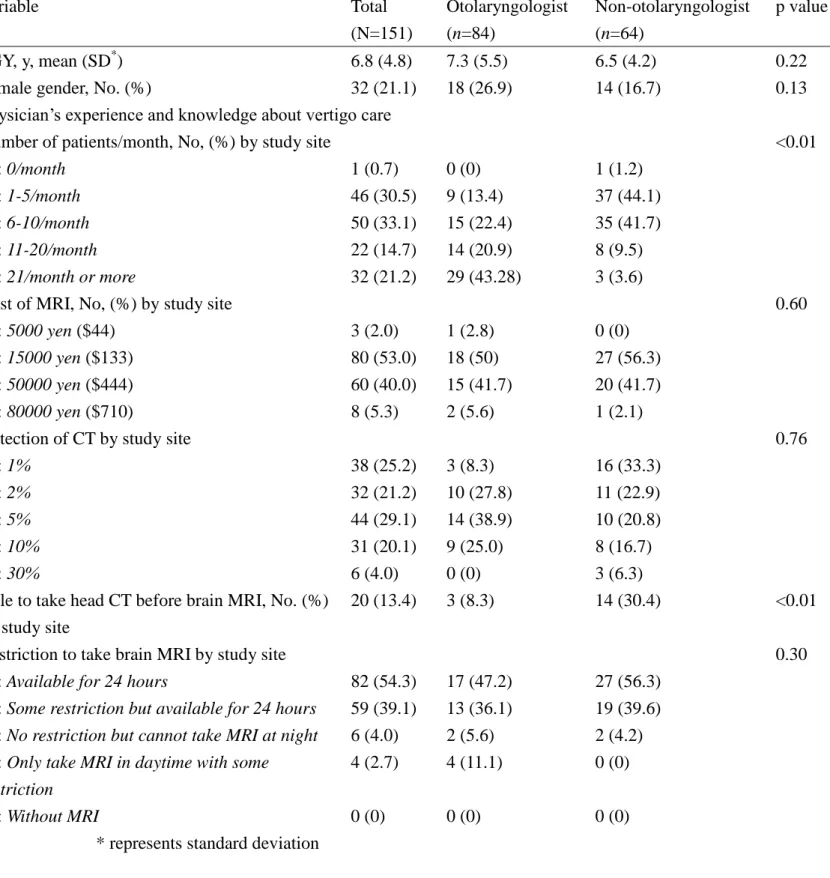
Table 1 shows the results of physician’s background. In the bivariate analysis, gender and
PGY were similar between the groups. There was a statistically significant difference in the average number of vertigo patients seen in a month and restrictions of brain MRI.
Bivariate analysis
Tables 2 and 3 show the results of the bivariate analysis of vertigo diagnostic and the treatment domains. In the diagnostic domain, the following variables were significantly different (higher group): CT for BPPV (non-otolaryngologist); possibility of central causes from BPPV history (non-otolaryngologist); MRI for vestibular neuritis (otolaryngologist); HINTS methods for vestibular neuritis (non-otolaryngologist); CT for nonspecific vertigo (non-otolaryngologist); Dix-Hallpike test for nonspecific vertigo (otolaryngologist).
In the treatment domain the following were significantly higher:
metoclopramide for BPPV (non-otolaryngologist); sodium bicarbonate for BPPV (otolaryngologist); Epley maneuver for BPPV (non-otolaryngologist); recommend to admit for BPPV (non-otolaryngologist); metoclopramide for vestibular neuritis (non-otolaryngologist); sodium bicarbonate for vestibular neuritis (otolaryngologist);
recommend to admit for vestibular neuritis (otolaryngologist); sodium bicarbonate for vestibular neuritis (otolaryngologist); sodium bicarbonate for Meniere disease
(otolaryngologist); sodium bicarbonate for nonspecific vertigo (otolaryngologist) and recommend to admit for nonspecific vertigo (non-otolaryngologist).
Otolaryngologists and non-otolaryngologists were willing to prescribe sodium bicarbonate for BPPV (otolaryngologists: 58.2 %, non-otolaryngologists: 26.2 %), vestibular neuritis (otolaryngologists: 91.0 %, non-otolaryngologists: 28.6 %), Meniere disease (otolaryngologists: 91.4 %, non-otolaryngologists: 32.1 %), BPPV
(otolaryngologists: 76.1 %, non-otolaryngologists: 29.8 %).
Multivariate analysis
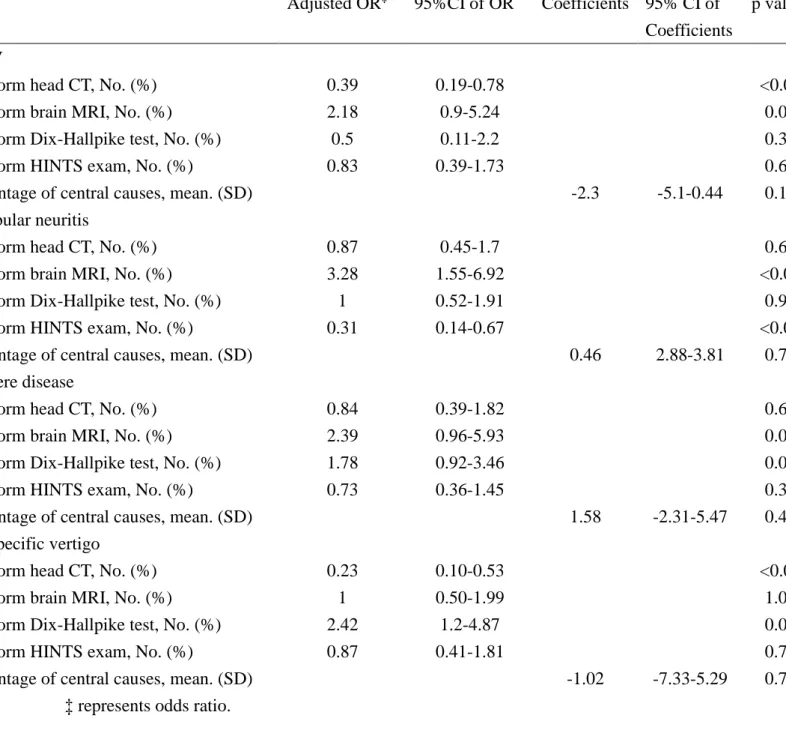
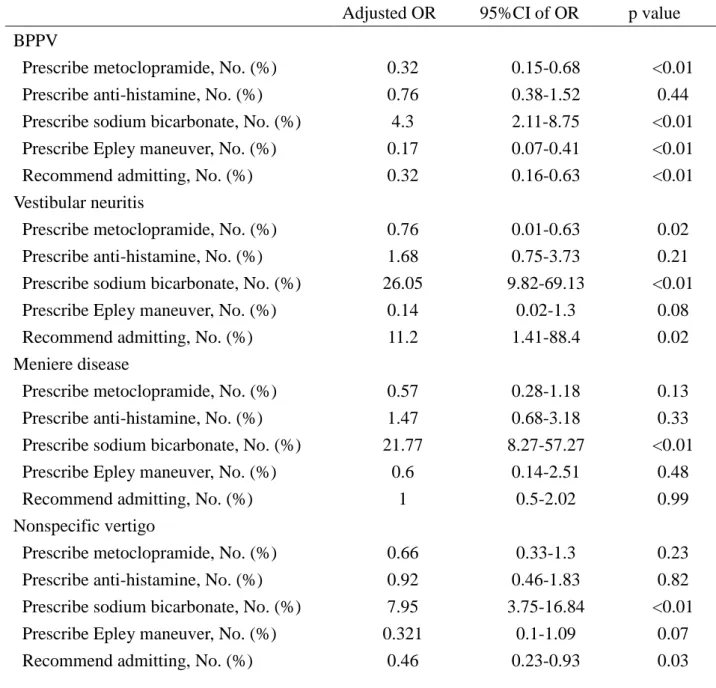
The multivariate analysis was adjusted for gender and PGY. We confirmed fifteen questions (five test questions, ten treatment questions) were significantly different.
(Table 4, 5)
In the diagnostic domain, otolaryngologists ordered significantly fewer head CT for BPPV (OR = 0.39, 95% [CI 0.19-0.78], p < 0.01) and for nonspecific vertigo (OR = 0.23, 95% [CI 0.1-0.53], p < 0.01), and performed less HINTS exam with vestibular neuritis (OR = 0.31, 95% [CI 0.14-0.67], p < 0.01). Otolaryngologists ordered
significantly more brain MRI for vestibular neuritis (OR = 3.27, 95% [CI 1.6-6.9], p <
0.01) and Dix-Hallpike test for nonspecific vertigo (OR = 2.42, 95% [CI 1.2-4.87], p = 0.01). We found no significant difference in questions about the possibility of having central causes.
In the treatment domain, otolaryngologists used significantly less Epley
maneuvers for BPPV (OR = 0.17, 95% [CI 0.07-0.41], p < 0.01) and metoclopramide for vestibular neuritis (OR = 0.08, 95% [CI 0.01-0.63], p = 0.02). Otolaryngologists ordered significantly more sodium bicarbonate for BPPV (OR = 4.3, 95% [CI 2.11-8.75], p <
0.01), vestibular neuritis (OR = 26.1, 95% [CI 9.81-69.1], p < 0.01), Meniere disease (OR
= 21.8, 95% [CI 8.27-57.2], p < 0.01), and nonspecific vertigo (OR = 7.95, 95% [CI 3.76-16.8], p < 0.01). Otolaryngologists would have admitted significantly more
vestibular neuritis patients (OR = 11.2, 95% CI [1.41-88.4], p = 0.02), and would not have admitted as many BPPV patients (OR = 0.31, 95% [CI 0.16-0.64], p < 0.01) or
nonspecific vertigo (OR = 0.47, 95% [CI 0.23-0.93], p = 0.03).
Discussion
As far as we know, this was the first study to detect the differences in vertigo care among physicians in Japan. Patients with vertigo might come to a hospital for different requests such as detecting the cause of the symptoms or achieving symptom relief. Physicians must resolve these requests and rule out serious causes.
Diagnostic test.
The bivariate analysis revealed that almost all physicians indicated they would perform the Dix-Hallpike test for BPPV, which is not surprising as BPPV is a clinical diagnosis based on the history and the results of Dix-Hallpike test (Tusa & Gore, 2012).
Despite this, more than 40 % of physicians would also order a head CT for BPPV patients. In the multivariate analysis, non-otolaryngologists would order more head CTs.
There is a possibility that as Polensek & Tusa (2009) found in their research, a similar situation exists in Japan where non-otolaryngologists were prone to order CTs.
Even though CTs were used for BPPV and other tests had significant
differences there was no significant difference of the percentage of central causes in the vertigo histories. This might be caused by daily bedside practice. Non-otolaryngologists tend to see patients in the ED. Vanni et al., (2017) focused on critical causes (stroke, cerebral hemorrhage, hydrocephalus, etc.) as differential diagnoses of vertigo in the ED.
Walther, (2017) reviewed dizziness and vertigo in the otolaryngology clinics and they focused on not only peripheral vertigo but also a multitude of otolaryngologic related diseases involving the inner ear such as barotrauma and fracture of the oto-base, and emphasized the use of more sophisticated technology on improving accurate diagnoses.
Other researchers found that the cause of the highest number of referrals from the ED to the otolaryngology clinic was peripheral vertigo (Garneau, Wasserman, Konuthla &
Malkin, (2017)). Therefore, there is possibility that some patients were already ruled out of having serious diseases. We considered this disparity of practice might be caused by the difference in some tests used between otolaryngologists and non-otolaryngologists.
Sodium bicarbonate.
The bivariate analysis showed that at least 25% otolaryngologists and
non-otolaryngologists were willing to prescribe sodium bicarbonate for vertigo patients, and the multivariate analysis revealed that otolaryngologists were significantly more willing to prescribe sodium bicarbonate for vertigo patients than non-otolaryngologists.
Sodium bicarbonate was discussed in the review of acute vertigo care in Japan (Aoki, 2016). He commented that the mechanism of sodium bicarbonate on vertigo was unclear. However, he mentioned two possible mechanisms: dilation of the inner ear’s
blood vessel and the improvement of acidemia in the inner ear. He expected the sodium bicarbonate mechanisms could treat vertigo.
In the research of Goto, et al. (1960) and Akagi (1988) sodium bicarbonate was prescribed for Meniere disease. They considered sodium bicarbonate had efficacy especially for Meniere disease. In our study, otolaryngologists would also prescribe sodium bicarbonate not only for Meniere disease but other conditions as well despite the dearth of studies. Tokita, Miyata, Asai, Hashimoto, Maeda, & Tanahashi (1980)
described two reasons that a double-blind randomized control study was difficult in Meniere disease: (1) the natural history of Meniere disease was not clear; (2) symptoms differed by individual. Even though Meniere disease was difficult to distinguish from other types of vertigo (Mammarella et al., 2017), we thought that the reasons of Tokita et al. (1980) were ambiguous. However, there is a possibility that their reasoning was
from a lack of evidence about the action and outcome of using sodium bicarbonate for Meniere disease. In Matsunaga and colleague’s (1977) animal-based study, they noted that there was efficacy of sodium bicarbonate for vertigo, but they didn’t mention the specific type of vertigo.
In summary Japan otolaryngologists and non-otolaryngologists routinely used sodium bicarbonate for various types of vertigo even though it was without adequate evidence.
Limitations
This study has several limitations. The first issue is about external validity. It is important to note that the study sites were all teaching hospitals, and the sample size was relatively small. And we also have to consider about the risk of selection bias. We could not calculate the response rate because we did not include it in the protocol.
Therefore, there was a possibility that all target physicians did not return the questionnaire.
Second is the diagnosis of different diseases in the diagnostic domain. In the treatment domain, we wrote scenarios with the disease name. However, we did not write it in the diagnostic domain. There is the possibility that because of the scenario
descriptions, physicians were unable to identify the symptom pattern and thus the disease. It is also possible that participants realized the treatment scenarios with the diagnoses were the same scenarios as the diagnoses scenario and thus the diagnoses were already made for them.
Third is about potential confounders, which were not included in this study.
This is a multicenter survey, and this study theme has novelty. Therefore, we could have missed other potential confounders rather than variables included in this study.
Conclusion
There were significant practice differences in acute vertigo diagnosis and treatment between non-otolaryngologists and otolaryngologists. To standardize acute vertigo care and detect efficacy of sodium bicarbonate, we need further research in the clinical settings.
References
Akagi, H. 1988. Results of conservative treatment of Meniere’s disease and prediction
of the effectiveness. Equilibrium Research. 47(3), 219-236. [in Japanese]
Aoki, M. 2016. Memai no puraimari kea. Kyusei memai ni taisuru taiou. The Oto-Rhino-Laryngological Society of Japan, vol 119: 1194-1200
Cheng, F-J., Wu, C-H., Syue, Y-J., Yen, P-C., Wu, K-H. (2014). Association of
physician risk tolerance with ED CT use for isolated dizziness/vertigo patients.
American Journal Emergency Medicine, 32, 1278-1293.
Garneau, J. C., Wasserman, I., Konuthla, N., & Malkin, B. D. (2017). Referral patterns from emergency department to otolaryngology clinic [Abstract]. Laryngoscope, 20.
Goto, K., Nozue, M., Suzuki, J., Tokumasu, K., Sakata, E., Komatuzaki, A., & Setoguti J. (1960). The effects of some drugs on vestibular nystagmus of peripheral origin their actions on optokinetic after-nystagmus. The Oto-Rhino-Laryngological Society of Japan, 66(11), 1351-1357.
Hasegawa, T. (1949).Prevention of motion sickness by intravenous injection of sodium bicarbonate. Archives Otolaryngology, 50(6), 708-715.
doi:10.1001/archotol.1949.00700010723004
Kawabata, A., Kishimoto, T., Ujihara, H., Sasa, M., & Takaori, S. (1990). Inhibition by intravenously administered sodium bicarbonate of neuronal activity in medial vestibular nucleus neurons. Japan, Journal. Pharmacology. 54, 383-389 Kerber, K. A. (2009). Vertigo and dizziness in the emergency department. Emergency
Medical Clinics North America, 27(1), 39-50, viii.
Lawhn-Heath, C., Buckle, C., Christoforidis, G., & Straus, C. (2013). Utility of head CT in the evaluation of vertigo/dizziness in the emergency department. Emergency Radiology, 20(1), 45-49.
Lee, S.. H & Kim, J. S. (2015). Acute diagnosis and management of stroke presenting dizziness or vertigo. Neurologic Clinic, 33(3), 687-698, xi.
Lerang, K., Gilboe, I. M., & Gran, J. T. (2012). Differences between rheumatologists and other internists regarding diagnosis and treatment of systemic lupus erythematosus. Rheumatology (Oxford), 51(4), 663-669.
doi:10.1093/rheumatology/ker318
Mammarella, F., Zelli, M., Varakliotis, T., Eibernstein, A., Pianura, C. M., & Bellocchi, G. (2017). Is electrocochleography still helpful in early diagnosis of Meniere disease? Journal Audiology Otolaryngology, 21 (2), 72-76.
Matsunaga, T., Inatome, K., Kubo, T., & Sano, M. (1977). Memaino yakubutu ryouhou no konkyo. Koutaishyakaizen ni taishite kindenzugakutekitachiba yori. Practica Otologica Kyoto, 70 (3), 1419-1426
Polensek, S. H., & Tusal, R. (2009). Unnecessary diagnostic tests often obtained for benign paroxysmal positional vertigo. Medical Science Monitor, 15(7), MT89-94.
Sasaki, H., Miyata, T. (1953). Two to three problems about otolith. Otolarynglogy (Tokyo), 1, 65-68. [in Japanese]
Tokita, K., Miyata, H., Asai, N., Hashimoto, M., Maeda, M., Tanahashi, S. (1980).
Evaluation of effects of treatment of Meniere’s disease. Practica Otologica, 73,
1124-1130.
Tusa, R. J. (2009). Dizziness. Med Clin North Am, 93(2), 263-271, vii.
Tusa, R. J., & Gore, R. (2012). Dizziness and vertigo: Emergencies and management.
Neurologic Clinics, 30(1), 61-74, vii-viii.
Vanni, S., Pecci, R., Edlow, J. A., Nazerian, P., Santimone, R., Pepe, G., . . . Grifoni, S.
(2017). Differential diagnosis of vertigo in the emergency department: A
prospective validation study of the STANDING algorithm. Frontiers Neurology, 8, 590.
Walther, L. E. (2017). Current diagnostic procedures for diagnosing vertigo and dizziness. GMS Curr Top Otorhinolaryngol Head Neck Surg, 16
Wipperman, J. (2014). Dizziness and vertigo. Primary Care, 41(1), 115-131.
doi.org/10.1016/j.pop.2013.10.004
Table 1 Physician’s characteristics and knowledge
Variable Total
(N=151)
Otolaryngologist (n=84)
Non-otolaryngologist (n=64)
p value
PGY, y, mean (SD*) 6.8 (4.8) 7.3 (5.5) 6.5 (4.2) 0.22
Female gender, No. (%) 32 (21.1) 18 (26.9) 14 (16.7) 0.13
Physician’s experience and knowledge about vertigo care
Number of patients/month, No, (%) by study site <0.01
1: 0/month 1 (0.7) 0 (0) 1 (1.2)
2: 1-5/month 46 (30.5) 9 (13.4) 37 (44.1)
3: 6-10/month 50 (33.1) 15 (22.4) 35 (41.7)
4: 11-20/month 22 (14.7) 14 (20.9) 8 (9.5)
5: 21/month or more 32 (21.2) 29 (43.28) 3 (3.6)
Cost of MRI, No, (%) by study site 0.60
1: 5000 yen ($44) 3 (2.0) 1 (2.8) 0 (0)
2: 15000 yen ($133) 80 (53.0) 18 (50) 27 (56.3)
3: 50000 yen ($444) 60 (40.0) 15 (41.7) 20 (41.7)
4: 80000 yen ($710) 8 (5.3) 2 (5.6) 1 (2.1)
Detection of CT by study site 0.76
1: 1% 38 (25.2) 3 (8.3) 16 (33.3)
2: 2% 32 (21.2) 10 (27.8) 11 (22.9)
3: 5% 44 (29.1) 14 (38.9) 10 (20.8)
4: 10% 31 (20.1) 9 (25.0) 8 (16.7)
5: 30% 6 (4.0) 0 (0) 3 (6.3)
Rule to take head CT before brain MRI, No. (%) by study site
20 (13.4) 3 (8.3) 14 (30.4) <0.01
Restriction to take brain MRI by study site 0.30
1: Available for 24 hours 82 (54.3) 17 (47.2) 27 (56.3)
2: Some restriction but available for 24 hours 59 (39.1) 13 (36.1) 19 (39.6) 3: No restriction but cannot take MRI at night 6 (4.0) 2 (5.6) 2 (4.2) 4: Only take MRI in daytime with some
restriction
4 (2.7) 4 (11.1) 0 (0)
5: Without MRI 0 (0) 0 (0) 0 (0)
* represents standard deviation
Table 2 Results of bivariate analysis in the diagnostic domain by physician type Total
(N=151)
Otolaryngologist (n=84)
Non-otolaryngologist (n=64)
p value BPPV+
Perform head CT, No. (%) 62 (41.3) 20 (30.0) 42 (50.6) <0.01
Perform brain MRI 26 (17.3) 16 (23.9) 10 (12.1) 0.082
Perform Dix-Hallpike test, No. (%) 142 (94.0) 62 (92.5) 80 (95.2) 0.511 Perform HINTS§ exam, No. (%) 105 (72.4) 44 (69.8) 61 (74.4) 0.578 Percentage of central causes, mean. (SD) 10.2 (8.6) 9.0 (8.9) 11.2 (8.4) 0.047 Vestibular neuritis
Perform head CT, No. (%) 61 (40.4) 26 (38.8) 35 (41.7) 0.741
Perform brain MRI 43 (28.5) 28 (41.8) 15 (17.9) <0.01
Perform Dix-Hallpike test, No. (%) 78 (51.7) 35 (52.2) 43 (51.2) 1 Perform HINTS exam, No. (%) 110 (74.8) 40 (62.5) 70 (84.3) <0.01 Percentage of central causes, mean. (SD) 11.7 (10.1) 12 (8.2) 11.5 (11.4) 0.248 Meniere disease
Perform head CT, No. (%) 36 (24.0) 15 (22.4) 21 (25.3) 0.705
Perform brain MRI 24 (16.0) 15 (22.4) 9 (10.8) 0.073
Perform Dix-Hallpike test, No. (%) 79 (52.7) 41 (61.2) 38 (45.8) 0.071
Perform HINTS exam, No. (%) 95 (65.1) 39 (60.9) 56 (68.3) 0.385
Percentage of central causes, mean. (SD) 12.3 (11.7) 13.2 (12.1) 11.5 (11.4) 0.31 Nonspecific vertigo
Perform head CT, No. (%) 112 (74.7) 41 (61.2) 71 (85.6) <0.01
Perform brain MRI 96 (64) 44 (65.7) 52 (62.7) 0.735
Perform Dix-Hallpike test, No. (%) 90 (60.4) 48 (72.7) 42 (50.6) <0.01
Perform HINTS exam, No. (%) 103 (71.0) 45 (70.3) 58 (71.6) 1
Percentage of central causes, mean. (SD) 25.2 (19.2) 25.2 (19.3) 25.2 (19.2) 0.858 +represents benign paroxysmal positional vertigo.
§ represents Head-Impulse-Nystagmus-Test of Skew exam.
Table 3 Results of bivariate analysis in the treatment domain by physician type Total
(N=151)
Otolaryngologist (n=84)
Non-otolaryngologist (n=64)
p value BPPV
Prescribe metoclopramide, No. (%) 106 (70.2) 38 (56.7) 68 (81.0) <0.01 Prescribe anti-histamine, No. (%) 100 (66.2) 42 (62.7) 58 (69.1) 0.41 Prescribe sodium bicarbonate, No. (%) 61 (40.4) 39 (58.2) 22 (26.2) <0.01 Prescribe Epley maneuver, No. (%) 117 (77.5) 41 (61.2) 76 (90.5) <0.01 Recommend admitting, No. (%) 81 (54.0) 26 (39.4) 55 (65.5) <0.01 Vestibular neuritis
Prescribe metoclopramide, No. (%) 142 (94.0) 59 (88.1) 83 (98.8) <0.01 Prescribe anti-histamine, No. (%) 116 (76.8) 55 (82.1) 61 (72.6) 0.17 Prescribe sodium bicarbonate, No. (%) 85 (56.3) 61 (91.0) 24 (28.6) <0.01
Prescribe Epley maneuver, No. (%) 8 (5.3) 1 (1.5) 7 (8,3) 0.08
Recommend admitting, No. (%) 137 (90.7) 66 (98.5) 71 (84.5) <0.01 Meniere disease
Prescribe metoclopramide, No. (%) 109 (72.2) 44 (65.7) 65 (77.4) 0.14 Prescribe anti-histamine, No. (%) 113 (74.8) 53 (79.1) 60 (71.4) 0.35 Prescribe sodium bicarbonate, No. (%) 88 (58.3) 61 (91.4) 27 (32.1) <0.01
Prescribe Epley maneuver, No. (%) 9 (6.0) 3 (4.5) 6 (7.1) 0.73
Recommend admitting, No. (%) 98 (64.9) 44 (65.7) 54 (64.3) 1.00
Nonspecific vertigo
Prescribe metoclopramide, No. (%) 97 (64.2) 39 (58.2) 58 (69.5) 0.18 Prescribe anti-histamine, No. (%) 98 (64.9) 43 (64.2) 55 (65.5) 1.00 Prescribe sodium bicarbonate, No. (%) 76 (50.3) 51 (76.1) 25 (29.8) <0.01
Prescribe Epley maneuver, No. (%) 18 (11.9) 4 (6.0) 14 (16.7) 0.05
Recommend admitting, No. (%) 97 (64.2) 37 (55.2) 60 (71.4) 0.04
Table 4 Results of multivariate analysis in the diagnostic domain
Adjusted OR‡ 95%CI of OR Coefficients 95% CI of Coefficients
p value BPPV
Perform head CT, No. (%) 0.39 0.19-0.78 <0.01
Perform brain MRI, No. (%) 2.18 0.9-5.24 0.08
Perform Dix-Hallpike test, No. (%) 0.5 0.11-2.2 0.36
Perform HINTS exam, No. (%) 0.83 0.39-1.73 0.61
Percentage of central causes, mean. (SD) -2.3 -5.1-0.44 0.10
Vestibular neuritis
Perform head CT, No. (%) 0.87 0.45-1.7 0.69
Perform brain MRI, No. (%) 3.28 1.55-6.92 <0.01
Perform Dix-Hallpike test, No. (%) 1 0.52-1.91 0.99
Perform HINTS exam, No. (%) 0.31 0.14-0.67 <0.01
Percentage of central causes, mean. (SD) 0.46 2.88-3.81 0.79
Meniere disease
Perform head CT, No. (%) 0.84 0.39-1.82 0.66
Perform brain MRI, No. (%) 2.39 0.96-5.93 0.06
Perform Dix-Hallpike test, No. (%) 1.78 0.92-3.46 0.09
Perform HINTS exam, No. (%) 0.73 0.36-1.45 0.37
Percentage of central causes, mean. (SD) 1.58 -2.31-5.47 0.42
Nonspecific vertigo
Perform head CT, No. (%) 0.23 0.10-0.53 <0.01
Perform brain MRI, No. (%) 1 0.50-1.99 1.00
Perform Dix-Hallpike test, No. (%) 2.42 1.2-4.87 0.01
Perform HINTS exam, No. (%) 0.87 0.41-1.81 0.71
Percentage of central causes, mean. (SD) -1.02 -7.33-5.29 0.75
‡ represents odds ratio.
Table 5 Results of Multivariate analysis in the treatment domain
Adjusted OR 95%CI of OR p value BPPV
Prescribe metoclopramide, No. (%) 0.32 0.15-0.68 <0.01
Prescribe anti-histamine, No. (%) 0.76 0.38-1.52 0.44
Prescribe sodium bicarbonate, No. (%) 4.3 2.11-8.75 <0.01 Prescribe Epley maneuver, No. (%) 0.17 0.07-0.41 <0.01
Recommend admitting, No. (%) 0.32 0.16-0.63 <0.01
Vestibular neuritis
Prescribe metoclopramide, No. (%) 0.76 0.01-0.63 0.02
Prescribe anti-histamine, No. (%) 1.68 0.75-3.73 0.21
Prescribe sodium bicarbonate, No. (%) 26.05 9.82-69.13 <0.01
Prescribe Epley maneuver, No. (%) 0.14 0.02-1.3 0.08
Recommend admitting, No. (%) 11.2 1.41-88.4 0.02
Meniere disease
Prescribe metoclopramide, No. (%) 0.57 0.28-1.18 0.13
Prescribe anti-histamine, No. (%) 1.47 0.68-3.18 0.33
Prescribe sodium bicarbonate, No. (%) 21.77 8.27-57.27 <0.01
Prescribe Epley maneuver, No. (%) 0.6 0.14-2.51 0.48
Recommend admitting, No. (%) 1 0.5-2.02 0.99
Nonspecific vertigo
Prescribe metoclopramide, No. (%) 0.66 0.33-1.3 0.23
Prescribe anti-histamine, No. (%) 0.92 0.46-1.83 0.82
Prescribe sodium bicarbonate, No. (%) 7.95 3.75-16.84 <0.01
Prescribe Epley maneuver, No. (%) 0.321 0.1-1.09 0.07
Recommend admitting, No. (%) 0.46 0.23-0.93 0.03