INVITED PAPER
Special Section on Leading-Edge Applications and Fundamentals of Superconducting Sensors and DetectorsResponse of a Superconducting Transition-Edge Sensor
Microcalorimeter with a Mushroom-shaped Absorber to L X-rays Emitted by Transuranium Elements
Keisuke MAEHATA†,††a), Makoto MAEDA†∗, Naoko IYOMOTO†, Kenji ISHIBASHI†, Keisuke NAKAMURA†††, Katsunori AOKI†††, Koji TAKASAKI††††, Kazuhisa MITSUDA†††††,andKeiichi TANAKA††††††,Nonmembers
SUMMARY A four-pixel-array superconducting transition-edge sensor (TES) microcalorimeter with a mushroom-shaped absorber was fabricated for the energy dispersive spectroscopy performed on a transmission elec- tron microscope. The TES consists of a bilayer of Au/Ti with either a 50- nm or 120-nm thickness. The absorber of 5.0µm thick is made from a Au layer and its stem is deposited in the center of the TES surface. A Ta2O5
insulating layer of 100-nm thickness is inserted between the overhang re- gion of the absorber and the TES surface. A selected pixel of the TES mi- crocalorimeter was operated for the detection of Np L X-rays emitted from an241Am source. A response of the TES microcalorimeter to L X-rays was obtained by analyzing detection signal pulses with using the optimal filter method. An energy resolution was obtained to be 33 eV of the full width at half maximum value at 17.751 keV of Np Lβ1considering its natural width of 13.4 eV. Response to L X-rays emitted from a mixture source of238Pu,
239Pu and241Am was obtained by operating the selected pixel of the TES microcalorimeter. Major L X-ray peaks of progeny elements ofαdecay of Pu and Am isotopes were clearly identified in the obtained energy spec- trum. The experimental results demonstrated the separation of241Am and plutonium isotopes by L X-ray spectroscopy.
key words: TES microcalorimeter, Mushroom shaped absorber, X-ray re- sponse, Energy Resolution, L X-ray spectroscopy
1. Introduction
Plutonium isotopes are handled with special care in nuclear fuel cycle facilities such as reprocessing plants and mixed
Manuscript received June 24, 2014.
Manuscript revised September 10, 2014.
†The authors are with Department of Applied Quantum Physics and Nuclear Engineering, Kyushu University, 744 Mo- tooka, Nishi-ku, Fukuoka, 819-0395 Japan.
††The author is with Research Institute of Superconductor Sci- ence and Systems, Kyushu University, 744 Motooka, Nishi-ku, Fukuoka, 819-0395 Japan.
†††The authors are with Sector of Decommissioning and Ra- dioactive Wastes Management, Japan Atomic Energy Agency, 4- 33 Muramatsu, Tokai-mura, Naka-gun, Ibaraki, 319-1194 Japan.
††††The author is with Oarai Research and Development Center, Japan Atomic Energy Agency, 4002 Narita-machi, Oarai-machi, Higashi Ibaraki-gun, Ibaraki, 311-1393 Japan.
†††††The author is with Institute of Space and Astronautical Sci- ence, Japan Aerospace Exploration Agency, 3-1-1 Yoshinodai, Chuo-ku, Sagamihara, Kanagawa 252-5210, Japan.
††††††The author is with Hitachi High-Tech Science Corp., 36-1 Takenoshita, Oyama-cho, Suntou-gun, Shizuoka 410-1393, Japan.
∗Presently, the author is with Nuclear Science and Engineer- ing Center, Japan Atomic Energy Agency, 2-4 Shirakata Shirane, Tokai-mura, Naka-gun, Ibaraki, 319-1195 Japan.
a) E-mail: [email protected] DOI: 10.1587/transele.E98.C.178
Table 1 EnergyE and emission probabilityPE ofγ-ray and/or X-ray photons emitted following theαdecay of239Pu and241Am isotopes.
239Pu 241Am
E[keV] PE[%] E[keV] PE[%]
L X-ray 11.6−20.7 4.66 11.9−22.2 37.66 KαX-ray 94.7−98.4 0.0108 97.0−101 0.0029 KβX-ray 110−115 0.0182 113−118 0.0009 γ-ray 13.0−129 0.0649 26.4−59.5 38.46
oxide fuel fabrication facilities. Most plutonium isotopes decay into uranium progenies by emitting mono-energy α rays. The isotope of241Pu decays to241Am isotope by emit- ting aβparticle. Plutonium isotopes are usually analyzed byαray spectrometry after a complicated chemical process for separation from the matrix material and removing241Am isotope which is progeny nuclide of 241Pu. Following the αdecay of most plutonium isotopes, the uranium progenies emitγ-rays and X-rays. The emission of X-rays results from internal conversion in the uranium progenies. Following the αdecay of the241Am isotope,γ-rays and X-rays are emitted by237Np progeny in the same manner asγ-rays and X-rays are emitted by uranium progenies created by theα decay of most plutonium isotopes. Typical values of energy and emission probability ofγ-ray and/or X-ray photons are pre- sented in Table 1 [1] for the αdecay of239Pu and241Am isotopes. As presented in Table 1, the values of the emission probability of L X-rays are much larger than those ofγ-rays and L X-rays in theαdecay of plutonium isotopes. Since most transuranium (TRU) elements emit L X-rays with the energy range from 10 to 22 keV followingαdecay, spectro- scopic measurements of L X-rays are expected to be useful for nondestructive TRU monitors. We carried out prelimi- nary spectroscopic measurements of L X-rays emitted from
241Am and239Pu sources with using a CdTe semiconductor detector. Figure 1(a) and (b) show an experimental energy spectrum of L X-rays emitted by 237Np progeny resulting from theαdecay of241Am and that by235U progeny result- ing from theαdecay of239Pu, respectively by dashed lines.
Solid lines indicate theoretical emission probability of cor- responding L X-ray lines [2], [3]. As shown in Fig. 1, the energy resolution of the semiconductor detector is insuffi- cient to identify all L X-ray peaks in a mixture of 241Am and239Pu.
Various microcalorimeters with a superconducting Copyright c⃝2015 The Institute of Electronics, Information and Communication Engineers
Fig. 1 Energy spectra of Np L X-rays emitted from241Am source (a) and U L X-rays emitted from239Pu source (b) obtained by our preliminary measurements with a CdTe semiconductor detector. Solid lines indicate theoretical emission probability of corresponding L X-rays.
transition-edge sensor (TES) have been developed and demonstrated to be operated with the energy resolution su- perior to that of the semiconductor detector [4], [5]. We have previously developed a TES microcalorimeter with a Au absorber of 5.0µm thick to detect L X-ray photons emitted from 241Am, 238Pu and 239Pu sources [6]. How- ever, we could not evaluate the energy resolution for peaks in the energy spectra of L X-rays emitted by 238Pu and
239Pu sources because of insufficient statistics. Then spec- troscopic measurements of L X-rays emitted from241Am,
238Pu and239Pu sources has been conducted over sufficient time period by operating an improved TES microcalorime- ter with the sensitive area of 150×150µm2, and values of the full width at half maximum of L X-ray peaks in the ex- perimental energy spectra have been obtained to be 60.9 eV at 17.751 keV for241Am source, 62.5 eV at 17.222 keV for
238Pu source and 62.6 eV at 17.222 keV for239Pu source [7].
Although separation of241Am and plutonium isotopes by L
A four-pixel-array TES microcalorimeter with a mushroom-shaped absorber was developed for energy dis- persive spectroscopy (EDS) performed on a transmission electron microscope (TEM)[8]. The mushroom-shaped ab- sorber is made from a Au layer and the square-shaped ab- sorber stem is deposited in the center of the TES surface.
Two types of microcalorimeter were fabricated with differ- ing absorber thicknesses of 0.5 and 5.0µm to detect X-ray photons in the energy range from 300 eV to 15 keV. The Au mushroom-shaped absorber of 5.0µm thick has an absorp- tion efficiency of 50% for photons with an energy of 20 keV to detect L X-ray photons emitted by TRU elements. We operated the four-pixel-array TES microcalorimeter with the Au mushroom-shaped absorber of 5.0µm thick for detecting L X-rays emitted from238Pu,239Pu and241Am sources. A dry-3He–4He dilution refrigerator was used to maintain the operating temperature of the TES microcalorimeter without disturbing L X-ray detection over a period of data accumu- lation for sufficient statistics. A response of the TES mi- crocalorimeter to L X-rays was obtained by analyzing de- tection signal pulses.
2. 4-pixel-array TES Microcalorimeter with a Mush- room Shaped Absorber
A TES microcalorimeter is a detector that measures the energy of an incident X-ray photon by the temperature rise, and consists of an energy absorber and a TES [9].
The energy of the incident X-ray photon is converted into a temperature rise in the absorber. The TES is a ther- mosensor utilizing the strong temperature dependence of the electric resistance of a superconducting thin film in the phase transition region for a precise measurement of the temperature rise. The sensitivity of the TES is given by α=d(lnRT ES)/d(lnT), where RT ES andT are the electric resistance of the TES and the temperature, respectively. As shown in Fig. 2, TES is electrically connected to an in- put coil of a superconducting quantum interference device (SQUID) array amplifier, and thermally connected to a heat bath of temperatureTbthrough a heat link of conductanceG.
The input coilLis connected in series with the TES, while a shunt resistorRS is connected in parallel with the TES–L line and a constant direct-current bias currentI0supplied to the TES electric circuit is divided into the TES currentIT ES
and the shunt current IS. The TES currentIT ES converted into the magnetic fluxϕby the input coilLand the SQUID array amplifier outputs the voltageVout proportional to the TES current IT ES. With electrothermal feedback, the theo- retical energy resolution is given by
∆E=2.35
√
kBCT2√
8n/α (1)
Fig. 2 Electric circuit of the TES microcalorimetor and the SQUID array amplifier.
Fig. 3 Structure of a TES microcalorimeter pixel with a mushroom- shaped absorber. (A) Top view, (B) Cross-sectional view.
wheren is typically between three and five, wherekB and C are the Boltzmann constant, the effective heat capac- ity of the TES microcalorimeter, respectively [10]. Sev- eral types of mushroom-shaped absorber have been devel- oped in an attempt to increase the sensitive area of the TES microcalorimeter [11]–[13]. The operational performance of the microcalorimeter is affected by the deformation of the overhanging structure. In the four-pixel-array TES mi- crocalorimeter developed for the EDS on the TEM, the over- hanging structure of the mushroom-shaped absorber was supported by inserting a thin insulating layer between the overhang layer of the absorber and the TES surface [8].
In this work, we fabricated the four-pixel-array TES mi- crocalorimeter with a same pixel structure described in ref- erence [8]. The Au absorber thickness was selected to be 5.0µm for detecting X-rays with absorption efficiency of 50% at the energy of 20 keV.
Figure 3 shows a schematic structure of the TES mi- crocalorimeter pixel with a mushroom-shaped absorber with supported overhanging structure. The thin-film thermome- ter of the TES consists of a Ti/Au bilayer formed on a SiNx
membrane. The mushroom-shaped absorber is made from a Au layer and the square-shaped absorber stem is deposited in the center of the TES surface. A 0.1-µm-thick Ta2O5 in- sulating layer is inserted between the overhang layer of the absorber and the TES surface to support the overhanging structure. The geometrical dimensions of the elements of the TES microcalorimeter pixel are listed in Table 2.
The TES microcalometer and the SQUID array ampli- fier chips were glued on a sample holder with a GE7031 varnish. Figure 4 shows a photograph of a fabricated four- pixel-array TES microcalorimeter chip glued on the sample holder. Each pixel of the TES microcalorimeter is labeled as px1–px4. The sample holder with the TES microcalome- ter and the SQUID array amplifier chips was cooled by a
Fig. 4 Photograph of a fabricated 4-pixel-array TES microcalorimeter with a mushroom-shaped absorber.
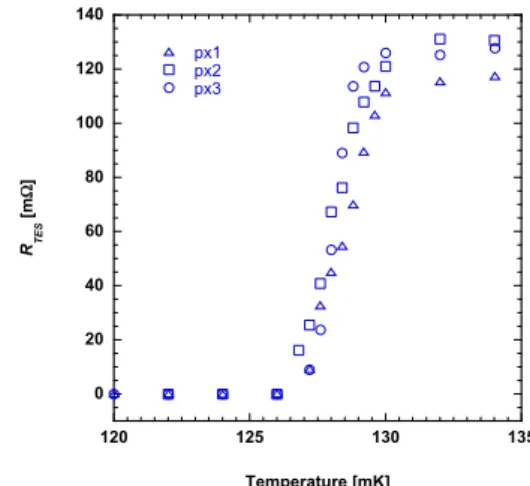
Fig. 5 Relationship between the electric resistance of the TES and the temperature of px1–px3.
Table 2 Geometrical dimensions of TES microcalorimeter pixel.
Elements Dimensions
Au absorber thickness 5µm
Au absorber surface area 160µm×160µm Au absorber stem area 100µm×100µm Ta2O5layer thickness 100 nm
Ta2O5layer perimeter 180µm×180µm TES bilayer thickness 120 nm (Ti)/50 nm (Au) TES surface area 200µm×200µm SiNxmembrane thickness 1µm
SiNxmembrane surface area 400µm×400µm
compact dry-3He–4He dilution refrigerator pre-cooled by the Gifford–McMahon (GM) cooler. Precise operation of the TES microcalorimeter had been disturbed by severe me- chanical vibrations accompanied with reciprocating motion of the GM cooler [14]. For suppressing mechanical vibra- tions the GM cooler was installed in the vacuum cham- ber of the3He–4He dilution refrigerator with employing a vibration-proofing structure.
After cooled below 200 mK, the electric resistance of the TES of each pixel in the TES microcalorimeter chip was measured by applying a constant bias current I0=10 µA with changing temperatures. In the circuit diagram Fig. 2, the electric resistance of the TESRT ES is given by
due to accidental damage in a setup preparation. Table 3 lists measured values of the transition temperatureTc, the phase transition temperature width∆Ttrn, the normal conducting resistanceRNand the sensitivityαof the TES of px1–px3.
For operating the TES microcalorimeter with the high energy resolution, the bath temperatureTband the bias cur- rentI0 are determined with taking account of the relation-
Table 3 The transition temperatureTc, the temperature phase transition width∆Ttrn, the normal conducting resistanceRNand the sensitivityαof the TES.
px Tc(mK) ∆Ttrn(mK) RN(mΩ) αat 128 mK
1 128.4 2.8 115 102
2 128.0 2.8 130 160
3 127.6 2.4 125 260
Fig. 6 Relationship between the applied bias currentI0and output volt- age of the SQUID array amplifierVout of px3 at a bath temperature of 80 mK.
Fig. 7 Relationship between the applied bias currentI0and the electric resistance of TESRT ES/RNfor px1–px3 at a bath temperature of 80 mK.
line in Fig. 6 forI0 below 120µA. The temperature of the TES microcalorimeter pixel increases with Joule heat gen- eration caused byRT ES with applying bias currentI0above 120 µA. In the range of I0 between 120 and 300µA, the TES is in the phase transition region owing the electrother- mal feedback mechanism [10]. The normal conducting state of the TES is indicated by the straight line in Fig. 6 for I0
above 300 µA. By using Eq. (2) relationship between I0
andVoutis converted in to that betweenI0andRT ES. Figure 7 shows relationship betweenI0 andRT ES/RN for px1–px3 at a bath temperature of 80 mK. As shown in Table 3 and Fig. 7, px1, px2 and px3 in the TES microcalorimeter chip have almost the same characteristics within a tolerance for X-ray detection operation.
3. Response to L X-rays Emitted from241Am Source The four-pixel-array TES microcalorimeter was cooled down to 80 mK and irradiated with L X-rays emitted from a sealed241Am source of 3.7 MBq. The241Am source was wrapped with a polyimide tape for stoppingα-rays and at- tenuating intensity of L X-rays and placed inside the refrig- erator. Each pixel of the TES microcalorimeter was operated individually with using a single channel electronics consist- ing of the TES bias current source and the readout of the SQUID array amplifier. Counting rate of detection signal pulses was found to be 1 count per second. First the px3 was selected to operate for L X-ray detection because of the highest value of the sensitivity αlisted in Table 3. L X-ray detection signal pulses were accumulated in operat- ing with setting the TES resistanceRT ES to 20, 30, 40, 50 and 60% ofRN. The TES resistanceRT ES was set by ap- plying the bias current I0 with using relationship between the applied bias currentI0and the electric resistance of TES RT ES/RNshown in Fig. 7. Detection signal pulses were dig- itized with 2.5×10⁵ samples per second and accumulated in a personal computer for response analysis. As shown in Fig. 8 two types of signal pulses were observed with differ- ent shape in X-ray detection. Slow signals consist of single rise and decay components with time constants of 16 and 395µs, respectively, while fast signals consist of a rise com- ponent with a time constant of 6.4µs and two decay com- ponents with time constants of 16 and 395µs. Slow signal pulses corresponded to X-rays detection events in the ab- sorber, whereas X-rays absorbed in the TES generated fast signal pulses. The number of slow signal pulses were found to be 92% of all detection events.
The full width at half maximum (FWHM) value of the energy resolution is expected by using the noise equivalent power NEP(f) [15]. By using the noise power spectrum
|N(f)|2,NEP(f) is expressed as
Fig. 8 Two different types of X-ray detection signal pulse observed in operating px2 at a bath temperature of 80 mK.
|NEP(f)|2=2E20|N(f)|2
|M(f)|2, (3)
whereE0is the L X-ray energy,|M(f)|is obtained by apply- ing the Fourier transform the averaged voltage signal pulse.
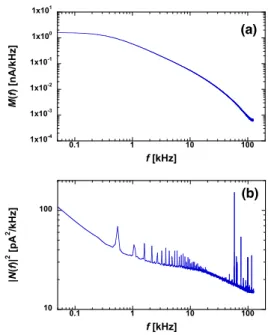
Figure 9 (a) and (b) show the Fourier transform of the av- eraged voltage signal pulse of 17.751 keV X-ray detection
|M(f)|and the noise power spectrum|N(f)|2with a cut-off frequency of 125 kHz. Expected FWHM values of the en- ergy resolution were calculated for 17.751 keV X-ray detec- tion with different operation setting of RT ES/RN by using the equation
∆Eev= 2.35E0
√ 2
∫ fmax
0
|M(f)|2
|N(f)|2d f
, (4)
where fmax was taken to be 125 kHz. Figure 10 shows re- lationship between operation settingRT ES/RN and the ex- pected value of the energy resolution∆Eevfor 17.751 keV X-ray detection. The minimum value of∆Eevwas obtained to be 34.9 eV by operation settingRT ES/RN of 0.3. Then the px1 and px2 were operated for L X-ray detection with applying the bias currentI0 for settingRT ES/RN to 0.3 and 0.4. Values of∆Eevfor the px1 and px2 were calculated with using Eq. (4) for 17.751 keV X-ray detection with operation settingRT ES/RN of 0.3 and 0.4. Calculated results are plot- ted in Fig. 10. The smallest value of∆Eevwas obtained to be 33.3 eV in operating the px2 with settingRT ES/RNof 0.3.
The pulse height distribution for operation of the px2 with setting RT ES/RN of 0.3 was obtained by analyzing accumulated detection signals with using the optimal fil- ter method [16]. In operating the TES microcalorimeter, a fluctuation of a bath temperature was observed to be ± 10µK at 80 mK. The effect of the bath-temperature fluctu- ation was taken into account in the pulse height analysis.
Since the signal pulses corresponding to 59.5 keVγ-ray de- tection were found in the pulse height analysis, the satura- tion energy of px2 would be higher than 59.5 keV. The ob- tained pulse height distribution was converted to response of the px2 by assigning peaks to energy of L X-rays emit- ted by237Np progeny resulting from theαdecay of241Am.
Fig. 9 The Fourier transform of the averaged voltage signal pulse of 17.751 keV X-ray detection|M(f)|(a), the noise power spectrum|N(f)|2 (b).
Fig. 10 Relationship between operation settingRT ES/RN and the ex- pected value of the energy resolution∆Eevfor 17.751 keV X-ray detection at a bath temperature of 80 mK.
Figure 11 shows obtained response of the px2 to L X-rays emitted from241Am source. Major peaks in the response in Fig. 11 are labeled with corresponding L-lines of Np X-ray.
Since the expected FWHM value of the energy resolution of the px2 was evaluated to be 33.3 eV for 17.751 keV X- ray detection, the natural line width of L X-ray was taken into account in fitting peaks in the response. In this work, response of the microcalorimeter to monoenergetic X-rays and the intensity distribution of individual L X-ray with the natural line width were assumed to have a Gaussian and Lorentzian shape, respectively, and individual peak in the response was fitted by using the Voigt function, which is the convolution of the Gaussian and the Lorentzian. Values of energy and natural width of L line X-ray were cited from the literature [17]. Fitted response to Lβlines of Np X-ray is shown by solid line in Fig. 12. Dotted line in Fig. 12 indicates the intensity distribution of Lβ lines of Np X-ray.
Fig. 11 Response of the px2 to L X-rays emitted from241Am source with settingRT ES/RNof 0.3 at a bath temperature of 80 mK.
Fig. 12 Fitted response to Lβlines of Np X-ray.
Table 4 Line energy, the natural width and fitting results of the FWHM value of the energy resolution for response of the px2 to L X-rays emitted from241Am source.
Line E(keV) Natural width (eV) ∆E(eV) Np Lα1 13.946 11.8 33.9±1.4
Np Lβ1 17.751 13.4 33.4±1.2
Np Lγ1 20.784 15.9 30.4±2.9
The FWHM value was obtained to be 33.4 eV at the Np Lβ1 peak of 17.751 keV, which agrees with the expected value.
Table 4 summarizes fitting results of the FWHM value of the energy resolution with corresponding values of line-energy and the natural width.
4. Response to L X-rays Emitted from Mixture Source of238Pu,239Pu and241Am
Since the handling of plutonium isotopes is strictly con- trolled under various safety regulations, the spectroscopic measurement of L X-rays emitted from plutonium isotopes was carried out by using checking sources of plutonium iso-
Fig. 13 Response of the px2 to L X-rays emitted from mixture source of
238Pu,239Pu and241Am with settingRT ES/RNof 0.3 at a bath temperature of 80 mK.
Fig. 14 Fitted response to Lβlines of U and Np X-ray.
Table 5 Line energy, the natural width and fitting results of the FWHM value of the energy resolution for response of the px2 to L X-rays emitted from mixture source of238Pu,239Pu and241Am.
Line E(keV) Natural width (eV) ∆E(eV)
U Lα1 13.618 11.7 31.5±2.3
U Lβ1 17.222 13.5 39.2±1.3
U Lγ1 20.169 14.5 33.5±2.6
Np Lα1 13.946 11.8 31.5±2.3
Np Lβ1 17.751 13.4 39.2±1.3
Np Lγ1 20.784 15.9 33.5±2.6
topes for calibration of the lung counter at the Nuclear Fuel Cycle Engineering Laboratories of the Japan Atomic Energy Agency. Checking sources of plutonium isotopes consist of three lymph node blocks containing238Pu with a total inten- sity of 111.33 kBq and three lymph node blocks containing
239Pu with total intensity of 184.63 kBq. The 4-pixel array TES microcalorimeter and the SQUID array amplifiers were cooled by a compact dry3He–4He dilution refrigerator with pre-cooled by a remote helium cooling loop [18]. For con- firming the performance of X-ray detection, the 4-pixel ar-
ray TES microcalorimeter was irradiated with L X-ray emit- ted from a sealed 241Am source at a bath temperature of 80 mK. The sealed241Am source was placed in front of the X-ray window of the refrigerator. The X-ray window was made of a disk shaped beryllium plate of 25 mm in diame- ter and 1 mm thick. The px2 was operated for L X-ray de- tection with settingRT ES/RNof 0.3. Experimental FWHM value of the energy resolution was obtained to be 34.8 eV at the Np Lβ1peak of 17.751 keV. Although an electrical noise in the laboratory caused a degradation of the energy resolu- tion, the energy resolution was found to be superior to that obtained in last experiments [7]. Mixture source of238Pu,
239Pu and241Am was placed in front of the X-ray window of the refrigerator, and the px2 was operated with setting RT ES/RNof 0.3. Figure 13 shows obtained response of the px3 to L X-rays emitted from mixture source of238Pu,239Pu and241Am. In obtained response, major peaks with high in- tensities can be clearly distinguished. Major peaks in the response in Fig. 13 are labeled with corresponding L-lines of U and Np X-ray. The Voigt function was used for fitting individual peak in the response as mentioned above. Fitted response to Lβ lines of U and Np X-ray is shown by solid line in Fig. 14. Dotted line in Fig. 14 indicates the inten- sity distribution of Lβ lines of U and Np X-ray. Table 5 summarizes fitting results of the FWHM value of the energy resolution with corresponding values of line-energy and the natural width.
5. Conclusions
The four-pixel-array TES microcalorimeter was irradiated with L X-rays emitted from a sealed241Am source at a bath temperature of 80 mK. The selected pixel of the TES mi- crocalorimeter was operated for the detection of L X-rays.
Detection signal pulses were converted to a response of the TES microcalorimeter to L X-rays with using the optimal filter method. An energy resolution was obtained to be 33 eV of FWHM value at 17.751 keV. Response of L X-rays emitted from a mixture of238Pu,239Pu and241Am sources was obtained by operating the selected pixel of the TES mi- crocalorimeter. Major L X-ray peaks of progeny elements of αdecay of Pu and Am isotopes were clearly identified in the obtained energy spectrum. The experimental results demon- strated the separation of241Am and plutonium isotopes by L X-ray spectroscopy.
Acknowledgments
The authors thank T. Hasuo for technical support. This work was financially supported by SENTAN, Japan Science and Technology Agency (JST) and a Grant-in Aid for Scientific Research (B) (24360397) from the Japan Society for Pro- motion of Science.
References
[1] BNM-LNHB/CEA Table de Radioneucléides, Nuclear data of indi- vidual nuclide can be downloaded as follows :http://www.nucleide.
org/DDEP_WG/Nuclides/Pu-239_tables.pdf, Feb.2009,http://www.
nucleide.org/DDEP_WG/Nuclides/Am-241_tables.pdf,Aug.2010.
[2] M. C. Lépy, J. Plagnard, and L. Ferreux, “Measurement of241Am LX-ray emission probabilities,” Appl. Radiat. Isot., vol.66, no.6–7, pp.715–721, June–July 2008.
[3] M. C. Lépy, B. Duchemin, and J. Morel, “Comparison of experimen- tal and theoretical L X-ray emission probabilities of241Am,239Pu and240Pu,” Nucl. Instrum. Methods Phys. Res. A, vol.353, no.1–3, pp.10–15, Dec. 1994.
[4] A. S. Hoover, N. Hoteling, M. W. Rabin, J. N. Ullom, D. A. Ben- nett, P. J. Karpius, D. T. Vo, W. B. Doriese, G. C. Hilton, R. D.
Horansky, K. D. Irwin, V. Kotsubo, D. W. Lee, and L. R. Vale,
“Large microcalorimeter arrays for high-resolution X- and gamma- rayspectroscopy,” Nucl. Instrum. Methods Phys. Res. A, vol.652, no.1, pp.302–305, Oct. 2011.
[5] S. R. Bandler, J. S. Adams, C. N. Bailey, S. E. Busch, J. A. Cherve- nak, M. E. Eckart, A. E. Ewin, F. M. Finkbeiner, R. L. Kelley, D. P.
Kelly, C. A. Kilbourne, J.-P. Porst, F. S. Porter, J. E. Sadleir, S. J.
Smith, and E. J. Wassell, “Advances in small pixel TES-based X-ray microcalorimeter arrays for solar physics and astrophysics,” IEEE Trans. Appl. Supercond., vol.23, no.3, pp.2100705, June 2013.
[6] K. Maehata, K. Nakamura, T. Yasumune, K. Ishibashi, K. Takasaki, K. Tanaka, A. Odawara, and A. Nagata, “Development of a TES microcalorimeter for spectroscopic measurement of Lx-rays emit- ted by transuranium elements,” J. Nucl. Sci. Technol., vol.47, no.3, pp.308–313, Jan. 2010.
[7] M. Maeda, K. Maehata, N. Iyomoto, K. Ishibashi, K. Takasaki, K. Nakamura, K. Aoki, K. Mitsuda, K. Tanaka, and Y. Yamanaka,
“Peak identification of L X-ray spectra of elemental Np and U,” J.
Nucl. Sci. Technol., Sept. 2014.
[8] K. Maehata, N. Iyomoto, M. Maeda, S. Ezaki, A. Takano, S. Ma- tsumura, T. Hara, K. Mitsuda, N. Y. Yamasaki, and K. Tanaka, “De- velopment of 4-pixel-array TES microcalorimeters with mushroom- shaped absorbers with insulating layers supporting overhang re- gions,” J. Low Temp. Phys., vol.176, no.3–4, pp.578–583, Aug.
2014.
[9] S. Friedrich, “Cryogenic X-ray detectors for synchrotron science,”
J. Synchrotron Rad., vol.13, no.2, pp.159–171, Mar. 2006.
[10] K. D. Irwin, “An application of electrothermal feedback for high resolution cryogenic particle detection,” Appl. Phys. Lett., vol.66, no.15, pp.1998–2000, Apr. 1995.
[11] N. Tralshawala, S. Aslam, R. P. Brekosky, T. C. Chen, E. Figueroa Feliciano, F. M. Finkbeiner, M. J. Li, D. B. Mott, C. K. Stahle, and C. M. Stahle, “Design and fabrication of superconducting transi- tion edge X-ray calorimeters,” Nucl. Instrum. Methods Phys. Res.
A, vol.444, no.1–2, pp.188–191, Apr. 2000.
[12] J. A. Chervenak, F. M. Finkbeiner, T. R. Stevenson, D. J. Talley, R. P.
Brekosky, S. R. Bandler, E. Figueroa-Feliciano, M. A. Lindeman, R. L. Kelley, T. Saab, and C. K. Stahle, “Fabrication of transition edge sensor X-ray microcalorimeters for Constellation-X,” Nucl. In- strum. Methods Phys. Res. A, vol.520, no.1–3, pp.460–462, Mar.
2004.
[13] Y. H. Lee, J. B. Bae, I. H. Kim, Y.-H. Kim, H. Y. Lee, K. B. Lee, M. K. Lee, and S. J. Lee, “Fabrication of thick metal absorber with overhanging structure for TESs,” IEEE Trans. Appl. Supercond., vol.19, no.3, pp.469–472, June 2009.
[14] T. Umeno, K. Maehata, K. Ishibashi, Y. Kamioka, S. Yoshida, K.
Takasaki, and K. Tanaka, “Operation of a TES microcalorimeter cooled by a compact liquid-helium-free3He–4He dilution refriger- ator directly coupled to a Gifford–McMahon cooler,” Cryogenics, vol.50, no.5, pp.314–319, May 2010.
[15] D. McCammon, “Thermal equilibrium calorimeters,” in Cryogenic Particle Detection, Topics Appl. Phys. 99, ed. By C. Enss, pp.1–34, Springer-Verlag, Berlin, Heidelberg, 2005.
[16] A. E. Szymkowiak, R. L. Kelley, S. H. Moseley, and C. K. Stahle,
“Signal processing for microcalorimeters,” J. Low Temp. Phys., vol.93, no.3–4, pp.281–285, Nov. 1993.
Keisuke Maehata received the B.E.
and Ph.D. degrees in nuclear engineering from Kyushu University, Japan in 1985 and 1992, re- spectively. He joined Low Temperature Divi- sion/Cryogenics Center of National Laboratory for High Energy Physics (KEK) as a research associate in 1986. He moved to School of Engi- neering, Kyushu University in 1990. He is asso- ciate professor of Graduate School of Engineer- ing, Kyushu University. His research interests are radiation physics and measurements, applied superconductivity and cryogenics.
Makoto Maeda received the B.E., M.E.
and Ph.D. degrees in nuclear engineering from Kyushu University, Japan in 2009, 2011 and 2014, respectively. He joined Japan atomic en- ergy agency as a researcher in 2014. His re- search interests are radiation measurements.
Naoko Iyomoto received the B.S., M.S., and Ph.D. degrees in Physics from the Univer- sity of Tokyo in 1994, 1996 and 1999, respec- tively. She has joined Kyushu University as an associate professor in 2010. Her research inter- ests are in the radiation detection and measure- ment.
Kenji Ishibashi received B.E. degree in 1974, M.E. in 1976 and Ph.D. in 1980 from Kyushu University. He is professor of Graduate School of Engineering, Kyushu University. His research area is nuclear radiation measurement.
clear fuel reprocessing plant and maintenance of radiation monitoring systems.
Katsunori Aoki received the B.H.S. and M.H.S. degrees from Fujita Health University, Japan, in 2010 and 2012. Since 2012, he has been an engineer of radiological control section in Japan Atomic Energy Agency. He has been engaged in radiological control of nuclear fuel reprocessing plant and monitoring of gaseous radioactive wastes.
Koji Takasaki received his B.E., M.E.
and Ph.D. degrees in Nuclear Engineering from Kyushu University, Japan, in 1984, 1986 and 2011, respectively. He is a deputy direc- tor of Health and Safety Department in Oarai Research and Development Center of Japan Atomic Energy Agency. His research area is the radiation protection and radiation measurements related to the nuclear fuel cycle facilities.
Kazuhisa Mitsuda received the B.S. and Ph.
D. degrees in physics from University of Tokyo, Japan in 1979 and 1984, respectively. After three years of JSPS Post Doc, he got a position at Institute of Space and Astronautical Science (ISAS) as a research associate in 1987. He is now a professor at department of space astron- omy and astrophysics of ISAS, which is now a part of Japan Aerospace Exploration Agency (JAXA). His major is high-energy astrophysics, and has worked on research and development of X-ray microcalorimeters since 1993.
Keiichi Tanaka received the M.S. degree in Physics from Tokyo Institute of Technology in 1997 and the D.S. degree in Physics from Tokyo University of Science in 2004, respectively. He stayed in Seiko Instruments Inc. from 1997 to 2005 and SII NanoTechnology Inc. from 2005–
2012. From 2013, he has stayed in Hitachi High-Tech Science Corp. His major research interests are to develop the TES system and de- vices. He is a member of the Japanese Society of Applied Physics.