86
A SIMPLE INTRODUCTION TO CRYSTALS $B^{2,s}$ FOR
KIRILLOV-RESHETIKHIN
MODULES OF TYPE $D_{n}^{(1)}$ANNESCHILLINGAND PHILIPSTERNBERG
ABSTRACT. TheKirillov-Reshetikhinmodules $W^{r,s}$ are finite-dimensional
representa-tionsof quantumaffinealgebras $U_{q}’(\mathfrak{g})$, labeled byaDynkin node$r$of the$\mathrm{a}\mathrm{f}\mathrm{f}$me
Kx-Moody algebra$\mathrm{g}$and apositive integer$s$
.
In thispaperwe explainthecombinatorialstructureofthe crystalbasis$B^{2,\epsilon}$correspondingto$W^{2,s}$for the algebra oftype$D_{n}^{(1)}$.
Proofs of allclaims,aswellasmorespecific detailsof all constructions, may befound
in[16].
1. INTRODUCTION
At the workshop on the Combinatorial Aspect of Integrable Systems held at RIMS
Kyoto, one of the recurring themes
was
the $X=M$ conjecture of$[1, 2]$.
Briefly, thisconjecture states thatthe one-dimension ai configuration
sums
$X$ ofa
certainclass oflat-ticemodels
can
be expressedas
fermonic formulas$M$,reflecting thecorner
transfermatrixmethod and theBethe ansatz
as
methodsforsolving theselattice models. Thecombina-torial tools ofthese methods
are
Young$\mathrm{t}\mathrm{a}\mathrm{b}\mathrm{l}\mathrm{e}\mathrm{a}\mathrm{u}\mathrm{x}/\mathrm{c}\mathrm{r}\mathrm{y}\mathrm{s}\mathrm{t}\mathrm{a}\mathrm{l}$ basesandrigged configurations,respectively. Thefollowingtable summarizesthethree regimesof this conjecture.
formulas $X$
:
1-Dsum
$M$ : fermionic formulaformulas $X$
:
1-Dsum
$M$ : femionic$\mathrm{f}\mathrm{o}\mathrm{m}\mathrm{u}\grave{\iota}\mathrm{a}$stat. mech. methods CTM Betheansatz
comb. objects $\mathrm{t}\mathrm{a}\mathrm{b}\mathrm{l}\mathrm{e}\mathrm{a}\mathrm{u}\mathrm{x}/\mathrm{c}\mathrm{r}\mathrm{y}\mathrm{s}\mathrm{t}\mathrm{a}\mathrm{l}\mathrm{s}$ riggedconfigurations
More specifically, the theoryofcrystal basesis used tolabel the highest weightvectors
ofirreducible representations (i.e., Bethe vectors) ofa certain algebra by crystal basis
elements. Since each Bethe vector corresponds to
a
solutionofthe Bethe equations andthese solutions
are
indexedbyrigged configurations, there shouldbea
natural bijectionbetween highest weight crystal elements andrigged configurations. Suchbijectionshave
been found by Kirillov and Reshetikhin [7] for typo $A_{n}^{(1)}$ (see
also [8]), and later for all
nonexceptional types for the vectorrepresentation [10] and symmetric
powers
[15]. FortyPe $D_{n}^{(1)}$ the bijection
was
givenin [14] for the fundamentalrepresentations.The$X=M$conjecture dependsupontheexistenceofthe crystals$B^{r,s}$forthe
Kirillov-Reshetikhinmodules$W^{r,s}$
.
TheKirillov-Reshetikhin(KR)modulesare
finite-dimensionalirreducible representations ofquantumaffine algebras $U_{q}’(\mathfrak{g})$
.
In general, it is notknownyet whether the $B^{r,s}$ exist and whattheircombinatorial structure is. It is thepurpose of
thisnote togive thecombinatorial structure of$B^{2,s}$ of type$D_{n}^{(1)}$
.
The KR crystals oftype
$\mathrm{A}_{n}^{(1)}$
have been explicitly described$[4, 13]$,
as
wellas
$B^{r,1}$ and$B^{1,s}$ formost types$[4, 6]$.
Furthermore, according to the theory ofvirtual crystals $[11, 12]$, the following algebra
2000Mathematics Subject
Classification.
Primary$17\mathrm{B}37$;Secondary$81\mathrm{R}10$.
Date:October2004.
87
A.SCHILLINGAND P.STERNBERG
embeddings havebeen explicitlyextendedto thecrystals of their KRmodules:
$C_{n}^{(1)}$,$A_{2n}^{(2\rangle}$, A$2n(2)\uparrow$,$D_{\mathit{7}\mathrm{L}}^{(2)}+1$ $rightarrow$ $A_{2n-1}^{\langle 1)}$
$A_{2n-1}^{(2\}}$,$B_{n}^{(1)}$ $\llcorner_{arrow}$ $D_{n+1}^{(1)}$
$E_{6}^{(2)}$,$F_{4}^{(1)}$ $\llcornerarrow$ $E_{6}^{(1\}}$
$D_{4}^{(3)}$,$G_{2}^{\langle 1\}}$ $rightarrow$ $D_{4}^{(1\}}$.
2. REVIEW
For background
on
quantumgroups,
crystal bases, perfect crystals, and otherwell-understood
concepts, pleaserefer to [16]orany ofthestandard
referenceson
thesetopics.The fermionic formulas suggest not only the existence ofthe crystals $B^{r,s}$, but also severalconjecturesaboutthestructure ofthesecrystals
as
well [1], In thecase
of$B^{2,s}$,this specializestoConjecture2.1([1]). The crystal$B^{2,s}$ tyPe$D_{n}^{(1\}}$ existsand has thefollowingproperties:
(1) Asa
classical
crystal$B^{2,s}$decomposesas$B^{2,s}\cong\oplus_{k=0}^{s}B(k\Lambda_{2})$.
(2) $B^{2,s}$ isperfect
ofIevel
$s$.
(3) $B^{2,s}$ isequippedwith
an
energyfunction
$D_{B^{2,s}}$such that$D_{B^{2.\epsilon}}(b)=k-s$if
$b$is
in the component
of
$B(k\Lambda_{2})$ (in accordancewith theenergy$D$as
in[16]).To construct $\tilde{B}^{2,s}$
so
that it satisfiesthese properties,we
first finda
way to label thevertices of the crystal. Our approach is to define a set of rules for what a legal “affine
tableau”is,and then showthatthis set is in bijection withthedirect
sum
$\oplus_{k=0}^{s}B(k\Lambda_{2})$.
This bijectionprovidestheactionofthecrystal operators$\tilde{e}_{\mathrm{i}}$ and
$\overline{f}_{\mathrm{i}}$ for$1\leq \mathrm{i}\leq n$,but
we
still needto know the action ofeo and$\tilde{f}_{0}$.
To define these crystal operators,we use
an
auxilliaryconstruction
calledthebranchingcomponent graPh, Itcan
be shownthattheresultingaffine crystal$\overline{B}^{2,s}$is perfect of level$s$
.
Infactitwas
proved in[16]thatthisistheunique perfect level $s$crystal forwhichtheenergy ffinction is
as
statedin Conjecture2.1.3. AFFINETABLEAUX
Webriefly recall the labelling by tableaux ofthe vertices ofclassical highest weight
crystals $B(k\mathrm{A}_{2})$ of highest weight $k\Lambda_{2}$, following the construction by Kashiwara and
Nakashima
[5], Eachcrystalelementcan
berepresentedby atableau of shape$\lambda=(k_{7}k)$on
thepartially orderedalphabet$1<2<\cdots<n-1<n<\overline{n-1}<\cdots\overline{2}<\overline{1}$
$\overline{n}$
suchthat thefollowingconditionshold[3,
page
202]:Criterion 3.1.
(1)
If
abis in thefilling, then$a\leq bj$(3) No configuration
of
theform
a$\frac{a}{a}$ or $\frac{a}{a}\overline{a}$ appears;(4) Noconfiguration
oftheform
$n-1n \frac{n}{n-1}$part $n-1 \overline{n}\frac{\overline{n}}{n-1}$appears.(5) No configuration
of
theform
$\frac{1}{1}$appears.
Notethat for$k\geq 2$, condition5 followsffomconditions 1 and3.
We define theset of affine tableau in $\tilde{B}^{2,s}$
byremoving parts 3 and 5 from
Criterion
3.1. The bijection between$\overline{B}^{2,s}$ and
$\oplus_{k=0}^{s}B(k\Lambda_{2})$ is
as
follows. Givenanaffinetableau$T$ which is not
a
classical tableau (i.e.,a
tableau that satisfies parts 1, 2, and 4 of 3.1,butviolates part3
or
5) theremust bea
configuration of the form $a$$\frac{a}{a},\frac{a}{a}\overline{a}$
or
$\frac{1}{1}$. Removecolumns of the form $\frac{a}{a}$ (possiblywith$a=1$)until the resulting tableau satisfiesCriterion
3.1. It
can
be shown that this procedure gives awell-defined bijectionbetween the twosets.
Thefollowing examplesaretaken ffom$B\sim 2,5$ for$D_{4}^{\langle 1)}$.
12
Example3.4. Theclassical tableau correspondsto the affinetableau
42 $\ovalbox{\tt\small REJECT}_{42222}^{12222}$ .
While
we
couldchoosetoadd columns of theform $\frac{2}{2}$ eithertothemiddleortothe rightside of the firsttableau, eitherchoice resultsinthesameaffine tableau.
1 2
4 2
By part 1 of Criterion 3.1 the onlyplace that
a
column oftheform $\frac{a}{a}$ maybe inserted1sbetween the first and secondcolumnsof$t$
.
However,we maychoosebetweenusingthistocreate aconfiguration of either ofthe forms $a$
$\frac{a}{a}$
or
$\frac{a}{a}\overline{a}$.
Once again,this“choice”doesnotaffect theoutcome.
4. THEBRANCHING COMPONENT GRAPH
Sincethe Dynkin diagramfor type$D_{n}^{(1\}}$ has
a
graph automorphism interchangingnodes0 and 1, weknow that interchanging the role of1-arrowsand0-arrows in$\overline{B}^{2,s}$
will
pro-duce
an
affine crystal isomorphic to $\tilde{B}^{2,\mathrm{s}}$.
89
A.SCHILLINGANDP.STERNBERG
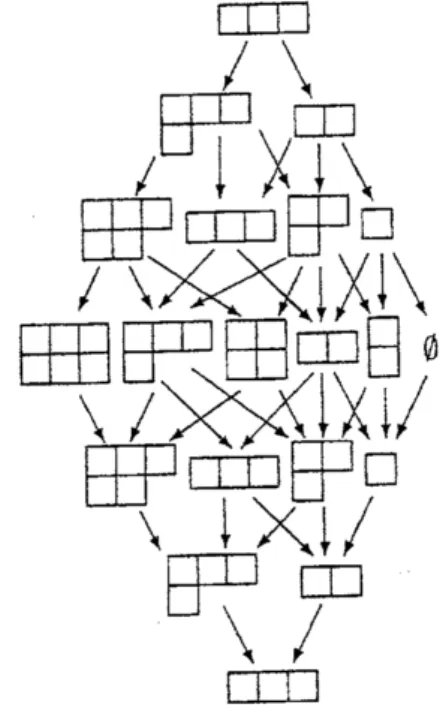
FIGURE 1. Branchingcomponent graph $B\mathrm{C}(3\Lambda_{2})$
largerscalebyconsidering the$D_{n-1}$-crystals that result ffom removing the
$1$
-arrows
from$\oplus_{k=0}^{s}B(k\Lambda_{2})$,since this direct
sum
isisomorphicto$\tilde{B}^{2,s}$ withtheO-arrowsremoved.
Thebranchingcomponent graph of$\overline{B}^{2,s}$,
denoted
$B\mathrm{C}(\overline{B}^{2,\mathit{5}})$,isdefined as
follows. Itsverticescorrespondto the$D_{n-1}$-crystalsthatremain connectedafter removing all O-arrows
and l-arrows ffom$B\sim 2,s$;
we
label the vertices (non-uniquely) by thepartition$\lambda$
indicat-ing the classical highest weight of the corresponding $U_{q}(D_{n-1})- \mathrm{c}\mathrm{r}\mathrm{y}\mathrm{s}\mathrm{t}\mathrm{a}1$
.
The edges of $B\mathrm{C}(\tilde{B}^{2,s})$are
definedbyplacing anedgefrom$v$ to$w$ if there is atableau$b\in B(v)$ such
that$\tilde{f}_{1}(b)\in B(w)$,where$B(v)$ denotes thesetoftableaux
contained
inthe$D_{n-1^{\sim}}\mathrm{c}\mathrm{r}\mathrm{y}\mathrm{s}\mathrm{t}\mathrm{a}1$ indexedby$v$
.
Itsufficestodescribe the effect ofremoving the 1-arrows ffom$B(k\mathrm{A}_{2})$forarbitrary
$\mathrm{k}$
.
Wedenotethisbranchingcomponent graphby$B\mathrm{C}(k\Lambda_{2})$,and
use
$v_{k}$todenotethe “highestweightbranchingvertex”, i.e., thebranchingvertex suchthatthe highest weight tableaux
$b_{k\mathrm{A}_{2}}\in B(v_{k})$.
An
intuitive
wayto construct$B\mathrm{C}(k\Lambda_{2})$ isas
follows. Begin with a1$\mathrm{x}$
$\mathrm{k}$ rectangle,
which labels Vk- For $1\leq j\leq k$, the partitions labelingthe vertices of rank$j$
are
thosewhich
are
contained
ina2x&
rectangle andwhichare
joinedbyan
edgeinYoung’s latticeto
some
partition
labelinga
vertexinrank$j-$ $1$. In eachrank,thepartitionsappear
withmultiplicity
one.
For$k+1\leq j\leq 2k$,thepartitions inrank$j$are
thesame
as
those inrank $2k-\tilde{J}$,againwith multiplicityone.
Finally,thereisan
edge froma
vertex$v$of rank$j$toa
vertex$w$ of rank$j+1$preciselywhen the corresponding
partitions are
joinedby
an
edgeinYoung’s lattice.
Example4.1. Figure 1 depicts$B\mathrm{C}(3\Lambda_{2})$
.
There is
a
uniqueinclusionof$B\mathrm{C}$(AA2 ) in$B\mathrm{C}((k+1)\mathrm{A}_{2})$;at
agrees
withthelabellingTYPE CRYSTALS
$\mathit{1}^{\prod}\backslash$
$\mathrm{f}\mathrm{f}1\int\Xi^{\mathrm{J}}\fbox\prod\downarrow\Lambda_{\mathrm{H}^{\downarrow\backslash }\emptyset}$ $\Xi^{\mathit{1}\backslash }\emptyset\square$
$\emptyset$
$\backslash$
$\mathrm{F}_{\int_{\prod}^{\square }}^{\downarrow \mathrm{I}}\downarrow[$
$\backslash \int_{\square }$
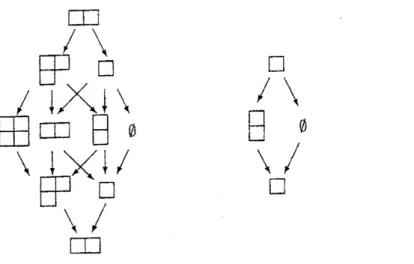
FIGURE 2. Branching component graph$B\mathrm{C}(\tilde{B}^{2,2})$
a
vertexto the rank of its image in $B\mathrm{C}(s\mathrm{A}_{2})$ under the appropriate compositionoftheseinclusions. For example, everyvertexlabelled by
0
alwayshas rank$s$in$B\mathrm{C}(\tilde{B}^{2,s})$.
Example 4.2. Figure 2 depicts $B\mathrm{C}(\tilde{B}^{2,2})$, which is the union of$B\mathrm{C}(0)$, $B\mathrm{C}(\Lambda_{2})$, and
$B\mathrm{C}(2\Lambda_{2})$
.
5. AFFINE KASHIWAR$\mathrm{R}\mathrm{A}$OPERAT0RS
In this section we describe how to “overlay”
a
set of arrows, called $F_{0}$ arrows,on
$B\mathrm{C}(\tilde{B}^{2,s})$ in a way that specifies $\tilde{e}_{0}$ and $\overline{f}_{0}$
.
Let $v\in B\mathrm{C}(\tilde{B}^{2_{\}s})$ be a vertex of globalrank$j$ in$B\mathrm{C}(k\Lambda_{2})$associated with thepartition $(\lambda_{1}, \lambda_{2})$
.
Placean
$F_{0}$arrow
ffom$v$tothe
following
.
vertices,if
theyexist:the vertex of global rank$j-1$ in$B\mathrm{C}((k-1)\mathrm{A}_{2})$ with shape $(\lambda_{1}-1, \lambda_{2})$;
.
thevertexof global rank$j-1$ in$B\mathrm{C}(k\Lambda_{2})$withshape ($\lambda_{1}$,A2
– 1);.
thevertex ofglobal rank$j-1$ in$B\mathrm{C}((k +1)\Lambda_{2})$ withshape $(\lambda_{1}+1, \lambda_{2})$;.
thevertex of globalrank $j-1$in$\mathcal{B}C(k\Lambda_{2})$ withshape$(\lambda_{1}, \lambda_{2}+1)$.
The directed graph thatconsists ofthe vertices of$B\mathrm{C}(\tilde{B}^{2,s})$ and the $F_{0}$
arrows
is1so-morphicto$B\mathrm{C}(\tilde{B}^{2,s})$
.
Via thisgraphisomorphism, whichwe
denote$\sigma$, we maydefine$\tilde{f}0$
for$\overline{B}^{2,\epsilon}$
.
Let$b\in B(v)$ be
a
tableauin $\tilde{B}^{2,s}$.
Notethat$B(v)$ isisomorphicto$B(\sigma(v))$as
a
$D_{n-1}$ crystals, let$b’\in B(\sigma(v))$denote the tableau correspondingto$b$under this
isomor-phism. Wemayhave $\tilde{f}_{1}(b’)=c’\in B(w)$for
some
branchingvertex to, orwe
mayhave$\tilde{f}_{1}$$(\ ’)=0$
.
Intheformercase,we
saythat$\tilde{f}_{0}(b)=c$,where$c$correspondsto$c’$ underthe
isomorphism between$B(w)$ and$B(\sigma(w))$; inthe latter case,$\tilde{f}_{0}(b)=0$. Bythe definition
of crystals,this also determines$\tilde{e}_{0}$.
Example5.1. In Figure3
we
have$\mathcal{B}\mathrm{C}(\tilde{B}^{2,2})$with the originalarrows
removed
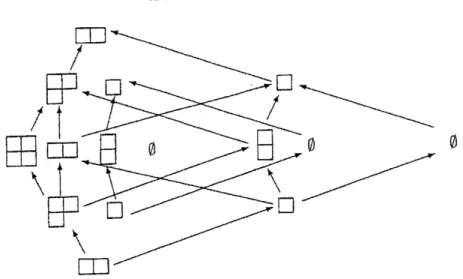
andthe$F_{0}$arrows
superimposed.Of course,
we
could have chosen to define the graph isomorphism in terms of thebranching vertices, and let the definition of the $F_{0}$
arrows
follow. In fact,we
didex-actly that in [16], where a is used to denote the automorphism of the vertices of$\tilde{B}^{2,s}$
correspondingtointerchanging nodes0and 1oftheDynkindiagram.
a
$\iota$A.SCHILLINGANDP.STERKBERG
$\emptyset$
FIGURE 3. $\mathcal{B}\mathrm{C}(\tilde{B}^{2,2})$ with$F_{0}$
arrows
Example5.2. Let$b= \frac{1}{1}\frac{2}{1}$,
so
$b\in B(v)$ where$v$ is thebranchingvertex ofshape $(1, 0)$with global rank 3in$B\mathrm{C}(\Lambda_{2})$
.
Wesee
fromFigures2 and 3that$\sigma(v)$ is thevertexwiththe
same
shapewith$\mathrm{r}\mathrm{a}\mathrm{A}$ $1$ in$B\mathrm{C}(2\Lambda_{2})$.
The correspondingtableauin$\sigma(v)$ is $b’=21 \frac{2}{2}$, and $c’= \overline{f}_{1}(b’)=21\frac{2}{1}$
.
Thebranchingvertex containing$c’$ isthevertex ofshape $(1, 1)$ with
rank2in$B\mathrm{C}(2\mathrm{A}_{2})$,whichisfixed under
$\sigma$,
so
$c=c’$. Therefore,$\overline{f}_{0}(b)=21\frac{2}{1}$.
Example5.3. Let$b= \frac{3}{1}\frac{3}{1}$,
so
$b\in B(v)$ where$v$ isthe branching vertex of shape $(2, 0)$with rank 4 in $B\mathrm{C}(2\Lambda_{2})$. We
see
from Figures 2 and 3 that$\sigma(v)$ is the vertex of the
same
shapewith rank0 in $B\mathrm{C}(2\Lambda_{2})$.
Thecorresponding tableau in$\sigma(v)$ is $b’=3311$, and
$c^{t}=\tilde{f}_{1}(b’)=3312$
.
The branching vertex containing$c’$ is thevertex ofshape $(2, 1)$ with
rank 1 in $\mathcal{B}\mathrm{C}(2\Lambda_{2})$
.
Its image under a is the vertex of thesame
shapewith rank 3 in
$B\mathrm{C}(2\mathrm{A}_{2})$,
so
$\tilde{f}_{0}(b)=c=23\frac{3}{1}$.Example 5.4. Let $b_{k\mathrm{A}_{2}}$ denote the
classical
highest weight tableau of$B(k\Lambda_{2})\subset\tilde{B}^{2,s}$
.
Then$\tilde{f}_{0}(bk\Lambda_{2})=b(k+1)\Lambda_{2}$ for$0\leq k\leq s-1$
.
6. PERFECTNESS
Several conditions must be
satisfied
fora
crystal $B$ to bea
perfect crystal of level$\ell$,
but themostsignificantchallenge is intheconditionthatthemaps $\epsilon$ and
$\varphi$from$B_{\min}$ to $(P_{\mathrm{c}1}^{+})_{\ell}$
are
bijective. Webrieflyrecallthedefinitionofthesesets andmaps
below;formore
detail
see
[16]or
[4].For
a
crystalbasis element$b\in B$, define theweights$\epsilon(b)=\sum_{\mathrm{i}\in I}\epsilon_{i}(b)\Lambda_{i}$ and
$\varphi(b)=\sum_{\mathrm{i}\in I}\varphi_{i}(b)\Lambda_{i}$,
where
$\epsilon_{\mathrm{i}}(b)=\max\{n\geq 0|\tilde{e}_{i}^{n}(b)\neq\emptyset\}$ $\varphi_{i}(b)=\max\{n\geq 0|\overline{f}_{\mathrm{i}}^{n}(b)\neq\emptyset\}$.
The level of
a
weightA is $\langle c, \Lambda\rangle$, where$c=h_{0}+h_{1}+h_{n-1}+h_{n}+ \sum_{n=2}^{n-2}2h_{\mathrm{i}}$ isthe
canonical
centralelement ofthe algebra of$\mathrm{t}\mathfrak{M}\mathrm{e}D_{n}^{(1\rangle}$.
The set ofminimalvertices,denote$B_{1\mathrm{n}\mathrm{i}\mathrm{n}}$, isthe setofcrystal elements $b$forwhich
$\langle$$c$,$\epsilon(b)\}$isminimal. Finally, define $(P_{\mathrm{c}1}^{+})\ell$
to be theset of level$\ell$weights Awithno5componentfor which $\langle h_{i}, \Lambda\rangle\geq 0$ for all$\mathrm{i}\in I$.
We
now
outlinetheconstructionof a2 $\mathrm{x}$ $s$tableau$T$suchthatgivenanylevel$s$ weight$\Lambda$, wehave$\epsilon(T)=\varphi(T)=$ A. It
was
shown in [16]thattheseare
precisely the tableaux1n$B_{\mathrm{I}\mathrm{n}\mathrm{i}\mathrm{n}}$
.
For$\mathrm{i}=0$,
$\ldots$,$n$, let $k_{i}=\langle h_{i}, \lambda\rangle$
.
Wefirst construct atableau$T_{\lambda’}$ corresponding to
the weight $\lambda’=\sum_{i=2}^{n}k_{\mathrm{i}}\Lambda_{i}$
.
We begin with the middle $k_{n-1}+k_{n}$ columns of$T_{\lambda’}$.
If$k_{n-1}^{\wedge}+k_{n}$is
even
and$k_{n}\geq k_{n-1}$,these columns of$T_{\lambda’}$are
If$k_{n-1}+k_{n}$ isoddand $k_{n}\geq k_{n-1}$,
we
haveIn eithercase, if$k_{n}<k_{n-1}$, interchange $n$and$\overline{n}$, and$k_{n}$ and$k_{n-1}$in theabove
configu-rations.
Next
we
putaconfiguration ofthe form1 12 . . . 2
2233 $\overline{k_{2}}k_{\mathrm{a}}\infty$ ontheleft,andaconfigurationof theform
22 $\frac{\overline{1}\overline{1}}{k_{2}}$
ontheright.
We
now use
Lecouvey$D$ equivalenceas
in [9]or
type $D$ slidingas
in [16] to changethistableauinto askewtableauof shape $(s-k_{0_{7}}s-k_{0}-k_{1})/(k_{1})$
.
If$k_{1}>s-k_{0}-k_{1}$$(\mathrm{i}.\mathrm{e}., k_{1}-(s-k_{0}-k_{1})=2k_{1}+k_{0}$ –$s>0$),placeaconfiguration of the following form
in theempty
spaces
inthemiddleof this skewtableau:if$2k_{1}+k_{0}-s$is even,
if$2k_{1}+k_{0}-s$isodd,
wherethenumber ofI’sequalsthenumber of$\tilde{1}’ \mathrm{s}$and thenumberof$2’ \mathrm{s}$equals the number
of
2’s
If$s-k_{0}$isodd,themiddle column of the tableau constructed
so
faris $\frac{a}{a}$ for$1\leq a\leq n$or
$n\overline{n}$.
Whatever it is, simply insert $k_{0}$ of this column intothe tableau next tothemiddlecolumn($\mathrm{c}\mathrm{f}$
, Section3). If$s-k_{0}$ iseven, the middletwo columns
are
oftheformab
$\overline{\frac{b}{a}}$for
some
letters $a$ and$b$(itis possible that $b$ is barred, in whichcase
$\overline{b}$isthe corresponding
93
A.SCHLLINGAND P.STERNBERG
Example6.1. Let$n$$=6$,andconsidertheweight
$\mathrm{A}_{0}+2\Lambda_{1}+\Lambda_{3}+2\Lambda_{6}$
.
Thisweight haslevel$1+2+2\cdot$$1+2=7$,
so
we
will havea2$\mathrm{x}$ $7$tableau at theend;i.e.,a
minimaltableau56
in$\tilde{B}^{2,7}$
.
We begin withthetableaucorrespondingto$2\mathrm{A}\mathrm{e}$,which
is 6 5 and expandit thus
an
accountof$\mathrm{A}_{3}:\ovalbox{\tt\small REJECT} 23652366\ovalbox{\tt\small REJECT}^{266\overline{3}}5\overline{6}\overline{3}.$Type$D$ sliding tumsit$\mathrm{i}\mathrm{n}\mathfrak{c}_{0}^{11}211$and inserting
one
column$\mathrm{g}\mathrm{i}_{\mathrm{V}\mathrm{e}\mathrm{s}\mathrm{u}\mathrm{s}_{\mathrm{S}6}}\ovalbox{\tt\small REJECT}_{62211}112266\overline{3}$.
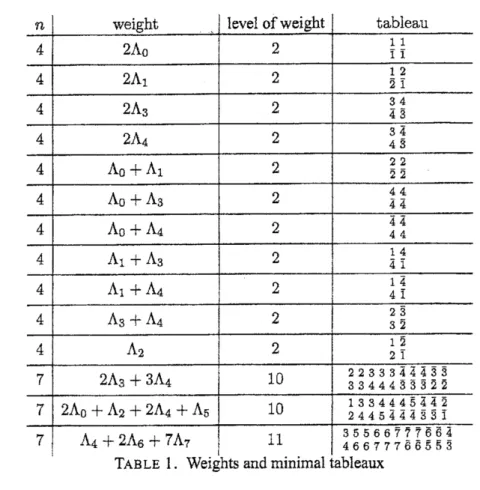
Example6.3, Table 1 shows severalweightsandthecorrespondingtableaux. The first 11
entries
are
allthelevel 2weights for$n=4$.
5 6 6 5
$n$ weight level of weight tableau 4 $2\Lambda_{0}$ 2 $\frac{1}{1}\frac{1}{1}$
4 $2\Lambda_{1}$ 2 $\frac{1}{2}$$\frac{2}{1}$
4 $2\Lambda_{3}$ 2 $\frac{3}{4}\frac{4}{3}$
4 $2\Lambda_{4}$ 2
43
$\overline{\frac{4}{3}}$
4 $\Lambda_{0}+\Lambda_{1}$ 2 $\frac{2}{2}$$\frac{2}{2}$
4 $\Lambda_{0}+\Lambda_{3}$ 2 $\frac{4}{4}\frac{4}{4}$
4 $\Lambda_{0}+\Lambda_{4}$ 2 $44\overline{4}\overline{4}$
4 $\Lambda_{1}+\Lambda_{3}$ 2 $\frac{1}{4}$$\frac{4}{1}$
4 $\Lambda_{1}+\mathrm{A}_{4}$ 2
41
$\overline{\frac{4}{1}}$ 4 $\mathrm{A}_{3}+\Lambda_{4}$ 232
$\overline{\frac{3}{2}}$ 4 $\Lambda_{2}$ 221
$\overline{\frac{2}{1}}$ 7 $2\Lambda_{3}+3\Lambda_{4}$ 10 22333 $\overline{4}\overline{4}\overline{4}\overline{3}\overline{3}$ $3$$\mathrm{S}$$4$$4$$4$$\overline{3}\overline{3}\overline{3}\overline{2}\overline{2}$ 7 $2\Lambda_{0}+\Lambda_{2}+2\Lambda_{4}+\Lambda_{5}$ 10 133444 $\overline{5}4$$\overline{4}\overline{2}$ $2$$4$$4$$5$$\overline{4}\overline{4}\overline{4}\overline{3}\overline{3}\overline{1}$ 7 $\Lambda_{4}+2\Lambda_{6}+7\Lambda_{7}$ 11 35566 $\overline{7}\overline{7}\overline{7}\overline{6}\overline{6}\overline{4}$ $4$$6$$6$ $7$$7$$7$$\overline{6}\overline{6}\overline{5}\overline{5}\overline{3}$TABLE 1. Weightsand minimal tableaux
[12] M. Okado, A. Schilling and M.Shimozono, VirtualcrystalsandKleber ’s algorithmCommun.Math. Phys,
238(2003) 187-209.
[13] M. Shimozono,AffinetypeAcrystal structureontensorproductsofrectangles, Demazurecharacters,and
nilpotentvarieties, J.AlgebraicCombin. I5(2002),no.2,151-187.
[14] A. Schilling, A bijectionbetweentype$D_{n}^{(1)}$crystalsandrigged configurations,preprint$\mathrm{m}\mathrm{a}\mathrm{t}\mathrm{h}.\mathrm{Q}\mathrm{A}/0406248$.
[15] A.Schilling andM.Shimozono,$X=M$forsymmetricpowers, in preparation.
[16] A. SchillingandP.Stemberg, Finite-Dimensional Crystals$B^{2,s}.[or$QuantumAffineAlgebras oftype$D_{n}^{(1)}$
.
preprint$\mathrm{m}\mathrm{a}\mathrm{t}\mathrm{h}.\mathrm{Q}\mathrm{A}/0408\mathrm{I}13$.
$\mathrm{D}\mathrm{E}\mathrm{P}\mathrm{A}\mathrm{R}\mathrm{T}\mathrm{M}\epsilon \mathrm{N}\mathrm{T}$OFMATHEMATICS, UNJVERSITYOFCALIFORNIA, ONESHIELDS AVENUE, Davis, CA
95616-8633,U.S.A.
$E$-mail address:[email protected]$\mathrm{s}$.edu
$URL$:http:$//\mathrm{w}\mathrm{w}\mathrm{w}$.math.ucdavi .$\mathrm{e}\mathrm{d}\mathrm{u}/\sim \mathrm{a}\mathrm{n}\mathrm{n}\mathrm{e}$
DEPARTMENTOFMATHEMATJCS, UNJVERSITY OFCALIFORNIA,ONE SHIELDSAVENU$\mathrm{E}$, Davis, CA
95616-8633,U.$\mathrm{S}.\mathrm{A}$.
$E$-mail address:[email protected]. edu