
トップページ - 横浜国立大学学術情報リポジトリ
24
0
0
全文
(2) 16. (298). Yokohama Journal of Social Sciences, Vol. 23, No. 3. gambling around in trying to deploy Six Sigma. The Six Sigma journey can be complex and complicated if an organization is not clear in regard to the steps and procedures needed for a successful implementation (Ismail, 2011). Wessel et al. (2004) stated that in todayʼs crowded markets, firms cannot afford to stagnate and waste resources by adopting a trial-and-error approach to formulate a strategic direction; and consequently, deliver poor quality products or services. Although Six Sigma is a new method, it is admired by most manufacturers in Asia (Ismail, 2011), including those in Malaysia. As globalization moves in, there is an immediate necessity for Malaysian local organizations to apply such best practices in their organizations and improve their deliverables (Sivakumar et al., 2011). Even though a few Six Sigma studies were carried out in different countries, available resources on the critical factors (CFs) of Six Sigma implementation in Malaysia are only limited (Ismail, 2011). Organizations in the same industry could have different CFs due to difference in geographical locations, strategies, product features, internal resources, and competence. Therefore, organizations need to be knowledgeable about the critical factors so that the Six Sigma implementation projects do not fail, especially when the organizations have made huge investments in such programs (Ismail, 2011). Besides, further study on how to deploy Six Sigma were not carried out. To address the highlighted gaps, this study aims to explore how Six Sigma program is implemented in Malaysian manufacturing companies and determine the implementation CFs. Research conducted in Malaysia found that most researchers had used the survey approach to identify the necessary CFs and ensure a successful Six Sigma implementation in Malaysian organizations. Since most studies conducted in Malaysia were based on survey, it was necessary to conduct some case studies to delve deeper into the actual implementation. Case studies were conducted to observe current practices in selected Malaysian manufacturing companies, regardless of its company size (small, medium or large company)1)and identify other critical factors that were not highlighted earlier in literature. Then activities that differentiate implementation effectiveness, gaps and barriers can be identified accordingly. 2. Related Literature on Six Sigma In the 1980s, Motorola realized that its progress was inadequate to meet their competition (Tague, 2005). Bill Smith at Motorola, during the late 1970s, developed the Six Sigma approach to drive quality forward with an objective to control the parts per million (PPM) level (Antony et al., 2005). Motorola won the Malcolm Baldridge National Quality Award in 1988, which was the first year this award was presented (Raisinghani et al., 2005). This resulted in publicity for Six Sigma, and other companies were encouraged to incorporate the program (Miguel and Andrietta, 2009). Six Sigma has branched out initially from the electronics industry (e.g. Motorola and Texas Instruments) to many other sectors (Tjahjono et al., 2010). Six Sigma was popularized when it was influenced by the Japanese QC circle (Ogawa, 2009). In the last two decades, its growth has become more prevalent as Six . 1)SMEs definition is based on new SME definition endorsed in July 2013 by National SME Development Council (NSDC), the highest policy-making body for the development of SMEs in Malaysia, a small enterprise in manufacturing is defined as an enterprise with full-time employees of between 5 and 74 while a medium enterprise in manufacturing is an enterprise with full-time employees of between 75 to 199 (SME Corporation Malaysia, 2018)..
(3) Critical Factors of Six Sigma Implementation for Manufacturing Companies in Malaysia(Aslina Siman, Mohd Rasid Osman) (299). 17. Sigma principles have also been implemented in the service industries from the supply chain context (Arnheiter and Maleyeff, 2005; Wei et al., 2010), as well as in hospitals (Sehwail and DeYong, 2003; Heuvel et al., 2005), in local governments (Furterer and Elshennawy, 2005) and in the public sector (Patel and Zu, 2009; Kumar and Bauer, 2010) (cited from Tjahjono et al., 2010). 2. 1 Six Sigma in General The term “Six Sigma” refers to a statistical measure of defect rate within a system (Pepper et al., 2010) and can generally be defined as a quality initiative or improvement program that aims for a process failure rate of 3.4 parts per million (PPM) or a 99.99966% defect-free product (Dedhia, 2005). Six Sigma is a datadriven approach used to eliminate defects and wastes in processes (Anh et al., 2011); hence, it becomes an improvement method that aims to increase business performance through solid and accurate business focus (Savolainen et al., 2007). Although there is a considerable amount of publication on Six Sigma and therefore, many different points of view, it is possible to identify the four interpretations of Six Sigma: a set of statistical tools, an operational philosophy of management, a business culture, and an analysis methodology that uses scientific methods (Tjahjono et al., 2010). Tague (2005) explained that Six Sigma is an organization-wide approach used to achieve breakthrough improvements tied to bottom-line results and its key features are the use of data and statistical analysis, highly trained project leaders known as Master Black Belt (MBB), Black Belt (BB) and Green Belt (GB) (Pulakanam et al., 2010), project selection based on estimated bottom-line results, and the dramatic goal of reducing errors to about three per a million opportunities. Besides Six Sigma, TQM, JIT, Lean, Kaizen, and ISO 9001 are among the quality initiatives that have attracted the interest of many researchers. The existence of trade-offs between quality initiatives supports the notion that there is no single recipe for the quality initiative such as TQM or JIT (Flynn et al., 1995). While these programs differ in scope and approach, they share a core focus which is a systematic attention to operational processes in organizations and involve mapping, improving, and adhering to systems of repeatable processes (Benner and Tushman, 2002; Benner and Veloso, 2008). Moreover, they share almost similar objectives such as continuous improvement, customer satisfaction and improvement of a companyʼs bottom line and performance. Schroeder et al. (2008) studied the differences between Six Sigma and TQM and concluded that Six Sigma has distinctive features in terms of its deployment approach and emergent structure, though they acknowledged that the other aspects are not new. The big difference between Six Sigma and previous quality initiatives is that Six Sigma focuses on key benefits and the bottom line to achieve impressive profits, while TQM is focused and motivated by quality idealism and loose progress monitoring towards goals (Motwani et al., 2004, McAdam and Evans, 2004; Snee, 2004). One could argue the nature of transition from TQM to Six Sigma and from JIT to the lean follow fad phenomena (Näslund, 2008). An obvious prediction is, given the fad or product life cycle phenomenon, there will be a new method promoted soon, and this may be something that perhaps organizations are already experiencing with the borderline preposterous concepts of Lean and Six Sigma (Näslund, 2008). Today, Lean and Six Sigma are the most popular business strategies for enabling continuous improvement (CI) in the manufacturing, services and public sectors (Albliwi et al., 2014). Since all business processes are interrelated, some argue that lean manufacturing cannot operate in isolation to realize its potential (Maskell and Kennedy,.
(4) 18. (300). Yokohama Journal of Social Sciences, Vol. 23, No. 3. 2007). Therefore, the integration of the two approaches; Lean and Six Sigma improves efficiency and effectiveness and helps achieve superior performance faster than the implementation of each approach in isolation (Antony et al., 2012). 2. 2 Six Sigma in Malaysia Kuik et al. (2010) analyzed that a majority of manufacturing investors in the Federation of Malaysian Manufacturers (FMM) database who implemented Six Sigma were from the United States of America (USA) (60%), Japan (32%), Singapore (4%) and Malaysian local investors (4%). A few studies have been conducted on Malaysian manufacturing companies regarding the Six Sigma implementation. Ismail (2011) for example conducted a study regarding the critical factors of Six Sigma implementation in two manufacturing companies. Taib (2008) found that almost 74 percent (17 respondents) of the surveyed Six Sigma companies have implemented Six Sigma for less than ten years. Kuik et al. (2010) also conducted a survey in Malaysia regarding the primary focus of Six Sigma implementation, along with the barriers and benefits of Six Sigma implementation. One of the important findings from this survey is that Six Sigma implementation is not widely recognised nor applied in manufacturing companies in Malaysia. Based on the studies conducted, they highlighted that top management involvement and commitment is very essential (Sivakumar and Muthusamy, 2011; Jayaraman et al., 2012; Leong and Teh, 2012; Ahmad et al., 2016). Other CFs mentioned are training and education (Leong and Teh, 2012; Jayaraman and et al., 2012; Sivakumar and Muthusamy, 2011), organizational infrastructure (Ahmad et al., 2016), and customer focus (Habidin and Yusof, 2013). Project/process assessment (Sivakumar and Muthusamy, 2011) and communication (Jayaraman et al., 2012) were also mentioned as some of the important CFs. Jie et al. (2014) conducted a case study at a manufacturing company to verify the developed Lean Six Sigma (LSS) framework for SMEs. They highlighted that some of the challenges in the implementation of the LSS framework were management commitment, lack of flexibility in terms of changes in work culture and activities, and lack of skills, knowledge and data collection systems. 2. 3 Six Sigma Methodology The Six Sigma project uses a structured five-phase problem solving methodology called DMAIC (George et al., 2005). George et al. (2005) explained that the DMAIC steps involve: 1) Define: To have the team and its sponsor reach agreement on the scope, goals, and financial and performance targets for the project. 2) Measure: To thoroughly understand the current state of the process and collect reliable data on process speed, quality, and costs issued to expose the underlying causes of problems. 3) Analyse: To pinpoint and verify the causes affecting the key input and output variables tied to project goals. (“Finding the critical Xs”). 4) Improve: To learn from pilots of the selected solution(s) and execute full-scale implementation. 5) Control: To complete project work and handover improved process to process owner with procedures for maintaining the gains. For the development of a new product or process, or for processes that need total overhaul, there is a modified version called Design for Six Sigma (DFSS). A process that often uses DFSS is called DMADV:.
(5) Critical Factors of Six Sigma Implementation for Manufacturing Companies in Malaysia(Aslina Siman, Mohd Rasid Osman) (301). 19. define, measure, analyze, design, verify. DFSS also employs the IDOV (Identify, design, optimize and verify) methodology (Nonthaleerak and Hendry, 2006). 2. 4 Implementing Six Sigma: Business Process Change (BPC) and Three Basic Approaches Implementing Six Sigma program will definitely change a companyʼs business process. According to Kettinger and Groverʼs BPC management model (1995), seven constructs are required in BPC, such as strategic initiatives, learning capacity (education), cultural readiness, leverage in information technology and knowledge sharing capability, network relations, change management and process management practices. As for the basic approach for Six Sigma implementation, Pande and Holpp (2002) categorized it into three approaches, which were business transformation, strategic improvement and problem-solving. Business transformation is the right approach for organisations with the need, vision and drive to launch Six Sigma as a full-scale change. Dramatic change will be uncertain. Everywhere, the management will be trying to drive results from the changes and control their impacts. The middle approach, which is strategic-improvement, offers the most options whereby its effort can be limited to one or two critical business needs, with teams and trainings aimed to address major opportunities or weaknesses. Besides, the strategic-improvement approach can be seen as comprehensive as the all-out corporate wide effort, but it is simply not as extensive or ambitious as the most aggressive efforts. The problem-solving approach is the most leisurely route towards Six Sigma improvement. The problem-solving approach is the best for companies that want to tap into the benefits of the Six Sigma methods without creating major ripples of change within the organization. This approach focuses on meaningful issues and addresses the root causes, by using data and effective analysis rather than plain old gut feelings. There are a few case studies conducted in other countries. Savolainen et al. (2007) conducted three case studies and identified a few key steps for a procedural implementation. The first step is top management education and training to understand the core of Six Sigma methodology. This is organized by a two to threeday training through a pilot development project in a particular case company. Second step is the definition of organizational key processes and their measurements. The key measures are aimed to form an integrated and punctual reporting system that supports managerial decision-making. In the third step, the experts and operators are trained by a 10 to 20-day training program and through a number of training-related improvement projects. The fourth step is where the clarity of different actor roles involved in the improvement process are clearly demarcated; actors may play a crucial role in supporting organizational learning and continuous improvement. Besides, Motwani et al. (2004) mentioned that when Motorola first introduced Six Sigma, they combined the following ingredients: A primary goal for total customer satisfaction, common, uniform quality metrics for all business areas, identical improvement for all business areas measured on one scale, goal directed incentives for managers and employees, and coordinated trainings for these goals and ways to achieve them. Since there is only one case study conducted in Malaysia, it is interesting to know if there is any difference in the Six Sigma implementation and how the program is being implemented in Malaysian manufacturing companies. 2. 5 Six Sigma Critical Factors Several studies related to CFs of Six Sigma implementation were conducted. From the literature review, 52 CFs were identified and grouped into 13 categories. It was found that 6 categories were frequently.
(6) 20. (302). Yokohama Journal of Social Sciences, Vol. 23, No. 3. mentioned, which were having undivided leadership and commitment from top management, selecting good project(s) and project management, having good training programs, linking Six Sigma activities to business strategy, having good motivation systems and emphasizing on customer-focus (Antony and Ferguson, 2004; Banuelas et al., 2006; Byrne et al., 2007; Jenicke et al., 2008; Lee-Mortimer, 2006; Motwani et al., 2004, Thomas and Barton, 2006 etc.). In addition, Augusto et al. (2009) also mentioned that factors to guarantee the effectiveness of Six Sigma are allocated resources to support its maintenance, adequate organizational infrastructure to assure introduction, development and continuity of the program. Jesus et al. (2016) listed 26 analyzed articles from 13 countries with 70 identified CFs. The top 10 CFs were: top management commitment/integration with financial results/incentive programs, project selection, prioritization and monitoring, training, linking Six Sigma to customer interest, linking Six Sigma to business strategy, cultural change2), Six Sigma organizational infrastructure, understanding Six Sigma methodology, communication systems/frequent communication of Six Sigma results, and linking Six Sigma to employee/ human resource interests. Most of the identified CFs were almost similar and some different terms were used, for example, motivation systems might be related to incentive programs, etc. Only three out of 26 articles had conducted a case study as an approach in their research method; thus, indicating that there were less studies to describe the importance of CFs. 3. Research Methodology From the literature, it was found that CFs identified in Malaysia and other countries are almost similar. However, there is no empirical evidence that explains the importance of CFs and their impact on Six Sigma implementation level. Therefore, the derived research question explored CFs influence on Six Sigma implementation level in Malaysian manufacturing companies. This research was conducted from 2008 to 2012. The gathering of preliminary information involved seeking information on activities to deeply understand the observations (Sekaran, 2000); thus, a literature review was carried out and compiled in a table for easy understanding. Since in 2008 there was no article related to Six Sigma in Malaysia, a preliminary survey was conducted to gauge basic demographic information related to Six Sigma implementation and identify manufacturing companies that were implementing the Six Sigma program. The questions included respondent designation, number of employees, quality initiatives implemented and year of implementations. The survey population was based on data extracted from the Federation of Malaysian Manufacturers (FMM) website that provided information on Malaysian manufacturing companies, including company names, addresses, telephone numbers, and email addresses. As of August 2008, there were 2,015 registered companies with FMM. Based on Sekaranʼs (2000) sample size calculation, the survey needed responses from at least 44 companies. Some researchers (e.g. Yusof and Aspinwall, 2000) mentioned that it was quite common for a survey response rate to be around 20%; hence, to ensure a response rate of more than 20%, the questionnaire must be distributed to more than 220 companies (44×5 companies) by random sampling. In this regard, 239 questionnaires were sent out for distribution. The answered questionnaires were collected either as . 2)Organizational culture is an important social characteristic that influences organizational, group, and individual behaviour as stated by Hartnell et al. (2011)..
(7) Critical Factors of Six Sigma Implementation for Manufacturing Companies in Malaysia(Aslina Siman, Mohd Rasid Osman) (303). 21. hardcopy (questionnaire form), excel or pdf form (if the questionnaire was collected via email. Then the basic demographic information was analyzed. From the survey, five companies were selected for the case study based on company background, number of Six Sigma belts, and level of savings. It was essential to visit these companies to know directly how Six Sigma was implemented, the methodology they used, and obstacles and advantages they faced. A checklist of case study questions was prepared beforehand. This checklist was based on open-ended questions, followed by an interview guide approach structure (Johnson et al., 2010). The interview checklist contents were adopted from Nonthaleerak et al. (2008). Basically, the checklist covered seven areas: particulars of person-in-charge, company background, Six Sigma implementation experience, Six Sigma activities, tools and techniques used, project management and benefits calculation quality costing, and problems in Six Sigma implementation. Since Six Sigma program will change the business processes of companies (Motwani et al., 2004), questions that relate to the seven constructs of BPC management (Kettinger and Grover, 1995) mentioned in Section 2. 4 were also included in the checklist. The case studies covered both multinational and local companies with low, moderate or high financial saving levels. The number of Six Sigma belts was also considered to gauge the differences or impacts of Six Sigma belt training on the companies. Five companies agreed to participate in the study, but the time given was limited. Besides, some of the needed data were considered confidential and could not be disclosed. During the visits in year 2009, observations, discussions and face-to-face interviews with the key personnel were conducted simultaneously. All the required information and data were gathered and compiled for analysis. There are two criteria to determine level of the Six Sigma implementation at the case study companies. The criteria were level of progress and level of saving (Nonthaleerak et al., 2008). Level of progress is based on whether there are on-going Six Sigma projects, years of experience and whether the training is completed throughout the organization. There are three levels of progress as defined below: 1) low progress is defined as having no on-going projects or no new project openings in the company, regardless of the years of experience in Six Sigma implementation, and with Six Sigma training limited to a certain level of employee (1 mark); 2) moderate progress is defined as having on-going project(s) with between one and three years of experience in Six Sigma implementation and with six sigma training limited to a certain level of employee (3 marks); and 3) good progress is defined as having on-going project(s) with more than three years of experience in Six Sigma implementation and Six Sigma training completed throughout the organization (5 marks). As for the level of savings, it is based on total yearly financial saving benefited from Six Sigma activities, as defined below: 1) Low if financial savings <RM 1 million per year (1 mark) 2) Moderate if financial savings ranged from RM 1 million to RM 5 million per year (3 marks) 3) High if financial savings > RM 5 million per year (5 marks) Overall, Six Sigma implementation levels were determined based on the sum of the level of progress and level of savings. Higher marks will indicate higher savings and better progress; thus, indicating higher implementation level..
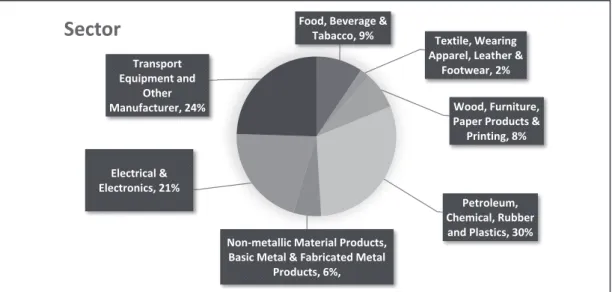
(8) 22. (304). Yokohama Journal of Social Sciences, Vol. 23, No. 3. Figure 1 Percentage by Size. Figure 2 Percentage by Respondents Designation. 4. Findings 4. 1 Companies Demographic Information The survey was conducted on selected Malaysian manufacturing companies, nationwide in 2008. Among the 239 distributed questionnaires, 53 respondents were collected, which represented a response rate of 22.18 %. Since Six Sigma implementation was not widely applied in Malaysian manufacturing companies, the response rate was considered sufficient and was supported by Yusof and Aspinwall (2000) who stated that a response rate of 20% to 25% was normal for mailed questionnaires. Besides, this survey response quantity was higher than other survey-based studies in Malaysia, such as those done by Jeyaraman et al. (2010) with 23 respondents from six Malaysian multinational companies, and Jafari et al. (2006) with 50 respondents, but was lower than that by Miguel and Andrietta (2009) with 78 respondents from 121 Six Sigma companies in Brazil. Basic demographic information for 53 respondents is as per Figures 1 to 5. Figure 1 shows the respondentsʼ company size. 58% of the respondents were from large companies, while 18% and 24% were from medium and small companies, respectively. Figure 2 shows the respondentsʼ designation, whereby 53% were managers and 47% were engineers or executives. As for the sectors (Figure 3), 30% were from petroleum, chemical, rubber, and plastics sector, followed by 24% from transport equipment and other manufacturer. As shown in Figure 4, it was found that 77.4 percent of the companies implement the ISO 9001 system which is in line with the current situation whereby most customers request their suppliers to be certified with ISO 9001. Only 28.3 percent of the companies implement the Six Sigma and Quality Control Circle/Innovative and Creative Circle (QCC/ICC). Other quality initiatives are also implemented by the companies, but the percentage is less than 22 percent. Three companies which represent 5.7 percent from the total respondents do not implement any of the stated quality initiatives, and they are all SMEs. From Figure 5, QCC/ICC quality initiatives were implemented for 11.5 years on average, which is 2.6 years longer than the ISO 9001. Six Sigma was implemented for an average of 5.3 years and can be considered new for manufacturing companies in Malaysia..
(9) References Pulakanam, V. J. and Voges, K. E., “Adoption of Six Sigma: Review of Empirical Research”, International Review of Business Research Papers, Vol. 6, No. 5, 2010, pp. 149–163.. Critical Factors of Six Sigma Implementation for Manufacturing Companies in Malaysia(Aslina Siman, Mohd Rasid Osman) (305). Food, Beverage & Tabacco, 9%. Sector Transport Equipment and Other Manufacturer, 24%. 23. Textile, Wearing Apparel, Leather & Footwear, 2% Wood, Furniture, Paper Products & Printing, 8%. Electrical & Electronics, 21%. Non‐metallic Material Products, Basic Metal & Fabricated Metal Products, 6%,. Petroleum, Chemical, Rubber and Plastics, 30%. Figure 3 Percentage by Sector. Percentage. Percentage Percentage. 100 100 100 77.4 77.4 77.4 8080 80 6060 60 28.3 28.3 28.3 28.3 28.3 28.3 24.5 24.524.5 22.6 22.622.6 4040 40 20.8 20.820.8 17.0 17.017.0 5.75.7 5.7 2020 20 0 0 0. Figure 4 Percentage of Quality Initiatives Implemented. Average Average Years Years ofof Quality Quality Initiatives Initiatives Implemented Implemented Average Years of Quality Initiatives Implemented respondents) (53(53 respondents) (53 respondents). 14.0 14.014.0 11.5 11.511.5 12.0 12.012.0 8.98.98.9 8.88.88.8 8.68.68.6 10.0 10.010.0 7.07.07.0 8.08.0 8.0 5.35.35.3 4.54.54.5 6.06.0 6.0 4.04.0 4.0 2.02.0 2.0 0.00.0 0.0. Year Year Year. Percentage Percentage ofof Quality Quality Initiatives Initiatives Implemented Implemented Percentage of Quality Initiatives Implemented (53(53 respondents) respondents) (53 respondents). Figure 5 Average Years of Quality Initiatives Implemented. 4. 2 Six Sigma Implementation in the Case Studies Companies 4. 2. 1 Company A Company A is located in Penang and focuses on the manufacture and sale of electronic parts for vehicle application. This company is a joint stock company and its headquarters is in Germany. It is a large company with approximately 1,050 employees. Strategic initiative for Six Sigma program was initiated when a relevant quality body from the headquarters performed an audit at the company and recommended the Six Sigma adoption for a continuous improvement program. In terms of its learning capacity, Company A has a two-year experience in Six Sigma implementing and adopted the business transformation approach with a full-scale change initiative. Two training sessions were conducted. The first training session cost them around RM 300,000 and took 18 months to complete..
(10) 24. (306). Yokohama Journal of Social Sciences, Vol. 23, No. 3. Company A organized a one-day champion training for 15 managers, after which they themselves discussed and selected 10 employees for an 18-day green belt training. The second training session costed them around RM 240,000. A consultant was selected based on a decision metric table. Two employees underwent a 20day black belt training while 17 underwent a10-day green belt training. Those who completed the training successfully were assigned with projects. The participants could only be certified with the green or black belt title if the consultant was satisfied and approved their projects. The first training session had low resistance from the participants since most of the managers sent the best people they had with the following employee background: degree holder, assistant manager, matured and devoted. The second training session faced higher resistance because the participants were employees with lower qualifications and posts. Company A has good change management practices through a strong support from the headquarters and top management. This was evident in their effort with the full-scale business transformation approach and commitment in making Six Sigma the top priority within its organization and business. The progress was initially slow since they had insufficient internal coaching. To ensure that Six Sigma projects were on track and move forward, the company hired a coordinator with a black belt title and had experience in Six Sigma implementation. Company A was targeting a cost saving of RM 30,000 per project, but they managed to achieve a better result. Company A had set up an Intranet to coordinate the Six Sigma program, progress information, and training materials to facilitate knowledge transfer and business transformation. Six Sigma is placed under the responsibility of quality department (continuous improvement section). The coordinator liaises with all Head of Departments (HODs) and identifies problematic areas. Then the list of problems is prioritized. The coordinator assigns a person-in-charge (PIC) for each identified project and sets the timeline. Basically, a green belt person oversees one project while a black belt person is in charge of two or three projects. One month is given to define the problems after which they will be presented to the management for decision-making. PIC reports and updates the project status to the Six Sigma coordinator who periodically monitors the progress and gives advice as and when required. Each project is given three to six months to complete. So far, there is some form of benefit calculation, but no standard form is being applied. Once the project is completed, there will be a session to present all the results to the company Chief Executive Officer (CEO). Company A received a big impact for the process management practices since there are reporting standards for bottom line savings and a presentation template has been created. Company A has an online and centralized data system. This is essential to expedite data collection and analysis activity, whereby the data is easily accessible and retrievable. They use Minitab software to run statistical analysis and it can even be operated by users who do not have any background on statistical methods. It can be concluded that Company A has good cultural readiness, information technology (IT) leveragability and knowledge sharing capability because their top management gave full support and provide relevan infrastructures, such as centralized data system and statistical software. However, its network relations are still considered at a minimum level since they are progressing to set up the Intranet for Six Sigma project. Hence, the Six Sigma projects are not shared with other branches, worldwide. Since the implementation was initiated from the headquarters and top management, Company A made huge investments to ensure its Six Sigma program success. However, the initial implementation was slow since at the project initiation stage Company A did not have internal guidance. The effectiveness of training provided by consultants was considered at a moderate level because the participants required some coaching.
(11) Critical Factors of Six Sigma Implementation for Manufacturing Companies in Malaysia(Aslina Siman, Mohd Rasid Osman) (307). 25. from the coordinator. In addition, Company A faced high resistance from employees who had low educational background. 4. 2. 2 Company B Company B is an SME company with 150 employees. It is established in Malaysia and located in Bangi, Selangor. Its CEO is a Japanese. However, its Board of Directors members are mostly Malaysians. Company B manufactures injection moulding, packaging, family care, and food products. In Company B the strategic initiative for Six Sigma program is directed by the top management from Penang headquarters and supported by the General Manager. The senior managers are given a briefing on Six Sigma and they have played their parts to promote internal program awareness via memos, banners, and circulars, as well as demanded employee commitment to the program. In terms of learning capacity, Company B has adopted the problem-solving approach to implement Six Sigma: achieving the benefits of Six Sigma without having to do major changes within the organization. Company B has sent employees for champion training (one participant), green belt training (one participant), and black belt training (two participants). The participants were from the quality assurance, production, and maintenance departments. Company B has already implemented Six Sigma for more than three years, but it has little impact since they only managed to save around RM 2,000 per project. It was also found that Six Sigma initiative in Company B faded away as there were no clear guidelines and targets from the top management. The company has also implemented other quality improvement initiatives such as Kaizen, which is more popular and easier to understand and implement. It was observed that the Six Sigma projects are loosely monitored since there is no official structure for the program. A coordinator is not assigned to ensure effective monitoring and successful completion. Lack of coaching from consultants at the headquarters has also contributed to the loss of interest over the Six Sigma initiative. Although training was conducted by the headquarters consultant, the participants felt that it was too rushed and they had too much to swallow in a one-day session. As a result, they did not manage to understand and grasp the essentials of Six Sigma. The following difficulties were highlighted by the key personnel: Six Sigma projects were launched after the training was completed, however, there were no clear requirements from the top management on how Six Sigma was to be deployed. This resulted in insufficient knowledge and unclear objectives for its implementation; thus, it can be concluded that Company B has unbalanced change management practice, whereby there is lack of forces in favour of changes and they are not keen enough to implement the Six Sigma program. In terms of facilities, Company B provides their employees with Minitab to facilitate analysis. There are also quality and production reports in the system. The reports must be manually keyed in by the person-in-charge on a daily basis. No Intranet-based information related to Six Sigma is provided to ensure a speedy and smooth knowledge transfer to the employees. However, information related to Six Sigma is displayed on the information board. It can be said that Company B has low cultural readiness, IT leveragability and knowledgesharing capability because the data is not updated live and there is no proper channel (such as the Intranet) for open communication and information sharing. Network relation is also considered at minimum level since there is no network-sharing provided between branches. Projects are selected by the General Manager. The main objective for all projects is to reduce high.
(12) 26. (308). Yokohama Journal of Social Sciences, Vol. 23, No. 3. product rejection rate. Process management practices of Company B are also considered to have no big impact and is still at the minimum level since they do not establish any standard method or system for Six Sigma projects activities and reporting. As mentioned earlier, the company does not have any set targets or a monitoring system to keep track of projects progress or status. The company basically reports the findings and improvement results once the projects are completed. Generally, the company takes about six to twelve months to complete a project. Company B has found no significant impact in Six Sigma implementation because it has other initiatives to achieve in their measured performance. The Six Sigma implementation is based on projects instead of organization-wide. Since just a few projects were launched, the impacts were not so visible and widely recognized. Employees who were involved in Six Sigma felt that they needed further training to understand the available tools. Although the training has increased the employeesʼ knowledge in problem-solving, they felt that more intensive coaching and monitoring from the experts are required. 4. 2. 3 Company C Company C has 1,102 employees and is located at Shah Alam, in Selangor. Company C is owned by Malaysians with three major shareholders. Its main products are metal parts and die. Its improvement programs include Six Sigma, lean Six Sigma and Kaizen, while its reduction program is called “Value Added Value Engineering” (VAVE) activity. Strategic initiative for Six Sigma program was initiated, led and enforced by the former Managing Director of Company C. The former Managing Director is an expert in Six Sigma tools and techniques and took his own initiative to train internally and recruited the Six Sigma team in 2003. A few projects were selected and carried out. It was estimated that the savings earned from the Six Sigma project was approximately RM 2 million within the two-year period. When the former Managing Director was transferred to the headquarters, the Six Sigma program faded, and its implementation was not widely used. In 2008, savings from Six Sigma project was approximately RM 80,000, and thus a reduction of more than 95% from the initial savings in 2004 and 2005. Company C assigned a coordinator and a black-belt Six Sigma Section Head to monitor Six Sigma and other improvement programs and provided Minitab software for the employees. Six Sigma project status needs to be periodically reported to the coordinator. Since the coordinator and the black-belt Six Sigma Section Head are also involved in other improvement programs, less priority was given to the Six Sigma activities. There is no proper communication and information sharing and only PIC knows the project details. Besides, data need to be manually keyed in and was not up-to-date. It can be concluded that Company C has low cultural readiness, IT leveragability and sharing capability. In terms of learning capacity, Company C tried to revive the interest in Six Sigma and organized a refresher training in 2008 for 20 participants with an external consultant and costed them approximately RM 20,000. The participants were from head of departments, head of sections, engineers and executives. However, the effort was not enough to create interest among the employees since there were also other initiatives implemented in Company C, such as Kaizen and VAVE. Company C sets its target on a yearly basis. The targets are set by the black belt Six Sigma Section Head. Project selections for Six Sigma are based on critical point (Cp) and Cpk results. Every month the company needs to complete one Six Sigma project. The Six Sigma project will be closed after three months if the Cp.
(13) Critical Factors of Six Sigma Implementation for Manufacturing Companies in Malaysia(Aslina Siman, Mohd Rasid Osman) (309). 27. and Cpk results are stable and higher than the set minimum limit. The project leaders will report the project results in cost saving sheets to the committee before closing the project. Initially Company C did implement Six Sigma successfully and attained the benefits in terms of cost savings. However, since the former Managing Director was transferred to their headquarters, the Six Sigma activity is slowed down and the benefits became less significant. Company C has a big impact on process management practices since they had already integrated the Six Sigma project with the system. However, the change management is unbalanced due to the top management change and lack of focus from the assigned coordinator. 4. 2. 4 Company D Company D is a multinational and Korean-based company which is located in Klang, Selangor with approximately 1,500 employees. Its main product is electronic home appliances, such as the microwave oven. Six Sigma can be considered as Company Dʼs sole improvement and cost reduction program. Strategic initiative for Six Sigma in Company D was directed by its headquarters in Korea. The training and coaching for Six Sigma belt certification and activities were conducted by both headquarters representatives and consultants. The company has a Six Sigma academy with lecturers and instructors readily available to conduct trainings and coaching. Six Sigma is implemented smoothly, and the company achieved savings of USD40 million (RM 133 Million─based on average exchange rate in 2008) per year. Company D has good change management practices and is committed to make Six Sigma a top priority within organizations. Every year, top and middle managers sit together and brainstorm on the following yearʼs projects, targets, and business strategy, usually on the fourth quarter of every year. They use Big Y Drilldown Tree to visualize their discussion findings. In terms of learning capacity, Six Sigma implementation is championed by the companyʼs Managing Director. Master black belts, full-time black belt, and Six Sigma coordinators are part of the Six Sigma team. The company also has a Financial Controller Manager (FEA) to verify the savings achieved by the Six Sigma projects. There is a number of black belts, green belts, and pregreen belts who help in the Six Sigma project implementation. Company D has made a big impact for process management practices since it has a structured reporting system, whereby project status or progress is reported on a designated website called Six Sigma Park. The Six Sigma team reports project status directly to the Managing Director who will then update the headquarters. Headquarters representative visits the company on a yearly basis to verify and monitor the company performance. Company D provides some software to the Six Sigma project members to facilitate data collection and swift project progress reporting and analysis. Examples of the software are GMES (Global Manufacturing Execution System), SAP (database for data gathering and execution), and Minitab. Company D has full support and coaching from its headquarters and other co-partners, such as Six Sigma online US foreign consultant. Therefore, it is concluded that Company D has IT leveragability and knowledge sharing. Besides, the network relations are considered at a high level because all reports are shared and every plant performance can be monitored live, worldwide. There is also a yearly conference to gather PICs for rapid knowledge sharing. The Product Innovation department is assigned to coordinate the Six Sigma program. Project selection is based on brainstorming sessions and ideas are then rationalized, accordingly. Six Sigma projects are targeted to be completed within six to 12 months. Every Six Sigma project is registered and reported on the Six Sigma Park website. The target of the projects and activities are automatically monitored by the Six Sigma Park.
(14) 28. (310). Yokohama Journal of Social Sciences, Vol. 23, No. 3. database system. The system will also remind the person-in-charge to report the status as and when required. The projects are considered complete and can be closed once it is verified by the MBB. No standard calculation format was established as the nature of the projects varies. Company D has high cultural readiness since Six Sigma has already become the company culture with more than 12 years of experience and has received full support from the top management, the person–in-charge is confident with the program. Besides, open communication and information sharing is rapidly done and wellknown. Data collection is a norm for the company employees, such as up-to-date X-R chart. However, some employees remain to have little interest and insufficient knowledge. 4. 2. 5 Company E Company E is a Japanese-based company, located in Shah Alam with approximately 1,300 employees. It produces and sells polymer parts for electronic products and industrial equipment. Examples of products are keypad, hybrid damper and general rubber. It also has a mould department with specific and special die design ability to fulfil customer requests. Strategic initiative is directed by the Managing Director. As for the learning capacity, the factory manager, who is a former quality assurance (QA) manager, was sent to America for Six Sigma training, while other employees were sent for an initial training by an external consultant which costed the company about RM 10,000. The number of employees who have undergone the training to date is 70. Company E has good change management practices and are committed to make Six Sigma a top priority. The QA manager is the key person responsible for coordinating and ensuring a successful Six Sigma program. The department coordinates Six Sigma program and conducts monthly presentation and competition. It is also responsible for record-keeping and other departments can view Six Sigma documents only with the approval of the QA department. Company E believes that their success in implementing Six Sigma is due to good cooperation and teamwork. Training and motivation as well as full support from the top management also contribute to a successful Six Sigma program implementation. Even though the company received full support from the top management, its cultural readiness, IT leveragability and knowledge sharing capability are considered moderate since there is constraint in terms of open communication and information sharing. Network relationship is also considered minimum because there is no mechanism for network sharing among branches. Company E has instructed each department to launch Six Sigma projects on a monthly basis as the company produces fad products (such as keypad) with an approximate six to 12-month shelf-life before the products become obsolete. Projects are presented monthly to the Managing Director who acts as one of the judges and the best projects will win prizes. In order to help and expedite Six Sigma projects, Company E provides four training rooms for Six Sigma project discussions, as well as softwares like Minitab, DOE, and SPC Kiss to facilitate data analysis. Six Sigma projects need to be launched every month in every department and each group should have one or two Six Sigma green belts. Even though there is no standard format established, the Six Sigma program is integrated within the system and there is rapid monthly presentations. Therefore, it is concluded that Company E has received a big impact in terms of management practices. Projects are selected based on a Pareto chart that has certain criteria set by respective departments, and need to be completed within three months. Cost saving targets for a single Six Sigma project is set at RM 5,000 and there is no other standard calculations. The Six Sigma projects will be considered completed once presented and approved during the monthly competition and presentation. There have been no major problems.
(15) Critical Factors of Six Sigma Implementation for Manufacturing Companies in Malaysia(Aslina Siman, Mohd Rasid Osman) (311). 29. in Company Eʼs Six Sigma implementation. However, sometimes the team members are pretty occupied and are not able to give full support and cooperation to the Six Sigma projects 4. 3 Comparison between Companies Table 1 shows a comparison made between the five case study companies. All five companies initiated the Six Sigma program as per top managementʼs suggestions or instructions. All companies carried out the business transformation approach, except for Company B. Company A and Company D have good cultural readiness, whereby the companies receive full support from the top management, practise open communication and information-sharing, and are equipped with online data collection facilities. Company A and Company D also have good information technology leveragability and knowledge-sharing capability, whereby the companies have set up designated websites or an Intranet to expedite knowledge-sharing activities. However, in terms of network relationship, only Company D shows an outstanding network relation. All reports are shared and the performance of every plant is monitored live. The company also organizes a yearly conference to gather the related persons-in-charge, and hence improve communication among branches. In terms of change management practices, the companies need to balance the forces in favour of change over forces of resistance. The companiesʼ change management practices correlated with the implementation approach. Since all companies, except Company B, implement the business transformation approach, it reflects the strong commitment from the companiesʼ top management. All the companies, except Company B, assigned a coordinator to monitor the Six Sigma projects and implementation progress. However, Company C is losing its commitment due to the transfer of its former Managing Director, who strongly champions the Six Sigma program to the company headquarters. Besides that, the assigned coordinator needs to monitor other improvement programs as well. Therefore, less time is spent for Six Sigma activities, resulting in lesser championing activities and loss of focus. Besides changes in management practices, process management practice is also essential. Process management practice is a set of concepts or practices established and carried out in order to achieve better results. Company A, Company C and Company D have a standard reporting structure to monitor, review and report the Six Sigma projectsʼ progress. Company E does not have a standard template for reporting. However, all project results are reported to the top management and evaluated during the monthly competition presentation. From the level indicator, Company D had the highest Six Sigma implementation level results which was 10 marks, followed by Company A and E. Company D has 12 years of experience and has gained an approximate yearly savings of more than RM 133 million per year. Company D solely implements the Six Sigma program for its improvement activity. Therefore, Company D should focus more on Six Sigma system improvement and ensure its effectiveness. Championing the Six Sigma activity is easier since employees can focus only on one improvement activity, as suggested by Elliot (2004) and keep out other initiatives. 5. Discussion The difference between Company D and the other companies is that Company D gives extra focus through its Six Sigma monitoring system, facilities, resources allocation, and training. Company D emphasises on knowledge-sharing, open communication and effective communication in its Six Sigma Park website.
(16) Case Study Area. Background. Strategic Initiatives. Learning Capacity (Education). Cultural Readiness. Information Technology Leveragability and knowledge sharing capability. Network Relationship. No. 1. 2. 3. 4. 5. 6. Network relationship still at a minimum level because no mechanism e.g. worldwide network sharing is provided.. Open communication and information sharing still at minimal level Data needed accessible but not updated live (keyed in manually by PIC). Open communication and information sharing rapidly done and well known Data needed accessible. Data collection is a culture of the company (e.g. online up to date X-R chart) Six Sigma activities and information uploaded on intranet. Good knowledge sharing. No network set up among the branches/around the world Network relationship still at a minimum level because no mechanism e.g. worldwide network sharing is provided.. Six Sigma activities and information not centralized. Visualized at the information board. No network set up among the branches/around the world. In some parts of the organization (Problem solving approach) Full support from top management but no clear guidelines provided. Project Champion = 1 Black belt = 2 Green belt = 1 (Total = 4). Local-based company but CEO is a Japanese Directed by top management (CEO). Company B. Network relationship still at a minimum level because no mechanism e.g. network sharing among branches is provided.. Six Sigma activities and information not centralized. Visualized at the information board. No network set up among the branches/around the world. Organization-wide (Business transformation approach) Initially received full support from top management but faded once the pioneered MD transferred Open communication and information sharing still at minimal level Data needed accessible but not updated live (keyed in manually by PIC). Project Champion = 1 Black belt = 4 Green belt = 26 (Total = 31). Joint venture between local and Japanese company Directed & pioneered by ex-MD. Company C. Network relationship at a high level since information and knowledge is shared worldwide. All the reports are shared and performance of every plant can be monitored live. There is also a yearly conference to gather PICs for rapid knowledge-sharing.. Open communication and information sharing rapidly done and well-known Data needed accessible Data collection is a culture of the company (e.g. up to date X-R chart) Has a designated website Six Sigma Park. Good knowledge sharing. Organization-wide (Business transformation approach) Full support from top management. Project Champion = 5 Black belt = 9 Green belt = 62 (Total = 76). Directed by HQ. Korean. Company D. Six Sigma activities and information centralized but confidential. Need to request from QA to review the reports. No network set up among the branches/ around the world Network relationship still at a minimum level because no mechanism e.g. network sharing among branches is provided.. Open communication and information sharing are at moderate level. Project Champion = 2 Black belt = 2 Green belt = 20 Yellow belt = 60 (Total = 84) Organization-wide (Business transformation approach) Full support from top management. Directed by MD. Japanese. Company E. (312). Organization-wide (Business transformation approach) Full support from top management. Directed by auditors from headquarters and supported by CEO Project Champion = 15 Black belt = 2 Green belt = 29 (Total = 46). German-based company. Company A. Table 1 Comparison between the Five Case Study Companies 30. Yokohama Journal of Social Sciences, Vol. 23, No. 3.
(17) Case Study Area. Change Management Practice (balancing forces in favor of change over forces of resistance). Process Management Practice (a set of concepts/ practices aimed for better result). Level of Progress. Level of Savings. Six Sigma Implementation Level Indicator (Level of progress + level of saving). No. 7. 8. 9. 10. 11. 6 marks. Moderate. 2M per year. Moderate. It has ongoing projects, 2 years of experience in Six Sigma implementation, and approximately 47 employees from the supervisor level onwards whom had already gone through Six Sigma training.. Big impact. Standard reporting for bottom line savings & presentation template has been created. The company is committed to making Six Sigma a top priority within its organization and business. Hired a black belt to monitor Six Sigma projects and implementation. Company A. 2 marks. Low. 30K per year. The company believes that Six Sigma is one of the key improvement strategies but is not keen enough to implement it. Recruits internal staff as Six Sigma personnel. Integrate current system with the Six Sigma concept - Key Result Area (K.R.A) according to DPMM and cost-saving projects. No big impact. Status still at minimum level. Not establish any standard method or system for Six sigma project. Low. No on-going project or no new project openings in the company, three years of experience in Six Sigma implementation, and Six Sigma training limited to a few employees only. Company B. 4 marks. 10 marks. Good. Has on-going projects with more than 7 years of experience in Six Sigma implementation and quite a large number of employees whom had already gone through Six Sigma training.. Good. Has ongoing projects with more than 12 years of experience in Six Sigma implementation and quite a large number of employees whom had already gone through Six Sigma training. Besides, Six Sigma training is available and employees are encouraged to participate. High. >RM 133M per year. 6 marks. Low. RM 100K per year. Big Impact but no standard forms. Integrated with the system. Reporting via presentation.. Big Impact. Has online standard report and can be monitored live anywhere.. Big impact a few years before, but the impact has become less significant. Has standard reporting for bottom line savings. Moderate. Has ongoing projects, 4 years of experience in Six Sigma implementation and approximately 31 employees from the supervisor level onwards who had already gone through Six Sigma training. Low. 80K per year. The company is committed to making Six Sigma a top priority within its organization and business. There is a coordinator to monitor Six Sigma activities.. The company is committed to making Six Sigma a top priority within its organization and business. There is a master black belt to monitor Six Sigma projects and implementation. Currently, Six Sigma is just one of its improvement programs. There is a coordinator but heʼs coordinating other improvement programs as well. Not focused.. Company E. Company D. Company C. Critical Factors of Six Sigma Implementation for Manufacturing Companies in Malaysia(Aslina Siman, Mohd Rasid Osman) (313) 31.
(18) 32. (314). Yokohama Journal of Social Sciences, Vol. 23, No. 3. and GMES. Besides, it ensures that relevant data are collected live and timely to expedite data analysis and monitoring. All reports are accessible to the related PIC and are openly communicated with the other branches and counterparts. Company D also assigns a coordinator to guide and ensure that all of the Six Sigma projects are well-executed. With the help of the Six Sigma Park website, Six Sigma projects are traceable, and thus, monitoring becomes easier. The coordinator is also a capable and reliable person who has vast experience in Six Sigma project completion, plus an expert MBB title to prove his competency and achievements. One more important factor is its Six Sigma training and coaching capability. Company D has full support from the headquarters for Six Sigma activities and ensures that its training and coaching are effective so as to improve the bottom-line performance. It has also established a Six Sigma academy to train its employees, worldwide. In addition, an online US consultant is available to help employees complete their Six Sigma projects. Among the five companies, Company B shows the lowest progress and lowest level of savings. This is due to lack of guidelines, such as no enforcement, strategy and targets stipulated by the top management. Since Company B also has other improvement activities, Six Sigma activities are considered as just one of the many improvement activities and are only conducted as and when necessary. Besides, an impeding factor is its training and coaching activity which was found to be ineffective as the participants felt that their level of understanding is still low and they do not have reliable people to refer to for any Six Sigma problems. When comparing the top 10 CFs listed by Jesus et al. (2016) with the case study findings, it was found that most of the mentioned CFs are highlighted by the key personnel during the interview. However, the number 4 CF (linking Six Sigma to customer interests) and number 10 CF (linking Six Sigma to the interests of employees/human resources) were not highlighted. It is concluded that these two CFs were considered not important from the key personnel perspectives. Similar findings in Brazil and international literature were highlighted by Jesus et al. (2016). Table 2 is summarized to answer the research questions on how CFs influence the Six Sigma implementation level in Malaysian manufacturing companies. From the case studies, it was found that one of the key factors to ensure an effective implementation is to assign a knowledgeable coordinator to monitor the Six Sigma project implementation. The coordinator might as well provide training, guiding or coaching to the relevant employees, accordingly. Top management leadership and commitment is essential, but it needs to be paired with good monitoring and successful execution as well. Most of the highlighted barriers during the case study, especially by companies that are struggling to implement the Six Sigma program, are related to lack of guidance, coaching and ineffective training. Employees are willing to follow the lead, but they emphasized that they need to be equipped with good coaching and training for improvement to happen 6. Conclusion The research objective is to explore how manufacturing companies in Malaysia implement their Six Sigma program and what are the CFs of the implementation. From the case studies, it was found that two out of 10 CFs were not highlighted by the key personnel. The CFs link Six Sigma to customer interests and interests of employees/human resources. Jesus et al. (2016) also reported similar findings in Brazil and international literature. Benchmarking the good practices of the case study companies and considering the impeding factors of the implementation, extra focus on the Six Sigma monitoring system, open communication and knowledgesharing facilities, resources allocation and good training and coaching are needed to ensure the effectiveness.
(19) Critical Factors of Six Sigma Implementation for Manufacturing Companies in Malaysia(Aslina Siman, Mohd Rasid Osman) (315). 33. Table 2 Why and How the CFs Influence the Six Sigma Implementations Level No. CFs. Why and how it influences the Six Sigma implementation level. 1. Top management commitment. It is important to have top management commitment since they definitely have big influence on employeesʼ attitude. They are also the key persons who have authority in ensuring proper resource allocation and infrastructures. For example, Company C is losing its commitment due to the transfer of its former Managing Director who strongly champions the Six Sigma program. Only Company D has a Financial Controller Manager (FEA) to verify the savings achieved by the Six Sigma projects.. 2. Project selection, prioritization and monitoring. Different criteria of project selection and prioritization were implemented by the companies. However, the key personnel emphasized on Six Sigma monitoring system, whereby they strongly insisted the need for knowledgeable coordinators to monitor the implementation. Company B had the lowest Six Sigma implementation level due to there was no coordinator assigned and no monitoring system to keep track on projects progress or status. 3. Training. Champion, BB, GB and YB were provided to the employees. Company B and Company C still need coaching even though they had already attended the training. Company C had slow progress in the beginning because they had insufficient internal coaching. To expedite the progress, the company hired a coordinator who have a black belt title and experience in Six Sigma implementation to monitor and coach the employees. 4. Linking Six Sigma to customers interests. Not highlighted by the key personnel.. 5. Linking Six Sigma to business strategy. Only Company D mentioned about linking Six Sigma with their business strategy, whereby the management will sit together and brainstorm on the following yearʼs projects, targets, and business strategy. Company B had lack of guidelines, such as enforcement, strategy and targets stipulated by the top management.. 6. Cultural change. It was easier to nurture cultural change if the implementation was embedded with the system. Company D had high cultural readiness since Six Sigma had already become the company culture with more than 12 years of experience. Company A faced higher resistance during the second training session as the participants consisted of employees with lower qualifications and posts.. 7. Six Sigma organization infrastructure. Online data collection and analysis, IT leveragability, knowledge sharing and network relationship were among the necessary infrastructure needed. Company D had a structured reporting system, whereby project status or progress were reported on a designated website which were directly linked to the Managing Director and headquarters.. 8. Understanding Six Sigma methodology. Standard template and reporting system might increase employeesʼ understanding. Company A, Company C and Company D had the standard while Company B and Company E did not.. 9. Communication system/ frequent communication of Six Sigma results. Among the activities conducted to communicate the Six Sigma results were via presentation and/or standard reporting. Employees had to conduct the project and prepare the report properly since it must be reviewed by the management. Only Company B did not implement it.. 10. Linking Six Sigma to the interests of employees/ human resources.. Not highlighted by the key personnel..
(20) 34. (316). Yokohama Journal of Social Sciences, Vol. 23, No. 3. of the program, along with the CFs that have already been mentioned. The research question on how the CFs influence the Six Sigma implementation level is summarized accordingly in Table 2. Top management commitment with clear guidelines is considered the most important factor in the Six Sigma implementation. Assigning a knowledgeable coordinator to monitor the Six Sigma project implementation as well as providing training, guidance or coaching for the relevant employees are some of the key factors in ensuring implementation effectiveness. This will address the issue on lack of guidance and coaching and ineffective training experienced by the studied. Double dagger factors, which are top management commitment paired with knowledgeable coordinators, are considered very important for Six Sigma implementation. 7. Limitations and Future Research This research still has room for further improvements. Due to time limitation and confidentiality, some criteria cannot be observed and verified accordingly. One of the criteria is how the observed manufacturing companies practise their information and knowledge sharing. Besides that, this research also does not have detailed examples on how these companies manage their project reviews and monitoring and evaluation systems. Both criteria cannot be investigated deeper due to the data confidentiality.. Acknowledgements The authors express their sincere gratitude and acknowledge the support of the Otsuka Toshimi Scholarship Foundation. Special thanks to Prof. Shinichi Ogawa for his invaluable comments and suggestions. The authors also wish to thank the interviewed people who were generous with their time and valuable insights during the course of the research.. References Ahmad, M. F., Ping, W. J., Hamid, N. A. A., Chan, S. W., “Critical Success Factors of Six Sigma Implementation in Malaysian Manufacturing Industry”, Paper presented at International Conference on Industrial Engineering and Operations Management. Kuala Lumpur, Malaysia, 2016. Albliwi, S., Antony, J., Lim, S. A. H. and Wiele, T. V. D., “Critical Failure Factors of Lean Six Sigma: A Systematic Literature Review”, International Journal of Quality & Reliability Management, Vol. 31, Issue 9, 2014, pp. 1012‒1030. Anh, P. C. and Matsui, Y., “Relationship between Quality Management Information and Operational Performance: International Perspectives”, Management Research Review, Vol. 34, No. 5, 2011, pp. 519‒540. Antony, J. and Craig Fergusson, “Six Sigma in the Software Industry: Results from a Pilot Study”, Managerial Auditing Journal, Vol. 19, Issue 8, 2004, pp. 1025‒1032. Antony, J., Krishan, N., Cullen, D. and Kumar M., “Lean Six Sigma for Higher Education Institutions (HEIs): Challenges, Barriers, Success Factors, Tools/Techniques”, International Journal of Productivity and Performance Management, Vol. 61, Issue 8, 2012, pp. 940‒948. Antony, J., Kumar, M., and Madu, C. N., “Six Sigma in Small-and Medium-sized UK Manufacturing Enterprises: Some Empirical Observations”, Journal of Quality & Reliability Management, Vol. 22, Issue 8, 2005, pp.860‒874. Arnheiter, E. D. and Maleyeff, J., “The Integration of Lean Management and Six Sigma”, The TQM Magazine, Vol. 17, No. 1, 2005, pp. 5‒18. Banuelas, R., Tennant, C., Tuersley, I., Tang, S., “Selection of Six Sigma Projects in the UK”, The TQM Magazine,.
(21) Critical Factors of Six Sigma Implementation for Manufacturing Companies in Malaysia(Aslina Siman, Mohd Rasid Osman) (317). 35. Vol. 18, No. 5, 2006, pp. 514‒527. Benner, M. J. and Tushman, M., “Process Management and Technological Innovation: A Longitudinal Study of the Photography and Paint Industries”, Administrative Science Quarterly, Vol. 47, 2002, pp. 676‒706. Benner, M. J. and Veloso, F. M., “ISO 9000 Practices and Financial Performance: A Technology Coherence Perspective”, Journal of Operations Management, Vol. 26, 2008, pp. 611‒629. Burton, T. T. and Sams, J. L., Six Sigma for Small & Mid-sized organizations: Success through Scaleable Deployment, New York: J. Ross Publishing, 2005. Byrne, G., Lubowe, D. and Blitz, A., “Using a Lean Six Sigma Approach to Drive Innovation”, Strategy and Leadership, Vol. 35, No. 2, 2007, pp. 5‒10. Dedhia, N. S., “Six Sigma Basics”, Total Quality Management and Business Excellence, Vol. 16, No. 5, 2005, pp. 567–74. Elliot, G., The Journey to Steps to Six Sigma, Handbook of Business Strategy, 2004. Flynn, B. B., Sakakibara, S., and Schroeder, R. G., “Relationship between JIT and TQM: Practices and Performance”, The Academy of Management Journal, Vol. 38, No. 5, 1995, pp. 1325‒1360. Furterer, S., and Elshenway, A. K., “Implementation of TQM and Lean Six Sigma Tools in Local Government: A Framework and a Case Study”, Total Quality Management, Vol. 16, No. 10, 2005. pp. 1179‒1191. George, M. L., Rowlands, D., Price, M. and Maxey, M., The Lean Six Sigma Pocket Toolbook, New York: McGrawHill, 2005. Habidin, N. F. and Yusof, S. M., “Critical Success Factors of Lean Six Sigma for the Malaysian Automotive Industry”, International Journal of Lean Six Sigma, Vol. 4, No. 1, 2013, pp. 60‒82. Hartnell, C. A., Ou, A. Y. and Kinicki, A., “Organizational Culture and Organizational Effectiveness: A Meta-Analytic Investigation of the Competing Values Frameworkʼs Theoretical Suppositions”, Journal of Applied Psychology, Vol. 96, No. 4, 2011, pp. 677‒694. Heuvel, J. V. D., Does, R. J. M. M and Verver, J. P. S., “Six Sigma in Healthcare: Lessons Learned from a Hospital”, International Journal Six Sigma and Competitive Advantage, Vol. 1, No. 4, 2005, pp. 380‒388. Ismail, N. Z., “Critical Success Factor of Six Sigma Implementation in Manufacturing Company”, Master of Science (Management), University Utara Malaysia, 2011. Jafari, S. M., Osman, M. R., Yusuff, R. M., and Tang, S. H., “ERP Systems Implementation in Malaysia: The Importance of Critical Success Factors”, International Journal of Engineering and Technology, Vol. 3, No.1, 2006, pp. 125‒131. Jayaraman, K., Kee, T. L. and Soh, K. L.,“The Perceptions and Perspectives of Lean Six Sigma (LSS) Practitioners”, The TQM Journal, Vol. 24, Issue 5, 2012. pp. 433‒446. Jenicke, L. O, Kumar, A., and Holmes, M. C., “A Framework for Applying Six Sigma Improvement Methodology in an Academic Environment”, The TQM Journal, Vol. 20, Issue 5, 2008, pp. 453‒462. Jesus, A. R., Antony, J., Herman Augusto Lepikson, H. A., and Adriano L. A. Peixoto, A. L. A. “Six Sigma Critical Success Factors in Brazilian Industry”, International Journal of Quality & Reliability Management, Vol. 33, Issue: 6, 2016, pp. 702‒723. Jeyaraman, K. and Leam K. T., “A Conceptual Framework for Critical Success Factors of Lean Six Sigma”, International Journal of Lean Six Sigma, Vol. 1, Issue 3, 2010, pp. 191‒215. Jie, J. C. R., Kamaruddin, S. and Aziz, I. A. (2014), “Implementing the Lean Six Sigma Framework in a Small Medium Enterprise (SME) – A Case Study in a Printing Company”, Paper Presented at International Conference on Industrial Engineering and Operations Management, Bali, Indonesia, 2014. Johnson, B., and Christensen, L., Educational Research: Quantitative, Qualitative and Mixed Approaches, 4th ed., New York: SAGE Publications, Inc., 2010. Kettinger, W. J., and Grover, V., “Special Section: Toward a Theory of Business Process Change Management”, Journal of Management Information Systems, Vol. 12, No. 1, 1995, pp. 9‒30. Kuik, S. S., Nagalingam, S. V., Amer, Y. and Saw, Y. P., “Implementation of Six Sigma Methodology to Improve Supply Chain Network in the Context of Malaysian Manufacturing Industries”, Paper Presented at 8th International Conference on Supply Chain Management and Information, Hong Kong, China, 2010..
図


関連したドキュメント
One of several properties of harmonic functions is the Gauss theorem stating that if u is harmonic, then it has the mean value property with respect to the Lebesgue measure on all
The Mathematical Society of Japan (MSJ) inaugurated the Takagi Lectures as prestigious research survey lectures.. The Takagi Lectures are the first se- ries of the MSJ official
The Mathematical Society of Japan (MSJ) inaugurated the Takagi Lectures as prestigious research survey lectures.. The Takagi Lectures are the first series of the MSJ official
[11] Karsai J., On the asymptotic behaviour of solution of second order linear differential equations with small damping, Acta Math. 61
I give a proof of the theorem over any separably closed field F using ℓ-adic perverse sheaves.. My proof is different from the one of Mirkovi´c
Keywords: continuous time random walk, Brownian motion, collision time, skew Young tableaux, tandem queue.. AMS 2000 Subject Classification: Primary:
The idea of applying (implicit) Runge-Kutta methods to a reformulated form instead of DAEs of standard form was first proposed in [11, 12], and it is shown that the
The object of this paper is the uniqueness for a d -dimensional Fokker-Planck type equation with inhomogeneous (possibly degenerated) measurable not necessarily bounded
