
Women’s Work in Family Businesses:Subjectivities of the Wives of Japanese Textile Mill Owners
22
0
0
全文
(2) 名古屋市立大学大学院人間文化研究科. 人間文化研究. 第 33 号. 2020 年 1 月. 〔学術論文〕. Women’s Work in Family Businesses -Subjectivities of the Wives of Japanese Textile Mill Owners- 宮下 さおり Saori Miyashita Abstract Work performed by the wives of owner-managers in family businesses tends to be underpaid. This paper examines the lived experiences of wives of owner-managers, to understand what influences them to commit to work regardless of pay, focusing on their labor process. Based on a case study of Japanese textile production, the study uses in-depth interviews with entrepreneurs and their families (n = 25). This contradictory phenomenon of these wives working despite low or no pay is explained by (a) the group interests of the whole family, (b) a wife’s satisfaction in supporting her husband, (c) job satisfaction, and (d) local reputation.. Key Words: Family Workers, Self-employment, Small- and Medium-sized Enterprises, Family Business, Remuneration, Gender, Textile industry. 1.Introduction Owners’ Wives as Family Workers: Hard Work for Low Remuneration. There exist various forms of exploitative relationships between spouses. Studies on the work performed by the wives of owners of family businesses have demonstrated the complex profiles of these workers. In the 1980s, the Commission of the European Communities (1987) investigated women involved in the professional activities of their husbands to estimate the number of such workers and their working situations in 10 European countries. On average, 12.2% of the surveyed wives were estimated to work in such a capacity at that time and place. Their workload varied considerably, and their perception was that they were receiving a lower rate of pay than equivalent employees. A review of feminist research shows that studies on the husband’s appropriation of the wife’s labor, such as by Finch (1983) and Delphy and Leonard (1992), have identified exploitative relationships between spouses and fully examined the variations and modalities of this relationship, including the role played by the wives of business owner-managers. These studies have emphasized the common structures of employment shared by wives across various households, including the self-employed household, which. 87.
(3) 名古屋市立大学大学院人間文化研究科. 人間文化研究. 第 33 号. 2020 年 1 月. forced them to support their husband’s occupational activities regardless of remuneration. Women’s important role in the family business1 has been explored. Mulholland (2003) presented a thorough analysis of successful family businesses from the viewpoint of class and gender formation, and emphasized the importance of the work done by female kin for establishing a business. Research from the field of management studies has also explored the role of women in family businesses. Brondel and Niforos (2013) reviewed studies on women and family businesses in the field of management studies and discussed the roles of women in such enterprises. In contrast, as is shown by their review, which does not refer to the remuneration of working wives, there have been few studies tackling the issue of low pay for women’s work in the family business. Only two studies on compensation for family-member executives (Gomez-Mejia, Larraza-Kintana, and Makri, 2003) and family workers (Block et al., 2015) exist, and they compare the average remuneration between family members of owners and others and suggest that family members receive lower remuneration. Block et al. (2015) showed that women family workers obtain more pay than non-relative women (p. 197); however, this result probably overestimated their pay due to the limitation of data that excluded unpaid employees. In considering the mechanism that produces their low remuneration, a case study of one industry and/or area can be helpful. This approach enables us to scrutinize industrial conditions that restrict labor processes and to examine economic, social, and subjective determinants that lead to women’s hard work with low remuneration.. Paradox of Employment for Female Family Members of Owners. The present exploratory paper contributes to an understanding of the wives of owner-managers, focusing on the historic case of Japan. Until the 1980s, running a business and not being a salaried employee was an ideal lifestyle for many ordinary people because it offered a chance to earn through one’s independent effort. Although Vogel (1963) suggested that young women in the early 1960s preferred to marry white-collar males working in the large bureaucracies of enterprises or government offices (p. 9), the wages, salaries, and opportunities for a majority of employees were often more limited than those for an independent businessman, especially in nonmetropolitan areas in those days. Therefore, the wives of business owners were generally envied. Their work was investigated by Rōdōshō (Ministry of Labour; reorganized in 2001 as the Ministry of Health, Labour and Welfare) in the early 1970s and aimed at improving women’s working conditions, including those of family workers (Rōdōshō Fujin Shōnenkyoku, 1970, 1971). These two studies revealed that their working hours were rarely short and that their remuneration was diverse: some wives were paid a rate above the average wage of female employees, whereas others were completely unpaid. According to other empirical data published by Chūshōkigyōchō (Small and Medium Enterprise Agency) in cooperation with Nihon Shōkōkaigisho (Japan Chamber of Commerce and Industry) or Zenkoku Shōkōkai Rengōkai (Central Federation of Societies of Commerce and Industry) (Chūshōkigyōchō and Nihon. 88.
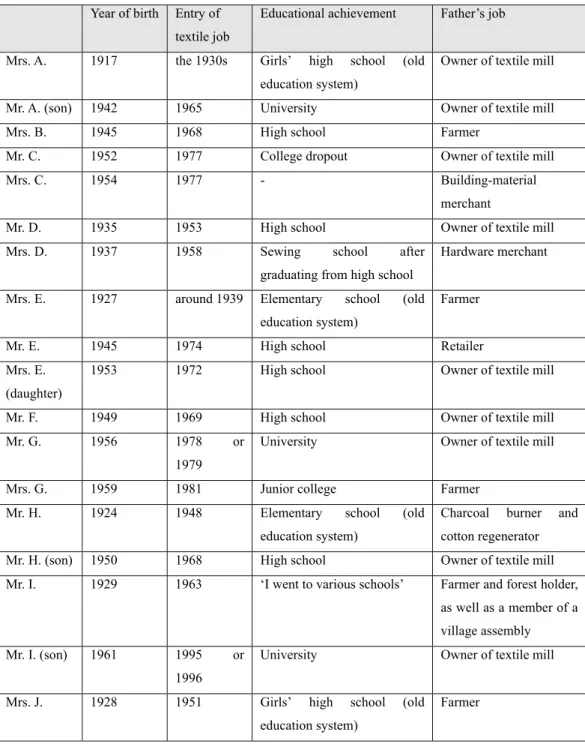
(4) Women’s Work in Family Businesses(Saori Miyashita). Shōkōkaigisho, 1976; Chūshōkigyōchō and Zenkoku Shōkōkai Rengōkai, 1976, 1980, 1982; Nihon Shōkōkaigisho and Chūshōkigyōchō, 1976, 1982; see also Miyashita, 2015), this tendency of working long hours at low pay remained in place at least until the early 1980s. The situation was quite common in Europe in the 1980s as well. A report by the Commission of the European Communities (1987, pp. 53–56, 57, 80–81) reported that 44% of the respondents who assisted with their husband’s businesses were unpaid, and 70% of them thought their pay was lower than the standard rate. Two-thirds felt that the amount of pay was not adequate. Co-working wives tended to work regardless of their remuneration (or the lack thereof) in Japan as well as in Europe. These data lead us to question how wives interpret and act in such situations. It is undoubtedly the husband—the owner of the business—who has the authority in managerial decisions, including remuneration for family workers. Interestingly, the Commission of the European Communities report (1987) revealed that co-working wives did not feel that the pay structure between spouses was unfair (p. 81). Thus, the wives’ subjectivities remain unclear.. Study’s Objectives. This paper explores the labor process that wives of owner-managers engaged in. First, job allocation, the value of work, and the acceptance of low remuneration derive from the dynamics within the workplace itself, even if family dynamics have a large impact on a business that the family themselves manage. An analysis of work relations together with that of family dynamics should thus be conducted. How is such an unequal relationship implemented: against women’s will or through their subjectivities? The starting point for such research should focus on their lived experiences as workers. Therefore, the objective of the present study is to investigate through historical analysis the perspectives of female family workers who were the wives of entrepreneurs. In other words, the research examines the work performed by the wives of owners, the reward they received for their efforts, the circumstances under which their commitment to work was obtained, and the reasons behind their acceptance of this role. This paper focuses on the textile industry and a Japanese rural industrial area to analyze these women’s work situations in detail. In order to obtain as many testimonies and records as possible, past conditions are explored, mainly those between the 1950s and the 1980s, which is a period marked by the large presence of family workers in businesses, including the wives of owners.. Data and Sources. Data were obtained from both qualitative interviews and quantitative surveys. The research was conducted in a city in the Hokuriku region. It is famous for its textile industry, which developed under. 89.
(5) 名古屋市立大学大学院人間文化研究科. 人間文化研究. 第 33 号. 2020 年 1 月. conditions of cheap rural labor. It played a crucial role in boosting the Japanese economy until the 1960s; however, the size of its output has been steadily decreasing since the 1990s. Many mills were established in the twentieth century, with the number of mills peaking in the 1970s. Only a small number of mills now remain. Some of these mills have kept up with cutting-edge manufacturing technology, in collaboration with world-class thread manufacturers, such as Toray, Teijin, Asahi KASEI, and Unitika, to produce high-tech fabrics, such as HEATTECH, permeation membranes, and printing screens as well as high-class clothing fabrics. The researched city has been the primary location for mills of various sizes. The variety of mill-owning families present in the city makes it ideal for research. Interview data was collected from a sample of 25 persons, including 11 women, who either owned their own business or worked as family employees in 14 firms. Their years of birth ranged from 1917 to 1961. Ten mills came into operation in the first half of the twentieth century, whereas the newest mill was established in 1970. Half of the respondents were no longer engaged in active weaving at the time of the interview. Respondents were identified through a list of local textile cooperatives as well as personal referrals from local informants. The size of the respondents’ businesses tended to be larger than the distribution of these businesses; therefore, it was desirable to explore various women’s roles in different sizes of businesses. A standardized set of topics was prepared for the research, including details on the founder of the business, the process of its establishment, the products manufactured, the clients and the terms and conditions of transaction, and the career history and remuneration of the respondents and their parents. The interviews were designed to be open-ended enough to allow respondents to narrate what they felt and thought about the topics discussed. Each interview lasted at least 90 minutes. All interviews were conducted between October 2011 and August 2013 at the respondents’ homes or offices. Most respondents were introduced to me by the textile cooperative, of which all the members were male mill owners; therefore, most spouses answered jointly. The characteristics of the sample and other details are presented in Table 1. Local information was supplemented with interviews with well-informed insiders, such as an older male relative of the owner of a large company situated in the prefecture and an ex-officer from the local textile cooperative. The secondary data used for this research were obtained from the Survey for Promoting the Textile Industry, conducted in 1969. This survey collected information from 2,892 mills belonging to local textile cooperatives, which organize mills according to administrative boundaries and size in order to promote mutual support, thus serving as a medium of governmental support and regulation. The sample of this research excluded some microenterprises as they were not involved in the cooperatives; however, the data were taken to be representative. A full set of completed questionnaires, to which 115 mill owners or senior managers responded, was obtained from the local cooperative at the research site. All of these mills were small or medium-sized enterprises because large companies belonged to other cooperatives. Questionnaire items included the quantity and quality of machines; the number of workers by gender, age, and. 90.
(6) Women’s Work in Family Businesses(Saori Miyashita). employment status; and the average wage of each group. Therefore, this data showed that the job allocation inside the mills and the remuneration varied by gender, age, employment status (of employees or family workers), and business size.. Table 1 Sample’s Characteristics. Year of birth. Entry of. Educational achievement. Father’s job. textile job Mrs. A.. 1917. the 1930s. Girls’. high. school. (old. Owner of textile mill. education system) Mr. A. (son). 1942. 1965. University. Owner of textile mill. Mrs. B.. 1945. 1968. High school. Farmer. Mr. C.. 1952. 1977. College dropout. Owner of textile mill. Mrs. C.. 1954. 1977. -. Building-material merchant. Mr. D.. 1935. 1953. High school. Mrs. D.. 1937. 1958. Sewing. Owner of textile mill school. after. Hardware merchant. graduating from high school Mrs. E.. 1927. around 1939. Elementary. school. (old. Farmer. education system) Mr. E.. 1945. 1974. High school. Retailer. Mrs. E.. 1953. 1972. High school. Owner of textile mill. Mr. F.. 1949. 1969. High school. Owner of textile mill. Mr. G.. 1956. 1978. University. Owner of textile mill Farmer. (daughter) or. 1979 Mrs. G.. 1959. 1981. Junior college. Mr. H.. 1924. 1948. Elementary. school. (old. Charcoal. burner. education system). cotton regenerator. and. Mr. H. (son). 1950. 1968. High school. Owner of textile mill. Mr. I.. 1929. 1963. ‘I went to various schools’. Farmer and forest holder, as well as a member of a village assembly. Mr. I. (son). 1961. 1995. or. University. Owner of textile mill. 1996 Mrs. J.. 1928. 1951. Girls’. high. school. (old. Farmer. education system). 91.
(7) 名古屋市立大学大学院人間文化研究科. Mr. J. (son). 1949. 1976. or. 人間文化研究. 第 33 号. 2020 年 1 月. University. Owner of textile mill. University. Owner of textile mill and. 1977 Mr. K.. 1947. 1979. other businesses Mrs. K.. 1953. 1976. Junior college. Office worker in a metal manufacturing company. Mr. L.. 1935. 1955. High school. Owner of textile mill. Mrs. L.. 1942. 1963. Junior college. -. Mr. M.. 1947. 1962. High school. Farmer and mill owner. Mrs. N.. 1931. 1970. School of agriculture after. Farmer and brewer. graduating from the higher course. of. an. elementary. school (old education system). 2.Results and Discussion Job Structure, Participation in Mill Work, and Roles of Family Members. The organization of work in the mills is discussed first. Generally, most work in Japanese textile mills tended to be gender segregated or gender specific. Mills were usually owned by men2, who often also assumed roles in sales, marketing, and finance. In contrast to the men’s ownership role, many specific tasks such as weaving and preparing threads were allocated to women. As a result, the mills required a considerable female workforce, and the management of female personnel was an important task. The wages of textile workers were not high in general, and working circumstances inevitably entailed constant noise and possible health hazards. These factors exacerbated labor shortages. Moreover, managers were required to cope with sudden decreases and increases in workforce requirements resulting from economic fluctuations. Regarding the composition of the workforce in the mill, another feature was evident: almost all mills had family members as workers, most of whom were women. The Survey for Promoting the Textile Industry (1969) indicated that many mills had family workers (see Table 2). Regardless of the size of a business as indicated by the number of looms, there tended to be one family worker or more per mill. Large enterprises appeared to be the exception; however, this finding may have been the result of the research process: responses from large-scale enterprises were collected by a textile cooperative that organizes large enterprises, and those in charge of the study counted the families of owners as employees, because the researchers determined that their compensation package was the same as that of employees, whereas the families of small and medium-sized mills were treated as family members participating in the business as. 92.
(8) Women’s Work in Family Businesses(Saori Miyashita). family workers (Miyashita, 2014, p. 77). Among family workers, the wives of owners were most commonly found in mills.. 3. Table 2 Comparison of Average Number of Workers per Mill, by Business Size and Employment Status (Fukui Prefecture). N of looms. N of mills. N of Employees per mill. N of Family workers per mill. 1–5. 226. 0.2. 1.0. 6–10. 883. 0.6. 2.1. 11–20. 827. 2.4. 2.3. 21–30. 323. 5.8. 2.4. 31–50. 296. 11.5. 2.2. 51–100. 198. 24.4. 1.6. 101–200. 107. 60.8. 0.9. 201–300. 15. 94.0. 1.4. 301–500. 10. 154.7. 0.7. 7. 708.3. 0.0. More than 501. Source: Fukuiken Shōkōbu Sen’ika (1969). The specific tasks performed by family workers can be correlated to the ratio of employees to workers overall or with the composition of the labor force.4. As a whole, microenterprises consisted of only family. workers or of family workers in addition to one or two female employees. That is, the workforce required to run a mill mostly comprised the owner’s family members. In 1969, about 26% of the mills in this city examined in the present research could be classified into the microenterprise category. These mills often operated under conditions of limited capital; thus, the wives of the owners did most of the weaving and inspection, together with the owner. When fewer than approximately five women were employed as weavers, together with either one or no male employee, the wives of owners were shifted to other work, such as helping with different tasks, doing preparatory work, and engaging in personnel management. This practice was estimated to be observed in one-third of all mills. In mills with more than approximately six employees, the wife tended to fulfill the roles of inspector and preparatory worker, and also of managing personnel. In at least three mills with nine or more permanent employees, the owners’ wives did not work in the mill at all and were full-time housewives. Except for a handful of housewives, the wives of owners were skillful workers in many areas as well as competent personnel managers (in the cases where employees were hired) because they often had to deal with a high turnover rate and labor shortages. They also sometimes played the role of business coordinator during the owner’s absence.. 93.
(9) 名古屋市立大学大学院人間文化研究科. 人間文化研究. 第 33 号. 2020 年 1 月. While the size of the enterprise seemed to have an influence on the wife’s role, it should not be understood as an ultimate cause of the differences in roles. The long-term manual work that the owners’ wives did even in stable mills, illustrates that an owner’s having a sufficiently solid financial position to hire employees, enough to allow the wife to stay at home, was not a sufficient condition for the wife to remain a housewife. Rather, the husband’s choice was important regardless of the wife’s own wishes. In any event, wives played an important role in these businesses.. Family Workers’ Lived Experiences and Their Remuneration. The skills and performance of the wives of mill owners were often of quite a high level. Did highly skilled, high-performing wives also receive high pay? Research by the local textile cooperative, conducted in 1969, revealed that the monthly pay rates by type of job, gender, and job status (see Table 3). In terms of type of job, “other manual worker” was a residual category, containing diverse working situations; such employees often performed more specific and unskilled tasks than weavers or preparatory workers, whereas family workers performed various tasks as assistants and substitutes. Employee pay in mills was quite low as a general rule. Maitsuki Kinrō Tōkei Chōsa (Monthly Labor Surveys) (Rōdōshō, 1970) reported that the average wage of all employees across industries was 49,443 JPY in July 1969; however, mill employees, regardless of gender, did not reach this level. The pay rates of the job categories were generally equivalent in this area owing to the concentration of mills. Regarding the pay rate of employees according to the job, it is evident that women tended to receive less pay than men. Table 3 shows that the pay for technicians who were family members was often lower than that for normal employees. The same is true for mechanics and weavers. The one exception would appear to be the category “Other (manual worker).” However, as previously stated, family members who were counted as “other manual workers” did carry out extensive work as the occasion might demand, and high pay for them would thus appear logical. Therefore, remuneration for family workers tended to be lower than for employees. These average data were calculated excluding “No Answer (NA).” Thirty-seven respondents to this survey refused to divulge the pay rates for family workers, although they gave this information for almost all other employees. Considering that NA was rarely seen for any other items on the completed questionnaires, this may represent a lack of recall regarding family workers’ remuneration, either because it was irregular or because it was a nominal wage only seen on the balance sheet. In such cases, family workers were virtually unpaid or received lower pay.. 94.
(10) Women’s Work in Family Businesses(Saori Miyashita) Table 3 Comparison of Monthly Pay Rates (in JPY) by Gender, Employment Status, and Job Types. Jobs. Employee. Employee’s. (N). Monthly. Pay. Rate (in JPY). Male. Family. Family. Worker’s. Worker. Monthly Pay Rate. (N). (in JPY). Technician. 22. 49050.9. 15. 41128.7. Mechanic. 196. 38395.4. 29. 30601.3. 39. 23329.2. 12. 55250.0. Weaver. 689. 32913.6. 50. 27422.2. Preparatory Worker. 219. 25633.7. 33. 26064.8. 48. 19314.7. 34. 29019.6. Other (Manual Worker). Female. Other (Manual Worker). Source: Estimated from the Survey for Promoting Textile Industry conducted in 1969. Note: Miyashita (2015) explains the calculation procedure (pp. 110–11).. How did family workers themselves act in and interpret such situations? How were family members given personal economic reward? On the basis of data from interviews (notwithstanding the limitations of sampling), three types of remuneration for family members were identified. First, in certain cases, wives received no remuneration at all, with the exception of a small allowance. For example, Mrs. J. regretfully said, “My allowance was irregular and the amount was not much. [So I enjoyed] nothing.” Mrs. C. also said, “Now, I think if I had had a salary, I could have saved wealth. But at that time, I was too busy to think about it.” Such women may be the most disadvantaged of all. Second, some wives were able to spend money freely in their household, albeit without receiving their own remuneration. Mrs. L. seemed satisfied with the way her husband allowed her to use money and said, “[With no personal remuneration but with access to the family purse] I have been free to use money. We did not strictly divide home and business.” Such wives may have been able to enjoy substantial use of money regardless of formal pay. Third, some wives received their own remuneration. According to the interview data, the wives, in interview settings, seldom expressed any dissatisfaction with the monetary amounts they received, but they acknowledged that money was tied up in the family, as the two cases (Mrs. D.’s and Mrs. G.’s) below illuminate:. 95.
(11) 名古屋市立大学大学院人間文化研究科. 人間文化研究. 第 33 号. 2020 年 1 月. Mrs. D: [My wage was appropriated for] living expenses. It [my wage] was not at my disposal.. Mrs. G: [After incorporating their business] it was intended to increase my remuneration, so I celebrated and thought, “Wow, I got it! This is my own!” But our president [her husband] told me, “This money isn’t yours.” Our remuneration had the same ups and downs, and I kept the minimum [income as our living cost], while saving in case of a capital shortfall. In some cases, we lent it to the company. Mr. G.: What I wanted to tell her was that her pay, for example 200,000 yen, wasn’t totally at her disposal. Mrs. G.: It’s tough for me. My pay is paid but not paid. No relevance [to my workload]!. They often spent their remuneration not on themselves but on living expenses as wives strove to maximize the value of the mill, although there were some differences in the degree to which the women were willing to do this. Their money was spent on their own families as well as their businesses. Thus, whether the amount of remuneration was adequate to their labor was rarely an issue.. Reasons for Wives’ Acceptance of Their Status. In summary, these women’s skill and labor often did not match their pay. This fact is not new or surprising in itself. The problem of the undervaluation of women’s work is a central issue for gender equality today. The mechanisms that (re)produce this phenomenon in the context of the Japanese management style of the mill should be explored. When it comes to family workers, the core issue seems to lie in the power relations within the family. It is the owner’s family that is best positioned to influence job allocation as well as evaluation of pay in Japan, where no legal regulations exist for fair pay for family workers. Thus, the field to be explored resides in the family. However, only vague explanations were obtained in the interview with owner-managers, such as how the decision was made to use family workers, how their remuneration was determined, and how wives responded to their treatment. The wife’s employment in the family business was “taken for granted,” and these women replied that there was too much to explain and “that’s the way things happen.” The same occurred with regard to the matter of remuneration. Therefore, this “natural” phenomenon needs to be examined through an elaboration of lived experiences and identity construction, which are embedded in their own economic and social contexts. This issue is closely related to the question of the identity of the owners’ wives. The following sections discuss this issue from the viewpoint of economic aspects of the family, social expectations of wives, and job satisfaction, closely interrelating the connections between. 96.
(12) Women’s Work in Family Businesses(Saori Miyashita). employers and employees.. 5. Economic risks and rewards for families. The familial relationship is discussed in this section. The family was an economic unit. The ups and downs of the family’s business placed great pressure on the wives to participate in business activities to varying degrees and in different areas in the business. Previous studies did not mention this aspect of family life, partly because it was obvious. However, as I discuss below, it became more important, especially for the family running their business, because the risks were so big that family members were often responsible for the debt resulting from business investments. Running a mill brought economic risks as well as rewards for the family, demanding considerable and continuous investment from the owner’s family. These two aspects of investment were two sides of the same coin. Most mills aspired to expand their business and to replace machines with newer, more efficient ones. Even though the mills suffered from violent and frequent economic fluctuations even during their peak business periods (Tsuchida, 1985), these goals did not appear irrational in light of the overall growth in the expansion period of textiles, when all products made appeared to be sold without businesses devoting much effort to sales. These risk/reward conditions strongly encouraged wives to commit to expanding the family business. Active investment often resulted in persistent debt for individual mill owners. Wives of owners could not help but be aware of such debt. As de facto co-debtors, wives were forced to engage in the business, especially in enterprises with a lower tolerance for risk, as Mrs. N. noted: “He was a debtor and I couldn’t escape from that fact, so I worked like hell, regretting my marriage.” Wives had no power over their husbands’ decisions to borrow money. Indeed, women had no voice in financial matters at home or in bank transactions. However, as adult members of the family, wives were responsible for the household debt. Wives’ keen awareness of the family’s debt was evident in the remarks of Mrs. B., the wife of a relatively wealthy owner and the recipient of her own salary as an employee of his business.. Mrs. B.: I never felt ownership of my pay because I had four children and understood he [my husband] had gone into debt for our business, even though I had never been consulted about finances. I used it [my pay] for children, living expenses, and savings.. With regard to rewards, it should not be underestimated that running a successful mill presented great returns for a family. It led to pleasure for some wives, even if they themselves did not receive their own remuneration. Hayashi (1968) noted that working long hours without a break represented pressure on families who founded small mills; however, it brought them wealth great enough to build modern homes with traditional Japanese gardens. A typical history of such a successful family is exemplified in the following case of Mr. M.’s mother:. 97.
(13) 名古屋市立大学大学院人間文化研究科. 人間文化研究. 第 33 号. 2020 年 1 月. Mr. M.: I was born into one of the poorest families in this town. [This remark might contain some exaggeration; his father had his own land, even if it was a small property.] My mother had been employed as a weaver for a long time and found that running a small mill produced a huge profit. So, she proposed to start up a mill.. Working hard with her son and his wife (Mr. M.’s father did not work diligently), they were later able to build a new house and to send all three granddaughters to junior college or university. Clearly, running their own business allowed the family to obtain wealth. For aspiring wives such as Mr. M.’s mother, working in their own mill may have seemed a welcome change. However, she was never able to receive her own wage or to have a say in financial matters, despite her considerable contributions to the business. Wives appeared often to put themselves second to an increase in the wealth and happiness of the family.. Supporting husbands as a role expectation. Generally speaking, supporting her husband was an expected role for a wife in Japan, similar to English-speaking countries (see Finch, 1983). As far as family businesses go, Blondel and Niforos (2013) clearly stated that this has been one of the most traditional roles of women. However, the way in which wives perceive this role has not been examined. From the accounts gathered in my interviews, this role could be a source of pleasure for women. For example, Mrs. C. stated very proudly, “I liked to follow his decisions,” reflecting on her husband’s decision to make changes in the business. However, the relationship between the spouses might not always be harmonious. It often embraced internal contradictions, especially under conditions in which men were privileged over women. Male owners commonly took their wives’ support for granted. Therefore, total working hours were often quite long6,. and wives rarely received credit for their contributions. The narratives cited in the present paper. were bound by the interview setting (the husbands were present, with the exception of four cases in which they were deceased), and the wives were not able to express dissatisfaction to the extent they might have desired. Some wives did convey regret about their husband’s conduct, as the two cases of Mrs. N. and Mrs. J. demonstrate below, but this can perhaps be attributed to the fact that their husbands were deceased. Mrs. D.’s testament along the same lines was one of the few aberrations in this aspect of women’s behavior during the interview, as she expressed her discontent even in the presence of her husband.. Mrs. N.: [Explaining the sequence of starting up] I really hated the idea of running a mill and opposed it by all means. But machines were eventually brought into the shed, so I reached the end of my rope and sulked in bed in the storeroom. I thought of divorce, but we had our children. My parents intervened for me, to stop the establishment of a mill, in vain. Anyway he, my husband, decided it [setting up a mill]. I. 98.
(14) Women’s Work in Family Businesses(Saori Miyashita). couldn’t escape from the fact.. The similar pattern of unwillingness to start up a mill was apparent in the case of Mrs. J. Her life after she married was not what she had hoped for. Born into a relatively wealthy farming family, she willingly married into a farming family of equivalent status. Soon after that, her father-in-law invested a large amount of money in establishing a mill. He asked his son, her husband, to run it, and her husband accepted. She still regretted her difficult working life, as expressed during the interview, even though 30 years had passed since she had retired from the mill. Mrs. D., in a weary tone, illustrated the ambivalence of many wives toward the “male dream” and its outcome:. Mrs. D.: I accepted with half a heart to follow my husband’s dream, that is to say, male heroic romanticism. Installing more machines and running a bigger business … such an ambition captured the hearts of men.. Thus, supporting her husband could be a source of pleasure because she performed her “correct” social role as a wife; however, the importance of this expected role should not be overstated. We must take broader relationships into consideration as well.. Excellence in expertise and management: a source of pride. As is common with workers in general, excellence in work was a source of pleasure and pride for family workers. They were required by their situations to attain expertise and acquired it as a result of great effort, although their levels and skills varied according to their situation. Previous research has not explored the fact that wives’ excellence at a job enhances their authority in the family business, and at the same time, such a disclosure can devalue them in the social hierarchy, as shown in the beginning and the middle of this section. Wives’ engagement in manual labor directly contributed to the business. Furthermore, managerial conditions sometimes forced employers and their families to have expertise in manual work owing to a shortage of competent employees. One point to consider is that the one of the tasks of managers was to utilize all human resources to accomplish a goal, such as the production of an adequate quality and amount of textiles, as contracted, before a due date. However, this was not easy. The turnover rate was high, and, in the case of the absence of employees, employers often needed to fill vacant posts, especially in smaller mills. The utilization of wives was a convenient way for male employers to do this. A second point is that the manufacturing process inevitably entailed difficulties such as snapped threads and disordered textures caused by momentary malfunctions of machines and/or threads. Workers with expertise repaired defective fabric as speedily as possible to mitigate losses caused by nonfunctional machines. Many mills wanted such employees. However, high demand for such skills exacerbated their high turnover rate. Therefore, relying. 99.
(15) 名古屋市立大学大学院人間文化研究科. 人間文化研究. 第 33 号. 2020 年 1 月. exclusively on employees for such expertise was not the most satisfactory policy. Owners of mills or family workers had to deal with such operational difficulties. Thus, their personal excellence at manual labor obviously contributed to their businesses and constituted their identity. Therefore, wives who newly became family employees worked hard to attain expertise, as the following case shows:. Mrs. D.: [When I joined the family business] I felt I had to acquire skills in the mill, for my mother-in-law [who was living and working with them] could do everything.. Mrs. E. stated quite proudly (having worked since she was young as an employed weaver to gain expertise to help her family of origin), “I was second to none in weaving.” The interview with Mrs. L. also reveals her pride in working. Answering questions alongside her husband, she tried to correct his misleading statement, which made it appear as if he had performed an important task alone. She had had no work experience before marriage, nor did she have any formal training in manufacturing fabrics; however, she learned the entire process on the job, including textile design, which required a deep understanding of the manufacturing process. She spoke of her own contributions as substantial, saying, “I did it too.” In contrast, some wives spoke of their lack of expertise in a regretful way. Those who were not all-round workers expressed their role as “a dogsbody, so to speak,” with a touch of self-derision. Mrs. J. lamented how hard it was to work in the mill and ruefully said, “I was not able to perform tasks in the mill well.” Clearly, a lack of expertise burdened these particular women. However, wives’ engaging in manual work could be interpreted as the mill’s having financial difficulties. Therefore, certain women could not reveal the full extent of their expertise. In the interview excerpt below, Mr. and Mrs. G. described what engaging in manual work meant for the wife of the mill owner.. Mrs. G.: My mother-in-law had worked a graveyard shift for a while [because of an employee’s absence, when shuttleless looms had already been installed]. She got up at 10 p.m. and worked in the mill until 5 a.m. Many mill owners lived around here [they were talking in the mill] and they sometimes dropped in on us, but she hated their visits very much. I feel sympathy for her. She might have disliked being seen doing hard midnight work usually assigned to men.7. The work in itself was OK for her, but it is out of. the realm [of the wives of the mill owners], isn’t it? Mr. G.: Yes, it is, or it could be. Before introducing shuttleless looms, when we had a lot of employees, she had not worked so hard and had leeway. I guess she took pride in being the wife of the mill owner. Mrs. G.: For all that, it’s a pity. She did a graveyard shift like an employee, and her manual work turned out to be indispensable to the mill.. 100.
(16) Women’s Work in Family Businesses(Saori Miyashita). The situation of Mrs. G’.s mother-in-law revealed what “suitable” work was for decent middle-class women running a wealthy mill. Engaging in manual work was not suitable for the middle class, although it was necessary and beneficial in running the mill. This role conflict compelled middle-class wives to make their work invisible to the public as much as possible. Apart from providing expertise in manual labor, being a good manager was also a source of satisfaction for women. This role gave power and authority to the wives of owners in the workplace. The experience was quite valuable and was hard to obtain, as women did not have the ability to move up the ladder and become managers without marrying an entrepreneur or without being a daughter without brothers. It was quite rare for women to attain power and authority in the workplace. Mrs. E. happily recalled her experience of taking care of employees quite well and of their respecting her in return, which continued even after the closure of the mill. Mrs. B. spoke of how kindly she treated her employees:. Mrs. B.: For me, employee welfare in the workplace had priority. My experience as an employee at a company in Tokyo [before marriage] taught me that a boss should not point out employees’ shortcomings too frequently. At that time, all mills were seeking employees. My grandmother-in-law told me to appreciate them for choosing us as employers. She was proud of the reputation of our mill for having a low turnover rate. Thus, the most important thing was to value employees. What we needed to do was to give them good pay and to let them take leave when they requested it. They had to have compelling reasons. So, I made a conscious effort to kindly agree to their requests [and arrange a substitute]. Correct and speedy procedures related to social security were of importance … I learned a lot from my husband and grandmother-in-law. The worst impediment to production was the lack of employees. This is why I took care of them.. The case of Mrs. C. provides another example of how highly a good manager was valued. She was not able to be a manager and only did preparatory work against her will because her mother-in-law played a leading role in their mill for a long time. Therefore, her husband’s decision to change their business activities gave her “a chance” to take control of business. After Mrs. C. was apprenticed as an assembler, they changed their enterprise to an assembly factory. She became a proper shop-floor manager—just as she had hoped—and this change resulted in the retirement of her mother-in-law. As far as holding the position of manager is concerned, the subjective meaning that women attached to being a good manager should be considered in light of the existing labor market for women as well as the promotion system in the textile mill. This labor was never easy, and consequently, it became a source of pleasure and pride.. 101.
(17) 名古屋市立大学大学院人間文化研究科. 人間文化研究. 第 33 号. 2020 年 1 月. Diligence and abstemiousness as traits of good employers. The diligent work performed by owners’ wives was not only influenced by economic aspects and job satisfaction but also affected by the wives’ relationship with employees. There was a social expectation for married women to be diligent at work, and owners’ wives were no exception. However, bearing in mind the nature of social expectations, which are always contested and negotiated, we must consider the social background related to wives’ acceptance of their status in the mill. The relationship with employees should not be overlooked. This is what the existing literature has not investigated. The experience of some wives reveals that their going out in public on weekdays led to a sense of tension. The wives of owners were, according to social expectations, supposed to be engaged in work at home or at the mill. The case of Mrs. C. is a clear example. She married into a prestigious family that ran a mill in the town and concentrated on raising her first child for a period of time. One day, she took her child to a park on a weekday. Soon after that, she heard a neighbor tell others, “Mr. C.’s wife does nothing and idles about all day”. This incident apparently shocked her, and she never returned to just focusing on child-rearing. In another case, Mrs. G. testified to such tension in a different way. She sometimes went to the bank and stopped at a shopping center nearby; however, she felt slightly afraid that someone might see her and think she was lazy. These two cases illustrate the pressure on the wives of owners to be seen solely as diligent workers. The social constellation around them, especially in relation to their work, is explored below. Taking business circumstances into consideration, the owners of textile mills, except those who headed large enterprises, had to live and work in a harmonious relationship with their neighbors in order to have access to a skilled workforce. In the 1960s, when there was massive demand for labor across Japan, large enterprises as well as small and medium-sized enterprise cooperatives in metropolitan areas attempted to obtain a young labor force from distant areas in conjunction with public employment security offices (Kase, 1997; Yamaguchi, 2016). Large textile enterprises in the prefecture seemed generally to share a recruiting strategy, which welcomed many teenage girls from far away.8. However, local textile cooperatives in this. town did not do this; consequently, small and medium-sized mills had no choice but to recruit workers in this area. This led employers to value local approval as good persons, as discussed below. With regard to their own business interests, owners and their families had to be “good” persons in relation to existing and potential employees as well as to residents who might be able to introduce them to prospective applicants in order to secure their business’s workforce. Thus, they could not lose their reputation as “good” employers. However, it was not easy to identify what constituted “a good employer.” At the very least, from the perspective of employees, the most important concern was presumably the amount of pay, which usually did not match employees’ demands.9. For this reason, the concerns of. employees possibly shifted to other aspects, such as the flexibility of leaves of absence, the treatment they received from employers, and the climate of the workplace. Thus, employees’ perceptions of the attitudes of. 102.
(18) Women’s Work in Family Businesses(Saori Miyashita). employers were important in terms of the condition of a longstanding shortage in the workforce. The expectations for the wives of owners should be understood within this local context. In order not to provoke employee antipathy, these women were not able to live a leisurely life. Their demonstration of diligence and abstemiousness may thus have been considered as a way of creating an advantage for the mill in that it might generate workers’ consent to engage in hard labor. In most cases, the wives of owners did not demonstrate a clear sense of hierarchy in the way they treated employees;10 instead, they treated all employees equally. As Mrs. B.’s comments, cited earlier, demonstrate, employers and their wives often expressed gratitude that they found favor in the eyes of the employees and became their employers. However, we should consider, too, that these statements might be interpreted as being influenced by the interview setting, in which there is a tendency for respondents to distort their responses in order to be perceived a certain way. Nevertheless, the actual statements should not be undervalued. In any event, a wife living a life of leisure was widely considered unacceptable.. 3.Conclusion This study, through a historical analysis of Japanese textile mills, explored the perspectives held by family workers who were the wives of mill owners. In general, the contribution a wife made to a business was considerable; however, the wives’ remuneration often failed to match their skills. Moreover, this contradiction was rarely perceived as problematic. What made them accept such contradictory treatment? This study suggested some relevant factors that prevented remuneration from being an issue and promoted diligence: (a) the group interests of the whole family; (b) the personal satisfaction of supporting one’s husband; (c) job satisfaction in conjunction with the attainment of power and authority; and (d) a local reputation, which was required within a difficult labor market. Thus, the intersection of work, family, and relations with the local community may have resulted in these wives’ accepting low remuneration. Thus, analysis of the status of family workers requires approaching the complex structure of family relations, employment relations, and local relations. As a whole, the work of wives in family businesses tended to be invisible. This study suggests two underlying contradictory meanings of hard work for wives. The first meaning is that such labor was clearly beneficial to the growth and stabilization of the business itself, leading to the family’s prosperity and renown. This brought pride to wives and contributed to their identity as well. However, their efforts could not be freely related to the world, owing to the second meaning that the wives’ hard work could be interpreted as being due to strained financial circumstances, resulting in a loss of family reputation. Therefore, the work by these women had to be invisible. These two contradictory meanings kept women from revealing their hard work. This silence around their work contribution, however, reinforced the inferiority of women. If a common. 103.
(19) 名古屋市立大学大学院人間文化研究科. 人間文化研究. 第 33 号. 2020 年 1 月. issue had been identified (there was a vague awareness of this) and if these wives had united to confront it, they might have been able to destabilize the power dynamics inside the family.11. However, not only the. double burden of business and household tasks but also the individual motivation not to lose honor as a member of a middle-class family prevented women from forging solidarity. This study demonstrated the crucial role of owners’ wives as business partners and as spouses, and their invisibility in labor participation. It further explored, through a Japanese case study, the reasons for the minimal resistance these wives displayed toward such treatment. Conflictual narratives by owners’ wives helped us better understand how low pay for hard work was achieved through/against wives’ subjectivities. However, the approach focusing on wives’ acceptance of their lower status should be supplemented with consideration of the opposite angle, that is, how wives of owners tried to win fair pay individually in the family and collectively in society. In particular, exploration of women’s collective movement is important because it can impact the dynamics within the family. The role of women in a family business may vary greatly from society to society owing to various economic, cultural, and historical factors. Further studies exploring the historical dynamics of spousal relations in the family business as well as international comparisons are needed.. Acknowledgment This work is part of the research project supported by JSPS KAKENHI Grant Number JP18K01801. Data used in this article are derived from the project funded by JSPS KAKENHI Grant Number JP22310161. I would also like to thank Grant-in-Aid for research at Nagoya City University Grant Number 01 ウ-24 for the English revision of the text.. Notes 1. The importance and prevalence of family businesses in various societies, including industrialized ones, have been explored (see Arnoldus, 2002; Colli, 2003; Perez and Colli, 2013). As Colli (2003) thoroughly demonstrated, the essential definition of a family business is difficult because the term is embedded in particular social, cultural, and historical settings (pp. 8–20). The term “family business” is defined as an enterprise in which a particular family has great control. Thus, it includes enterprises with employees who are not kin to employers. For the purposes of this paper, the broadest definition is used. 2. The 1960 Japanese Population Census showed that a lower proportion of women have been owners of companies in the textile industry than in manufacturing industries overall; furthermore, this tendency seemed clearer in the prefecture including the researched city compared to the national average.. 3 An association for promoting textile industry restructuring in Fukui prefecture investigated the workforce composition of small family-run mills (Fukuiken Sen’i Sangyō Kōzō Kaizen Suishin Kyōkai, 1979). It revealed that 135 mills out of 144, employed workers who were the wives of owners. Such a high level of participation by wives in mills was seen in the researched area as well as in other areas in Japan. See also Miyashita (2014). 4. Miyashita (2014) examined measures that I focus on when I identify the pattern of workforce composition. 104.
(20) Women’s Work in Family Businesses(Saori Miyashita). among these mills. At the same time, Miyashita suggested that the different experiences of owners’ wives in the same size business should be considered, in order to find hidden factors. For example, wives’ participation in manual labor even in relatively stable mills revealed the importance of the husbands’ choices. 5 This paper does not intend that the analysis of lived experiences in their labor process is the most suitable approach or perspective among others to explain the mechanism wives accepted underpaid work. It is assumed to consist of multiple factors, therefore, other approaches are also needed. Miyashita (2019) examined public framework such as tax system regulating remuneration for family workers. 6. The Ministry of Labor took a public interest in the role and the labor of family workers and established a committee of experts to investigate this issue. They published Rōdōshō Fujin Shōnenkyoku (1970) and Rōdōshō Fujin Shōnenkyoku (1971).. 7. The Labour Standards Act prohibited women from working after 10 p.m. for maternal protection at that time; therefore, men usually worked the graveyard shift. Meanwhile, this law was not applicable to employers or family workers.. 8. This was not the first time that female workers were recruited from distant areas. Before World War II, many textile mills employed such workers, including those engaged from the Korean Peninsula, which was under Japanese colonial rule from 1910 to 1945.. 9. Trade unionism was not developed in smaller mills. On the contrary, it was developed in large enterprises.. 10. Some accounts indicated a strict hierarchy between managers and employees, as the following case shows. Based on Mr. and Mrs. G.’s accounts, Mr. G.’s mother held a strong belief in it was we who employed them. She wore good kimonos when leaving the house and hated being treated in the same way as neighbors including ex-weavers, as attested by the fact that she refused to accept the same level of residential care as neighbors in later life. It cannot be stated that no hierarchy existed or that the power of employees was stronger than that of owners’ wives in the time and place. 11 There are many associations that organize family workers in Japan. For example, concerning regional associations of manufactures and retailers, the Shōkōkai was founded in rural areas, and the Shōkōkaigisho was established in urban regions, thus covering a considerable area of Japan. The majority of these organizations have had a women’s club since 1963. Their activities are sometimes related to a wide range of employees’ interests; however, these organizations have rarely spoken officially about the work situation of family workers. Minshō Fujinbu, a women’s association of family workers and owners of small businesses, has organized a campaign for tax reform to recognize the universal right for family workers to receive tax credits. However, the scope of its campaigning has not been broad enough to impact the majority of workers.. References Arnoldus, D. (2002). Family, Family Firm and Strategy: Six Dutch Family Firms in the Food Industry, 1880–1970. Amsterdam: Aksant Academic Publishers. Block, J.H., Millán, J.M., Román, C., and Zhou, H. (2015). Job Satisfaction and Wages of Family Employees. Entrepreneurship Theory and Practice, 39(2): 183–207. Brondel, C., Niforos, M. (2013). The women of the family business. In: Perez PF, Colli A (eds) The Endurance of Family Business (pp.199–223). New York: Cambridge University Press. Chūshōkigyōchō, Nihon shōkōkaigisho. (1976). Daitoshi niokeru Shōkibokigyō Sōgō Chōsa Hōkokusho (General Research on Small-sized Businesses in Metropolitan areas). Tokyo: Chūshōkigyōchō.. 105.
(21) 名古屋市立大学大学院人間文化研究科. 人間文化研究. 第 33 号. 2020 年 1 月. Chūshōkigyōchō, Zenkoku shōkōkai Rengōkai. (1976). Chōsonbu niokeru Shōkibokigyō Sōgō Chōsa (General Research on Small-sized Businesses in rural areas). Tokyo: Chūshōkigyōchō. Chūshōkigyōchō, Zenkoku shōkōkai Rengōkai. (1980). Shōkibokigyō Fujin Keieisya no Keieishikou Oyobi Chiikikastudou heno Sankakuishikitou nikansuru Chōsa (Research on Attitude toward Business and Community Activities among Women Managers in Small-sized Businesses). Tokyo: Chūshōkigyōchō. Chūshōkigyōchō, Zenkoku shōkōkai Rengōkai. (1982). Shōkōkai Chiku niokeru Shōkibokigyō Sōgō Chōsa (General Research on Small-sized Businesses in areas holding Societies of Commerce and Industry). Tokyo: Chūshōkigyōchō. Colli, A. (2003). The History of Family Business 1850–2000. Cambridge: Cambridge University Press. Commission of the European Communities. (1987). Non-Salaried Working Women in Europe: Women Running Their Own Businesses or Working Independently- Women Involved in Their Husbands’ Professional Activity. Luxembourg: Office for Official Publications of the European Communities. Delphy, C., Leonard, D. (1992). Familiar Exploitation: A New Analysis of Marriage in Contemporary Western Societies. Cambridge: Polity Press. Finch, J. (1983). Married to the Job: Wives’ Incorporation in Men’s Work. London: Routledge. Fukuiken Sen’i Sangyō Kōzō Kaizen Suishin Kyōkai. (1979). Fukui Sanchi: Shōreisai Kigyō Jittai Chōsa Hōkoku (Fukui Area of Production: Small and Micro Business Investigative Report). Fukui: Fukuiken. Fukuiken Shōkōbu Sen’ika. (1969). Fukuiken Shokuhugyō Shinkō Kihon Chōsa Hyō (Survey on the Textile Industry in Fukui Prefecture). Fukui: Fukuiken. Gomez-Mejia, L.R.,Larraza-Kintana, M., and Makri, M. (2003). The Determinants of Executive compensation in family-controlled public corporations. Academy of Management Journal, 46(2): 226–237. Hayashi, R. (1968). ‘Betokon Hataya’ to Hokuriku Kigyō Chitai (‘Viet Cong’ mills in Hokuriku textile area). Chiri (Geography), 13(4): 95–100. Kase, K. (1997). Shūdan Shūshoku no Jidai (The Era of young workers mass migration). Tokyo: Aoki Shoten. Miyashita, S. (2014). Keieisha no Tsuma ga Hatasu Yakuwari- Hokuriku Orimonogyō niokeru Keieisyakazoku no Bunseki kara (Work and the Role Performed by Wives of Owner-managers: A Historical Analysis of a Textile Town in Hokuriku Region). Gendai Josei to Kyaria (Women and Careers), 6: 75–88. Miyashita, S. (2015). Kazokujūgyosha nitaisuru Hōshū Hassei no Kitei Yōken- Hokuriku Orimonogyō no Shitekibunseki kara (Remuneration within Family Firms–The Case of Family-Run Textile Mills in the Hokuriku Region). Jendā Kenkyū (Gender Studies), 17: 92–119. Miyashita, S. (2019). Shōkibo Kigyō niokeru Jigyōnushi no Tsuma heno Rōdō Hōshū- Kōteki Wakugumi, Setainai Rikigaku, Shukanteki Sekai ni Cyakumoku Shite (Underpaid Owner-Managers’ Wives in Micro and Small Family Businesses: Public Framework, Family Dynamics and Their Subjectivities). Rōdō Syakaigakkai Nenpō (Annual Review of Labor Sociology), 30: 50-77. Mulholland, K. (2003). Class, Gender and the Family Business. Hampshire: Palgrave Macmillan.. 106.
(22) Women’s Work in Family Businesses(Saori Miyashita). Nihon Shōkōkaigisho, Chūshōkigyōchō. (1976). Chūtoshibu niokeru Shōkibokigyō Sōgō Chōsa (General Report on Small-sized Businesses in Medium-sized Cities). Tokyo: Chūshōkigyōchō. Nihon Shōkōkaigisho, Chūshōkigyōchō. (1982). Daichūtoshibu niokeru Shōkibokigyō Sōgō Chōsa (General Report on Small-sized Businesses in Metropolitan and Medium-sized Cities). Tokyo: Chūshōkigyōchō. Perez, P.F., Colli, A. (eds) (2013). The Endurance of Family Business: A Global Overview. New York: Cambridge University Press. Rōdōshō. (1970). Maitsuki Kinrō Tōkei Chōsa(Monthly Labor Surveys). Tokyo: Rōdōshō. Rōdōshō Fujin Shōnenkyoku. (1970). Seizōgyō Joshi Kazoku Jūgyōsha no Seikatsu Jittai ni kansuru Chōsa (Survey on Working Condition of Female Family Workers in the Manufacturing Industry). Tokyo: Rōdōshō. Rōdōshō Fujin Shōnenkyoku. (1971). Oroshiurigyō, Kourigyō Joshi Kazoku Jūgyōsha no Seikatsu Jittai ni kansuru Chōsa (Survey on Working Condition of Female Family Workers in the Wholesale and Retailing industries). Tokyo: Rōdōshō. Tsuchida, M. (1985). Orimono Fukui Sengoshi (Postwar Textile History in Fukui). Fukui: Fukui Shinbun. Vogel, F. E. (1963). Japan’s New Middle Class. California: University of California Press. Yamaguchi, S. (2016). Shudan Shushoku toha Nandeattaka (What was young workers mass migration?). Kyoto: Minerva Shobo.. 107.
(23)
図


関連したドキュメント
[3] Chen Guowang and L¨ u Shengguan, Initial boundary value problem for three dimensional Ginzburg-Landau model equation in population problems, (Chi- nese) Acta Mathematicae
Keywords: continuous time random walk, Brownian motion, collision time, skew Young tableaux, tandem queue.. AMS 2000 Subject Classification: Primary:
The main problem upon which most of the geometric topology is based is that of classifying and comparing the various supplementary structures that can be imposed on a
It turns out that the symbol which is defined in a probabilistic way coincides with the analytic (in the sense of pseudo-differential operators) symbol for the class of Feller
Then it follows immediately from a suitable version of “Hensel’s Lemma” [cf., e.g., the argument of [4], Lemma 2.1] that S may be obtained, as the notation suggests, as the m A
Our method of proof can also be used to recover the rational homotopy of L K(2) S 0 as well as the chromatic splitting conjecture at primes p > 3 [16]; we only need to use the
discrete ill-posed problems, Krylov projection methods, Tikhonov regularization, Lanczos bidiago- nalization, nonsymmetric Lanczos process, Arnoldi algorithm, discrepancy
While conducting an experiment regarding fetal move- ments as a result of Pulsed Wave Doppler (PWD) ultrasound, [8] we encountered the severe artifacts in the acquired image2.
