<Special Feature><Study of the Disaster
Restoration System>How does clinical workers’
victimization history affect their working
relationship with the survivors of the Great
Hanshin-Awaji Earthquake? : An exploratory
study for the establishment of post-disaster
clinical services
journal or
publication title
先端社会研究
number
5
page range
177-218
year
2006-12-16
URL
http://hdl.handle.net/10236/11498
────────────────── *Kwansei Gakuin University
How does clinical workers’ victimization
history affect their working relationship with
the survivors of the Great Hanshin-Awaji
Earthquake?
──An exploratory study for the establishment
of post-disaster clinical services
Satoshi Ikeno
*■Abstract
The purpose of the study is to systematically explore the ways in which clinical workers’ personal experiences of victimization in the Great Hanshin-Awaji (Kobe) Earthquake affect their therapeutic relationships with their clients. Clinical workers included social workers and clinical psychologists who have been engaged in various psychosocial support activities. Those workers have been selected as the study popu-lation, because they are the primary group of professionals who have provided clini-cal services and outreach programs for Kobe survivors.
To accomplish this purpose, a qualitative research method was applied in this study. In-depth face-to-face interviews were conducted with a total of 23 subjects. The qualitative analysis based on the Grounded Theory delineated a variety of cate-gories and concepts related to the vicarious effects of their personal victimization ex-periences on their clinical relationships with survivors. Practical implications were discussed, focusing on the necessity of a support system for clinical workers to maintain an appropriate therapeutic relationship with disaster victims, and how to deal with items that have not been talked about.
INTRODUCTION
The Great Hanshin-Awaji (Kobe) Earthquake of January 17, 1995 brought tremen-dous harm into the lives of 1.5 million people, in just one minute. In addition to the impact of the first shock of the earthquake, disruptions occurred as a result of the subsequent widespread fires, the lack of crisis response, and the collapse of many buildings and transportation systems because of illegal construction proce-dures [The Asahi Shimbun, January 20, 1995]. In total, the earthquake killed more than 5,000 people in the first 24 hours, set much of the city ablaze, and nearly de-stroyed the world’s fifth largest port [Hyogo Disaster Recovery Study Center, 1996].
Post-traumatic distress, however, is not the only issue among the Kobe survi-vors. The author found that there were professional service providers who had been profoundly affected by working with the suffering of Kobe victims. In the summer of 1996 to 1998, the author had opportunities to provide several debrief-ing sessions to professionals that included social workers, psychologists, psychia-trists, and firefighters. In the group sessions, they revealed their difficulties in re-lating to the Kobe survivors: their identification with clients’ suffering, survivor guilt, anger toward clients who received only minor harm, and their loss of self-confidence as professionals.
In the case of large-scale disasters such as earthquakes and floods, in many cases, the clinical workers who provide the psychosocial support to the victims are themselves also victims of the same disaster. In the case of the Hanshin-Awaji Earthquake, many clinical psychotherapists and psychiatrists who lived outside of the affected area, most of whom suffered no direct damage in the earthquake, went to Kobe to provide assistance immediately after the earthquake. One month after the quake, however, they gradually returned to the areas where they worked, and it was then that the workers who lived in the affected area were entrusted with support of the victims. As a result, many workers who were engaged in
help-ing the survivors, were victims themselves, and they dealt with the problems of their clients without coping with their own traumatic experiences.
In this context, it can be said that research is needed to examine the effects of personal victimization among clinical workers related to their clinical work with the Kobe survivors. The acknowledgment of the effects of clinical work with vic-tims will lead to the development of more effective strategies to cope with work-related traumatic stress among social workers and clinical psychologists. In turn, the survivors will benefit from being seen by those workers who are able to rec-ognize and cope with the effects of vicarious trauma, as well as who are able to provide more effective clinical services.
PURPOSE OF THE STUDY
The purpose of the study is to systematically explore the ways in which clinical workers’ personal experiences of victimization by the Great Hanshin-Awaji (Kobe) Earthquake affects their therapeutic relationships with their clients. Clinical workers include social workers and clinical psychologists who have been engaged in various psychosocial support. Those workers have been selected as the study population, because they are the primary group of professionals who have pro-vided clinical services and outreach programs for Kobe survivors. This study aims to answer the following questions. Have the worker’s own experiences of victimi-zation affected the extent to which they have been psychologically affected as a result of working with the Kobe survivors? If so, what kinds of personal experi-ences did they have? What aspects of their work have their own experiexperi-ences af-fected? How have they coped with their own experiences? How have they coped with the effects of working with the survivors?
This research question is derived from the conceptual framework of “counter-transference” and “vicarious traumatization.” The framework of each concept was introduced to accomplish the aims of this study. These frameworks cover a holis-tic picture of the secondary effects and distress that are derived from experiences
of working with traumatized clients.
The data was collected primarily through in-depth qualitative interviews. Based upon the inductive research paradigm, both procedures were applied to understand the consequences of being involved in long-term empathic relationships with Kobe survivors. This study did not intend to quantitatively measure the influence of these factors on clinical workers’ working experiences, or to test their statistical significance. Rather, the study aimed to understand how significant these factors were in the workers’ personal as well as professional experiences working with the Kobe victims. Furthermore, the open-ended nature of the interviews made it possible to identify other influential factors which may not have been previously identified.
LITERATURE REVIEW
1. Theoretical background
Over the years, a variety of concepts such as trauma, traumatic neurosis, and PTSD have emerged to describe the consequences of exposure to extreme stress. Most of the theories, however, were significantly influenced by the psychoanalytic perspective for their theoretical development [Kleber & Brom, 1992]. The psycho-analytic perspective cannot be explained with a single framework. Many schools emerged in the field with different viewpoints regarding trauma and post traumatic psychological reactions [Strean, 1979; Sullivan, 1953; Young-Eisendrath, 1988]. However, the concept of “therapeutic relationship” has been a key factor in treat-ment procedures among psychoanalytic schools. The concept of therapeutic alli-ance, transference, and countertransference reveals significant implications for con-ceptualizing the impact of vicarious traumatization on trauma workers.
Psychoanalytic theory makes it possible to conceptualize the complex dynamics and events in the therapeutic relationships between therapists and clients. Recog-nizing the effects of transference, reenactment, and countertransference, the psy-choanalytic model introduced the critical notion that therapeutic relationships and
therapeutic alliances significantly affect the process and outcome of trauma thera-pies [Hepworth et al., 1991; Maroda, 1991; Slatker, 1987; Strean, 1979]. Regard-ing this aspect, Pearlman & Saakvitne [1995a: 47] clearly stated that “boundaries in the therapeutic environment are critical to trauma therapy and its origins in psy-choanalytic theory.”
The concept of countertransference was conceptualized in the psychoanalytic theory [Strean, 1979; Sullivan, 1953; Young-Eisendrath, 1988]. Although many definitions have emerged, countertransference is basically viewed as the conscious and unconscious reactions to transference that are derived from a therapist’s life experience and unresolved personal issues [Slatker, 1987]. Recently, countertrans-ference has been conceptualized as the therapist’s emotional reactions to clients and their issues, regardless of their sources [Wilson & Lindy, 1994]. In trauma therapy, therapists particularly need to face countertransference because clients tend to express various intensive emotions related to overwhelming tragedies, pain, vulnerability, and significant losses [Wilson & Lindy, 1994; Kinzie, 1989, 1994]. Within the psychoanalytic perspective, it is a common premise that recog-nizing and properly controlling countertransference is critical for the maintenance of an effective therapeutic relationship [Hepworth et al., 1991; Strean, 1979, 1994]. This aspect is considered to be central in creating a therapeutic role struc-ture in trauma therapy. Moreover, managing countertransference is considered to be a central task in preventing the negative psychological effects of relating to traumatized clients. Vicarious traumatization was originally conceptualized within CSDT. In the following, the framework of CSDT is reviewed in order to under-stand the holistic picture of practitioners’ working experience in their clinical work with trauma survivors.
Constructivist Self-development Theory (CSDT) was formulated and developed to provide a conceptual framework to understand the complexity of interpersonal and adaptational aspects of child abuse and sexual abuse survivors through clinical studies as well as empirical findings [McCann et al., 1988; McCann & Pearlman,
1990a, 1990b, 1992; Pearlman & Saakvitne, 1995a, 1995b; Pearlman & MacIan, 1995; Neumann & Gamble, 1995; Shauben & Frazier, 1995]. CSDT has further been developed to conceptualize the effects of vicarious traumatization, the impact of trauma work on not only psychotherapists, but other trauma workers such as emergency workers, social workers, physicians, nurses, and firefighters [McCann & Pearlman, 1990a].
CSDT relies on the following philosophical as well as theoretical frameworks as its body of knowledge: a) constructivist theory, b) cognitive theory, c) theories in self-psychology, d) social learning theory, and e) object relations theory [Pearlman & Saakvitne, 1995a]. CSDT views an individual as a whole, and assumes that any extreme events may impact five areas of “self”: psychological needs, frame of ref-erence, self-capacity, ego-resources, and memory system [McCann & Pearlman, 1990a; Pearlman & Saakvitne, 1995a, 1995b].
CSDT explains the impact of vicarious traumatization on practitioners as affect-ing these five areas. CSDT also includes socio-cultural factors in its theoretical framework in order to explain the psychological effects of vicarious traumatization [McCann & Pearlman, 1990a; Pearlman & Saakvitne, 1995a]. The theory ac-knowledges that socio-cultural factors may ascribe meanings of traumatic expo-sure, as well as varying coping strategies and adaptation processes among survi-vors. As a result, CSDT eventually implies a holistic viewpoint that enables us to assess the effects of traumatization from psychological, interpersonal, and socio-cultural aspects.
2. Empirical studies of secondary and vicarious traumatization on clinicians Studies of countertransference in trauma therapy have been reported since the late 1980 s. Danieli [1988], for instance, examined 61 human service professionals (28 social workers, 23 psychologists, and 10 psychiatrists) who were working with survivors of the Nazi Holocaust in psychiatric settings. Through in-depth inter-views, he found that these professionals revealed unique countertransference
reac-tions to survivors, such as denial of their feelings, guilt feeling, rage at the Nazis or survivors, shame, dread or horror, grief, viewing survivors as “heroes,” “me too” reactions, and a sense of bonding with the survivors. He warned that these reactions may negatively affect their therapeutic relationships as well as treatment processes.
Kinzie [1989, 1994] also addressed the countertransference issues in trauma therapies with Southeast Asian refugees. Based on his own clinical work and su-pervision experience, he found a variety of psychological symptoms among mental health professionals who were working with traumatized refugees. The symptoms included depression, emotional arousal, irritability, and intrusive images. He indi-cated that these psychological symptoms were caused by being excessively in-volved in the traumatic stories of the refugees.
With regard to the empirical research on issues of vicarious traumatization, Shauben & Frazier [1995] assessed the vicarious effects on 118 women psycholo-gists and 30 sexual violence counselors working with survivors of sexual violence. They empirically showed the disrupted schema of those professionals. The re-search identified that the subjects who had a higher percentage of survivors in their caseload reported more disrupted beliefs, more symptoms of PTSD, and more self-reported vicarious trauma. The study also found that the symptomatol-ogy was not related to the subjects’ own history of victimization.
Pearlman & MacIan [1995] examined the effects of vicarious traumatization on 188 self-identified trauma therapists. The research examined several independent variables, such as caseload of trauma work, the existence of therapists’ trauma his-tory, demographic background, and the degree of trauma-related supervision. Out-come variables included psychological difficulties (measured by the Traumatic Stress Institute Belief Scale [TSI Belief Scale]), avoidance and intrusive symptoms of PTSD (measured by Impact Event Scale [IES]), and other general psychologi-cal distress (measured by revised Symptom Checklist-90 [SCL-90-R]). Contrary to the findings of Shauben and Frazier [1995], the study identified that trauma
thera-pists with a personal trauma history showed more negative effects from their work with trauma as regards their psychological needs, PTSD symptoms, and other gen-eral mental health status, than those without a personal history.
Bride [2004] intensively reviewed published studies and illustrated theoretical frameworks, the impact of trauma work, and factors that significantly influenced the secondary or vicarious traumatization. In accordance with his review, 15 stud-ies were identified through a computer data base [PsychInfo and Published Inter-national Literature on Traumatic Stress]. Within this research, only one study fo-cused on the clinicians who were working with disaster victims [Wee & Myers, 2002]. However, no research on the clinicians working with the survivors of natu-ral disasters has been reported.
Bride [2004] summarized that these studies assessed the level of post-traumatic symptoms (PTSD), cognitive schema, and general psychological distress that were as a result of continuous trauma work. In addition, for the negative effects of working with trauma clients, he extracted risk factors such as demographic factors, exposure of the clients’ trauma materials, working experiences with the survivors of childhood trauma, personal trauma histories, and coping mechanisms from the literature review. He concluded as follows:
Empirical research on secondary and vicarious traumatization in psychosocial service providers remains in its infancy. To date, research has in large part been limited to seeking a basic understanding of the prevalence and correla-tions of secondary and vicarious traumatization [pp. 42−43].
He also pointed out that there is little to no longitudinal research. Referring to this point, Cunningham [2003] stated that more qualitative studies on vicarious traumatization should be conducted in order to provide rich data regarding more in-depth understanding of the experience of clinicians who are working with trau-matized survivors.
Furthermore, studies of vicarious traumatization focusing on the samples includ-ing ethnic diversity have been limited. In Japan, the theoretical framework of vi-carious trauma was first applied in 2000, and no empirical research on the samples of Japanese service providers has been conducted.
METHODS
1. Research Design
The design of this study applied quantitative research methods to explore the im-pact of relating to trauma survivors on clinical workers. The investigation referred to the factors described in the framework of Constructivist Self-development The-ory (CSDT) [McCann & Pearlman, 1990a; Pearlman & Saakvitne, 1995a], psy-choanalytic theory [Maroda, 1991; Slatker, 1987; Wilson & Lindy, 1994], and stress coping theory [Aldwin, 1994; Horowitz, 1976, 1979; Lazarus & DeLongis, 1983]. However, the purpose of using these variables or concepts was to recog-nize, evaluate, and expand their theoretical implications. More importantly, how-ever, the study focused on finding new variables and processes that previous theo-ries had not identified as contributing to our understanding of the nature of vicari-ous traumatization. The integration of already examined variables and newly ex-plored factors made it possible to refine and enhance a practical theory that would further elucidate the picture of worker’s adaptation processes to psychological stress in clinical work with trauma survivors.
2. Sampling Method
Eligibility for being a subject in this study was determined by three conditions: 1) current victim caseload, 2) the duration of their working experience with these survivors, and 3) the survivors’ issues with which they are working. Subjects were recruited from the ITS (Institute of Traumatic Stress) that was founded to provide clinical services to Kobe survivors, social work divisions in the public sector (the city of Kobe, the city of Nishinomiya, and Hyogo prefecture), and private
prac-tices. The sampling procedure was based on the theoretical sampling method [Gla-ser & Strauss, 1967]. Theoretical sampling is the core sampling method for the Grounded Theory Approach (GTA) that was adopted for the qualitative data analysis.
(1) Current victim caseload : Because the study aimed to focus on their recent working experiences, social workers or any practitioners who were not working with survivors at the time of data collection were excluded.
(2) Duration of working experience: The author interviewed practitioners who had been working with psychosocial issues of the survivors for at least one year. One of the study objectives was to explore the transformational effects of working with trauma survivors on the worker’s self-concept, philosophy of life, and other as-pects of their personal and professional life. It was less likely that the author would be able to identify the evolutional process of transformations in their life experience if interviews were conducted with clinicians who had only been work-ing with the survivors for a short time.
(3) Survivor’s issues: In order to focus on the effects of exposure of workers to survivors’ traumatic experiences, the author recruited practitioners who were working with survivors on the psychosocial issues that are induced by the distur-bances of the earthquake, such as loss of home, loss of family and/or significant others, their own injury, injury of family and/or significant others, unemployment, or bankruptcy. Following the procedure that Pearlman & MacIan [1995] employed in their study of vicarious traumatization issues among trauma workers, the practi-tioners were asked: “Do you consider relating to the client’s traumatic experiences caused by the disruption of the earthquake part of your clinical work?” Practitio-ners who responded “yes” to this question will be candidates for the study.
3. Data Collection Procedure
Data was collected from August 1999 to September 2001. Two methods were in-volved: 1) self-administered structured questionnaires for demographic data, and 2)
in-depth interviews. First, face-to-face interviews allowed the subjects to open up their issues and the development of a trusting relationship between the subjects and myself. Second, after the in-depth interview, the subjects were asked to fill out the self-administered structured questionnaires that included demographic data and other standardized measurements.
The depth interviews were conducted by the researcher in Japanese. The in-terviews took place in the subjects’ work settings or residences, whichever was most convenient for the subject. Each interview was approximately two hours long. Appointments were made with the subject prior to each interview. To pro-vide the subject with a sense of authority and control in the interview, the subject selected the interview site.
The interview obtained initial information about the subject’s own personal ex-periences of victimization. The information includes: 1) the nature and perception of their own personal victimization by the Kobe Earthquake, and 2) the nature and perception of their own personal victimization experience that was not related to the Kobe Earthquake. Next, in-depth ethnographic interviews were conducted. These semi-structured interviews were tape-recorded with the consent of the sub-jects. The questions were established to answer the research questions indicated in the study aims. The questions were also established to capture detailed descrip-tions of the changes in the subjects’ percepdescrip-tions about the effects of working with the Kobe victims, from January 1995 when the earthquake occurred, to the present time. Therefore, the interviewer asked about the time frame of the subject’s responses: When did this begin? How long have you felt this way? Have these things changed over time? One year, two years, or three years later?
4. Data Analysis
The method of analyzing qualitative information relied on the Grounded Theory Approach (GTA). The original GTA method was introduced by Glaser and Strauss (1967) and then a variety of GTA methods were established (Glaser, 1978;
Strauss, 1987; Strauss & Corbin, 1990; Kinoshita, 1999, 2003). This process en-abled to clarify a larger, more consolidated picture of practitioners’ experiences in working with the Kobe survivors in the fashion of theory formulation.
First, the transcribed data were converged in order to show the result in the form of coherent concepts or categories open and axial coding (Strauss & Cobin, 1990). At the first stage of analysis, this convergence method resulted in separat-ing the transcribed qualitative from the context, and it is difficult to explore the process of vicarious effects. As a result, this segmentation made it difficult to ac-complish the purpose of highlighting the process among concepts or categories and developing a theory.
To deal with this issue, this study further adopted the analytic method from the GTA developed by Kinoshita (1999, 2003), named “Modified Grounded Theory Approach (M-GTA). During the open coding phase, M-GTA enables the origina-tion of “concepts” from qualitative data. The discovery of concepts is essential in the data analysis because “a concept is a labeled phenomenon that might possibly be related to each other” (Strauss & Corbin, 1998: 102). Therefore, the specifica-tion of concepts becomes the foundaspecifica-tion of the theory building process.
When a concept is generated from the qualitative data, the M-GTA requests, at the same time, that a researcher should consider three aspects including: “1) other concepts that are likely to be related to the concept, 2) categories constituting mul-tiple concepts and 3) relationships among concepts that are likely to be clarified” (Kinoshita, 2003: 181−182). It can be said that this stage integrates the open and axial coding process by Strauss & Cobing (1990) without segmentation the flow of qualitative data.
In the phase of selective coding, the relationship among these concepts is dis-cussed and categories consisting of multiple concepts are generated. The relation-ship among individual concepts generated by the open coding and other concepts should be discussed one by one. A researcher shall repeat this work to find a con-cept that is related to a basic concon-cept. The minimum analysis unit is a concon-cept.
However, the next unit consists of the relationship between two concepts. After relating two concepts with each other, a researcher shall seek relationships among concepts to be related. Finally, a category consisting of the relationship among multiple concepts is generated. The relationships among concepts were finally de-scribed by figures.
RESULTS
This chapter reports the results of the following data analyses: 1) descriptive analysis of the subject’s demographic data and personal victimization, 2) qualita-tive data analysis of the effects of workers’ own experiences of victimization on their therapeutic relationships.
1. Demographic data
A total of 23 subjects participated in this project. The gender ratio was eight men (34.8%) and 15 women (65.2%) respectively. Table 1 presents the
socio-Table 1 Sample Characteristics Research participants N (%) Research participants N (%) Age Mean 34.70 SD 12.19 Median 34.00 Mode 31.00 Range 26 (28−54) Gender Female 15 (65.2) Male 8 (34.8) Marital Status Single 6 (26.1) Married/partnered 16 (69.6) Divorced/separated 1 ( 4.3)
Highest obtained degree
BA/BS 20 (87.0) MA/MS 1 ( 4.3) MSW 2 ( 8.7) LCSW 5 (21.7) LCPsyc 4 (17.4) Personal income <¥1,000,000 0 ( 0.0) ¥1,000,000−¥1,999,999 7 (30.4) ¥2,000,000−¥2,999,999 9 (39.1) ¥3,000,000−¥3,999,999 3 (13.0) ¥4,000,000−¥4,999,999 2 ( 8.7) ¥5,000,000−¥5,999,999 1 ( 4.3) ¥6,000,000 and over 1 ( 4.3)
demographic characteristics of those subjects. All subjects were born in Japan and were of Japanese descent. Nine of all subjects were interviewed at their work site (39%), eight subjects at a rental conference room (35%), 4 subjects were at their residence (17%), and two subjects in a lobby of hotel (9%). All interview sites were quiet, and the privacy of each subject was protected.
The subject’s mean age was 34.7 years with all of them college graduates. Three subjects had a master’s degree in psychology or social work (13%). Per-sonal income was relatively low, about $20,000 annually. Marital status informa-tion was as follows: 16 subjects were married (69.6%), 6 had never been married (26.1%), and one had been divorced at the time of the interview (4%).
Table 2 shows information regarding personal victimization felt by the sub-jects. All subjects were at their residences at the first attack of the earthquake. All subjects lived within 50 kilometers from the epicenter of the earthquake, such as in Kobe, Nishinomiya, Amagasaki and Sanda city, etc. Among 23 subjects, five subjects had their home completely destroyed (21.7%) and eight subjects had their home half destroyed (34.8%). Among 13 subjects who had their home damaged, seven subjects had experiences in shelters (30.4%). The average number of days spent in these was 7.3 days. Two subjects lost their family members living to-gether (8.7%, father and grandmother). As many as 11 subjects lost one or more
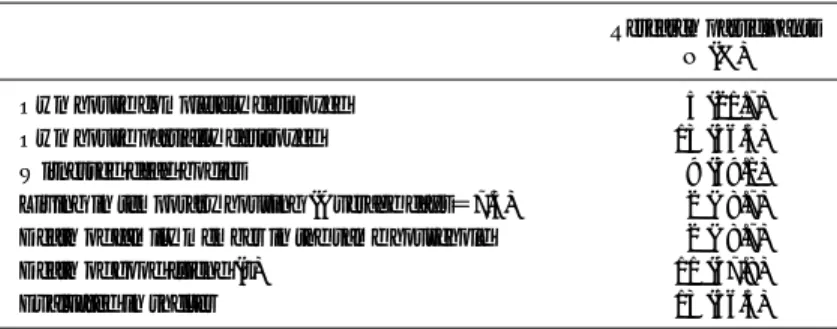
Table 2 Personal victimization*
Research participants N (%)
Own house completely destroyed 5 (21.7)
Own house partially destroyed 13 (56.5)
Witnessed dead bodies 9 (39.1)
Living in temporary housing (Average days=7.3) 2 ( 8.7) Death of family member in the same household 2 ( 8.7)
Death of good friend (s) 11 (47.8)
Evaluated in shelter 13 (56.5)
*Participants were asked to indicate all damages inflicted by the disaster. There-fore, actual numbers exceed 23 (100%).
good friends (47.8%). There was no subject who was injured requiring treatment at hospitals.
With regard to the personal trauma experiences that occurred within one year from the data collection, and that were not attributable to damage caused by the earthquake, it was reported that two subjects experienced sudden serious diseases in a parent, and one subject was injured in a traffic accident.
Regarding their professional experiences, the mean number of years in profes-sional practice was 11.3. The mean number of hours that the subjects worked with Kobe survivors was 27.0 hours per week. The averaged percentage of the sub-ject’s caseload was 65.0%. Furthermore, the averaged percentage of time dealing with psychological issues of Kobe survivors was 59.8 %.
2. The effects of workers’ own experiences of victimization on their therapeu-tic relationships
The clinical methodology for providing support to traumatized survivors changes in accordance with the practice model. Trauma work, however, should basically aim to achieve a state where a survivor can reintegrate a traumatic experience into his mind and obtain an effective coping mechanism where he no longer has any strong emotional reactions as regards the traumatic memories [Figley, 1985, 1995; Horowitz, 1979; Wilson & Lindy, 1994]. During that sort of trauma work, a stable and empathic attitude is the most crucial factor for clinical workers in forging trusting relationships with survivors, as well as in helping them to find a new meaning for their traumatic experiences. Traumatized survivors are likely to reveal their traumatic experiences with strong emotion, feeling deep anxiety, confusion, and anger. In addition, survivors tend to show a strong dependency on clinical workers [Figley, 2002]. Consequently, it is not easy, even for well-trained work-ers, to maintain the controlled empathic attitude that is required in counseling ses-sions.
effects of workers’ experiences of victimization on their therapeutic relation-ships,” and dividing this category into the following two subcategories: 1) an identification reaction to a client and 2) avoidance of clients. These subcatego-ries are explained hereinafter.
a) An identification reaction to a survivor (15/23, 65.2%)
Wilson & Lindy [1994] pointed out that a psychotherapist who works with a trau-matized client sometimes shows an excessive identification reaction. The reaction is captured by the framework of “countertransference.” During clinical work with a traumatized client, this kind of countertransference makes it difficult for a psy-chotherapist to maintain an appropriate psychological distance between himself and a client. It is said that a therapist or social worker tends to exhibit such a countertransference reaction, especially when he has also had a personal traumatic experience [Danieli, 1988; Schauben & Frazier, 1995]. In some cases, therapists disclose their own personal traumatic experiences in counseling sessions, and eventually are no longer able to maintain the neutral position that is required for an appropriate therapeutic relationship.
The qualitative analysis also highlighted identification issues among the clinical workers. All the subjects experienced the initial shock of the earthquake. Thirteen of the 23 subjects (13/23, 56.5%) had their houses fully or partially destroyed, two of them (2/23, 8.7%) experienced the death of family members, and eleven of them (11/23, 47.8%) also faced the death of good friends. It is clear that most of the subjects were dealing with their own personal issues related to damage and loss suffered in the disaster. In the counseling sessions, their personal traumatic experiences synthesized with those of their clients, allowing them to empathize with their clients on a deep level. This situation resulted in a kind of therapeutic relationship that they had never experienced before.
Such identification with survivors’ problems (as described above) does not nec-essarily occur in every case. Identification should not be understood by the dualis-tic perspective “with or without.” It is necessary to understand how the dynamics
of the identification reaction change in the treatment process, when maintaining an empathic relationship with a survivor.
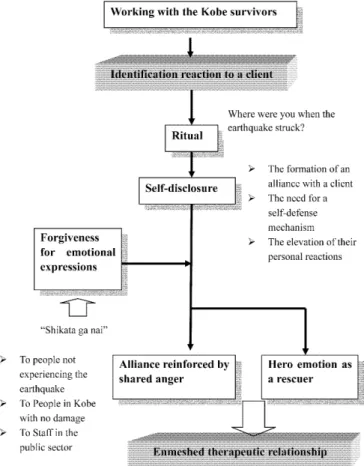
In this study, several significant concepts regarding the identification process were formed by the GTA. Fifteen of the 23 subjects (15/23, 65.2%) talked about their identification reaction to the psychosocial issues of their clients. As a result, five concepts regarding the identification reaction were extracted to form the sub-category “an identification reaction to a survivor.” These five concepts and the relationships among them are described below.
Ritual: Survivors raised various psychosocial issues during their counseling ses-sions. These issues were related to housing, medical care, employment, education, and psychological distress. 12 subjects (12/23, 52.2%) reported, however, that dur-ing the sessions they were always asked the same simple question, “Where were
you when the earthquake struck? ” Taking their cue from this question, the
survi-vors proceeded to elaborate on the situation, talking about the first shake, the evacuation process, and their living conditions up until then. The subjects care-fully listened to these stories, even though a long time before focusing on the sur-vivor’s present problems. One of the subjects described this communication pat-tern as a so-called “ritual between survivors.” A male subject aged 31 working as a social worker said:
You know, as soon as I touched on a topic relating to the earthquake, most of my clients changed their attitudes. I don’t know why, but anyway, I feel that they became calm and started talking about their stories without any hesitation. And then, you know, we just traced our experience with each other. We cannot avoid talking about the victimized experiences in the ses-sions, even when working with marital problems.
I talk a lot about the earthquake with my clients. I ask them “where were you when it happened?” and sometimes it is the client who asks me. When that happens, we then spend 20 to 30 minutes just talking about the earth-quake until the interview is over. You could say it is a sort of ritual. It’s by working through this ritual and talking about the earthquake that one gets onto the real subject.
Self-disclosure: The analysis showed that the subjects often talked about their own experiences of the disaster to their clients. 15 subjects revealed their experi-ence of disclosure in face-to-face interviews (15/23, 65.2%). This sort of self-disclosure was likely to occur during counseling sessions. Sometimes they began talking about their own experiences in response to survivors’ questions, such as “Are you a victim of the disaster?” In some cases, they started talking about their experience without being asked. This is what one clinical psychotherapist had to say on the subject:
I talk about my own experience of the disaster to survivors. I had never talked about myself to my clients before the earthquake, but now I can’t help myself. (Female, 39 years old)
The qualitative data analysis revealed that this self-disclosure on the part of the subjects occurred as a result of: 1) the formation of an alliance with a client, 2) the need for a self-defense mechanism against the strong emotional reactions of a client, and 3) the elevation of their personal emotions.
First, disclosing the fact that they were also survivors led to the formation of an alliance with clients, because they could share their experiences of the disaster with each other. Eight subjects (8/23, 34.8%) said that almost all of their clients started talking about themselves more freely once they disclosed that they were survivors. This would seem to indicate that when both the client and the clinical
worker are survivors, it is easier to establish a trust relationship.
As a secondary observation, the analysis also showed that in some cases, self-disclosure on the part of the subject functioned to interrupt the client’s stories that were characterized by traumatic experiences. One clinical psychotherapist said the following:
I sometimes talk about myself during the sessions. I realize this is bad, but as long as I talk about myself, I don’t have to listen to my client and it gives me some relief at the time. (Female, 28 years old)
This pattern of self-disclosure served as a form of self-protection for the sub-jects. Even well-trained workers cannot help feeling anxiety or tension when they encounter a situation where they don’t know what to do about the traumatic epi-sodes experienced by a client. Thus, when an “inexperienced” worker is faced with strong emotional reactions of clients and hears about the miserable episodes their clients have experienced, the workers can feel overwhelmed, and even ques-tion their ability as professional workers. The female therapist who made the re-mark above also had almost no experience in working with survivors’ trauma is-sues.
Some subjects said, they just “couldn’t help speaking up.” They explained this need for self-disclosure as a method for dealing with the hardships of their clients, based on a sharing of their own personal experiences. One of the subjects ex-plained his own loan repayment procedures to a client who was having trouble paying back a loan. He repeated it giving useful information obtained by himself to the client:
I just can’t stop asking about their experiences of victimization, especially when I want to build a closer relationship with my clients. You know, as soon as we talk about the earthquake, we can share a lot of things. There is
no way to avoid talking about the distress, because everything is related to the disaster, right? I also lost my house, and it was hard to get information about how to deal with loan issues. I can’t stop talking about my case to my clients who have the same problems. I think this is OK, isn’t it?
In short, the interview data indicated that this self-disclosure occurred as a re-sult of several factors, such as the formation of alliances with clients, a desire to protect themselves against strong emotional reactions from clients, and their own elevated emotions.
“Forgiveness” for emotional expressions: The interviews showed that six sub-jects forgave themselves for disclosing their personal emotions to clients (6/23, 26.1%). This “forgiveness” became a factor in accelerating patterns of self-disclosure. In general, emotional expressions by practitioners are allowed to some extent in order to maintain empathic relationships with clients. A clinical worker needs to respect all emotions expressed by a client. Furthermore, a clinical worker needs to place significance on self-awareness to control his or her own emotional reactions.
However, workers who have experienced the trauma of a disaster sometimes cannot suppress their own emotions when they encounter other survivors who have had the same traumatic experiences. Almost all the subjects confessed that they had wept when hearing about tragic episodes experienced by their clients. A significant action taken by the subjects towards uncontrolled emotional expres-sions was “forgiveness.”
One male social worker aged 42 revealed his own experience as follows:
I can’t help but cry. I can’t stay calm when I hear a father who lost his child say, “I’m happier because I could gather their ashes, and reach peace.” I have a middle school-aged daughter myself. I can’t help but cry. There’s
nothing else I can do. I think this is good. After all, I’m also a human being. I can’t stay calm when I see survivors.
The expression “It can’t be helped” was one that was frequently used when the subjects were asked about their own expression of emotion during clinical sessions with clients. They felt that emotional expressions were inevitable under such spe-cial circumstances where both the clinical workers and their clients were survivors of the same disaster. The analysis revealed that the forgiveness towards emotional expressions was most significant when they encountered the client’s episodes about the death of family members. A female social worker aged 44 said:
Whenever I talk about the earthquake and listen to others talk about it, espe-cially in cases where family members have been lost or lifestyles have been ruptured as a result, I end up crying. There is no other way to react. I’ve never let myself cry in front of my clients before, but now I can forgive my-self. I am also a victim after all. I don’t think that because we cried together it means that our relationship is turning into something special. The client does not relate to me but, in this situation, where there is this kind of mutual help between victims, I think expressing our feelings is important too. That’s all right, isn’t it?
On this occasion, it could be said that knowledge of professional conduct and the code of ethics was of no use for the clinical workers in controlling their emo-tions in an appropriate manner. More than a few subjects said that they should deal with their emotional reactions in a more professional manner, but that it was difficult to do in practice. The interviews clearly showed that they tried to objec-tively evaluate their emotional expressions by thinking back to their former work-ing experiences with traumatized clients, but in the end, however, they “forgave” themselves for their expressions of emotions, ruling that these were special cases,
to support the survivors.
Generation of hero emotion as a “rescuer”: The survivors started moving from the shelters into temporary housing about six months after the earthquake. Almost all of the support was based on outreach services involving home calls to temporary housing. The staff of ITS were acting as specialists to provide outreach services. At this point, the initial phase of rescue work including emergency re-sponses such as the restoration of the electric and water supplies, the distribution of relief goods, and the securing of shelters had ended, but the needs of the in-habitants of the temporary housing were just beginning. They had a variety of needs. They required support not only for the trauma they had suffered, but also for other concerns such as conflicts with new neighbors, problems with respect to hospital visits, and issues of nursing care.
A female social worker aged 28 who worked for the Mental Care Center said:
The survivors living in the temporary housing were separated and isolated from the local communities. The most serious problem for aged people was the isolation because there were many solitary old people. I think that our regular visits were an important point of contact with society for them. So, I felt strongly about the support that I was giving them. All support that I pro-vided was for daily living. I had a sense that I was serving the survivors di-rectly.
The outreach program was conducted to support the day-to-day needs of the survivors. Clinical workers listened to the clients talk about their experiences of the disaster, and developed emotional relationships at the houses of the clients. Here, relationships more like those between “friendly neighbors” formed, rather than the typical relationships that develop between “clinicians and clients.” They supported the survivors not only psychologically, but also in more direct ways
such as introductions to social resources, assistance with hospital visits, manage-ment of group work including coffee hours, and case managemanage-ment in collaboration with hospitals. During those times, some of the subjects reported feeling more like heros, as they were supporting the survivors and making a social contribution on the front lines (9/23, 39.1%).
Alliance reinforced by shared “anger”: The analysis showed that the emotion of “anger” played a significant role in generating an identification reaction of a clinical worker to a client. Based on stress coping process models of trauma vic-tims including in natural disasters, in the initial phase, people experience a state of numbed or impaired reality. Then, people go through a phase of “denial” where they do not accept what actually happened. Lastly, they enter the third phase where they express their feelings of anxiety and anger about their loss [Williams, 1993].
The feelings of “anger” experienced by the subjects are multilayered. These feelings of anger include anger about the bad environment their clients are living in, anger towards a government that seems indiscreet, anger about the damage and loss they suffered, anger towards survivors who suffered less damage, and anger towards people outside of the afflicted areas who had suffered no damage at all. A complicated process where these types of angers were all internalized projected it-self onto the problems of their clients, and expressed itit-self in the activities of sup-port they provided.
Sometimes, the feelings of anger felt by seven subjects (7/23, 30.4%) meshed with those of their clients, and the so-called alliance between subjects and clients was further strengthened. The empathic anger felt by both subject and client was directed towards three main groups: 1) people in the cities of Osaka and Tokyo, 2) people in the Kobe metropolitan area who suffered no damage, and 3) workers in the public sector.
for instance, was obvious. In the interview, a 51 year-old male social worker re-sponded in the following way:
My client and I sometimes discussed our shared anger toward people in Osaka. We always said, “Why was only Kobe damaged?” They didn’t suffer any damage. You know, they were walking around as if there had been no earthquake. I don’t think it was ethically appropriate, but we said to each other that we really hoped they’d get to experience an earthquake once! Af-terwards, we became more comfortable talking with each other.
Workers and clients always shared anger toward the government. They shared various dissatisfaction with such things as delayed applications for temporary housing, complicated application procedures for public donations, poor living en-vironments, forceful land rearrangement plans, strict application criteria for wel-fare benefits, and regional differences in the amount of relief goods. A phenome-non where the dissatisfaction or anger was shared with clients, and their therapeu-tic relationships were accelerated actually occurred. A female social worker, aged 31, mentioned as follows:
The administration has no flexibility. The rules always come first. That’s why the victims are seen just as a group. Each victim’s problems are different, however, especially in the case of senior citizens, where just a slight differ-ence in knowledge can change the way you treat them. Even if it’s just a 10-minute walk to the station, the load level depends on each person’s situation. So deciding the issue of temporary housing using a lottery system. . . . Well, when I listen to the clients, I also start to feel angry towards the administra-tion.
both social workers in the public sector, actually started a protest movement that could be called a “social action.” They made an appeal for revisions to the appli-cation criterion for welfare benefits in the City of Kobe. Their “social action” in-cluded 1) a protest activity towards related departments and 2) advocacy action through newspapers in order to speak for the survivors. A male social worker, aged 48, said as follows:
What is really hard is being in the middle. That is being in a position that on the one hand involves being apart of the administration, and on the other,
being a social worker. One of the duties of the social worker is to confront the problems of society, which includes taking social action. In the case of this earthquake, it is full of contradictions. Regarding public welfare assis-tance and the selection of temporary housing, the real situation of the clients is not considered enough. It is necessary to have the courage to point out this problem. I tried to do just that in several different ways but with no suc-cess. In the end, I came to the conclusion that there is nothing I could do about it.
In the end, their activities were not successful. The application criteria for wel-fare benefits were not revised, and on top of that, they both received a verbal rep-rimand from their bosses because they had criticized the administrative office of the City of Kobe to which they belonged and had brought the problem to light by leaking the information to the press. They were told that, as a matter of practice, they should stop these advocacy actions.
b) Avoidance of clients (8/23, 34.8%)
As shown above, the subjects’ identification with their clients’ experiences of the disaster was accelerated through the self-disclosure on the part of the subjects, of their own experiences of the disaster, their tendency to forgive themselves for their expressions of emotion, and the elevated heroic sensation they experienced as rescuers. A process where the subjects showed a tendency to share feelings of an-ger with their clients toward third parties and to develop close personal relation-ships with them was observed.
Meanwhile, eight of the subjects (8/23, 34.8%) formed therapeutic relationships with their clients that involved taking an evasive attitude towards their traumatic experiences, and avoiding the identification process all together. As a matter of course, they sometimes cried in sympathy when clients talked about their particu-larly traumatic experiences that were related to the loss of family members or the loss of homes and belongings. However, the self-disclosure and self-forgiveness
for their expressions of emotion did not accelerate among these particular subjects. They applied themselves instead to maintaining their expertise and minimizing the empathic relationship, in order to construct therapeutic relationships.
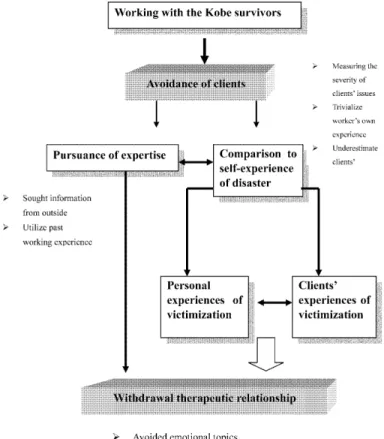
The sub-category called “avoidance of clients” was generated after interviews with these counselors. Their experience was quite a contrast to the close identifi-cation the other subjects had with their clients. This sub-category “avoidance of clients” consists of the three concepts; “comparison to self-experience of disas-ter,” “pursuance of expertise,” and “avoidance of an empathic relationship.” Each concept will now be explained.
An objective comparison to self-experience of disaster: One male social worker aged 39 said that he stayed calm during sessions with his clients because he himself was a victim and understood all too well their experiences. His house was totally destroyed in the earthquake and he lived in a shelter for one week af-ter the disasaf-ter. He introduced his own method for conducting his assistance ac-tivities. There were three other subjects (3/23, 13.0%) who also used the same strategies to control empathic relationships. In this method, they always compared the extent of damage suffered by a client with the damage they had suffered them-selves. In this way, they evaluated the problems of their clients based on their own experiences:
It’s true that I felt sad when I made arrangements for an application for housing for a client who had lost a family member. I felt that I should try hard because there were many people who had undergone more grueling ex-periences than I had, and yet I disregarded clients whose losses had been less than mine.
As seen in the statement above, he evaluated the problems of his clients by measuring the severity of their problems using criterion based on his own experi-ences of the disaster. When dealing with the problems of clients who he
consid-ered to have suffconsid-ered more than he had, he tended to trivialize his own experience of the disaster. On the other hand, he was likely to underestimate the problems of those clients who he thought had suffered only slight damage relative to himself, and minimized his emotional reaction accordingly.
He used this comparative method of evaluating the problems of his clients in a calm and clinical manner, by using his own experiences of the disaster as a bench-mark. He said that he does not talk about himself after hearing about traumatic ex-periences of clients when evaluating them with this method. He listens to their traumatic experiences from the viewpoint of an assessor. The process of identifica-tion is not accelerated, and an objective viewpoint is maintained.
Pursuance of expertise: Four subjects strove to further their expertise by coun-seling survivors with life-threatening traumatic experiences, and enhanced their skill and ability to develop therapeutic relationships (4/23, 17.4%). The informa-tion they obtained about traumatology grew rapidly after the earthquake, and to-gether with the knowledge and techniques they already had, they were better able to understand the psychological reactions of clients. Furthermore, they aggres-sively developed social resources to promote assistance. A female clinical psycho-therapist aged 27 said:
It is a challenge. I was also afflicted and lost friends. Certainly, it is sad to hear clients’ experiences of the disaster, but I have to keep working now. I read a lot of books. My ability as a specialist is really being tested.
They pursued expertise in two ways: 1) by collecting information aggressively from other sources such as by reading specialized books, participating in work-shops or training courses, and working with psychiatrists; and 2) by having dis-cussions with colleagues about the assistive processes and interventions of similar cases they had experience with.
the earthquake, even specialists in mental health and psychiatry fields were not fa-miliar with the word PTSD. It was alien territory. Autonomous and voluntary bod-ies held a large number of training courses and workshops for various issues that had not been focused on in the Japanese mental health field, such as a basic knowledge of trauma, diagnostic criteria for PTSD, differences between PTSD and ASD, courses of psychological reactions, and methods of psychological debriefing. Some subjects participated in workshops and formed networks of specialists in or-der to enhance their expertise. A female subject aged 54 enrolled in a correspon-dence course six months after the earthquake, and in two years, obtained all the qualifications she needed to become a social worker. She said, “I would never
have obtained this qualification if it had not been for the earthquake.”
Secondly, the reviews by the subjects on cases they were responsible for are not limited to the assistance of the survivors. They planned clinical interventions by assessing and comparing their past working experiences and the cases they were routinely responsible for before the earthquake. Some subjects said that their past experiences were of no use when providing psychosocial support for the survivors. A female psychologist aged 28 said:
It is the first time I have ever had to deal with victims of a natural disaster such as an earthquake. There were a few cases in the past where I worked with people who had lost family members in traffic accidents or as a result of violence. I tried to remember those experiences and remember what I had done to help. I also read some books over again that I had read in the past and asked lots of questions to psychiatrists to get as much information as I could. I tried not to be overwhelmed. I guess I would say, that as a clinical person, I was being tested. I think it has been a good experience for me pro-fessionally.
experi-ence. They were the clinical workers who sought better methods to assist their cli-ents, by reviewing cases they had handled previously that involved clients who had suffered the effects of trauma as a result of the sudden death of family mem-bers, or a result of having been victims of crime. They said that they had not con-tinued to do their work only for humanitarian reasons, but for the reason that they wanted to try to develop highly specialized therapeutic relationships in order to deal more effectively with the problems of clients.
Avoidance of empathic relationship: Four subjects maintained their therapeu-tic relationships with survivors by avoiding an empathic relationship (4/23, 17.4%). The subjects 1) avoided emotional topics in interviews, 2) avoided using positive interview techniques such as reflection and insight, 3) avoided talking about experiences of the disaster, and 4) engaged exclusively in responding to the needs of life.
The qualitative data showed they avoided getting into empathic relationships with their clients because 1) they wanted to avoid recalling their own experiences of the disaster, 2) they did not have the confidence to bear the strong emotional reactions of the survivors, 3) they thought that talking about the disaster itself would negatively affect their assistance activities, and because 4) they felt that an empathic relationship did not show the target of assistance.
The psychological dynamics to suppress their own memories of the disaster by avoiding an empathic relationship with clients is easily understood. The topics of the disaster to be avoided include the shock immediately after the earthquake, dead bodies, fires, and trapped survivors. One male social worker who lost a member of his family said:
I can’t bear hearing someone talk about a family member who had been bur-ied under the wreckage of a collapsed house. I can’t endure hearing about such things. I want to stop it. I can’t help it. I become sad when I hear such stories. This is not good for the client. I can’t talk about my own experiences
either.
Some subjects avoided topics such as the deaths of family and friends. Another male social worker aged 41 said:
It was about two weeks after the earthquake. A client had lost her child. She wrapped the remains in a blanket to carry them with her. I tried to address the issue of social welfare. I wept upon seeing the blanket and later vomited in the bathroom during the counseling session. I was filled with shame and self-loathing. I thought I was incapable of providing the psychological coun-seling the survivors needed.
As illustrated in the comment above, six practitioners were overwhelmed by the shocking traumatic experiences of the survivors, and lost confidence in their abili-ties to provide psychological support for the survivors (6/23, 26.1%). They had basic knowledge about emotional venting and the process of distress. However, for almost all the subjects in the study, it was the first time that they had ever had to provide psychological support to victims who had suffered from such traumas, including the sudden and traumatic deaths of family members, and the complete loss of houses and homes. Most of the subjects showed anger towards the earth-quake itself, perhaps in reaction to the fact that they did not know how to console people who were castigating themselves for not having saved others.
Meanwhile, some subjects preferred to avoid getting into empathic relationships, because they thought that talking about the survivors’ traumatic experiences with them would promote recollections of events that might only serve to impede re-covery. One subject said, “I don’t know how far I can go when asking such
ques-tions. I haven’t been able to figure that out to this day.”
There was a client I had who had lost their child in the disaster. The client was in their early 30’s and didn’t talk much about their child. Even when I visited the client at their home, they acted very cheerfully around me. Their complexion wasn’t good though, and I was worried, but it wasn’t easy for the client for me to ask about their child. How is the client supposed to an-swer when asked about it? This is very difficult. I don’t have the confidence or know-how to handle situations like this. That is why I considered it unnec-essary to get that deep into this issue.
Most subjects had no knowledge of or training in trauma therapy, so it is only natural that they were bewildered and at a loss when dealing with the topics and emotions that they faced while supporting the survivors. In general, some subjects half-heartedly considered they should avoid emotional topics.
Four subjects avoided getting into empathic relationships because they could not see the purpose of these in providing assistance to their clients (4/23, 17.4%). The clients all talked about common topics such as what they had done on the day of the earthquake, their experiences at the shelters, their criticism of the government, issues related to their temporary housing and economic troubles, and difficulties with neighborly relations, but these subjects could find no solutions for them. The subjects said that they had difficulty establishing specific targets of assistance, and hesitated in building up any sort of empathic relationship:
The most serious problems of the victims concern their sense of loss and un-certainty about the future. Aged people in temporary compounds have a sense of hopelessness rather than uncertainty. I always see the same prob-lems when I’m counseling survivors. There is no specific support. I have nothing I can do. I cannot encourage them. I’m a little tired.
temporary housing said that when assisting the survivors of a disaster, the practi-tioners hardly ever followed a process where they shared a specific target of assis-tance with their clients and utilized an empathic relationship to solve their prob-lems. These subjects lost their empathic energy for sympathy and reached a state of “compassion fatigue” upon hearing so many stories of loss and suffering, and this resulted in a process where the subjects avoided empathic relationships.
Figure 2 shows this pattern of “avoidance of clients” as described above.
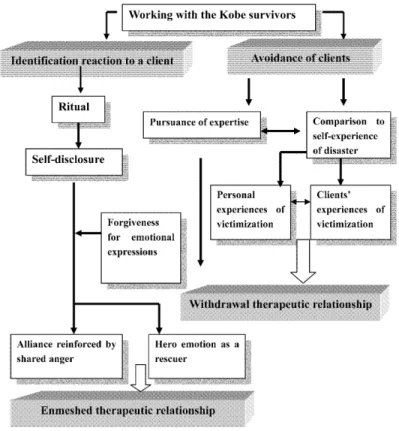
Figure 3 summarizes the effects of workers’ own victimization experiences of therapeutic relationships. This figure shows a holistic view of the impacts of working with the Kobe survivors on the therapeutic structure of clinical work.
DISCUSSION
Limitation: It is important to emphasize here that this study applied a qualitative approach based on an inductive research paradigm in order to explore the vicari-ous effects on clinical workers, of working with the survivors of the Kobe Earth-quake. This study, therefore, did not aim at addressing the issues of variability and generalizability with regard to the mental health state among those workers. In
ad-Figure 3 Effects of workers’ own experiences of victimization on the therapeutic relationship
dition, since this study does not allow me to test the results on representative sam-ples of a population, the results may not be convincing enough to impact policy makers to act on them. Rather, the value of the findings in this study should be viewed as an initial step in the development of more culturally informed studies as well as social work methodologies that might facilitate positive stress management processes among social workers and clinical psychologists.
Supporting an appropriate therapeutic relationship with disaster victims: The result of the qualitative analysis shows that a special therapeutic relationship progresses between disaster victims and practitioners that cannot be observed in ordinary clinical settings. The result illustrated the actual state where an assister himself has an experience of a disaster when he is empathizing and identifying with the experiences of a disaster victim. This study found an establishment of a therapeutic relationship with an inappropriate psychological distance, such as self-disclosure accompanied by emotional expressions or anger shared with clients. Meanwhile, some subjects compared their experiences of the disaster to those of clients, and dared to communicate with clients while taking evasive attitude.
This close or evasive therapeutic relationship should not be evaluated using a simple decision regarding right or wrong. Especially in the case of natural disas-ters, it is social workers and clinical psychologists who live in the afflicted area that actually support the disaster victims in the long term. In addition, in the case of the Kobe Earthquake, support entered the afflicted area not only from Japan but from all over the world during the chaotic three weeks that followed the earth-quake. After that however, local workers had to support the victims. In large-scale natural disasters, local supporters in the area, who have suffered harm themselves, have to support the disaster victims.
In the case of large-scale disasters, the structure where local workers who have experienced the same disaster and trauma as the victims will remain unchanged in the future. As shown below, the results of this research suggest a practical method to support trauma workers who cannot avoid identification with, or withdrawal
from clients.
Self-awareness is the most important clinical issue for a clinical worker when he works with victims in a natural disaster. Supervision has been requested to clarify the countertransference and to accelerate the self-awareness of trauma workers. Especially in the support of traumatized clients, the dynamics of transfer-ence or countertransfertransfer-ence between a client and assister exert a crucial influtransfer-ence on both the process and effect of the support. Thus, it is necessary to construct a supervision system in order to systematically understand the countertransference shown by clients as regards traumatic materials, and the actual state of the vicari-ous traumatization.
It is noted that a supervisor should not view in a negative light various psycho-logical reactions and the unresolved intra-psychic conflicts of a worker in the process of identification with a client. A supervisor should consider and accept a countertransference reaction as an important cue for a worker to find himself, and to understand unsolved psychological problems. Finally, it would be desirable to have a supervisor to support a worker so that he could mature into a specialist. Thus, it is indispensable that a supervisor solidifies an inseparable relationship of cooperation with practitioners (supervisee) in order to function as a team when clinically supporting disaster victims.
It is significant to talk about experiences of disasters and the traumatic experi-ences of practitioners. However, it is difficult to process all of the personal inner conflicts of trauma workers within a “supervision” framework. From the view-point of the results of the qualitative analysis, even a supervisor is seen from the standpoint of a boss or co-worker. It has become apparent that some clinical workers do not share the value of support itself, because of disagreements that are generated regarding perspectives of psychosocial problems faced by disaster vic-tims, and the methods and targets of support. The results of the analysis showed that some workers dared only to disclose their experiences of a disaster to clients, and not to their co-workers or bosses.
Thus, it is necessary to construct a system where clinical workers can receive psychological support and counseling from the institutes they belong to, so that they can maintain appropriate therapeutic relationships with disaster victims, and cope with the damage caused by vicarious traumatization. It is also necessary to promote cooperation among institutes for psychologically supporting trauma work-ers in the form of outsourcing. There is no institute that psychologically supports trauma workers through outsourcing in Japan at this time.
Importance of items not talked about: In this research, the vicarious traumati-zation of clinicians who were engaged in supporting disaster victims in the Kobe Earthquake was studied in an exploratory manner, mainly by using a qualitative research method. In the analysis, the literal records of the interview were analyzed by applying M-GTA, and the content was conceptualized and categorized.
B. G. Glaser, who was a founder of the GTA, devised a qualitative data analy-sis method using positivism as an epistemological framework. After that, Strauss & Cobin [1990] modified the GTA. However, the epistemology of the examina-tion method is based either on positivism, or upon Symbolic Interacexamina-tion Theory [Blumer, 1969]. In the M-GTA, the epistemology is constructed by combining positivism and Symbolic Interaction Theory pragmatically.
Both GTAs are analysis methods where a concept is generated based on the in-terview data. The aim of the approach is basically placed on building a theory. The problem here is whether or not the materials talked about by the subjects are only data showing the phenomena to be researched. In most social research, the material verbalized by the subjects is used as valid data, while unanswered parts are disregarded. Social research behaves as if the “untold parts” do not exist, with-out bothering to review their possible meanings.
In this study, it is believed that the untold parts may hold important clues to un-derstanding the real experiences of the practitioners who engaged in supporting disaster victims who suffered from very high stress as a result of the Kobe Earth-quake. Ogino [1999] mentioned that there were two types of untold parts
includ-ing 1) material not verbalized in the interview process, which may however, be verbalized in the future; and 2) materials that can never be verbalized through any effort. The first type occurs in the situation where a subject hesitates in talking to a new investigator, or finds it difficult to talk about the experience in a calm man-ner given its import. The second type refers to the denial of the premise that the whole experience can be verbalized. Ogino insists that the parts that cannot be verbalized, or the blank parts are the real opinions of the victims.
During the interviews, the author tried to read not only the spoken language, but also the non-verbal messages expressed by the practitioners who were engaged in the clinical work with the disaster victims. Ogino [1999: 116] cited a story written by R. Akutagawa, a well-known Japanese novelist, to describe the power of non-verbal messages. In one interview, a female social worker revealed the same non-verbal messages indicated in Akutagawa’s story. She talked about her therapeutic relationship with a survivor (middle-aged female) who had lost her younger sister. The social worker talked about her experiences regarding the disas-ter of the client she treated. She talked about the experience of the client including the place the disaster occurred, the status of the damaged house, the occurrence of a fire and how it spread, the search for the body of the victim’s sister, the course of escape, and the actual recovery of the body. The social worker talked in very forthright language. It is considered that she was going to talk about the status of the client from a professional standpoint. However, she grasped a handkerchief and quivered as she spoke.
From her non-verbal messages, it was assumed that it was hard for her to ver-balize her thoughts and feelings because of the effect by procuration from her therapeutic relationship with her client. In this situation, her thoughts from the non-verbal message given by the quivering of her hands revealed many clues about her emotional state.
Research methodologies to understand social phenomena in the cross hauling with researched people, have been constructed, such as the phenomenological