Synchronization of Simultaneous Oscillators Including Nonlinear Resonators
Haruka Funahashi† Yang Yang‡ Yoko Uwate† Yoshifumi Nishio† (†Tokushima University ‡Xi’an Jiaotong University)
1. Introduction
In this study, synchronization phenomena observed from two inductively coupled simultaneous oscillators including nonlinear resonators are reported. Note that the characteristics of nonlinear resisters are de- scribed by a third order function. We focused on the phase difference between the two oscillators for vari- ous parameter values.
2. Circuit Model
The circuit model is shown in Fig.1. The normal-
Figure 1: Circuit model.
ized circuit equations are given as follows.
˙
x11 = β(x11+x12){
1−(x11+x12)2}
−y11−f(x11)−yc
˙
x12 = αC[β(x11+x12){
1−(x11+x12)2}
−y12−f(x12)−yc]
˙
x21 = β(x21+x22){
1−(x21+x22)2}
−y21−f(x21)−yc
˙
x22 = αC[β(x21+x22){
1−(x21+x22)2}
−y22−f(x22)−yc]
˙
y12 = x11
˙
y22 = αLx12
˙
y12 = x21
˙
y22 = αLx22
(1)
whereyC corresponds toiC
yc=δ{αL(y11−y21) + (y12−y22)} (2) f(x) corresponds to the nonlinear characteristics of the diodes.
f(x) =1
ε(x−0.5|x+γ|+ 0.5|x−γ|) (3)
3. Simulation Results
In this article, we show only several computer sim- ulated results obtained by giving different initial con- ditions for the fixed parameters as αC=0.3, αL=0.3, γ=0.1,ε=0.6,β=0.1, andδ=0.6.
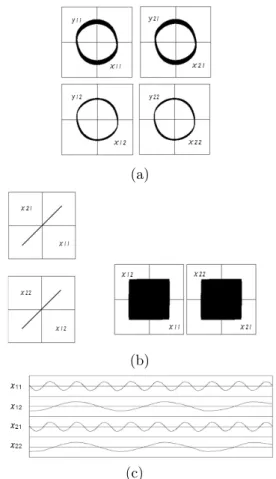
Figure 2 shows a typical example of the simulated results. We can see that each oscillator exhibits si- multaneous oscillations and that the corresponding resonators are synchronized in in-phase.
(a)
(b)
(c)
Figure 2: Computer simulated results. (a) Lissajous figures. (b) Phase differences. (c) Time waveforms.
4. Conclusions
In this study, we have investigated synchronization phenomena observed from two inductively coupled si- multaneous oscillators including nonlinear resonators.
By computer simulations, we have confirmed that the corresponding resonators were synchronized in in- phase while the oscillators exhibited asynchronous si- multaneous oscillations.
4
2013 SHIKOKU-SECTION JOINT CONVENTION RECORD OF THE INSTITUTES OF ELECTRICAL AND RELATED ENGINEERS (TOKUSHIMA)
平成25年度電気関係学会四国支部連合大会 講演論文集 (2013 徳島大学)