九州大学学術情報リポジトリ
Kyushu University Institutional Repository
高吸水性セルロースグラフト共重合体の膨潤機構
吉延, 匡弘
九州大学農学研究科林産学専攻
https://doi.org/10.11501/3075468
出版情報:Kyushu University, 1993, 博士(農学), 課程博士 バージョン:
権利関係:
Mechanisms of Swelling of the Super Water-Absorbents Derived from Cellulose Graft Copolymers
Masahiro Yoshinobu
1994
Kyushu University
Contents
General Introduction
Chapter 1
"Syntheses of Cellulose Graft Copolymers as Super Absorbent Polymers"
1.1 Introduction 1.2 Experimental
1.3 Results and Discussion 1.4 Conclusion
Chapter 2
"Effects of the Crosslinking Density and the Amount of Branch Polymer on the Swelling Behavior of Cellulose Graft Copolymers"
Page
1
8 11 16 39
Chapter 3
"Effect of the Molecular Chain Length of Trunk Polymer on the Swelling Behavior of Cellulose Graft Copolymers"
3.1 Introduction
3.2 Experimental
3.3 Results and Discussion
3.4 Conclusion
Chapter 4
"Porous Structures of Hydrogels of Cellulose Graft Copolymers"
4.1 Introduction 4.2 Experimental
4.3 Results and Discussion 4.4 Conclusion
Chapter 5
"Rheological Properties of Cellulose Graft Copolymers"
5.1 Introduction 5.2 Experimental
Hydrogels of
Contents
66
69
73
93
95
98
105
124
129
132
5.3 Results and Discussion 5.4 Conclusion
Chapter 6
"Morphologies of Hydrogels of Cellulose Graft Copolymers"
6.1 Introduction 6.2 Experimental
6.3 Results and Discussion 6.4 Conclusion
General Conclusion
Acknowledgement
References
140 164
167 169 171 190
192
203
205
Introduction
General Introduction
When a water-soluble polymer containing ionic groups is slightly crosslinked, it demonstrates a high water- absorbency and becomes a hydrogel in water. This polymer
is called the super absorbent polymer(superabsorbent polymer, superabsorbents, absorbent, super water-absorbent, water-absorbent resin, or super gel) [1-9].
Cottons, pulps, fabrics, and
spong
es have been used forthe water-absorptive materials from old times [1-9]. These materials absorb water into their chinks by the capillary phenomenon. However, their absorbencies are low in the
vicinity of
20g of water per gram of dry material, and they easily release the absorbed water by being pressed.
Some kinds of cross linked polymers of poly(vinyl alcohol), poly(hydroxyethl methacrylate), and poly(ethylene glycol) have been developed since about 1965 and have been used for the water-absorptive materials such as soil conditioners and thickners in place of pulps and fabrics [1- 9]. These polymers do not release the absorbed water by being pressed, but their absorbencies are
20-30gjg and similar to those of pulps and fabrics.
In July, 1974, it was reported that the first
superabsorbent polymer was synthesized in Northern Regional
Research Center, the United States Department of Agriculture
[ 10] . This super absorbent polymer was a partially
hydrolyzed graft copolymer of polyacrylonitrile on corn
strach. This could absorb some hundred grams of water per gram of dry polymer, and its remarkable absorbency attracted attention in the world.
Afterwards, various kinds of super absorbent polymers have been synthesized from various kinds of natural and synthetic polymers [1-9, 11-25]. Most of them were synthesized from starches and synthetic polymers. Starches from cassava, potato, corn, wheat, and so on were used [1-9, 11-43]. Monomers used were acrylonitrile, acrylamide, sodium acrylate, sodium allylsulfonate, sodium styrenesulfonate, sodium vinylsulfonate, 2-acrylamide-2- methylpropanesulfonic acid,
etc[ 1-9, 11-53]. The methods of syntheses were graft copolymerizations onto starches, crosslinkings by copolymerization of crosslinker,
introduction of hydrogen bonding, and irradiation with light
and radiation, post-hydrolysis, and other hydrophilizations
and water-insolubilizations [1-9, 11-53]. The polymers
Introduction Some of them are currently commercialized and utilized mainly in sanitary fields; for example, for disposable infant diapers, feminine sanitary nupkins, under pads, and absorbent products for adult incontinence
[1-9, 11-25].
Onthe data in
1992,
the amount of super absorbent polymers manufactured went up to over270,000
tons per year in the world and130,000
tons per year in Japan. Most of the super absorbent polymers manufactured were the crosslinked poly(
sodium acrylate)
and the starch graft copolymers. The percentage of the application of them in the sanitary fields exceeded90%.
Besides the high water-absorbencies, the super absorbent polymers have specific properties such as the liquid absorptive property, the liquid retaining property, the moisture sorptive property, the drug deliverable property, the barrier property to liquid penetration.
Thus, the super absorbent polymers are recently utilized in various fields such as medical fileds, food industrial fields, agricultural and horticultural fields
[ 1-9, 11-25, 54-58].
Most of the commercial super absorbent polymers are in powder or granular forms, and these are used after mixing with pulps or spreading on films
[1-9, 11-25].
For theuti liation in various fields, the super absorbent polymers being in various forms such as fibrous or sheet forms are
required for each specific use. However, it seems that the absorbents in fibrous or sheet forms are not generally used because of their inferior absorbencies.
The graft copolymers on cellulosics and lignocellulosics also have become of great interest in the fields of the super absorbent polymers in a number of aspects: water absorptive property, mechanical properties, and variety of forms of the original cellulosics
[ 28,
59-72].
In addition, the crystalline nature of the cellulose can be greatly destroyed by the graft copolymerization or the post-hydrolysis[
63] .
This releases the naturalabsorbency of the original cellulose as well as adding that of the hydrophilic side chains leading to a extremely high water absorbency. Thus, the cellulosic super absorbent polymers have been synthesized by graft copolymerizations of acrylonitrile, acrylamide, acrylic acid, methacrylic acid, methyl acrylate, ethylene glycol dimethacrylate, and others onto wood pulp, cotton, cellophane, rayon, cellulose derivatives, and others. These graft copolymers can absorb more water than the original cellulosics, but their
commercial super absorbent polymers [ 69, 71].
Introduction It will be possible to synthesize the highly water-absorptive cellulose graft copolymers that have prominent absorbencies.
The super absorbent polymer is a slightly crosslinked polymer network containing ionic groups, and the principle of the swelling of the ionic polymer network is generally interpreted by Flory's theory of swelling as follows: In water, the mobile ions of cations dissociate from the ionic groups attached to the polymer chains, and the difference in osmotic pressure between the inside and outside of the network stems from the difference in the concentration of ions between the inside and outside of the network [ 73].
The negatively charged groups attached to the polymer chains set up an electrostatic repulsion that tends to expand the network. As a result, the external water is incorporated into the network and retained in the network. Therefore, the absorbency of the super absorbent polymer is determined by the balance of the affinity of the network for water, the difference in osmotic pressure between the inside and outside of the network, and the elasticity of the network.
On the other hand, the mehcanism of the swelling of the super absorbent polymer that can extremely highly swell will not be briefly interpreted. In particular, the mechanism of the swelling of the graft copolymer that is composed of two components of the trunk polymer and the branch polymer
will be more complicated than that of the one-component polymer such as crosslinked poly
(
sodium acrylate)
andpartially hydrolyzed crosslinked polyacrylamide. It is considered that both of the trunk polymer and the branch polymer play important roles in the swelling of the graft copolymer. Although the swelling of the graft copolymers have been studied, the actions of trunk polymers and branch polymers for the swelling of the graft copolymers have not been studied in detail. With regard to the studies on the mechanism of the swelling of the super absorbent polymers, moreover, most of them have discussed the absorbencies of the polymers but have not discussed the swelling behavior of the polymers or the changes in structures and rheological properties of the hydrogel in detail.
The purpose of this research is to synthesize the cellulosic super absorbent polymers by the graft copolymerization onto cellulosics, and to elucidate their swelling mechanisms. For these purposes, the syntheses of the highly water-absorptive cellulose graft copolymers in fibrous and sheet forms instead of the conventional powdery
Introduction the grafted branch polymer on the swelling behavior of the graft copolymer were discussed. In Chapter 3, the effect of the molecular chain length of the cellulose trunk polymer on the swelling behavior of the graft copolymer was discussed. In the following chapters, futhermore, the changes in the structures and rheological properties of the hydrogels of the graft copolymers with the voluminal changes of the graft copolymers were discussed. The porous structures were examined and discussed by using of the solute exclusion technique in Chapter 4. In Chapter 5, the viscosities measured by use of a viscometer based on the heat transmission
viscoelasticities
in the measured
hydrogels, by use of oscilating plate
/
plate rheometer wereand the dynamic a compressible discussed. In Chapter 6, the last chapter, the morphological studies for the hydrogels by the observation using a cryogenic scanning electron microscope on cryogenic state were discussed.
Chapter 1
Syntheses of Cellulose Graft Copolymers as Super Absorbent Polymers
1.1 Introduction
A graft copolymer is composed of two components of a trunk polymer and a homogeneous or heterogeneous branch polymer. Graft copolymerization can be carried out in such a way that the properties of the branch polymers can be added to those of the trunk polymer without largely changing the latter.
Graft copolymerization onto cellulose and its derivatives began in the early 1950's
[74].
The graftcopolymerization of synthetic polymers onto cellulose was attempted in the world as a new and exciting way to modify cellulose and extend its uses against the synthetic polymers that was rapidly growing. There has been very high activity for the investigation on the graft copolymerization
Chapter 1 In spite of these efforts, there has been comparatively
little commercial application of the cellulose graft copolymer
[ 7 4] .
It has been difficult to synthesize the cellulose graft copolymer with a desired structure, composition, and amount by limited cost, period, and equipment. Because a homopolymer has been concurrently formed in a considerable extetnt in most cases, and the reproducibility has lacked in most of the heterogeneous reactions. In addition, the grafted branch polymers have been often too few and too long, leading to a limited involvement of the cellulose molecules themselves. These are the reasons why the cellulose graft copolymers have been scarcely used in practice.The graft copolymers can be synthesized by direct grafting of the branch polymers or by graft copolymerization of the monomers, but the latter method is generally employed
[ 7 4] .
The graft copolymerization of monomers ontocellulose is initiated by free radical processes in general
[74-153].
Macrocellulosic free radicals are formed through dehydrogenation, depolymerization, or oxidation of cellulose. Commonly used methods of free radical initiation include the followings: ionizing radiations such as high energy and ultraviolet radiations, chemical redox systems with eerie ion, persulfuric ion, peroxide/
ferrousion with or without cellulose xanthate, manganese ion, etc.,
decomposition hydroperoxides modifications.
of peroxy compounds or halogenous atoms,
introduced by and chemical Corona or arc discharge, electrochemical, mechanical, ultrasonic, and thermal methods are also used.
Among these methods, the eerie ion initiation method is superior to the other methods in the yield of graft copolymer, the elimination or minimization of concurrent homopolymer formation, the involvement of all or most of the cellulose molecules in the grafting process, the convenience on the control of the molecular weights and molecular weight distribution of the grafted branch polymers, and the reproducibility of the yield, properties, and other features of the graft copolymer
[74].
Therefore, the super absorbent polymers in fibrous and sheet forms were synthesized by the graft copolymerization of acrylamide and acrylic acid onto several types of cellulosics such as wood pulps, a cellulosic film, and a nonwoven fabric from regenerated cellulose by using of the eerie ion initiation method, with or without post- hydrolysis. Their absorbencies and hygroscopicities were
1.2 Experimental
1.2.1 Materials
Chapter 1
The cellulosics used in this study were the following;
a bleached kraft pulp from softwood(NBKP), a NBKP being in powdery form(P/PULP), a water-solubilized NBKP modified by slight cyanoethylation(CE/PULP) [154], a cellulosic film that was extracted with water and ethanol to remove flexibilizer(FILM), and a nonwoven fabric from regenerated cellulose(NWF).
Acrylamide(AM) was obtained from Wako Pure Chemical Industries, Ltd. and purified by recrystallization from benzen [155].
Acrylic acid(AA) was obtained from Wako Pure Chemical Industries, Ltd. and purified by distillation [156].
Ceric ammonium nitrate(CAN) as an initiator, N,N'
methylenebisacrylamide(MBAA) as a closslinker, and other chemicals were reagent grade(Wako Pure Chemical Industries, Ltd.) and used without further purification.
1.2.2 Graft Copolymerization
The graft copolymerization of AM onto the pulps was carried out by using of the eerie ion initiation method as follows: The pulp was dispersed or dissolved in water. AM and MBAA were dissolved in water separately.
dissolved in an aqueous solution of nitric acid.
CAN was The pulp
dispersion or solution was transferred to a reaction vessel together with the CAN solution, the AM solution, and the MBAA solution. The vessel was put into a constant temperature bath, and the graft copolymerization was carried out in a stream of nitrogen for deaeration and stirring.
After graft copolymerization, the graft copolymer was washed with water to remove the
homopolymer of polyacrylamide (PAM) .
residuals and the The graft copolymer was then precipitated in 2-propanol and dried under vacuum at 25 oc, and the weight was measured.
The nitrogen content of the graft copoloymer was determined by using of the Kjeldahl method, and the weights of the cellulose trunk polymer(WT1) and the PAM branch polymer(WT2) were calculated. The degree of grafting
(DG)
was calculated from the following equation:
DG (%)
= WT2(g)WT1(g) X 100 ( 1 . 1 )
In the case of the graft copolymerization onto the cellulosic sheets such as FILM and NWF by using of the conventional eerie ion initiation method, it is predicted
Chapter 1 was dissolved in aqueous solution of nitric acid. A weighed cellulosic sheet, which was cut into a size of about 12.5 em x 10.0 em, was soaked in this solution. After this pretreatment, the sheet was rinsed with water to remove the residual eerie ion, and then the water was wiped off from the surfaces of the sheet. The pretreated sheet was transferred to a reaction vessel together with the aqueous solutions of nitric acid and monomers of AM, AA, or AA with AM (AA· AM). The subsequent procedure was similar to that described above, but the crosslinker was not used.
The DG of the sheet graft copolymer was calculated from the weight increase of the sheet. The composition of the PAM and poly(acrylic acid)(PAA) branch polymer for the graft copolymer of PAA with PAM(PAA·PAM) was calculated from the determination of the nitrogen content of the graft copolymer by using of the Kjeldahl method.
The graft copolymerizations of PAM onto several kinds of starches were also carried out by using of the eerie ion initiation method as described above. Starches used were a corn starch, a potato starch, and a water-soluble starch(Wako Pure Chemical Industries, Co., Ltd.).
1.2.3 Alkaline Hydrolysis
The amide groups in the graft copolymer of PAM were converted into carboxyl groups by alkaline hydrolysis as
follows: One gram of the graft copolymer was dispersed in 200 g of 0.5 N aqueous solution of sodium hydroxide, and the dispersion was boiled for 30 minutes. After hydrolysis, the dispersion was neutralized with aqueous solution of hydrochloric acid, and then the partially hydrolyzed graft copolymer was converted into the sodium salt form by the addition of aqueous solution of sodium hydroxide. The product was precipitated in methanol and dried under vacuum at 25 o C.
The degree of hydrolysis
(
DH)
was defined as the ratio of conversion of amide groups into carboxyl groups and estimated from the nitrogen content of the partially hydrolyzed graft copolymer.On the other hand, the graft copolymers of PAA and PAA·PAM were converted directly into the sodium salt form by
the addition of aqueous solution of sodium hydroxide.
1.2.4 Measurement of Absorbency
The water absorbencies of the partially hydrolyzed graft copolymers of PAM and the graft copolymers of PAA and
Chapter 1 water retention value(WRV) was calculated in grams of water per gram of the graft copolymer from the following equation:
WRV(g/g) =
SW(g) - DW(g)
DW(g) ( 1 . 2 )
where SW is the weight of the swollen copolymer, and DW is the oven dry weight of the copolymer.
1.2.5 Measurement of Hygroscopicity
The hygroscopicity of the graft copolymer on NWF was measured as follows: A weighed graft copolymer was placed in a desiccator controlled at 20 o C and a given relative humidity(RH) by saturated solutions of several salts or in a thermo-hygrostat(Platinus Rainbow PR-1, Tabai MFG. Co., Ltd.). After the weight of the graft copolymer had ceased to change, the graft copolymer was weighed, and the moisture gain was calculated as the weight ratio of the absorbed moisture to the air dried graft copolymer.
Similarly, the time course of moisture sorption was determined by measuring the weight of the graft copolymer.
1.3 Results and Discussion
1. 3. 1 Reactivity on Graft Copolymerization and Alkaline Hydrolysis
Tables 1.1-1.4 show the results of the graft copolymerization of AM, AA, and AA· AM onto the cellulosics and of the alkaline hydrolysis. The DG was affected by the types of the cellulosics and by the grafting conditions such as the concentrations of CAN and nitric acid, the grafting time, and the composition of monomers. The composition of monomers affected the composition of the grafted branch polymer also, but the branch polymers in the graft copolymers of PAA·PAM on FILM and on NWF consisted mainly of PAA.
On the other hand, the DH of every partially hydrolyzed graft copolymer of PAM on the cellulosics was about
60%
[157].
Therefore, the amount of carboxyl groups in the graft copolymer increased with an increase in the DG.Table 1.1 Partially Hydrolyzed Graft Copolymers of PAM on NBKP and on CE/PULP
Chapter 1
Grafting Conditions Characteristics
Graft Cone. of Cone. of Grafting
Copolymer CAN HN03 Time D G D H
(x10-3 mol/L) (mol/L) (h) (%) (%)
NBKP-AM-HydA) 0.83 0.06 5.0 72.4 60.4
NBKP-AM-Hyd 3.32 0.12 5.0 125.1 54.2
NBKP-AM-Hyd 6.64 0.24 5.0 139.7 54.8
NBKP-AM-Hyd 3.32 0.36 5.0 190.6 57.8
NBKP-AM-Hyd 3.32 0.24 5.0 218.2 63.0
NBKP-AM-Hyd 3.32 0.24 6.0 265.1 67.8
NBKP-AM-Hyd 3.32 0.24 8.0 364.9 61.0
CE/PULP-AM-Hyd8) 3.32 0.06 3.0 35.9 39.4
CE/PULP-AM-Hyd 19.92 1.44 3.0 68.9 50.1
CE/PULP-AM-Hyd 19.92 0.24 6.0 112.3 64.1
CE/PULP-AM-Hyd 3.32 0.60 3.5 150.2 72.8
CE/PULP-AM-Hyd 3.32 0.48 3.5 177.8 68.4
CE/PULP-AM-Hyd 3.32 0.36 6.5 279.0 62.6
CE/PULP-AM-Hyd 3.32 0.24 3.0 353.4 65.0
Grafting conditions: weight of pulp, 1.6 g; weight of AM, 8.0 g; amount of MBAA, 0.30 wt% of AM; total volume, 80 mL; temp., 40 oc.
A) Partially hydrolyzed graft copolymer of PAM on NBKP.
B) Partially hydrolyzed graft copolymer of PAM on CE/PULP.
Table 1.2 Partially Hydrolyzed Graft Copolymers of PAM on P/PULP
Grafting Condition Characteristics
Graft Copolymer
P/PULP-AM-HydA) P/PULP-AM-Hyd P/PULP-AM-Hyd P/PULP-AM-Hyd P/PULP-AM-Hyd P/PULP-AM-Hyd
Grafting conditions:
Amount of MBAA D G D H
(wt% of AM) (%) (%)
0.00 86.9 76.6
0.10 114.1 66.7
0.15 286.3 56.2
0.30 314.8 65.4
0.60 294.2 70.7
0.90 440.7 69.6
weight of P/PULP, 2.0 g; weight of AM, 10.0 g; cone. of CAN, 3.32x1o-s mol/L; cone. of HNOs, 0.24 mol/L; total volume, 80 mL; temp., 40 oC; time, 3.0 h.
A) Partially hydrolyzed graft copolymer of PAM on P/PULP.
Chapter
1
Table 1.3 Partially Hydrolyzed Graft Copolymers of PAM on FILM and on NWF and Graft Copolymers of PAA on FILM and on NWF
Pretreatment and Grafting Conditions Characteristics
Graft Cone. of Cone. of Grafting
Copolymer CAN HN03 Time D G D H
(x10-3
mol/L) (mol/L) (h)(%) (%)
FILM-AM-HydA>
3.32 0.12 6.0 55.7 62.6
FILM-AM-Hyd
6.64 0.48 6.0 119.0 57.4
FILM-AM-Hyd
3.32 0.06 6.0 181.2 60.8
FILM-AM-Hyd
9.80 0.24 6.0 342.6 61.5
FILM-AM-Hyd
9.80 0.48 6.0 401.3 64.8
FILM-AA8>
9.80 0.00 3.0 55.9
FILM-AA
9.80 0.24 3.0 132.1
FILM-AA
9.80 0.06 3.0 229.7
FILM-AA
9.80 0.18 3.5 320.4
NWF-AM-Hydc>
6.64 0.12 3.0 64.9 58.3
NWF-AM-Hyd
9.80 0.24 4.0 178.8 68.5
NWF-AM-Hyd
9.80 0.24 6.0 330.1 62.8
NWF-AM-Hyd
9.80 0.24 8.0 384.0 54.7
NWF-AAn>
3.32 0.12 6.0 56.9
NWF-AA
6.64 0.12 6.0 123.3
NWF-AA
9.80 0.12 6.0 185.6
NWF-AA
9.80 0.24 6.0 315.2
Pretreatment conditions: weight of cellulosic sheet,
0.4
g;volume,
50
mL; temp.,20
aC; time,2.0
h.total
Grafting Conditions: weight of monomer, mol/L; total volume,
100
mL; temp., without addition of MBAA.A) Partially hydrolyzed graft copolymer B) Graft copolymer of PAA on FILM.
C) Partially hydrolyzed graft copolymer D) Graft copolymer of PAA on NWF.
4.0
g; cone. of HN03,0.24 40
ac for AM and25
ac for AA;of PAM on FILM.
of PAM on NWF.
Table 1.4 Graft Copolymers of PAA with PAM on FILM and on NWF
Grafting Conditions Characteristics
Graft Composition Grafting Composition of
Copolymer of Monomer Time D G Branch Polymer
(%) (
h) (%) (%)
AA AM PAA PAM
FILM-AA·AMA> 80 20 6.0 55.9 88.7 11.3
FILM-AA·AM 60 40 3.5 136.3 82.9 17.1
FILM-AA·AM 60 40 6.0 295.8 88.3 11.7
FILM-AA·AM 40 60 6.0 272.1 75.2 24.8
FILM-AA·AM 20 80 6.0 86.2 63.1 36.9
NWF-AA·AM8> 90 10 6.0 238.6 96.7 3.3
NWF-AA·AM 80 20 6.0 307.0 94.5 5.5
NWF-AA·AM 60 40 4.0 345.8 90.7 9.3
NWF-AA·AM 60 40 6.0 428.5 91.9 8.1
NWF-AA·AM 50 50 6.0 258.1 91.6 8.4
NWF-AA·AM 30 70 6.0 69.9 52.8 47.2
Pretreatment conditions: weight of cellulosic sheet, 0.4 g; cone. of CAN, 9.80x10⁻³ mol
/
L; cone. of HN03, 0.24 mol/
L; total volume, 50 mL;temp., 20 oc; time, 2.0 h.
Grafting conditions: weight of monomer, 4.0 g; cone. of HN03, 0.24 mol
/
L; total volume, 100 mL; temp., 25 aC; without addition of MBAA.A
)
Graft copolymer of PAA with PAM on FILM.B
)
Graft copolymer of PAA with PAM on NWF.Chapter 1 1.3.2 Absorbency of Graft Copolymer
Fig. 1.1 shows the water absorbencies of the partially hydrolyzed graft copolymers of PAM on pulps and on starches.
Although Samples C1 and S1, Samples C2 and S2, and Samples C3 and S3 were respectively similar to each other in the DG as shown in Table 1.5, the water absorbencies of the pulp graft copolymers
(
Samples C1, C2, and C3)
were higher than those of the starch graft copolymers(
Samples S1, S2, andS3
)
. The pulp graft copolymers also had apparently higher absorbencies than commercial super absorbent polymers from starch and synthetic polymers did as shown in Table 1. 6.It is considered that the cellulose molecule, which has high rigidity and largely extends in water, acts effectively in the swelling of the graft copolymer. This specific action of the cellulose trunk polymer was discussed in detail in Chapter 3.
Fig. 1.2 shows the effe
�
t of DG on WRV for thepartially hydrolyzed graft copolymer of PAM on NBKP
(
NBKP-AM-Hyd
)
and for that on CE/
PULP(
CE/
PULP-AM-Hyd)
. The NBKP-AM- Hyd and CE/
PULP-AM-Hyd with DG below 100% could absorb water over 1000 g/
g of the graft copolymer. The WRVs of both graft copolymers increased with an increase in DG up to about 200%, and the maximum WRVs of NBKP-AM-Hyd and CE/
PULP-AM-Hyd were 2692.8 g
/
g and 3034.6 g/
g, respectively. With a further increase in DG beyond 200%, WRVs steeplyr"\
... C')
v C')
�
(.) c:
a>
.c �
0 V) .c
<
� a>
....-
ro
�
3000-
2000
.__1000-
0
liiillilllllllili
·.·.·.·.·.·.·.·.··'
C1
· · ·
· · ·
· · ·
· · ·
· · ·
· · ·
· · ·
· · ·
:-:·:·:·:·:·:·:·:·:
� � � � � � � � � � � � � � � � � ��
C2
. . . . .
· · · . . . . . . ...
· · · . . . . . . . . . . . . .... . . . ...
. . . ... .
· · ·
· · · . . .
.. . . ... . . . .
· · · . . . . . ... . ... .
. . . .... .
. . . ...
. . . . . . . ... . . . ...
. . .
.. . .
· · · . . . . . .
... . . . ... . . . . . . . . . . . . .
· · · . . . . . . . . ... . . ... . . .
· · · . . .
· · · . . . . . . � .. . . . . . . . � . . . .
· · · . � . . . . .
· · · . . . . . .
· · · . . .
· · · . . . . . . ... . ... . . . .... . . . .
· · · . . .
· · · . . .
C3 Cellulose
C1 = NBKP
C2= Powdered Pulp C3 =Water-Soluble
Pulp
51 52 Starch
S 1 = Corn Starch
53
S 2 = Potato Starch 53= Water-Soluble
Starch
Fig. 1.1 Differences in water absorbency between the partially hydrolyzed graft copolymers of PAM on pulps and those on starches.
Chapter 1
Table 1.5 Partially Hydrolyzed Graft Copolymers of PAM on Pulps and on Starches
Sample Trunk Polymer D G D H
(
%) (
%)
Cl NBKP 218.2 63.0
C2 P
/
PULP 142.0 65.9C3 CE
/
PULP 279.0 62.6Sl Corn starch 204.3 58.3
S2 Potato starch 166.9 55.7
S3 Water soluble starch 286.7 54.5
Grafting conditions for C1 and C3 were described in Table 1.1.
Grafting conditions for C2, S1, S2, and S3: weight of P
/
PULP orstarch, 2.0 g; weight of AM, 10.0 g; amount of MBAA, 0.30 wt% of AM; cone. of CAN, 9.80xl0-3 mol
/
L; cone. of HN03, 0.24 mol/
L;total volume, 80mL; time, 1.5 h for C2 and 6.0 h for S1-S3.
Table 1.6 Commercial Super Absorbent Polymers Used
COMMERCIAL-! COMMERCIAL-2
Composition Starch Poly(sodium acrylate) Poly(Sodium Aclylate)
Raw Material Starch Sodium Acrylate
Acrylonitrile
Method of Graft Suspension
Synthesis Copolymerization Polymerization
Method of Copolymerization Self Crosslinking Crosslinking with Crosslinker
Post-Treatment Alkaline Hydrolysis
WRV(g/g) 987.8 680.8
WRY and SRYo.so were measured by the same method that those of the graft copolymers were measured.
a>
�
ro>
c
.Q
...c a>
...
a>
0::
�
a>
...
�
3000
2000
1000
0 200 400
Degree of Grafting ( % )
Fig. 1 .2 Effect of the degree of grafting on the water retention value of the partially hydrolyzed graft copolymers of PAM on pulps.
Plots: (0), CE/PULP-AM-Hyd;
( .6.
) , NBKP-AM-Hyd.Chapter 1
decreased. The similar result of the decrease in WRV with an increase in DG was obtained in the study on the absorbency of hydroxyethylcellulose graft copolymer by Miyata and Sakata [71].
The cellulose graft copolymer synthesized is a crosslinked polyelectrolyte, and its swelling phenomenon can be explained by Flory's theory of swelling expressed by the following eqation [73]:
[f>/3
=(1/2
Xi/Vu
X1/8*1/2)2
+(1/2 - XJ..)/VJ..
Ve/ Vo ( 1
. 3 )where Q is the swelling ratio at equilibrium,
i
is the number of electronic charges per polymeric unit in a polyelectrolyte,Vu
is the molecular volume of a repeating unit, S* is the ionic strength in the external solution,X:1.
is the parameter expressing the first neighbor interaction free energy for solvent with polymer,
V:1.
is the molecular volume of solvent,Ve
is the effective number of chains in a real network,Vo
is the volume of the unswollen polymer network. In this equation, represents the concentration of fixed charge referred to the unswollensolvent affinity.
Chapter 1 However, the WRVs of NBKP-AM-Hyd and CE/PULP-AM-Hyd showed the maximum values at about 200%
grafting. With an increase in DG, the extent of the affinity of the graft copolymer for water increased, but the weight ratio of the cellulose trunk polymer in the graft
copolymer decreased. The increase in the affinity of the graft copolymer for water would increase the absorbency, but the decrease in the weight ratio of the cellulose trunk polymer would decrese the specific action of the cellulose trunk polymer described above. It is considered that the absorbency is determined by the balance of them, and that this is one of the reasons why WRVs decrease with an increase in DG in the region above 200%.
Comparing with NBKP-AM-Hyd, CE/PULP-AM-Hyd had a higher absorbency than NBKP-AM-Hyd did at a similar DG. CE/PULP- AM-Hyd has a stronger affinity for water than NBKP-AM-Hyd does. Because the CE/PULP trunk polymer is a water-soluble pulp but the NBKP trunk polymer is a water-insoluble one, and because the cyanoethyl groups in the CE/PULP trunk polymer were partially converted into carboxyl groups in the process of alkaline hydrolysis of the graft copolymer [154].
Therefore, it is considered that the affinity for water of CE/PULP-AM-Hyd is stronger than that of NBKP-AM-Hyd, and that this is the reason why the WRV of the former is larger than that of the latter.
The effects of the amount of the crosslinker added at
the graft copolymerization on the
DGand
WRVof the graft copolymer of AM on P / PULP ( P / PULP-AM-Hyd ) are shown in Fig.
1.3. The
DGincreased from 87% to 286% with an increase in the amount of MBAA up to 0.15 wt%, but the
DGappeared to level off in the vicinity of 300% beyond this amount. In regard to the effect on the absorbency, on the other hand, the maximum
WRVof 3010.2 g / g appeared at 0.30 wt% addition of MBAA. The swelling of the super absorbent polymer is limited by the balance of two forces: One is the force of the expansion of the network owing to electrostatic
repulsion of carboxyl groups, and the other is the force of the depression of the expansion of the network owing to the elasticity of the network [1-9]. The addition of a small amount of crosslinker is required for water- insolubilization, but the addition of excess crosslinker increases the crosslinking density and decreases the absorbency as expressed in Eq. 1.3. It is considered that this is the reason why the maximum
WRVappeared at 0.30 wt%
addition of MBAA. It is difficult to evaluate the
-
�
0')
c :p�
ro
�C!'
�
0 Q) d)
� 0)
0 d)
Chapter 1
400
200
0 0.2
(
0.4 MBAA (0/o)
3000
)
1000
500
0.6 0
Fig. 1.3 Effects of the amount of the crosslinker added on the degree of grafting and water retention value of P/PULP-AM-Hyd.
Plots:
(
0)
, degree of grafting;(
e)
, water retention value.-
C)
...
C)
� Q)
>
(TJc 0
�
c
+J
Q) 0::: d)
�
d)
+J
�
crosslinker that had been added.
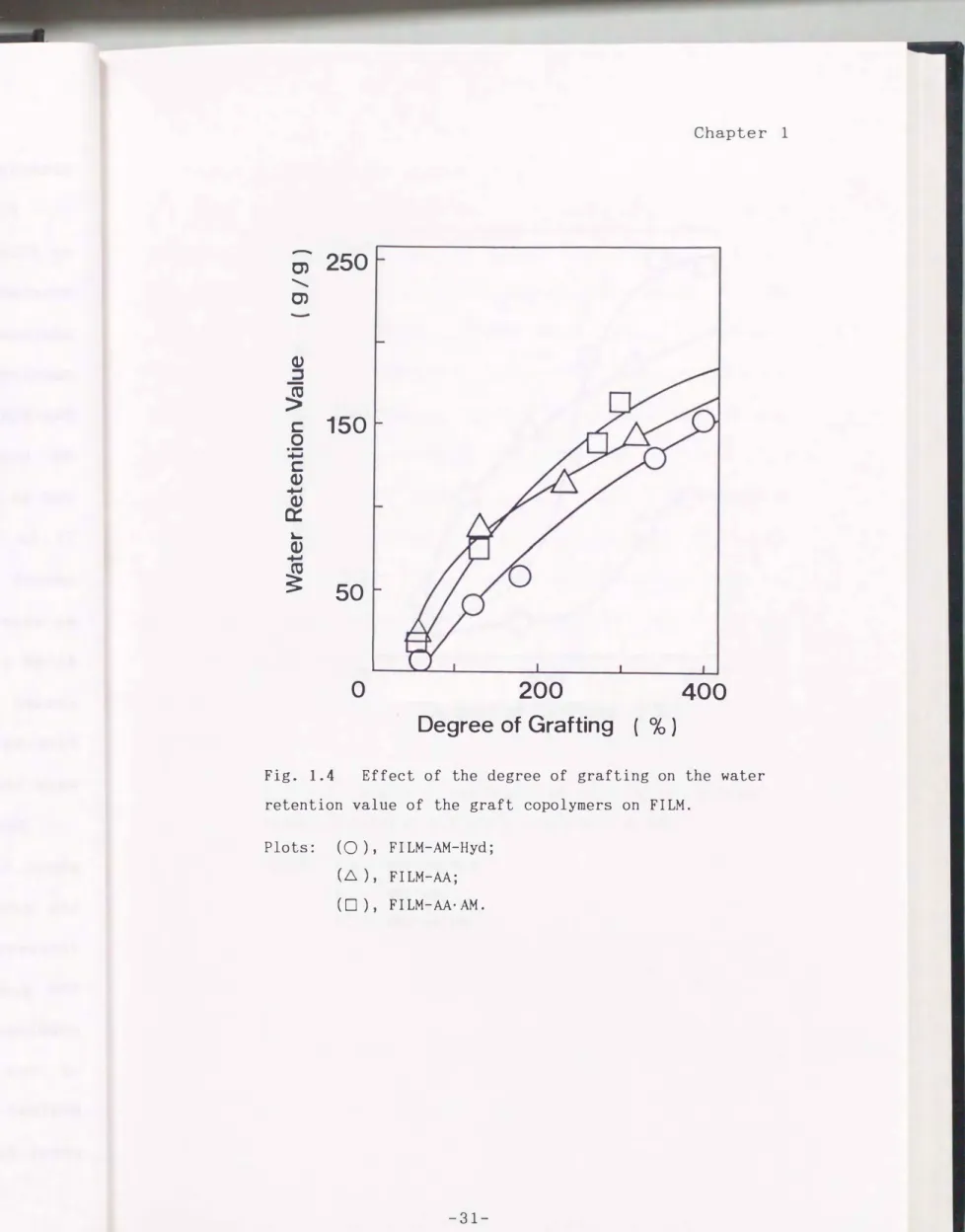
Fig. 1.4 shows the absorbencies of the graft copolymers
on FILM. The WRV increased with an increase in the DG and reached about 150 g/g. In regard to the effect of the species of the branch polymers, the WRVs of the graft copolymer of PAA on FILM(FILM-AA) and the graft copolymer of PAA·PAM on FILM(FILM-AA·AM) were about the same at a similar DG, but that of the partially hydrolyzed graft copolymer of
PAM on FILM(FILM-AM-Hyd) was lower than those of the others.
It is considered that these results are ascribed to the amount of carboxyl groups of the graft copolymer; that is, as shown in Tables 1.3 and 1.4, the branch polymer in FILM
AA·AM is mainly composed of PAA, and the amounts of carboxyl groups of FILM-AA and FILM-AA· AM are larger than that of FILM-AM-Hyd. Incidentally, the graft copolymers on FILM were broken into gel particles after swelling.
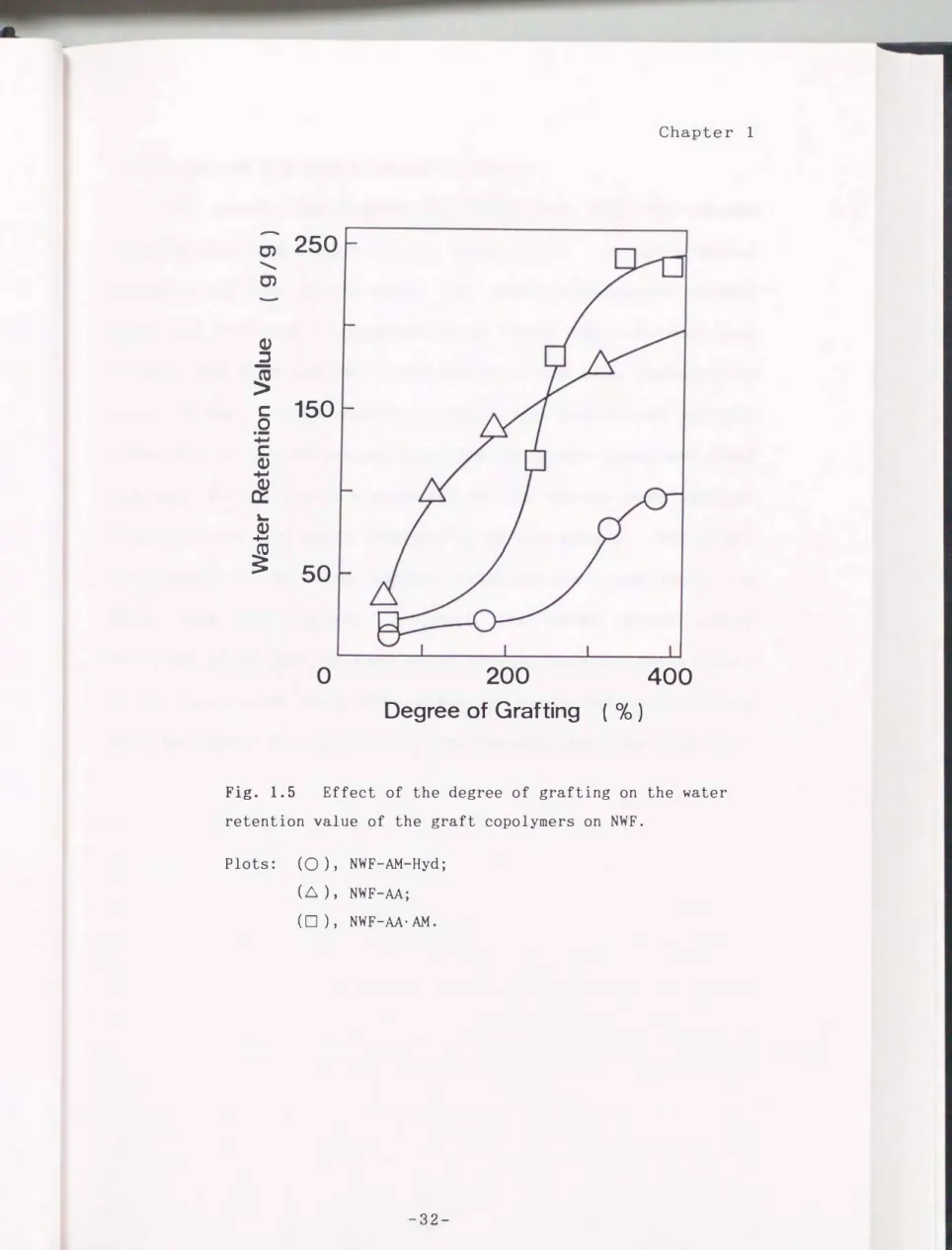
The absorbencies of the graft copolymers on NWF are shown in Fig. 1. 5. The results were similar to those for the graft copolymers on FILM. The WRV increased with an increase in the DG and reached about 250 g/g. The WRVs of
� 250
...
C)
Q) :J
� c:
� 0 Q) c:
�
Q) 0::
a-
� cu
�
150
50
Chapter 1
0 200 400
Degree of Grafting ( % )
Fig. 1.4 Effect of the degree of grafting on the water retention value of the graft copolymers on FILM.
Plots: ( 0), FI LM-AM-Hyd;
(L.
) , FILM-AA;( 0
) , FILM-AA · AM .-
C)
250
...
C)
4)
�
�
.Q
c:+J c:
d)
&!
+J'- +J d)
�
150
50
0 200 400
Degree of Grafting ( 0/o )
Fig. 1.5 Effect of the degree of grafting on the water retention value of the graft copolymers on NWF.
Plots: (0), NWF-AM-Hyd;
(D.),
NWF-AA;(D),
NWF-AA· AM.Chapter 1 thickness and 1-6 times larger in area.
The graft copolymers on FILM and NWF had lower absorbencies than those on the pulps did. In spite of no addition of the cross linker, the graft copolymers on the FILM and NWF were prevented from being water-solubilized because the FILM and NWF trunk polymers had been shaped into sheet forms. This shaping caused the depression of the extension of the molecular chain of the graft copolymer, and the WRVs of the graft copolymers on the sheets were smaller than those of the graft copolymers on the pulps. The graft copolymers on NWF had higher absorbencies than those on FILM, and the formers retained the sheet forms after swelling while the latters were broken into gel particles.
It is considered that the reason of these results is that NWF has higher hydrophilicity and flexibility than FILM did.
1.3.3 Hygroscopicity of Graft Copolymer
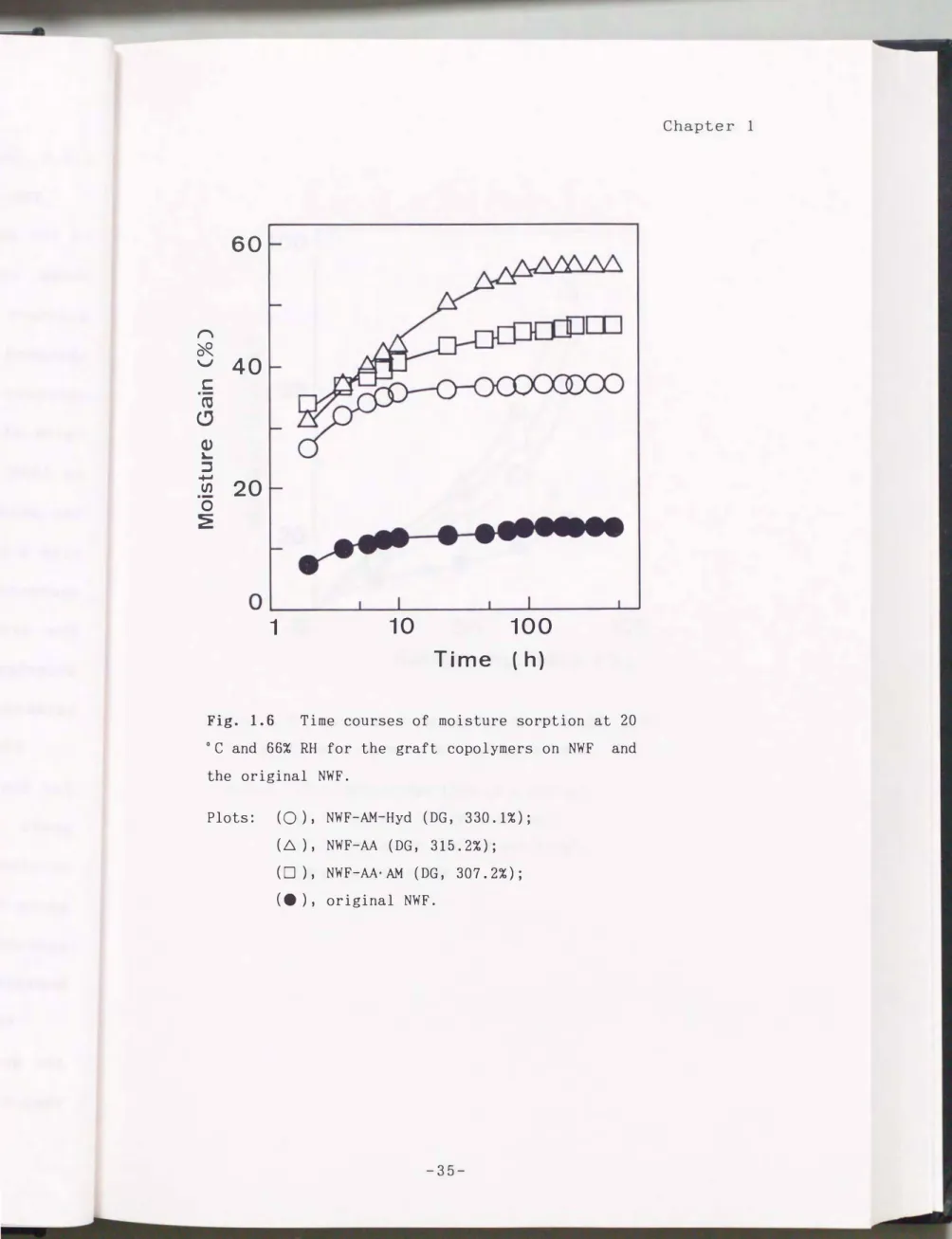
The time courses of moisture sorption at 20 oc and 66%
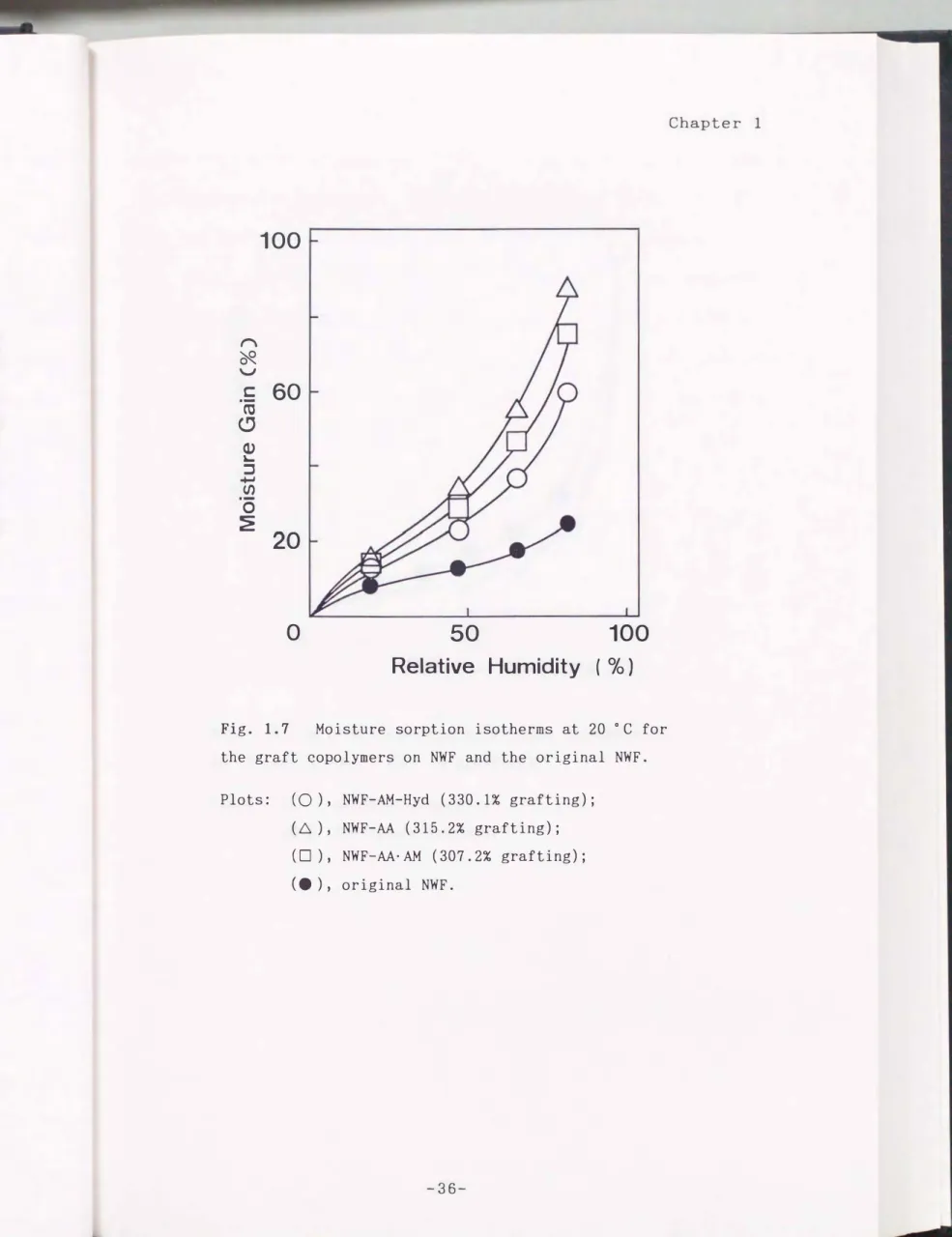
RH for the graft copolymers on NWF and the original NWF are shown in Fig. 1.6. The graft copolymers could absorb moisture more rapidly than the original NWF did, and they absorbed 80-95% of the moisture for each equilibrium moisture gain within 10 hours. The equilibrium moisture gains of the graft copolymers were about 3-5 times as great as that of the original NWF. In regard to the effect of the species of the branch polymers in the graft copolymer with a similar DG in the vicinity of 300%, the moisture gain decreased in the order of NWF-AA, NWF-AA· AM, and NWF-AM-Hyd.
The order of the moisture gain as well as that of the absorbency coincided with the order of the amount of carboxyl groups in the graft copolymers.
Fig. 1.7 shows the moisture sorption isotherms at 20 oc for the graft copolymers on NWF and the original NWF. The graft copolymers could absorb much moisture than the original NWF did at every RH. The order of the moisture gains was the same as shown in Fig. 1.6. The effect of the
r"\
�
v r:::
(TJ
C!J
Q)
� ::J
+""
(/) 0
�
60
40
20
0
�----�--�----�--�---�1 10 100
Time (h)
Fig. 1.6 Time courses of moisture sorption at 20 oc and 66% RH for the graft copolymers on NWF and the original NWF.
Plots: (0), NWF-AM-Hyd (DG, 330.1%);
(�
), NWF-AA (DG, 315.2%);(0
) , NWF-AA· AM (DG, 307. 2%);( e
) , original NWF.Chapter 1
100
,...
�
\o,J
r::
60
·-
ro
<-'
a>
L. :J
+-' C/)
·a � 20
0 50 100
Relative Humidity ( Ofo )
Fig. 1.7 Moisture sorption isotherms at
20
oc forthe graft copolymers on NWF and the original NWF.
Plots: (0), NWF-AM-Hyd
(330.1%
grafting);(6),
NWF-AA(315.2%
grafting);(0), NWF-AA· AM
(307. 2%
grafting);( e
) , original NWF.250
""
�
'V
c:
co
150
(.!J
(1) J...o+-ol ::J CJ) 0
�
50
0 50 100
Relative Humidity ( Ofo)
Fig. 1.8
Moisture sorption-desorption isotherms at 20
acfor
NWF-AA·AM(307.2% grafting).
Plots: (
0) , sorption process;
(
e) , desorption process.
Chapter 1
higher humidity was exposed to lower humidity, the moisture sorption was indicative of the reversible behavior with hysteresis. The moisture gain at 98% RH reached about 240 wt%, and the difference in the moisture gains between sorptive and desorptive processes at 72% RH was about 25%.
Chapter 1 1.4 Conclusion
The cellulosic super absorbent polymers were synthesized by the graft copolymerization of AM and AA onto several types of cellulosics such as NBKP, P/PULP, CE/PULP, FILM, and NWF by using of the eerie ion initiation method, with or without post-hydrolysis. These graft copolymers were prepared as the super absorbent polymers in fibrous and sheet forms instead of the conventional super absorbent polymers in powdery and granular forms.
The partially hydrolyzed graft copolymers of PAM on pulps had higher absorbencies than those on starches and the commercial super absorbent polymers from starch and synthetic polymers did. The cellulose molecule seems to act effectively in the swelling of the cellulae graft copolymer. Their WRVs were affected by the degree of grafting and the amount of the crosslinker added, i.e., the amount and the crosslinking density of the grafted branch polymer. Under a condition of fixed amount of the cross linker added, the maximum WRV appeared at about 200%
grafting. Under a condition of fixed degree of grafting, the maximum WRV appeared at 0.30 wt% addition of MBAA. The maximum WRVs of NBKP-AM-Hyd, P/PULP-AM-Hyd, and CE/PULP-AM- Hyd were 2692.8 g/g, 3010.2 g/g, and 3034.6 g/g, respectively. The absorbency of the graft copolymer on water-soluble pulp was higher than those of the graft
copolymers on water-insoluble pulps. The absorbency of the graft copolymer with shorter fiber length was higher than
that with longer fiber length.
The graft copolymers on FILM and on NWF were prevented from being water-solubilized in spite of no addition of the crosslinker. The WRVs of the graft copolymers on FILM and NWF increased with an increase in the DG and reached about 150 g
/
g and 250 gj
g, respectively. Their WRVs were smaller than those of the graft copolymers on the pulps because of the shaping in sheets. The graft copolymers on NWF with higher hydrophilici ty and flexibility than FILM had higher absorbencies than those on FILM, and the formers retained the sheet forms during swelling while the latters were broken into gel particles. In regard to the effect of the species of the branch polymers, the WRVs of the partially hydrolyzed graft copolymers of PAM were smaller than those of the graft copolymers of PAA and PAA·PAM.The graft copolymers on NWF could absorb much moisture more rapidly than the original NWF. The effect of the species of the branch polymers on the hygroscopicity was
humidity.
Chapter 1 When the graft copolymer that had absorbed moisture at higher humidity was exposed to lower humidity, its moisture sorption was indicative of the reversible behavior with hysteresis. The moisture gain at 98% RH reached about 240 wt%, and the difference in the moisture gains between sorptive and desorptive processes at 72% RH was about 25%.
The cellulose graft copolymers synthesized are to be expected for the development of new materials and for the utilization in various fields.
Chapter 2
Effects of the Crosslinking Density and the Amount of Branch Polymer on the Swelling Behavior of Cellulose Graft Copolymer
2.1 Introduction
The capability of the super absorbent polymer is usually evaluated by
solutions containing
the absorbencies for water electrolytes, because the
and super absorbent polymer is generally utilized in the sanitary and medical fields or the agricultural and horticultural fields [1-9, 11-25]. The absorbencies for solutions containing electrolytes may be important rather than the absorbency for pure water.
The swelling behavior in solution or solvents of various kinds of the ionic polymer networks, which absorb less water than the super absorbent polymers, have been reported in many articles [26-43, 44-53, 59-72]. Though the
Chapter 2 the types of the cellulose trunk polymers and by the species of the grafted branch polymers. As to the branch polymer,
the amount of the cross linker added at the graft copolymerization and the degree of grafting, i.e. , the crosslinking density and amount of the branch polymer affected the absorbencies of the graft copolymers. Their effects were very pecurior; that is, the graft copolymers had maximum absorbencies with an increase in the degree of
grafting, and an optimum amount of crosslinker for the absorbency existed.
the addition of It would be important to clarify the effects of the crosslinking density and amount of the branch polymer on the swelling behavior of the cellulose graft copolymer.
Therefore, the effects of the crosslinking density and amount of the branch polymer on the swelling behavior of the cellulose graft copolymer in aqueous NaCl solutions were discussed.
2.2 Experimental
2.2.1 Synthesis of Sample
A bleached kraft pulp from softwood with shortened fiber length(P/PULP) was used as trunk polymer. Other chemicals were the same ones as in Chapter 1. The graft copolymerization of acrylamide(AM) onto P/PULP and the alkaline post-hydrolysis of the graft copolymer of crosslinked polyacrylamide(PAM) on P/PULP(P/PULP-AM) were carried out in similar manners as described in Chapter 1.
2.2.2 Measurement of Absorbency
The water retention value(WRV) and saline retention values(SRVs) for aqueous NaCl solutions with various concentrations of the partially hydrolyzed P/PULP-AM(P/PULP
AM-Hyd) were measured by using of a similar method as described in Chapter 1. The characteristics such as degree of grafting (DG), degree of hydrolysis (DH), and WRV of the samples used in this chapter are shown in Table 2.1.
The swelling behavior of P/PULP-AM-Hyd was compared with that of a partially hydrolyzed crosslinked
Chapter 2
Table 2.1 Characteristics of P/PULP-AM-Hyds Used in This Chapter
Grafting Conditions Characteristics
Sample Weight Amount of Grafting
of AM MBAA time D G D H WRY
(g) (wt% of AM) (h) (%) (%) (g/g)
A 10.0 0.10 5.0 338.7 63.2 2635.2
B 10.0 0.30 3.0 314.8 65.4 3010.2
c 10.0 0.60 3.0 294.2 70.7 1772.8
D 6.0 3.00 1.0 52.2 58.4 500.2
E 10.0 3.00 1.0 116.0 62.3 802.3
F 10.0 3.00 3.0 148.1 58.6 463.3
Grafting conditions: weight of P/PULP, 2.0 g; cone. of eerie ammonium nitrate, 3.32x10⁻³ mol/L; cone. of nitric acid, 0.24 mol/L; total volume, 80 mL; temp., 40 ac.
ferrous sulfate were dissolved in 50 mg of water. The two solutions were mixed and allowed to polymerize for 1 hour at
20 a C • After polymerization, the hydrogel of the
polyacrylamide(PAM) was washed with water to remove any residual impurities. One gram of the hydrogel of PAM was added to 50 g of 0.5 N aqueous solution of sodium hydroxide and allowed to stand for 48 hours at 20 a c 0 Then, the hydrogel of PAM-Hyd washed with water to remove the alkali.
The DH and WRY of PAM-Hyd were 56.5% and 634.7 g/g, respectively.
Chapter
2
2.3. Results and Discussion2.3.1 Swelling Behavior in aqueous NaCl solutions
Fig.
2.1
shows the effect of the concentration of NaCl in external solution on the SRV for PIPULP-AM-Hyd(Sample C).The PIPULP-AM-Hyd had a high absorbency for water, and its WRV reached
1772.8
gig. By the addition of a small amount of NaCl to water, the absorbency steeply decreased, and the SRV for0.01
wt% aqueous NaCl solution was493.5
gig. With further increase in the concentration of NaCl, the SRV gradually decreased. The SRVs for0. 10
wt% and 0. 90 wt%aqueous NaCl solution were
338.0
gig and249.6
gig, respectively.It is well-known that the swelling phenomenon of the ionic polymer network can be explained by Flory's theory of swelling representing by the following equation
[73]:
(f'/3
=(
1
I2
Xi
Iv u
X1
I S* 1/
2 ) 2 + (1
I2
- X 1 )I v
1Vel Vo
(2
.1
)where Q is the swelling ratio at equilibrium,
iiVu
is the concentration of fixed charge referred to the unswollennetwork, S* is the ionic strength in the external solution,
(1/2 - X1) I V1
represents the network-solvent affinity, andVe/Vo
is the crosslinking density of the network.I n E q.
2 1
. , t h e f . 1 rs t t erm,( 1
I2
x � . Iv
u x1
I S* 1/
2 ) ' represents the ionic osmotic pressure of the polymer network. The ionic strength in solution, S*, is2 000
�
0>
...
0>
.._....
1500
Q.) :J
-ro >
c
1 000
0
...
500
c Q.)
...
Q.) c::
a>
c
250
(/)
ro0 0.25 0.50 0.75 1. 00 Concentration of NaCI ( 0/o )
Fig. 2.1 Effect of the concentration of NaCl on the saline retention value of P/PULP-AM-Hyd(Sample C).
proportional to solution(Eq. 2.2):
the
S* =
concentration
1 2
Chapter 2 of electrolytes in
( 2 . 2 )
where S* i s the ionic strength in so l u t ion ( mol
I
kg ) , z .1 andCi are the charge number and concentration of ion spesies i
in solution, respectively.
The highly water-absorptive cellulose graft copolymer is one of the polymer network containing ionic groups, and its swelling phenomenon as shown in Fig. 2. 1 also can be explained by Flory's theory. With an increase in the concentration of NaCl, i.e. , the ionic strength, the difference in the osmotic pressure between the internal and external solution of the hydrogel, which was represented by the first term in Eq. 2. 1. decreased. As a result, the expansion of the polymer network depressed, and the SRV decreased. Such a decrease in the absorbency with an increase in the concentration of NaCl is an unavoidable
property of the super absorbent polymer.
In this instance, provided that Flory's equation(Eq.
2.1) is quantitatively applicable to the swelling behavior of P/PULP-AM-Hyd, the value of QP/3 should linearly increase with an increase in the value of 1/S*. To examine whether Flory's equation can be quantitatively applicable to the swelling behavior of P/PULP-AM-Hyd or not, the value of
(f'/3
was plotted against the value of 1/ S*, assuming that the value of Q is equal to the SRV. The result is shown in Fig.2. 2.
The plot for PAM-Hyd gave a good linearrelationship, but that for the P/PULP-AM-Hyd did not give a linear relationship. That is, the swelling behavior of the P/PULP-AM-Hyd did not quantitatively follow Flory's theory.
The relationship between the SRVs and the concentrations of NaCl is presented in Fig.
2.3
in the form of semilogarithmic plot for the P/PULP-AM-Hyd(Sample C)[ 6 6] . The relationship is linear in the NaCl concentration
range from 0.01 wt% to 10.00 wt%. In Chapter 1, it becomes apparent that the absorbencies and hygroscopicities of the cellulose graft copolymers are affected by the types of the cellulose trunk polymers and the species of the grafted branch polymers, the degree of grafting, and the amount of the crosslinker added. The NaCl concentration dependence of the absorbency would be also affected by both conditions of the branch polymer and the trunk polymer. In what follows, the effects of the crosslinking density and amount of the branch polymer on the swelling behavior of the graft
M I
0
,...
20
><
10
M ' l{)
0
0 0
I I I I I
20 40
1 1 s·
Chapter 2
60
Fig. 2.2 Plots of QP/3 against 1/� for P/PULP-AM-Hyd (Sample C) and PAM-Hyd.
Plots: (0), P/PULP-AM-Hyd(Sample C);
(e),
PAM-Hyd.r"\
500
C)
"""
v400
0')Q) ::J
>300
ro c:0
� c:
�200
Q) 0:::
Q)
.E 100 (/)
ro10-1 10° 101 Concentration of NaCI C % )
Fig. 2.3 Relationship between the saline retention values and the logarithms of the concentrations of NaCl for P/PULP-AM-Hyd(Sample C).
Chapter 2 2.3.2 Effect of the Crosslinking Density of Branch Polymer
on Swelling Behavior
Under the same grafting conditions, the DG of the P/PULP-AM-Hyd with 0.10 wt% addition of MBAA was lower than those of the P /PULP-AM-Hyds with 0. 30 wt% and 0. 60 wt%
addition of MBAA as shown in Table 1. 2 in Chapter 1. To obtain the P/PULP-AM-Hyds that resembled one another in DG, the graft copolymerization for the P/PULP-AM-Hyd with 0.10
wt% addition of MBAA was carried out 5. 0 hours, but other
conditions of the graft copolymerization and the post
hydrolysis were the same for three kinds of P/PULP-AM- Hyds (Samples A, B, and C) . As shown in Table 2.1, these P/PULP-AM-Hyds with different amounts of the crosslinker added had similar values of DG and DH in the vicinity of 300% and 66%, respectively. It is considered that these P/PULP-AM-Hyds are similar to one another in the amount and con tent of carboxyl groups of the branch polymer.
Therefore, the effects of the amount and content of carboxyl groups of the branch polymer on the swelling behavior are negli gible, and the effect of the amount of the crosslinker,
i.e., the crosslinking density, on the swelling behavior can be disscussed.
Fig. 2. 4 shows the relationships between the SRVs and the lo garithms of the concentrations of NaCl for P/PULP-AM
Hyds with different amounts of the crosslinker added(Samples
500
""'
C>
...
C>
400
v
Q)
-:J
ro
300
>
c 0
+J c
200
+J Q) Q) c::
Q)
1 00
c ro
C/)
0
10-2 10-1 10° 101
Concentration of NaCI ( 0/o)
Fig. 2.4 Relationships between the saline retention values and the logarithms of the concentrations of NaCl for P/PULP-AM-Hyds.
Plots: (0),
0.10
wt% addition of MBAA(SampleA);
(6 ), 0.30
wt% addition of MBAA(Sample B);( 0
), 0. 60
wt% addition of MBAA( Sample C).A-C)·
Chapter 2 The plots for all P/PULP-AM-Hyds gave linear relationships, and the straight lines had different slopes.
The slope increased with an increase in the amount of MBAA.
This result indicates that the NaCl concentration dependence of the absorbency for the P/PULP-AM-Hyd with larger amount of the crosslinker is smaller than that for the P/PULP-AM
Hyd with smaller amount of the crosslinker.
These relationships are represented by the following empirical equation [66]:
SRV = -� log[NaCl] + C (SRV > 0)
( 2 . 3 )
where [NaCl] is the concenration of NaCl(wt%), and K and C are the empirical parameters.
K is defined as the slope of the straight line, and the value of K corresponds to the magnitude of the NaCl concentration dependence of the absorbency.
as the SRV for 1.00 wt% aqueous NaCl solution.
C is defined
Fig. 2 .5 shows the effects of the amount of the cro sslinker added on the values of the empirical parameters of K and C in Eq. 2. 3 for P/PULP-AM-Hyd. The value of K decreased with an increase in the amount of the crosslinker, that is, the P/PULP-AM-Hyd with higher crosslinking density of the branch polymer had higher resistibility against the decrease in the absorbency with an increase in the concentration of NaCl than that with lower crosslinking
200
150
250
200 ()
100 150
ol��----��----�--��j o
0 0.2 0.4 0.6
Fig. 2.5 Effects of the amount of the crosslinker added on the values of the empirical parameters of K and C in Eq. 2.3 for P/PULP-AM-Hyd.
Plots: (0), K;