Studies of coexistence mechanism between Aedes albopictus and Aedes flavopictus
著者 スルタナ アフロザ
著者別表示 SULTANA AFROZA journal or
publication title
博士論文本文Full 学位授与番号 13301甲第1935号
学位名 博士(学術)
学位授与年月日 2020‑09‑28
URL http://hdl.handle.net/2297/00061377
doi: https://doi.org/10.1111/mve.12469
Dissertation
Student ID No. : 1724062015 Name : Sultana Afroza Chief advisor : Dr. Nobuko Tuno Date of Submission : 15 September 2020 Graduate School of Natural Science & Technology Kanazawa University
Studies of coexistence mechanism between Aedes albopictus and Aedes flavopictus
ࣄࢺࢫࢪࢩ࣐࣐࢝ࣖࢲࢩ࣐࢝ࡢ㸰✀ࡢඹᏑᶵᵓࡢ◊✲
Division of Natural system
26 June 2020
DEDICATION
this research is devoted to my loving parents, beloved husband and lovely daughter for their great sacrifice
to complete this study.
ACKNOWLEDGEMENTS
I would like to express my immense gratitude to Dr. Nobuko Tuno, admirable mentor, for giving me the opportunity to study at the Laboratory of Ecology, for her unwavering inspiration, effective criticisms and direction throughout the entire period of research.
I would like to thank to Dr. Kyohsuke Ohkawara and Dr. Usio Nisikawa for their advice, insightful feedback and motivation to conduct the research work. I was blessed to get a wonderful lab and also thankful to all of my lab members for their assistance in my work.
I would like to extend my gratitude to my father and mother for their endless blessings and moral support. I am deeply impressed to express my gratitude to my lovely brothers for their unconditional support.
I would like to give my special appreciations to my husband and daughter for their dedications, uncountable support and sacrifice during my study.
I would like to express my deepest sense of respect to all of my friends, colleagues and relatives for their encouragement and affections for the successful completion of research.
Finally, I want to acknowledge the MEXT (Ministry of Education, Culture, Sports, Science and Technology), Government of Japan for awarding me the scholarship for this study at Kanazawa University.
TABLE OF CONTENTS
Contents Page
Acknowledgements ………. i Table of contents ………... ii- v
List of tables ……… vi- vii List of illustrations ………viii- ix List of images ………. x Abstract………. xi-xiii
1.
General introduction1.1.
Organization of the study……… 1-21.2.
Background of the study ……… 3-7 1.3 Objectives of the study ……… 8 References ……… 9- 152. Reproductive interference between Aedes albopictus and Aedes flavopictus at a place of their origin
2.1. Introduction ……… 16 2.2. Materials and Methods ………. 18
2.2.1 Experimental designs
2.2.2 Mosquito colony and rearing of larvae 2.2.3 Generations of large and small mosquito 2.2.4 Mating experiment
2.2.4. (a). Conspecific mating 2.2.4. (b). Heterospecific mating
2.2.5. Measurements 2.2.6. Data analysis
2.3. Results ……… 22 2.4. Discussion and Conclusions … … … 2 5 References ……… 27-31
3. Effect of vegetation on the larval and adult growth performance of Aedes albopictus (Diptera: Culicidae)
3.1. Introduction……… 32 3.2. Materials and Methods……… 34
3.2.1. Experimental designs 3.2.2. Source of vegetation
3.2.3. Collection of Aedes albopictus mosquito 3.2.4. Microcosms experiment
3.2.5. Data analysis
3.3. Results ……… 36
3.3.1. Larval mortality 3.3.2. Development time 3.3.3. Body size and fecundity
3.4. Discussion and Conclusions ………. 38 References ……… 41-46 4. The influence of b od y si z e o n th e f e cu nd i ty and l ong e v it y
o f Aedes albopictus and Aedes flavopictus
4.1. Introduction ………. 47
4.2. Materials and Methods … … … 4 8
4.2.1. Mosquito strain
4.2.2. Rearing larger and smaller size mosquito
4.2.3. Development days, oviposition and counting retained eggs 4.2.4. Measurement of ovarian follicle
4.2.5. Longevity and female body size 4.2.6. Data analysis
4.3. Results ……… 51
4.3.1. The effect of temperature and diet on adult development time and body size
4.3.2. Relationship between body size and fecundity 4.3.3. Relationship between body size and longevity
4.4. Discussion a n d C o n c l u s i o n s… … … 5 3 References ……… 56-61
5. Temperature and humidity influence on the fecundity and longevity of Aedes albopictus and Aedes flavopictus
5.1. Introduction ……… 62
5.2. Materials and Methods ……… 63
5.2.1. Mosquito strain
5.2.2. Control of temperature and relative humidity 5.2.3. Fecundity
5.2.4. Egg hatchability 5.2.5. Longevity 5.2.6. Data analysis
5.3. Results ………. 65
5.3.1. Effect on fecundity 5.3.2. Effect on hatching 5.3.3. Effect on longevity
5.4. Discussion and Conclusions………. 67 References ……… 71-77 6. Summary and conclusion
6.1. Summary ………... 78-79
6.2. Concluding statements ………. 80 Tables ……… 81-88 Figures ………. 89-97 Images ...………. 98-100 Biographical sketch ……… 101
LIST OF TABLES
Table 1. Wing length (mm) (Mean ± SD) of females and males, copulation duration (Sec) (Mean ± SD), numbers of eggs oviposited (Mean ± SD) and hatched per female and hatching rates of eggs in conspecific (C), heterospecific (I) and double-mating (D: heterospecific mating followed by conspecific mating) experiments with Aedes albopictus (A) and Aedes flavopictus (F). L: large individuals reared at 22 °C, S: small individuals reared at 28°C……… 87
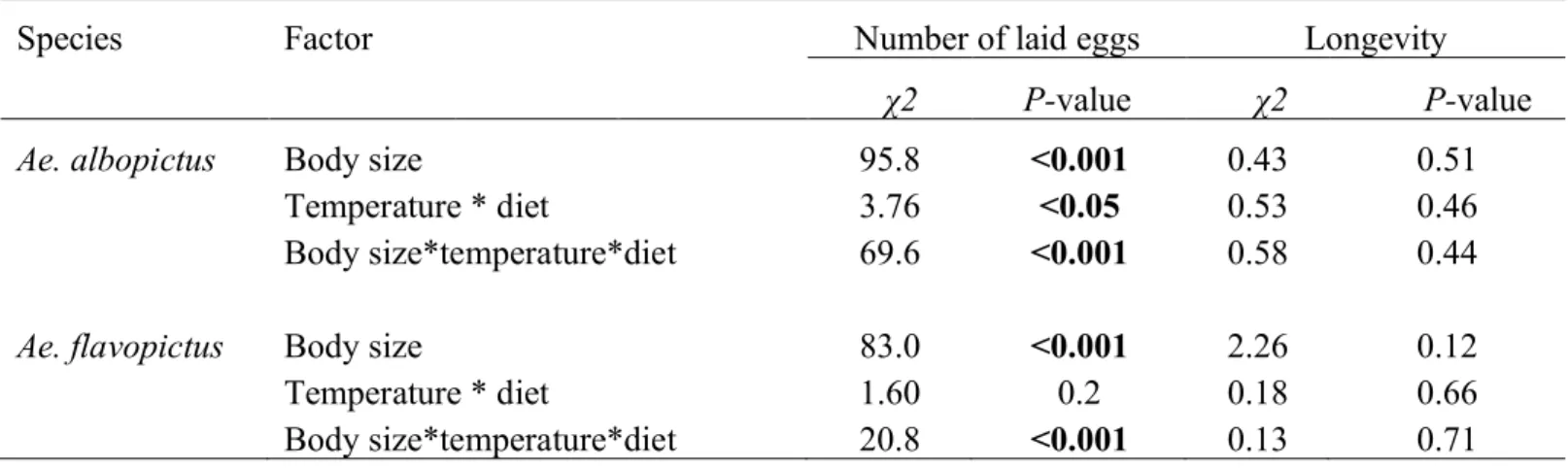
Table 2. Summary of generalized linear model (GLM) analyses on number of eggs hatched, number of eggs laid and hatch rate of eggs……… 88
Table 3. Percentage (%) of larval mortality (1st to 4th instar) of Aedes albopictus raised with different vegetation with result of two-way ANOVA analysis……… 89
Table 4. Developmental time from the first instar to adult emergence (day), female wing size (mm), number of eggs laid per female in one gonotrophic cycle of Aedes albopictus raised with different vegetation with pairwise test results (Tukey Kramer honestly significant different test).
……… 90 Table 5. Wing length (mm), number of laid eggs, retained eggs, total number of eggs (laid + retained eggs), number of follicles and ratio of follicles in Ae. albopictus and Ae. flavopictus under different temperature and diet treatment………. 91
Table 6. GLM for the number of laid eggs and survival analysis (Cox`s proportional hazard) for longevity of Ae. albopictus and Ae. flavopictus………. 92
Table 7. Effect of temperature and relative humidity on oviposition variation, number of eggs, retained eggs and percentage of egg hatching of Ae. albopictus and Ae. flavopictus……… 93
Table 8. Multivariate ANOVA analysis for the number of eggs, hatching and survival analysis (Cox`s proportional hazard) for longevity of Ae. albopictus and Ae. flavopictus……… 94
LIST OF ILLUSTRATIONS Figure
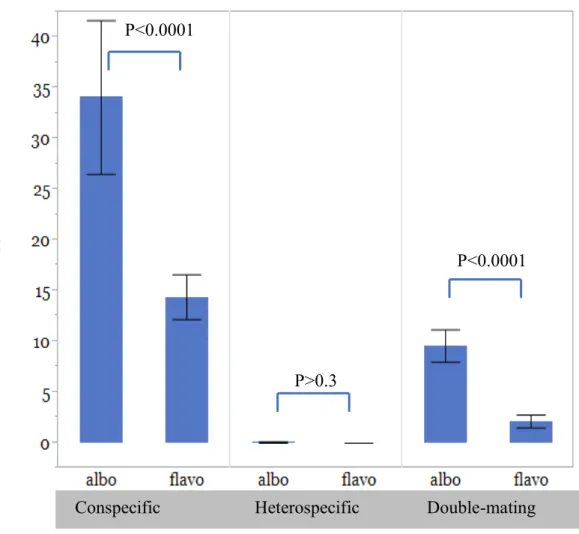
Fig. 1. Number of eggs hatched of Aedes albopictus (albo) and Aedes flavopictus (flavo) in the three mating experiments with results of species-pairwise comparisons (Mann-Whitney Test).
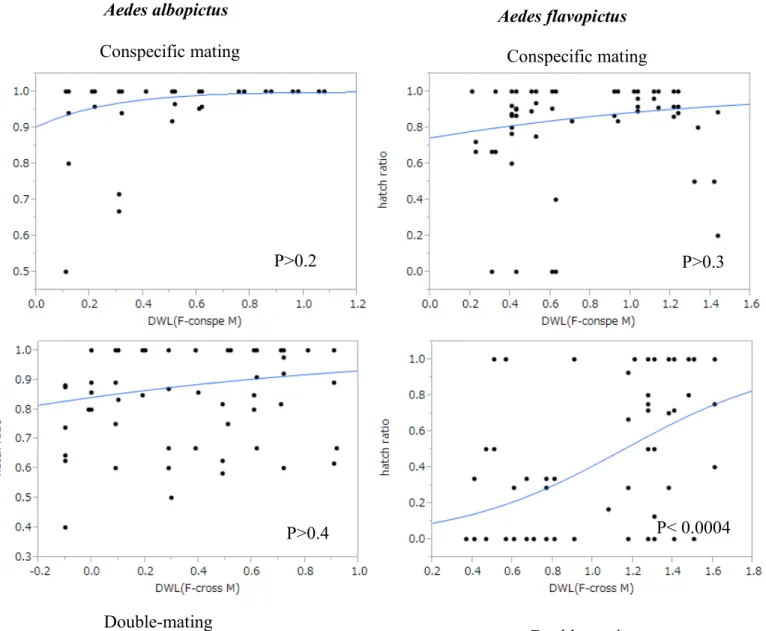
………. 95 Fig. 2. The relationship between egg hatch ratio and difference of female wing length in Aedes albopictus (albo) and Aedes flavopictus (flavo) in conspecific and double-mating experiments.
………. 96 Fig. 3. Regression analysis of two parameters by experiment type and female species.
Regression analysis between difference of female wing length and conspecific male wing length and conspecific copulation duration (Fig. 3A); Regression analysis between difference of female wing length and different species male wing length and heterospecific copulation duration (Fig. 3B); *: P<0.05, **: P<0.01, ***: P<0.0001……… 97
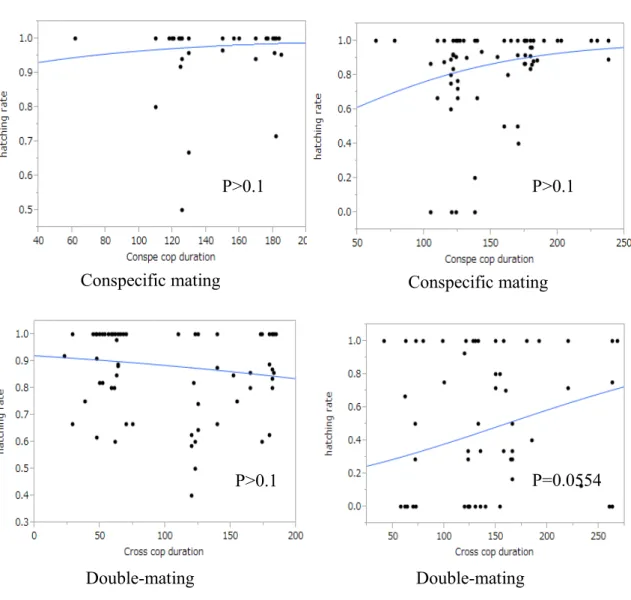
Fig. 4. GLM between conspecific copulation duration and hatching rate of eggs; between double-mating copulation duration and hatching rate of eggs of Aedes albopictus and Aedes flavopictus……… 98
Fig. 5. Estimated population performance index (I) values of Ae. albopictus were reared under three vegetation treatments with two temperature at 22 C and 28 C………. 99
Fig. 6. Mean development time (days), by larval rearing temperature (25 C and 28 C) and level of diet (high, low) of Ae. albopictus and Ae. flavopictus……… 99
Fig. 7. Body size (wing length) and number of eggs laid (retention and without retention) in (A) Ae. albopictus and (B) Ae. flavopictus. Dark circle indicates female laid eggs without retention and open triangle indicates female with retained eggs……… 100
Fig. 8. Body size (wing length) and number of follicles in (A) Ae. albopictus and (B) Ae.
flavopictus……… 101
Fig. 9. Kaplan-Meier plots of the longevity (days) of (A) Ae. albopictus and (B) Ae. flavopictus at two temperatures (25 C and 28 C) with two different diets……… 101
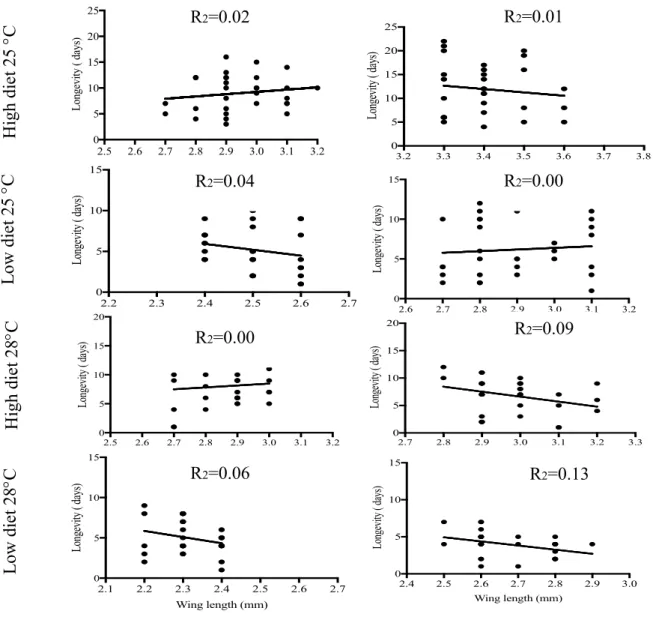
Fig.10. Relationship between longevity (days) and body size (wing length) of Ae. albopictus and Ae. flavopictus by larval rearing temperature and diet treatment. The equation of the regression of longevity on wing length is given with the R2 value……… 102
Fig. 11. Number of eggs and egg hatching response of Ae. albopictus and Ae. flavopictus (females at two temperatures (25°C and 28°C) and humidity (52% and 47%)
………... 103
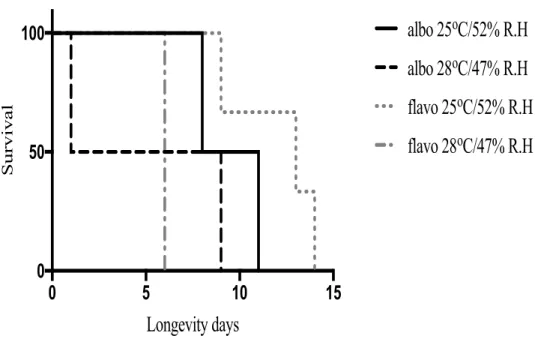
Fig. 12. Kaplan-Meier survival plots of Ae. albopictus (albo) and Ae. flavopictus (flavo) females at two temperatures (25°C and 28°C) and humidity (52% and 47%) ……… 103
LIST OF IMAGES
Image 1. Photograph of Ae. albopictus and Ae. flavopictus ……….... 104 Image 2. Photograph of heterospecific mating between Ae. albopictus and Ae. flavopictus
……… 105 Image 3. Photograph of sterile eggs ………. 105 Image 4. Photograph of retained eggs in ovaries ………. 106
Title: Studies of coexistence mechanism between Aedes albopictus and Aedes flavopictus
Abstract
Aedes (Stegomyia) albopictus and Aedes (Stegomyia) flavopictus are sibling species that have overlapped distributions from southern to central Japan. Ae. albopictus occurs from the Ryukyu islands in Tohoku district, while Ae. flavopictus is dispersed throughout Japan including, Hokkaido region. Globally, Ae. albopictus causes reproductive interference with native species, sometimes caused even exclusion. It is still unrecognized, where the Ae. albopictus originated in Asia, but both species are native in Japan. Experimental tests of reproductive interference are needed to know the causes of coexistence between them in nature, that is likely to might limit their distributions.
We executed the reproductive interference study between Ae. albopictus and Ae.
flavopictus, and particularly focused on the body size difference between the mating pair. Here, we examined the effects of body size on copulation duration, fecundity and hatchability of eggs in different mating, including, conspecific, heterospecific and double-mating (i.e.
heterospecific mating followed by conspecific mating). Females mated only with heterospecific males produced few viable eggs, indicating that post-mating isolation is almost complete. When mated with heterospecific males before conspecific mating, the production of viable eggs was lower than when mated only with conspecific males, revealing the occurrence of reproductive interference. The degree of reproductive interference was larger in Ae.
flavopictus than in Ae. albopictus when the female size was small but did not differ between them when the size was large. Aedes albopictus females appear to be able to distinguish Ae.
flavopictus males from conspecific males and larger females are more successful in the rejection of heterospecific males. On the other hand, Ae. flavopictus were not able to discriminate between conspecific and heterospecific males. Considerably, body size of Ae.
flavopictus might have a significant effect on reproductive interference caused the dominance on Ae. albopictus during heterospecific mating. Here, we suggested that Ae. flavopictus did not replace by Ae. albopictus in an area, leads to cohabit to establish their ecological niche.
Our study aimed to observe the effects of vegetation, including, bamboo (Phyllostachys pubescens), cherry (Prunus × yedoensis) and beech (Castanopsis sieboldii) on the growth of Ae. albopictus. The highest larval mortality was observed in cherry and beech, conversely, the lowest in bamboo. Larval stages feed upon cherry and beech showed delay in development and adult emergence than that of bamboo. Female body size was larger when larvae raised with the bamboo compared to cherry plant. Ae. albopictus females oviposited more eggs in bamboo vegetation, however, adult reared by cherry plants laid less amount of eggs. Per capita performance of Ae. albopictus on bamboo plants was higher for the population growth compared to cherry and beech. Thus, Ae. albopictus larvae were affected by bamboo vegetation that might have influenced on the larval and adult growth. Our findings suggested that bamboo plants should avoid in future plantation program near the urban areas, as it might harbor a potential habitat for mosquitoes.
Body size has a strong linked to the fecundity and longevity that assists to predict the prevalence of mosquito-borne disease. Here, the relation between body size and fitness traits (fecundity and longevity) was observed through diet (low and high) and temperature treatments (25°C and 28°C) of Ae. albopictus and Ae. flavopictus. Large Ae. albopictus developed 59.6 % to 81.1% of follicles to eggs, whereas, small females developed 47.8% to 56.6% of follicles.
In addition, Ae. flavopictus large and small females develop only 55.6% to 57.4% and 49.5%
and 47% of follicles to eggs, respectively. In both species, body size showed a positive correlation with the number follicles. Fecundity increased with the body size, however, Ae.
albopictus laid more eggs than Ae. flavopictus. Conversely, Ae. flavopictus retained more eggs compared to Ae. albopictus. Body size and egg retention were negatively correlated in both
species. Notably, there was no significant relation (P>0.05) between the body size and longevity. Thus, the impact of body size on fecundity might be considered to control vector.
The global climatic variation might affect the distribution pattern of Ae. albopictus and Ae. flavopictus. Here, we have combined temperatures (25ºC and 28ºC) and humidity (52%
and 47% RH) to check the impact on the fecundity and longevity of Ae. albopictus and Ae.
flavopictus. Ae. albopictus laid large amount of eggs than Ae. flavopictus, regardless exposed to higher temperature (28ºC) with lower humidity (47% RH). Oviposition time of both species extended as relative as humidity increased (52% RH) at low temperature (25ºC). Conversely, higher temperature and lower humidity reduced the hatching of both species. Higher temperature (28ºC) and lower humidity (47% RH) hindered the longevity of Ae. flavopictus.
However, Ae. albopictus exposed to those atmospheric conditions showed the deleterious effect on longevity Thus, our study enabled to determine suitable environmental condition for vector mosquito that might help to make reliable predictions of disease transmission.
Ae. albopictus is now widely distributed throughout the world, causing the elimination of related Aedes species, however, it has long been coexisting with Ae. flavopictus in Japan.
Overall, varying body size of females exhibited difference in mating biology, fecundity and longevity that facilitated the coexistence of Ae. albopictus and Ae. flavopictus.
CHAPTER 1 General Introduction 1.1. Organization of the study
The organization of the dissertation is as follows:
In Chapter 1, specifies with a brief introduction reflecting the background, aim, and scope of the study.
In Chapter 2, provides a detailed description of the influence of body size on the reproductive interference of Ae. albopictus and Ae. flavopictus. Here, our study elucidates how body size may influence reproductive interference. In addition, how body size related different mating affects the copulation duration, fecundity and hatchability were examined as well as a detail on the introduction, materials and methods, results with the discussion and conclusion are presented here.
In Chapter 3, discusses about the effects of vegetation on the larval and growth performance of Ae. albopictus. How vegetation change influences the population performances of Ae. albopictus, were raised with three types of vegetation, including bamboo, cherry and beech leaves in the laboratory and describe the background, materials and methods, results with the discussion.
In Chapter 4, studies the influence of body size on the fecundity and longevity of Ae.
albopictus and Ae. flavopictus. How the body size effects on fecundity by comparing the ovarian follicle and egg retention capacity as well as longevity and illustrates the background, materials and methods, results with the discussion.
In Chapter 5, investigates the temperature and humidity influence on the fecundity and longevity of Ae. albopictus and Ae. flavopictus. How the temperature and humidity fluctuations would affect the fecundity and longevity and depicts the background, materials and methods, results along with discussion.
In Chapter 6, I summarize the results of my research, draw a concluding statement.
1.2. Background of the study
Aedes albopictus is an aggressive and anthropophilic mosquito belonging to Stegomyia species. It has invaded in tropical and temperate areas of Southeast Asia, China and Japan (Bonizzoni et al. 2013), but lately, expanded its native range on all continents, except Antarctica (Benedict et al. 2007, Caminade et al. 2012, Kraemer et al. 2015). However, other Stegomyia species Ae. flavopictus constrains their distribution only in Japan and South Korea.
Unlike Ae. albopictus, Ae. flavopictus does not limit its distribution range globally. The rapid expansion of Ae. albopictus causes tremendous health threats and associated with emerging and re-emerging diseases, including dengue, Chikungunya, and Zika (Weaver and Reisen 2010, Gardner et al. 2016, Wilder-Smith et al. 2017). In comparison with Ae. albopictus, Ae.
flavopictus has no evidence as a vector in nature (Eshita et al. 1982) but they can transmit the dengue virus. Overall, global climate changes resulting increased temperature, rainfall, precipitation, along with urbanization might influence the disease outbreak.
Climate change seems to be the driving factors may allow the distribution of Ae.
albopictus and Ae. flavopictus. Ae. albopictus has expanded its distribution and modulated by temperature (Lounibos 2002, Reinhold et al. 2018). Recent studies reveal that an increased temperature, influences the displacement of Ae. japonicus and Ae. albopictus in their native ranges in Nagasaki, Japan (Chaves 2016). Ae. albopictus is mainly dispersed in southern and central Japan and now expanding to northern areas (e.g. Tohoku district). Conversely, Ae.
flavopictus occurs throughout Japan, including Hokkaido (Tanaka et al. 1979, Toma et al.
2002) and comprises three subspecies namely, Ae. flavopictus distributed in Palearctic region, Ae. flavopictus downsi in Amami and Okinawa islands, besides Ae. flavopictus miyaraifrom from Ishigaki Island and Iriomote Island of the Ryukyu archipelago (Toma et al. 2002). Ae.
albopictus and Ae. flavopictus are susceptible to temperature changes (Alam and Tuno 2020),
however, Ae. albopictus is more adapted to higher or variable temperatures compared to Ae.
flavopictus. In variable temperature, their tolerance limit may clarify the different habitat use.
Throughout their distribution ranges, Ae. albopictus is well adapted in urban areas, whereas, Ae. flavopictus is particularly located in forest zone as well as oviposit in bamboo stumps and tree holes (Tanaka et al. 1979, Sota et al. 1992, Chaves 2016). In Japan, Ae. albopictus and Ae.
flavopictus widely overlapped their geographic distributions. However, they are expected to encounter in breeding surroundings, because their habitat selection is not rigid (Sunahara et al.
2002). Despite habitat choice, it is crucial to know what other factors influence the coexistence of these two species? Therefore, we consider reproductive interference may be the most plausible reason of the co-occurrence between this species in Kanazawa, Ishikawa prefecture, Japan.
Reproductive interference is an interspecific sexual interaction that can decrease the population growth, thus impeding the species co-occurrence in breeding habitats (Ribeiro and Spielman 1986). The misleading coupling of males during heterospecific mating with females initiates negatively, therefore, reduced the number of eggs (Bargielowski et al. 2011, Tripet et al. 2011). In addition, if two or more species are sexually interacted (McHugh 1972) with similar mating signals, the chances of interspecific interactions increase. Since the last two decades, the concept of reproductive interference has been an interest to explain the reasons of species displacement (Kyogoku and Sota 2015). In mosquitoes, it confirms that reproductive interference acts as a driver of the elimination of the other native Aedes species by Ae.
albopictus (Lounibos 2002, 2007, Juliano and Lounibos 2005, Tripet et al. 2011, Bargielowski et al. 2013, 2015a, 2015b, Bargielowski and Lounibos 2014, Lounibos et al. 2016, Lounibos and Juliano 2018). As example, Ae. albopictus mated frequently with Ae. polynesiensis and Ae. aegypti (Bargielowski et al. 2013) resulting in displacement of mosquito species. However,
it is interesting to know why Ae. albopictus did not able to displace Ae. flavopictus, while coexisting in a particular region.
In our study sites, Kanazawa City, Japan, both species coexist, where the encounter occurs rarely in breeding premises. So, there is a growing interest on the ecological significance of reproductive interference between two species. The recent studies Alam and Tuno (2019 unpublished data), hypothesized that heterospecific mating may occur seasonally, especially during summer. It may be expected that Ae. albopictus shifts from warmer urbanized areas to forest areas, where Ae. flavopictus already exists. Consequently, heterospecific mating occurs, due to fail to discriminate between conspecific and interspecific males. However, this trend is different in Nagasaki Prefecture, Japan. Although they overlap their distribution, can avoid heterospecific mating because resulting from the ability to distinguish conspecific and heterospecific species. Thus, the absence of reproductive interference may lead to long term coexistence of both species. Therefore, we are keen to understand whether heterospecific mating reduces re-mating with conspecific species or not. Apart from this, it is rarely studied that body size that may influence on reproductive interference. Recent findings demonstrate that Ae. flavopictus is larger in size compared to Ae. albopictus (Alam and Tuno 2020).
Therefore, it is also our interest to evaluate whether body size influenced reproductive interference or not.
Reproductive interference with the larval resource competition may permit cohabitation and distribution of species. The confront of both species may be mediated by the choice of breeding habitats. Moreover, in breeding ground, larvae feed on organic debris from the nature, particularly microorganism as well as plant debris. Vegetation inputs into breeding habitats can alter the mosquito community that provides the energy source for the larvae, consequently, making the radical changes of ecosystems (Sax et al. 2005). Particularly, mosquito larvae are profoundly affected by the terrestrial plants with different nutrients
(Yanoviak 1999) resulted in an increased larval growth and attracted adult mosquitoes for oviposition (Shaalan and Canyon 2018). However, few plant species comprise of lethal products (e.g., tannins and lignins) that hinders the growth and development of larvae (Rey et al. 1999, David et al. 2000c). Japan has a great variety of terrestrial plant species, including bamboo, deciduous and evergreen forests. It grasps an attention to researcher because Ae.
albopictus have preference sub-urban and urban land with dense vegetation (Rey et al. 2006), in particular, tree holes and bamboo stumps. In recent, it is predicted that Ae. albopictus is going to expand in their northern distribution because of expansion of unmanaged bamboo groves. The bamboo expansion is radically changing due to inappropriate forest management strategies (Suzuki and Nakagoshi 2011). Few studies have been conducted on vegetation as a contributing factor of Ae. albopictus distribution. To address this, there is an urge to elucidate the role of different vegetation that interact with the larval and adult development of Ae.
albopictus.
Global climate has been linked to increase the frequency of vector-borne disease. This disease is related with biotic and abiotic factors that affect the vector abundance. The vector abundance might be influenced by temperature and food. Diet exerts the larval development rate (Kivuyo et al. 2014), fecundity (Reiskind and Lounibo 2009, Alto et al. 2012, Takken et al. 2013) and survival (Aznar et al. 2018). Particularly, high diet, low density and lower temperature corresponds to larger adults (Zeller and Koella 2016), which exhibits more fecund (Briegel 1990, Renshaw et al. 1994) and longer survival rate (Sultana and Tuno 2020, unpublished data). However, low diet produces smaller adult (Lehmann et al. 2006), which require more blood meals for oviposition and vectorial capacity (Muturi et al. 2011). The female’s vectorial capacity is linked to fecundity and longevity that influences the disease transmission (Nasci 1986, Briegel 1990, Takken et al. 1998, Alto et al. 2008, Helinski and Harrington 2011, Takken et al. 2013, Barreaux et al. 2018). Overall, body size can determinant
because it affects the survival and longevity of mosquito (Nasci 1986). Furthermore, both biotic and abiotic factors impacting Ae. albopictus life history traits, including developmental duration, biting tendency, gonotrophic cycle, body size, oviposition, and survival (Briegel 1990, Rueda et al. 1990, Tun-lin et al. 2000, Delatte et al. 2009). However, it is still unknown how environmental factors may influence the life traits of Ae. flavopictus. Our present study aims to focus how environmental factors (e.g. temperature, humidity and diet) affects the life history of Ae. albopictus and Ae. flavopictus by means of egg size, development period, fecundity, egg retention capacity, ovariole size, body size as well as longevity.
1.3. Objective of the study
The most invasive Aedes albopictus species distributed globally, whereas Aedes flavopictus limit their distribution. Around the world, Ae. albopictus causes reproductive interference with native Aedes species resulting in exclusion of species. In Japan, it would be remarkable that Ae. albopictus coexist with Ae. flavopictus and did not replace by Ae.
albopictus? Furthermore, a little study has been directed to body size difference with mating partners affects reproductive interference. So, the purpose of this research is to test the effect of body size on copulation duration, fecundity and hatchability after conspecific, heterospecific and double-mating between Ae. albopictus and Ae. flavopictus.
In the next century, many countries are susceptible to disease transmission by Aedes spp.
Therefore, it is crucial to understand the vector ecology with environmental variables to control disease. Here, we investigate the body size, fecundity as well as longevity of two vector species to prevent the epidemic or distribution of disease. The precise objectives of this study are as follows:
1. To determine the impact of body size on the reproductive interference of Ae. albopictus and Ae. flavopictus.
2. The effects of vegetation on the larval and adult growth performance of Ae. albopictus.
3. To determine the body size effect on the fecundity and longevity of Ae. albopictus and Ae.
flavopictus.
4. To estimate the influence of temperature and humidity on the fecundity and longevity of Ae. albopictus and Ae. flavopictus.
References
Alam, M.S. & Tuno, N. (2020) A study comparing the growth rates of two related species, Aedes albopictus and Aedes flavopictus (Diptera: Culicidae) at different temperature regimes. Japan Society of Medical Entomology and Zoology, 71, 25‒30.
Alam, M.S. & Tuno, N. (2019) Seasonal fluctuation in distribution and habitats of Aedes albopictus and Aedes flavopictus. (Unpublished data).
Alto, B.W, Reiskind, M.H. & Lounibos, L.P. (2008) Size alters susceptibility of vectors to dengue virus infection and dissemination. Journal of Tropical Medicine and Hygiene, 79, 688–95.
Alto, B.W., Muturi, E.J. & Lampman, R.L. (2012) Effects of nutrition and density in Culex pipiens. Medical and Veterinary Entomology, 26, 396–406.
Aznar, R.V., Alem, I., De Majo, M. S., Byttebier, B., Solari, H. G. & Fischer, S. (2018) Effects of scarcity and excess of larval food on life history traits of Aedes aegypti (Diptera: Culicidae). Journal of Vector Ecology, 43, 117–124.
Bargielowski, I., Alphey, L. & Koella, J. C. (2011) Cost of mating and insemination capacity of a genetically modified mosquito Aedes aegypti OX513A compared to its wild type counterpart. PLoS ONE, 6, e26086.
Bargielowski, I.E., Lounibos, L.P. & Carrasquilla, M.C. (2013) Evolution of resistance to satyrization through reproductive character displacement in populations of invasive dengue vectors. Proceedings of the National Academy of Sciences. USA, 110, 2888–
2892.
Bargielowski, I.E. & Lounibos, L.P. (2014) Rapid evolution of reduced receptivity to interspecific mating in the dengue vector Aedes aegypti in response to satyrization by invasive Ae. albopictus. Evolutionary Ecology, 28,193-203.
Bargielowski, I., Blosser, E. & Lounibos, L.P. (2015a) The effects of interspecific courtship on the mating success of Aedes aegypti and Aedes albopictus (Diptera: Culicidae) males.
Annals of the Entomological Society of America, 108, 513–518.
Bargielowski, I.E., Lounibos, L.P., Shin, D., Smartt, C.T., Carrasquilla, M.C., Henry, A., Navarro, J.C., Paupy, C. & Dennett, J.A. (2015b) Widespread evidence for interspecific mating between Aedes aegypti and Aedes albopictus (Diptera: Culicidae) in nature.
Infection Genetics and Evolution, 36, 456–461.
Barreaux, A.M.G., Stone, C.M., Barreaux, P. & Koella, J.C. (2018) The relationship between size and longevity of the malaria vector Anopheles gambiae (s.s.) depends on the larval environment. Parasites and Vectors, 11,485.
Benedict, M.Q., Levine, R.S., Hawley, W.A. & Lounibos, L.P. (2007) Spread of the tiger:
Global risk of invasion by the mosquito Aedes albopictus. Vector Borne Zoonotic Diseases, 7, 76–85.
Bonizzoni, M., Gasperi, G., Chen, X. & James, A.A. (2013) The invasive mosquito species Aedes albopictus: current knowledge and future perspectives. Trends Parasitology, 29, 460-468.
Briegel, H. (1990) Metabolic relationship between female body size, reserves, and fecundity in Aedes aegypti. Journal of Insect Physiology, 36, 165–172.
Caminade, C., Medlock, J.M., Ducheyne, E., McIntryre, K.M., Leach, S., Baylis, M. & Morse, A. (2012) Suitability of European climate for the Asian tiger mosquito Aedes albopictus: recent trends and future scenarios. Journal of the Royal Society Interface, 9, 2708–2717.
Chaves, L.F. (2016) Globally invasive, withdrawing at home: Aedes albopictus and Aedes japonicus facing the rise of Aedes flavopictus. International Journal of Biometeorol, 60, 1727–1738.
David, J.P., Rey, D., Pautou, M.P. & Meyran, J.C. (2000c) Differential toxicity of leaf litter to dipteran larvae of mosquito developmental sites. Journal of Invertebrate Pathology,
75, 9–18.
Delatte, H., Gimonneau, G., Triboire, A. & Fontenille, D. (2009) Influence of temperature on immature development, survival, longevity, fecundity, and gonotrophic cycles of Aedes albopictus, vector of chikungunya and dengue in the Indian Ocean. Journal of Medical Entomology, 46, 33–41.
Eshita, Y. (1982) Experimental studies on the transmission of dengue virus by Japanese mosquitoes. Teikyo Medical Journal, 5,17-27.
Gardner, L., Chen, N. & Sarkar, S. (2016) Global risk of Zika virus depends critically on vector status of Aedes albopictus [Letter]. Lancet Infectious Diseases, 16, 522–523.
Helinski, M.E.H. & Harrington, L.C. (2011) Male mating history and body size Influence female fecundity and longevity of the dengue vector Aedes aegypti. Journal of Medical Entomology, 48, 202-211.
Juliano, S.A. & Lounibos, L.P. (2005) Ecology and invasive mosquitoes: effects on resident species and on human health. Ecology Letters, 8, 558-574.
Kivuyo, H.S., Mbazi, P.H., Kisika, D.S., Munga, S., Rumisha, S.F., Urasa, F.M. & kweka, E.
J. (2014) Performance of five food regimes on Anopheles gambiae senso stricto larval rearing to adult emergence in insectary. PLoS One, 9, e110671.
Kraemer, M.U., Sinka, M.E., Duda, K.A., Mylne, A., Shearer, F.M., Brady, O.J., Messina, J.
P., Barker, C.M., Moore, C.G., Carvalho, R.G. & Coelho, G.E. (2015) The global compendium of Aedes aegypti and Ae. albopictus occurrence. Scientific Data, 2, 150035.
Kyogoku, D. & Sota, T. (2015) Exaggerated male genitalia intensify interspecific reproductive interference by damaging heterospecific female genitalia. Journal of Evolutionary Biology, 28, 1283– 1289.
Lehmann, T., Dalton, R., Kim, E.H., Dahl, E., Diabate, A., Dabire, R. & Dujardin, J.P. (2006).
Genetic contribution to variation in larval development time, adult size, and longevity of starved adults of Anopheles gambiae. Infection Genetenics Evolution, 6, 410–416.
Lounibos, L.P. (2002) Invasions by insect vectors of human disease. Annual Review of Entomology, 47, 233-266.
Lounibos, L.P. (2007) Competitive displacement and reduction. Biorational Control of Mosquitoes (ed. T.E. Floore), pp. 272–282. Bulletin no. 7. Journal of American Mosquito Control Association, 23 (Suppl. No. 2).
Lounibos, L.P., Bargielowski, I., Carrasquilla, M.C. & Nishimura, N. (2016) Coexistence of Aedes aegypti and Aedes albopictus (Diptera: Culicidae) in peninsular Florida two decades after competitive displacements. Journal of Medical Entomology, 53,1385- 1390.
Lounibos, L.P. & Juliano, S.A. (2018) Where vectors collide: the importance of mechanisms shaping the realized niche for modeling ranges of invasive Aedes mosquitoes. Biology Invasions, 20, 1913-1929.
McHugh, R. (1972) Aspects of acoustic interaction in the bush cricket genus Metrioptera (Orth., Tettigoniidae). PhD dissertation, University of London.
Muturi, E.J., Kim, C.H., Alto, B.W., Berenbaum, M.R., & Schuler, M.A. (2011) Larval environmental stress alters Aedes aegypti competence for Sindbis virus. Tropical Medicine & International Health, 16, 955-964.
Nasci, R.S. (1986) The size of emerging and host-seeking Ae. aegypti and the relation of size to blood-feeding success in the field. Journal of the Mosquito control Association, 2, 61-2.
Renshaw, M., Service, M.W. & Birley, M.H. (1994) Size variation and reproductive success in the mosquito Aedes cantans. Medical and Veterinary Entomology, 8, 179-186.
Rey, D., Andre, C., Pautou, M.P. & Meyran, J.C. (1999) Differential sensitivity of mosquito taxa to vegetable tannins. Journal of Chemical Ecology, 25, 537–548.
Rey, J.R., Nishimura, N., Wagner, B., Braks, M.A.H., O’Connell, S.M. & Lounibos, L.P.
(2006) Habitat segregation of mosquito arbovirus vectors in south Florida. Journal of Medical Entomology, 43,1134–1141.
Reiskind, M.H. & Lounibos, L.P. (2009) Effects of intraspecific larval competition on adult longevity in the mosquitoes Aedes aegypti and Aedes albopictus. Medical and Veterinary Entomology, 23, 62–68.
Reinhold, J.M., Lazzari, C.R. & Lahondère, C. (2018) Effects of the Environmental Temperature on Aedes aegypti and Aedes albopictus Mosquitoes: A Review. Insects, 9, Pii, E158.
Ribeiro, J. M. C. & Spielman, A. (1986) The satyr effect: a model predicting parapatry a species extinction. American Naturalist, 128, 513-528.
Rueda, L.M., Patel, K.J., Axtell, R.C. & Stinner, R.E. (1990) Temperature dependent development and survival rates of Culex quinquefasciatus and Ae. aegypti (Diptera:
Culicidae). Journal of Medical Entomology, 27, 892- 898.
Sax, D.F., Stachowicz, J.J. & Gaines, S.D. (2005) Species Invasions: Insights into Ecology, Evolution, and Biogeography. Sinauer Associates Incorporated, Sunderland.
Shaalan, E. A.-S. & Canyon, D.V. (2018) Mosquito oviposition deterrents. Environmental Science and Pollution Research, 25, 10207–10217.
Sota, T., Mogi, M. & Hayamizu, E. (1992) Seasonal distribution and habitat selection by Aedes albopictus and Ae. riversi (Diptera, Culicidae) in Northern Kyushu, Japan. Journal of Medical Entomology, 29, 296–304.
Sunahara, T., Ishizaka, K. & Mogi, M. (2002) Habitat Size: A factor determining the opportunity for encounters between mosquito larvae and aquatic predators. Journal of Vector Ecology, 27, 8–20.
Suzuki, S. & Nakagoshi, N. (2011) Sustainable management of Satoyama bamboo landscapes in Japan Landscape Ecology in Asian Cultures, Springer Japan. 211-220.
Sultana, A. & Tuno, N. (2020) The influence of body size on fecundity and longevity of Aedes albopictus and Aedes flavopictus. Unpublished PhD dissertation, University of Kanazawa.
Tanaka, K., Mizusawa, K. & Saugstad, E.S. (1979) A revision of the adult and larval mosquitoes of Japan (including the Ryukyu Archipelago and the Ogasawara Islands) and Korea (Diptera: Culicidae). Contributions of the American Entomological Institute 16,1–987.
Takken, W., Klowden, M.J. & Chambers, G.M. (1998) Effect of body size on host seeking and blood meal utilization in Anopheles gambiae sensu stricto (Diptera: Culicidae): the disadvantage of being small. Journal of Medical Entomology, 35, 639–45.
Takken, W., Smallegange, R.C., Vigneau, A.J., Johnston, V., Brown, M., Mordue- Luntz, A.
J. & Billingsley, P.F. (2013) Larval nutrition differentially affects adult fitness and Plasmodium development in the malaria vectors Anopheles gambiae and Anopheles stephensi. Parasite and Vectors, 6, 345.
Toma, T., Miyagi, I., Crabtree, M.B. & Miller, B.R. (2002) Investigation of the Aedes (Stegomyia) flavopictus Complex (Diptera: Culicidae) in Japan by Sequence Analysis
of the Internal Transcribed Spacers of Ribosomal DNA. Journal of Medical Entomology, 39,461–468.
Tripet, F., Lounibos, L.P., Robbins, D., Moran, J., Nishimura, N. & Blosser, E.M. (2011) Competitive reduction by satyrization? Evidence for interspecific mating in nature and asymmetric reproductive competition between invasive mosquito vectors. American Journal of Tropical Medicine and Hygiene, 85, 265–270.
Tun-Lin, W., Burkot, T.R. & Kay, B.H. (2000) Effects of temperature and larval diet on development rates and survival of the dengue vector Aedes aegypti in north Queensland, Australia. Medical and Veterinary Entomology, 14, 31-7.
Weaver, S.C. & Reisen, W.K. (2010) Present and future arboviral threats. Antiviral Research, 85, 328–345.
Wilder-smith, A., Gubler, D.J. Weaver, S.C. Monath, T.P., Heymann, D.L. & Scott, T.W.
(2017) Epidemic arboviral diseases: Priorities for research and public health. Lancet Infectious Diseases, 17, e101–e106.
Yanoviak, S.P. (1999) Effects of leaf litter species on macroinvertebrate community properties and mosquito yield in neotropical tree hole microcosms. Oecologia, 120, 147–155.
Zeller, M. & Koella, J.C. (2016) Effects of food variability on growth and reproduction of Aedes aegypti. Ecology Evolution, 6, 552–559.
CHAPTER 2
Reproductive interference between Aedes albopictus and Aedes flavopictus at a place of their origin
2.1. Introduction
Reproductive interference, a phenomenon where the production of offspring through conspecific mating is reduced by the preceding or following heterospecific mating, can be an important key in considering speciation and species interactions. The idea of reproductive interference was proposed by a theoretical research of Levin and Anderson (1970), and its utility in explaining a wide range of biological phenomena has been revealed since early 1980s.
For example, reproductive interference is assumed to cause extinction of either of the sibling species that coexist (Ribeiro and Spielman 1986, Kuno 1992, Yoshimura and Clark 1994, Feng et al. 1997, Kishi and Nakazawa 2013). Contrarily, it may interfere the population growth of them and thereby reduce their competition and promote their coexistence.
In mosquitoes, reproductive interference has been extensively studied in Aedes species, particularly Ae. aegypti and Ae. albopictus (Gubler 1970a, b, Nasci et al. 1989, Tripet et al.
2011, Bargielowski et al. 2013, 2015a, b, Giatropoulos et al. 2015). In southeastern USA, Ae.
aegypti has decreased the number after the arrival of Ae. albopictus which is native to Southeast Asia and recently expanding its distribution to not only the Americas but also Africa, Europe, Australia and Middle East (Gratz 2004, Benedict et al. 2007). It has been suggested that the decrease of Ae. aegypti is likely attributable to satyrization, a form of asymmetric reproductive interference, where insemination by Ae. albopictus males induces refractoriness to further mating in Ae. aegypti females, whereas insemination by Ae. aegypti does not affect mating behaviors of Ae. albopictus females (Nasci et al. 1989, Tripet et al. 2011, Bargielowski et al.
2013, 2015a, b). However, Ae. albopictus failed to establish its dominance over Ae. aegypti in Miami (O'Meara et al. 1995, Lounibos et al. 2010). On the other hand, reproductive
interference incurs costs to females (Leahy and Craig 1967, Lima-Camara et al. 2013, Kyogoku and Sota 2015) and therefore, leads the evolution of resistance to reproductive interference, abilities to discriminate between conspecific and heterospecific males or habitat segregation (Lounibos et al. 2010, Bargielowski et al. 2013, 2015a, b). However, reproductive interference is not the only mechanism of the replacement or distributional changes of Ae.
aegypti and Ae. albopictus, but larval competition, climatic regimes and habitat changes such as urbanization have also been suggested to play important roles in their replacement (Chan et al. 1971, Hawley 1988, Kaplan et al. 2010, Lounibos et al. 2010 Bargielowski et al. 2013, 2015a, b, Lounibos and Juliano 2018).
In Japan, Ae. albopictus and Ae. flavopictus (Yamada) are most common among Aedes species and show widely overlapped geographic distributions; the former is mainly distributed in southern and central Japan and now expanding its distribution to northern areas (e.g. Tohoku district) probably attributable to global warming (Kobayashi et al. 2002, Mogi and Tuno 2014), while the latter (with two regional subspecies) occurs throughout Japan including Hokkaido, the northernmost district, and also in Korea (Tanaka et al. 1979, Toma et al. 2002). Throughout their distribution ranges, the former mainly inhabits residential areas, whereas the latter does in natural environments such as bamboo groves and forests (Tanaka et al. 1979, Sota et al.
1992). However, they are assumed to encounter with each other, because their habitat selection is not rigid (Sunahara et al. 2002). It is therefore possible that either of them eliminates the other through reproductive interference, as has been observed in the case of Ae. aegypti and Ae.
albopictus in southern USA.
Here, we investigated whether reproductive interference occurs between Ae. albopictus and Ae. flavopictus, particularly focusing on the body-size difference between the copulating pair. In these species, females are usually larger than males and Ae. flavopictus is larger than Ae. albopictus in both sexes when collected outdoors in the same seasons or when reared at the
same temperatures in the laboratory (Alam and Tuno 2020). Therefore, the size difference between Ae. flavopictus females and Ae. albopictus males is very large, while the difference between Ae. albopictus females and Ae. flavopictus males is small. Such body-size difference between the copulating pair has been known to influence mating success in many insects including mosquitoes (Okanda et al. 2002, Ponlawat and Harrington 2007), and therefore it could also affect the outcome of reproductive interference. In the present experiment, Ae.
albopictus and Ae. flavopictus individuals that varied in the body size were produced by rearing larvae at different temperatures (22 C and 28 C); individuals reared at 22 C were larger than those reared at 28 C.
2.2. Materials and Methods 2.2.1. Experimental designs
To examine the effects of heterospecific mating on copulation duration and the production of offspring, we conducted three kinds of experiments 1) conspecific mating (control), 2) heterospecific mating and 3) double-mating (i.e. heterospecific mating followed by conspecific mating). In addition, the effects of body size difference between copulating pairs on copulation duration and the production of offspring were investigated using small and large adults that are produced by rearing larvae at high and low temperatures, respectively. In conspecific and heterospecific mating, a small/large virgin female was mated with a large/small male to increase the variation of the size difference of mating pairs. In double-mating, a small/large virgin female was first mated with a large/small male of different species and immediately mated with a conspecific large/small male. The effects of heterospecific mating and the body size difference between copulating pairs on copulation duration, the frequency of females that laid eggs, the number of eggs laid, and the number of viable eggs (i.e. those that hatched) were analyzed. The details of experiments are described below.
2.2.2. Mosquito colony and rearing of larvae
A laboratory colony of Ae. albopictus was established from adults and larvae in a residential area (36°31'N, 136°41'E, 50 m in altitude) and a colony of Ae. flavopictus was from larvae collected in a bamboo stump (36°33'N, 136°42'E, 100 m in altitude) in Kanazawa city, Ishikawa Prefecture in June 2018. Both colonies were maintained at 25 ± 1 °C under 70–90%
relative humidity and 14L/10D (14 h light–10 h dark) photoperiod conditions in incubators (140 cm in width, 140 cm in depth and 190 cm height; AFC19-3.47KH, Amefrec Co., Ltd.
Osaka, Japan). Adult mosquitoes were reared in rearing cages (20 cm width × 20 cm height×
30 cm length). To allow mosquito females to lay eggs, blood meal was provided and then placed in a cage with a cup containing dechlorinated water and paper strip. The strips with eggs were kept wet for three days at 25°C for embryonic development and then dried. At the start of experimental rearing, stripes with eggs were submerged in dechlorinated water in plastic trays (25 cm width × 34 cm length × 6 cm height). Hatched larvae were fed with fish food (TetraMin, Spectrum Brands Japan Co. Ltd., Yokohama, Japan) until pupation. Pupae were transferred into an above-mentioned rearing cage, and adults that emerged were provided with 3% sucrose solution on a piece of cotton. In both species, third generation offspring were used in the experiments.
2.2.3. Generation of large and small mosquitoes
To produce large and small adult mosquitoes, larvae were reared at two different temperatures, 22 C and 28 C, under 14L/10D photoperiod conditions with a sufficient amount of food, because the body size decreases with the increase of rearing temperature (Farjana and Tuno 2013, Alam and Tuno 2020). When they pupated, they were individually kept in vials with mesh cover till emergence at 25°C in incubators. When adults emerged, they were sexed,
and females and males were separately kept in rearing cages with free access to 3% sucrose solution. Body sizes of experimental individuals were shown in Table 1.
Mating experiments
2.2.4.(a). Conspecific mating
All the virgin females used in the experiment were allowed to suck blood from human hands one day before mating experiments. Mating experiments were performed by releasing engorged virgin females (2–5 days old) in a cage in which 10 virgin males (2–5 days old) were released in advance. In the present experiment, large females were released in cages with small males and small females were released in cages with large males to increase the variation of the size difference between mating pairs. This experimental setup is based on our field observations. In the field, males of these Aedes species are attracted to humans as well as females; they are aiming to mate with females that come to suck blood. According to our observations, the number of males collected around us at a time was usually less than 10.
In the experiment, females were released by turns; i.e. one female was released at once. When copulation occurred, the duration of copulation was measured. Then, the female was collected and individually placed in vials for fecundity check, and another female was released in the cage. In this experiment, it was not determined with which one of 10 males the female mated. In this way, mating experiment was repeated 20 times with a cage containing 10 males. When 20 mated females were obtained, males were killed and measured for their wing length under a stereoscopic microscope. The variation in wing length among 10 males was small; i.e., the standard deviation was less than 5% of the mean (data are not shown). The experiments were continued with a new cage with another 10 virgin males. In total, 40 large and 40 small mated females were obtained for each species.
2.2.4.(b). Heterospecific mating
Experiments were conducted in the same way as above except a heterospecific female was released in the cage. In total, 40 large and 40 small mated females were also obtained for each species.
2.2.4.(c). Double-mating (heterospecific mating followed by conspecific mating)
First, heterospecific mating experiments were conducted as above. When copulation ended, the mated female was immediately transferred to another cage with 10 conspecific males. When copulation occurred, copulation duration was measured. As well as the above experiments, a large female was released in a cage with small males, and a small female was released in a cage with large males. In total, 40 large and 40 small mated females were obtained for each species.
2.2.5. Measurements
To examine egg production, every mated female was isolated in a plastic vial (3 cm diameter × 6 cm height) with a piece of wet filter paper on the bottom and a cotton ball soaked with sugar solution on mesh sheet covering the vial mouth. The vials were left for five to seven days at 25 C and then checked for the presence/absence of eggs on the filter paper. On the seventh day, the females were killed and measured for wing length. If eggs were laid, they were counted and immersed in dechlorinated water for 15 days to determine hatchability. Eggs that did not hatch were bleached and examined for embryogenesis under a microscope according to the procedure of Trips (1970).
2.2.6. Data analysis
The effects of the mating type (i.e. conspecific, heterospecific or double-mating), species, the difference of body size between copulating pairs on the number of eggs laid, the number of eggs hatched, and the hatching rate of eggs were analyzed by generalized linear model (GLM). As referred previously, it was not determined with which one of 10 males in
the cage the experimental females mated. Accordingly, the body size difference between the copulating pair was obtained by subtracting the average wing length of 10 males from the female wing length. The analysis on the number of eggs hatched or laid was performed with the identity link function and the normal distribution error, and the analysis on the hatching rate was with the logit link function and the binomial distribution error. For explanatory variables, the mating type, species, the body size difference and the interaction terms of these parameters were used. Based on the results of the analysis by GLM, the number of hatched eggs was further compared between Ae. albopictus and Ae. flavopictus by Mann-Whitney test.
Copulation duration was compared between conspecific and heterospecific mating by ANOVA.
In addition, regression analysis was performed to examine the effect of the female size on the hatching rate of eggs, the effect of the body size difference of copulating pair on copulation duration, and the effect of copulation duration on the hatching rate of eggs. The statistical analysis was performed using JMP 11.2.1 (SAS Institute Inc., Cary, USA).
2.3. Results
The wing length of females (FWL) and males (MWL), copulation duration, the number of eggs laid per female, and the number of viable (i.e. hatched) eggs produced per female and the hatching rates of eggs in the conspecific, heterospecific and double- mating (heterospecific mating followed by conspecific mating) experiments with Ae. albopictus and Ae. flavopictus (Table 1). In general, females were larger than males in both species and Ae. flavopictus was larger than Ae. albopictus when reared under the same conditions (Table 1). Therefore, the wing size differences of copulating pairs (defined as “FWL minus MWL” in this study) were usually positive except for some combinations of Ae. albopictus females and Ae. flavopictus males. There were substantial variations in copulation duration, the number of eggs laid per female, and the number of viable eggs produced per female and the hatching rates of eggs.
The results of the GLM analysis are shown in (Table 2). Mating type, female species and the interaction terms have significant effects on the number of eggs laid and the number of viable eggs produced. Furthermore, not only these two factors, but also female size and their interactions have significant effects on the hatching rate. In the analyses on the effect of each factor, the number of viable eggs produced was significantly (Mann-Whitney test, P < 0.001) larger in Ae. albopictus than in Ae. flavopictus in the conspecific and double-mating experiments (Fig. 1). In the heterospecific mating experiments, viable eggs were not produced except for three eggs that were produced by a pair of Ae. albopictus female and Ae. flavopictus male (Table 1). These eggs grew into males, but their fertility was not determined.
Figure 2 shows the relationship between the hatching rate and the size difference of copulating pairs (i.e. “FWL minus MWL”). The hatching rate of eggs oviposited by Ae.
flavopictus females in the double-mating experiments was relatively low when the size difference in the heterospecific mating was small but significantly increased with the increase of the size difference (GLM, P = 0.0004). In addition, the hatching rate was only 0.24 in eggs produced by small Ae. flavopictus females that experienced double-mating with large Ae.
albopictus and Ae. flavopictus males, whereas the rate was 0.69 in those produced by large Ae.
flavopictus females that experienced double-mating with small males (Table 1). In the other cases, the hatching rate was relatively high (Fig. 2) and no significant effects of the size difference was observed (GLM, P > 0.2).
Copulation duration of Ae. albopictus females was significantly longer when copulated with conspecific males than when copulated with heterospecific males (ANOVA, P
< 0.001), but that of Ae. flavopictus females did not significantly differ whether they copulated with conspecific or heterospecific males (ANOVA, P = 0.228). When copulation occurred between conspecific pairs, the duration significantly increased with increase of the size difference in Ae. flavopictus (Regression analysis, P <0.001), but not so distinctly in Ae.
albopictus (Fig. 3A). When copulation occurred between Ae. albopictus females and Ae.
flavopictus males, the duration significantly decreased with the increase of the size difference (Regression analysis, P<0.001; Fig. 3B). In contrast, the duration significantly increased with the increase of the size difference in copulation between Ae. flavopictus females and Ae.
albopictus males (Regression analysis, P<0.05, Fig. 3B). Larger males of Ae. albopictus are having the shortest copulation duration, and that may impact the further hatching rate.
Figure 4 shows the relation between the copulation duration and the hatching rate. In the conspecific mating experiments, the copulation duration did not have significant effects on the hatching rate (GLM, P>0.1). As well, the duration of conspecific copulation did not significantly affect the hatching rate of Ae. albopictus in the double-mating experiments (GLM, P > 0.05). However, in Ae. flavopictus females, the conspecific copulation duration in the double-mating experiments showed marginally significant effects on the hatching rate (GLM, P =0.0554 Fig. 4).
In summary, reproductive interference occurred between Ae. albopictus and Ae.
flavopictus and its degree was asymmetrical; i.e. the production of viable eggs was reduced in females of both species when heterospecific mating occurred precedingly to conspecific mating and the degree of the reduction was larger in Ae. flavopictus (Table 1). In addition, the degree of interference was greater when the size difference of mating pairs was smaller in Ae.
flavopictus (Table 1). In Ae. flavopictus females, the hatching rate of their eggs was reduced with the decrease of the duration of copulation with heterospecific males (Fig. 4), and the duration was reduced when the size difference was smaller (Fig. 3). In Ae. albopictus females, however, the hatching rate of their eggs was scarcely affected by the duration of copulation with heterospecific males (Fig. 4). On the other hand, Ae. albopictus females are assumed to be able to shorten the duration of copulation with heterospecific males when the body size difference was larger (i.e., copulating males were smaller).
2.4. Discussion and Conclusions
Ae. albopictus shows a more anthropophilic distribution than Ae. flavopictus that mainly occurs in forests away from populated towns. However, their habitat selection is not rigid (Sunahara et al. 2002), and Aedes males, as well as females, are attracted to host animals including humans to find mates (Nelson 1986, Yuval 2006), suggesting that Ae. albopictus and Ae. flavopictus could encounter around their hosts. On the other hand, the body-size difference between Ae. flavopictus and Ae. albopictus may affect their mating performance and the production of offspring through reproductive interference. To address these issues, we examined the effects of heterospecific mating on offspring production in relation to the body size difference between mating pairs.
We found that reproductive interference occurred between Ae. albopictus and Ae.
flavopictus under the experimental setting; i.e. the production of eggs and the hatchability were reduced when heterospecific mating occurred before conspecific mating. Such reproductive interference has also been reported between Ae. albopictus and Ae. aegypti and revealed to play an important role in their population dynamics (Nasci et al. 1989, O'Meara et al. 1995, Kaplan et al. 2010, Tripet et al. 2011, Bargielowski et al. 2013, 2015a, b). The present study further found that the body size difference between the copulating pair had a large effect on the production of viable eggs (i.e. those that have a capacity to hatch) in Ae. flavopictus females;
i.e. in comparison with a case where mating occurs only with conspecific males, the production of viable eggs was approximately 1/4 and 1/16 in large and small Ae. flavopictus females that mated with Ae. albopictus males before conspecific males, respectively. On the other hand, such effect of the body size difference was not observed in Ae. albopictus; the production of viable eggs did not differ between large and small Ae. albopictus females that mated with Ae.
flavopictus males before conspecific males (i.e., 1/4 for both).
Remarkably, duration of heterospecific copulation of Ae. albopictus females decreased with the decrease of the size of copulating males relative to own size, while the duration of conspecific copulation was prolonged to some extent with the decrease of the size of copulating males. This suggests that Ae. albopictus females can distinguish conspecific males from Ae.
flavopictus males and relatively larger females are more successful in rejection of heterospecific males. In the double-mating experiments, however, the hatching rate of Ae.
albopictus eggs was not so distinctly higher even when the copulation duration with heterospecific males was shorter. On the contrary, in Ae. flavopictus, heterospecific copulation, as well as conspecific copulation, was prolonged with the increase of female size relative to copulating males, and the hatching rate of eggs tended to increase with the increase of duration of conspecific (and heterospecific) copulation in the double-mating experiments. Consequently, the productivity of larger females is less affected by heterospecific mating in Ae. flavopictus.
It appeared in the present study that Ae. albopictus females have evolved an ability to discriminate between conspecific and heterospecific males. In contrast to Ae. albopictus females, Ae. flavopictus females have not evolved such ability. In Okinawa island, where Ae.
albopictus and a subspecies of Ae. flavopictus, Ae. f. downsi Bohart and Ingram, are distributed, males of both species have been reported to discriminate between conspecific and heterospecific females, although if females were able to discriminate was not studied (Miyagi and Toma 1989). The studies of Ae. aegypti and Ae. albopictus in USA have suggested that reproductive interference drives rapid evolution of such mechanisms (Lounibos et al. 2010, Bargielowski et al. 2013, 2015a, b). Aedes albopictus has been expanding its distribution range to the north in Honshu, the mainland of Japan. The two species may encounter for the first time in northern parts. We demonstrated that even in their origin Ae. albopictus may cause reproductive interference with its sibling species, Ae. flavopictus, and the outcome can be affected by their body size difference.
References
Alam, M.S. & Tuno, N. (2020) A study comparing the growth rates of two related species, Aedes albopictus and Aedes flavopictus (Diptera: Culicidae) at different temperature regimes. Japan Society of Medical Entomology and Zoology, 71, 25-30.
Bargielowski, I.E., Lounibos, L.P. & Carrasquilla, M.C. (2013) Evolution of resistance to satyrization through reproductive character displacement in populations of invasive dengue vectors. Proceedings of the National Academy of Sciences, USA, 110, 2888–
2892.
Bargielowski, I., Blosser, E. & Lounibos, L.P. (2015a) The effects of interspecific courtship on the mating success of Aedes aegypti and Aedes albopictus (Diptera: Culicidae) males.
Annals of the Entomological Society of America, 108, 513–518.
Bargielowski, I.E., Lounibos, L.P., Shin, D., Smartt, C.T., Carrasquilla, M.C., Henry, A., Navarro, J.C., Paupy, C. & Dennet, J.A. (2015b) Widespread evidence for interspecific mating between Aedes aegypti and Aedes albopictus (Diptera: Culicidae) in nature.
Infection Genetics and Evolution, 36, 456–461.
Benedict, M.Q., Levine, R.S., Hawley, W.A. & Lounibos, L.P. (2007) Spread of the tiger:
Global risk of invasion by the mosquito Aedes albopictus. Vector Borne Zoonotic Diseases, 7, 76–85.
Chan, K.L., Ho, B.C. & Chan, Y.C. (1971) Aedes aegypti (L.) and Aedes albopictus (Skuse) in Singapore City. 2. Larval habitats. Bulletin of the World Health Organization, 44, 629–
633.
Chaves, L.F. (2016) Globally invasive, withdrawing at home: Aedes albopictus and Aedes japonicus facing the rise of Aedes flavopictus. International Journal of Biometeorol, 60, 1727–1738.
Feng, W., Lu, X. & Liu, W. (1997) Comparison and numerical simulations for diffusive models of resource and sexual competition. Nonlinear Analysis -Theory, 30, 2765–2774.
Giatropoulos, A., Papachristos, D. P., Koliopoulos, G., Michaelakis, A. & Emmanouel, N.
(2015) Asymmetric mating interference between two related mosquito species: Aedes (Stegomyia) albopictus and Aedes (Stegomyia) cretinus. PLoS ONE, 10, e0127762.
Gratz, N.G. (2004) Critical review of the vector status of Aedes albopictus. Medical and Veterinary Entomology, 18, 215–227.
Gubler, D.J. (1970a) Induced sterility in Aedes (Stegomyia) polynesiensis marks by cross- inseminating with Aedes (Stegomyia) albopictus Skuse. Journal of Medical Entomology, 7, 65–70.
Gubler, D.J. (1970b) Competitive displacement of Aedes (Stegomyia) polysiensis Marks by Aedes (Stegomyia) albopictus in laboratory populations. Journal of Medical Entomology, 7, 229–235.
Hawley, W.A. (1988) The biology of Aedes albopictus. Journal of American Mosquito Control Association, 4 (Suppl),1–39.
Kaplan, L., Kendell, D., Robertson, D., Livdahl, T. & Katchikian, C. (2010) Aedes aegypti and Aedes albopictus in Bermuda: extinction, invasion, invasion and extinction. Biology Invasions, 9, 3277–3288.
Kishi, S. & Nakazawa, T. (2013) Analysis of species coexistence co-mediated by resource competition and reproductive interference. Population Ecology, 55, 305–313.
Kobayashi, M., Nihei, N. & Kurihara, T. (2002) Analysis of Northern distribution of Aedes albopictus (Diptera: Culicidae) in Japan by geographical information system. Journal of Medical Entomology, 39, 4–11.
Kuno, E. (1992) Competitive exclusion through reproductive interference. Researches on Population Ecology, 34, 275–284.