An Introduction to Kidawida:
The Language of the Taita in Southeast Kenya
Volume
Ⅱ:
:
Pronouns
SAKAMOTO, Kunihiko
Abstract
This paper aims to analyze Kidawida which is the main indigeneous language among the Taita. Almost all the major linguistic groups of Kenya are present in this district, but those spoken by significant numbers of people are Bantu, Nilotic and less importantly Eastern Cushitic. The language of the Taita belongs to Northeast Coastal Bantu group. The first person to try and put the language of the Taita in writing was Wray, J.A. who was sent to Kenya by the Church Missionary Society in London. In 1894, he published An Elementary Introduction to the Taita Language. This book was written on the gram-mar of Kisaghala, because his first mission was established in the Teri valley of the Saghala Hills. Kisaghala is one of dialects of the Taita language.
In volumeⅠ, I analyzed nouns, adjectives and numerals of Kidawida which is spoken mainly in the Taita Hills, southeast Kenya. In this volume, I'll analyze grammatical fea-tures of Kidawida in pronouns making reference to the Wray's work on Kisaghala. I'll discuss six features of pronouns: personal pronouns, possessive pronouns, reflexive pro-nouns, demonstrative propro-nouns, relative propro-nouns, and interrogatives. Pronouns in Ki-dawida are similar to the Swahili language in their structure. In the following volume, I'll continue to analyze verbs, adverbs, and others.
Contents
Volume Ⅰ: 1.Introduction (1) Pronunciation (2) Stress (3) Word Order 2.Nouns (1) Classifications (2) Location 3.Adjectives (1) Regular Adjectives (2) Ways of Forming Adjectives (3) Comparison of Adjectives (4) Arabic Adjectives 4.Numerals (1) Cardinal Numbers (2) Ordinal Numbers (3) Adverbial Numbers Volume Ⅱ: 5.Pronouns (1) Personal Pronouns (2) Possessive Pronouns (3) Reflexive Pronouns (4) Demonstrative Pronouns (5) Relative Pronouns(6) Interrogatives and other pronouns
Pronouns
Like adjectives, Kidawida pronouns are of vari-ous types. They are described below.
(1)
Personal Pronouns
There are personal independent pronouns of which are six in all. Each refers to animate beings
(Mohammed, M.A. 2001: 108). The full forms of the personal pronoun are as follows:
ini I isi we
oho you inyo, inyu you
uo he or she awo they
Personal independent pronouns can stand on their own. All the six pronouns can serve as “ac-tors” or “agents13” of their sentences (ibid.:108). I or they, when referring to inanimate objects, are expressed by special prefixes. The objective case of the personal pronoun is the same as the subjec-tive case.
The possessive case is expressed as described below.
① By use of possessive pronouns, as in:
iwanu japo my arrow
ng’ombe rake his cattle
kidu chawo their mortar
② By the case of the preposition -a, of, as in: mburi ra wandu the people’s goats The possessive pronoun is formed by prefixing the preposition -a to a special form of the person-al pronoun, as in:
-apo mine e-du ours
-ako yours e-nyu yours
-ke his, her, or its a-wo theirs
It often happens that one needs to say ‘with me’ or ‘and you’ etc. In Kiswahili the word re-quired here for ‘and’ and ‘with’, is ‘na’, but in-stead of saying ‘na mimi’ (Wilson, P.M. 1985:50), they use ‘nami’. In Kidawida, they use similar contractions as in Kiswahili.
naini and me, with me
nesi and us, with us(pl.)
naoho and you, with you
nainyu, nainyo and you, with you (pl.)
2
るものであり、特に、前稿 Vol.Ⅰで述べた名詞クラスの 8 つの分類法は、代名詞を考える 前提となる。アルフレッド・レイ Alfred Wray は、ダヴィダ語の隣接言語であるサガラ語 の名詞クラスを 9 つに分類しているが、本稿では、前稿で分析した 8 クラスを基本として 議論を進める。一方、代名詞の種類に関しては、レイのサガラ語の分析を参照して、人称 代名詞、所有代名詞、再帰代名詞、指示代名詞、関係代名詞、および、疑問詞を取り上げ る。Vol.Ⅲ以下では、動詞、副詞、その他を取り上げる。 Key wordsnauo and him, with him nawo and them, with them (pl.) The prefixes used in conjugating the verb to mark the subjective case of the personal pronoun are as follows:
na, ni, ne I di we
kwa you mwa you
wa he, she we, wi, wa they
These denote animate beings only.
The objective forms of the personal pronoun denoting animate beings are as follows:
ni me di us
ku you mu you
m him, her wi them
The following prefixes are used in connection with words expressing inanimate things to denote the personal pronoun:
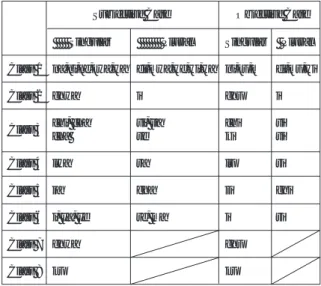
Class 1 Class 2 Class 3 Class 4 Class 5 Class 6 Class 7 Class 8 Singular na,ni,ne,kwa,wa ghwa chi, cha cha lwa ja i, ya, ye ghwa ku Plural di,mwa,we,wi,wa i vi, va ve ra gha re, ma Singular ni,ku,m ghu chi ki lu ji i ghu ku Plural di,mu,wi i vi vi ri ghi ri Subjective Case
The subjective and objective cases of Class 7 take the same form for their singular as those of Class 2 singular.
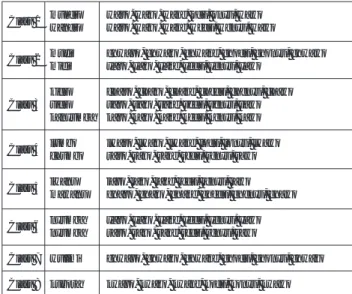
The following table shows the use of the objec-tive prefixes:
4
Class 1 Class 2 Class 3 Class 4 Class 5 Class 6 Class 7 Class 8 Waniwonagha. Wanikunde / Wanikundagha. Wakuwonagha. Wakukunde / Wakukundagha. Wambonagha. Wamkunde / Wamkundagha. Wadiwonagha. Wadikunde. Wamuwonagha. Wamukunde. Wawawiwona / Wawiwonagha. Wawikunde. Waghuwona. Waghukunde. Waiwonagha. Waikunde. Wachiwonagha. Wachikunde / Champoiagha. Waviwonagha. Wavikunde / Vamupoiagha. Wakiwonagha. Wakikunde / Kamupoiagha. Waluwonagha. Walukunde / Walukundagha. Wariwonagha. Warikunde / Ramupoiagha. Wajiwonagha. Wajikunde / Jampoiagha. Waghiwonagha. Waghikunde / Gampoiagha. Waiwonagha. Waikunde / Yamupoiaga. Wariwonagha. Warikunde / Ramupoiagha. Waghuwona. Waghukunde. Wakuwonagha. Wakukunde / Kwamupoiagha. He sees me. He loves me. He sees you. He loves you. He sees him. He loves him. He sees us. He loves us. He sees you. He loves you. He sees them. He loves them.He sees it. (mghunda, a garden) He loves it.
He sees them. (mighunda, gardens) He loves them.
He sees it. (kidu, a mortar) He loves it.
He sees them. (vidu, mortars) He loves them.
He sees it. (kanyumba, a little house) He loves it.
He sees it. (lumbo, a song) He loves it.
He sees them. (chumbo, songs) He loves them.
He sees it. (ighembe, hoes) He loves it.
He sees them. (maghembe, hoes) He loves them.
He sees it. (nyumba, a house) He loves it.
He sees them. (nyumba, houses) He loves them.
He sees it. (wulimi, cultivation) He loves it.
He sees it. (kubora, a singing) He loves it.
Table 9: Concord of the Objective Prefixes.
In all cases the first syllable is the subject of the verb. The syllable representing the object al-ways immediately precedes the verb, as:
Waniwonagha. [Wa-, he; ni-, me; wonagha, sees.] He sees me.
Daghughuagha. [Da-, we; ghu, it; ghua, buy.] We buy it. (mughunda, a garden)
When emphasis is required, the full form of the personal pronoun may be used together with the
proper subjective and objective prefixes, as fol-lows:
Namuzera. I have told him. Niachipoisa. I will repair it.
The objective prefix is used where in English the definite article is used, for example:
Nadema mudi. I have cut the tree. Nirilisha ng’ombe. I will tend the cattle. Naghidaya machi. I have drawn the water.
The indefinite article is denoted by the omission of the objective prefix, as follows:
Nalasa nyamandu. I have shot an animal. Dighua mburi. We will buy a goat. Nawona mundu. I have seen a man. (2)
Possessive Pronouns
The roots of possessive pronouns are similar to those of possessive adjectives. There is , however, a difference between these two categories of grammatical items. Possessive adjectives are ac-companied by nouns while possessive pronouns stand alone (op.cit.:110).
The possessive pronoun always follows imme-diately after the thing possessed, it varies accord-ing to the number and class.
mughenyi wapo my friend kidu chenyu your mortar
The unvarying parts of the possessive pronoun are as follows:
apo my edu, odu our ako your enyu,onyu your ake his, her, or its awo their The above forms may be used as enclitics with such words as:
mwanwapo (mwana wapo)my child
wakedu / wanidu our brothers / our sisters mkwako / mkako your wife
The initial letters of the possessive pronoun prop-er to each class and numbprop-er of nouns are as fol-lows: Class 1 Class 2 Class 3 Class 4 Class 5 Class 6 Class 7 Class 8 Singular w- ghw- ch- k- t- lw- j- y- ghw- Plural w- y- v- r- gh-
Class 1 Class 2 Class 3 Class 4 Class 5 Class 6 Class 7 Class 8 Singular wa ghwa cha ka ta lwa ja ya ghwa kwa Plural wa ya va va va ra gha ra
Table 12: Initial Prefix to the Preposition -a. When a noun is put into the locative case, its
pronoun requires a special form, such as: kidundunyi kwapo in my store ngolonyi kwapo in my heart
chongonyi kwake in his head
The following table shows how the various forms of the possessive pronouns are used:
6
Class 1 Class 2 Class 3 Class 4 Class 5 Class 6 Class 7 Class 8 mundu wandu mudi midi kidu vidu kanyumba lumbo chumbo iwanu mawanu nyumba nyumba wulimi kuborawapo, wako, wake, odu, onyu, wawo wapo, wako, wake, wedu, wenyu, wawo
ghwapo, ghwako, ghwake, ghodu, ghonyu, ghwawo yapo, yako, yake, yedu, yenyu, yawo
chapo, chako, chake, chedu, chenyu, chawo vapo, vako, vake, vedu, venyu, vawo kapo, kako, kake, kedu, kenyu, kawo lwapo, lwako, lwake, lodu, lonyu, lwawo rapo, rako, rake, redu, renyu, rawo japo, jako, jake, jedu, jenyu, jawo ghapo, ghako, ghake, ghedu, ghenyu, ghawo yapo, yako, yake, yedu, yenyu, yawo rapo, rako, rake, redu, renyu, rawo
ghwapo, ghwako, ghwake, ghodu, ghonyu, ghwako kwapo, kwako, kwake, kodu, konyu, kwawo Table 11: The Various Forms of the Possessive Pronouns.
When emphasis is required, the word -eni, -oni, self, or own, is used, as:
iwanu japo jeni my own arrow mughunda ghwapo ghoni my own garden nyumba rapo reni our own houses The owner of a thing is denoted by use of the preposition -a, ‘of’, which takes the initial letter proper to the class and number of the nouns with which it is connected14.
ngome (nyumba)ya Mzungu the European’s house ighembe ja mkapo (muka wapo)
my wife’s hoe mnyaro ghwa Mumaasai (Mwiwawi)
the Maasai’s path ng’ombe ra mzuri the chief’s cattle The personal pronoun is often used where in English the possessive pronoun is implied.
Wemchikanya maghu. They broke his legs. Wekudumbua chala. They cut off your finger. Dimfunga mikonu yake. We will tie his hands. The initial prefix to the preposition -a is the same as that of the possessive pronoun, thus:
Class 1 Class 2 Class 3 Class 4 Class 5 Class 6 Class 7 Class 8 mundu moni wandu weni mudi ghoni midi cheni kidu cheni vidu veni kanyumba keni lumbo leni chumbo reni iwanu jeni mawanu gheni nyumba cheni nyumba reni wulimi ghoni kubora koni
the man himself the men themselves
the tree itself the trees themselves
the mortar itself the mortars themselves the little house itself
the song itself the songs themselves
the arrow itself the arrows themselves
the house itself the houses themselves
the cultivation itself
the singing itself Table 13: The Use of the Word -eni or -oni. (3)
Reflexive Pronouns
The reflexive pronoun is expressed by the use of the following forms:
① By the use of the syllable -ku-. This syllable takes the place of the objective prefix, and im-mediately precedes the verb, as:
Wiakushinga mavuda. They oil themselves. The words moni, self, and weni, selves, are often added after the verb to denote a more definite re-flexive, as:
Nekutika ini moni. I hit myself.
Wadakudema moni. He cuts himself. Wiakukalia weni.
They deceive themselves. ② By the use of the word chongo, head, and
ngo-lo, heart, for example:
chongo chapo myself ngolo redu ourselves Namanya ngolo yapo. I know myself. ③ By the use of the word -eni or -oni, self. This
takes the following forms to agree with the sev-eral classes and numbers of nouns:
By myself, by yourself, etc., is expressed by -ekeri and -eka.
ini niekeri I by myself oho kuekeri you by yourself isi diekeri / isi dieka we by ourselves inyo mwekeri / inyo mweka
you by yourselves When used in connection with nouns, -eka takes the same prefix as the possessive pronouns, as:
mudi ghueka the tree by itself midi yeka trees by themselves kidu cheka the mortar by itself vidu vieka mortars by themselves In Kiswahili there is one reflexive object infix for everything, that is -ji-. It means “myself”, “yourself”, “him- / her- / it- self”, “ourselves”, “yourselves”, “themselves”, and “oneself”
(Man-gat, A.W. 2001:110). For example, Ninajipenda.(I love myself.), Unajipenda. (You love yourself.), Anajipenda.(He / she / loves him / herself.), Mlango umejifunga.(The door has closed itself.)
(4)
Demonstrative Pronouns
Demonstrative pronouns point out objects of all kinds. Being pronouns, they stand alone and, therefore, are not followed by adjectives. Further-more, the roots of these pronouns are similar to those of demonstrative adjectives (Mohammed, M.A., 2001:111).
There are three sets of demonstrative pronouns. The first refers to objects near at hand, as:
mundu uhu this man mudi ughu this tree
to objects at a distance, as:
mundu uja that man mudi ghuja that tree
The third set of demonstrative pronouns refers to objects previously mentioned, as:
mundu uo
that man, that man mentioned before mudi ugho
that tree, that tree mentioned before Distance is denoted by the stress laid on the penultimate, as:
-uja, hoja, hooja that (man)
nyerinyeri heeja! that star over there! All the above demonstrative pronouns may be made to express there he, she, or it is, and there they are as:
hoja there is
hawaja there they are hooja there it (tree) is heja there they (trees) are
The following table will show how the demon-strative pronouns are used.
8
A negative is formed by prefixing si- and sub-stituting -ngi for -eni or -oni, as:
sini ungi it is not I siisi wangi it is not we sioho ungi it is not you sinyo wangi it is not you siuo ungi it is not he siawo wangi it is not they
The following examples are applied demonstra-tive pronouns.
Anyaha means in or at this place. Ajaeni means in or at that place. Anyaho means in or at that very place. Ni huwo means that is it, or that is how it is. (Kilambo) kisiku na kisiku means this thing or that thing.
Wusiku na wusiku means something or other.
(5)
Relative Pronouns
Relatives are words like “who”, “whom”, “which”, “where”, “how”, and “when”, when refering to a subject which has already been men-tioned (Mangat, A.W., 2001:144). The relative pro-noun is expressed in many different ways: ① By the first set of demonstrative pronouns, as:
ichi kibaa this which is great ivi vipoie these which are good ② By ni- prefixed to the third set of
demonstra-tive pronouns and followed by the same pro-noun in its simple form as:
Nijo ijo nikunde. That is it which I want. Class 1 Class 2 Class 3 Class 4 Class 5 Class 6 Class 7 Class 8 mundu (man) mudi (a tree) kidu (a mortar) kanyumba (a little house) lumbo (a song) iwanu (an arrow) nyumba (a house) wulimi (cultivation) kubora (singing) this uhu ughu ichi aka ulu iji ihi ughu uku that uja ghuja chija kaja luja jija ija ghuja kuja this before uo ugho icho ako ulo ijo io ugho uko wandu (men) midi (trees) vidu (mortars) vinyumba (little houses) chumbo (songs) mawanu (arrows) nyumba (houses) these awa ihi ivi ivi iri agha iri those waja ija vija vija rija ghaja rija those before awo io ivo ivo iro agho iro Table 14: The Use of the Demonstrative Pronouns.
③ By ni- prefixed to the third set of demonstra-tive pronouns and followed by -eni, with its ap-propriate prefix, as:
Nijo jeni. That is it which.
④ By ni- prefixed to the third set of demonstra-tive pronouns, as:
Nijo jilimagha. That is it which hoes. Ni agho ghiwonagha. These are they which see. ⑤ By the word niko. This word may be used with
all verbs and all tenses, as in:
Niko naghamba. That is what I say. Aho niko nikoghe. That is where I was. Aho niko naka. That is where I am. Koni answers the same purpose, as:
Niko koni naghamba. That is exactly what I said. ⑥ By the parts of the verb to be prefixed the last syllable of the third set of demonstrative pro-nouns, as follows:
Nekoghe nacho. I was with it, I had it. ichi nekoghe nacho that which I had ⑦ By the word uko na, have, as:
mundu uko na iriso (na lwafuo)
a man who has an eye uhu uko na cheja (vindo)
he who has food ⑧ By the demonstrative pronouns of all classes.
These may be used in connection with all verbs and in all tenses, as:
uhu uko na lukundo / ukundagha he who loves uhu wawakunda he who is loving uhu okundeghe he who loved uhu uchakunda he who will love uhu nimwidie / nimusimie
he whom I beat uhu uidilo / usimilo he who is beaten ichi (kidu) kuchikunde
it (mortar) which you want ichi (kidu) chikunde it (mortar) which wants ichi (kidu) chikundo it (mortar) which is wanted ughu (mudi) ghukundo
it (tree) which is wanted ughu (mudi) ghukunde
it (tree) which wants ughu (mudi) ghukundo
it (tree) which is wanted, etc. The negative relative is formed by the use of
the usual negative prefix, si or se, as:
Sicho icho nikunde. That is not it which I want. uhu usene he who does not have uhu useghendie he who did not go ichi chisene it which does not have The word niko is used in connection with per-sonal pronouns to express that is what, why, where, and when, as:
Niko naghamba. That is what I say. Niko nakimbia. That is why I ran. Niko nawaghenda. That is where I go. Niko nichakunda. That is when I will love. Niko may be used with all tenses of the verb. (6)
Interrogative and Other Pronouns
Interrogative pronouns are only used for asking questions. Unlike interrogative adjectives, inter-rogative pronouns are not accompanied by nouns (opt.cit.:112). There are four interrogatives which do not vary in form:
Ki? What?
Lii? When?
Kwaki? Why?
Indoki? What kind?
Indoki always follows the noun with which it is connected, for example:
Mundu wa indoki? What kind of a man? Wandu wa indoki? What kind of men? Kindo cha indoki? / Kindoki?
What kind of a thing? What is it? is expressed by niki? The following will show how the interrogatives are used:
Ichi niki? What is this? Kucha lii? When will you come? Kwaki kwadeda huwo?
Why did you speak like that? What? is often expressed by the syllable -ki, suf-fixed to the verb, as follows:
Kwakundekii15? What do you want?
Jeko ilaghoki? What is the matter? Ni is often used with the appropriate prefix to ex-press nothing and no:
Wawabonyaki? Wani.
What do they do? Nothing. Kwakundekii16? Wani.
Has it (the arrow) hit? No.
Ki- suffixed to the particle na-, with or and, pre-ceded by the verb to be, is used to express what is there, as:
Kwawonaki?
What is there with you? = What is the matter with you? Yawonaki?
What is there with it? = What is the matter with it?
The same form following a negative verb may express why not? as in:
Kwaki nisekundagha?
Why shall I not love? Kwaki usebonyagha (io)?
Why will he not do (it)? Who? when? and whose? are expressed by -ani? ①Ani is used alone when asking the question who? as:
Ko ani? Who are you? (sing.) Mo ani? Who are you? (pl.) Nani (uo)? Who is he?
② Ani is often suffixed to ku-, which then be-comes kwani, to express to, or from whom? as: Kwafuma kwani? / Kwafuma hao?
From whom do you come? Kwawacha kwani?
To whom do you come? ③ Ani is used with the appropriate prefix to
ex-press whose, as:
Mundu wani? Whose man? Wandu wani? Whose men? Mudi ghwani? Whose tree? Iwanu jani? Whose arrow?
How? is expressed by wada? This may either be used alone, or suffixed to the verb, as:
Ni wada? How is it? Malagho gheko wada?
How does the matter stand? Kwaghamba wada?
How, or what do you say? Where? is expressed by hao? It may be suf-fixed to verbs, thus:
Kwawaenda hao? Where are you going? Koko hao? Where are you? Cheko hao? Where is it?
The following will show how hao? is used with the verb to be:
10
Class 1 Class 2 Class 3 Class 4 Class 5 Class 6 Class 7 Class 8Oko hao (mundu)? Weko hao (wandu)?
Ghoko hao (mudi)? Yeko hao (midi)?
Cheko hao (kidu)? Veko hao (vidu)? Keko hao (kanyumba)? Veko hao (vinyumba)?
Loko hao (lumbo)? Reko hao (chumbo)?
Jeko hao (iwanu)? Gheko hao (mawanu)?
Yeko hao (nyumba)? Reko hao (nyumba)?
Ghoko hao (wulimi)?
Koko hao (kubora)?
Where is he (man)? Where are they (men)?
Where is it (tree)? Where are they (trees)?
Where is it (mortar)? Where are they (mortars)? Where is it (little house)? Where are they (little houses)?
Where is it (song)? Where are they (songs)?
Where is it (arrow)? Where are they (arrows)?
Where is it (house)? Where are they (houses)?
Where is it (cultivation)?
Where is it (singing)? Table 15: The Use of the Word hao.
The above are also used to express Which? in which case the two words are contracted into one, as:
Uao? Which (man)?
Wiao? Which (men)? Ghuao? Which (tree)?
Iao? Which (trees)?
How many? is expressed by -linga? This takes
the appropriate prefix, as:
Wandu walinga? How many men? Midi ilinga? How many trees? Vidu vilinga? How many mortars? Chumbo ilinga? How many songs? Mawanu alinga? How many songs? Nyumba ilinga? How many houses?
Acknowledgements
My study on Kidawida is supported by the Japan Society for the Promotion of Science. I am grateful to JSPS for the research grant, 2004 to 2006, by the Grant-in-Aid for Scientic Research. I express my thanks to Mr. Harrison A. Mwachala and his family, and also to the Taita People.
Notes
13.Traditional grammars refer to them as subjects (Mohammed, M.A. 2001:108).
14.The possessive ‘of’ is translated into Swahili by a word whose stem has only one letter, ‘-A’. But this word must take agreements with the possessed, not the possessor. Yet you cannot say, for instance, ‘the child’s toys’ as we would in English. Such a phrase has to be turned round the other way to say ‘The toys of the child’, and the possessive have would have to agree with ‘toys’, and not the ‘child’ (Wil-son, P.M. 1985:74).
This is the same as in Kidawida.
15.The -kii, suffixed to the verb, is a stress upon ‘what’.
16.The same as note 15.
References
Greenberg, J.H.1966a. The Language of Africa. Indi-ana University. Bloomington, Mouton & Co., The
Hague.
Greenberg, J.H. (ed.)1966b. Universals of Language
Report. Cambridge, Mass: M.I.T. Press.
Guthrie, M. 1948. The Classification of the Bantu
Lan-guages. Oxford University Press, London.
Institute of Kiswahili Research. 1996. English-Swahili
Dictionary. University of Dar es Salaam.
Inter-Territorial Language Committee for the East African Dependencies. 1939, 2002. A Standard
Swahili-English Dictionary. Oxford University
Press.
Inter-Territorial Language Committee for the East African Dependencies. 1939, 2000. A Standard
En-glish-Swahili Dictionary. Oxford University Press.
Mangat, A.W. 2001. Swahili for Foreigners. Kenway Publications, Nairobi.
Ministry of Finance and Planning, and Institute of African Studies, University of Nairobi(MFP & IAS) 1984. The District Socio-Cultural Profiles Project. A
Joint Research and Training Project, Taita-taveta District, Draft Report. Nairobi.
Perrott, D.V., 1951, 2003. Teach Yourself SWAHILI. Hodder and Stoughton. United Kingdom.
Sakamoto, K., 2003. An Introduction to Kidawida: The Language of the Taita in south-east Kenya, Volume Ⅰ: Nouns, Adjectives and Numerals., Bulletin of
Policy Studies, No.6.,Shobi University.
Taasisi ya Uchunguzi wa Kiswahili, 1981. Kamusi ya
Kiswahili Sanifu. Oxford University Press, Dar es
Salaam.
Whitely, W.H.(ed.).1974. Language in Kenya. Oxford University Press.
Wilson, P.M.1970. Simplified SWAHILI. Kenya Litera-ture Bureau, Nairobi.
Wray, J.A.1894. An Elementary Introduction to the
Taita Language. Society for Promoting Christian