• 検索結果がありません。

神田外語大学学術情報リポジトリ asKUIS

N/A
N/A
Protected

Academic year: 2021

シェア "神田外語大学学術情報リポジトリ asKUIS"

Copied!
51
0
0

読み込み中.... (全文を見る)

全文

(1)

Annual reports (第25号)

journal or

publication title

Studies in linguistics and language teaching

volume 25

page range 201‑250

year 2014‑11

URL http://id.nii.ac.jp/1092/00001194/

asKUIS 著作権ポリシーを参照のこと

(2)

Annual Reports

A. 2014 Academic Literacies RILS&LE Report

Project Coordinator: Luke Rowland

Committee members: Will Lingle, Nicholas Canning, Scott Sustenance, Chad Hamilton, Joe Moody, Barton Colmerauer, Patrick Murphy

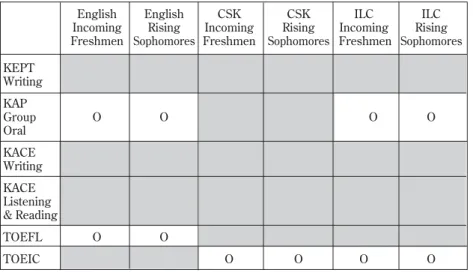
The Academic Literacies group welcomed five new members into its ranks this year and thus spent the first part of the year getting everyone up to speed on the current state of the curriculum at KUIS. Following this, the group spent time dis- cussing and fleshing out a range of goals and objectives for the new literacy course which is being prepared for April 2016. Currently, the group is in the process of developing a cutting-edge narrative unit for the course, drawing on principles of multimodality and digital literacies and using Inanimate Alice, a digital novel, as its core text.

In September this year, the group presented at the 2014 JALT Hokkaido Language

Teaching Conference: Elements of good teaching on the historical origins of multi-

literacies and the practical implications of the Knowledge Processes. All agreed

that it was a great success and a wonderful professional development opportunity

for those teachers who had not presented previously. In other good news for the

group, past and present members had an article published in 2014 in the interna-

tional journal, Language, Culture and Curriculum, focusing on materials analysis

(3)

work that had been done in previous years. Furthermore, publication of the article has led to Bill Cope and Mary Kalantzis inviting members of the group to con- tribute a book chapter in a volume on multiliteracies to be published next year.

Recognition of this kind from beyond institutional bounds provides a real fillip to the group’s efforts so kudos to all involved and here’s to another successful year in 2015!

B. Foundational Literacies

Project Coordinator: Richard O’Loughlin

Committee members: Stuart Champion, Lorraine Kipling, Euan Bonner, Adrienne Stacy, Nicholas Thompson

Members of the project group have been working in a variety of areas in order to improve the Foundational Literacies course for teachers. Stuart is in the process of consolidating and adapting materials in accordance with teacher feedback.

Foundational Literacies teaching materials are also being transferred to Google

Drive to improve accessibility and facilitate future improvements. The welcome

pack given to new teachers during orientation is also being improved; clearer

guidelines and a more detailed overview should give new teachers a better

understanding of the course. Lorraine, Euan and Adrienne are developing the

Extensive Reading thread with an eye to adding a portfolio of ER activities to the

existing Foundational Literacies curriculum, and to provide an induction to both

teachers and students to the idea of Extensive Reading. Particular focus is on

increasing the number of available activities that can be applied to any text,

(4)

regardless of its content or difficulty level. Specific activities under development include Reading Journals and Story Summaries, Readers' Theatre, Reading Discussion Groups, and Choose Your Own Adventure texts. Nick is working on developing additional grammar support to the existing course materials. He is attempting to identify areas where students can benefit from support on how to accurately and effectively make use of certain grammatical forms within the context of the writing genre being studied. Once areas for development are identified he will proceed with developing contextualised ‘focus-on-form’ activities.

C. The Basic English Proficiency Project

Project Coordinators: Alex Selman, Carla Bridge

Committee members: Bethan Kushida, Caroline Hutchinson, Erin Hughes, Mamiko Nakata

Introduction

The Basic English Proficiency Project continued development of the Freshman English syllabus and made preparations for full implementation in the English department in 2015. Workshops were developed and discussion meetings held with teachers.

Group Projects

Syllabus development and iPad implementation.

Work continues on the refinement of the syllabus design and optimising use of

iPads as discussed in Selman et al. (2013). The projects have been developed to

(5)

focus on Rhetoric Types (Narration, Description, Exposition, Argumentation), allowing greater self-direction while maintaining clear criteria for assessment. The affordances of the iPads were further investigated, including an online Portfolio format using ‘Numbers’ App shared through iCloud, and further development of iBooks as a materials format.

Syllabus Introduction Workshops.

The BEPP committee recombined this year into one group. This allowed the com-

mittee to begin addressing how best to roll out the new syllabus, which will be used

across all levels of English Department Freshman English from April 2015. One of

the main committee tasks has been to develop workshops and discussion

opportunities to introduce and support teachers as they begin to use the new

syllabus, which has been developed and fully trialled in the Advanced Track

streams. As a means of introducing new concepts and terminologies, two

workshops were developed and trialled during committee meeting times. Both

workshops were run in very similar manners and involved defining, brainstorming

and discussing ideas that could be used with both the processes and projects, as

defined by the new syllabus. These will be used next year with new incoming

teachers as it was felt that smaller focused discussion groups would be more

appropriate for current teachers. Committee members have also been use this

year to discuss together ideas about making the server more accessible and

user-friendly as well as how we are currently using the new syllabus in our current

classes, often with a focus on how the iPads have been integrated. This has allowed

us as a group to become clearer on our understanding of the new syllabus and to

feel more confident to take on a support role going into next year.

(6)

Syllabus Introduction Discussions.

Small group discussion were held with all teachers planning on teaching Freshman English in 2015. In the first round the focus was on the Rhetoric format for projects. Teachers examined their present projects in terms of rhetoric types and shared ideas for future project. In the second round the focus was on the process syllabus and the core processes as they have been defined for the Freshman English syllabus. Teachers were encouraged to think of teaching in terms of process and tools rather than depending on pre-made materials. The contribution from the teachers, their ideas, concerns and requests, are invaluable to plans for implementation and maintenance of the new syllabus.

Individual Research.

Alex Selman is investigating the process syllabus as a means for the development of mediational tools for language learning. He is interested in the ways that technology can transform classroom affordances and the contrast between process syllabus as envisaged when the ideas were popular in the 1980s, and how they can work today.

Rochelle King, Carla Bridge and Caroline Hutchinson continued working on their

joint research project, which is looking into how students’ self-assess their

presentations and how they use teacher feedback in that process. Data was

collected and analysis has been undertaken. The next step is to follow up

with a group of focus group students to discover more about the choices

made by students as they assess themselves and their opinions towards the best

approaches to feedback.

(7)

Selman, A., Worth, A., & Kowalchuk, C.(2013). C-2. The Basic English Proficiency Project (Advanced-track English) 2013-2014 Year End Report. Studies in Linguistics and Language Teaching, 24, 223-225.

D. Department of International Communication—BEPP (IC)

Project Coordinators: Andrzej Szeib, Tamatha Roman

Committee members: Allan Nicholas, Amber Barr, Chad Miles, Dana Brem, Jared Baierschmidt, Stuart Benson

Introduction

For the 2014-2015 academic year, BEPP IC welcomed back six returning members and two new members joined the team (Dana Brem and Tamatha Roman).

Committee members made BEPP IC related presentations at several national and international conferences including JALT National and CamTesol.

Given the upcoming merger of the departments and the unification of the curriculum, which is currently being developed and trialed by other committees/departments, BEPP IC has spent the majority of its time this year on materials development, curricular maintenance, as well as addressing the use of iPads in the classroom.

As it was successful during the last academic year, the BEPP IC project members broke into three subgroups: EIC1, IC Reading and Writing, and Media English.

Summaries of each subgroup’s activities and individual research can be found in

(8)

the next section.

Subgroup Work

English for International Communication 1 (Andrzej, Stuart)

As the department is currently preparing for the introduction of the new curricuar framework in 2016, no substantial development of the curriculum has occurred.

Still, material renewal work continued throughout the year. Stuart has focused on the introduction of presentation skills into the EIC and IBC courses. He has designed and implemented new materials into the existing curriculum to increase the time spent on presenting in both formal and informal settings. He is also currently designing a questionnaire pertaining to the introduction of iPads in the freshman classes in the IC department and hopes to administer it by the end of the year. In addition, a research study he conducted on multiple strategies in the classroom has been published in the September issue of Peerspectives, while another study on the explicit use of Lextutor in the classroom is currently under revision.

Andrzej has spent the year completing several curricular tasks. The first of these

was transferring some of the EIC1 materials into iBook form. He has created

iBooks for two first semester units: The Sounds of English (pronunciation

unit) and The Building Blocks of Language (vocabulary unit). He was able to

successfully trial both iBooks in his classroom. He has also worked on developing

a new final project for the Culture Unit - a digital publishing project where students

create an online magazine and publish it using ISSUU. In addition, he has changed

the Global Issues Unit from a paper-based unit into a more self-directed, TED

(9)

Talk-based one.

IC Reading and Writing (Allan, Amber, Chad, Dana)

The IC Reading and Writing subgroup has spent the year continuing last year’s work of improving the course materials. Allan has worked on a number of areas related to both the IC curriculum, and his research goals. Materials development has been primarily focused on the EIC1 pragmatics unit, developing tasks and activities designed to raise learner awareness of L2 pragmatic norms. He has also worked on materials in the IC Reading-Writing course, with the aim of developing learners’ academic writing skills. His research activities have been related to his work on pragmatics, developing ways of effectively teaching and assessing prag- matic competence in the L2.

Chad has continued to clarify, adjust and supplement parts of the curriculum that

were introduced in collaboration with and under the guidance of last year’s

coordinators. He shortened and clarified aspects of the email unit in order to make

it more coherent and changed the dialogue journal component to be longer

and more geared towards reflecting on and critiquing course content. For the

narrative unit, students again wrote narrative essays telling a story of how a core

belief was formed, and then recorded themselves reading the story aloud. This

time, instead of simply posting the story on their blog, they experimented with an

iPad app called Storehouse, which allowed the students to weave their narratives

around pictures and video in an attractive and interactive format. At the end of the

first semester, students again compiled their writings into Zines, which they

designed and created themselves. The Zines were again put on display in an

(10)

American library and subsequently added to the permanent collection. In the second semester, students read an e-version of an authentic novel on their iPads.

Chad has also continued to collect data on his dialogue journal project. In September, he presented at JALT Hokkaido on a previous dialogue journal study he conducted.

Dana’s focus in terms of content has been to make the material more relatable to students’ everyday lives, so that they are using English to express their own thoughts and opinions. His goal is to shift the lesson focus more towards the student, so that they have more investment in both the question and the answer.

This encourages them to reflect upon their own ideas. He has also emphasized creative writing, especially in conjunction with the extended reading section of the course. During the spring semester his class focused on a series of short stories, and during the current fall semester they are working with graded readers. He has been creating lessons and activities that involve reflection and discussion of these readings, as well as creative and collaborative writing in a similar style to the reading. As a result, the students have grown much more confident and comfortable with writing in English. In terms of research and professional development, he is currently preparing material to present at the CamTESOL conference in Cambodia in 2015. He will be adapting several lessons from this year to meet the needs of Cambodian EFL teachers, with an emphasis on low-tech collaborative writing activities.

IC Media English (Jared, Tamatha)

Goals in Media English this year included streamlining the material such that

(11)

newspaper lessons and summary lessons were re-organized and formatted to better prepare students for reading future news articles. Jared worked on increasing critical media literacy through having students question how the author, audience, and purpose of different articles affect the content. He had learners look at online video game reviews and made a list of the key features (such as the mixing of both formal and informal language). Students compared these features with Amazon customer reviews and noted both the overlap of some features, due to the purpose of reviewing a game being the same, as well as the differences in tone due to differences in author and audience. Tamatha continued to develop an alternative project for Media English, the news show, utilizing the SALC’s green room. In addition, two new ideas were being trialed and researched in her class this year: summarizing TED Talk videos rather than news articles in order to promote further media literacy, and having each student present a “Media Show and Tell” at the beginning of each class as a showcase to current media.

Future Outlook

As the time draws near for the departments to be integrated, the BEPP IC

committee will continue to work on material development in order for the

integration to be successful. Materials for the new curriculum are currently being

tested in several freshman classes and will continue to be trialed next academic

year. One thing that will be a challenge next year will be the inclusion of iPads in

all IC classes; that is, in second year IC2 and Media English as well. Members will

need to develop ways to successfully use applications like Google Docs in order to

accommodate the new technology. Committee members have begun to test out

new apps in freshman classrooms, as well as assess students’ views toward their

(12)

use of iPads. We hope that the research carried out in these areas will provide useful insights into the use of technology in the classroom.

E. The Basic English Proficiency Project Multiple Languages Department, formerly the

Department of International Languages and Culture (BEPP-ILC) )

Project Coordinator: Carol Begg

Committee members: Eric Hall, Tetsuko Fukawa, Robert Smith, Charlotte Lin, Rachel Manley

Introduction

In the 2014-2015 academic year, the department said ‘farewell’ to two members but was very pleased to welcome Charlotte Lin and Rachel Manley to KUIS and the group. In a change from previous ML conventions, Charlotte and Rachel are also teaching non- ML courses. This seems to be going well and the new lecturers are better placed to share information about the new curriculum with the rest of the group.

Class sizes and iPads

The new class sizes in both freshmen and sophomore classes have been well

received by both students and lecturers. The freshman classes are effectively

utilizing the iPad in and outside of class. Many Freshman English teachers (FE)

have become paperless or partially paperless, and most are using applications, web

services (such as Google Drive and Edmodo) for submission of student

(13)

assignments, teacher- and peer-corrections, and giving feedback. FE students are also experimenting with the different styles of presentations that are now available to them with the iPad.

Sophomore class issues

As has happened in previous years, the sophomore students expressed dislike for the new class-groupings in which they are with students of mixed abilities.

Not streaming students in the second year has been discussed in the group previously with no agreement being reached. However, due to the high number of complaints received (by myself, sophomore teachers, Regional Language Teachers, Academic Affairs, and the Japanese Department Head) and the length of time these issues persisted for this issue became a serious problem in Semester One. The sophomore class teachers were extremely professional, flexible, and patient in their handling of these complaints, and met with colleagues and students to resolve in-class tensions. After further discussion in the group and with administration, the decision was made to stream sophomore classes – Sophomore English and Media English – from next year. Suitable student assessment needs to be in place in order to do this successfully and fairly.

Curriculum development

The timeline for and details of how the new framework will be rolled out are

still forth coming. Therefore, group members have continued their collective

development of current, core course materials, most notably the Freshman

English curriculum. The new teachers have been providing interesting

suggestions and insights for improvement based on their past experiences and on

(14)

their work with the Foundational Literacies course.

Testing

After agreeing last year to remove the KACE test from ML students’

assessment, the test procedure – using the Freshmen students’ TOEIC and KAP Group Oral scores – was used to tier the incoming Freshmen. It is hoped that this combined approach will continue for this year, but negotiations with KEPT are still ongoing.

Regional language instructors

As was expressed last year, the group has continued to strengthen individual ties with RL teachers with whom students are shared, to address (potential) issues and improve the way lessons are delivered. The ML/ILC department held a lunch shortly after Golden Week, which was very well attended. The ELI and RL teachers provided foods and drinks to be shared and this event helped address emerging issues in the sophomore classes (as explained above).

Research Carol Begg

Carol is continuing to look at ML students' relationship with and interest in

their L2/3, in connection with their study abroad experiences. Her RILS-funded

paper exploring the experiences of the 2013-2014 Cohort studying in Brazil, is

published this year. She would like to thank the Portuguese Department for all of

their help and support with this. She has continued to work on her Global

Citizenship class – and now teaches this within both the ML and IC Departments.

(15)

She has presented at the Asian Conference on Education in Osaka, the CLaSIC conference in Singapore, and published three papers.

Eric Hall

Eric is focusing on the development of methods by which students can be offered the opportunity to experiment with adapting language they already know to unfamiliar and abstract subject matter. He is using student-generated photographs and video because of the personal connection each student has to the photographs, and video they have produced themselves causes them to be more invested in the process. He is interested in the concepts of multimodality in how texts (both spoken and written) can be incorporated, with visual imagery (photo and video), by students in their studies. He is utilizing student projects where photographic and video themes are pre-conceptualized and planned by the students, goals are set, and photographs and videos are taken and reflected upon through post-conceptualization.

Tetsuko Fukawa

Tetsuko is focusing on double-major students’ attitudes and motivation towards

learning English and Thai, and collecting data for her RILS research project. She

seeks to accommodate students’ needs into ILC curriculum and encourage stu-

dents to become language users capable of having meaningful language exchange

with other speakers of English. In addition to the research, she has presented at

JALT Hokkaido and CULI-LITU International Conference 2014. She will also be

presenting at Trends in Language Teaching Conference in December. In the

presentations, she shared practical lesson ideas on how to build lessons upon

(16)

students’ prior knowledge of their own culture and how to create a syllabus to facilitate learner autonomy.

Robert Smith

In April this year, following further meetings with ELI faculty, the focus of the research was finalized and data collection began. Although initially concerned only with ‘noticing’ the focus now encompasses the effect of peer mediation during a peer mediated collaborative repair task. It is predicted that peer mediation may have an effect on what mistakes learners notice and on the number of successful repairs learners make in subsequent tasks. By researching this aspect of the collaborative task, it is hoped that teachers may gain more confidence in letting students collaborate independently in the classroom. Over the course of the first semester, four collaborative tasks were both audio and video recorded and a number of students were interviewed after the tasks in order to gauge their level of attention to the task. The interviews were also recorded to assist in this evaluation. These recordings are now in the process of being analyzed to extract the relevant data. A draft paper is scheduled to be completed by the end of the year.

Charlotte Lin

Charlotte and fellow lecturer Rachel are doing an analysis of the emergence of

rhetorical modes during the process of collaboration in the digital board game

Pandemic. The research will be undertaken through a qualitative approach that

will incorporate questionnaires after playing, stimulated responses to video of

participants engaged I game-play, and interviews. The questions used are

modeled on those used in Freshman English curriculum. This year Charlotte has

(17)

presented at JALT conferences in Osaka, Sendai, and Okinawa. She will also present at NELTA early next year. Her conference topics are iPad blogging and social networking in Foundational Literacies, multiple-skills development using TED talks, and generating student-centered discussions with problem-solving activities in conversation classes.

Rachel Manley

Rachel has a focus on using technology in her classes. Her current research is based on using strategy and critical thinking iPad apps as an extra-curricular activ- ity. She has attended many conferences including JALT Osaka, JALT Hokkaido, and CAMTESOL in 2014. Her interest not only lies in technology use in the class- room, but also in teaching pronunciation and colloquial English (such as slang and idioms).

F. Basic English Proficiency Project (BEPP) Group:

Foundational Literacies (Advanced)

Group Coordinator: James Owens

The research group has been busy implementing, evaluating and redesigning

materials for the curriculum. The structure of the course has been changed, to

better match the Freshman English course and also consider what workloads are

manageable by students at certain points of the year. All the materials, including

iBooks, vocabulary lists and supplementary materials are available on a shared

Google Drive folder. These materials undergo constant change and redesign.

(18)

Based on the trial use of a standard-reading exercise, where students answer the same list of questions with a variety of different texts from a range of different genres (primary, blurred and secondary, as described by Byrnes et al. (2006)) the group has presented (CamTesol 2014) and had papers published on the effectiveness of such an exercise (Owens, 2014). More recently the group has presented on the use of nonlinear text in student answers (Asian Conference on Education 2014), and how this corresponds with the Multiliteracies pedagogy espoused by the ELI.

Work planned for the next year includes continuous evaluation and redevelopment of the materials, and further research regarding the use of nonlinear text in the form of student-created concept maps, with regard to Van Leeuwen’s work on social semiotics (Van Leeuwen, 2005).

References

Byrnes, H., Crane, C., Maxim, H., & Sprang, K. (2006). ‘Taking text to task: Issues and choices in curriculum construction’. ITL: International Journal of Applied Linguistics, 152, 85–110.

Owens, J. ( 2014). ‘Using a standard reading exercise in a foundational literacies course’. Language Education in Asia (LEiA), Vol 5, Issue 1, 81-92.

Van Leeuwen, T. (2005). Introducing Social Semiotics. Oxon: Routledge.

(19)

G. CSK (English for Chinese, Spanish, Korean majors) 2014-2015 Year End Report

Project Coordinator: Jaclyn Pitts

Committee members: Edward Thomas, Krista Owen

Curriculum

The CSK (English for Chinese, Spanish and Korean majors) committee is in its fourth year.

In previous years, we have worked on developing materials for Freshman and Sophomore CSK classes, however, this year those projects were put on hold while we await a decision regarding the new direction of CSK courses. After the initial acceptance of the proposal made by the ELI, we learned that some of the Japanese CSK teachers, as well as some of the regional language teachers were not happy with the changes outlined in the proposal and wanted to rethink the way English courses fit into the CSK program. At the time of writing, the CSK com- mittee has not received any information regarding future changes to the courses and we have decided to focus on research projects that will help us develop curriculum in the future once decisions are made.

Research Matters

The committee has worked as a group to develop a survey that will help us gain

insight into what actually happens in the classroom as perceived by students. The

survey ask students for their opinions regarding what they find enjoyable in their

(20)

English classes and what they see as beneficial to their learning in terms of participation, sharing opinions and languages used by the teacher and the students in the classroom. With this information, we hope to be able to develop a course that better fits the needs of CSK students. We are currently in the process of making final revisions to the survey and hope to administer it at the end of the fall semester.

H. CALL Project Group 2014-15 RILS Report

Project Coordinator: Jason Ropitini

Committee Members: Anton Lloyd-Williams, Jacob Breaux, Jeremy Eades, Marnie Brown, Raswan Sockol, Rob Werner

I. Year in Summary

2014 marks a more focused approach for the CALL group following 2013, which was a transitional year for the group. Incumbent CALL members are Anton Lloyd-Williams (English), Jeremy Eades (International Communication), Marnie Brown (English) and Raswan Sockol (International Communication). New to the CALL group for 2014 are Jacob Breaux (English), and Rob Werner (International Communication).

As the new curriculum vision for the KUIS English Language Institute (ELI)

becomes manifest, the CALL group has prioritized its members’ time, targeting

the practical application of educational technologies in the classroom by way of

supporting teachers looking to bolster their technological competencies,

(21)

particularly with regard to using the iPad as a tool for teaching and learning.

The objectives of the CALL group over the 2014 academic year have been as fol- lows:

• to support the ELI in implementing educational technologies

• to promote the use of Moodle

• to provide a framework for iPad use in classes

• to assist teachers wanting to create educational content for iPads

• to offer teachers opportunities for professional development

• to advise the Building 8 committee on future educational technology implementation

• to foster research in the field of educational technology among CALL mem- bers

II. ELI Support

Each CALL group member is tasked with liaising with another project group. This

outreach program was established to ensure that educational technology systems

are discussed in a coordinated manner in order to avoid the issue of divergent

technologies and practices thereof, which is apt to occur in a large environment

undergoing significant transformation, as is the case here within the ELI and its

various curricula. The table below lists the ELI project groups and the affiliated

CALL representatives.

(22)

The CALL group continues to support ELI teachers requiring assistance with implementation of technologies in the classroom. The data set resulting from this assistance will prove useful moving forward, aiding in the highlighting of common issues with technology that will allow the ELI - with the assistance of the CALL group - to establish pre-emptive measures that ideally prevent such issues from arising in future.

III. Moodle

Moodle, the established learning management system (LMS) at KUIS, supports a social constructionist educational framework, which espouses a collaborative learning environment. Using Moodle as a virtual learning environment (VLE), teachers are able to create entire courses complemented by an array of synchronous and asynchronous student-centred activities.

Moodle has been actively used by teachers and students at this university for more than seven years and, as of December 2014, has over 13,000 users enrolled in one Table 1: CALL Representatives

Project CALL Representative

Academic Literacies Anton Lloyd-Williams

CSK Curriculum Jacob Breaux

Foundational Literacies Jason Ropitini Freshman English Marnie Brown

IC Curriculum Jeremy Eades

ILC Curriculum Rob Werner

Media English Raswan Sockol

(23)

or more of the almost seven hundred courses developed to date. The CALL group has spent a significant amount of time over the 2014 academic year retiring old courses and rearranging content into a more coherent structure. This has included redesigning the front page and offering one-on-one tutorials on design principles for teachers wishing to create for their classes Moodle pages that are both substantive and visually effective. It is the aim of CALL to assist teachers who want to implement Moodle as a viable eLearning system that enhances the teach- ing-learning experience.

IV. iPads

2013 saw the limited rollout of a one-to-one tablet program here at KUIS. The

initial program required all top-tier freshman English students to purchase

iPads for use in classes. Significantly, this year the tablet program became

comprehensive, requiring that all new entrants at KUIS have an iPad to

complement their studies. However, it must be remembered that requiring that all

students have iPads does not mean eo ipso that these tablets will be used

effectively. In fact, it is a possibility that such a requirement could result in an

impediment to learning. Consequently, this now full-scale tablet program

necessitates that the CALL group work closely with teachers to ensure best

practices are established and that a general level of competency is reached. This

has involved the CALL group closely monitoring the literature on tablet use in

tertiary education environments and then seeding that information initially to

teachers proactive in their use of technology, and secondarily to other teachers

through a series of workshops and through the provisioning of digital self-

study resources curated by the CALL group. The intention, though, is to build

(24)

efficiencies in workflow by limiting workshops to pre-service offerings while offering digital training materials to teachers who wish to upskill in the area of technology in education.

The CALL group meets regularly to discuss current research on tablet pedagogy, deployment and implementation strategies, implications regarding curriculum design, and practicalities of a tablet-based teaching-learning paradigm.

V. ELI Mac Lab

It has been established that iPads are the tablets that students will be required to use over the course of their studies at KUIS. This, then, requires the creation of content by teachers for their learners. The iBook platform is currently the platform receiving most interest, as it is a product that integrates seamlessly into the iPad ecosystem. However, teachers at KUIS are presently provided with Windows© OS laptops, which Apple does not support with regard to creating iBook content. To remedy this, the CALL group recommended the creation of a space made available for teachers needing Macs running OS X to create iBooks. A space was secured and five iMacs set up with the software required to generate content. Furthermore, each iMac in this new lab also has a range of training material for the purpose of fostering professional development in the domains of both education and technol- ogy. Table 2 (below) shows training material currently available (December 2014).

The list of training materials is dynamic, with the CALL group adding and remov-

ing content to reflect the needs and wants of the ELI.

(25)

VI. Building 8

With the construction of Building 8 on the near horizon, the CALL group, through project group coordinator Jason Ropitini, has ensured there has been a vocal presence in the Building 8 working group, particularly with respect to the implementation of integrated educational technologies that support teaching and of technologies that support modes of learning, such as active learning and flipped learning.

VII. Individual Pursuits

The CALL group encourages its members to pursue their interests across various tech-related domains. Below is a brief overview of the current members’ particular interests and areas of research.

• Anton Lloyd-Williams’ main interests are increasing motivation through technology and exploring the difficulties and challenges of introducing

• iCloud

• iOS 8 Features

• iPad Classroom Fundamentals

• Leading & Working in Teams

• LMS Fundamentals

• Moodle 2.6

• Objective C

• Office for Educators

• OS X Yosemite

• Pages 5

• C++

• CSS

• Data-driven Instruction

• Excel

• Flipping the Classroom

• Google Drive

• HTML/HTML5

• iBooks Author

• Instructional Design for Adult Learners

• PowerPoint

• Public Speaking Fundamentals

• Resume Design

• Ruby on Rails

• Writing Email

• Writing Fundamentals

Table 2: Training Material Topics

(26)

technology into non-tech environments.

• Jacob Breaux continues to pursue his research interests; multimodal design, digital literacy, and the use of mobile technologies in the language learning classroom.

• Jason Ropitini is interested in the affordances tablets offer teachers and learners, both in the classroom and out. He is also interested in methods of determining technological competencies of teachers and learners, and ways of improving said competencies.

• Jeremy Eades is interested in the use of digitally constructed environments in an EFL context, and how they can be used to improve students’ self- efficacy. He is also focused on technological literacy and educating stu- dents in navigating the online world.

• Marnie Brown is interested in investigating new technologies, especially mobile technologies and looking at how they may be of any benefit in the EFL classroom. Her particular focus is on how teachers and students conceive and conceptualise new tech devices - and the exploration of the impact that this has on student innovation in a multiliteracies landscape.

• Raswan Sockol is interested in ways of incorporating portable technologies

into classroom instruction, thereby enabling students to seamlessly blend

teacher-led lessons and autonomous learning. Of particular interest to him

(27)

is visual instruction and phonological production; identifying tools that will enable students internalize the mechanics of sound, allowing for self- scaffolding.

• Rob Werner is interested in the implementation of digital media, in particular iBooks, and how to best utilise features of iBooks Author to design the best materials for core courses. He is also interested in Moodle design and functionality. His interests extend to examining ways of implementing educational social network platforms like Edmodo to support teaching and learning.

VIII. Looking Forward

In 2015, the CALL group will continue to support the core objectives outlined

above. From 2015, those students using iPads will extend to upperclassmen, which

will necessitate an even stronger focus by the CALL group on ensuring that best

practices are established and that support is given to teachers wanting to use iPads

not only in English-proficiency classes, but also in content classes. Furthermore,

the CALL group will continue to refine how teachers currently use - and have their

learners use - iPads. The CALL group also anticipates working closely in an

advisory capacity with those designing new curricula, ensuring that iPads are effec-

tively integrated into the teaching-learning process.

(28)

I. Th e Kanda Assessment Project (KAP)

Project Coordinator: Arthur Nguyen

Committee members: Yuko Sugiyama, James Herbach, Aurélie Treadwell, Phoebe Lyon, Samantha Marta

Director of Assessment:: Paul Lyddon, Ph.D.

Introduction

In the 2014-2015 school year, the Kanda Assessment Project (KAP) continued its

efforts from the previous year to eliminate redundancies in the testing program

and streamline the January and March test administrations (see Table 1). These

previous efforts included the discontinuation of the KEPT Writing Test and all sec-

tions of the KACE test because of their overlap with TOEFL and TOEIC, respec-

tively. They also included the termination of all KAP testing unrelated to student

placement, namely the Group Oral Exam for CSK students as well as all rising

sophomores.

(29)

Table 1. Testing Regimen for KUIS Departments Served by KAP in 2013-2014

English English CSK CSK ILC ILC

Incoming Rising Incoming Rising Incoming Rising Freshmen Sophomores Freshmen Sophomores Freshmen Sophomores KEPT

Writing KAP

Group O O O O

Oral KACE Writing KACE Listening

& Reading

TOEFL O O

TOEIC O O O O

Testing Schedule Changes

Once the ongoing ELI curriculum reform is fully implemented, the eventual plan

is to phase out all January KAP Group Oral testing and replace it with a system of

key assessments that will cover all the core courses and span the entire year. As

the ILC Department has not previously streamed students into 2nd-year classes,

the immediate plan was to simply eliminate the Group Oral Exam for its rising

sophomores this year. When the ILC Department unexpectedly announced a

desire to begin 2nd-year streaming in 2015, however, ILC and KAP representatives

met to discuss the issues and options. While the final details of the new 2nd-year

placement procedure are still under discussion, it was decided that the actual

Group Oral Exam would not be administered in January and that the basis of these

future placements would be some combination of teacher recommendations,

(30)

Table 2. Testing Regimen for KUIS Departments Served by KAP for 2014-2015

English English CSK CSK ILC ILC

Incoming Rising Incoming Rising Incoming Rising Freshmen Sophomores Freshmen Sophomores Freshmen Sophomores KEPT

Writing KAP

Group O O X X

Oral KACE Writing KACE Listening

& Reading

TOEFL O O

TOEIC O O O O

TOEIC scores, and regressed Group Oral scores. Thus, the testing regimen for the current academic year is as appears in Table 2.

Test Structure Modifications

The previous year also saw a number of changes in the structure of the Group Oral

Exam itself. First, as an initial warm-up, a brief self-introduction task was

implemented. Next, as a secondary warm-up, the traditional picture description

task was turned into a non-scored exercise. These changes not only allowed for the

reduction of student anxiety, thus increasing the ratability of each candidate and

the reliability of the scores, but it also served to ensure sufficient time for the test

raters to prepare their score sheets for the ensuing evaluation.

(31)

Despite multiple communications to the students that the picture description task is now merely a warm-up and that performance on it does not count toward the final test result, rater feedback after last year’s administration suggested that the line drawings being used for the KAP test closely resembled those from a similar task on the EIKEN Test in Practical English Proficiency, wherein performance is indeed evaluated. Thus, to avoid the possibility of creating greater test anxiety for students with EIKEN testing experience, the KAP team simply decided to clearly distinguish its picture description images by replacing the previous line drawings with high-quality photographs.

Other Testing Improvement Efforts

Last year’s testing modifications necessitated at least minimal revision of the

scoring rubric to eliminate the category no longer in use for the picture

description task. However, the occasion additionally provided the impetus for a

major rewriting of the scoring bands for the remaining categories as well as the

development of a quick reference guide to be used in conjunction with the full

version of the revised rubric. As in every year, a number of Group Oral sessions

were video recorded during both the January and March administrations in order

to obtain authentic student performance data for later research, benchmarking,

and training purposes. Examination of these videos then led to minor adjustments

of some of the scoring bands as well as a refinement in the wording of the

performance descriptions to ensure greater uniformity between the quick

reference guide and the full rubric and, ultimately, reliability of the speaker ratings.

(32)

J. The Media English Project

Project Coordinators: David Faulhaber, Lucius Von Joo

Committee members: CShawn Hupka, Li-hsin Tu, Jonathan Loh, Luann Pascucci, Ryan Lege, Anna Twitchell

Introduction:

The Media English Project is now in its 4th year as a committee and continues to pursue materials development. In preparation for the ELI-wide 2016 curriculum change the Media English committee has been collecting and assessing the existing materials from all three departments. Presently the committee oversees materials development for the English department; however, the committee is creating an ELI-wide curriculum.

Goals and Objectives:

The Media English Project Group has been actively developing (and piloting) new

curriculum modules that signal a shift away from past tendencies to settle on

topical affairs and reproduction of traditional print media (primarily due to

existing materials on the server) and move towards a multimodal approach (Kress

2010). The latest units—picture books, currency, habiliment, audio-as-media,

advertising, and spoken word—focus instead on the concept of mediation and

those affordances (and limitations) made possible by the media itself (McLuhan,

2001). A new website was created to get away from the drill-down folder hierarchy

of the server in favor of a menu-style interface that makes it much easier for

anyone to quickly find and use materials while encouraging a co-constructed

(33)

classroom (Freire, 1994). The group has also been holding regular “meet-ups”

(open to all, but of particular use to current Media English instructors) to discuss and explore the new units under development.

Future:

The committee will continue the curriculum and website development and will make an effort to launch a trial of the website in 2015 in preparation for the official 2016 roll out. The committee also plans to conduct research on the effects the co-constructed interface has on teacher, students and class (Ranciere, 1991).

.

References

Freire, P. & Freire, A. (1994). Pedagogy of hope: Reliving pedagogy of the oppressed.

New York: Continuum.

Kress, G. (2010). Multimodality: A Social Semiotic Approach to Contemporary Communication. New York: Routledge

McLuhan, M. (2001). The medium is the massage: An inventory of effects. Random House; reissued by Gingko Press.

Rancière, J. (1991). The ignorant schoolmaster: Five lessons in intellectual emanci-

pation. Stanford, Calif.: Stanford University Press.

(34)

K. The Self-Access Learning Centre (SALC) Project

Project Coordinators: Yuki Hasegawa, Atsumi Yamaguchi, Elizabeth Lammons

Committee members: Neil Curry, Brian Morrison, Junko Noguchi, Erin Okamoto, Akiyuki Sakai, Satoko Watkins

Other supporting members: Miho Funakura, Yuko Monden, Mina Onuma, Yoko Ohno, and Yuko Momata

SALC Director: Jo Mynard

INTRODUCTION

There were three SALC projects in the 2014-2015 academic year which were determined by what needed to be accomplished in the SALC Strategic Plan. This report will give a brief report of each of these three projects.

Project 1: Ongoing SALC Curriculum Development

Project members: Junko Baierschmidt, Elizabeth Lammons, Jo Mynard, Satoko Watkins

This is an ongoing project and this section provides a summary of the main work completed in the 2014-15 academic year by SALC Learning Advisors (LAs).

1. Background

Since 2011, the Learning Advisors (LAs) at the Self Access Learning Centre

(SALC) has been conducting an ongoing curriculum evaluation and modification

(35)

project. This project is still ongoing as we are continuing to craft an informed curriculum for KUIS students. For a summary of work completed prior to this year, see Takahashi et al. (2013), Thornton (2012; 2013), Lammons (2013; 2014), Noguchi (2014), Watkins et al. (2014), and reports in previous volumes of the present journal (Studies in Linguistics and language Teaching, published by Kanda University of International Studies). This year’s work included the following elements:

• piloting ELM 1 paper version

• testing SALC module app for ELM 1

• creating and evaluating ELM 2

• assessing ELM 1 and ELM 2

• creating Optional Course Content (OCC)

2. Piloting ELM 1 paper version

At the end of the 2013-2014 academic year, the SALC team decided that it would be

better to return to the non-classroom based self-directed learning model as

opposed to delivering the content in conjunction with English language classes

due to curricular changes in other university departments. In this module,

students spend four weeks learning about self-directed learning skills, create a

learning plan as they complete the units, revise the plan and then they spend four

weeks implementing the learning plan they have created. The team was able

to utilize the research that had been conducted on the pilot study in addition to

activities that have worked in the elective SALC courses and the First Steps

Module to create the Effective Learning Module 1 (ELM 1). An overview of the

(36)

ELM 1 is detailed below:

Part One: Learn How to be a Good Language Learner (Input)

• Unit 1: Goal Setting

• Unit 2: Strategies

• Unit 3: Resources

• Unit 4 SURE Plan

• Update Learning Plan

Part Two: Try out your Learning Plan (Implementation)

• Self-directed Learning (Weeks 1-4)

After piloting ELM1 in semester one, changes were made to some of the instructions and the organization of the activities in the units to make it easier for students to navigate on their own. These changes were made by the LA team as a whole and were based on feedback sessions within LA meetings about the differing experiences LAs were having with the students completing the module units and implementation. The suggested changes by the LA team were incorporated into the revised ELM 1 module that the curriculum team launched in semester two after making those changes over the summer.

3. Testing SALC Module Application for ELM 1

In the last academic year, the university decided that all incoming freshman

students would be required to purchase an iPad for use with the university’s

changing curriculum. Thus, the SALC in partnership with an application design

company created a module application so students will be able to complete ELM 1

and ELM 2 and receive feedback from their Learning Advisor via the application.

(37)

Initially, the team planned to pilot the module application within semester one, but in an effort to ensure that the application would be user-friendly, the curriculum team decided to push the pilot back to the next academic year. While this was disheartening due to the efforts that the LA team put forth last year to get the content ready for the application, it has actually benefitted the team as it has provided an opportunity to pilot the paper version of the new modules and make adjustments to the content for the input units, learning plan and learning journals.

As elucidated in the previous section, this allowed the team to sharpen the directions provided and make more comprehensible content.

In semester two of this academic year, the curriculum team has been busy revising the application content in accordance with the semester two revised version of the ELM 1 module. Since this version reflects all of the changes that have been made to the module based on LAs feedback from last semester, these changes will be incorporated into version two of the application which will be piloted in the next academic year. Currently, one LA is testing the module application with two students who are trying out the units in the application and the implementation part. They are providing feedback on the functionality, design, and ease of use of the application. The LA team has also been testing different functions of the application. A full-scale pilot with students will be conducted in the next academic year.

4. Creation and Pilot of ELM 2

By the end of ELM 1, students will have created a learning plan for their goals,

trialled the plan over the course of four weeks while reflecting on their learning

(38)

process, and revised their learning plans. ELM 2 will give students the opportunity to continue with their plans from ELM 1 or create a new one. In the LHL module, students would create a learning plan or use their existing plan from the FSM, do a diagnostic, and then implement the plan over the course of eight weeks. They meet with their LA three times in the semester. The first meeting is to discuss their learning plan, the second is to reflect on their first four weeks work, and the final meeting is at the end of the module where students reflect on their self-directed learning process. Students also complete a 500 word report about it.

The curriculum team decided to keep this format as the LA team has found that students enjoy the freedom of establishing a plan and then implementing it with feedback from their learning advisor. In the past, it has been challenging for students to understand the importance of diagnostics and how they connect to evaluating their learning. In an effort to ensure that the LA team is unified in the decision about the ELM 2 content, a brief survey was conducted with the LA team at the end of semester one. Two of the items were about including diagnostics and an evaluation tool, the “Wheel of Language Learning” (Kato & Sugawara, 2009), as a way to assist students in reflecting on their self-directed learning through the ELM 2 module. Based on the results of the survey, both diagnostics for reading, writing, listening, and speaking and the wheel of language learning were included in the ELM 2 module. LAs will decide whether the diagnostics and the wheel of language learning will be included in the ELM 2 module application next academ- ic year or if this content will be administered in a different format.

5. ELM 1 and ELM 2 Assessment

Decisions about the assessment policies for ELM 1 and ELM 2 were finalized in

(39)

semester two of this academic year. The process was long as the LA team discussed how feedback would be provided to students about what they have demonstrated that they can do. It was also difficult to decide which components of the modules would be required and evaluated, versus those items that LAs would encourage students to do but would not evaluate. The assessment statements were based on the pilot assessment from last year and the principles that the LA team established for the modules (Noguchi, 2014).

6. Creation of Optional Course Content (OCC)

In establishing the current, revised SALC curriculum, several components such as time management and affective factors were omitted from the course content for the ELM 1 module. It was determined that this content would be optional for students to use when they needed the information. The SALC Director coordinated the creation of the OCC. The content includes separate modules that students can try based on their needs, and the topics include motivation, reducing anxiety, time management and confidence building. These areas came from the results of the needs analysis conducted by the LA team (Thornton, 2013). Each topic was promoted for a week through social media and signposting in the SALC.

Further, a website was created that contains the ELM 1 module and OCC. There are other aspects of OCC that could arise based on the changing needs of students, for example, researching and preparing for study abroad, writing resumes for job interviews and so on.

7. Conclusions and next steps

In the coming months, the curriculum team will have completed the test of the

(40)

module application, and the module application company will be able to incorporate changes for the full scale pilot in the 2015-2016 academic year. The LA team will be piloting both the ELM 1 and the ELM 2 module using the module application next academic year. Through this process the LA team will be able to evaluate the application. In addition, focus groups might help us ascertain if the modules are meeting students needs.

Project 2: Learning Communities

Project members: Akiyuki Sakai, Neil Curry, and Yuki Hasegawa

Overview

This year, three learning advisors were allocated to work on starting learning communities in the SALC. In the SALC, two student-centered learning systems called “Language Exchange” and “Study Buddy” have been in practice for a while and both of them are popular among Japanese students and also with exchange students. While these systems aim to connect learners on a one-to-one basis, the SALC Learning Communities Group was set up to form more organized learning groups run by students with clear learning goals. Originally, the group set out to work on creating learning communities only, but later in the semester decided to also introduce Peer Mentoring System into the SALC as well.

1. Deciding Communities to Establish

In order to create Learning Communities that would be considered useful by

students, the group members decided to do a needs analysis first to find out

students’ needs regarding learning communities. Students’ views were gathered

(41)

via a questionnaire which was first piloted with some of the students. From the pilot, it was found that students did not quite understand the concept of Learning Communities, therefore, some of the questions were changed and explanations were added in the final questionnaire. The instrument contained both closed and open-ended questions.

The questionnaire was created on Surveymonkey and the link was distributed to 3,363 students via email asking them to answer. In total, 602 responses were received and the responses are being analyzed in detail. It was found from the questionnaire that KUIS students are generally very interested in learning communities and would consider joining one if it were offered. By analyzing one of the open-ended questions, the students’ interest areas were found. The learning communities of interest are as follows In order): 1) Speaking, 2) Activities with exchange students, and 3) working on tests such as TOEFL and TOEIC. Another popular area of interest was working on their hobby in English with others.

However, “hobby” was not specified in the responses, so it was decided among the group members that it would be difficult to decide on one hobby that many students would be interested in, so the team decided to focus mainly on the other findings.

As planned, the next step would be to create two learning communities selected from the results of the students’ needs analysis. The focus of the 1st semester was to plan how to run the learning community in terms of when and where students will meet, resources, who will be in charge, and the learning goals.

In the 2nd semester, the focus would be on promoting the learning communities

and gathering students to help with the running of the communities.

(42)

2. Peer Mentoring Scheme

One goal of the Learner Community group has been to investigate the possibility of introducing a Peer Mentoring scheme to the SALC. It is hoped that peer mentoring will provide both academic and emotional support to students, as it has been shown in various studies to have a positive effect on matters such as academic achievement (Rodger & Tremblay, 2003) and student retention (Jacobi, 1991).

It was decided to question the student body as to the areas in which they had experienced help from their peers, and in which they would like help with, and their general knowledge and understanding of mentoring. A questionnaire was produced and trialed in an SALC Learning Course class in July, and subsequently released to SALC card holders (a total of approximately 2500 students). The replies are now being analysed in order to see which areas the students are interested in helping and being helped with.

A fact-finding trip was undertaken in September to Akita International University in order to observe their Peer Tutoring course. Ideas and materials were collected regarding the content and style of the training sessions, training materials and background readings, and organizational considerations.

The next step will be to decide which areas mentors will concentrate on, and how they will be trained, selected and supervised. These stages will begin in the 2015-16 academic year:

1

st

semester – plan content of mentoring training, and select trainees (number still

to be determined). Select mentees.

(43)

2

nd

semester – begin programme

3. Student Involvement in the SALC: The Work of the SALC Student Committee (SSC)

Akiyuki Sakai

The SALC Student Committee (SSC) continues to meet weekly to discuss possible ways to promote the SALC by giving insights using their own perception as students. The main aim of the group is to make the SALC a more welcoming and comfortable environment for students.

During the seasonal events held at the SALC/ELI Lounge, the SSC made a continuous effort to promote more frequent and extended use of various resources in the SALC by introducing and hosting activities that benefit those who use the SALC more often. The group began approaching different events with clearer and different aims and decided to leave the Halloween party almost completely in the hands of the ELI Student Activities Committee this year. The group’s aim was to let the party be a simple opportunity for students to come and spend some time at the SALC/ELI Lounge, as well as to make the focus more on student-to-teacher interactions. The exact outcome of the intention may be difficult to measure;

however, the fact that the group is now planning its activities on an annual basis rather than event-to-event is easier to see.

The group continued to put its booth up during the ELI freshman party to

contribute to the event and promote the group and its activities. As a result, the

group had 10 new members (nine freshman and one sophomore) joining in spring,

nearly doubling its number to comprise 22 members in total. This expansion has

(44)

certainly had an effect on the organization of the group, as well as what it is capable of doing. The expansion has been a greater opportunity in many ways but a limitation in certain cases, giving the group a chance to face new challenges. The group has been managing its strength in promoting the SALC through its postings on twitter, receiving a good number of retweets. Postings of a small recommendation boards in the SALC by each member of the group was something the group brought back this year and was quite a help for many learners at the SALC.

4. The Conversation Club Satoko Watkins

Although this project was not part of the Learning Communities group, it is

important to document this project briefly as it has implications to the development

of learning communities in the future. A small group of students met with their

former learning advisor every Friday at the yellow sofas in Semester 1. The

students took turns to set topics and lead a conversation. Students wrote goals for

their speaking and reflected on whether they had achieved their goals. Gradually,

this group grew as the students brought their friends to join and eventually formed

a student run “Conversation Club” who now meet in a classroom every Friday

lunchtime as there is more space. Learning advisor Satoko Watkins has been

instrumental in establishing this club and attends the weekly meetings, but has

been proactive at establishing student leadership. Three students were appointed

as leaders and group membership continues to grow due to word of mouth and

promotion via posters and social networks.

(45)

5. SALC Newsletter

Akiyuki Sakai, Erin Okamoto, Miho Funakura, Yuko Monden

The SALC Newsletter has been published since 2001 for the purpose of promoting the SALC. For the quarterly issue in the academic year 2014-15, the new editorial team consisted of a SALC Assistant Manager and two Learning Advisors. The team decided to focus on content covering both those working in the SALC and in the ELI communities as well as activities within those communities. The team also decided to continue to include scenes from the SALC featuring students on the cover and continued to evaluate the content to make it more accessible and closer to students.

The contents of the newsletter vary per issue, but the consistent columns include the following features: Interview, How Do I Use It?, and People in the SALC.

Interview is based on an interview with an ELI teacher about something they are enthusiastic about. The People in the SALC column used to feature Learning Advisors almost exclusively, but this year it has featured an Assistant Manager, a new Learning Advisor, and a SALC Student Staff, as a part of the shift the editorial team decided to make to allow the newsletter be more open, with an aim to gradually make it more student oriented. The editorial team plans to feature a non-SALC Staff student in the column in the upcoming winter issue. The How Do I Use It? page includes information that guides and helps students engaging in self-directed learning at the SALC easier. Other features in the newsletter include the SALC schedule and announcement or tips for those who are new to the SALC.

Archives of the newsletter are kept by the SALC Assistant Manager in charge of

organizing the newsletter production.

(46)

6. Social Networking

SALC Student staff and SALC assistant managers

Again, this project was not part of the Learning communities group work, but is documented here because of its significant role. @elisalc Twitter followers have reached 600 and there are 390 facebook followers.

Project 3: Resources

Project members: Atsumi Yamaguchi, Bob Morrison, and Erin Okamoto Mission

The 2014-2014 Resources Project was organized with the aim of accomplishing the following annual goal:

To evaluate the existing self-access learning materials as well as to develop and examine digital materials in order to publicize the results by the end of the academic year 2014

To realize the goal, the Resources Project team launched three sub-projects.

A general overview of each project is presented below.

1. Fostering English Communicative Competence with Authentic Englishes in Films

Atsumi Yamaguchi

This project aimed to feed into one of the Resources Project goals: evaluating

existing resources in the SALC. Films have long been utilized as effective learning

resources in the EFL context (c.f. King, 2002). Similarly, as with many self-access

centers around the world, the SALC accommodates a large number of DVDs as

(47)

authentic learning materials. Yet, there have been no clear guideline for the SALC to select films which are more effective for English language learning. Thus, drawing on grounded theory (c.f. Glaser, 1992), this project examined the criteria learners used in order to select films for English language learning. The main source of data comes from an open-ended written survey and follow-up semi- structured interviews (30 minutes each). Informants of this study included eight KUIS students and two Learning Advisors who extensively utilized films as learning resources. The emergent codes from six participants are listed below.

a. Leaning outcomes

Context and discourse 6

Culture 6

Authentic expressions 10

The result showed that films enabled the participants to effectively learn authentic expressions which cannot be learned from textbooks. The informants appreciated the fact that films afforded them with opportunities to learn contextualized words and expressions used in everyday life. In addition, they expressed that films enabled them to learn culture of the target language including life styles.

b. Criteria for selecting films

Accents 6

interesting storyline 7

This result shows that films which have interesting storylines may be essential for

Table 1. Testing Regimen for KUIS Departments Served by KAP in 2013-2014
Table 2. Testing Regimen for KUIS Departments Served by KAP for 2014-2015

参照

関連したドキュメント

I give a proof of the theorem over any separably closed field F using ℓ-adic perverse sheaves.. My proof is different from the one of Mirkovi´c

We have formulated and discussed our main results for scalar equations where the solutions remain of a single sign. This restriction has enabled us to achieve sharp results on

Keywords: continuous time random walk, Brownian motion, collision time, skew Young tableaux, tandem queue.. AMS 2000 Subject Classification: Primary:

n , 1) maps the space of all homogeneous elements of degree n of an arbitrary free associative algebra onto its subspace of homogeneous Lie elements of degree n. A second

This paper presents an investigation into the mechanics of this specific problem and develops an analytical approach that accounts for the effects of geometrical and material data on

The object of this paper is the uniqueness for a d -dimensional Fokker-Planck type equation with inhomogeneous (possibly degenerated) measurable not necessarily bounded

In the paper we derive rational solutions for the lattice potential modified Korteweg–de Vries equation, and Q2, Q1(δ), H3(δ), H2 and H1 in the Adler–Bobenko–Suris list.. B¨

While conducting an experiment regarding fetal move- ments as a result of Pulsed Wave Doppler (PWD) ultrasound, [8] we encountered the severe artifacts in the acquired image2.