Vol.7 No.1 原子力バックエンド研究
研究論文
Investigation on the preparation and properties of cesium ion –sieve
*Zhang Huiyuan1 Zhao Lili1 Wang Rongshu1 Lin Cansheng2 Zhang Xianye2 Wang Xiaorong2
A new cesium ion-sieve (Cs-IS) was developed by cesium ionextraction∕introduction reaction with ZMPP. The investigation on its properties showed that Cs-IS not only remains the similar microcrystalline structure of ZMPP, but also carries forward the large exchange capacity for cesium and good chemical stability in the medium of 3mol/dm3 HNO3 from ZMPP. In the static exchange with the strong acidic simulated HLLW, Cs-IS exhibits high exchange rate for cesium and large separation factorβCs/M.
Keywords: ion-sieve, cesium, HLLW, ion exchange, zireonyl molybopyrophosphate
* 1 Introduction
Nowadays, with the improvement of environment awareness all over the world, series attentions have been paid to the disposal of the high level radioactive liquid waste (HLLW) in many countries, especially, to the removal of cesium-137 from HLLW in an economical and safe manner[1-5].
Accordingly, considerable efforts have been made on the development of ion exchanger for the 137Cs selective removal from HLLW[6-11]. A new kind of ion exchanger, zireonyl molybopyrophosphate (ZMPP), has been synthesized successfully and found to have high ion exchange capacity for cesium and good stabilities in concentrated HNO3 solution. In order to be suitable for the highly saline system of HLLW, with ZMPP as the matrix, a new functional ecomaterials Cesium Ion-Sieve (Cs-IS) was prepared by special chemical sieve-making means on the basis of China Patent ZL92102475.4[12]. It can remove directly and effectively 137Cs among many other kinds of metal ions.
Ion-Sieve (IS) is a China Patent invented by one of the authors of this paper. It is a high selective ecomaterials by special preparation process[13]. First, a series of inorganic compounds, as the matrix of Ion-Sieve, are synthesized. Then the introducing ions are inserted into, sited on, extracted from the matrix while the microcrystalline structure of the matrix remains similar. So the material obtained, possessing specific exchange sites in its microcrystalline formation, gives “ion sieve effect” for the certain ion concerned in the applicability.
2 Experiment
All reagents and chemicals were of analytical grade.
Doubly distilled water was used throughout the whole process.
2.1 Synthesis of ZMPP, the matrix of Cs-IS
The optimum conditions of the synthesis had been determined by orthogonal experiment.
A 1.0 mol/dm3 Na2MoO4 solution was mixed with a 1.0 mol/dm3 K4P2O7 solution in a molar ratio of 1:10 with stirring.
After the pH of the mixture was adjusted to 3.0, a solution of 0.2 mol/dm3 ZrOCl2 was added dropwise (Zr4+/MoO42- mole ratio was 2/1) under constant stirring, resulting in white precipitates. After the pH readjustment, the mother liquor was left standstill for 24hr. Then the precipitates were to allow settling down of the precipitates, vacuum filtered off, washed with water until the effluent was neutral, and dried at 40℃.
2.2 Stability in acid
The solubility of ZMPP was measured by shaking portions of ZMPP with various acid solutions concerned for 2 days. The concentrations of Zr and P in the aqueous phase were determined spectrophotometrically, employing arsenazo Ⅲ, and ammonium molybdate and vanadate, respectively. In addition, Mo was titrated volumetrically with 1,2-diamino cyclohexane tetra acetic acid (DCTA).
2.3 Preparation of Cs-IS
Synthesized ZMPP was immersed into a CsNO3 solution and shaken in an intermittent shaking device until the exchange equilibrium was obtained within 3 days. The sample was separated from the aqueous phase by filtration and dried at 40
℃. Then it was heated at 300℃ for 2 hr. After cooled, the material was allowed to stand with NH4NO3+HNO3 solution for 4 days with intermittent shaking to extract Cs+, then washed with water, finally dried at 40℃. The sample obtained is cesium ion-sieve (shorted as Cs-IS), which has the same composition with its matrix ZMPP.
2.4 Ion exchange capacity StIEC
This article was presented in Japan-China Workshop on Nuclear Waste Management and Reprocessing .
Investigation on the preparation and properties of cesium ion –sieve, by Zhang Huiyuan, Zhao Lili, Wang Rongshu, Lin Cansheng, Zhang Xianye, Wang Xiaorong
*This project was supported by the National Advanced Materials Committee of China (NAMCC) and the National Natural Science Foundation of China (NSFC)
1 School of Chemical engineering and Technology, Tianjin University, Tianjin, 30007
2 China Institute of Atomic Energy, P. O. Box 275, Beijing 102413
The ion exchange capacity of exchanger with cesium ions was determined by static exchange experiment [14].
81
原子力バックエンド研究 March 2001
Table 1 Composition of Simulated HLLW**
Ion Na+ K+ Cs+ Sr2+ Ni2+
Reagent used NaNO3 KNO3 CsNO3 Sr(NO3)2 Ni(NO3)2·6H2O Concentration (g/dm3) 51.20 0.45 1.76 0.62 8.20
Ion Cr3+ Fe3+ Al3+ MoO42- H+
Reagent used Cr(NO3)3·9H2O Fe(NO3)3·9H2O Al(NO3)3·9H2O Na2MoO4·2H2O HNO3
Concentration (g/dm3) 2.00 16.80 17.40 0.82 3.0 (mol/dm3)**
2.5 Surface ion-exchange capacity SIEC(Cs+)
To a stock solution of CsNO3, a weighted amount of exchanger was added with vigorous stirring. The change in pH of the solution with time was recorded until the equilibrium was attained as shown by constancy of pH. Concentrations of H+ and Cs+ were determined by pH measurement and atomic absorption spectroscopy, respectively.
2.6 Physical analyses
X-ray diffraction patterns were measured by using a XD-3A X-ray diffractometer with Ni-Filtered CuKα radiation.
KBr disc method on a Nicolet FT-IR Spectrometer, model 5-DX, was used to record the infrared spectra of ZMPP(Cs+) and Cs-IS (Cs+) in the wave number range of 300~3800 cm-1.
2.7 Applicability experiment
The simulated HLLW adopted was self-compound (Table 1). The results of ZMPP and Cs-IS exchanged with the strong acid simulated HLLW were investigated by static exchange experiment(14). The concentrations of metal ions were determined by atomic absorption spectroscopy. Then the rate of exchangeηand separation factor are defined by Eq. (1) and Eq.
(2) respectively, where and are the ion concentrations in solution,
CA CB CA and
CB are the ion concentrations of exchanger phase.
A A
A
C C
C
= +
η% (1)
%
×100
=
B A
B A AB
C C
C
β C (2)
3 Results and Discussion
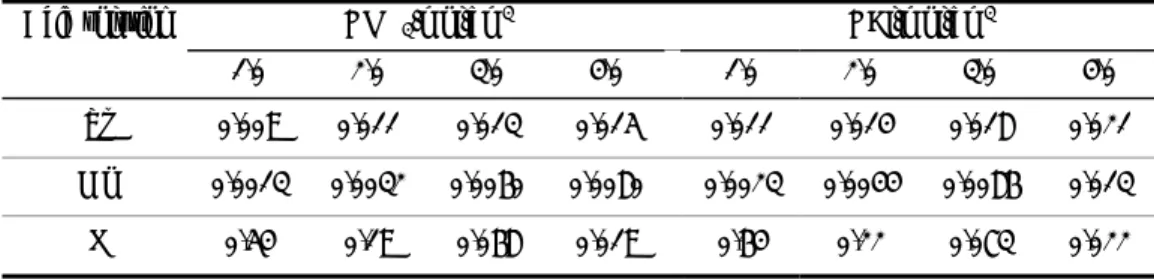
Table 2 shows the dissolved content of ZMPP in acids. In Fig.1, the losses of ZMPP in the solution were very small, less than 0.3% for all. It indicated that ZMPP is possessed of excellent stability in concentrated acid. The sequence of the ZMPP stability in different acids is HNO3>HCl>H2SO4 .
It is the premise and difficulty in the process of preparing IS to remain the similar microcrystalline structure of IS to that of its matrix. So, during the preparation of Cs-IS, the XRD analysis of samples was conducted after every key step (Fig.1).
In these XRD patterns, every diffraction peak position is alike whereas the strength of peaks is different. Therefore, from the results the conclusion can be drawn that Cs-IS is possessed of the similar microcrystalline structure to that of ZMPP.
Ion exchange capacities of ZMPP and Cs-IS for cesium
Fig.1 X-ray diffraction patterns
Table 2 Dissolved content of ZMPP in acid solutions (mg/50cm3)
Acid solution HNO3/mol/dm3 HCl/mol/dm3
1.0 2.0 3.0 4.0 1.0 2.0 3.0 4.0
Zr 0.009 0.011 0.013 0.015 0.011 0.014 0.018 0.021
Mo 0.0013 0.0032 0.0060 0.0080 0.0023 0.0044 0.0086 0.013
P 0.54 0.19 0.068 0.019 0.64 0.22 0.073 0.022
82
Vol.7 No.1 Investigation on the preparation and properties of cesium ion –sieve*
Table 3 The IEC (Cs+) on ZMPP or Cs-IS
Medium Neutral 3mol/dm3 HNO3
SIEC(mmol/g) StIEC(mmol/g) StIEC/SIE
C(%) SIEC(mmol/g) StIEC(mmol/g)
ZMPP(NH4+) 1.73 2.07 83.6 --- 2.05
Cs-IS(NH4+) 1.58 1.82 86.8 --- 1.83
ion were compared not only in the neutral solution, but also in 3 mol/dm3 HNO3 solution. As shown in Table 3, Cs-IS holds the high cesium ion exchange capacity from its matrix. The IR spectra of ZMPP (Cs+) and Cs-IS (Cs+) were shown in Fig. 2.
They are very similar. Bands around 3440 cm-1 and 2930 cm-1 were due to the symmetrical and anti-symmetrical stretching vibrations of water molecule with hydrogen bonding. The band at 1640 cm-1 was assigned to free water. The strong and broad band around 1000-1100 cm-1 was due to P-O-P deformation vibration; very weak bands around 900 cm-1, 800 cm-1 and 760 cm-1 were observed indicating the presence of Mo-O-Mo; bands at 600 cm-1 and 400 cm-1 were assigned to Zr-O stretching vibrations.
In the IR spectrum of Cs-IS (Cs+), P-O-P deformation vibration and Zr-O stretching vibrations were stronger, and
around 1640 cm-1 vibration was weaker, around 3440 cm-1 and 2930 cm-1 vibrations were stronger than those in the IR spectrum of ZMPP (NH4). This showed that after being sited at 300℃, the microcrystalline structure of Cs-IS (Cs+) is not different from that of ZMPP(Cs+) except for losses of some adsorptive water.
Fig.2 IR spectra of ZMPP and Cs-IS
As the data in Table 4 indicated, Cs-IS selectivity for cesium ion is larger than that of ZMPP. For example, the rate of exchange for Cs+ on ZMPP was 21.6%, while on Cs-IS it was 40.3% at V/m=100cm3/g. It is clear that Cs-IS has much more special exchange sites for Cs+ ion in its microcrystalline structure.
4 Conclusion
Zireonyl molybopyrophosphate (ZMPP), as the matrix of Cs-IS, was prepared under the optimum synthesis conditions, and a new Cs-IS was developed. The results of XRD analysis showed that Cs-IS is possessed of the similar microstalline structure to ZMPP. The IR spectra indicated the presence of the bonds of Zr-O, P-O-P, and Mo-O-Mo in Cs-IS. From the investigation on the properties of Cs-IS, it was known that Cs-IS not only carries on good stability in acid and high exchange capacity from ZMPP, but also behaves superior selectivity for cesium ion by special chemical sieve-making method. It is suitable for the utilization in the highly saline system of HLLW. Therefore, Cs-IS is one of the most promising and new ecomaterials for the cesium –137 removal directly from HLLW.
References
[1] Mishra S. P., Tiwary D.: Ion exchangers in radioactive waste management. Radiochim. Acta 69, 121-126 (1995).
Table 4 Exchange of main metal ions in the simulated HLLW with ZMPP or Cs−IS (V/m=100)
ZMPP(NH4+) Cs−IS(NH4+)
Metal ion Concentration Concentration Rate of Separation Concentration Rate of Separation before
exchange
after
exchange exchange η factor βCs/M after exchange exchange η factor βCs/M
(g/dm3) (g/dm3) (%) (g/dm3) (%)
Na+ 51.2 49.8 2.73 10 50.1 2.15 31
Cs+ 1.76 1.38 21.60 1.0 1.05 40.30 1.0
Ni2+ 8.2 8.15 0.60 45 8.15 0.60 110
Cr3+ 2.0 1.97 1.50 18 1.98 1.00 67
83
原子力バックエンド研究 March 2001
[2] Sylvester P., Clearfield A.: The removal of strontium and cesium from simulated hanford groundwater using inorganic ion exchange materials. Sol. Extra. Ion Exch.
16(6), 1527-1539 (1998).
[3] Behrens E. A., Sylvester P., Clearfield A.: Assessment of a sodium nonatitanate and pharmacosiderite-type ion exchangers for strontium and cesium removal from DOE waste simulants. Environ. Sci. Techno. 32, 101-107 (1998).
[4] Vaňura P., Makrlík E.: Extraction of cesium by a nitrobenzene solution of sodium bis-1,2-dicarbollyl-cobaltate in the presence of 15-crown-5.
J. Radio &. Nuc. Chem. 241(2), 369-372 (1999).
[5] Grunder M. et al.: Simultaneous removal of technetium and cesium by functionalized calixarenes from acidic liquid waste. J. Radio. Nuclear Chem. 241(1), 59-67 (1999).
[6] Bortun A. I. et al.: Modified titanium phosphates as cesium selective ion exchangers. Sol. Extra. Ion Exch. 15(5), 895-907 (1997).
[7] Mimura H. et al.: Ion-exchange properties of potassium nickel hexacyanoferrate(Ⅱ) compounds. Sol. Extra. Ion Exch. 16(4), 1013-1031 (1998).
[8] Mardan A. et al.: Preparation of silica potassium cobalt hexacyanoferrate composite ion exchanger and its uptake behavior for cesium. Separation Purification Technology 16, 147-158 (1999).
[9] Mimura H. et al.: Selective removal of cesium from highly concentrated sodium nitrate neutral solutions by potassium nickel hexacyanoferrate (Ⅱ)-loaded silica gels. Sol. Extra.
Ion Exch. 17(2), 403-417 (1999).
[10] Satyanarayana J., Murthy G. S., Sasidhar P.: Adsorption studies of cesium on a new inorganic exchanger ammonium molybdophosphate – alumina (AMP – Al2O3).
J. Radio. & Nucl. Chem. 242(1), 11-16 (1999).
[11] Orechovaskά J., Rajec P.: Sorption of cesium on composite sorbets based on nickel ferrocyanide. J. Radio.& Nucl.
Chem. 242(2), 387-390 (1999).
[12] Wang R. S.: Lead Ion-Sieve. Chinese Patent, No. ZL 92 1 02475.4 (1992).
[13] Zhang B. Q.: Ionic-exchange behavior of MnO2 and selective adsorption of lithium ions by MnO2 ionic sieve.
Chinese J. Applied Chem. 15(5), 98-100 (1998).
[14] Yao X. et al.:. Studies on new inorganic ion exchangers containing phosphorous ( Ⅶ ). Chem. J Chinese Universities 16(5), 458-461 (1989).
84