法政大学情報メディア教育研究センター研究報告 Vol.22 2009年 47 http://hdl.handle.net/10114/3060
Copyright © 2009 Hosei University
環境に配慮したフルードパワーシステムの限界設計に関する研究 -気泡除去装置内の流れ解析-
Environmentally Friendly Design of Hydraulic Systems -Numerical Analysis of Flow in Bubble Eliminator-
田中 豊1) 鈴木 隆司2) 永石 晃一3)
Yutaka Tanaka, Ryushi Suzuki, Kohichi Nagaishi
1)法政大学デザイン工学部システムデザイン学科
2)(株)オーパスシステム
3)法政大学システムデザイン研究科システムデザイン専攻
Air entrainment in working fluids has greatly detrimental effects on function and lifetime of the fluid power components and systems. It is important to eliminate the air bubbles from the working oil to preserve oil quality, system performance, and to avoid possible damage of the components. A newly device using swirl flow for bubble elimination capable of eliminating bubbles and of decreasing dissolve gases has been developed. We focus on the technical issue for the shape of bubble eliminator from numerical analysis of flow in bubble eliminator.
Keyword : Swirl flow, Numerical analysis, Bubble eliminating
1. はじめに
フルードパワーシステムの作動流体である作動油 はパワーの伝達媒体として不可欠である.近年では,
環境・エネルギーへの配慮から,建設機械を中心に タンク容量を抑えた設計の必要性が高まっている.
1)こうした設計下では,作動油に含まれる気泡や泡 などが原因となり,熱による作動油の温度上昇や劣 化,システムの性能低下など,多くの問題を引起す ことが指摘されている.著者らの一人は,油圧回路 下流にインラインで計装して積極的に油中気泡を除 去する,気泡除去装置(Bubble Eliminator)を開 発し,作動油の温度上昇・劣化抑制効果を試験して きた.2)そして油中気泡の除去がすることで作動油
の温度上昇・劣化抑制効果があることを検証した.
本報では,気泡除去装置の気泡除去性能を評価す るために作動内部の流れの様子や気泡の挙動の数値 解析を行ったので,その結果を報告する.
2. 気泡除去原理
Figure 1 は気泡乗除装置断面図である.気泡除去
装置は主に,流入口部の円筒体とそれに続くテーパ ー管路部および下流の口径管路部より構成されてい る.所要の流入流量で流入部円筒体内部に接線方向 から気泡を含んだ作動油が混入されると,円筒体内 部に旋回流が形成され,それによって発生した遠心 力により,比重の軽い油中気泡が中心軸付近に集ま る.さらにテーパー管路部で旋回半径を小さくする ことにより,気泡は中心軸付近に移動する.また,
中心軸付近の圧力は,テーパー管路部の終わる付近 でもっとも小さくなり,下流に向かっていったん上 昇回復しその後緩やかに下降する.したがって,気 原稿受付 2009年3月5日
発行 2009年3月31日
法政大学情報メディア教育研究センター
48
Copyright © 2009 Hosei University 法政大学情報メディア教育研究センター研究報告 Vol.22 Fig.2 Numerical Analysis Model
Table 2 Dimension of Numerical Analysis Model
D D1 T X Y L L1 L2 L3
Case [mm]
1 16 9 4 2 4 240 4 9 227 2 16 9 4 2 4 240 4 18 218 3 16 9 4 2 4 240 4 27 209 4 16 9 4 2 4 240 4 36 200
Table 3 Fluid Property
流量 [l/min]
レイノルズ数 Re [-]
6 454
泡はテーパー管路部の上流の流入部付近に集中し,
気泡柱を形成する.この気泡柱を,流出口と反対に 設置した放気口より排出する.この時に流出口に設 けた弁を絞ることで背圧を与えることにより少量の 作動油とともに気泡を分離して除去することができ る.このため特異な逆圧力勾配が本装置の性能に大 きな影響がある.
Fig.1 Principle Bubble Eliminator
3. 数値解析手法
本報で行った数値解析では,連続の式,ナビエ・
ストークス方程式およびエネルギー保存側を有限体 積法により離散化したアルゴリズムを用い,逐次反 復法により連続相を作動油とし分散相を気泡として 気液二相流のオイラー混相流の定常計算を解析ソフ
トウェア STAR-CD により行った 3).座標系は,管
路断面をx-y平面,管路中心をz軸にとる三次元直 交座標とした.数値解析に用いた流体の物性条件は
以下のTable 1のように定めた。
作 動 油 は 出 光 興 産 ダ フ ニ ー ス ー パ ー ハ イ ド ロ
32HOの40℃時の物性値を用いた。動粘度はWalther
の以下の実験式を用いて算出した.なお本解析にお いて気泡の浮力は考慮しない.
T m n
k ) log log(
log +
ここで,
ν:動粘度[mm2/s] T :絶対温度[K]
k,n,m:作動油によって決まる定数
である.
Table 1 Test Condition
物性条件 作動油 気泡 動粘度 [mm2/s] 31.13 13.35×10⁻⁶ 密度 [kg/m3] 846.5 1.204 気泡径 [mm] - 0.3 体積分率[%] 97 3
4.解析モデルと条件
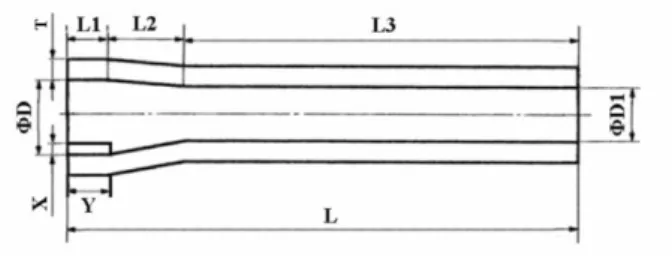
Figure 2は本研究で用いられていたモデル,Table
2 は計算を行った各寸法である。このように4種類
の形状の気泡除去装置について解析を行った.
また Table 3 は2つの流入口から与えた総流量と
代表長さを下流の口径とした際のレイノルズ数 Re の計算結果である.
5.解析結果及び考察
解析結果の一例をFigure 3に示す.圧力分布の解 析結果から,圧力分布は,装置上流(流入口付近)
が装置下流(流出口付近)と比べ極めて高いことが 見て取れる.装置中心軸では一度圧力が下がり回復 に向かう傾向が見て取れる.圧力が減少する現象は 旋回流の旋回強さが大きく現れていると考えられる.
また,各Caseにおいても同様に下流に向かうにした がって動圧が回復していると考察できる。これは試 験の結果と大きく外れていないため,解析における 方向性は間違っていなかったと考えられる.
また,流出口の設定圧を10kPaとしているため,
流出側では全体として設定圧まで戻る結果となって いる。
49
Copyright © 2009 Hosei University 法政大学情報メディア教育研究センター研究報告 Vol.22 Fig.3 Result of Numerical Analysis 6.おわりに
気泡除去装置内の流れ解析を行った。本解析におい ては,圧力回復において粘性による散逸が大きいと 考えられる.これは,作動油と気泡を総合流体と考 えると作動油と気泡の密度が大きく違うため気泡の 体積分率が増加すると流体全体の密度が著しく低下 するため粘性が減少する.すると流体の角運動量が 減少し旋回強さも減少すると考えられるからである.
そこで気泡の体積分率を上昇させ解析することで性 能の差を擬似的に考察できる.
また,モデルに関しても流入部円筒管の中心軸に 集まった気泡を排出する管を設けることにより除去 効率を上昇させることができる.そうしたモデルを 作成することや,粘性による影響を考慮したモデル 作りが必要となる.
参考文献
[1]松山雄一,出光トライボレビュー,No27,(2004),12-1 [2]鈴木隆司,油圧と空気圧,24巻3号(1994), 340-345
[3]本彦文,田中豊,新井和吉,鈴木隆司,"気泡除去装置
内旋回流れの数値解析(気泡除去性能の評価)",
法政大学計算科学研究センター研究報告第12巻 1999年