2018
年1
月30
日2017
年度聖路加国際大学大学院修士論文Evaluation of the Behavior Change of Midwives After Introducing Early Essential Newborn Care at an Urban Tanzanian Healthcare Facility
16MW011
福冨 理佳Table of Contents
I. Introduction ... 1
1.1 Background ... 1
1.2 Statement of the problem ... 4
1.3 Goals ... 4
1.4 Objectives ... 5
1.5 Rationale ... 5
II. Literature Review ... 7
2.1 Newborn care in Tanzania ... 7
2.2 Factors affecting implementation of practice of health care workers in Tanzania 8 III. Methods... 10
3.1 Study Design ... 10
3.2 Study period ... 10
3.3 Setting and Samples ... 11
3.3.1 Setting. ... 11
3.3.2 Samples. ... 12
3.4 Local collaboration ... 12
3.5 Data Collection ... 13
3.5.1 Participant observation. ... 13
3.5.2 Questionnaires. ... 15
3.6 Data Analysis ... 15
3.7 Ethical Considerations ... 16
3.7.1 Procedures for obtaining informed consent. ... 16
3.7.2 Protection of personal information. ... 17
3.7.3 Risk. ... 18
3.7.4 Benefit. ... 18
3.7.5 Ensuring the reliability of research. ... 18
3.7.6 Dissemination of research results. ... 19
IV. Results ... 20
4.1 Study setting and participants ... 20
4.1.1 The study setting. ... 20
4.1.2 The characteristics of participants. ... 21
4.2.2 Actual team action process... 25
4.2.3 The gap between the plans and actual action. ... 29
4.3 Practical behavior changes of EENC implementation ... 35
4.4 The change of perspective toward EENC by reflected questionnaire survey ... 38
4.4.1 Comparison of awareness of EENC. ... 40
4.4.2 Comparison of perception for EENC practice. ... 42
4.4.3 Comparison of self-confidence of midwives on EENC practice. ... 43
4.4.4 Comparison of attempted practice of EENC. ... 44
4.4.5 Barriers and needs for EENC adoption. ... 45
V. Discussion ... 47
5.1 Midwives’ degree of EENC implementation ... 47
5.2 “Mid-stream” EENC-driven correction of existing practice ... 48
5.3 The barriers for adopting a new practice in the field ... 49
5.4 Vision for the EENC program ... 53
5.5 Limitation of the study ... 54
VI. Conclusion ... 55
List of Tables and Figures
Table 1 Baseline Characteristics of Study Participants 22 Table 2 EENC Components as a Percentage of Practical Implementation 36 Table 3 Characteristics of the participants in Questionnaire Survey 39
Table 4 Comparison of Awareness of EENC 41
Table 5 Comparison of Perceptions for Effectiveness and Feasibility of EENC 42
Table 6 Comparison of Self-Confidence 43
Table 7 Comparison of Attempted Practice on EENC 44
Table 8 Possible Barriers of EENC Implementation 45
Figure 1 Timeline of data collection 14
Figure 2 Time frame of initial scheduled plan and actual team action 24
Abbreviations
EENC Early Essential Newborn Care MDG Millennium Development Goal
MoHSW Ministry of Health and Social Welfare (in Tanzania) SDG Sustainable Development Goal
UNICEF United Nations Children’s Fund WHO World Health Organization WPRO Western Pacific Regional Office
Definition of Terms
Newborn death The death within 28 days of birth of any live-born baby regardless of weight or gestational age (World Health Organization [WHO], 2014b)
Stillbirth A baby born with no signs of life, weighing more than 1000 g or with more than 28 completed weeks of gestation (for international
comparison purposes) (WHO, 2014b)
Preterm birth A baby born < 37 completed weeks gestation (WHO, 2014b)
I. Introduction
1.1 Background
Although remarkable progress has been made in recent decades to reduce the number of child deaths worldwide, a significant number of newborns continue to die annually despite the availability of feasible, evidence-based solutions (World Health Organization [WHO], 2014b). An estimated 2.9 million newborns died in 2011, accounting for 44% of the deaths of children under five (Yoshida et al., 2016). This proportion of neonatal mortality continues to increase because the neonatal mortality rate is declining at a slower rate than the mortality rate for older children (Darmstadt et al, 2014; World Health Organization [WHO], 2014a; WHO, 2014b). Further, newborn survival, health, and prevention of stillbirths were not specifically addressed in the millennium development goals (MDGs) framework and consequently received less attention and investment (Yoshida et al., 2016; Souza et al., 2014; WHO, 2014a; WHO, 2014b).
In January 2016, the 17 sustainable development goals (SDGs) of the 2030 agenda for sustainable development officially came into force. Over the next 15 years, countries will mobilize against inequality, poverty, and climate change. Another objective in the SDGs is maternal mortality—with a target mortality rate of under 70 per 100,000 live births. With newborn deaths still accounting for 44% of under-five deaths globally, newborn mortality and stillbirths required greater visibility in the SDGs. At last, in the
newborn deaths result from three preventable and treatable conditions: complications due to prematurity, intrapartum-related deaths (including birth asphyxia), and neonatal infections. More than 80% of all newborn deaths occur in Southern Asia and Sub- Saharan Africa (WHO, 2014b).
The United Republic of Tanzania in Sub-Saharan Africa is among the few
countries, which has achieved its MDG goal 4 by reducing the under-five mortality rate to less than 54 per 1,000 live births before the end of 2015 (Ministry of Health [MoH] et al., 2016). However, 44% of those deaths occurred in the first 28 days of life, and the decline in newborn mortality has been much slower than for under-five deaths overall.
The neonatal mortality rate has declined from 40 per 1,000 live births in 1999 to 25 per 1000 in 2015-2016 (MoH et al., 2016). The main cause of newborn deaths was birth asphyxia, which accounted for more than half of the deaths (Kidanto et al., 2009;
Mmbaga et al., 2012). Moreover, the maternal mortality rate has remained statistically unchanged between 2010 and 2016 (454 per 100,000 live births in 2010 and 556 per 100,000 in 2015-2016; National Bureau of Statistics [NBS], 2011; MoH et al., 2016).
Previously, to improve maternal and perinatal health, the most prioritized research questions focused on the evaluation of implementation and delivery of ongoing
maternal and perinatal health interventions. Nowadays, training and/or awareness interventions and access to interventions and/or services have become the primary research themes, as well (Souza et al., 2014). In 2014, the World Health Organization Western Pacific Regional Office (WHO WPRO) and the United Nations Children’s Fund (UNICEF) Regional Action Plan for Healthy Newborn Infants provided a platform
for countries to scale-up Early Essential Newborn Care (EENC; WHO, 2014a). EENC is a package of interventions provided to the mother and newborn that lasts for three days from childbirth (Obara & Sobel, 2014). EENC interventions are simple, low cost, and have been demonstrated to be effective in preventing newborn deaths from most common causes. EENC has three strategies: (a) “First Embrace”—which includes early skin-to-skin contact between mother and baby, proper baby warming as a result of the early contact, feeding and cord care; (b) prevention and care of preterm birth and low- birth-weight babies; and (c) prevention and care of sick newborn infants (WHO, 2014a).
EENC also aims to eliminate outdated, harmful, or ineffective practices that remain widespread. EENC focuses on improving the quality of care during and immediately after birth.
Full implementation of EENC in the Western Pacific Region is estimated to prevent at least 50,000 deaths each year (WHO, 2014a). High coverage and quality of preconception, antenatal, intrapartum, and postnatal interventions could save nearly three million newborns, stillbirths, and mothers by 2025 in 75 high-burden countries with an additional running cost of US $1.15 on a per capita basis (Bhutta et al., 2014).
EENC would not only save the most newborn lives but also prevent maternal deaths and stillbirths (WHO, 2014a). In 2016, WHO WPRO published the first biennial progress report of EENC (World Health Organization Regional Office for the Western Pacific [WHO WPRO], 2016). According to the report, EENC has been introduced to 12 countries in the Western Pacific Region. More than 27,500 health care workers have
clinical practice from seven countries with the highest burden of neonatal mortality, immediate skin-to-skin contact was practiced for 72% of newborn, and 48% sustained the practice until breastfeeding was complete. Although most newborn babies were placed in immediate skin-to-skin contact, 24% were separated prior to the first breastfeeding. However, the data varies widely with countries respectively. Of 153 facilities self-reporting data on quality improvement of care, only 22% had formed an EENC team and conducted health facility assessment. Changing practices requires clear staff roles and responsibilities, as well as restructuring working environment and
recordkeeping of those coached in EENC, but they are often missing (WHO WPRO, 2016).
The majority of maternal and newborn deaths are preventable through
implementing effective interventions. However, there are copious examples of failures to implement effective interventions in developing countries and specifically, for the purposes of this study, the United Republic of Tanzania (Vogel et al., 2016).
1.2 Statement of the problem
In Tanzania, neonatal and maternal mortality remain pointedly high. New methods of promoting effective and sustainable interventions are needed.
1.3 Goals
This study worked with midwives in an urban Tanzanian healthcare facility, and evaluated and developed coaching strategies for the implementation of Early Essential Newborn Care.
1.4 Objectives
1. To observe and evaluate midwives’ behavior change after introducing EENC at an urban Tanzanian healthcare facility
2. To identify the barriers affecting EENC adoption into the facility
1.5 Rationale
In improving neonatal care in developing nations and regions, the locus of
improvement moves from technological progress to behavioral intervention (as well as access to care). Encouraging and evaluating the adoption and implementation of international best practices (defined in this paper as the guidelines set forth in the WHO’s EENC) are the backbone of any such improvement in care and, accordingly, this study is designed as an action research to probe these questions. Community participation in project planning, implementation, and monitoring is recommended to improve the quality of care during pregnancy, childbirth, and the postnatal period for both mothers and newborns, to increase the timely use of facility care for obstetric and newborn complications, and to improve maternal and newborn health (World Health Organization [WHO], 2015). Although the use of skilled care before/during/after birth and maternal/newborn mortality/morbidity was identified, there was little information of the factors of success or failure intervention (Marston et al., 2013). Qualitative information will help fill this information gap and should be at the heart of future quantitative research.
EENC should have a positive effect in reducing the newborn mortality rate over the long term.
II. Literature Review
2.1 Newborn care in Tanzania
The main cause of newborn deaths in Tanzania was birth asphyxia, in normal birth weight babies and prematurity in low weight babies each, which accounted for more than half of the deaths (Kidanto et al., 2009; Mmbaga et al., 2012). In 2009, the Tanzania MoHSW launched the Helping Babies Breathe Training, which focuses on immediate intervention for non-breathing newborn to reduce early newborn death including asphyxia. The program contributed reduction in early newborn death in facility-based settings (Kidanto et al., 2015; Mduma et al., 2015; Msemo et al., 2013).
However, the status of newborn resuscitation in rural or home-based deliveries remain uncertain, but in fact the newborn mortality is higher.
In Tanzania, facility deliveries have been increasing from 44% in 1999 to 63% in 2015-2016, of which skilled personnel attended only 64% (MoH et al., 2016). In rural areas, 40-50% of babies were dried and approximately 30% were wrapped within five minutes. Although over 90% of babies were had their cords cut with a clean razor blade, only 50% were tied with a clean thread (Penfold et al., 2010; Shamba et al., 2014).
Despite the knowledge of the need of using sterilized equipment to reduce risk of infection to both mother and babies during delivery, use of gloves during delivery and hand washing before delivery were seldom reported (Dhingra et al., 2014). Although early initiation of breastfeeding and feeding colostrum were well practiced, skin-to-skin
mortality might be decreased by training birth attendants (Bhutta, 2005). In addition, trained packaged care was more effective to reduce stillbirths (Carlo et al., 2010). Even reduction of neonatal mortality, stillbirth, and perinatal mortality were observed as consequences of implementation of community-based interventional care packages (Lassi & Bhutta, 2015)
2.2 Factors affecting implementation of practice of health care workers in Tanzania
In Tanzania, four WHO maternal and perinatal guidelines—(a) Prevention and treatment of post-partum hemorrhaging (2012); (b) Prevention and treatment of pre- eclampsia and eclampsia (2011); (c) Induction of labour (2012); and (d) Augmentation of labor (2014)—remain ineffectively implemented (Vogel et al., 2016). According to the study, barriers to implementation of the guidelines exist in three main areas: (1) the health care system generally: access to resources; continuity of care; monitoring and evaluation; policies; and dissemination of guidelines; (2) the health care provider:
beliefs, attitudes, and buy-in about the use of guideline recommendations; knowledge and skills needed to implement the guidelines; and training, coaching, and professional development around guideline implementation; and (3) the patient/community: health- seeking behavior and preferences for care; community champions; and socioeconomic status. The factors associated with the work motivation of non-physician health care workers in Tanzania were also identified as satisfaction with salary which might be a prerequisite for any intervention to change motivation; however salary requirements
need to be satisfied before health care workers can be motivated by other factors (Chandler et al., 2009).
III. Methods
3.1 Study Design
This study methodology is an action research approach using a mixed methods consisting of (a) participant observation with midwives for their behavior on team meetings, coaching sessions and clinical EENC implementation; and (b) questionnaires to midwives to review the change of perspective toward EENC.
In this study, an action research is defined “a systematic research process that can be articulated by the researcher, involving data collection and analysis as well as reflection and discussion with co-researchers or others for the purpose of making change in a situation over time” (Moch, Vandenbark, Pehler & Stombaugh, 2016). An action research encourages a process of planning, acting, observing, reflecting and revised-planning in collaboration with the local research partners. During the study, essentially midwifery instructors; as research partners; had leadership for coaching EENC to other midwives and as well as the leadership of their clinical EENC
implementation. Planning, reflecting and revised-planning would be discussed at team meetings. The researcher’s stance was an observer as participant: basically an observer, as well as a facilitator for their activities. The researcher tried to cultivate relationships with them through participation in EENC seminar, talk and trust while staying on the ward as long as possible and understanding their community context.
3.2 Study period
The study was conducted from the end of July 2017 to the end of October 2017: in 12 weeks after a three-day EENC seminar to introduce it to the facility.
In July 2017, for the first time, there was a three-day coaching seminar to introduce EENC “First Embrace” to Muhimbili National Hospital (MNH), Tanzania. This study itself was constituted by duration from their completion of participation of the seminar to 12 weeks later.
3.3 Setting and Samples
3.3.1 Setting.
The study was conducted at MNH in Dar-es-Salaam in Tanzania. Dar-es-Salaam is the largest city in Tanzania and the largest city in eastern Africa by population, as well as a Tanzania’s commercial hub. It has a population of 4,364,541 as of the official 2012 census with an average population growth rate of 5.6 percent year-over-year from 2002 to 2012 (National Bureau of Statistics [NBS], 2011). MNH is classified as a “national teaching and referral hospital”, which is the highest-level medical institution in Tanzania offering the most comprehensive services. MNH has 1,500 beds, attends to 1,000 to 1,200 outpatients per day, and admits 1,000 to 1,200 inpatients per week (Muhimbili National Hospital, 2017).
The hospital has a maternity division consisting of labor, neonatal, eclampsia, antenatal, and postnatal wards in a four-story building and an ancillary obstetric theatre.
The labor and eclampsia wards mainly handle deliveries. The division has a manager and an in-charge midwife placed at each ward. The maternity wards have 10,000-12,000 deliveries per year with an average of 30 per day.
3.3.2 Samples.
Midwifery instructors.
Midwives who had participated in the EENC seminar were recruited as research partners. Objectives, methods and ethical considerations of this study were explained to each potential participant after the seminar. Local collaborators selected them in
advance. They were formed to regularly assess and improve the quality of care at ward in the hospital. We worked together on implementation of EENC at a maternity ward with an action research as Midwifery instructors. Approximately six to 10 midwifery instructors were predicted. They were staffs working at a maternity ward as midwives at MNH.
Midwives.
We recruited all other midwives who work at the ward at the setting hospital and participate in any capacity in deliveries at the ward. Objectives, methods, and ethical considerations of this study were explained or distributed to each potential participant, for the day-time shift for a week. The midwives who consented to the research were intended of behavioral observation during work. There were approximately 100 midwives working at the ward on two different shifts: daytime and overnight shift.
3.4 Local collaboration
Dr. Sebalda Leshabari, the Dean of Muhimbili University of Health and Allied Sciences School of Nursing (MUHAS SON), is a local collaborator for this research.
MUHAS SON and St. Luke’s are sister schools and have the memorandum of understanding for research collaboration. Dr. Leshabari is a leading researcher of
maternal health and midwifery and she was the local contact when participants wanted to ask questions.
Ms. Ecstasy Mlay, the registered nurse tutor of MUHAS SON, attended “WHO and Multi-country Joint Seminar on Early Essential Newborn Care” held at St. Luke’s in Japan on October 2016. She had already taken the three-day EENC coaching seminar and had been a facilitator of EENC. She was the local contact as well, and played the role of coordinator for the setting facility and researcher. During the data collection and analysis, she was asked for assisting to interpret the remarks’ data.
3.5 Data Collection
3.5.1 Participant observation.
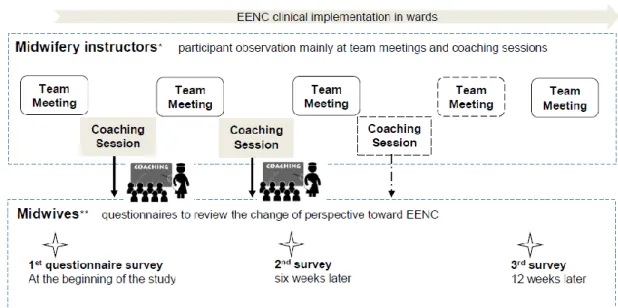
Figure 1 shows timeline of data collection. Participant observation was made from the first team meeting with midwifery instructors after completion of their participation of EENC seminar. Observations was made of the regular team meetings; its strategies (i.e. when, how and who) should be planned at the first. In the first team meeting, goals of implementation rates of each EENC demonstration and a coaching strategy would be developed for EENC implementation at the ward. During subsequent meetings, the current situation of coaching and EENC practice would be informed and reflected while identifying and addressing the environmental and sociological barriers. Over weeks, the other team meeting would be conducted to evaluate the goals to be achieved and the
strategy. Team meetings were conducted in English and were taped, and the recordings were used in combination with notes taken during the meetings.
Observations were also made of midwives’ behavior on coaching session, and on clinical EENC implementation on regularly scheduled observational window; twice a week during day-time shift from 12 pm to 3 pm, which were used both for study data as well as for informing the real-time iterative improvement of coaching methods.
Description of the process and context was made with a field notebook. Midwives’ other behavior on their daily work relevant to EENC was incidentally observed and recorded with the note as well.
Figure 1. Timeline of data collection. After completion of EENC seminar, midwives having participated in the seminar became midwifery instructors to assess and improve quality of care in the maternity ward. From their first team meeting, data collecting was begun with
monitoring and recording in this study. Participant observation was mainly made of the regular team meetings with midwifery instructors and coaching sessions; its schedule should have been planned at the first meeting; as well as EENC clinical implementation in a ward. Observation for EENC clinical implementation was conducted on regularly scheduled observational window. The questionnaires to midwives regarding their perspective toward EENC were collected three-time total.
In consideration of mothers, posters informing that the researcher may have been present at the scene of receiving care to observe midwives’ clinical practice were put up in noticeable places (Appendix E; the poster was translated Swahili by a local
collaborator.).
3.5.2 Questionnaires.
The three-time self-administered questionnaire to midwives, which includes (a) sociodemographic characteristics (age, gender, qualification, work experience and participant in EENC seminar), only in the first questionnaire; (b) perspective
(awareness, perception for effectiveness and feasibility, self-confidence and attempted practice) toward EENC; and (c) possible barriers and suggestions for EENC adoption, to assess its changes over time and to evaluate coaching method (Appendix F & G). The first was on the beginning of the study, the second was six weeks later and the third 12 weeks later.
These questionnaires were handed to midwives and sealed questionnaires were anonymously dropped in a locked collection box.
3.6 Data Analysis
Qualitative data from participant observation were recorded and analyzed sequentially—i.e. meeting/coaching cycles. These results were used to describe the process of action and the behavior change of midwives.
Questionnaires addressing the midwives’ perspective toward EENC contributed
examine the change over time of perspective toward EENC using x2 test and Wilcoxon signed rank test. Additionally, suggestions to make EENC sustainable were asked with solicited with room on the survey for description/elaboration. The descriptive answers were summarized by integrating all periods and coded into categories in order of descending prevalence. Moreover the Kruskal-Wallis test was used to assess the variation of EENC clinical implementation.
All data analysis was conducted collaboratively with supervision. To establish the credibility of the study, member checking was conducted through feedback from both midwives as well as midwifery instructors to verify interpretation of all the data and study results.
3.7 Ethical Considerations
The study was guided by sound ethics such as voluntariness, anonymity, harmlessness, and protection of privacy and personal information.
EENC as a program is based on both the promotion and sanctity of human life, and this proposed study itself is already designed to include intervention on the part of the researcher. Therefore, in any incidences in which there was an immediate threat to the mother or newborn’s health or life—and during which personal intervention by the researcher at the immediate expense of objectivity in data collection occurs—the researcher would always make the decision to assist in any such emergency.
3.7.1 Procedures for obtaining informed consent.
Recruitment was conducted based on the principle of voluntariness. Sealed consent forms were anonymously dropped in a locked collection box. Participants had
opportunities to refuse or withdraw consent anytime by submitting a refusal form (Appendix D). The refusal form was handed to participants at the beginning of the study.
Only the researcher knew their decision making. Midwives who declined to participate in the study would never suffer detrimental treatment.
Midwifery instructors.
Objectives, methods, and ethical considerations of this study were explained to each potential participant after the three-day EENC seminar, and consent was required for participation (Appendix B).
Midwives of the maternity ward.
Objectives, methods, and ethical considerations were explained first to the in- charge (head nurse), and then distributed to each potential participant during day time shifts for a week (Appendix C). The researcher stayed at the ward during the recruitment period to deal with questions from the participants. Although all midwives were
incidentally observed, only those who consented were monitored and recorded.
3.7.2 Protection of personal information.
Data collection and management have been conducted based on the principles of anonymity, protection of privacy, and personal information. Data was collected only for this study and has kept and managed in a private locker and password-protected
computer. All the recorded data was anonymized and identified only through serial numbers. The data and a collation list to identify individuals were kept separate and at
The discussion at team meetings was recorded and notes were taken in real time.
After transcribing, the data was eliminated from the IC recorder.
3.7.3 Risk.
Participants may have put energy for changing their clinical practice, and may have felt pressure associated with judgement and observation of their clinical practice.
There was low risk for physical suffering and no risk of financial burden. However, should any problems related to the study occur, the local collaborators and the
researcher would respond in good faith to the best of their abilities.
3.7.4 Benefit.
Participants could have improve their knowledge and skills of EENC. Sustainable EENC implementation should reduce neonatal mortality, benefitting both the hospital and society at large.
3.7.5 Ensuring the reliability of research.
There were no corporate, governmental, nor religious conflicts of interest related to this study. All the data was kept for five years after completion. Ethical clearance and permission were obtained from 1) the Ethics Committee of St. Luke’s International University (Approval number: 17-A027); 2) the Ethics Committee of Muhimbili University of Health and Allied Sciences (Approval number: 2017-09-04/AEC/Vol.Ⅻ /67); 3) National Institute of Medical Research (Approval number: NIMR/HQ/R.8a/Vol.
Ⅸ/2574); and 4) Tanzania Commission for Science and Technology.
3.7.6 Dissemination of research results.
All anonymized data and results have been available for inspection upon request of the participants. Research findings were targeted for publication in peer-reviewed academic journals.
IV. Results
The chapter describes study results consisting of (a) the process of team actions for dissemination of the EENC program; (b) practical behavior changes of EENC
implementation; and (c) the change of perspective toward EENC by reflected the questionnaire surveys.
4.1 Study setting and participants
4.1.1 The study setting.
The study was conducted at Muhimbili National Hospital (MNH) in Dar-es-Salaam in Tanzania. At the wards in the hospital, required equipment and supplies for EENC were sufficiently available: clean bed linens, clean water supply, soap, gloves, delivery instruments, clean towels for drying and covering the baby, neonatal self-inflating bag and masks, cord ties or clamps and forceps, disposable syringe with needle, and oxytocin. Of the required equipment, only a room thermometer, clean towels to dry hands, and a clock were missing. Alternatively, the staff used backside of outer
packages of sterilized gloves for drying their hands after washing. Clocks were hanging on the wall; however, they were invisible from delivery beds and all are running out of batteries. The staff used their smartphone to call for time of birth. As such, the missing equipment was being handled with workarounds. Five neonatal self-inflating bag and masks were available in total, which were considered generally sufficient.
4.1.2 The characteristics of participants.
Baseline characteristics of the study participants are shown in Table 1. A total of 94 midwives out of 97 gave their consent to be included for observation and the
questionnaire surveys. A majority of the participants were female (88.3%). Participants in their thirties were the largest group by age (38.3%), over half had spent less than a decade as midwife (53.2%), and over half had spent less than a decade employed at the facility (53.2%). Regarding educational attainment, the largest group had a post high- school two-year diploma (66.0%) and the second largest had college degree courses (17.0%).
Table 1
Baseline Characteristics of the Study Participants (n=94)
Characteristics n (%)
Age (yr)
24-29 25 (26.6)
30-39 36 (38.3)
40-49 18 (19.1)
50- 10 (10.7)
Missing Value 5 (5.3)
Gender
Female 83 (88.3)
Male 9 (9.6)
Missing Value 2 (2.1)
Qualification
Certificate 9 (9.6)
Diploma 62 (66.0)
Digree 16 (17.0)
Others 2 (2.1)
Missing Value 5 (5.3)
Ward
Labor 17 (18.1)
Neonatal 19 (20.2)
Eclampsia 12 (12.8)
Antenatal and Postnatal 21 (22.3)
Obstetric Theatre 21 (22.3)
Missing Value 4 (4.3)
Length of Career as Midwife (yr)
0-4 27 (28.7)
5-9 23 (24.5)
10-14 23 (24.5)
15-19 3 (3.2)
20- 10 (10.6)
Missing Value 8 (8.5)
Length of Career at the Facility (yr)
0-4 31 (33.0)
5-9 19 (20.2)
10-14 27 (28.7)
15-19 1 (1.1)
20- 10 (10.6)
Missing Value 6 (6.4)
4.2 The process of team action for dissemination of EENC program
After completion of the three-day EENC seminar, those who participated in the seminar became members of the EENC team: midwifery instructors. We, the team, took actions to promote the EENC program to assess and improve quality of care for 12 weeks on site. The team consisted of seven female midwives ranging 28 to 52 years of age including three in-charge midwives. Figure 2 shows the time frame of (a) initial scheduled plans; and (b) actual team action; the details are described in the text.
Additionally, the gap between the plans and action are described. Linguistic data is enclosed in quotes.
4.2.1 Initial scheduled plans.
At the first team discussion meeting on the final day of the seminar, a coaching strategy was developed for EENC implementation on site. In the EENC program, the team meeting was decided to be held at least monthly. During subsequent meetings, the current situation of coaching sessions and EENC implementation would be evaluated with attention to identifying and addressing the environmental and sociological barriers affecting implementation. The coaching sessions would be planned immediately after the first team meeting and be held regularly to reach every midwifery staff, which would consist of simulation-based training.
.
Week 1 2 3 4 5 6 7 8 9 10 11 12
Initial Scheduled Plan
Actual Team Action
Data Collection
Figure 2. Time frame of initial scheduled plan and actual team action. The timing for data collection is shown at the bottom.
Training (Lecture &
Coaching Session) Prepare for Training
Lecture For lecture
・create slides
・prepare materials
For session
・discuss with the division manager
For session
・set a time & venue
For session
・prepare materials
Observation of EENC implementation
(the 1st period) (the 2nd period)
Questionnaire survey 1 survey 2
(the 3rd period)
survey 3 Team Meeting 1
Coaching Session 1
Coaching Session Coaching Session 4
Coaching Session 3 Coaching Session 2
Team Meeting 5 Team Meeting 4
Team Meeting 3 Team Meeting 2
Team Meeting 2 Team Meeting 1
Team Meeting
Team Meeting Training
Prepare for Training
4.2.2 Actual team action process.
The first week: The first team meeting was held on the final day of the three-day EENC seminar. All of the anticipated midwifery instructors participated in the meeting to discuss a coaching strategy. The team discussed three principle plans (a) to make a lecture based on EENC a regularly scheduled meeting at the maternity division; (b) to hold nearly the same session as the three-day seminar in one day for the field’s
midwives; and (c) to provide on-the-job training for midwives of each ward where the midwifery instructors belonged. The maternity division holds a morning meeting once a week to share information across the entire ward, which usually has around 20 staff.
Two of the midwifery instructors who were the oldest and were in-charge midwives took the role as leaders. As to the lecture and coaching sessions, they would propose to ask the maternity division manager to arrange the date for the lecture and to consult about planning the sessions. Additionally, they concluded that every midwifery
instructors would try to conduct on-the-job training to spread EENC best practice across their respective wards.
The second to fourth week: At the beginning, I, as the researcher, took a stance as an observer without active involvement. I stayed around wards during these periods for observation. The team meeting was not held. Neither the coaching sessions nor on-the- job training were observed.
The fifth week: At the beginning of the week, one of the team leaders informed
presentation at the meeting. Our lecture was postponed to the following next week.
Meanwhile, the second team meeting was scheduled on that day by my encouragement.
The sixth week: One of the team leaders began preparations by asking me for the slides introducing EENC. We revised the slides together in accordance with a one hour time limit, emphasizing practical techniques and including photos from the three-day seminar. The team leader attempted to arrange each role for the midwifery instructors on the lecture as well.
Approximately 30 midwives attended and five of the midwifery instructors made a lecture for them. In the first 15 minutes, EENC’s 21 sequential components and its supporting evidence were explained and thereafter two clinical scenarios were
simulated with birthing manikins by the team. During the simulation, some participants were taking notes and others were taking video with their smartphones. The lecture was carried out within the allotted time frame. A statement below was feedback from one of the participants.
‘It was a great presentation. You taught us an updated knowledge and skills which what I was surprised the most was suctioning after birth should not be a routine care. I was taught to do in almost every cases. And EENC seems very effective for mother and baby and also very easy. We should provide this care for patients right away.’
After the lecture, we had a team meeting discussing our progress of training plans so far. The team was willing to hold a practical coaching session and to provide on-the- job training, however we faced some difficulties in carrying them out. The meeting was concluded by consulting the division manager regarding our training plans.
The seventh week: No action was taken on the plan by the team. One of the team leaders had taken a four-week holiday and the division manager was out of town for a week.
The eighth week: Another team leader and I discussed the training plans with the division manager. As we expected, discussion was focused on the venue and fund for holding a session and discussed how to avoid the under-participation of the one-day session. I suggested using their own resources in the hospital such as the meeting room or a delivery room at labor ward and to shorten the length of the session so that staff could participate during their daytime working shift. They agreed with the suggestion and proposed a two-hour session every day in a week. One staff from each ward on each day was proposed to participate in the sessions. The session was scheduled three weeks later (the 11th week) when both of the team leaders would be present. The manager would inform all in-charge midwives of the session and the leader would inform their own co-workers as well.
The ninth week: Another team leader left for a two-week holiday. During the period, the leaders were absent on site. The midwifery instructors hadn’t been informed of the session that had been planned the previous week. I informed them in person and followed up with a text message.
The 10th week: One leader returned from her four-week holiday. The session plan was discussed in detail. An appropriate time would be asked to in-charge and ward midwives, and a delivery room—as venue consisting of three delivery beds—would be
next week, it conflicted with another training seminar that an aid donor country would hold for Kangaroo-mother-care. Our session was forced to be postponed a couple of weeks.
The 11th week: No team action was observed until I asked the team by text
message to confirm if the manikins had been prepared for the session. They asked me to source them from school or somewhere available. I arranged for manikins from the office of the Tanzanian Midwifery Association located on the hospital property.
The 12th week: In the sessions, each staff from eight wards including labor, neonatal, eclampsia, obstetric theatre, two antenatal, and two postnatal were invited. A total number of the participants were 15 for five days, an average of three a day. The team leaders coordinated at least three facilitators each day. However, only three midwifery instructors contributed to facilitate the sessions. Some were unable to manage, others seemed hesitant in joining to facilitate. Moreover, the leaders could not show up. A Tanzanian academic who is also an EENC facilitator and a Japanese midwifery volunteer were present for support and took on the role of a facilitator as needed. Each facilitator coached up to three participants using a delivery bed and manikins. First, EENC sequential components and its evidence were briefly instructed and simulated by a facilitator following the program instruction. Second, each
participant practiced EENC techniques with coaching at least two times until they mastered the technique. The questions confirming the evidence of drying baby immediately, direct skin-to-skin contact, the timing of removing a pair of gloves, and delayed cord clamping were often asked by the participants during practice. At last, if
time allowed, they simulated the scenario of a non-breathing baby requiring newborn resuscitation within one minute. The session was usually concluded half-way through the second scenario.
‘This is the first time for me to take an active training here. I am not always choosed [chosen] for trainings outside, but this was a great opportunity for me really. I want to conduct a training like this at my ward to share this newborn care with my co- workers.’
4.2.3 The gap between the plans and actual action.
This section describes the gap between the initial scheduled plans and the actual team action: (a) failure of regular team meetings; and (b) delay in the training plans.
Failure of regular team meetings.
According to EENC program, team meetings would be held regularly at least monthly to assess and improve the quality of care. Although two of the members played a central role in the team, the meeting was not held without persuading by researcher for over a month. Moreover, other midwifery instructors assumed hands-off attitudes
toward all actions as team. One of the midwifery instructors mentioned;
‘X and Z [names of the team leaders] will provide direction for us. We just follow what they tell us. They are our boss.’
Each of the midwifery instructors needed initiative to take action for their promotion.
They were aware of the need for leadership and supervision to proceed for adopting something new as well;
important thing is supportive supervision should be carried out. We need a strong leadership, otherwise it will never be achieved, because we don’t know how to and we don’t want to do extra work without any understanding and cooperating of co- workers.’
Moreover, a busy working environment caused by shortage of manpower might have dissuaded them from taking initiative. By way of example, a baby was born with precipitate delivery on a bed during observation. Two midwives were in charge for two postpartum and four parturient mothers at the same time. When the mother screamed calling a midwife, one was delivering another baby and another was doing
perineorrhaphy for other. An intern came from the next delivery room holding a delivery kit and picked up the baby then started to dry. The researcher was called to assist that situation transpiring for almost half a day. At the labor ward, nine parturient mothers were supported in their deliveries by only three midwives at the most. The midwives conducted all the deliveries including vacuum extraction and vaginal repair with perineorrhaphy. Most of the time, they didn’t record the partograph for labor. The midwives were quite burdened by the number of patients they had to attend to.
On the other hand, occasions where there were only a few patients or no patients for hours were occasionally observed. The midwives were passing the time by sitting around a table chatting. One of the midwifery instructors commented:
‘Do you know how long it takes from my home to here? Two hours. Every time I wake up at 4:15 and take a bus by 5 [am]. You know I have to be here by 7. I’m already tired before starting to work every day.’
They rotated in 12 hour from 7 am to 7 pm for daytime shifts. Some staff were late for the start of workday whether by heavy traffic jam or no provided reason. Due to the cost of housing given development in the city center, almost all staff could not afford to live in the city.
‘I don’t wanna do extra work unless my boss pay extra money for me, because I’m very tired all the time.’
Exhaustion from commuting proved a serious burden and lessened the motivation for extra work.
The participants were too unsatisfied with their wages to get motivated to adopt something new practices under the duress of their already busy working environment.
‘Our salary is not enough. Even I try very hard to provide good better care for mother and baby like EENC, I can’t get money. Of course I want to help them so much but we don’t have enough manpower [and] enough time. It’s difficult for us to do what we want as midwife. When I try to do my best, I only get tired and waste my time unless someone support me like giving me money and working together.’
During observation, almost all midwives cared about the academic qualification and salary of the researcher. Their wage was determined by seniority and academic qualification at the hospital, and the staff had got bonus pay at random times in a few years. They were unsatisfied with that.
‘Maybe in Tanzania, we receive less gratitude from patients than other countries. I watched a documentary about German midwife on TV. After she conducted delivery,
The staff seemed to have an expectation of gratitude or recognition as reward of their effort as well. However, they seemed unsatisfied with what they received.
Delay in the training plans.
Like the regular team meetings, the team needed to be supervised to progress in their training plans. Coaching sessions were held only once (two-hour session for five days) finally on the 12th week. None of the midwifery instructors had experience having a practical coaching session to share with co-workers the knowledge and techniques they learned. Besides, they thought their own session should be the same as what they took at off-site with financial support for participation. A midwifery instructor
mentioned at the second team meeting:
‘Where can we have training at our maternity block? There is a meeting room but it’s not big enough for a training. We don’t have any fund as well. We don’t have any venue and fund. I think it’s difficult for us to conduct training by ourselves.’
The hospital had no simulation room but the affiliated university located next-door had one which was bookable for hospital staff.
‘We’ve never had a training like what you are trying to do [a practical coaching session] here because we don’t have many staff both as trainees and trainers to send to training and also we don’t have time.’
Although the EENC program attempts the seminar participants to propagate the training to others, they expressed concern that time, venue space, and manpower are limited in the field. Funding continued to be a sticking point:
‘In Tanzania, most people expect money, chai [tea break in Swahili] and
certification for attending a training. It motivates us. If we don’t have any of them because we have no fund, I worry if anyone come.’
In fact, our first scheduled coaching session was delayed by one week by another seminar held by an aid donor country for Kangaroo mother care held for the entirety of each day for an entire week. The division manager announced to team:
‘I’m sorry. I didn’t know about the [other] seminar. Your training was supposed to be held because it planned first. But other seminar was sponsored by a foreign organization, so even if you manage to hold your training, you cannot win [gather participants]. Everyone may want to go to the other seminar to get something, you know.’
The training participants in Tanzania expected to be provided a financial allowance for attending. Since our small sessions seemed to have an obvious disadvantage for
attracting them, the team involuntarily agreed to postpone.
Unexpected absence of leaders was observed. The team became bogged down in planning without the leaders, which contributed to a delay in training plans. Tanzanians have been taught from early childhood that seniors must be respected, admired etc.
There is even a Swahili greeting expression “Shikamoo” required for elders, which means “I am beneath your feet.”
‘In our country, the things old people decide and tell are very important. Even here [in hospital], the boss and older staff are important. We have to follow what they say, and actually we expect them to do something for us.’
Practically, when the team was trying to make a training plan for EENC, the members showed a preference for the judgment of the senior staff. The combination of the Tanzanian seniority system and social/occupational hierarchy seemed remarkable. The planning was delayed until the senior’s presence and agreement could be secured.
4.3 Practical behavior changes of EENC implementation
EENC clinical implementation was observed on a regularly schedule: twice a week during the day-time shift for three hours. The participants of labor ward (n=17) and eclampsia ward (n=12) who mainly conducted delivery were intended for observation.
The available observational scenes—n=20, n=15, n=19 respectively—were included to investigate practical changes of EENC implementation. Table 2 shows practical changes of EENC with the number and percentages of its implementation according to 21
sequential components. The variation in the three periods was assessed using the Kruskal-Wallis test.
From the observation, practical components achieved more than 80% of
implementation rate at the third period were “Turn off a fan” (100%), “Put on gloves”
(100%), “Clamp cord” (100%), “Deliver placenta” (100%), “Place dry cloth on
mother’s abdomen” (94.7%), “Dry baby thoroughly” (94.7%), “Remove the wet cloth”
(89.5%), “Cover baby’s body and head” (89.5%), “Check cord pulsation” (89.5%), and
“Dry immediately” (84.2%). Of which, “Put on gloves”, “Cover baby’s body and head”,
“Clamp cord” and “Deliver placenta” were all well-implemented at baseline.
The practical components improved over 50% from start to finish were “Dry baby thoroughly” (up 79.7%), “Remove the wet cloth” (up 69.5%), “Check cord pulsations”
(up 59.5%), “Dry immediately” (up 54.2%) and “Put baby in direct skin to skin contact”
(up 52.9%). EENC core practices such as drying immediately and thoroughly, skin-to- skin contact, and delayed cord clamping achieved a high level of implementation.
The practical components improved from 30% to 50% were “Wash hands 2” (up 43.2%), “Arrange delivery kit” (up 40.7%), “Remove a pair of gloves” (up 37.4%) and
“Turn off a fan” (up 35%), of which two were related to hand hygiene. During
observation, hand washing and removing a pair of gloves were not practiced in urgent cases such as when the baby was about to be born and when the staff came to the delivery scene without intending to be involved in the procedure.
Table 2
EENC Components as a Percentage of Practical Implementation
1 Turn off a fan 13 (65.0) 11 (73.3) 19 (100.0)
2 Wash hands 2 (10.0) 0 (0.0) 3 (15.8)
3 Place dry cloth on mother's abdomen 14 (70.0) 10 (66.7) 18 (94.7) 4 Prepare resuscitation area 0 (0.0) 1 (6.7) 0 (0.0) 5 Check if bag and mask are functional 0 (0.0) 0 (0.0) 0 (0.0)
6 Wash hands 2 0 (0.0) 3 (20.0) 12 (63.2)
7 Put on gloves 18 (90.0) 11 (73.3) 19 (100.0)
8 Arrange delivery kit 0 (0.0) 1 (6.7) 9 (47.4)
9 Call out time of birth 7 (35.0) 5 (33.3) 12 (63.2)
10 Dry immediately 6 (30.0) 10 (66.7) 16 (84.2)
11 Dry baby throughly 3 (15.0) 8 (53.3) 18 (94.7)
12 Remove the wet cloth 4 (20.0) 2 (13.3) 17 (89.5)
13 Put baby in direct skin to skin contact 1 (5.0) 2 (13.3) 11 (57.9) 14 Cover baby's body and head 19 (95.0) 14 (93.3) 17 (89.5) 15 Check for a second baby 5 (25.0) 2 (13.3) 6 (31.6) 16 Give oxytocin within 1min 10 (50.0) 11 (73.3) 12 (63.2)
17 Remove a pair of gloves 2 (10.0) 0 (0.0) 9 (47.4)
18 Check cord pulsations stopped 6 (30.0) 2 (13.3) 17 (89.5)
19 Clamp cord 20 (100.0) 14 (93.3) 19 (100.0)
20 Deliver placenta 20 (100.0) 15 (100.0) 19 (100.0)
21 Counsel mother on feeding cues 0 (0.0) 0 (0.0) 0 (0.0) (n=20)
1st period 2nd period (n=15)
3rd period (n=19)
Newborn resuscitation preparation consisting of “Prepare resuscitation area” and
“Check if bag and masks are functional” and “Counsel mother on feeding cues” were not implemented. Occasionally in the morning, the chief midwife was observed checking if the bag and masks were ready at the newborn resuscitation area; however they were not checked for functionality. An infant warmer placed in the corner of each delivery room was used to conduct newborn resuscitation. EENC recommends to designate a newborn resuscitation area beside each delivery bed, however they seemed too comfortable using the infant warmer to change their practice in the observational duration. Breast feeding support was provided, but it was more hands-on support than explaining feeding cues. It seemed to cause an interruption of skin-to-skin contact during perineorrhaphy for the mother. By the time the baby was brought back to the mother after the procedure, the baby already showed feeding cues and the midwife provided hands-on breastfeeding support. “Cover baby’s body and head” was only one decreased slightly from 95% at first to 89.5% at last with the limited number of
observational samples.
Implementation of each EENC components was scored on a scale of zero to two following the instruction, with a maximum total possible score of 42. Average rank was calculated from the scores. By assessing the variation of EENC implementation across the three periods, there were significant differences among groups (x2=31.145, p<.001).
4.4 The change of perspective toward EENC by reflected questionnaire survey This section describes the changes of perspectives toward EENC consisting of (a) awareness; (b) perception for effectiveness and feasibility; (c) self-confidence; (d) attempted practice; and (e) barriers and needs for EENC adoption.
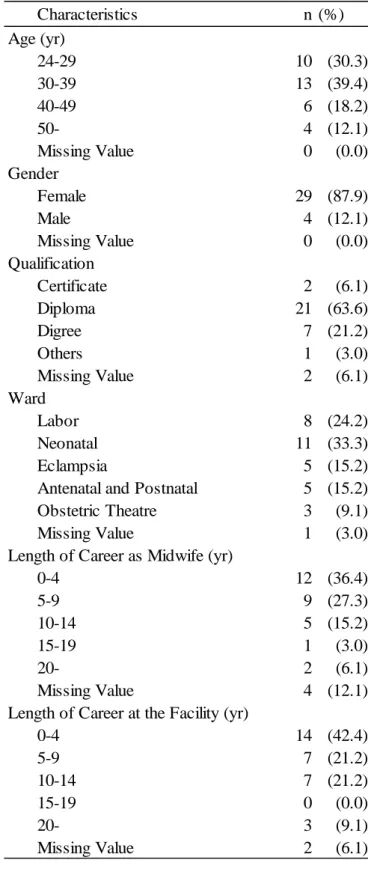
A total of 33 out of 94 study participants were included in questionnaires survey (issued three times). The number of valid response was small and varied widely: n=85, n=37 and n=39 respectively. For assessment purposes, those who responded both the first and the last were included. Table 3 shows the characteristics of the participants in the questionnaire survey. Participants in their thirties were the largest group by age (39.4%), and over 60% reported their length of career as a midwife and their time employed at the facility to be less than a decade (63.7% and 63.6%). Post-high school diploma (63.6%) was the most common educational attainment among the participants.
Of the participants, most worked at labor and neonatal wards.
Table 3
Characteristics n (%)
Age (yr)
24-29 10 (30.3)
30-39 13 (39.4)
40-49 6 (18.2)
50- 4 (12.1)
Missing Value 0 (0.0)
Gender
Female 29 (87.9)
Male 4 (12.1)
Missing Value 0 (0.0)
Qualification
Certificate 2 (6.1)
Diploma 21 (63.6)
Digree 7 (21.2)
Others 1 (3.0)
Missing Value 2 (6.1)
Ward
Labor 8 (24.2)
Neonatal 11 (33.3)
Eclampsia 5 (15.2)
Antenatal and Postnatal 5 (15.2)
Obstetric Theatre 3 (9.1)
Missing Value 1 (3.0)
Length of Career as Midwife (yr)
0-4 12 (36.4)
5-9 9 (27.3)
10-14 5 (15.2)
15-19 1 (3.0)
20- 2 (6.1)
Missing Value 4 (12.1)
Length of Career at the Facility (yr)
0-4 14 (42.4)
5-9 7 (21.2)
10-14 7 (21.2)
Characteristics of the Participants in Questionnaire Survey (n=33)
4.4.1 Comparison of awareness of EENC.
The questions asked general awareness of EENC with “Yes” or “No” questions.
Varying levels of awareness from the first questionnaire to the last is shown in Table 4.
The proportion of participants who knew the name of EENC increased from 72.7% to 97.0% and those who acquired the content increased from 57.6% to 75.8%, all of which were not statistically different from the first and the last. Over half of the participants had already gained idea of EENC from the outset; on the other hand, one participant remained unaware of EENC by the end. The respondents who knew the 21 sequential components of EENC—n=19 and n=25 respectively—were further asked how they had learned of EENC with options (a) published materials; (b)
training/seminar/presentation; and (c) others. From the first to the last questionnaire, training/seminar/presentation got a higher proportion accounting for 57.9% and 84.0%
of the total respectively. Moreover, more practical ways of training tended to be provided to the participants according to the final survey.
Table 4
Comparison of Awareness of EENC
n (%) n (%) P Value
Q1. I have heared the name of the program "Early Essential Newborn Care (EENC)".
Yes 24 (72.7) 32 (97.0)
No 8 (24.2) 1 (3.0)
Missing Value 1 (3.0) 0 (0.0)
Q2. I know the 21 sequential components/steps of EENC.
Yes 19 (57.6) 25 (75.8)
No 14 (42.4) 7 (21.2)
Missing Value 0 (0.0) 1 (3.0)
Q2-1. How did you learn EENC?
Published materials 2 (10.5) 3 (12.0)
Training/Seminar/Presentation 11 (57.9) 21 (84.0)
Others 4 (21.1) 1 (4.0)
Missing Value 2 (10.5) 0 (0.0)
Q2-2. What was your experiences of Trainig/Seminar/Presentation?
Only a lecture 2 (18.2) 0 (0.0)
Both a lecture and practice 6 (54.5) 16 (76.2)
On the Job Training 2 (18.2) 5 (23.8)
Others 1 (9.1) 0 (0.0)
Note. The p-values were calculated with the use of two-sided chi-square. *Fisher's exact test
1st (n=33) 3rd (n=33)
.13*
.08
(n=19) (n=25)
4.4.2 Comparison of perception for EENC practice.
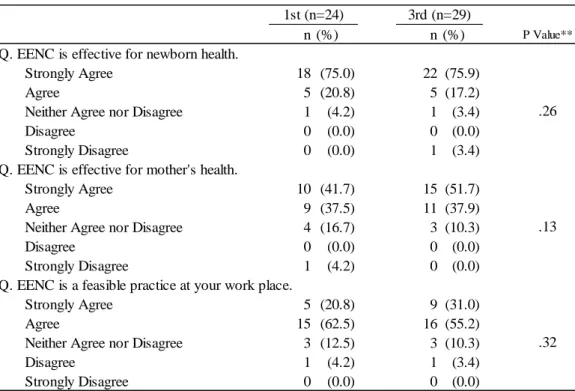
Table 5 shows the variation of the perception of effectiveness and feasibility
regarding EENC among respondents aware of EENC (n=24 and n=29 respectively). The participants with positive responses (“Strongly Agree” or “Agree”) for effectiveness for newborn health accounted 95.8% and 93.1% respectively. “Strongly Disagree” was voiced at the last questionnaire by one participant. The proportion of positives responses for effectiveness for mother’s health increased from 79.2% to 89.6%. On feasibility of EENC in the field, the proportion of “Strongly Agree” slightly increased from 20.8% to 31.0% with no statistical difference. The number of negative responses (n=4)—defined as “Disagree” or “Strongly Disagree”—showed no change. The participants already tended to have positive perceptions from the start in common with both effectiveness and feasibility.
Table 5
Comparison of Perceptions for Effectiveness and Feasibility of EENC
n (%) n (%) P Value**
Q. EENC is effective for newborn health.
Strongly Agree 18 (75.0) 22 (75.9)
Agree 5 (20.8) 5 (17.2)
Neither Agree nor Disagree 1 (4.2) 1 (3.4)
Disagree 0 (0.0) 0 (0.0)
Strongly Disagree 0 (0.0) 1 (3.4)
Q. EENC is effective for mother's health.
Strongly Agree 10 (41.7) 15 (51.7)
Agree 9 (37.5) 11 (37.9)
Neither Agree nor Disagree 4 (16.7) 3 (10.3)
Disagree 0 (0.0) 0 (0.0)
Strongly Disagree 1 (4.2) 0 (0.0)
Q. EENC is a feasible practice at your work place.
Strongly Agree 5 (20.8) 9 (31.0)
Agree 15 (62.5) 16 (55.2)
Neither Agree nor Disagree 3 (12.5) 3 (10.3)
Disagree 1 (4.2) 1 (3.4)
Strongly Disagree 0 (0.0) 0 (0.0)
1st (n=24) 3rd (n=29)
.26
.13
.32
4.4.3 Comparison of self-confidence of midwives on EENC practice.
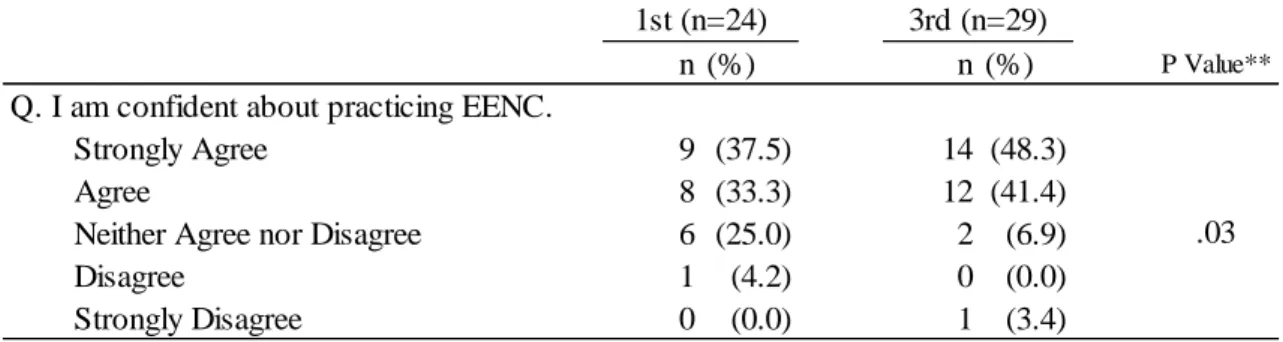
Table 6 shows variance of self-confidence on EENC practice with a five-point scale. The positive responses accounted for 70.8% and 89.7% respectively. The
proportion of “Disagree” (4.2% to 0.0%) and the uncertain response “Neither Agree nor Disagree” (from 25.0% to 6.9%) decreased, whereas “Strongly Disagree” gained one respondent (3.4%). The distribution showed significantly difference in two periods (z value=-2.165, p=.03).
Table 6
Comparison of Self-confidence
n (%) n (%) P Value**
Q. I am confident about practicing EENC.
Strongly Agree 9 (37.5) 14 (48.3)
Agree 8 (33.3) 12 (41.4)
Neither Agree nor Disagree 6 (25.0) 2 (6.9)
Disagree 1 (4.2) 0 (0.0)
Strongly Disagree 0 (0.0) 1 (3.4)
Note. ** P-values were calculated with the use of the Wilcoxon signed rank test for ordinal variables.
1st (n=24) 3rd (n=29)
.03
4.4.4 Comparison of attempted practice of EENC.
Questions regarding attempted practice of EENC is shown in Table 7. The
proportion of participants who attempted to practice EENC increased 66.7% to 75.0%, of which at last 66.7% of them tried to perform EENC more than once.
Table 7
Comparison of Practical Behavior on EENC
n (%) n (%) P Value
Q. I attempted to practice EENC.
Yes 16 (66.7) 24 (75.0)
No 7 (29.2) 4 (12.5)
Missing Value 1 (4.2) 4 (12.5)
Q. How often have you attempted?
More than 3 times 9 (56.3) 9 (37.5)
2 or 3 times 2 (12.5) 7 (29.2)
Once 4 (25.0) 6 (25.0)
Not sure 1 (6.3) 1 (4.2)
Missing Value 0 (0.0) 1 (4.2)
Note. The p-values were calculated with the use of two-sided chi-square
1st (n=24) 3rd (n=32)
.16
(n=16) (n=24)