The Design of EBA Business Fieldwork
Integrate IoT Resource in Japanese Industries and
Talent in Asian Top Universities
EBA
oT
Masaki Umejima
Project Associate Professor, Graduate School of Media and Governance, Keio University
Supanuch Supanimittrakul
Senior Researcher, Keio Research Institute at SFC
F
Natawut Nupairoj
Assistant Professor, Faculty of Engineering, Chulalongkorn University
Chaodit Aswakul
Assistant Professor, Faculty of Engineering, Chulalongkorn University
Manoj Lohatepanont
Assistant Professor, Faculty of Engineering, Chulalongkorn University
Kultida Rokviboonchai
Assistant Professor, Faculty of Engineering, Chulalongkorn University
When addressing Internet of Things [IoT], two strategies are available: open and closed. Home appliances to be key devices on IoT have adopted a closed strategy for many years. However, we can observe the new aspects that 1) home appliances with the open interface named ECHONET Lite make up Home Energy Management System [HEMS] which enables peak demand control of energy usage and 2) industry-academic cooperation in ASEAN plays the important role
n erne of Things oT oT o e Energ n ge en s e E E A EA E ET i e A EA T T EBA oT
oT l for energ infr s ru ure higher edu ion A EA oT
A EA Keywords:
of spreading the open technologies such as ECHONET Lite through providing the platform which facilitates the engineers at the higher educational institutions in ASEAN.
In driving open technology, the role of university which educates engineers, makes feasibility study to ensure interoperability of the entire system, and creates regulations for social deployment of new technology, is important. The case of the internet innovation in 1990s told that education and empirical study in university were mandatory of increasing awareness to open technology such as TCP/IP and HTML.
EBA Business Fieldwork that we discuss on this paper has created the platform which enables of cooperating among four different parties who are motivated by IoT: student, university, company, and government. Through reviewing EBA Business Fieldwork, we highlight the embryonic movement in which 1) universities support to deploy open technology on IoT and 2) companies provide students with field work opportunities as same as scholarships.
1 Problem Identification
In ASEAN, Japanese home appliance giants such as Mitsubishi, Panasonic, and DAIKIN have placed the important position of manufacturing a hardware such as an air conditioner for many years. However, the position as the manufacturing core in ASEAN has been descent as same as the innovation is provoked by software and data driven approach.
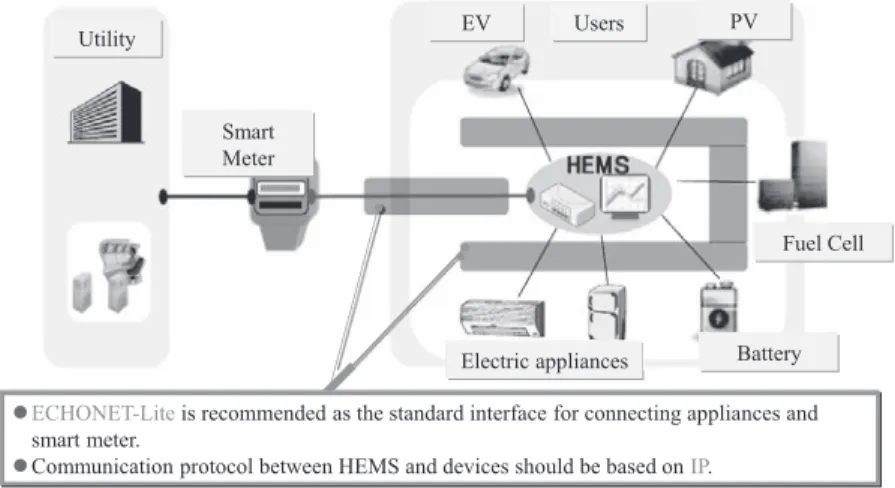
In 2011, when the heavy earthquake and Tsunami made a serious nuclear disaster in Fukushima, Japan, the Japanese government and industrial liaison launched the new approach to provide a home appliance with network access in adopting an open interface. That ambitious project called ECHONET Lite was started with only 22 industrial participants in 2011. In five years passed, ECHONET Lite has become an international standard at ISO/IEC and grown to the big project with getting participations from over 250 companies, e.g. Toyota, Panasonic, Toshiba, NTT, Softbank, Tesla motor [U.S.], SMA [Germany], and LG [Korea] (Fig.1).
On the other hand, EBA Consortium is a university consortium formed in 2012 to pursue Evidence-Based Approach (EBA) that is the approach for
the problem-finding, analysis and problem-solving by combining the field-based observation and evidence-field-based analysis. An evidence-field-based approach is practiced in, for example, the evidence-based medicine, which is designed to fuse broad medical research accomplishments with highly specialized clinical knowledge. To be familiar with forming up EBA concept, new education in highlighting a fieldwork is necessary. The purpose of EBA is to educate students to utilize the Big-Data (data collection, analyses, and visualization) through fieldwork study and internship.
Consortium partner universities jointly design the EBA course curriculum and offer courses in their own expertise to students from the partner universities. The consortium is formed by 9 institutions in 7 countries: KEIO UNIVERSITY in Japan, UNIVERSITY OF THE PHILIPPINES DILIMAN in Philippines, UNIVERSITY OF SCIENCE and MALAYSIA and UNIVERSITY OF MALAYA in Malaysia, CHULALONGKORN UNIVERSITY in Thailand, INSTITUTE OF TECHNOLOGY BANDUNG and BRAWIJAYA UNIVERSITY in Indonesia, HANOI UNIVERSITY OF SCIENCE AND TECHNOLOGY in Vietnam, and UNIVERSITY OF COMPUTER STUDIES, YANGON[1] in Myanmar.
EBA Business Fieldwork was designed to form up cooperation among students who studied a theoretical framework in universities and companies who aimed at creating innovative services on IoT. Student participants could learn 1) the theoretical framework that existed behind the latest IoT movements on business and 2) observe business implementation or exercise with new technologies through visiting the laboratories and the pilot study sites.
When university designing a fieldwork in cooperating with a company, proprietary technology is not suitable for securing the open access environment to the technology for a student. In conclusion, the topic of EBA Business Fieldwork was occupied by open technologies such as ECHONET Lite, Hadoop, and Open Stack.
2 Theoretical Study
2.1 Modular Architecture and Open Strategy
How did EBA Business Fieldwork integrate IoT resource in Japanese industries and talent in Asian top universities? The organizational architecture that EBA Business Fieldwork relied on was a platform theory of enabling cooperation among multiple players in respecting autonomy in each participant. This chapter discusses about the theoretical framework how a platform designs cooperation.
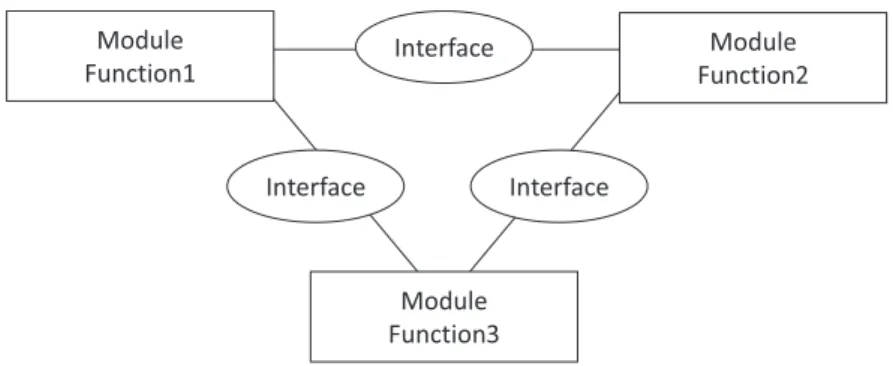
An architectural concept is the enabler of describing the framework of corporation and the product attributed by a system of cooperation. In details, an architecture is defined as follows: a way to identify which modules are the components of a system and how they work (Baldwin et al., 2000), basic design ideas on how to divide whole product into components and processes, allocate product functions therein, and design interfaces between parts and processes (Fujimoto, 2001), and the design of the role sharing and the interface between subordinate systems in constructing a large system by assembling multiple subordinate systems (Kokuryo, 1999) (Kokuryo, 2008) (Fig.2).
The architecture is divided into integral and modular types. The integral
architecture is complicated on the relationship of the functional group and the parts group therein. Taking the car as an example, it is necessary that all parts such as the tire and the suspension to delicately adjust to each other for making the function of the ride such as noise and vibration. The designer of each module performs a fine correction of the design to each other by working closely with each other (Fujimoto, 2001).
A modular architecture builds a complex product and business process with assembling small subsystems that can be independently designed and integrated as a whole system. For example, the computer industry have changed the market extensively with the introduction of inexpensive and fast information processing capabilities. In a modular architecture, a complex product or business process is built by integrating small subsystems that can be independently designed and unified as a whole. The wide adoption of a modular architecture has dramatically driven the innovation (Baldwin et al., 2000).
In construct, the limit of human cognitive capacity is the determining factor of the structure of an artifact. The information transmission by the machine and the programmed processing power continue to grow exponentially. The interdependences among modules are the parameter of designing a whole system. As a result of the situation in which human information processing capacity becomes scarce value in the overall economy, it is defined as a composite of how the design of each module is affected by the design of other modules.
If the interdependences are high among each unit, the adjustment must be made between the persons who are designing each unit. If the interdependence is low, it eliminates the need of fitting. The complexity of the whole system design can be reduced by collecting modules with high interdependence. In the modular architecture, the whole system is completed in complying with the design rules. Once the assembling rules as a visible rule between modules are determined, the improvement of individual
modules has become autonomous. It is caused that the design and the improvement of other modules are done independently, the improvement and innovation of the system as a whole, even if not directed by a centralized authority, can be created afterwards by assembling the autonomous improvement of individual modules.
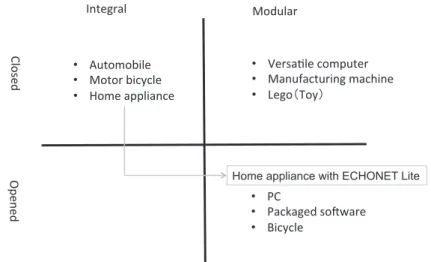
Aoki et al. (2002) discussed this situation as system innovation from the bottom based on the competition that creates innovation among individual modules. Kokuryo (2008) argued with the era of a small device with a great power. The modular architecture is classified as the closed-type in which use of the interface is exclusively restricted and the opened-type in which the interfaces among each module are socially opened to anyone for free or charge.
A closed architecture product refers to the interface design rules between modules that are essentially closed within one company. For example, in the case of automobiles, the detailed design of each product may be left to external suppliers, but the basic design part of interface design and functional design is completed by one company (Fujimoto, 2001) (Figure 3).
Open-architecture products break down into highly-independent
modules based on a design rule (architecture) that is a widely shared system, a product or business process with inherently complex functions. Open-architecture products employ a corporate strategy that combines information transmitted by a variety of principals by connecting with a socially shared open interface with ensuring versatility as a whole system. In fact, while the interface is proprietary and the entire system is closed, the system is integrated only within the same corporate or the corporate group sharing the interface, even if it is a modular system. Once the interface is open, the modules developed by a small company can be integrated in a free combination. A small company with excellent engineers develops and invests in the specific area and a combination of the best complementary technologies that exist at that time can create a new and innovative product as a whole system (Kokuryo, 1999).
Aoki et al. (2002) highlighted a network system that the scale of network is observed in addition to the scale of merit. The open-interface, which the scale of network is prioritized than the scale of merit, is the enabler of designing a whole network created by highly independent and versatile subjects.
The economy of scale and the economy of network are different concepts, and argued that they could have the opposite effect on the market structure. Specifically, the pursuit of scale merit in demand for the purpose of obtaining network effect does not necessarily lead to the formation of the monopoly or the oligopoly by a giant enterprise in the production scene (Shinozaki, 2011).
2.2 Platform as an Organizational Theory
Platform has been spreading rapidly since the 1980s when open system was popular on the information system such as the Internet. Before the open system coming to the market, the closed system that the industry supplies the peripheral devices such as software and
printers without separating the main body of a computer was common. The open system on the modular architecture that the big integrated system is divided into the small and multiple autonomous systems with an open interface is the enabler that the software developed by a small startup is operated on a big giant’s machine such as Microsoft. For now, the operating system (OS) became a platform, and almost everything in the personal computer software industry has come to develop on a common platform such as Microsoft. As a result, many software vendors and hardware vendors were free to combine them on the common platform of OS.
As the OS example shows, the platform has a tendency to occupy a monopoly position in the platform itself. Conversely, in the industrial world, businesses that hold the platform will be able to boast an overwhelming advantage. A platform-based operator can continue to maintain its predecessor in development by allowing the industry to use the standard of an interface with its own platform and peripheral products as a virtual standard (de facto standard). It can be said that platform supremacy becomes an important point in the business strategy, and the recognition to the platform is increased.
The Internet now connects billions of people allowing vast exchange of information including personal information. While it offers wide range of benefits to the people, it also increased the threat of privacy violation enormously. Such applications on the Internet as social networks and e-commerce platforms became databases that may, if inadequately used, to monitor and manipulate users.
A collaborative interaction is necessary across disciplinary borders, including philosophy, theology, engineering, economics and law. Design and the construction of such platforms should thus be at the core of efforts to create a healthy Human-IT ecosystem in which societies and technology can co-evolve sustainably. Development of institutions that operates the platform will also be a focal target of the development of Human-IT ecosystem.
In the design of the platform, five parameters are considered: 1) communication patterns, 2) role of each participant, 3) incentives, 4) trust, and 5) management of internal change (Kokuryo et al., 2011). In those five parameters, incentive design is the most important of maintaining sustainability of a platform (Umejima, 2011).
3 The Case of Open Strategy in a Home Appliance
Architecture: ECHONET Lite
In 2011, Trade and Industry’s Industrial Structure Council of Ministry of Economy, Trade and Industry in Japan held architecture-level discussions to decide an appropriate framework on Home Energy Management Systems (HEMS) which enables peak demand control in every household. In Japan, energy price is decided by peak demand measured by Kw and total usages measured by kwh. In that sense, HEMS is aiming at bringing energy cost reduction as same as reducing energy consumption.
In general, an energy management system is a system that implements Demand Side Management (DSM) to improve the efficiency with which energy is used at the customer side. In Japan, there were discussions on the subject of whether the system architecture should be vertically integrated with a closed interface, or should be horizontally specialized with an open interface.
Those architecture-level discussions with a lively debate reached a new principle of which new entries should be encouraged on HEMS business, emphasis should be placed on increasing the potential for added-value creation, and the interface design of HEMS should be opened as the international standard (Fig.4).
ECHONET is a home network communication protocol created by the ECHONET Consortium, which was founded in 1997 by a group mainly comprised of Japanese manufacturers of consumer electrical products with the aim of standardizing the implementation
of home automation. The distinguishing feature of this protocol is that it facilitates detailed control of Japanese consumer electrical products. On the other hand, since it defines interfaces for everything from a physical media to an application software, it is unable to adapt to the global trend towards the increasing use of IP at the network layer. In particular, the enforcement of ECHONET addresses, which are intended to facilitate seamless connections to various physical layers, presents a major barrier to the formation of an international strategy. In response to requests from the public and private sectors, the ECHONET Consortium investigated the idea of eliminating ECHONET addresses and switching to a new communication protocol consisting of the ECHONET protocol placed an ordinary IP address on a physical layer.
This culminated in ECHONET Lite, which was released by the ECHONET Consortium in July 2011. This specification has a new interface definition that does not define the physical layer and only defines parts of applications and the command systems of domestic electrical appliances and facilities (Fig.5).
The two changes made by the ECHONET Consortium to the technical specifications (synchronizing with IP and leaving the physical layer unspecified) have presented a major impact. This is the enabler of cooperating with other protocols that have already been deployed and achieved international standardization. It could also be said that these changes made the protocol easier for new businesses and overseas businesses to use.
Although ECHONET Lite is sometimes criticized for being a Japan-only specification, this is not actually true. There are still many things that could be improved — for example, there are no training systems in place (even for engineers) and no SDK or software development environment has been set up. However, it would be incorrect to call ECHONET Lite less international. First, it has been ratified as IEC standard. ECHONET Lite is participating in some working groups in ISO/IEC in order to adjust with the trends in international standardization and engage in consultations with experts from around the world. It is the main accomplishment that ECHONET Lite specification has become ISO/IEC14543-4-3 as a communication standard. Second, the ECHONET Lite specification is an open standard. The ECHONET Lite specification, which is the unique intellectual property of the ECHONET Consortium, also plays a large role in open standard decision-making. All the technical specifications can be obtained via the ECHONET Consortium’s web.
Third, ECHONET Lite synchronizes with the direction of international M2M network maintenance. And fourth, it is being used in a growing number
Type Name of specification Summary
Japan ECHONET Lite IP-based. Compatible with XML, etc. Defined for over 80 different devices. Allows detailed control
U.S. SEP IP-based. Predominantly offers superficial access to crude controls Europe KNX Considerable experience of implementations in places on a larger
scale than residential buildings
of implementations. The number of devices compatible with ECHONET Lite is continuing to grow steadily. For now, the properties [demand] for over 90 different types of home appliances, e.g. air conditioners, lighting, photovoltaic solar cells, fuel cells, and storage batteries, have been defined. Commercial products are on the market in Japan and ASEAN.
By using ECHONET Lite to bring a network access to home appliances, Home Energy Management System (HEMS) has become the open system in which students can create application services through learning in university.
4 The Case of the Platform to Empower an Open Strategy:
EBA Business Fieldwork
4.1 Platform Design for EBA Business Fieldwork
EBA Business Fieldwork is a short-term fieldwork emphasized on industrial participation with the aim to bring the opportunity where students could interact with the academic-industrial researchers with the related topics and its empirical studies such as Energy Management and entrepreneurship. Unlike regular internship programs that students work for one company, students could visit many companies and learn the various solutions from more than two partner companies in one EBA Business Fieldwork.
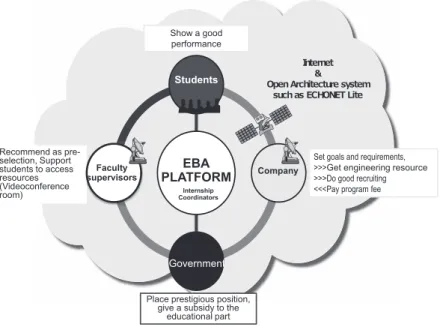
In implementing EBA Business Fieldwork, the new platform was formed by four different participants: student, university, company, and government (Fig.6).
Student and university joined or observed empirical studies on IoT that a company addressed at many areas in Asia and Japan. That was the incentive for students and universities to stay at the platform.
In a company, the interactions with young engineers who are the users of open technology become a driver to join the platform. In a home appliance architecture whose technology was proprietary for many years, it was less necessary that the engineers in Japanese industry giants such as Panasonic and Toshiba hear the voice of external engineers in university.
Engineer training had loved top-down approach within a company. The training program edited by the mother factory in Japan was transferred to the factories in ASEAN countries. It was the big contrast to the internet that industry communicated well with the external engineers outside the company. In open architecture, the use of engineering resource outside the company is necessary for the company growth.
In addition, the student-company interaction on the platform created the added value that a company suggests a job offer to a student.
In the participation of government, the platform received financial support by Re-Inventing Japan Project of Ministry of Education, Culture, Sports, Science and Technology of Japan (2012-2016). The policy in Japanese government is to increase a student overseas who is interested in working in Japanese company and studying in the higher education in Japan.
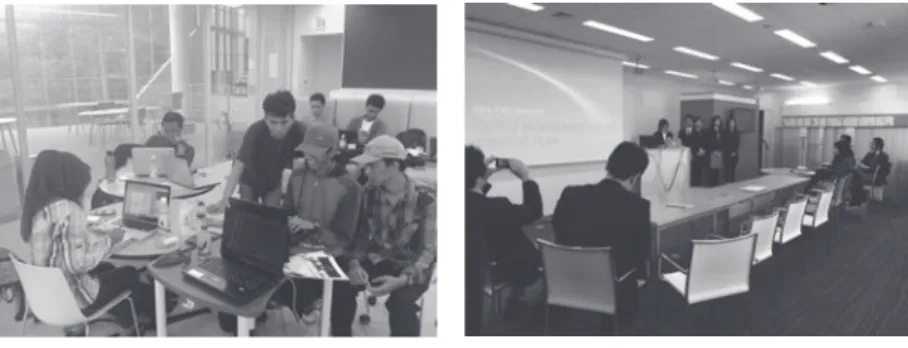
For the process, participating universities nominated students through an assessment such as interview or business plan/application contest. Student participants have online preparation courses such as theme-related assignment, and onsite workshops (energy management, Internet of things, data analysis and visualization) before visitation to companies. After broadening their knowledge by observation of real business solutions at company, the most important is presentation and intensive discussion with lecturers, industrial experts to identify suitable solutions for theme-related issues (See the process in the below figure (Fig.7)) .
Fieldwork content is the combination of topics related to policy, business, and technology. Workshops and activities are based on Data Driven Approach (data collection, analysis, and visualization). Activities should involve multidisciplinary professionals not only academic experts (professors, researchers) but also industrial participants for students to understand how to use a technology in real business.
The roles and responsibilities of the participants are as follows. Professor should have long-term research collaboration with industrial partners. University-industrial relationship supported it by making a good awareness from industrial experts. Pre-training of basic knowledge help students to achieve the expected outcome, which is a business plan or prototype design, even if students have less study background related to the fieldwork.
A selection process that evaluates right participants with transparent
and tangible criteria such as required skills related to the theme, high self-motivation, ability to learn, and initiative. For students, self-study before coming to Japan is recommended to take initiative to ask question when not understanding anything during visitation at companies.
It is necessary for partner companies to identify their objectives such as educational purpose, recruitment, joint research, or getting idea for global expansion. For fruitful discussion, a company should provide enough information including project background and necessary knowledges for running a fieldwork.
The role of government is important as same as an industrial participation. Together with partner companies, a governmental participation secures the position of EBA fieldwork and a governmental financial support to cover educational parts supports to create good awareness about a diplomatic relation in an academic revel.
Facilitator plays the role of running the collaboration among four participants: University, Student, Industry, and Government. In providing pre-workshop or pre-assignment to student participants, a facilitator helps students to understand the method to achieve the expected outcomes by providing related materials, and examples. To help them focus on fieldwork, it is necessary to provide guidance about daily life including transportation, meals, and local language.
With the above definition, three EBA Business Fieldworks were implemented from 2013-2016. In this paper, three fieldworks are highlighted: Big Data Management Fieldwork, Energy Management Fieldwork, and Data Management and Energy Fieldwork.
4.2 Big Data Management Fieldwork
The participants of Big Data Management Fieldwork were seven Indonesian Electrical Engineering students, who are the winner of application contest, were nominated by their professor at Institute of
Technology, Bandung (ITB). At the contest day, students had to present their plan together with a prototype. The content of the presentation included a project background, a target outcome, and cost estimation. After passing the presentation that had a role of the selection process, that group of students participated in 10-day fieldwork in July 2015.
Main activities are lectures by lecturers from Keio University (Japanese language, Energy management, Data analysis). Data Visualization workshops is taught by EBA researchers, and Twitter Analysis hands-on practices was implement with engineers from partnering company, NTT DATA Corporation.
At the final day, industrial representative impressed that students could present solutions. Students’ outcomes were mainly prototypes of Twitter data analysis and visualization such as traffic accident detection, and citizen daily report.
4.3 Energy Management Fieldwork
Keio University in Japan and Chulalongkorn University in Thailand have done the joint online entrepreneurship course. Based on that long-term collaboration, an online interview placed at the selection process was conducted by a senior researcher at Keio University, five Thai engineering students passed it and visited Home Energy Management System Test Center by ECHONET, and Panasonic’s R&D center in January 2016. After observing the business implementations in Japan, students developed a business plan that aimed at deploying HEMS for Thailand market.
4.4 Data Management and Energy Fieldwork
The participants of Data Management and Energy Fieldwork were eight students passed the selection by lecturers in their universities, and completed assignment a month before coming to Japan in October 2017 for 10 days. In addition of lectures and workshops, students had several online and a
face-to-face presentation to share their idea after learning about the latest technology and business solutions at Smart House at Mitsubishi Electric factory, Smart City Center at Toshiba. Moreover, almost daily discussion with industrial experts helped them brushed up and specified their business idea related to IoT and energy management.
4.5 Feedback by the Industry Participants to Business Fieldwork
The biggest impact was seen at the fieldwork in October 2016 because the fieldwork led to the recruitment opportunity and this means EBA could increase talent mobility and enhance technological collaboration and create meaningful career path for student participants.
In detail, Japanese Human Resource Department manager from DAIKIN Corporation mentioned his feedback towards participating of fieldwork in October 2016, as below:
“Impression of students are as expected from top universities in Southeast Asia. They have logical communication skills, flexible mindset, high motivation in learning, taking initiative, independent, and have potential for further development.”
He shows strong interest to recruit engineering students from EBA partner universities. As a spin-off of fieldwork, DAIKIN and EBA jointly conducted internship for recruitment from March to September 2017. As of October 2017, 2 interns passed a pre-selection test, internship, and job interview. They accepted job offer and will become a full-time employee of the company from April 2017.
4.6 Feedback by the Student Participants to Business Fieldwork
EBA Business Fieldwork participants mainly mentioned that 1) Workshops and lectures are brief and informative, 2) Company visitation is an eye-opening opportunity to see real technology trends and business innovation, 3) Learning how Japanese industries collect, analyze, and
visualize massive data that HEMS collects for the purpose of optimizing energy flow and demand help to consider how to solve the problem like energy shortage.
In addition, when discussing about a career plan, more than half of student participants are strongly interested to continue their future career in Japan either continuing higher education or pursuing working at companies that participated in the fieldwork.
5 Conclusion and Challenges
As we discussed on this paper, EBA Business Fieldwork has created the platform with aiming at integrating IoT resource in Japanese industries and talent in Asian Top universities (Fig.8).
Empirical study of three cases in EBA Business Fieldwork have concluded that the newly designed platform is the enabler of cooperation among four different parties: student, university, company, and government.
On the other hand, three challenges are remaining; communicational challenge, incentive challenge, and operational challenge.
Firstly, communication challenge is how the platform organizer creates intensive to the interactions among the participants who are from different countries in different field of studies. Most of students do not have business
experience and the local language proficiency. In that sense, it is essential that the platform organizer prepares the suitable environment where fruitful interaction can be done. To increase communication, creating trust among all participants is necessary. In EBA Business Fieldwork, the platform organizer pays priority to transparency within the organization. In an example, the disclosure of the following items such as research themes, expected outcomes, and required skills was actively done by industries.
Secondly, incentive challenge is to provide meaningful incentive to partner companies (sponsors). Not only providing the matching with young engineers in university, the platform delivered the enough incentive to the company who want to have a linkage to recruitment process in contrast to the general fieldwork which was always seen as a mere academic activity.
Thirdly, operational challenge is time management. During the duration of EBA Business Fieldwork, time should be wisely managed by the organizer because schedule is quite tight to cover all lectures, workshops, field activities, group work, and presentation of students’ accomplishment. In addition, guidance for students is necessary because most of participants have never had experience outside a home country. Participating fieldwork is the first oversea experience for them.
After successful cooperation on EBA Business Fieldwork, ECHONET Consortium, who has maintained an open interface for a home appliance, launched a research center at Chulalongkorn University in Thailand. It has been placed as the part of a research project of Computer Engineering Faculty at Chulalongkorn University.
In looking back when the platform for implementing EBA Business Fieldwork was launched, it was unpredictable outcome that Japanese company developed a research center at the university in ASEAN with aiming at spreading open technology in ASEAN. In addition to creating university-industry collaboration research, EBA platform produced one master thesis research, whose title was “Development of
Real-Figure 9
HEMS Research Center at
Chulalongkorn University in Thailand
Time Interworking between IEEE1888 and ECHONET Lite Standards for Building Energy Management System” with the supervision by Dr. Chaodit. Later on, that research was presented at the national conference in Electrical Engineering (EE-CON39) and invited for a special issue at the Engineering Journal of Faculty of Engineering, Chulalongkorn University.
EBA Business Fieldwork that we discuss on this paper has created the platform which enables of cooperating among four different parties: student, university, company, and govern-ment.
I n t h e p o i n t o f v i e w a t u n i v e r s i t y e d u c a t i o n , i t h a s explored the new opportunity where a company participates in
university education in the context of executing a corporate strategy, not in social contribution.
In driving open technology, the role of university which educates engineers, makes feasibility study to ensure interoperability of the entire system, and creates regulations for social deployment of the new technology deployment, is important. It was learning from the internet innovation. In the era of driving IoT, that lesson is valid.
In conclusion, EBA Business Fieldwork as same as the newly designed platform has performed well by integrating IoT resource in Japanese industries and talent in Asian top universities in respect to the past study in the internet innovation.
End Note
[1] UNIVERSITY OF COMPUTER STUDIES, YANGON is an associate member at EBA Consortium.
References
Baldwin, C.Y., and Clark, K.B., Design Rules: The Power of Modularity, Cambridge, MA: MIT Press, 2000.