disabilities : case studies from the Red River
Delta region
権利
Copyrights 日本貿易振興機構(ジェトロ)アジア
経済研究所 / Institute of Developing
Economies, Japan External Trade Organization
(IDE-JETRO) http://www.ide.go.jp
journal or
publication title
The Vietnamese family during the period of
promoting industrialization, modernization and
international integration
page range
44-62
year
2017-03
章番号
Chapter 3
研究会名
Dynamics and transformation of the Vietnamese
family in the Doi Moi period (ドイモイ下ベト
ナムの家族の動態と変容)
44
Chapter 3
Roles and Functions of Vietnamese Families
in Caring for a Member with Disabilities:
Case Studies from the Red River Delta Region
Minoru Teramoto
1Abstract
This paper is based on field research in a commune in one province of Red River Delta region, and tries to clarify the roles and functions of the Vietnamese families caring for a member with disabilities.
Key Words: Vietnamese family, role, function, person with disabilities, industrialization,
modernization, international integration
1. Introduction
This study is aimed at examining the roles, and functions played by Vietnamese families in caring for a member with disabilities during the period of promotion of industrialization, modernization and international integration. This paper is based on a field survey conducted at a commune (xã) in the Red River Delta region. In this study,
the term “family” fundamentally means people who are married or have blood
relationships and who live and eat together in the same house.
The structure of this paper is as follows. First, I present the methods used in conducting the field survey. Second, we consider the results of the survey from the perspective of
relationships between subjects and the surrounding actors. Thereafter, we examine subjects’ hope for their families.Finally, we discuss economic aspects of the subjects.
45
2. Methodology
This field survey was implemented in October, 2013. The survey area was a commune
in the rural area in Ha Nam Province within the Red River Delta region. I visited the subjects’ houses and interviewed them in person using a prepared questionnaire2. I tried to meet the subjects directly, because this study was aimed at qualitative research. A total of 31subjects were interviewed, of whom 28 people had disabilities and three were people without disabilities3. In cases where subjects were unable to answer, a member of the family was asked to reply. A total of 10 people with disabilities found it difficult to answer and 1 person did not participate in the interview4.
3. Interviewee and family characteristics
Let’s consider the number of family members, number of generations, and types of disabilities.
Table1 and table 2 show us the number of members and the number of generations in the families surveyed.
Table1 provides the number of members in subjects’ families. The largest bloc in Table1 comprises families with two members (seven families) and those with four members (seven families). Families falling in the range between two and five people constitute 77.4% of the families surveyed. Two families contain a single member. The largest family surveyed contains nine members.
Table2 indicates the number of generations in a family. Eight families have one generation, 14 families have two generations, and nine families have three generations. Families with only one or two generations total 71.1%. This means that nuclear families are more prevalent than are large families.
2 I received support from a Vietnamese organization to implement this survey. I wish to express
gratitude.
3 This survey is part of a two- year research project (2013-2015) on the welfare regime in Vietnam.
The intention behind including the people without disabilities (3people, all of them men) was to compare the case of people with disabilities and those without disabilities. The Language used in the survey was Vietnamese. In December 2016, I implemented a small survey in a commune in the south of Vietnam, but in this time, did not have enough time to analyze the information gathered.
46
From these descriptive statistics, it can be concluded that to-five member, two-generation families are the common form of the subjects’ families.
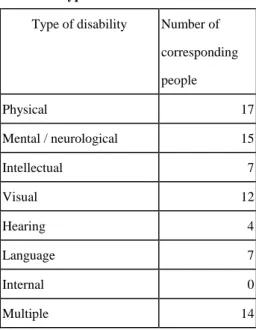
Table 3 provides information regarding the types of disabilities experienced by the subjects. The most common type of disability is physical disability (17 people). The second common type of disability is mental/neurological disability (15 people). The third most prevalent type of disability is visual disability (12 people).
Among these people with disabilities, 14 people have multiple disabilities. The 28 subjects with disabilities are split evenly between men and women at 14 people each.
Table 4 provides the age distribution. The youngest subject was born in 1995 , and the oldest subject was born in 1935. Table 4 also shows the two main groups: (1) 1930 to 1960 (18 people) and (2) 1966 to 1995 (13 people). In the first group, 13 people (72.2%) clustered in the birth-year range of 1946-1960. This period overlaps the First Indochinese War. In the second group, six people (46.2%) clustered in the 1966-1975, which overlaps the Second Indochinese War (Vietnam War).
4. Relationships between subjects and surrounding actors
Here, we consider the relationships between the subjects and surrounding actors, who may be immediate family members, more distant relatives, neighbors, friends and state. I asked subjects the following questions:
(1) What kind of help do you need from your family (gia đình)? (2) What kind of help do you need from your relatives (họ hàng)?
(3) What kind of help do you need from your neighbors (hàng xóm)? (4) What kind of help do you need from your state (nhà nước)?
(5) Do your friends (bạn) help you when you face any difficulties ? 5 Let’s now look at the subjects’ responses to these questions.
(1)What kind of help do you need from your family?
Table 5 shows interviewees’ responses to question (1) above. Among the 31 subjects, 20 people need help from their families, whereas 11 people answered “nothing.” All 20 people needing help from their families have at least a disability.
Among those 20 people, seven people answered “everything” (they need support in every aspect of daily life). The actors who mainly help these seven subjects are as follows:
5 I had put this question in a different part of the questionnaire. For this reason, it was asked
47
mother ( two people); parents ( one person); wife (two people); husband ( one person); younger brother (one person). The gender distinction of these actors is as follows: five women, compared with three men. In this quite limited case study, women play a larger role in caring for the subjects with disabilities than do men.
In addition, three people answered that they needed help with “care,” seven people mentioned daily activities, such as “cooking” and “washing clothes,” as well as support when moving and with personal-hygiene activities such as “defecation,” “bathing.”6 One person answered that they needed help “bringing up a child.”7
Two people answered that they needed “economic support (cho tiền, kinh tế),” And one person answered that they needed help with “visiting (thăm hỏi).”
Besides “family,” other surrounding actors could also provide “economic support.” However, activities such as “care” and “help with daily life” are special, because they need to be conducted in person. Families of all 18 people8 who need “ care ” and “ help with daily activities ” have been undertaking these role without hiring a helper .
(2) What kind of help do you need from your relatives?
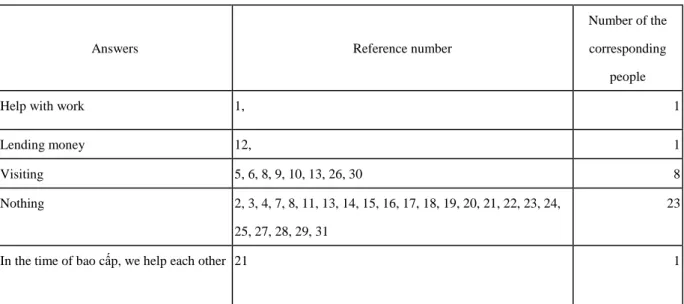
Table 6 reports subject’s answers to question (2).
A total of 23 people (74.2% of the subjects) answered “nothing,” whereas eight people answered “visiting (thăm hỏi).” In fact, “visiting” is one method of communication that could offer psychological help to subjects. However, it does not necessarily have a substantial influence on subjects’ daily life.
One person answered “help with work,” and another person answered “when faced with economic difficulty, lend money.” “Help with work,”and “Lending money” would influence a subject’s daily life more when compared with “visiting.” But, only 2 people responded like those.
Lastly, it is worth paying attention to answers such as “in the time of bao cấp,9 we helped each other.” This answer indicates that time and socioeconomic settings could be factors that affect relationships.
(3) What kind of help do you need from your neighbor? Table 7 reports subjects’ answers to question (3).
6 This is including the case of going out.
7 This is the answer of a father who has a daughter with disabilities. The daughter has a baby, but she
does not care much for the baby.
8 This number includes the case with the answer “bringing up a child.”
9 Before “ Đổi Mới ” policy adopted in December 1986, there was a period during which Vietnam
adopted a centrally planned economy. During that time, the State tried to control and administer every aspect of society.
48
As with question (2), the most common answer was “nothing” which was given by 21 people (67.7% of subjects).
Even though 10 people answered “visiting,” this number could be 14 people because four people who answered “nothing” also added comment “visiting.” These four people thought that “visiting” by the neighbors do not help them much.
One person answered “help with work,” and another person answered “help economically.” This situation is similar to the one consequent to the answers to question (2).
Other answers included like “help psychologically,” “mobilize,” and “have fun.” These neighbors live near the subjects; however, their relatives do not necessarily live nearby. Of course, there are many cases wherein relatives are also neighbors. However, even though neighbors might not have a blood tie to the subjects,10 a good relationship with neighbors could help the subjects in certain circumstances.
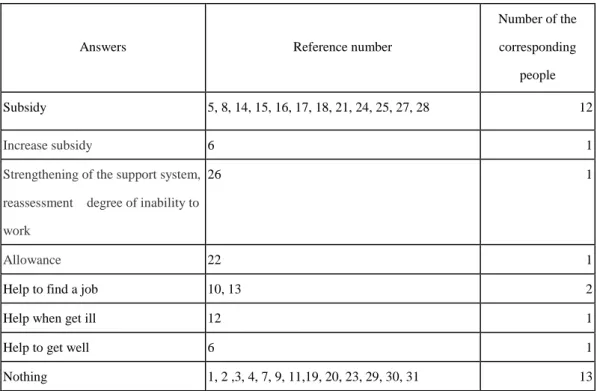
(4) What kind of help do you need from your state? Table 8 reports subjects’ answers to question (4).
There are three groups of answers, which are as follows:(1) subsidize;(2) employment; (3) health.
First, 14 people’s answers relate to the extent of the government’s “subsidize” behavior. These answers included a desire for a “reassessment of degree of inability to work,” which was given by a Vietnam War veteran who had been wounded and suffered disease during the war. He was not satisfied with the assessment of his health condition, which is used to decide the amount of subsidy received11.
Three people gave answers relating to “employment”. Among them, two people wanted a job in order to get an allowance and one person was working at a social organization. Further, two people gave answers related to “health.”
Interestingly, 13 subjects answered “nothing.” In comparison with the cases of question (1), (2), (3) and (5), question (4) received the second smallest number of responses. This means that the state is looked up to as one of the most needed actors, with subjects expecting economic, material and substantial support from the state.
(5) Do your friends help you when you face any difficulties?12
10 The subjects may feel at a burden, if there was a blood relation.
11 When I met him in 2013, his health condition was not good, and in 2014, I received word of his
death.
12 I put this question here, because I put this question in a different section of the questionnaire from
49
Among the 31 subjects, 12 people have friends. Table 9 provides information regarding exchanges between these 12 subjects and their friends.
Among those 12 people, only two people answered “yes” to question (5). One person provided examples of help as “sharing” and “offering mental exchange,” and the other respondents mentioned “mobilize” and “help with each other.”
However, most of the subjects think that their friends do not offer substantial, material help with their livelihood.
(6) Remarks
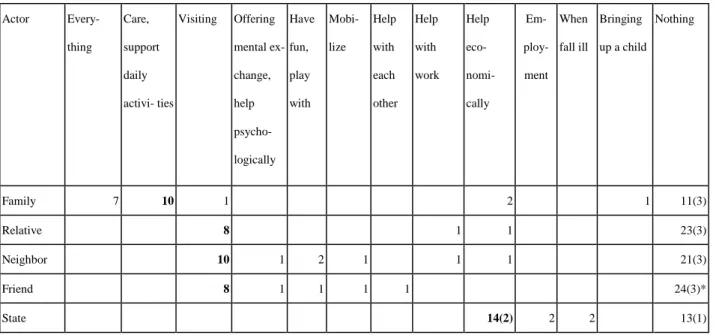
Table 10summarizes the answers given to questions (1)-(5).
Upon examining questions that received the answer “nothing,” it is clear that the roles and functions of the family and state are bigger than those of the other actors.
The family plays a vital role in supporting subjects’ livelihood. Except for the family, no actor can take care of “everything” for the subjects. Seven people (22.6 %) need support from their families in every aspect of daily life. More than 50 % of subjects receive daily support from their families with tasks such as cooking, washing, and personal hygiene.
These subjects’ families have not employed a helper. With respect to the role of the state, 14 subjects need a subsidy or want to increase the
amount of subsidy received from the state. Three people need support in tasks related to employment13, such as help in finding a job. In addition, two people need support when they fall ill. These answers indicate that subjects require economic, medical, and material support from the state.
Compared with “family” and “state,” the other actors (relative, neighbor and friend) do not have distinct roles in supporting the subjects. The most common activity is “visiting.” Therefore, on the basis of an analysis of the answers to questions (1) to (5) above, we obtain the following orders of support:
Family, State> Neighbor, Relative, Friend
5. What do you wish for the family?
Here, let’s consider the responses to the question “What do subjects wish for their family?” Table 11 provides subject’s answers.
50
Five people answered “health,” which is the most frequent answers. Four people answered “happiness.” One person each answered “marriage” and “harmony for the family.” These answers are related to psychological satisfaction.
Answers such as “job” and “education” each received three responses. Following these answers, there were answers such as “enough to eat,” “get money” and “build a new house” (each given by one person). These answers are related to actual interest.
Finally, a total of 12 people answered “I don’t know,” “nothing.”
6. Economic aspects of the subjects
Now, we focus on the economic aspects. We think about following matters: (1) subjects’ personal income and its distribution; (2) ratio of personal income of subjects in family income; (3) when the subjects do not have enough money, to whom do they look for help?
(1) Subjects’ personal income and its distribution
Here, we shall discuss subjects’ personal income and its distribution.
First, Table 12 provides results of survey. There are basically three types of the resources providing subject’s personal income except for 3 persons who do not have any personal income.
These sources are (1) a job, (2) a subsidy for the person with disabilities (PD)14, and (3) a subsidy related to the war. Category (3) offers two types of subsidy as follows: (a) a subsidy for victims of Agent Orange (tactical herbicides) (AO); and (b) a subsidy for wounded, diseased soldiers (WDS).
There are two people who earn an income from a job. Neither of them has any disabilities. One is working for the cooperatives (hợp tác xã), and the other works for a social organization. The income level of the former is between 1million dong and 1.1 million dong, and the income level of the latter is between 2.5 million dong and 2.6 million dong. Except for three people who do not have any income, all other respondents receive some form of subsidy. Of these, 17 people get the subsidy for the people with disabilities. Of the people receiving war-related subsidies, six get the subsidy for victims of Agent Orange and four receive the subsidy for wounded, diseased soldiers15. Among the victims of Agent Orange, there are two types: victims who participated in the Vietnam War (first
14 This kind of subsidy is the subsidy for people with disabilities who don’t have relation with war. 15 Actually there is a person who is both a wounded, diseased soldier as well as a victim of Agent
51
generation= 2 people=reference number 8, 30) and the children of the first generation (second generation= 4 people=reference number 10,19,25,31)16.
Focused on the people getting subsidy, depending on the kind of subsidy, subjects’ income can be classified into three main groups.
The first group earns between 100,000 dong and 400,000 dong. A total of 17 people fit this category, all of whom receive the subsidy for people with disabilities (PD).
The second group, containing five people, earns between 600,000 dong to and 1.9 million dong. These people receive the subsidy for victims of Agent Orange(AO) (one first-generation and four second-generation recipients).
The third group, containing four people, earns between 2.1 million and 4.2 million dong. All of these earning subjects receive the subsidy for the wounded, diseased soldiers (WDS)17.
(2) Ratio of personal income of subjects in family income
Now we examine the ratio of subjects’ personal income to family income, as presented in Table 13. On the basis of the ratio obtained, three groups can be identified as follows: (1) 0% to 30% (19 people) = Group 1; (2) 40% to 90% (seven people) = Group 2; (3) 100% (five people) = Group 318.
The arithmetic average of Group 1 is 10.1% (median=8.3%). The arithmetic average of the Group 2 is 61.9% (median=58.8%). On the basis of these data, we cannot ignore the subjects’ contributions to the family income. Even in Group 1, subjects contribute about 10% of the family income.
As we see in 5 (1), of the 28 subjects who have a personal income, only two have an income from a job, neither of whom has a disability.
We can, therefore, conclude that subjects’ contributions to the family income should not be ignored and the roles and functions played by the state in subjects’ lives in the economic field are relatively big.
(3) When the subjects do not have enough money, to whom do they look for help?
Table 14 indicates the result of the survey. The most common answer is “brother and sister” (eight people). The second most common answer is “child” (seven people), and the third one is “neighbor” (six people). Among those who answered “brother and sister,”
16 It means that while in the body of mother, they were exposed to dioxin. Also, many people expect
the influence to remain in the third generation.
17 As I wrote before, one person is not only a wounded, diseased soldier but also a victim of Agent
Orange.
52
only one subject lives with a brother or sister (in this case, with an elder brother19) in the same house. And among those who answered “child”, only three people live with a “child”. Also, subjects answered “mother,” “grandparents” live in a different house.
This result indicates that living in the same house is not necessarily an important factor in this matter. Even though in this paper, “family” has been defined as people who are married or have blood relationships and who live and eat together, we can still think of “brother and sister” and “child” in this case as being similar to families in the above sense because of the closeness of relationships.
However, the six people who answered “neighbor” indicate that nearness are factors that influence subject’ attitudes in this case.
(4) Remarks
Among the 31 subjects, 28 people (26 people with disabilities) have an income. Two
people without a disability have job. 26 subjects with disabilities receive a subsidy. Even though 92.9% of subjects with disabilities contribute to the family income, these resources come from the state. As we saw, there are several different kinds of subsidies, which depend on the cause of the disability. The subsidy for people who participated in the war is much higher than that for the others.
7. Concluding remarks
In this study, I analyzed information related to the surveyed families, relationships between subjects and the surrounding actors, the subjects’ wishes for their families, and the economic aspects of subjects.
Through this research, we have determined the paramount importance of the family’s role, and function in supporting subjects’ daily lives, which are wide-ranging, from “take care of the subjects directly” to economic aspects, among other things. In this case study, none of the families employed a helper to perform their role or function for the subjects. The state also has also plays important roles and functions in the economic aspects of subjects’ lives. Among 28 people with disabilities, 26 people receive a subsidy from the state. For these 26 people, the state subsidy is only one source of income even though there are many kinds of subsidies such as those for people with disabilities(PD), victims of Agent Orange(AO) and wounded and diseased soldiers(WDS) .
19 This is based on a reply of subject’s mother, because the subject can’t reply. As I noted before, in
53
Even though no subjects referred to health insurance in this research, 28 people with disabilities have received a health insurance card without paying the insurance fee.20
Relatives, friends and neighbors also play important roles and functions, among which “visiting” is the most common answer. In cases wherein subjects do not have enough money (Table14) and given the number of subjects’ answering “nothing” (Table10), the importance of the proximity to subject’s residence could be an important factor influencing relationships between subjects and the surrounding actors
Finally, if we contemplate the characteristics of the studied roles and functions played by the family, the difference from other actors consists of taking care of subjects directly (i.e., face to face). On the basis of the limited research conducted in this survey, we can determine that subject’s families provide the most intimate level of personal and personal-hygiene care.
But, there are further points which need to be clarified such as: (1) influence of the promotion of industrialization, modernization and international integration to the roles and functions of the Vietnamese families; (2) situations in the other places and different regions in Vietnam and so on. Next, I wish to be concerned with these matters.
20 As we seen before, there are a number of support systems depend on the subjects. Among the
three people without disabilities, two people participate in the health insurance system through the organization which they belong and one person does not participate in any system.
54
<Tables>
Table1 Number of menbers of family to be surveyed Number
of members
Reference number The number
of the corresponding families 1 5,15 2 2 6,7,9,11,12,25,26 7 3 10,17,18,19,22,28 6 4 1,3,13,20,23,24,29 7 5 16,21,27,30 4 6 2,14, 2 7 8,31 2 8 0 9 4 1
Note: Reference number 18,22,23 are family of persons with disabilities.
Source: Based on the research of author.
Table2 Number of generations in the family to be surveyed Number of
generations
Reference number The number
of the corresponding families 1 5,6,7,9,11,12,15,26, 8 2 1,3,10,13,17,18,20,22,23,24,25,27,28, 29, 14 3 2,4,8,14,16,19,21,30,31 9
Note: Reference number 18,22,23 are family of persons with
disabilities. Source: Based on the research of author.
55
Table 3 Types of disabilities
Type of disability Number of
corresponding people Physical 17 Mental / neurological 15 Intellectual 7 Visual 12 Hearing 4 Language 7 Internal 0 Multiple 14
Source: Author's field survey.
Table 4 Distribution of years of birth
Years of birth Reference number
Number of corresponding people 1930-1935 5 1 1936-1940 6, 7, 9 3 1941-1945 18 1 1946-1950 2, 11, 12, 17, 30 5 1951-1955 8, 14, 16, 21, 22 5 1956-1960 1, 15, 26 3 1961-1965 0 1966-1970 31 1 1971-1975 19, 23, 24, 25, 28 5 1976-1980 10 1 1981-1985 13, 20 2 1986-1990 4 1 1991-1995 3, 27, 29 3 1996-2000 0
Note: Reference numbers 18,22, and 23 are people without a disability. Source: Author's field survey.
56
Table 5 What kind of help do you need from your family?
Answers Reference number
The number of the corresponding
people
Everything 3 (Mother), 5 (Younger brother), 9 (Husband), 17
(wife), 25 (Mother), 26 (Wife), 27 (Parents)
7
Care 6, 8 ,20 3
Cooking 15 1
Cooking, washing clothes etc. 19 1
Care of the defecation, bathing 28 1
Bathing care 29 1
Cooking, washing clothes and bathing care 7, 24 2
Help to move 14 1 Bringing up a child 4 1 Money 11 1 Economy 12 1 Visiting 11 1 Nothing 1, 2, 10, 13, 16, 18, 21, 22, 23, 30, 31 11
Note: Parentheses contain main actors who have been taking a role. Reference number 18 ,22, and 23 are persons without a disability.
57
Table 6 What kind of help do you need from your relatives?
Answers Reference number
Number of the corresponding
people
Help with work 1, 1
Lending money 12, 1
Visiting 5, 6, 8, 9, 10, 13, 26, 30 8
Nothing 2, 3, 4, 7, 8, 11, 13, 14, 15, 16, 17, 18, 19, 20, 21, 22, 23, 24,
25, 27, 28, 29, 31
23
In the time of bao cấp, we help each other 21 1
Note: Reference numbers 18, 22, and 23 are persons without a disability. Source: Author's field survey.
Table 7 What kind of help do you need from your neighbor?
Answers Reference number
Number of the corresponding
people
Help with work 1 1
Help economically 12 1
Visiting 2, 3, 5, 8, 9, 10, 13, 18, 21, 30 10(+ 4)
Help psychologically 21, 1
Mobilization 21, 1
Nothing 3 (visit), 4, 7, 8 (visit), 11, 13 (visit),
14, 15, 16, 17, 18 (visit), 19, 20, 22, 23, 24, 25, 27, 28, 29, 31
21
Have fun 6, 26 2
Note: Among 20 persons who answered "nothing," four persons also answered "visit" after giving
their main answer. Reference numbers 18, 22, and 23 are persons without a disability. Source: Author's field survey.
58
Table 8 What kind of help do you need from your State?
Answers Reference number
Number of the corresponding
people
Subsidy 5, 8, 14, 15, 16, 17, 18, 21, 24, 25, 27, 28 12
Increase subsidy 6 1
Strengthening of the support system, reassessment degree of inability to work
26 1
Allowance 22 1
Help to find a job 10, 13 2
Help when get ill 12 1
Help to get well 6 1
Nothing 1, 2 ,3, 4, 7, 9, 11,19, 20, 23, 29, 30, 31 13
Note: Reference numbers 18, 22, and 23 are persons without a disability. Source: Author's field survey.
Table 9 Way of exchange with friends
Way of exchange Reference number Number of correspond ing people Visiting, meeting with each
other
13, 18, 21, 22, 23, 26, 30, 31 8
Play with each other 16 1
Offering mental exchanges, sharing
19 1
Mobilize 30 1
Help with each other 30 1
Do not help each other 11, 13, 16, 17, 21 5
Note: Reference numbers 18, 22, and 23 are people without a disability. Source: Author's field survey.
59
Table 10 Role and function of the actors surrounding the subjects (people)
Actor Every- thing Care, support daily activi- ties Visiting Offering mental ex- change, help psycho- logically Have fun, play with Mobi- lize Help with each other Help with work Help eco- nomi- cally Em- ploy- ment When fall ill Bringing up a child Nothing Family 7 10 1 2 1 11(3) Relative 8 1 1 23(3) Neighbor 10 1 2 1 1 1 21(3) Friend 8 1 1 1 1 24(3)* State 14(2) 2 2 13(1)
Note: Numbers in parentheses are numbers of persons without a disability. *19 subjects do not have friends.
Source: Author's field survey.
Table11 What do you wish for the family?
Wish for the family Reference number
Number of corresponding people
Health 8, 19, 22, 24, 31 5
Happiness 7,9,12,30 4
Enough to eat, consume enough 5 (younger brother) 1
Job 10 (bicycle repair) ,21, 23 3
Get money 27 1
Build a new house 1 1
Education 4 (father), 13, 19, 3
Marriage 18 1
Harmony for the family (Reunion of the family, wife's return)
10 1
I don't know 29 1
Nothing 2, 3, 6, 11, 15, 16, 17, 20, 25, 26, 28 11
Note: Reference numbers 18, 22, and 23 are people without a disability. Source: Author's field survey.
60
Table 12 Distribution of subjects' personal income
Income level/month (10000 dong) Reference number Number of corres-ponding people Number of people who get a subsidy not based on war Number of people who get a subsidy based on war 0 11,12,18, 3 0 0 0-10 0 0 0 10 - 20 1(PD), 2(PD), 4(PD), 5(PD), 6(PD), 7(PD), 9(PD), 13(PD), 14(PD), 15(PD), 16(PD), 24(PD), 28(PD), 29(PD) 14 14 0 20 - 30 0 0 0 30 - 40 3(PD), 20(PD), 27(PD) 3 3 0 40 - 50 0 0 0 50 - 60 0 0 0 60 - 70 31(AO) 1 0 1 70 - 80 0 0 80 - 90 0 0 0 90 - 100 0 0 0 100-110 23 1 0 0 110-120 19(AO), 25(AO) 2 0 2 120-130 0 0 0 130-140 0 0 0 140-150 0 0 0 150-160 10(AO), 1 0 1 160-170 0 0 0 170-180 0 0 0 180-190 8(AO) 1 0 1 190-200 0 0 0 210-220 21(WDS, 30(WDS*), 2 0 2 220-230 0 0 0 230-240 0 0 0 240-250 0 0 0
61 250-260 22 1 0 0 260-270 0 0 0 270-280 0 0 0 280-290 0 0 0 290-300 0 0 0 300-310 0 0 0 310-320 0 0 0 320-330 0 0 0 330-340 0 0 0 340-350 0 0 0 350-360 0 0 0 360-370 0 0 0 370-380 0 0 0 380-390 0 0 0 390-400 0 0 0 400-410 17(WDS) 1 0 1 410-420 26(WDS) 1 0 1 420-430 0 0 0 430-440 0 0 0 440-450 0 0 0 Total 31 17 9
Note: PD = Person with disabilities, WDS = Wounded, diseased soldier, AO = Victim of Agent Orange (tactical herbicides).Reference numbers 18,22, and 23 are people without a disability. *When I met this person in 2006, this person claimed to be a victim of Agent Orange (first generation).
62
Table 13 Ratio of personal income of the subjects to family income
Ratio Reference number Number of corresponding
people 0-1% 11,12,18 3 1-10% 4(PD) ,5(PD), 9(PD), 14(PD), 16(PD), 29(PD), 31(AO) 7 10-20% 1(PD), 2(PD), 3(PD) 7(PD), 28(PD) 5 20-30% 19(AO), 20(PD), 21(WDS), 23 4 30-40% 0 40-50% 30(WDS,AO) 1 50-60% 10(AO), 17(WDS), 22 3 60-70% 8(AO) 1 70-80% 25(AO) 1 80-90% 24(PD) 1 90-100% 0 100% 6(PD) ,13(PD), 15(PD),26(WDS), 27(PD) 5
Note: PD = Person with disabilities, WDS = Wounded, diseased soldier, AO = Victim of Agent Orange (tactical herbicides). Reference numbers 18, 22, and 23 are people without a disability.
Source: Author's field survey.
Table14 When the subjects do not have enough money, to whom do they look for help ?
Person asked for help Reference number Number of corresponding people
Neighbor 1, 3, 4, 7, 8, 19 6
Brother and Sister 3, 5, 13, 16, 17, 24, 28, 30 8
Child 6, 8, 11, 12, 18, 22, 30 7 Mother 17 (Bà mẹ), 13 2 Grandparents 24, 1 Nephew, niece 15 1 Relative 27 1 Bank 17, 23, 31 3 None 25, 1
Do not ask anybody 2, 9, 10, 4, 21 5
No Comment 20, 26, 29 3
Note: Reference numbers 18, 22, and 23 are people without a disability. Source: Author's field survey.