Indirect Comparison of Dupilumab and Mepolizumab Treatments for Uncontrolled Eosinophilic Asthma
―Bayesian Analysis of Randomized Controlled Trials―
Koichi ANDO*1,2), Akihiko TANAKA1), Hatsuko MIKUNI1), Tomoko KAWAHARA1), Naota KUWAHARA1), Ryo MANABE1),
Megumi JINNO1), Yoshito MIYATA1), Kuniaki HIRAI1), Tsukasa OHNISHI1), Shin INOUE2) and Hironori SAGARA1)
Abstract: The efficacy and safety of dupilumab, a humanized interleukin (IL)-4 receptor alfa monoclonal antibody (mAb) that inhibits the signaling of the type 2 cytokines IL-4 and IL-13, for the treatment of uncontrolled eosinophilic asthma remains to be fully characterized, particularly in comparison to other therapeutic mAbs. Therefore, we conducted a meta-analysis of randomized controlled trials
(RCTs) to indirectly compare the efficacy and safety of dupilumab with those of mepolizumab, a humanized anti-IL-5 mAb, in patients with uncontrolled eosinophilic asthma. Comparisons were made using the Bayesian statistical method. This meta- analysis complies with the Preferred Reporting Items for Systematic Reviews and Meta-Analyses (PRISMA) guidelines. Six RCTs were eligible for this study : two RCTs focused on dupilumab and four on mepolizumab. The primary efficacy outcome was a change in the forced expiratory volume at 1.0 second (FEV1.0), and the primary safety outcome was the incidence of severe adverse effects (SAE). The mean difference in changes in the FEV1.0 following treatment with dupilumab versus mepolizumab was 0.133 (95% CI, 0.016-0.252). There was no significant difference between these two agents in the incidence of SAE (OR, 1.99 ; 95% CI, 0.19-11.16). These results strongly indicate that dupilumab is more effective than mepolizumab and is generally well-tolerated in patients with uncontrolled eosinophilic asthma.
Key words: dupilumab, mepolizumab, interleukin-4/13, interleukin-5, asthma
Introduction
The increased global use of inhaled corticosteroids (ICS) has significantly reduced the frequency of hospitalizations for patients with acute exacerbations of bronchial asthma1,2). However, many patients do not achieve optimal asthma control despite using a combination of ICS and other anti-asthma medications, including systemic glucocorticoids3). Therefore, there is currently an unmet medical need for further or additional treatment options for patients with uncontrolled asthma1-3). Original
1)Department of Medicine, Division of Respiratory Medicine and Allergology, Showa University School of Medicine, 1-5-8 Hatanodai, Shinagawa-ku, Tokyo 142-8666, Japan.
2)Showa University Dental Hospital Medical Clinic.
* To whom corresponding should be addressed.
Recently, humanized therapeutic monoclonal antibodies (mAbs) targeting inflammatory signal- ing and downstream pathways, such as anti-IgE mAbs (omalizumab, XolairⓇ) or anti-interleukin
(IL)-5 mAbs (mepolizumab, NucalaⓇ), have become available4,5). These agents are now considered to be the cornerstone of therapeutic options in asthma treatment2,6). Emerging and potential therapeutic targets include IL-13 or IL-4/13. These mAbs mediate many features of allergic inflammation associated with pulmonary diseases that cause airway obstruction, such as goblet cell metaplasia, airway hyper-responsiveness, and mucus hypersecretion4,7).
Several phase 2 or 3 studies have revealed that new therapeutic mAbs, including anti-IL-13, anti-IL-4/13, and anti-IL-5 mAbs, significantly improve pulmonary function and the incidence of asthma exacerbation compared with the placebo in uncontrolled eosinophilic asthma5-8). Moreover, the frequencies of drug-related adverse events were similar between these therapeutic agents and the placebo. Based on these results, emerging and potential therapeutic mAbs are expected to be effective and well-tolerated treatment options for patients with uncontrolled eosin- ophilic asthma5). In particular, the anti-IL-4/13 monoclonal antibody dupilumab is considered to be an emerging cornerstone of asthma treatment because of its efficacy in reducing asthma exacerbation, improving pulmonary function, and improving asthma control.
Despite these advances, randomized controlled trials (RCTs) comparing the overall efficacy and safety of dupilumab with other conventional therapeutic mAbs, such as mepolizumab, have not yet been performed and the data remain limited. In our opinion, data regarding the comparative efficacy and safety of dupilumab and other conventional therapeutic mAbs, such as mepolizumab, is essential for establishing treatment strategies for uncontrolled eosinophilic asthma. Therefore, the aim of the present study was to perform a meta-analysis of RCTs to compare the overall efficacy and safety of dupilumab with that of mepolizumab in patients with uncontrolled eosinophilic asthma.
Materials and methods Literature search
A meta-analysis of RCTs was conducted to compare the efficacy of dupilumab with that of mepolizumab in asthma control in patients with uncontrolled eosinophilic asthma. This meta- analysis complies with the Preferred Reporting Items for Systematic Reviews and Meta-Analyses
(PRISMA) guidelines9,10). A literature search of MEDLINE (PubMed), Scopus, and the Cochrane Library databases was conducted covering data from October 2017. PubMed was used primarily for the publication search because it is an open-access database suitable for compre- hensive literature searches. Scopus was used to ensure that all eligible articles were detected in PubMed. The Cochrane Library database was searched for additional references. No restrictions were imposed on the search language. Additional relevant articles were identified in the refer- ence lists of the retrieved articles. The electronic databases were searched independently by two investigators (KA and AT). If discrepancies arose between the two investigators, a third inves- tigator (HS) was asked to evaluate the results, or the discrepancies were resolved by discussion with the research team.
Inclusion and exclusion criteria
Studies were considered eligible for inclusion in the present meta-analysis if they met the following criteria : 1) the RCTs assessed the clinical efficacy of dupilumab or mepolizumab in adolescents or adults aged ≥ 12 years with a diagnosis of uncontrolled or inadequately controlled severe or moderate-to-severe eosinophilic asthma, and 2) the study outcomes included a change in the forced expiratory volume at 1.0 second (FEV1.0) or in the incidence of severe adverse events. Observational, case-control, cohort, and non-blinded clinical trials were excluded. Other exclusion criteria included a history of current or former smoking, treatment with oral mainte- nance corticosteroids, pregnancy, and recent parasitic infection. All references were independently screened by KA and AT in accordance with the inclusion and exclusion criteria.
Data extraction
Data from eligible studies were extracted based on predefined criteria. The predefined pri- mary outcome was a change in the FEV1.0. If the efficacy outcomes in a study were compared among patients divided into groups with high and low levels of biomarkers, only patients in the high-biomarker group were included in the present meta-analysis. If efficacy outcomes were compared among patients treated with high and low doses of therapeutic mAbs, only patients in the high-dose groups were included in the present meta-analysis.
Risk of bias assessments
A Cochrane-recommended methodology9) was used to analyze each of the eligible studies for the following parameters : random sequence generation ; allocation concealment ; blinding of participants or personnel, or outcome assessment ; incomplete outcome data ; selective reporting ; and other forms of potential bias. The methodological quality of the eligible trials was also evaluated using the Jadad score, which grades studies based on their randomization, blinding, and dropout results11).
Statistical analysis
An indirect comparison between dupilumab and mepolizumab was conducted for each out- come using the OpenBUGS Bayesian Markov chain Monte Carlo software. We extracted direct evidence from the eligible studies that had compared either dupilumab or mepolizumab with a placebo (the common comparator). We then input the data into a simulation model to deter- mine the estimated distribution of treatment effects that would be observed if numerous trials were performed. In each outcome, a Markov chain was used with 10,000 iterations (following a “burn-in” of 1,000 iterations). We generated 95% credible intervals using the 2.5 and 97.5 percentiles of the posterior distributions. If a 95% credible interval included a value of 0 for the difference in means, or 1 for the odds ratios (ORs), then the result was construed as being non-significant.
Results
Study selection, Jadad scores, and study characteristics
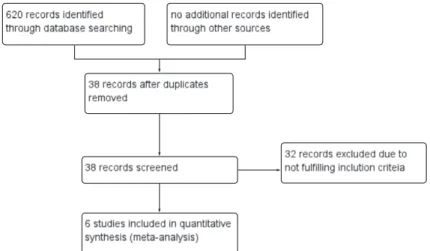
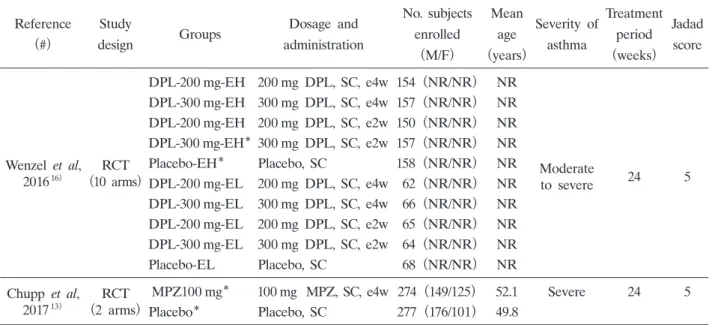
The study selection process is shown in Figure 1. A total of 620 articles were identified dur- ing the literature search with 193 articles, 284 articles, and 143 articles retrieved from PubMed, Scopus, and the Cochrane Library databases, respectively. Of these, 38 records remained after duplicates were removed. After screening the title/abstract and full text, six reports with 1800 randomized patients were ultimately included in the present meta-analysis12-17). One study com- pared outcomes among high biomarker, low biomarker, and placebo groups16). According to the predefined inclusion criteria for the present study, only the high biomarker and placebo groups were analyzed in this meta-analysis. All six studies were assigned a Jadad score of 5, establish- ing the high quality of these studies. The study characteristics are listed in Tables 1 and 2.
Risk of bias
The risk of study bias was evaluated based on random sequence generation (selection bias), allocation concealment (selection bias), blinding of participants and personnel (performance bias), and outcome assessment (detection bias); incomplete outcome data (attrition bias), selec- tive reporting (reporting bias), and other forms of potential bias. Each study was considered to have a low risk of bias for all factors analyzed, except for attrition bias in one study. The determinations of these assessments are shown in Figure 2.
Primary efficacy outcome
Pulmonary function was assessed by measuring the change in the FEV1.0 in five RCTs. In two studies, efficacy outcomes were compared between patients with high and low biomarker lev- els ; in these cases, patients in the high-biomarker group only were included in the present meta- analysis. A significant improvement in the FEV1.0 was found in patients treated with dupilumab compared to those treated with mepolizumab, with no improvement in the placebo group (mean difference, 0.133 ; 95% CI, 0.016-0.255 ; Fig. 3A).
Fig. 1. Study selection process
Table 1. Characteristics of the studies included in this meta-analysis (continued in Table 2)
Reference
(#)
Study
design Groups Dosage and
administration
No. subjects enrolled
(M/F)
Mean age
(years)
Severity of asthma
Treatment period
(weeks)
Jadad score
Pavord et al, 201215)
(4 arms)RCT
MPZ-750 mg* 750 mg MPZ, Ⅳ, e4w 156 (63/93) 48.6
Refractory
asthma 52 5
MPZ-250 mg 250 mg MPZ, Ⅳ, e4w 152 (59/93) 49.4 MPZ-75 mg 75 mg MPZ, Ⅳ, e4w 143 (39/104) 50.2 Placebo* Placebo, Ⅳ, e4w 155 (58/97) 46.4 Wenzel et al,
201317) RCT
(2 arms)
DPL-300 mg* 300 mg DPL, SC, weekly 52 (26/26) 37.8 Moderate to
severe 12 5
Placebo* Placebo, SC, e2w 52 (26/26) 41.6 Ortega et al,
201414) RCT
(3 arms)
MPZ-75 mg 75 mg MPZ, Ⅳ, e4w 191 (85/106) 50
Severe 32 5
MPZ-100 mg* 100 mg MPZ, SC, e4w 194 (78/116) 51 Bel et al,
201412)
(2 arms)RCT
Placebo* Placebo, e4w 191(84/107) 49
Severe 20 5
MPZ-100 mg* 100 mg MPZ, SC, e4w 69 (25/44) 50 Placebo* Placebo, SC, e4w 66 (36/30) 50
F, female ; M, male ; RCT, randomized controlled trial ; MPZ, mepolizumab ; DPL, dupilumab ; Ⅳ, administered intravenously ; SC, administered subcutaneously ; e2w, every two weeks ; e4w, every four weeks ; NR, not reported ;
*patient groups included in the present meta-analysis.
Table 2. Characteristics of the studies included in this meta-analysis (continued from Table 1)
Reference
(#)
Study
design Groups Dosage and
administration
No. subjects enrolled
(M/F)
Mean age
(years)
Severity of asthma
Treatment period
(weeks)
Jadad score
Wenzel et al, 201616) RCT
(10 arms)
DPL-200 mg-EH 200 mg DPL, SC, e4w 154 (NR/NR) NR
Moderate
to severe 24 5
DPL-300 mg-EH 300 mg DPL, SC, e4w 157 (NR/NR) NR DPL-200 mg-EH 200 mg DPL, SC, e2w 150 (NR/NR) NR DPL-300 mg-EH* 300 mg DPL, SC, e2w 157 (NR/NR) NR
Placebo-EH* Placebo, SC 158 (NR/NR) NR
DPL-200 mg-EL 200 mg DPL, SC, e4w 62 (NR/NR) NR DPL-300 mg-EL 300 mg DPL, SC, e4w 66 (NR/NR) NR DPL-200 mg-EL 200 mg DPL, SC, e2w 65 (NR/NR) NR DPL-300 mg-EL 300 mg DPL, SC, e2w 64 (NR/NR) NR
Placebo-EL Placebo, SC 68 (NR/NR) NR
Chupp et al, 201713)
(2 arms)RCT
MPZ100 mg* 100 mg MPZ, SC, e4w 274 (149/125) 52.1 Severe 24 5
Placebo* Placebo, SC 277 (176/101) 49.8
F, female ; M, male ; RCT, randomized controlled trial ; DPL, dupilumab ; e2w, every 2 weeks ; e4w, every 4 weeks ; NR, not reported ; MPZ, mepolizumab ; EH, patient groups with eosinophil phenotype ; EL, patient groups with eosinophil phenotype ; SC, administrated subcutaneously ;
*patient groups included in the present meta-analysis.
Primary safety outcome
Comparative safety profiles were assessed based on the incidence of severe adverse events in six studies. In two studies, efficacy outcomes were compared between patients with high and low biomarker levels. In these cases, patients in the high-biomarker group only were included in the present meta-analysis. The results of the Bayesian analysis revealed that there was no significant difference in the incidence of severe adverse events between dupilumab and mepoli- zumab (OR, 1.99 ; 95% CI, 0.19-11.16 ; Fig. 3B).
Fig. 2. Bias assessment summary. (A) The risk of bias graph presents the items at risk of bias, as judged by the authors, as percentages for each study included in the meta-analysis. (B) The risk-of-bias summary presents items at risk of bias, as judged by the authors, for each study included in the meta-analysis.
Fig. 3. (A) Estimated percentage density of the mean differences in changes in the FEV1.0 after treatment with dupilumab versus mepolizumab. (B) Estimated percentage density of the log odds ratios (ORs) of the incidence of severe adverse effects following treatment with dupilumab versus mepolizumab. DPL ; dupilumab, MPZ ; mepolizumab.
Discussion
In the present meta-analysis, we compared the efficacy and safety of dupilumab with those of mepolizumab in individuals with uncontrolled eosinophilic asthma. The results indicated that pulmonary function improved significantly following treatment with dupilumab compared to mepolizumab, and that the safety profiles of the two agents were similar.
Previous RCTs of dupilumab or mepolizumab showed that these therapeutic agents signifi- cantly improved pulmonary function and had similar safety profiles compared to the placebo.
However, no study has directly compared the efficacy and safety of dupilumab and mepolizumab.
The results of the present study indicate that dupilumab was more effective than mepolizumab in improving pulmonary function, and it has a safety profile similar to that of mepolizumab.
The plausibility of these results can be explained by looking into the molecular biological mech- anisms of dupilumab. Type 2 T helper (Th2) cytokines, such as IL-4 and IL-13, have a large pathogenic impact on the eosinophilic and allergic inflammatory process in approximately 50% of patients with uncontrolled or severe asthma18). The findings of the present study strongly support the use of dupilumab as an effective option for patients with uncontrolled eosinophilic asthma.
To the best of our knowledge, the present study is the first meta-analysis to compare the effi- cacy and safety of dupilumab and mepolizumab in patients with uncontrolled eosinophilic asthma.
We found that treatment with dupilumab was an effective and tolerable therapeutic option.
Despite the promising findings, the present meta-analysis has some limitations that must be considered. First, only published studies were considered. Therefore, it is possible that publica- tion bias may be present, although this was not apparent in the funnel plot. Second, by nature, a meta-analysis is a retrospective research study that is subject to the same methodological limitations as retrospective studies. For example, all six studies included in the present meta- analysis were supported by a pharmaceutical company, and the authors reported receiving grants or uncompensated support. It is possible that these sources of funding may have influenced the study outcomes. Moreover, outcome selection bias may have occurred. Third, the drug dosages and frequency of drug administration varied among the studies included in the present meta- analysis. Furthermore, the total doses of these therapeutic agents varied partly because of differ- ent study durations, which may have affected the final conclusions. Finally, we included a small number of studies (six) in our meta-analysis. Although meta-analyses involving small numbers of studies are not uncommon in orphan disease research, the presence of heterogeneity may confound the results.
In conclusion, we assessed and compared the efficacy and safety of dupilumab with that of mepolizumab in treating pulmonary function in patients with uncontrolled eosinophilic asthma.
Dupilumab significantly improved pulmonary function compared to mepolizumab, although both agents had a similar safety profile. These results suggest that dupilumab is an effective and generally well-tolerated treatment for patients with uncontrolled eosinophilic asthma. Further studies are required to confirm the efficacy profile and tolerability of dupilumab in patients with uncontrolled eosinophilic asthma.
Funding None.
Conflicts of Interest disclosure
The authors have no conflicts of interest to disclose.
References
1) Carr TF, Kraft M. Update in asthma 2014. Am J Respir Crit Care Med. 2015;192:157-163.
2) Ichinose M, Sugiura H, Nagase H, et al. Japanese guidelines for adult asthma 2017. Allergol Int. 2017;66:163-189.
3) Moore WC, Peters SP. Severe asthma: an overview. J Allergy Clin Immunol. 2006;117:487-494; quiz495.
4) Mitchell PD, El-Gammal AI, OʼByrne PM. Emerging monoclonal antibodies as targeted innovative therapeutic approaches to asthma. Clin Pharmacol Ther. 2016;99:38-48.
5) Nixon J, Newbold P, Mustelin T, et al. Monoclonal antibody therapy for the treatment of asthma and chronic obstructive pulmonary disease with eosinophilic inflammation. Pharmacol Ther. 2017;169:57-77.
6) McCracken JL, Veeranki SP, Ameredes BT, et al. Diagnosis and management of asthma in adults: a review.
JAMA. 2017;318:279-290.
7) Fricker M, Heaney LG, Upham JW. Can biomarkers help us hit targets in difficult-to-treat asthma? Respirology.
2017;22:430-442.
8) Barranco P, Phillips-Angles E, Dominguez-Ortega J, et al. Dupilumab in the management of moderate-to-severe asthma: the data so far. Ther Clin Risk Manag. 2017;13:1139-1149.
9) Higgins JPT, Green S, eds. Cochrane handbook for systematic reviews of interventions. West Sussex: John Wiley &
Sons; 2011.
10) Shamseer L, Moher D, Clarke M, et al. Preferred reporting items for systematic review and meta-analysis pro- tocols (PRISMA-P) 2015: elaboration and explanation. BMJ(Internet). 2015;350:g7647. (accessed 2016 Nov 25)
Available from: https://www.bmj.com/content/bmj/349/bmj.g7647.full.pdf
11) Jadad AR, Moore RA, Carroll D, et al. Assessing the quality of reports of randomized clinical trials: is blinding necessary? Control Clin Trials. 1996;17:1-12.
12) Bel EH, Ortega HG, Pavord ID. Glucocorticoids and mepolizumab in eosinophilic asthma. N Engl J Med.
2014;371:2434.
13) Chupp GL, Bradford ES, Albers FC, et al. Efficacy of mepolizumab add-on therapy on health-related quality of life and markers of asthma control in severe eosinophilic asthma (MUSCA): a randomised, double-blind, placebo- controlled, parallel-group, multicentre, phase 3b trial. Lancet Respir Med. 2017;5:390-400.
14) Ortega HG, Liu MC, Pavord ID, et al. Mepolizumab treatment in patients with severe eosinophilic asthma. N Engl J Med. 2014;371:1198-1207.
15) Pavord ID, Korn S, Howarth P, et al. Mepolizumab for severe eosinophilic asthma (DREAM): a multicentre, double-blind, placebo-controlled trial. Lancet. 2012;380:651-659.
16) Wenzel S, Castro M, Corren J, et al. Dupilumab efficacy and safety in adults with uncontrolled persistent asthma despite use of medium-to-high-dose inhaled corticosteroids plus a long-acting beta2 agonist: a randomised double- blind placebo-controlled pivotal phase 2b dose-ranging trial. Lancet. 2016;388:31-44.
17) Wenzel S, Ford L, Pearlman D, et al. Dupilumab in persistent asthma with elevated eosinophil levels. N Engl J Med. 2013;368:2455-2466.
18) Barranco P, Phillips-Angles E, Dominguez-Ortega J, et al. Dupilumab in the management of moderate-to-severe asthma: the data so far. Ther Clin Risk Manag. 2017;13:1139-1149.
[Received December 25, 2017 : Accepted January 16, 2018]