Surface Functionalization of Polymer Substrates through Radiation-Induced Graft Polymerization:
Conventional and Controlled Polymerization Techniques
DISSERTATION
Submitted for the Degree of Doctor of Philosophy Division of Molecular Science
Gunma University 2018
by
Jordan F. Madrid (B.Sc., M.Sc.)
ii
THESIS DECLARATION
I, Jordan F. Madrid, certify that:
This thesis does not contain material which has been accepted for the award of any other doctorate degree or diploma in my name, in any university or other tertiary institution.
No part of this work will, in the future, be used in a submission in my name, for any other doctorate degree or diploma in any university or other tertiary institution.
This thesis does not contain any material previously published or written by another person, except where due reference has been made in the text.
The work(s) are not in any way a violation or infringement of any copyright, trademark, patent, or other rights whatsoever of any person.
This thesis contains published work and/or work prepared for publication, some of which has been co-authored.
Signature:
Date:
iii
ABSTRACT
The formation of functional hybrid polymeric materials by attaching graft polymer chains with desirable and advantageous tailored properties to the surface of a base polymer with desirable bulk character is an attractive application of graft polymerization. The grafting process allows us to modify, tune and alter the characteristics of base polymers and to control their wettability, biocompatibility, adsorption capacity and behavior, conductivity, antimicrobial property, and reactivity.
The resulting graft copolymer creates significant opportunities to develop new hybrid platforms for a number of applications.
In this work, graft copolymers were prepared from natural and synthetic base polymers through the radiation-induced graft polymerization in solution and emulsion phases. We report the synthesis of adsorbents based from lignocellulosic polymers (water hyacinth fibers and abaca-based nonwoven fabric) and the development of method for imparting hydrophobic property to microcrystalline cellulose. The radiation-induced method that we employed results in the synthesis of base polymers with covalently bonded poly(glycidyl methacrylate) graft polymers that serve as anchors for the ligand which is responsible for the enhanced adsorption character. The synthesized grafted adsorbents exhibited improved adsorption capacity and kinetics than the base polymers and in some cases even better than commercially available ion exchange resins. The “grafting from” approach that stemmed from radiation-induced initiation offers the possibility to functionalize the surface of these base materials with graft polymer chains that possess contrasting properties (hydrophobic/hydrophilic).
The developed modification platform enables the fabrication of radiation grafted cellulose that is compatible with hydrophobic matrices.
We also investigated the graft polymerization of a polymer through a technique that combines the merits of radiation-induced synthesis and reversible addition-fragmentation chain transfer (RAFT) process in emulsion phase. We demonstrated the facile combination of these techniques in simple reaction that ultimately results in the fabrication of copolymer with immobilized epoxide groups on the surface. The preparation of graft copolymers through a method that combines the advantages and merits of radiation-induced grafting in water-based emulsion, an
iv environment friendly green method, and controlled radical polymerization via RAFT- mediation is described, for the first time, in the second major part of this thesis. Both electron beam- and γ-radiation initiation processes were used in the synthesis. While conventional graft polymerization in emulsion phase yielded graft copolymers with low degree of grafting values (< 7.5% at 10% (wt/wt) glycidyl methacrylate concentration), addition of RAFT agent to the graft polymerization system allowed the synthesis of polyethylene/polypropylene-g-poly(glycidyl methacrylate) (PE/PP-g- PGMA) with more tunable degree of grafting (8% < Dg < 94%) by controlling the grafting parameters. Relatively good control (PDI ~ 1.2 for selected grafting conditions) during polymerization was attained. The number average molecular weight of free homopolymers increased as a function of monomer conversion. NMR analyses of the free homopolymers indicate the presence of dithiobenzoate group from 4-cyano-4-((phenylcarbonothioyl)thio)pentanoic acid RAFT agent on the polymer chain. These evidences have been considered as a proof of RAFT mechanism.
Furthermore, the reactivity and adsorption behavior of the graft copolymer produced from the combination of radiation-induced grafting in emulsion phase and RAFT-mediation was evaluated. The PGMA graft chains from the PE/PP-g-PGMA that was prepared in emulsion phase through radiation-induced RAFT-mediated graft polymerization showed higher reactivity towards amination reaction at 40 °C compared to the conventionally prepared graft copolymer. Similar to the previously prepared adsorbent, the epoxide rings of PGMA served as a precursor group that were eventually converted to diglycol amic acid ligands. The diglycol amic acid modified PE/PP-g-PGMA prepared with RAFT mediation exhibited better Eu and Sm adsorption performance than the diglycol amic acid adsorbent prepared using conventional grafting. The diglycol amic acid modified PE/PP-g-PGMA exhibited selectivity for Eu over Cu and Fe in acidic solutions. The introduction of RAFT polymerization in the DA-modified adsorbent preparation process enhanced the reactivity and performance in terms of Eu and Sm adsorption.
v
TABLE OF CONTENTS
Section Page
Title Page i
Thesis Declaration ii
Abstract iii
Table of Contents v
List of Figures viii
List of Tables xiv
List of Abbreviations xv
Acknowledgement xvii
Introduction 1
CHAPTER 1
Radiation-induced graft polymerization in solution and emulsion phases: modification of cellulosic and lignocellulosic polymeric materials
9
1.1 INTRODUCTION 9
1.2 EXPERIMENTAL 12
1.2.1 Materials 12
1.2.2 Radiation-induced grafting 13
1.2.3 Post-grafting functionalization 14
1.2.4 Adsorption experiments 15
1.2.5 Characterization of grafted material 16
1.3 RESULTS AND DISCUSSION 17
1.3.1 Effect of solvent 17
1.3.2 Effect of absorbed dose 21
1.3.3 Effect of GMA concentration 26
1.3.4 Amination of APNWF-g-PGMA and WHF-g-PGMA 29 1.3.5 Characterization of pristine and grafted cellulosic and
lignocellulosic polymers
33
1.3.5.1 FTIR Analysis 33
(i) FTIR-ATR Analysis of WHF-g-PGMA and aminated WHF-g-PGMA
33 (ii) FTIR-ATR Analysis of APNWF-g-PGMA and aminated APNWF-g-PGMA
35 (iii) FTIR-ATR Analysis of MCC and MCC-g-PGMA 36
1.3.5.2 SEM-EDX Analysis 37
(i) SEM Analysis of WHF-g-PGMA 38
(ii) EDX Analysis of WHF and WHF-g-PGMA 39 (iii) EDX Analysis of aminated WHF-g-PGMA 39 (iv) SEM Analysis of APNWF-g-PGMA and aminated APNWF-g-PGMA
41 (v) SEM Analysis of MCC and MCC-g-PGMA 41
vi
1.3.5.3 Thermogravimetric Analysis 42
(i) Thermogravimetric Analysis of WHF-g-PGMA and aminated WHF-g-PGMA
42 (ii) Thermogravimetric Analysis of APNWF-g-PGMA and aminated APNWF-g-PGMA
43 (iii) Thermogravimetric Analysis of MCC and MCC-g- PGMA
45 1.3.5.4 XRD Characterization of MCC and MCC-g-PGMA 46 1.3.6 Characteristics and kinetics of heavy metal uptake 47 1.3.6.1 Aminated WHF-g-PGMA as adsorbent 47 (i) Effect of pH on metal ion adsorption 48 (ii) Effect of contact time on Cr3+, Cu2+ and Pb2+
adsorption
49
(iii) Adsorption Kinetics 51
(iv) SEM-EDX analysis of metal loaded EDA functionalized WHF
53 1.3.6.2 Aminated APNWF-g-PGMA as adsorbent 53 (i) Effect of pH on Cu2+ and Ni2+ adsorption 53 (ii) Effect of initial concentration on metal ion uptake 55
(iii) Adsorption kinetics 57
1.3.7 Wettability test of MCC-g-PGMA 60
1.4 CONCLUSIONS 61
1.5 REFERENCES 63
CHAPTER 2
RAFT-mediated graft polymerization in emulsion phase: electron beam
and γ-radiation initiation 67
2.1 INTRODUCTION 67
2.2 EXPERIMENTAL 69
2.2.1 Materials 69
2.2.2 Irradiation 70
2.2.3 Graft polymerization 70
2.2.3.1 Pre-irradiation grafting 70
2.2.3.2 Simultaneous grafting 71
2.2.4 Characterization of pristine trunk polymer, grafted polymers and free homopolymers
72
2.3 RESULTS AND DISCUSSION 74
2.3.1 Simultaneous grafting 74
2.3.1.1 RAFT-mediated radiation-induced synthesis of PE/PP-g-PGMA
74 2.3.1.2 Characterization of the homopolymers formed in the polymerization mixture during grafting
79 2.3.1.3 Characterization of the PE/PP-g-PGMA 84
vii
2.3.2 Pre-irradiation grafting 90
2.3.2.1 Effects of RAFT agent on pre-irradiation grafting in emulsion phase
90 (i) Comparison between RAFT-mediated and conventional grafting
93 (ii) Effects of monomer concentration 96 (iii) Effects of monomer-to-RAFT agent ratio 99 2.3.2.2 Surface and thermal properties of grafted materials 102
2.4 CONCLUSIONS 106
2.5 REFERENCES 107
CHAPTER 3
Towards enhanced reactivity and adsorption performance through RAFT-mediated grafting
110
3.1 INTRODUCTION 110
3.2 EXPERIMENTAL 111
3.2.1 Materials 111
3.2.2 Irradiation and Graft Polymerization 112 3.2.3 EDA and DA Functionalization Reactions 113 3.2.4 Characterization of grafted and functionalized polymers 115
3.2.5 Batch adsorption 115
3.2.6 Column adsorption 116
3.3 RESULTS AND DISCUSSION 117
3.3.1 Influence of temperature and reaction time in the amination reaction
117 3.3.2 Influence of solvent in the reaction of aminated PE/PP with
diglycolic anhydride
120 3.3.3 Characterization of grafted and functionalized polymers 121
3.3.3.1 FTIR Analysis 121
3.3.3.2 XPS Analysis 122
3.3.3.3 SEM-EDX Analysis 124
3.3.4 Adsorption experiments 125
3.4 CONCLUSIONS 130
3.5 REFERENCES 131
CHAPTER 4
Conclusions and Perspectives
133
APPENDIX 137
Appendix I: Publications and presentations arising from this thesis
viii
LIST OF FIGURES
Title Page
Figure 1 Simultaneous and pre-irradiation grafting 2 Figure 1.1 Cellobiose unit: two β-D-glucopyranose units joined together by β- 1,4-glycosidic linkages.
9
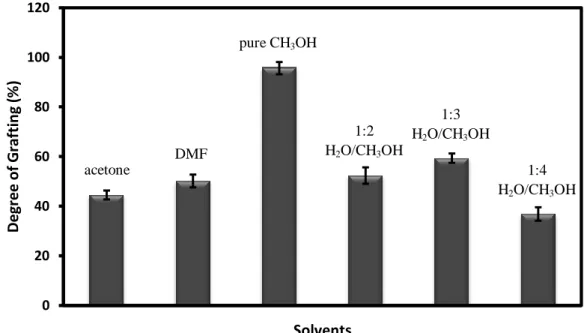
Figure 1.2 Effect of solvent on degree of grafting in the radiation-induced graft polymerization of GMA from WHF. Grafting conditions: 30 kGy, 8 kGy hour-1, 5% GMA, 3 trials.
18
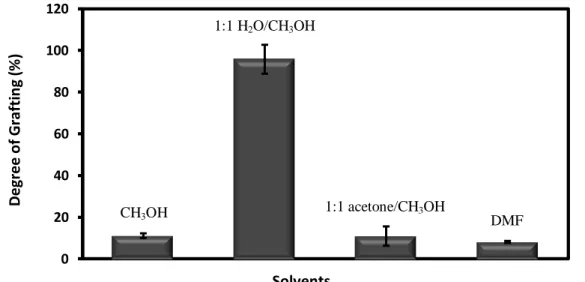
Figure 1.3 Effect of solvent on the degree of grafting in the radiation-induced graft polymerization of GMA from MCC. Grafting conditions: 10 kGy, 8 kGy hour-1, 7% GMA, 2 trials.
19
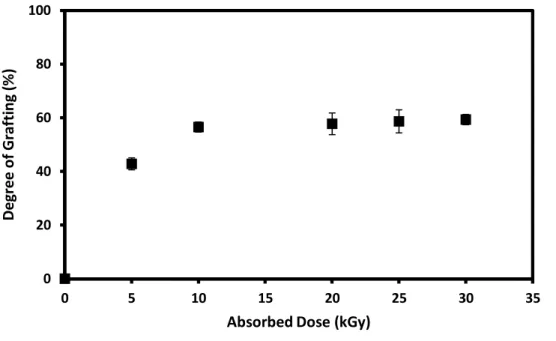
Figure 1.4 Effect of absorbed dose on degree of grafting in the radiation- induced graft polymerization of GMA from WHF. Grafting conditions: 5%
GMA, 8 kGy hour-1 dose rate, 1:3 water/methanol, 3 trials.
22
Figure 1.5 Effect of absorbed dose on degree of grafting in the radiation- induced graft polymerization of GMA from MCC. Grafting conditions: 7%
GMA, 8 kGy hour-1 dose rate, methanol, 2 trials.
22
Figure 1.6 Effect of absorbed dose on degree of grafting at different reaction times for graft polymerization of GMA from electron beam pre-irradiated APNWF. Grafting conditions: 5% GMA, 0.5% Tween 20, 200 kGy (◆), 100 kGy (■) and 50 kGy (●) absorbed doses, 5 trials.
24
Figure 1.7 Effect of monomer concentration on degree of grafting in the radiation-induced graft polymerization of GMA from WHF. Grafting conditions: 10 kGy, 8 kGy hour-1, 1:3 water/methanol, 3 trials.
26
Figure 1.8 Effect of monomer concentration on degree of grafting in the radiation-induced graft polymerization of GMA from MCC. Grafting conditions: 10 kGy, 8 kGy hour-1, methanol, 2 trials.
27
Figure 1.9 Effect of monomer concentration on degree of grafting at different reaction times for graft polymerization of GMA from electron beam pre- irradiated APNWF. Grafting conditions: 0.5% Tween 20, 50 kGy absorbed dose, 7% (■), 5% (◆) and 3% (●) GMA, 5 trials.
28
Figure 1.10 Chemical structure of the monomer glycidyl methacrylate (GMA). 29
ix Figure 1.11 Variation of EDA group density with reaction time at (a) 15%, (b)
30%, (c) 50% and (d) 70% (wt/wt) EDA concentration. EDA group density was determined gravimetrically (◆) and by an elemental analyzer (■), 3 trials.
30
Figure 1.12 FTIR-ATR spectra of (a) pristine WHF, (b) PGMA homopolymers and (c) WHF-g-PGMA with 58% degree of grafting.
34
Figure 1.13 FTIR-ATR spectra of (a) WHF-g-PGMA with 58% degree of grafting and (b) EDA functionalized WHF-g-PGMA.
34
Figure 1.14 FTIR-ATR spectra of (a) pristine APNWF, (b) APNWF-g-PGMA with 150% degree of grafting and (b) EDA functionalized APNWF-g-PGMA.
36
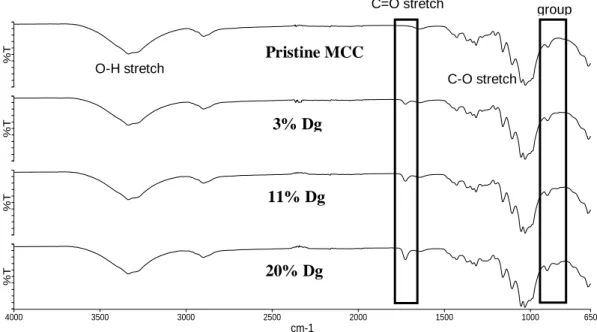
Figure 1.15 FTIR-ATR spectra of pristine MCC and MCC-g-PGMA with different degrees of grafting.
37
Figure 1.16 SEM photographs of (a) pristine WHF, WHF-g-PGMA with (b) 32% Dg, (c) 58% Dg, (d) 93% Dg (1500x magnification) and (e) 93% Dg (5000x magnification).
38
Figure 1.17 EDX spectrum of (a) water hyacinth fibers and (b) 58% grafted fibers.
39
Figure 1.18 Nitrogen elemental map from the EDX analysis of the EDA functionalized WHF with 1.78 mmol/gram EDA functional group density.
40
Figure 1.19 SEM photographs of (a) pristine APNWF, (b) APNWF-g-PGMA with 140% Dg and (c) aminated APNWF-g-PGMA.
40
Figure 1.20 SEM photographs of (a) pristine MCC and (b) MCC-g-PGMA with 12% Dg.
41
Figure 1.21 TGA thermographs of (a) pristine WHF and (b) WHF-g-PGMA with 58% degree of grafting and (c) aminated WHF-g-PGMA.
43
Figure 1.22 TGA thermographs of APNWF, APNWF-g-PGMA and aminated APNWF-g-PGMA.
45
Figure 1.23 TGA thermographs of pristine MCC, and MCC-g-PGMA with 11% and 18% degrees of grafting.
46
Figure 1.24 X-ray diffraction patterns of pristine MCC (black) and MCC-g- PGMA (red).
47
Figure 1.25 Effect of pH on the removal of Cr3+, Cu2+ and Pb2+ by the EDA functionalized WHF-g-PGMA (◆) and pristine WHF (■), 3 trials.
48
Figure 1.26 Time profiles for the adsorption of Cr3+, Cu2+, and Pb2+ from 150 50
x ppm solutions onto EDA functionalized WHF-g-PGMA (◆) and pristine WHF (■).
Figure 1.27 Effect of pH on amount of (a) Ni2+, (b) Cu2+ ions adsorbed by the aminated APNWF-g-PGMA, 3 trials.
54
Figure 1.28 Effect of initial concentration on the adsorption of (a) Cu2+ and (b) Ni2+ ions by the aminated APNWF-g-PGMA (◆) and DIAION WA20 (■) at 30 °C and initial pH of 5, 2 trials.
56
Figure 1.29 Chemical structure of DIAION WA20. 57 Figure 1.30 The relative amount of (a) Cu2+ and (b) Ni2+ ions removed from 10 ppm solutions as a function of time by aminated APNWF-g-PGMA (●) and DIAION WA20 (■) at pH 5 and 30oC.
58
Figure 1.31 Wettability tests of (a) pristine MCC and MCC-g-PGMA with (b) 6%, (c) 10% and (d) 18% degree of grafting values.
60
Figure 2.1 4-cyano-4-((phenylcarbonothioyl)thio)pentanoic acid (CPPA) RAFT agent.
75 Figure 2.2 GPC plots for free poly(glycidyl methacrylate) formed in the γ- initiated graft polymerization from PE/PP mediated by the RAFT agent 4- cyano-4-((phenylcarbonothioyl)thio) pentanoic acid (CPPA) at 10% (wt/wt) GMA and 1% (wt/wt) Tween20: (a) 0.5 kGy, 100:1 GMA-to-CPPA, Mn,GPC = 2500, PDI = 1.16; (b) 1 kGy, 100:1 GMA-to-CPPA, Mn,GPC = 4900, PDI = 1.16; (c) 3 kGy, 100:1 GMA-to-CPPA, Mn,GPC = 6700, PDI = 1.16; (d) 0.5 kGy, 400:1 GMA-to-CPPA, Mn,GPC = 7800, PDI = 1.29; (e) 1 kGy, 400:1 GMA-to-CPPA, Mn,GPC = 13600, PDI = 1.28.
80
Figure 2.3 1H NMR spectrum (300 MHz, CDCl3) of free poly(glycidyl methacrylate) (Mn,GPC = 4900, PDI = 1.16) formed in the γ-initiated graft polymerization from PE/PP mediated by the RAFT agent 4-cyano-4- ((phenylcarbonothioyl)thio) pentanoic acid (CPPA) at 10% (wt/wt) GMA, 1%
(wt/wt) Tween20 and 100:1 GMA-to-CPPA molar ratio. Inset is the plot for peaks between 7.3-8.0 chemical shifts due to dithiobenzoate aromatic protons of CPPA.
82
Figure 2.4 Dependence of Tg on molecular weight of free PGMA formed in the γ-initiated graft polymerization from PE/PP mediated by the RAFT agent 4-cyano-4-((phenylcarbonothioyl)thio) pentanoic acid (CPPA).
83
Figure 2.5 ATR-FTIR spectra of (a) pristine PE/PP, (b) PE/PP-g-PGMA, Dg = 7%, (c) PE/PP-g-PGMA, Dg = 24%, and (d) PE/PP-g-PGMA, Dg = 92%.
85
xi Figure 2.6 Plot of 1730 cm-1 and 2848 cm-1 peak area ratios at different Dg.
Peak areas were calculated from FTIR spectrum at absorbance mode.
85
Figure 2.7 SEM images at 300x magnification and elemental oxygen maps of (a), (d) pristine PE/PP; (b), (e) PE/PP-g-PGMA, Dg = 24%; and (c), (f) PE/PP- g-PGMA, Dg = 92%.
86
Figure 2.8 Thermogravimetric curves of pristine PE/PP and PE/PP-g-PGMA with different Dg.
88
Figure 2.9 XPS survey wide scan and C1s high-resolution spectra of (a) and (b) pristine PE/PP, (c) and (d) PE/PP-g-PGMA, RAFT-mediated grafting Dg = 90%, (e) and (f) PGMA homopolymer, RAFT-mediated, Mn,GPC = 2500 g mol-
1, PDI = 1.16.
89
Figure 2.10 Possible reactions for GMA polymerization from irradiated PE/PP surface in presence of CPPA.
91 Figure 2.11 (a) RAFT agents evaluated in this study: (i) 4-cyano-4- ((phenylcarbonothioyl)thio) pentanoic acid (CPPA), (ii) 2-cyano-2-propyl benzodithioate (CPDB), (iii) 2-cyano-2-propyl 4-cyanobenzodithioate (CPCB), (iv) 2-phenyl-2-propylbenzodithioate (PPB); (b) Variation of Dg with reaction time using different RAFT agents: CPPA (♦), CPDB (■), CPCB (x), PPB (●);
3 trials.
92
Figure 2.12 1H NMR spectrum of poly(glycidyl methacrylate) in CDCl3. Inset is the plot for peaks between 7.3-8.0 chemical shift due to aromatic ring protons of the RAFT agent.
93
Figure 2.13 Variation of Dg with reaction time for the graft polymerization of GMA from PE/PP in presence of RAFT agent (▲-100 kGy, ♦ - 50 kGy) and without RAFT agent (● - 100 kGy, ■ - 50 kGy). GMA concentration, 10%
(wt/wt); monomer to surfactant weight ratio, 10:1; monomer to RAFT agent molar ratio, 400:1; reaction temperature, 40 °C, 3 trials.
94
Figure 2.14 Possible chain transfer reactions of the propagating chains and dormant chains.
95 Figure 2.15 Effect of monomer concentration on Dg at different reaction times for PE/PP irradiated at (a) 50 kGy and (b) 20 kGy absorbed dose. 10% (▲), 5% (■) and 3% (♦) (wt/wt) GMA concentration; monomer to surfactant weight ratio, 10:1; monomer to RAFT agent molar ratio, 400:1; reaction temperature, 40 °C, 3 trials.
98
Figure 2.16 Variation of Dg with reaction time for the graft polymerization of GMA from PE/PP in presence of RAFT agent at different GMA to RAFT agent molar ratio: ■ - 400:1, ▲- 200:1, ♦ - 100:1. GMA concentration, 3%
(wt/wt); monomer to surfactant weight ratio, 10:1; reaction temperature, 40 °C, 100
xii 3 trials.
Figure 2.17 Variation of Dg with reaction time for the graft polymerization of GMA from PE/PP in presence of RAFT agent (♦) and without RAFT agent (■). Absorbed dose, 20 kGy; GMA concentration, 3% (wt/wt); monomer to surfactant weight ratio, 10:1; monomer to RAFT agent molar ratio, 400:1;
reaction temperature, 40 °C, 3 trials.
100
Figure 2.18 FTIR-ATR spectra of (a) pristine PE/PP and (b) PE/PP-g-PGMA synthesized in emulsion state in presence of RAFT agent CPPA.
103
Figure 2.19 SEM images for the fiber surface with corresponding EDX oxygen elemental maps for (a) pristine PE/PP and (b) PE/PP-g-PGMA.
104
Figure 2.20 Thermogravimetric and derivative thermogravimetric curves for pristine PE/PP (•••), PE/PP-g-PGMA synthesized in presence of CPPA, 100%
Dg (- -), PE/PP-g-PGMA conventional synthesis, 120% Dg (–).
105
Figure 3.1 Preparation of DA modified PE/PP 114
Figure 3.2 Conversion plots for the ring-opening reaction of the epoxide groups from graft PGMA with ethylenediamine at (a) 40 °C and (b) 60 °C:
50% EDA reaction with PE/PP-g-PGMA prepared with RAFT agent (♦), without RAFT agent (■), and 25% EDA reaction with PE/PP-g-PGMA prepared with RAFT agent (▲), without RAFT agent (x), 3 trials.
118
Figure 3.3 Diglycol amic acid (DA) group density resulting from the reaction of the EDA modified PE/PP-g-PGMA with diglycolic anhydride in different solvents as function of reaction time. EDA group density: 2.0 mmol gram-1, room temperature, solvents: dichloromethane (▲), dimethylsulfoxide (■), dimethylformamide (♦), 3 trials.
121
Figure 3.4 FTIR-ATR spectra of PE/PP-g-PGMA, ethylenediamine modified PE/PP-g-PGMA and diglycolic anhydride modified PE/PP-g-PGMA.
122
Figure 3.5 Surface elemental composition based from XPS survey wide scan spectra of (a) ethylenediamine modified PE/PP-g-PGMA and (b) diglycolic anhydride modified PE/PP-g-PGMA.
123
Figure 3.6 SEM images, oxygen and nitrogen elemental maps of PE/PP-g- PGMA (a, d, g), ethylenediamine modified PE/PP-g-PGMA (b, e, h) and diglycolic anhydride modified PE/PP-g-PGMA (c, f, i).
124
Figure 3.7 pH dependence of Eu and Sm adsorption on the diglycolic anhydride modified PE/PP-g-PGMA. Mass of adsorbent: 15 mg; volume of Eu/Sm solution: 25 mL; initial concentration of metal ions: 5 ppm; Eu adsorption using adsorbent prepared with RAFT-mediation (◆) and without
126
xiii RAFT-mediation (■); Sm adsorption using adsorbent prepared with RAFT-
mediation (▲) and without RAFT-mediation (x); 2 trials.
Figure 3.8 Effect of competing Cu and Fe ions on Eu adsorption by the DA modified PE/PP-g-PGMA prepared with RAFT-mediation. Mass adsorbent: 15 mg; volume of metal ion solution: 25 mL; initial concentration of metal ions: 1 ppm; 2 trials.
127
Figure 3.9 Adsorption isotherm of Eu on DA modified PE/PP-g-PGMA at 25
°C. Mass adsorbent: 15 mg; initial pH: 2.20, volume of Eu solution: 25 mL;
time: 24 hours.
128
Figure 3.10 Plot of effluent relative concentration against effluent volume, in BV, for the column mode adsorption of (a) Eu, and (b) Eu (●) and Fe (◆) using DA modified PE/PP-g-PGMA. Adsorbent: 26.9 mg, 4 mm height, 7 mm diameter; space velocity 250 hour-1; Eu and Fe initial concentration: 1 ppm.
129
xiv
LIST OF TABLES
Title Page
Table 1.1 Effect of dose rate on degree of grafting for the radiation-induced graft polymerization of GMA from WHF. Grafting conditions: 5% GMA, 1:3 water/methanol, 10 kGy absorbed dose, nitrogen atmosphere.
24
Table 1.2 EDA group densities of aminated WHF-g-PGMA at different EDA concentrations. IPA solvent, 30 °C
32
Table 1.3 Kinetic parameters for the adsorption of Cr3+, Cu2+, and Pb2+ ions from 75 ppm solutions onto EDA functionalized WHF and pristine WHF.
52
Table 2.1. RAFT-mediated graft polymerization of GMA aqueous emulsion (10:1 GMA to Tween 20 weight ratio) onto PE/PP at room temperature under γ-irradiation at dose rate of 1 kGy h-1.
76
Table 2.2 GPC data for free poly(glycidyl methacrylate) obtained from grafting of GMA from PE/PP. Absorbed dose, 20 kGy; GMA concentration, 3%; GMA to RAFT molar ratio, 400:1; GMA to surfactant weight ratio, 10:1.
101
Table 3.1 Distribution coefficients (D) for the indicated metal ions. 127
xv
LIST OF ABBREVIATIONS
1H NMR proton nuclear magnetic resonance
APNWF abaca/polyester nonwoven fabric
APNWF-g-PGMA abaca/polyester nonwoven fabric-graft-poly(glycidyl methacrylate)
ATR-FTIR attenuated total reflection Fourier transformed infrared spectroscopy
BV bed volumes
CPPA 4-cyano-4-((phenylcarbonothioyl)thio) pentanoic acid CRP controlled radical polymerization
CTA chain transfer agent
D distribution coefficient
DA diglycol amic acid
DCM dichloromethane
Dg degree of grafting
DGA diglycolic anhydride
DMF dimethylformamide
DMSO dimethylsulfoxide
DSC differential scanning calorimetry
DTG derivative thermogravimetry
EB electron beam
EDA ethylenediamine
EDX energy dispersive X-ray spectroscopy
FTIR Fourier transformed infrared spectroscopy
GMA glycidyl methacrylate
GPC gel permeation chromatography
xvi ICP-OES inductively coupled plasma optical emission
spectrometer
IPA isopropanol
MCC microcrystalline cellulose
MCC-g-PGMA microcrystalline cellulose-graft-poly(glycidyl methacrylate)
Mn number average molecular weight
NWF nonwoven fabric
PDI polydispersity index
PE polyethylene
PE/PP polyethylene/polypropylene
PE/PP-g-PGMA polyethylene/polypropylene-graft-poly(glycidyl methacrylate)
PGMA poly(glycidyl methacrylate)
PNRI Philippine Nuclear Research Institute
PP polypropylene
RAFT reversible addition-fragmentation chain transfer
REE rare earth element
RIGP radiation-induced graft polymerization
SEM scanning electron microscopy
Tg glass transition temperature
TG thermogravimetry
TGA thermogravimetric analysis
THF tetrahydrofuran
WHF water hyacinth fibers
WHF-g-PGMA water hyacinth fibers-graft-poly(glycidyl methacrylate)
XPS X-ray photoelectron spectroscopy
XRD X-ray diffraction
xvii
ACKNOWLEDGEMENT
First and foremost, I would like to express my sincere gratitude to my advisors Dr. Takeshi Yamanobe, Dr. Lucille Abad, and Dr. Noriaki Seko for their advices, guidance and support during the conduct of the researches discussed in this thesis, especially to Yamanobe sensei and Seko san for accepting me to work in their laboratories. They unhesitatingly provided me with all the resources and assistance required for the successful execution of this research. Doumo arigatou gozaimasu.
I gratefully acknowledge (1) Japan Society for the Promotion of Science (JSPS) for the RONPAKU Ph.D. Fellowship award that gave me the opportunity to get my doctor degree here in Japan and (2) Philippine Council for Industry, Energy and Emerging Technology Research and Development (PCIEERD-DOST) for some financial assistance during the conduct of this work.
My utmost appreciation goes to the members of the Research Project Environmental Polymer (Noriaki Seko, Yuji Ueki, Seichi Saiki, Natsuki Hayashi, Haruyo Amada, Hiroyuki Hoshina, Jinhua Chen, Noboru Kasai, Makikatsu Takahashi, Takashi Hamada, Masaaki Omiichi, Shoko Taguchi, Yoko Shimoyama, Tomomi Higuchi) for their support and assistance in the conduct of experiments and also for making my life here in Japan a very comfortable and enjoyable one.
My deepest gratitude to the current and former members of the PNRI Chemistry Research Group for the serious and not so serious discussions, and the excellent company on and off work.
Most importantly and above all, to Mama, Papa, Ate, Kuya Tutong, Bashong, Ivy, LJ, Jabeth, Kuya Raul, Ate Beth and the soon to be member of our family, my former girlfriend and future wife, Lanilyn. Everything is about you guys, my treasured and most cherished family. This thesis is for you all!
/JFM
1 INTRODUCTION
Graft polymerization is a well-established and widely accepted method for customizing polymer properties. The immense interest given by polymer scientists in the development of graft copolymers can be credited to the unique characteristics observed from this type of macromolecule. A graft copolymer may combine some of the characteristic properties of both polymers while random copolymers usually exhibit properties that are intermediate between those of the two basic homopolymers;
hence graft copolymers have a similar role in polymer science, as do alloys in metallurgy. Another reason for the increasing interest in developing these materials is based on the potential applications in various fields such as separation and purification [1], adsorption of dyes, precious and heavy metals [2 – 6], energy conversion and energy storage [7], solid phase catalyst for biodiesel production [8]
and biomedical applications [9 – 10].
Numerous methods have been suggested for the preparation of graft copolymers. In general, these methods confer graft side chains on the base polymer backbone by robust covalent bonding [11]. Three basically different grafting approaches are known: the “grafting to” approach which couples the reactive end group of a pre-formed polymer to a functional group on the polymer backbone; the
“grafting from” approach that allows the growth of the graft polymer chain from active initiating sites on the polymer backbone; and the “grafting through” approach which is the copolymerization of a macro monomer with a low molecular weight co- monomer [12].
In practice, the “grafting from” approach is the most commonly utilized method for grafting. This approach requires formation of active sites (free radicals or charged intermediates) that will serve as initiation points on the main trunk polymer backbone. Graft polymerization may be initiated by chemical reactions, plasma, UV- light and ionizing radiation. In recent years, an increasing number of papers have been published on ionizing radiation-induced graft polymerization of natural and synthetic polymers [1 – 10], mostly because of the fact that the methods using ionizing radiation are often easier to handle than most conventional chemical techniques.
Moreover, radiation-induced grafting methods are very general, owing to the
2 Free radical formation
Radiation
Polymer backbone/
trunk polymer
Simultaneous grafting
Pre-irradiation grafting Monomer molecules
Radiation
unselective absorption of radiation in matter. Radiation-induced graft polymerization (RIGP) has the advantages of (a) facile preparation, (b) final material free from toxic chemical initiators, (c) availability of various radiation sources, (d) ambient conditions required for RIGP, (e) possibility of surface- and bulk-grafting, and (f) ability to combine polymers with incompatible properties. The proper combination of monomer, polymer substrate, radiation source and RIGP technique allowed the synthesis of functional polymers for new applications and better performance than conventional polymer materials [1, 3].
Figure 1 Simultaneous and pre-irradiation grafting Polymer backbone/
trunk polymer
Monomer addition
Grafted polymer Grafted polymer
Homopolymers
3 Two main techniques are generally used in performing RIGP: (1) simultaneous (mutual) irradiation grafting and (2) pre-irradiation grafting techniques.
These techniques are illustrated in Figure 1. In the simultaneous irradiation technique, the trunk polymer is immersed in the monomer solution and the mixture is irradiated.
An inevitable side reaction for the simultaneous method is the formation of too much free homopolymers because the monomer is also subjected to radiation. This homopolymerization can be suppressed by adding homopolymerization inhibitors in the monomer solution. In the pre-irradiation technique, the trunk polymer is irradiated (in vacuo or inert conditions) to produce free radicals and subsequently, is thoroughly mixed with pure monomer or monomer mixture under regulated reaction conditions.
Because the monomer molecules are not irradiated, pre-irradiation methods produce very minimal to zero homopolymers.
A detailed report for the effects of grafting reaction parameters (e.g. absorbed dose, dose rate, type of monomer, monomer concentration, type of trunk polymer, type of solvent, reaction temperature, and reaction time) on the amount of grafted polymer chain, normally expressed as degree of grafting (Dg), was provided by Nasef and Hegazy (2004) [13]. Among the reaction parameters, the solvent plays a critical part in the diffusion of the monomer molecules to the free radical sites and in the initiation, propagation and termination of the grafted polymer chains. Therefore, the type of solvent used in the grafting reaction has a significant effect on the Dg, degree of graft penetration and homogeneity [14]. In a solvent-mediated grafting, the monomer and trunk polymer are mixed in an appropriate solvent to facilitate monomer diffusion and to improve swelling of the base polymer. This technique has been commonly used in various RIGP methods. However, the type of solvent has to cautiously chosen to prevent early termination of the grafted polymer chains. Polar solvents (e.g. alcohols and dimethylsulfoxide) and non-polar solvents (e.g. toluene, chloroform) are commonly used in monomer dilution for RIGP. However, it is also possible to use water instead of organic solvents to perform grafting, through the emulsion-mediated grafting method. In emulsion-mediated grafting, the monomer mixture is prepared by homogenizing the monomer in water in the presence of a surfactant. The minimal use of organic solvents contributes to the green chemistry of the process [4]. Also, water provides an almost ideal solvent medium because unlike many organic solvents, it is highly resistant to attack by free radicals so that chain
4 transfer to the solvent can be kept to a minimum [15]. Moreover, grafting in emulsion phase provides advantages in terms of decrease in both irradiation dose and monomer concentration requirements, thus it is cheaper and economically feasible [4, 16].
Most RIGP processes proceed via free-radical mechanism. Irreversible termination of propagating polymer chains and chain transfer reactions are features intrinsic to the process of free radical polymerization. Both irreversible termination of propagating polymers and chain transfer reactions result in a loss of control over chain length and chain structure together with broadening of the molecular weight distribution[17 – 19]. These drawbacks have led to the research area of controlled free-radical polymerization (CRP), a group of polymerization techniques which applies chain transfer agents (CTA) in conventional free radical polymerization. It has been established that CTA has profound effects in free radical polymerization processes. Chain transfer processes can be utilized to control the polymer architecture and to reduce polydispersity [20]. Developments in the field of chain transfer polymerizations include the use of conventional transfer agents [21], catalytic transfer agents based on cobalt complexes [22], degenerative transfer [23], and chain transfer by reversible addition-fragmentation (RAFT) [18, 24 – 29].
Among the CRP techniques, chain transfer by reversible addition- fragmentation (RAFT) is one of the most adaptable techniques for providing pseudo- living characteristics to free radical polymerization [17, 30, 31]. RAFT polymerization shows high potential because it possesses significant advantages such as suitability to wide range of monomer (e.g. acrylates, methacrylates, and styrenic monomers), applicability under a wide array of polymerization conditions (e.g. wide range of solvents, ambient temperature, photo- or γ-initiation) and processes (e.g.
solution or emulsion). RAFT-mediated graft polymerization at ambient conditions by means of γ-radiation has been successfully conducted for different types of monomers [32]. In this technique, thiocarbonyl organic compounds such as trithiocarbonates and dithioesters are used as chain transfer agents. During RAFT mediated γ-radiation initiated grafting, propagation of both grafted polymer chains (covalently linked to the surface), and free/ungrafted polymer chains (in the solution) are regulated by the same RAFT agent simultaneously. Hence, the molecular weights and molecular weight distributions of grafted and ungrafted/free polymer chains should be very similar when the grafting proceeds from the trunk polymer surface [31].
5 Free radical polymerization is commonly employed in the industrial production of a wide range of synthetic materials, with approximately 50% of these conventional free radical polymerization processes currently being performed in emulsions. In order to achieve industry acceptance, RAFT-mediated polymerization and other CRP methods must be viable in emulsion, particularly in water-based emulsion system [17]. Besides being an environment friendly solvent, the use of water-based emulsions offers additional advantages in terms of easy processing of the product material. Although emulsion-mediated RIGP using the “grafting from”
approach has been performed using several combinations of monomers and base polymers [2 – 4, 6, 16], so far there is no study on the effects of CTA, particularly RAFT agents, on the emulsion-mediated RIGP using electron beam or γ-radiation for initiation.
The purpose of this thesis is to functionalize natural and synthetic polymers through radiation-induced graft polymerization techniques, such as simultaneous and pre-irradiation grafting, and to evaluate the effects of RAFT chain transfer agent in the emulsion phase graft polymerization. The applications of the graft copolymers in adsorbing different heavy and rare earth metals, and in imparting hydrophobic surface are also explored. Chapter 1 explores the solution- and emulsion-mediated radiation- induced graft polymerization of the oxirane group-containing monomer glycidyl methacrylate (GMA) on microcrystalline cellulose, delignified water hyacinth fibers and abaca/polyester nonwoven fabrics. These trunk polymers were radiation grafted using the proposed technique for the first time; hence their successful epoxide group functionalization opens doors to a variety of new applications. The conventional
“grafting from” approach was utilized and both simultaneous irradiation and pre- irradiation methods for grafting were employed in synthesizing the grafted cellulosic and lignocellulosic materials, emphasizing on the effects of the reaction parameters on the amount of grafted chains. The radiation-grafted water hyacinth fibers and abaca/polyester polymers were tested for their heavy metal adsorption capacity, while the radiation-grafted microcrystalline cellulose was tested for its wettability in two immiscible solvents. The techniques utilized in Chapter 1 primarily proceed through the free radical polymerization process, which suffers from lack of control on the molecular weight and molecular weight distribution of the graft chains. We imparted control to the radiation-grafting process by addition of RAFT agent to the monomer
6 mixture to suppress irreversible termination reactions. Chapter 2 analyzes, for the first time, the effects of adding RAFT agent in the industry relevant emulsion- mediated radiation-induced graft polymerization of glycidyl methacrylate (GMA) on the synthetic polymer backbone polyethylene/polypropylene. The union of the two techniques, i.e. RAFT-mediation and radiation induced grafting in emulsion phase, was motivated by the prospective combination of the merits and advantages offered by the individual methods. Both simultaneous irradiation and pre-irradiation techniques were applied and the results, in terms of the amount of grafted polymer chain and molecular weight distribution of homopolymers, from the two techniques were discussed. Chapter 3 focuses on the comparison of the chemical reactivity and the europium adsorption capacity of the poly(glycidyl methacrylate) (PGMA) modified polymers prepared in emulsion phase via RAFT-mediated radiation-induced grafting with those synthesized using the conventional radiation-induced grafting. The synthesized radiation-grafted polymers are suitable as precursor material and it can be tailor fit to meet the desired properties of the target applications, which in this case, as rare earth element adsorbent. All the results and important insights were synthesized in Chapter 4, together with the recommendations and suggestions for future research.
7 REFERENCES:
1. Nasef, M.M.; Güven, O. Prog. Polym. Sci. 2012, 37, 1597-1656.
2. Madrid, J.F.; Nuesca, G.M.; Abad, L.V. Radiat. Phys. Chem. 2014, 97, 246-252.
3. Madrid, J.F.; Ueki, Y.; Seko, N. Radiat. Phys. Chem. 2013, 90, 104-110.
4. Seko, N.; Ueki, Y.; Hoshina, H.; Tamada, M. J. Ion Exch. 2007, 18, 232-235.
5. Hoshina, H., Ueki, Y., Saiki, S., Seko, N. Int. J. Org. Chem. 2014, 4, 195-200.
6. Kavaklı, P.A.; Kavaklı, C.; Seko, N.; Güven, O. 2016. Radiat. Phys. Chem. 2016, 127, 13-20.
7. Nasef, M.M.; Gürsel, S.A.; Karabelli, D.; Güven, O. Prog. Polym. Sci. 2016, 63, 1-41.
8. Ueki, Y.; Saiki, S.; Shibata, T.; Hoshina, H.; Kasai, N.; Seko, N. Int. J. Org.
Chem. 2014, 4, 91-105.
9. Akiyama, Y.; Kushida, A.; Yamato, M.; Kikuchi, A. and Okano, T. J. Nanosci.
Nanotech. 2007, 7, 796-802.
10. Biazar, E.; Zeinali, R.; Montazeri, N.; Pourshamsian, K.; Behrouz, M.J.;
Asefnejad, A.; Khoshzaban, A.; Shahhosseini, G.; Soleimannejad, M.; Najafabadi, Abyani, R.; Jamalzadeh, H.; Fouladi, M.; Hagh, S.R.; Khamaneh, A.S.; Kabiri, S.;
Keshel, S.H.; Mansourkiaei, A. Int. J. Nanomed. 2010, 5, 549-556.
11. Wojnarovits, L.; Foldvary, Cs.M.; Takacs, E. Radiat. Phys. Chem. 2010, 79, 848- 862.
12. Roy, D.; Semsarilar, M.; Guthrie, J.T.; Perrier, S. Chem. Soc. Rev. 2009, 38, 2046- 2064.
13. Nasef, M.M.; Hegazy, E.S.A. Prog. Polym. Sci. 2004, 29, 499-561.
14. Nasef, M.M. Polym. Int. 2001, 50, 338-346.
15. Franks, F. Water A Comprehensive Treatise: Volume 4: Aqueous solutions of amphiphiles and macromolecules, Plenum Press, New York, USA, 1975, 585-586.
16. Wada, Y.; Tamada, M.; Seko, N.; Mitomo, H. J. Appl. Polym. Sci. 2008, 107, 2289-2294.
17. Vosloo, J.J.; De Wet-Ross, D.; Tonge, M.P.; Sanderson, R.D. Macromolecules 2002, 35, 4894-4902.
18. Grasselli, M.; Betz, N. Nucl. Instrum. Meth. B 2005, 236, 201-207.
19. Matyjaszewski, K. and Spanswick, J. Mater. Today 2005, 8, 26-33.
8 20. Rizzardo, E.; Chong, Y.K.; Evans, R.; Moad, G. and Thang, S.H. Macromol.
Symp. 1996, 111, 1-11.
21. Boutevin, B. Adv. Polym. Sci. 1990, 94, 69.
22. Davis, T.P.; Kukulj, D.; Haddleton, D.M.; Maloney, D.R. Trends Polym. Sci.
1995, 3, 365-373.
23. Gaynor, S.C.; Wang, J.S.; Matyjaszewski, K. Macromolecules 1995, 28, 8051- 8056.
24. Moad, G.; Chiefari, J.; Chong, Y.K.; Krstina, J.; Mayadunne, R.T.A.; Postma, A.;
Rizzardo, E.; Thang, S.H. Polym. Int. 2000, 49, 993-1001.
25. Yu, W.; Kang, E.; and Neoh, K. Langmuir 2005, 21, 450-456.
26. Yoshikawa, C., Goto, A., Tsujii, Y., Fukuda, T., Yamamoto, K., and Kishida, A.
Macromolecules 2005, 38, 4604-4610.
27. Wang, W.; Neoh, K.; Kang, E. Macromol. Rapid Comm. 2006, 27, 1665-1669.
28. Millard, P.E.; Barner, L.; Reindhardt, J.; Buchmeiser, M.; Barner-Kowollik, C.;
Muller, A. Polymer 2010, 51, 4319-4328.
29. Barsbay, M.; Güven, O. Polymer 2013, 54, 4838-4848.
30. Moad, G.; Rizzardo, E.; Thang, S.H. Aust. J. Chem. 2005, 58, 379–410.
31. Barsbay, M.; Güven, O.; Stenzel, M.H.; Davis, T.P; Barner-Kowollik, C.; Barner, L. Macromolecules 2007, 40, 7140–7147.
32. Barsbay, M.; Güven, O. Radiat. Phys. Chem. 2009, 78, 1054–1059.
9
CHAPTER 1
RADIATION-INDUCED GRAFT POLYMERIZATION IN SOLUTION AND EMULSION PHASE: MODIFICATION OF CELLULOSIC AND LIGNOCELLULOSIC POLYMERIC MATERIALS
1.1 INTRODUCTION
Cellulose is a natural polymer and it constitutes the most abundant and renewable biopolymer resource available worldwide. Natural sources of cellulose include several agricultural products and byproducts, such as cotton, abaca, sugar cane bagasse, jute, rice straw [1 – 3], some animals and in some cases, bacteria and fungi [4 – 6]. Cellulose is one of the raw materials with high potential for the modern industry. It is a carbohydrate composed of β-D-glucopyranose units joined together by β-1,4-glycosidic linkages, as illustrated in Figure 1.1. The glucose units in cellulose are oriented in a way, which produces long, and unbranched chains, allowing the cellulose molecules to develop highly ordered structures. Cellulose samples normally include both amorphous and crystalline regions.
O OH H H H H
H O H
OH
O O
OH H H H H
H O O H
OH
O
n
Figure 1.1 Cellobiose unit: two β-D-glucopyranose units joined together by β-1,4- glycosidic linkages.
In nature, cellulose is normally intimately associated with lignin and hemicelluloses, and some protein, lipids, wax, etc. [7] and the structure of this biomass is normally referred to as lignocellulose. The relative proportion of the three main components (i.e. cellulose, hemicellulose and lignin) of lignocellulose is dependent on the plant source [8]. Hemicelluloses are branched carbohydrates, comprised of five- and six-carbon sugars such as arabinose, galactose, mannose and
10 xylose, with lower degree of polymerization than cellulose. Lignin, on the other hand, is a branched, three-dimensional, complex polymer with both aromatic, such as p- coumaryl alcohol, coniferyl alcohol and sinapyl alcohol and aliphatic components.
Both hemicelluloses and lignins can be eliminated from the raw material source by alkali hydrolysis [9].
Radiation processing of natural materials to modify their properties has been studied for several applications [3, 10 – 19]. Radiation interacts with matter to create excited or ionized atoms or molecules, followed by a rapid train of processes involving definable intermediates (ions, electrons, free radicals) leading to chemical change. The free radicals generated in the amorphous regions of cellulose decay fast, while others that are located in the crystalline and in the boundary of amorphous and crystalline areas of cellulose structure decay more gradually. The long-lived radicals may give rise to further degradation [20] and may also initiate graft polymerization in the presence of a different type of monomer to impart new functionalities.
In recent years, radiation-induced graft polymerization is considered as an important research subject, because it has been shown as a good method for the modification of chemical and physical properties of polymeric material [3, 19, 21 – 27]. The process of radiation-induced grafting has advantages over chemical grafting.
The most pronounced is the absence of chemical initiators, which are, most of the time, unnecessary in the final product. Residual initiators slowly leach out when the polymers are in use and thus are not desirable for biomaterials and for polymers which are targeted for environmental applications [3, 10]. Another advantage is that high temperature is not necessary for radiation-induced grafting; hence heat sensitive monomers can be polymerized or grafted safely [3, 10].In order to obtain different kinds of functional polymers, grafting of monomers that have various types of functional group or those which are straightforwardly transformed to other functional chemical groups have been tried. Radiation-induced grafting has also been shown to impart important properties to cellulosic materials; such properties include flame retardancy, high absorbency, water impermeability, abrasion resistance, anti-crease properties, rot resistance, thermo-responsive property and properties for bio-medical applications [25].
11 Graft polymerization of various monomer molecules from cellulose and lignocellulosic materials may be performed via mutual/simultaneous grafting or pre- irradiation grafting techniques. In the simultaneous grafting technique, the monomer and the trunk polymer are simultaneously irradiated to create initiation sites (i.e. free radicals) for graft polymerization. Most researches used monomer solutions instead of pure monomers in the simultaneous grafting technique. During irradiation, free radicals are generated from the decomposition of solvent, monomer, and trunk polymer. Generally, the solution consists of more solvent than monomer molecules and as approximation, it may be assumed that the bulk of high-energy radiation is absorbed by the solvent and the generated free radicals from solvent molecules radiolysis react with both the monomer and the trunk polymer [3]. An increase in the irradiation dose boosts the generation of free radicals on the cellulose and lignocellulose materials, and consequently, the number of active sites that may initiate graft polymerization also increases leading to increased grafting yield. In pre- irradiation grafting of cellulose, 10-40 kGy absorbed doses are utilized and in this range, the degree of grafting increases with absorbed dose [28].
In this chapter, the modification of microcrystalline cellulose and two lignocellulosic biomasses, namely water hyacinth and abaca fibers, by radiation grafting is discussed. Microcrystalline cellulose (MCC) is a plant-derived form of cellulose and it has advantage of high surface area compared to other conventional cellulose fibers. Moreover, it has good mechanical properties, making it a very promising cellulosic reinforcement in polymeric matrices [29]. However, the inherent hydrophilicity of microcrystalline cellulose limits its dispersion and compatibility with hydrophobic matrices. This results to low interface bonding strength which affects the properties of composites containing MCC. Consequently, modification of MCC to enhance its hydrophobicity is of interest in order to improve its compatibility with various hydrophobic matrices. Water hyacinth (Eichhornia crassipes) is a waterweed that rapidly propagates causing congestion of waterways. In 2011, several parts of Mindanao area in the Philippines were heavily flooded due to water hyacinth infestation of major river systems. In most cases, the plants are just allowed to rot and thrown away. Recently, the fibers from water hyacinth plants at the Philippines have been used to produce textiles, bags and footwear. The Philippines remains the world’s largest producer of fibers from abaca plant (Musa textilis). As such, the industry
12 continues to contribute and sustain the country’s economic growth and development.
There are plenty of applications for abaca fibers worldwide. Some of these include the use of abaca fiber in the automotive industry and the use of enzyme from abaca in cosmetics. However, continuous development of new end-use of abaca fiber should be done to further heighten the country’s competitive advantage in the world market.
The purpose of this chapter is to investigate the conventional radiation- induced grafting of the epoxide-containing monomer glycidyl methacrylate on microcrystalline cellulose and two lignocellulosic biomasses, abaca and water hyacinth fibers, which are present in large amounts in the Philippines. The abundance of these materials presents an advantage for the Filipinos; hence, it is necessary to try and explore possibilities for new applications of these natural polymers. This chapter discusses in detail the implementation of simultaneous and pre-irradiation grafting techniques for the modification of the chosen trunk polymers. The grafted lignocellulosic materials were tested for their metal ion adsorption capability. On the other hand, the change in the hydrophilic character of microcrystalline cellulose was evaluated after grafting it with poly(glycidyl methacrylate) (PGMA). The effects of various grafting parameters on the amount of grafted chains were systematically studied and discussed.
1.2 EXPERIMENTAL
1.2.1 Materials
The delignified water hyacinth fibers (WHF) and needle-punched abaca- polyester nonwoven fabrics (APNWF) were given in kind by the Philippine Textile Research Institute (PTRI) while the microcrystalline cellulose (MCC), with a density of 1.5 g/cm3, was obtained from Merck. The WHF were cleaned by soaking in methanol for an hour. These were then washed repeatedly with deionized water and air dried at room temperature. Final drying was performed in an oven at 40 °C for 72 hours. Analytical grade glycidyl methacrylate (GMA, >97%, Aldrich or Tokyo Chemical Industry Co.), methanol (>99.8%, Tedia), dimethylformamide (DMF,
>99.8%, RCI Labscan), acetone (> 99.5%, Univar), isopropanol (IPA, >99%, Tedia), ethylenediamine (EDA, >99%, Aldrich or Kanto Chemical Co.), sulfuric acid (>98%,
13 Univar), polyoxyethylene sorbitan monolaurate (Tween 20, Kanto Chemical Co.), were used as received. The Pb2+, Cu2+, Cr3+ and Ni2+ solutions for ion adsorption studies were prepared from either from 1000 ppm Titrisol standard solutions (Merck, for adsorption by grafted WHF) or from the metal ion salts Ni(CH3COO)2•4H2O (>98.0%) and CuSO4•5H2O (>99.5%, Kanto Chemical Co., for adsorption by grafted APNWF). Deionized water was obtained from an ultra-pure water system Milli-Q plus (Millipore).
1.2.2 Radiation-induced grafting
In the γ-radiation-induced grafting of WHF and MCC, the monomer GMA was dissolved in suitable solvents (e.g. methanol, acetone, DMF, water/methanol mixture) to prepare the monomer solution. A weighed amount of WHF or MCC was mixed with the GMA solution, and then the mixture was deoxygenated by bubbling with high purity N2 gas for 10 minutes. The samples were irradiated by 60Co gamma rays (absorbed dose 2-30 kGy, dose rate 8 kGy hour-1) in the Philippine Nuclear Research Institute (PNRI) Gamma Irradiation Facility at room temperature. After irradiation, the grafted WHF and MCC were filtered from the mixture. The homopolymers and unreacted monomers adhered on the grafted samples were removed by extraction with acetone in a Soxhlet extraction set-up for 5 hours. The samples were then dried in a convection oven at 40 °C for 24 hours. The absorbed dose was determined by an ethanol-chlorobenzene dosimetry system, which is traceable to the National Physical Laboratory, United Kingdom and prepared using ASTM 51538.
In the electron beam-induced grafting of APNWF, the APNWF was first cut into 3 cm x 3 cm square pieces and were placed in polyethylene bags. The air inside the polyethylene bags was displaced with high-purity nitrogen gas. The samples were then irradiated at dry ice temperature with electron beam of 2 MeV energy and 3 mA current up to absorbed doses of 50, 100 and 200 kGy. The absorbed dose of the samples irradiated with electron beam was evaluated from the response of cellulose triacetate dosimeter. The irradiated APNWF samples were placed in a glass ampoule that was immediately evacuated of air using a vacuum line. Afterwards, a previously deaerated emulsion composed of GMA and Tween20 in deionized water was drawn into the glass ampoule. The emulsion grafting was carried out by keeping the glass
14 ampoule in a thermostatic water bath at 40 °C for 1 – 4 hours. After the desired reaction time, the grafted APNWF pieces were washed repeatedly with methanol, to remove the remaining non-reacted GMA and adhered Tween 20, and then dried in vacuo.
The amount of grafted poly(glycidyl methacrylate) (PGMA) chains on the cellulosic and lignocellulosic trunk polymers were expressed as degrees of grafting (Dg) and the values were calculated gravimetrically using the following equation:
- 100 (1.1) where Wg is the weight of trunk polymer after grafting and Wo is the weight of pristine trunk polymer.
1.2.3 Post-grafting functionalization
The epoxide groups in the water hyacinth fibers-g-poly(glycidyl methacrylate) (WHF-g-PGMA) were converted into amino functional groups by reaction with EDA solution in IPA. Approximately 0.1 gram of the WHF-g-PGMA was mixed in the ethylenediamine solution for 24 hours with continuous shaking at 30 °C. The functionalized WHFs were washed repeatedly with deionized water and then dried in a convection oven at 40 °C for 48 hours. The dried functionalized fibers were kept in a desiccator prior to characterization and adsorption experiments. The EDA group density, expressed in mmol EDA group per gram adsorbent, was determined gravimetrically and calculated using the equation:
EDA group density [mmol/g] = [(Wf – Wg)/Wf] (1000/MW) (1.2) where Wf is the weight of the EDA functionalized WHF, Wg is the weight of the WHF-g-PGMA and MW is the molecular weight of EDA.
In the same way as WHF amination, abaca polyester nonwoven fabric-g- poly(glycidyl methacrylate) (APNWF-g-PGMA) was also reacted with EDA to introduce amino functional groups on the abaca-containing polymer backbone. A solution of EDA in IPA was added to a glass ampoule containing the sample. The amination reaction was performed for 15 – 180 minutes in a thermostatic water bath at 60 °C. After the desired reaction time, the aminated APNWF-g-PGMA was removed from the solution and then washed thoroughly with methanol. After drying in vacuo,
15 the EDA group density was determined using two methods. The first method was similar to the one described above (through Equation 1.2) and the other method was based on the nitrogen content that was determined using an elemental analyzer.
1.2.4 Adsorption experiments
The effects of pH, initial metal ion concentration and contact time in the adsorption capacity of the synthesized adsorbents were evaluated. A weighed amount of the sample (e.g. pristine polymer backbone, aminated WHF, aminated APNWF) was mixed in a solution of the target metal ion. The mixture was stirred for a pre- determined adsorption time; afterwards, an aliquot was withdrawn from the solution and filtered with 0.45 μm syringe membrane filter. The filtrate was analyzed for metal ion concentration using atomic emission spectrophotometry. The amount of metal ion adsorbed by the synthesized adsorbent was reported either as percentage removal/adsorption:
percentage removal/adsorption [%] = (Co – Ct)/Co 100 (1.3)
where Co is the initial ion concentration (ppm) and Ct is the ion concentration (ppm) of the solution at time t; or as qt:
qt [mg metal ion/g-adsorbent] = (Co – Cf) V/W (1.4)
where Co and Cf are the initial and final concentrations (ppm) of the metal ion in the aqueous phase, V is the volume of the solution (L) and W the mass (g) of the synthesized adsorbents.
The kinetic model that would better describe the adsorption of the target ions on the adsorbents was determined by fitting the obtained data into two kinetic models:
the first order model [3] proposed by Lagergren and the pseudo-second order model developed by Ho and McKay [30]. The LINEST function from Microsoft Excel 2007 was used to get linear regression parameters such as r2 and slope. The first-order rate constant of adsorption, k1, was obtained from the slope of the plot of log (qe – qt) versus time, where qe and qt are the amount of metal ion adsorbed at equilibrium and at time “t”, respectively. The pseudo-second-order rate constant of adsorption, k2, was computed from the slope of the plot of 1/qt versus 1/t.
16 1.2.5 Characterization of grafted material
Fourier transformed infrared spectroscopy (FTIR) analysis of the pristine, grafted and functionalized samples were carried out using a Spectrum Frontier FTIR Spectrometer System (Perkin Elmer) with Single Reflection Diamond Universal Attenuated Total Reflection (ATR) accessory (Golden Gate Single Reflection Diamond ATR, Specac-Teknokroma). Samples were scanned in the range 600-4000 cm-1, with a resolution of 4 cm-1.
The morphology of the polymer substrates was investigated by Scanning Electron Microscopy (SEM) using a Hitachi TM 3000 (Hitachi, Japan) microscope at acceleration voltage of 15 kV and magnification of 1500X. It is equipped with Quantax 70 (Bruker-Nano, Germany) energy dispersive X-ray (EDX) spectrometer for elemental analysis.
Thermogravimetric measurement of the polymer samples was carried out using a Shimadzu TGA-50 instrument with platinum cell. The samples were heated from 25-950 oC at a rate of 10oC per minute and maintained under nitrogen atmosphere at flow rate of 50 mL min-1.
Metal ion concentrations before and after adsorption were determined using a Perkin Elmer Inductively Coupled Plasma-Optical Emission Spectrometer (ICP-OES) Optima 4300 DV or a Shimadzu AA-6300 double beam atomic absorption spectrophotometer. The concentrations of the metal ions from the adsorption experiments were calculated from their respective calibration curve.
The X-ray diffraction (XRD) patterns were taken using an X-ray diffractometer set-up, with Siemens Kristalloflex 760 X-ray Generator with Cu as anode material and Philips PW 1050/80 vertical goniometer equipped with a detector assembly, graphite crystal secondary monochromator and collimators. The X-ray diffractometer was set at 34 kV and 20 mA. Samples were scanned from 2θ = 10° to 30° using the Cu Kα radiation (λ 1.54 Å). The crystallinity index, IC, was calculated according to Segal empirical equation:
IC = (I002 – Iam)/I002 (1.5)