
The Influence of Opinion Leaders towards the
Purchase Intentions of Consumers in the
Virtual Communities of Consumption
著者 WANG YU
学位授与機関 Tohoku University
学位授与番号 11301甲第17836号
博士学位請求論文
The Influence of Opinion Leaders towards the
Purchase Intentions of Consumers in the Virtual
Communities of Consumption
(消費者バーチャルコミュニティーにおける消費者の購
買意図に対するオピニオンリーダーの影響)
東北大学大学院経済学研究科 博士後期課程 B5ED1503 王 羽Category
Abstract ... 5
Publications ... 15
Lists of the figures ... 17
Lists of the tables ... 18
List of Acronyms ... 21
Chapter 1. Introduction ... 23
1.1. Background and research questions ... 23
1.1.1. Background ... 23
1.1.2. Research questions ... 30
1.2. Research significance and key concepts ... 35
1.2.1. Research significance ... 35
1.2.2. Key concepts ... 37
1.3. Methodology ... 38
1.4. Thesis outline and technical routes ... 41
1.4.1. Thesis outline ... 41
1.4.2. Technical routes ... 43
Part 1. The influential factors of opinion leaders towards the purchase intentions of consumers in the virtual communities of consumption ... 45
Chapter 2. Literature review ... 45
2.1. WOM and eWOM ... 46
2.1.1. WOM ... 46
2.1.2. eWOM ... 48
2.1.3. Differences of WOM and eWOM ... 50
2.2. Opinion leaders and online opinion leaders ... 51
2.2.1. Opinion leaders ... 51
2.2.2. Online opinion leaders ... 58
2.3. Virtual Community ... 61
2.3.1. Virtual Community ... 61
2.3.2. Virtual communities of consumption ... 73
2.4. Consumer ... 74
2.4.1. Definitions ... 74
2.4.2. Consumer behavior models ... 75
2.4.3. Discussion on TAM and IAM ... 80
2.4.3.1.Applications of TAM on studying purchase intentions ... 80
2.4.3.2. Applications of IAM on studying purchase intentions ... 88
2.4.3.3. Discussion ... 90
2.4.4. Tie strength ... 93
Chapter 3. The model ... 95
3.1. Design of the model ... 95
3.1.1. For the first small question ... 96
3.1.2. For the second small question ... 96
3.1.3. For the third small question ... 97
3.1.4. For the fourth small question ... 99
3.2. Hypotheses and definitions of variables for the model ... 108
3.2.1. Hypothesis ... 109
3.2.2. Variables ... 111
Chapter 4. Empirical analyses ... 117
4.1. Design of the questionnaire ... 117
4.1.1. Measurements of the variables ... 117
4.1.2. The research sample--China ... 126
4.1.3. The specific method ... 128
4.1.3.1. About the design of questionnaire ... 128
4.1.3.2. About the respondents ... 129
4.1.3.1. The sample size ... 129
4.1.4. Data analysis approach ... 130
4.1.5. Focus group and pretesting the questionnaire ... 133
4.1.5.1. Focus group ... 133
4.1.5.2. Data sources for pretest ... 134
4.1.5.3. Pretest ... 134
4.1.6. The formal questionnaire ... 141
4.2. Data analyses ... 142
4.2.1. Analyses on the basic information of the respondents ... 142
4.2.2.Analyses on respondents’ experiences of online activities and choices ... 151
4.2.3. Validity analysis ... 158
4.2.4. Reliability analysis ... 161
4.2.5. Discriminant validity analysis ... 162
4.2.6. Confirmatory factor analysis ... 163
4.2.6.1. Confirmatory factor analysis for each factor .... 165
4.2.6.2. Confirmatory factor analysis for the whole model ... 177
4.2.7. Testing hypotheses ... 180
4.2.8. Results ... 183
4.3. Discussion for Part 1 ... 185
4.3.1. Forthe influential factors ... 186
4.3.2. For the explanatory ability of the model………..188
Part 2. Identifying the online opinion leaders in the virtual communities of consumption in which they cannot be identified directedly ... 190
Chapter 5. Literature review ... 191
5.1. The identification approaches of online opinion leaders ... 191
5.1.1. The main approaches ... 191
5.1.2. The approach chosen for this study ... 196
5.2. Social Network Analysis (SNA) ... 199
5.2.1. Basic introduction ... 199
5.2.2. Basic principles ... 203
5.2.3. Relevant theories ... 204
5.2.4. The indicators of opinion leaders ... 208
Chapter 6. Design of the research ... 213
6.1.Introduction of the selected virtual community of consumption---- Changsha Tong ... 213
6.2. Research method ... 215
6.3. Research measures ... 216
6.4. Data sources and sampling method ... 220
Chapter 7. Data analyses ... 221
7.1. The relationship matrix and the social diagram ... 222
7.2. Analysis of tie strength ... 226
7.3. Analysis of the small-world phenomenon ... 227
7.4. Analyses of centrality ... 232
7.4.1. Analysis of Degree centrality ... 232
7.4.2. Analyses of the OutDegree and of the InDegree ... 236
7.4.3. Clustering analysis of the OutDegree and of the InDegree ... 240
7.4.4. Analysis of Betweenness centrality ... 242
7.4.5. Analysis of Closeness centrality ... 246
7.5. Analysis of the structure holes ... 249
7.6. Identification of the online opinion leaders ... 252
7.6.1. Analysis of the indicators’ data ... 252
7.6.2. Identification ... 256
7.7. Influences of opinion leaders on eWOM dissemination .... 257
7.8. Results ... 259
7.9. Discussion for Part 2 ... 262
8.1. Summary of Chapter 1 to 7 ... 267
8.2. Conclusions for this thesis ... 271
8.3. The theoretical implications ... 275
8.4. The practical implications ... 277
8.4.1 For virtual communities of consumption ... 278
8.4.2. For companies and marketers ... 280
8.4.3. For cultivating opinion leaders ... 282
8.5. Major theoretical contributions ... 284
8.6. Limitations and future research ... 291
8.6.1. Limitations for Part 1 ... 292
8.6.2. Limitations for Part 2 ... 294
8.6.3. Future research ... 295
Appendices ... 301
English version of the questionnaire ... 301
Chinese version of the questionnaire ... 311
Acknowledgement ... 320
References ... 321
Abstract
With the development of Internet, the electronic word-of-mouth (eWOM) communication becomes popular and the consumer behavior changes greatly. After getting attentions and interests towards the products or services, the consumers now will choose to search eWOM information before purchasing, and share the experiences with others after purchasing in the online spaces, especially in the virtual communities of consumption. Meanwhile, they start to pay attention to the online opinion leaders who can filter the really useful information and provide some recommendations of products or services. Considering that opinion leaders and eWOM affect the consumers and play crucial roles in the marketing strategies, researchers have intense interests in studying opinion leaders and eWOM (J. Engel, Blackwell, & Miniard, 1990). With the development of Internet, more and more individuals who share similar interests gather online and lead to the virtual communities, such as the virtual communities of consumption. Prior researches show intense interests of researchers on the opinion leaders and eWOM in the virtual communities. For example, Kozinets, De Valck, Wojnicki, and Wilner (2010) pointed out that the online opinion leaders in the online communities affect the mechanism of eWOM dissemination, and that marketers can intervene the eWOM dissemination partly by utilizing opinion leaders. However, the mechanism of how opinion leaders affect the purchase intentions of consumers in the virtual communities is still unclear. Obviously, if the marketers could better understand the mechanism, they could develop better strategies for utilizing opinion leaders.
Meanwhile, after paying attention to the importance of the opinion leaders, the researchers and marketers find that sometimes it is difficult to identify opinion leaders directly before utilizing them. Because some virtual communities of consumption fail to provide the information of personal attributes, such as the number of followers. Under such situation, the marketers need to find out appropriate approaches to
identify opinion leaders. However, prior researches show that although there are many approaches used for identify the online opinion leaders, how to identify the online opinion leaders in the virtual communities of consumption is still unclear.
Consequently, this thesis focuses on two main questions.
1) How to explain the mechanism of how opinion leaders affect the purchase intentions of the consumers in the virtual communities of consumption?
2) How to identify opinion leaders in the virtual communities of consumption in which they cannot be identified directly.
For the first question, because this research aims at investigating the influence on the purchase intentions of consumers, so the theories related to consumers are investigated.
Previous researches have confirmed the important influence of opinion leaders towards the behaviors of consumers (Chakrabarti, 2013; Dalrymple, Shaw, & Brossard, 2013) and have showed several typical models for explaining consumer behavior. After the literature review towards these models, four small questions are pointed out and answered, including 1) For this study, which traditional model of consumer behavior will be more suitable? 2) Whether can the original model be used for this study? 3) How did other researchers adjust this model for study? 4) How to design the model for this study based on the model selected as the basic model? Through answering these four small questions, the model for this study are built up.
For the second question, prior researches have confirmed three approaches for identifying online opinion leaders. However, there are actually two kinds of virtual communities of consumption, including the ones exhibiting the attributes of members, such as their number of followers and the ones which do not. Namely, inside the second kind of virtual communities, the opinion leaders cannot be identified directly. Hence, it becomes a question for the marketers to utilize the opinion leaders in such virtual communities. Previous researches indicate that few research is about identifying the opinion leaders in the virtual communities of consumption, let alone in the virtual communities of
consumption in which they cannot be identified directly. Hence, for filling in this research gap, a discussion based on the literature review is provided. Considering its unique advantages, Social Network Analysis (SNA) is found to be suitable for this study. Also, three small questions are pointed out and will be answered, including 1) How to identify the opinion leaders in such virtual communities of consumption? 2) What are the characteristics of such virtual communities of consumption? 3) How do the opinion leaders affect the eWOM dissemination?
Hence, for these two main questions, this thesis is divided into two parts, including Part 1 and Part 2.
The outlines of this thesis are shown as follows.
Chapter 1 was titled with “Introduction”. The background was introduced and the two research questions were explained. Then this chapter illustrated the theoretical implications, practical implications, key concepts, methodology and planned outlines.
Chapter 2 to 4 were for the Part 1 of this thesis. Part 1 was to investigate the mechanism of how opinion leaders affect the purchase intentions of consumers in the virtual communities of consumption.
Chapter 2 was titled with “Literature review”. This chapter began with the basic review on WOM and eWOM, offline and online opinion leaders and virtual communities. Then, the concepts related to consumer behavior were introduced and some typical models used for explaining the consumer behavior were listed. Particularly, the applications of the Technology Acceptance Model (TAM) and Information Adoption Model (IAM) on studying the purchase intentions summarized. The emphases of every research were discussed and the implications for further research were provided. Finally, a short introduction of tie strength was provided.
Chapter 3 was titled with “The model”. For designing the model for this thesis, four small questions were investigated and answered. For the first question, IAM was considered as the suitable model. For the second question, the original IAM was considered insufficient to be used for this study, because this thesis focused on the opinion leaders, and the IAM only focuses on the information and that new factors resulted from the
new environment needed to be considered. For the third question about how did other researchers adjust IAM for eWOM study, several researches were discussed. For the last question about how to design the model based on IAM for this study, the extended model was provided. As a result, for the model of this thesis, the factors related to opinion leaders, to the consumers and two supposed mediators were added to the original IAM models.
To be more specific, the factors of opinion leaders, including the source credibility, message quality and tie strength were investigated and the factors of consumers, including the trust towards the site, recommendation consistency, confirmation with prior belief were investigated. Furthermore, besides the perceived usefulness of information, the perceived risk and of message credibility were supposed to serve as mediators.
Then, this chapter provided the 15 hypotheses for these factors and defined these variables.
Chapter 4 was titled with “Empirical analyses”. The section 4.1 introduced the design process of the questionnaire, including designing the measurements of the variables, choosing China as the sample, explaining the specific method. Then the Chinese version of the questionnaire was purified through a small group of discussion and a pretest was held for testifying the reliability and validity of the questionnaire. As the result to the empirical analysis for 128 pieces of answers, two questions were deleted from the questionnaire and the final version of the questionnaire was obtained. The final questionnaire was sent out online in China and 347 pieces of answers were accepted.
The section 4.2 introduced the data analyses. This section began with the analyses of the basic information of the respondents, based on the data from the part 3 of the questionnaire. Secondly, the analysis of their online activities and choices were provided, based on the data from the part 1 of the questionnaire. Thirdly, the data of the part 2 of the questionnaire was analyzed. The specific steps of SEM analysis included the validity analysis, the reliability analysis, the discriminant validity analysis and the confirmatory factor analysis. Finally, with the empirical
analyses, the hypotheses were testified and the functions of those supposed mediators were investigated. As a result, among the 15 hypotheses, 13 hypotheses were supported and 2 hypotheses were not supported. Finally, the section 4.3 provided the discussion for Part 1.
Chapter 5 to 7 were for the Part 2 of this thesis. Part 2 was to identify the online opinion leaders in the virtual communities of consumption in which they could not be identified directly.
Chapter 5 was titled with “Literature review”. The approaches for identifying opinion leaders in the previous researches were collected and discussed. Three main approaches for identifying online opinion leaders were list, including the user attributes analysis, the text mining analysis and the network structure analysis. Particularly, Social Network Analysis (SNA) was one type of network structure analysis.
Considering the aim for Part 2, the SNA was selected after a comparison among these three types of approaches. Because of the unique advantages of SNA, three small questions were pointed out and answered.
For the first question, because that SNA was widely used for identifying online opinion leaders in the social network, the opinion leaders in the virtual communities of consumption could be identified by using SNA. For the second question, because SNA was widely used for analyze the structure of social network, the characteristics of the virtual communities of consumption could be investigated. For the third question, because SNA could be used to create several virtual scenarios based on the assumed changes in relationships, the influences of opinion leaders towards the eWOM dissemination could be analyzed by comparing the data with and without them. Hence, Part 2 chose to use SNA.
Then, the SNA and the indicators of the opinion leaders were introduced. For this study, the measurements of the central position and of the structure holes were considered as the indicators for the opinion leadership. Namely, the selected indicators include Indegree, OutDegree, Betweenness, InFarness, OutFarness, EffSize and ConStraint.
began with the introduction of randomly selected virtual community of consumption in China, called Changsha Tong. Then, the specific research approach and related measures were explained. Finally, it was pointed out that the data sources result from the posts in Changsha Tong in one week and the sampling method was the snowball sampling.
Chapter 7 was titled with “Data analyses”. The section 7.1 described the relationship matrix and the social diagram of the whole network. The section 7.2 and 7.3 were for analyzing the structure of the virtual community, by providing the analysis of the tie strength and of the small-world characteristics. The section 7.4 and 7.5 were for obtaining the data of the indicators of opinion leaders. The section 7.4 was about the analyses of centrality, including the analyses of Degree centrality, of Betweenness centrality and of Closeness centrality. The section 7.5 was about the analysis of structure holes. Then, the section 7.6 was about the identification and 18 opinion leaders and 5 potential opinion leaders were identified.
The section 7.7 provided the analysis of the influence of these opinion leaders on eWOM communication. After comparing the network data with and without these opinion leaders, the results confirmed that these opinion leaders increased the speed and scale of eWOM dissemination. The section 7.8 listed the results and the section 7.9 provided the discussion for Part 2.
Chapter 8 was titled with “Conclusion”. This chapter began with a brief summary of chapter 1 to 7 and provided the conclusions to the two empirical analyses. Then, the theoretical and practical implications, the major contribution, the limitation and ideas for future research were provided.
The major contributions of this thesis include five points and are provided as follows.
1) Part 1 of this thesis provides an integrated and unique model for explaining the mechanism of opinion leaders towards the purchase intentions of consumers in the virtual communities of consumption from the perspective of the information adoption process of
consumers.
In order to investigate the influences of opinion leaders on the consumers, the Part 1 analyzes and summarizes the traditional models of consumer behavior and built up an extended model, based on the Information Adoption Model (IAM). In this new model, some factors related to opinion leaders and some factors related to the consumers are added. Furthermore, besides the perceived usefulness of information, two factors are supposed to be the mediators for this model.
After the empirical analysis, Part 1 confirmed that:
From the side of opinion leaders, the influential factors of opinion leaders include source credibility, message quality and tie strength. From the side of consumers, their trust towards the site and the
confirmation with prior belief are found to be influential.
From the side of mediators, beside the perceived usefulness of information, the perceived risk and the message credibility are found to be influential.
By developing an integrated model and by confirming the influential factors of opinion leaders, this model provides new perspectives to the researches related to opinion leaders, especially the researches related to the influential factors of opinion leaders and the mechanism of opinion leaders towards the purchase intentions of consumers in the virtual communities of consumption.
2) Part 1of this thesis extended the original IAM uniquely and confirmed its applicability in studying the influences of opinion leaders towards the purchase intentions of consumers in the virtual communities of consumption.
As the literature review in the Part 1 indicates that although IAM was developed to explain the information adoption of individuals, it had been applied under different situations with different but additional factors and different subjects.
In order to investigate the mechanism of opinion leaders towards the purchase intentions of consumers in the virtual communities of consumption, the Part 1 of this thesis also extended the IAM innovatively.
The unique parts of the new model include:
The original IAM has been adapted to study the eWOM information adoption behavior and the purchase intentions of consumers. The model in this study was developed for studying the mechanism of how opinion leaders affect the purchase intention of individuals in the certain situation from the perspective of information adoption. Namely, the focus of the new model is opinion leader.
The original IAM is critiqued for only focusing on the information perspective. For this study, the new model focuses on the perspectives of both opinion leaders and consumers.
The original IAM only study the mediator called perceived usefulness. For this study, the model adds two mediators.
The model in this study has utilized the IM in a new environment, namely the virtual communities of consumption.
Hence, the unique model in this study and the empirical study provide the new idea of the researches related to IAM.
3) Part 1 of this thesis confirms the supposed mediators and besides the perceived usefulness of information, the newly added mediators include the perceived risk and message credibility.
Previous studies point out that the perceived risk and message credibility can serve as the mediators when studying the information adoption of individuals as in the travel website (Tseng & Wang, 2016) and as in the online communities (C.-W. Chen, Chen, & Hsu, 2011), respectively. As the results of this thesis, the perceived risk has negative influences on the information adoption directly and through the perceived usefulness of information indirectly. Meanwhile, the message credibility affects the information adoption directly and through the perceived usefulness of information indirectly.
The conclusions in this thesis can be considered as the supplement to the previous researches that in the virtual communities of consumption, the perceived risk and message credibility also have the intermediary functions towards the information adoption of consumers.
these two factors will enrich the researches related to these two factors and related to IAM.
4) Part 2 of this thesis provides one of the first empirical studies on utilizing SNA for identifying the online opinion leaders in the virtual communities of consumption in which they cannot be identified directly.
Previous researches have shown that although there are many approaches for identifying online opinion leaders, few research identify the online opinion leaders in the virtual communities of consumption. Moreover, among the three main approaches for identifying online opinion leaders, SNA is the suitable one for filling the research gap. Also, based on the literature review, the measurements of central position and of structure holes are selected as the indicators of the opinion leadership.
As a result, the empirical study in the Part 2 enriches the researchers’ understanding towards the identification approaches of identifying opinion leaders in the virtual communities of consumption and towards the applicability of SNA.
5) The results of both Part 1 and Part 2 provide a unique investigation for and confirm the influences of the opinion leaders in the virtual communities of consumption from both the perspective of the information adoption process of consumers and from the perspective of social science.
The research of Kozinets, De Valck, Wojnicki, and Wilner (2010) has confirmed the influences of opinion leaders towards the eWOM dissemination in the online communities by indicating that opinion leaders usually spread the eWOM information to the consumers.
However, the mechanism of how opinion leaders affect the purchase intention of consumers is still unclear. Meanwhile, when facing with the virtual communities of consumption in which the opinion leaders cannot be identified directly, it becomes a question for the marketers to identify the opinion leaders. Furthermore, the specific influence of opinion
leaders towards the eWOM dissemination is not explained.
Through the empirical studies, the results serve as a supplement to the research of Kozinets et al. (2010) in four perspectives:
The results in the Part 1 investigated and confirmed the influential factors of opinion leaders in the certain situation, including the message quality, source credibility and tie strength.
The results in the Part 1 provided a model for explaining the mechanism of how opinion leaders affect the purchase intention of consumers in the virtual communities by building up and testifying an extended model based on IAM from the perspective of information adoption process of the consumers.
The results in the Part 2 provided a useful approach to identify the online opinion leaders in the virtual communities of consumption in which they cannot be identified directly from the perspective of social science.
The results in the Part 2 analyzed and figured out that the opinion leaders affect the speed and scale of the eWOM flow in such virtual communities of consumption.
Consequently, the results on the influences of opinion leaders obtained from Part 1 and Part 2 will enrich the researchers’ understandings towards the opinion leaders in the virtual communities of consumption.
Publications
Journal Papers
YU WANG, Information Adoption Model, a review of the literature, Journal of Economics, Business and Management (JOEBM), Vol. 4, No. 11, November 2016, 618-622.
YU WANG, The Influential Factors of Opinion Leaders towards Consumers’ Purchase Intention in Virtual Communities of
Consumption, 東北大学研究年報, accepted on 8th, August, 2017.
YU WANG, Online Purchase Intention Based on TAM and IAM A Literature Review, International Journal of e-Education, e-Business, e-Management, and e-Learning (IJEEEE), Vol. 8, No.2, June 2018, 66-74.
YU WANG, Review for Identifying Online Opinion Leaders, International Journal of Economics and Management Engineering, Vol. 11, No, 10, 2017, 2391-2395.
YU WANG, An empirical study on identifying opinion leaders in the online communities of consumption, Global Journal of Emerging Trends in e-business, Marketing and Consumer Psychology (ISSN 2311-3170), accepted
Conference Papers
YU WANG, The Influence of Opinion Leaders towards Consumer Information Adoption in the Virtual Communities of Consumption, Proceedings of the 2nd Asia-Pacific Management and Engineering Conference (APME 2016), 444-451.
YU WANG, eWOM Marketing and Opinion Leaders in the Virtual Communities of Consumption, Proceedings of the 12th International Conference on “Business, Economics, Social Science & Humanities- BESSH-2017” (BESSH 2017), Volume 411, Issue 12, 20
Consumption based on SNA, Proceedings of 2017 4th International Conference on Advanced Education Technology and Management Science, 238-242.
YU WANG, A theoretical model for studying the influence of opinion leaders towards the purchase intentions of consumers in the online
community of consumption, Proceedings of the 319th International
conference on science technology and management (ICSTM 2018), (forthcoming)
Lists of the figures
Figure 1. AIDMA ...24
Figure 2. AISAS ...25
Figure 3. The Organic Inter-Consumer Influence Model ...27
Figure 4. The Linear Marketer Influence Model ...28
Figure 5. The Network Co-Production Model ...29
Figure 6. The technical routes of this thesis ...45
Figure 7. A typology of eWOM media ...49
Figure 8. Two-step flow of communication ...51
Figure 9. Four types of virtual communities...66
Figure 10. Four stages of members; development ...70
Figure 11. Theory of Reasoned Action (TRA) ...76
Figure 12. Theory of Planned Behavior (TPB) ...77
Figure 13. Technology Acceptance Model (TAM) ...78
Figure 14. Information Adoption Model (IAM) ...80
Figure 15. The research model of C.-W. Chen et al. (2011). ...99
Figure 17. The model for this thesis ... 109
Figure 18. The scale of Chinese netizen and the Internet penetration ... 127
Figure 19. The measurement model for T... 166
Figure 21. The measurement model for SC ... 168
Figure 22. The measurement model for TS ... 169
Figure 23. The measurement model for RC ... 170
Figure 24. The measurement model for C ... 171
Figure 25. The measurement model for PR ... 172
Figure 26. The measurement model for PU ... 173
Figure 27. The measurement model for MC ... 175
Figure 28. The measurement model for IA ... 176
Figure 29. The measurement model for PI ... 177
Figure 31. A social network ... 199
Figure 32. The small-world phenomenon ... 206
Figure 33. The structural holes ... 207
Figure 34. The Screenshot of Changsha Tong ... 215
Figure 35. The screenshot of the social diagram... 226
Figure 36. The theoretical model for this thesis ... 285
Figure 37. The Linear Marketer Influence Model ... 289
Lists of the tables
Table 1. 10 methods to identify opinion leaders ...55
Table 2. The difference between virtual communities and real communities ...62
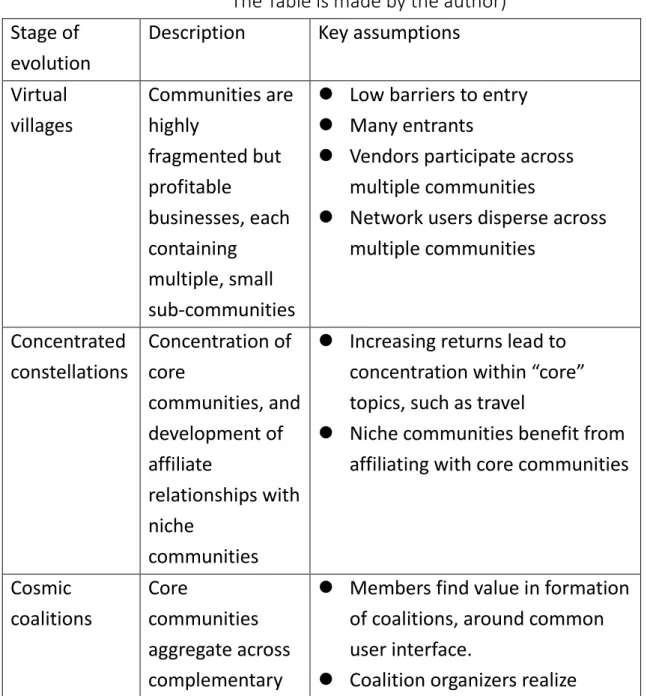
Table 3. Four stages of the evolution of virtual communities ...64
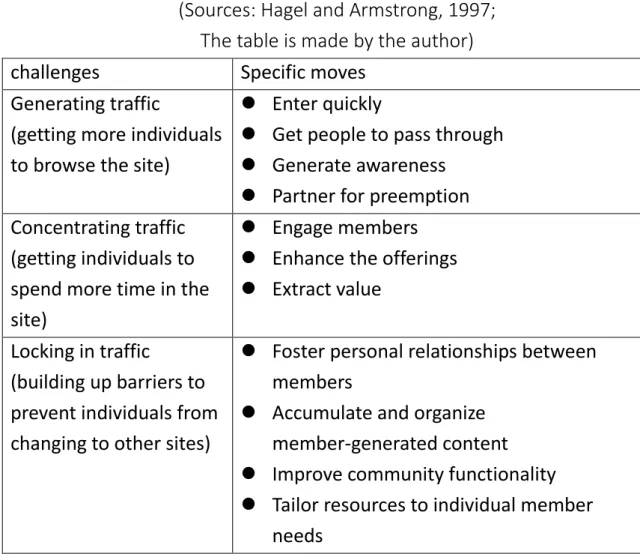
Table 4. The challenges of getting a mass of members ...73
Table 5. Various emphases of the applications of TAM ...90
Table 6. Various emphases of the applications of IAM ...92
Table 7. Measurement of trust towards the site ... 118
Table 8. Measurement of message quality... 119
Table 9. Measurement of source credibility ... 120
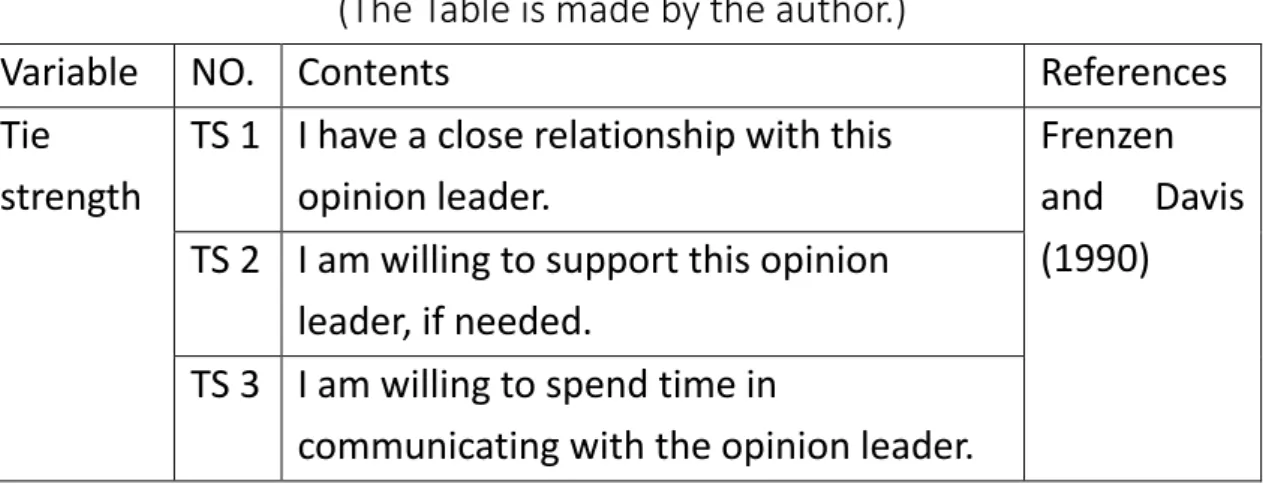
Table 10. Measurement of tie strength ... 121
Table 11. Measurement of recommendation consistency ... 121
Table 12. Measurement of confirmation with prior belief ... 122
Table 13. Measurement of perceived risk ... 123
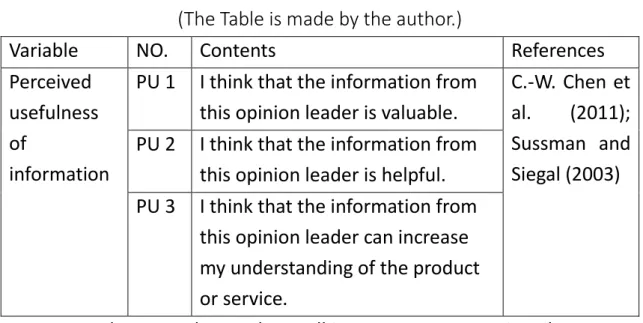
Table 14. Measurement of perceived usefulness of information ... 124
Table 15. Measurement of message credibility ... 124
Table 16. Measurement of information adoption ... 125
Table 17. Measurement of purchase intention ... 126
Table 18. KMO and Bartlett’s Test for the pretest ... 135
Table 19. Total Variance Explained for the pretest ... 135
Table 20. Rotated Component Matrix for the pretest ... 137
Table 21. A new Rotated Component Matrix ... 138
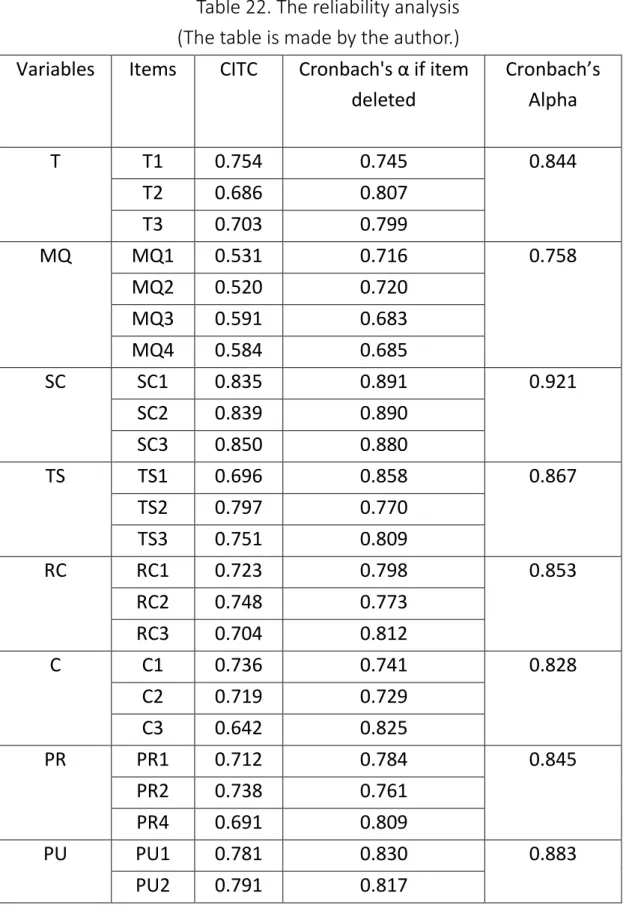
Table 22. The reliability analysis ... 140
Table 23. The data of gender ... 143
Table 24. The data of age ... 143
Table 25. The data of education ... 144
Table 26. The data of job ... 145
Table 27. The data of income ... 146
Table 28. The data of the time period of using Internet ... 146
Table 29. The data of the history of purchasing commodity online . 147 Table 30. The data of the history of searching commodity information online ... 148
Table 31. The data of the frequency of shopping online per month 148 Table 32. The data of the total time spent in the webpage every time in average ... 149
Table 33. The data of the frequency of visiting the website ... 150
Table 34. The data of the total money spending online per month . 150 Table 35. The data of the main shopping approach ... 151
Table 36. The data of the most suitable commodity type to purchase
online ... 152
Table 37. The data of the choice of searching for commodity information online before purchasing it... 153
Table 38. The data of the sources of commodity information ... 154
Table 39. The data of the virtual communities which is the most frequently used ... 154
Table 40. The data of the experiences of finding commodity information because of the recommendations of opinion leaders ... 155
Table 41. The data of the experiences of the type of opinion leaders which the respondents usually pay attention to or be willing to pay attention to ... 156
Table 42. The data of interests in commodity labeled with “some opinion leaders recommend” ... 157
Table 43. KMO and Bartlett’s Test ... 158
Table 44. Total Variance Explained ... 158
Table 45. Rotated Component Matrix ... 159
Table 46. The Reliability analysis ... 161
Table 47. The Discriminant Validity analysis ... 162
Table 48. The goodness-of-fit measures ... 164
Table 49. Confirmatory factor analysis and the validity analysis for T ... 166
Table 50. Confirmatory factor analysis and the validity analysis for MQ ... 167
Table 51. Test of goodness-of-fit for MQ ... 167
Table 52. Confirmatory factor analysis and the validity analysis for SC ... 168
Table 53. Confirmatory factor analysis and the validity analysis for TS ... 169
Table 54. Confirmatory factor analysis and the validity analysis for RC ... 170
Table 55. Confirmatory factor analysis and the validity analysis for C ... 171
Table 56. Confirmatory factor analysis and the validity analysis for PR ... 172
Table 57. Confirmatory factor analysis and the validity analysis for PU ... 174
Table 58. Test of goodness-of-fit for PU ... 174 Table 59. Confirmatory factor analysis and the validity analysis for MC
... 175 Table 60. Confirmatory factor analysis and the validity analysis for IA
... 176 Table 61. Confirmatory factor analysis and the validity analysis for PI
... 177 Table 62. Test of goodness-of-fit test for the whole model ... 179 Table 63. Path coefficient for the whole model ... 179 Table 64. The results of the hypotheses ... 183 Table 65. Testing mediators ... 184 Table 66. Researchers’ choice on the indicators for identifying opinion leaders ... 211 Table 67. The data of posts in a week ... 220 Table 68. The relationship matrix ... 223 Table 69. Clustering analysis ... 227 Table 71. Part 2 of characteristic path length analysis ... 228 Table 72. Analysis of Density ... 229 Table 73. Clustering analysis for the sociometric random graph ... 230 Table 74. Part 1 of characteristic path length analysis for the sociometric random graph ... 230 Table 75. Part 2 of characteristic path length analysis for the sociometric random graph ... 230 Table 76. Summary of the analyses above ... 231 Table 77. Part 1 of Degree centrality ... 232 Table 78. Part 2 of Degree centrality ... 234 Table 79. Analysis of the OutDegree ... 236 Table 81. Part 1 of clustering analysis of the OutDegree and of the InDegree ... 240 Table 82. Part 2 of clustering analysis of the OutDegree and of the InDegree ... 241 Table 83. Part 1 of analysis of Betweenness centrality ... 242 Table 84. Part 2 of analysis of Betweenness centrality ... 244 Table 85. Part 1 of analysis of Closeness centrality ... 246 Table 86. Part 2 of analysis of Closeness centrality ... 248 Table 87. Analysis of structure holes ... 249 Table 88. Analysis of the indicators’ data ... 252 Table 89. Analysis of network with and without opinion leaders ... 257
List of Acronyms
Abbreviation Meaning
AVE Average Variance Extracted
C Confirmation with Prior Belief
CFA Confirmatory Factor Analysis
CFI Comparative Fit Index
CI Confidence Interval
df Degrees of Freedom
eWOM Electronic Word-of-Mouth
EFA Exploratory Factor Analysis
ELM Elaboration Likelihood Model
GFI Goodness-of-Fit Index
IA Information Adoption
IAM Information Adoption Model
IDT Innovation Diffusion Theory
MC Message Credibility MQ Message Quality PI Purchase Intention PR Perceived Risk PU Perceived Usefulness of Information
R2 The Squared Multiple Correlation
of the Variable
RC Recommendation Consistency
RMSEA Root Mean Square Error of
Approximation
SC Source Credibility
SEM Structural Equation Modeling
SMC Squared Multiple Correlations
SNA Social Network Analysis
T Trust towards the Site
TPB Theory of Planned Behavior
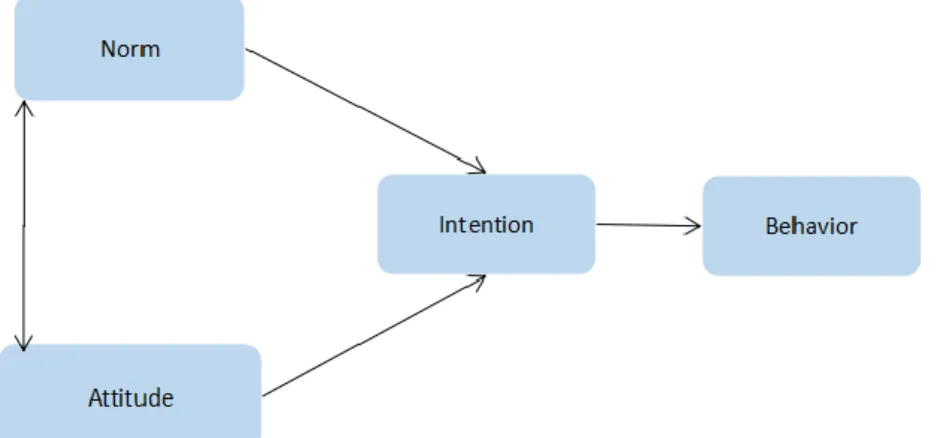
TRA Theory of Reasoned Action
TS Tie Strength
WOM Word-of-Mouth
2
Delta Qui-Square
2
/df The ratio of chi-square value to
Chapter 1. Introduction
1.1. Background and research questions
1.1.1. Background
(1) The electronic word-of-mouth (eWOM) communication becomes popular and affects the psychological processes of consumers.
In the offline environment, the word-of-mouth (WOM) communication has received extensive attentions from both academics and practitioners for decades (De Bruyn & Lilien, 2004). It refers to the oral communication between a receiver and a communicator and the receiver perceives the information as non-commercial and concerning a brand, a product, or a service (Arndt, 1967b). The WOM communication is an important channel for people to obtain information (Van den Bulte & Joshi, 2007).
Nowadays, the Internet enables numerous information to be spread online within diversified channels and breaks the geographical distribution. With the new transmission pattern of information, individuals are able to use various network platforms online, such as the e-commerce websites, the third-party websites, the virtual communities, the blogs and so on. They begin to interact online and share information, to build relationships with others and even to make transaction (Kozinets, 1999; Wei Zhang & Watts, 2008). Obviously, they change their roles of passive receivers of advertisement to active participants. Hence, the eWOM communication becomes popular.
Obviously, eWOM communication affects consumers’ purchase intention greatly (Park, 2003; See-To & Ho, 2014). Also, because of popularity of eWOM communication, the psychological processes during the consumers’ purchase of a product or service changed.
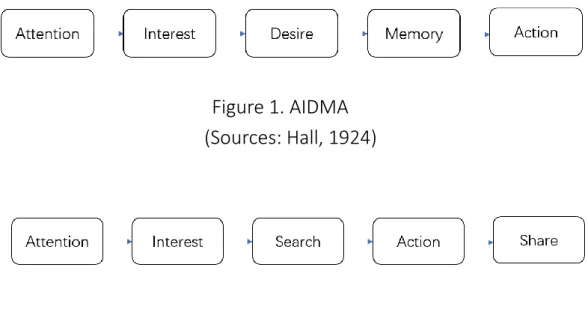
To be more specific, in the traditional environment, the classic AIDMA model, proposed by Hall (1924), was widely used to explain the psychological processes during the consumers’ purchase of a product (see Figure 1). This model had 5 steps, including Attention, Interest,
Desire, Memory and Action. Namely, the consumers paid attention to a product, aroused the interest, desired for it and kept it into the memory. Then, the consumers would take the action for purchasing.
Nowadays, the psychological processes have been changed, because consumers can not only search, select and share information through Internet, but also interact with others.
In response to this change,Dentsu Incorporated (2008), the largest
advertising agency in Japan proposed a new model called AISAS (see Figure 2), based on the AIDMA model. The new model has 5 steps, including Attention, Interest, Search, Action and Share. Namely, after paying attention to the product and having the interest, the consumers will search relevant eWOM information online to better evaluate the alternatives. Then they will purchase the product and share their experiences with others online.
This new marketing model indicates that the steps of searching and sharing information become crucial before the forming of consumers’ purchase intentions. These consumers gradually become to seek opinions for making more need-satisfying decisions (Punj & Staelin, 1983). Thanks to the Internet, which provides the users with the channels for communication, consumers can search and share information online and the communication between the sellers and buyers become unimpeded and efficient.
Figure 1. AIDMA (Sources: Hall, 1924)
Figure 2. AISAS
(2) The online opinion leaders appear and affect others, such as the potential consumers in the virtual communities of consumption.
Facing with numerous eWOM information of the products or services, consumers feel it difficult to evaluate and judge all of them. The opinion leader offers a solution to the problem: when the potential consumers face with a complex choice, they can turn to the opinion leaders for help. The opinion leaders are individuals who actively receive information and send it out with their subject ideas to some degree to others (Arndt, 1967a). The definition of opinion leader indicates the importance of opinion leaders towards the eWOM dissemination. In addition, they can affect the attitudes or behaviors of others through WOM communication informally (Stern & Gould, 1988). Meanwhile, they are considered to be more influential and can create and spread more WOM than general individuals (J. Engel et al., 1990; Rogers, 1995).
To be more specific, through various communication channels, the opinion leaders affect the diffusion and adoption of new products , others’ choices (Chan & Misra, 1990; Goldsmith & De Witt, 2003) and decision-making process (Rogers & Cartano, 1962; Valente & Davis, 1999), and so on.
Furthermore, because of the development of Internet, the virtual communities appeared. The rapid improvement of technologies enables the information to be spread more quickly and the individuals with similar interests gradually gather online, leading to the appearance and popularity of virtual communities. The virtual communities, also called online communities, refer to online social aggregations which emerge when enough Internet users discuss long enough, with sufficient human feelings, to form online relationships (Rheingold, 1993). The virtual communities can be divided into four types, including the virtual communities of consumption, of interest, of fantasy and of relationship (Rheingold, 1993). To be more specific, individuals are able to purchase or sell products and services inside the virtual communities of
consumption, to discuss some common topics inside the virtual communities of interest, to have new identities inside the virtual communities of fantasy and to build up relationships with others in the virtual communities of relationship (Hagel & Armstrong, 1997).
Particularly, the virtual communities of consumption gather a great number of potential or actual consumers who like discussing and sharing information on products and services. The emergence of such virtual communities has transformed consumer information searching processes into “a source of community and understanding” (Kozinets, 1999). Hence, the individuals are able to not only search information, but also to share information, interact with others and cultivate relationships with them.
Inside such kind of virtual communities, the influences of opinion leaders become obvious. They usually give out evaluation or recommendation towards some products or services based on their purchase experiences or using experiences. Meanwhile, they act as role models for others to imitate (Chau & Hui, 1998). Then, members can utilize the information from opinion leaders to judge their own choices and make transaction. Under such situation, the opinion leaders exert both informational and interpersonal influence towards other members.
(3) With the eWOM and opinion leaders being popular, the eWOM dissemination in the virtual communities is also affected.
Considering the influences of eWOM communication on consumers, understanding the mechanism of eWOM dissemination will contribute greatly to marketers who want to utilize eWOM marketing to promote their products or services and to attract consumers.
For the mechanism of WOM/eWOM dissemination in the online communities, Kozinets et al. (2010) illustrates three models to review as in a series of three evolutionary shifts and these models include the Organic Inter-Consumer Influence Mode, the Linear Marketer Influence Model and the Network Co-Production Model. Since overlap has occurred, these models coexist.
The model is shown in the Figure 3. Early researchers have proved that conversations among buyers to spread WOM/eWOM are more influential than marketing communications (Kozinets et al., 2010; Rogers, 2003; Ryan & Gross, 1943). These interpersonal communications among consumers are about sharing the information about products or services. In this model, WOM serves as the organic part, because it occurs only between consumers and can hardly be affected by the markers. The marketers can only spread product information by terms of advertisements or promotions without further intervention. It is the consumers themselves who actively share their consumption experiences to help or warn others who have insufficient consumption experiences (Arndt, 1967b; Kozinets et al., 2010).
Figure 3. The Organic Inter-Consumer Influence Model (Source: Kozinets et al., 2010)
The Linear Marketer Influence Model
The model is shown in the Figure 4. With the number of eWOM information increasing and the opinion leaders becoming popular, researchers began to notice the influence of influential individuals, namely the opinion leaders, during the process of spreading eWOM (Summers, King, Martin, & Jackson, 1976). These opinion leaders can efficiently convey the marketing messages and meanings to a wider population.
Influence Model, the biggest difference between these two models is that the marketers now can indirectly affect the opinion leaders by terms of advertisement or promotions. Namely, besides performing product notification to the public, Marketers also focus on using some traditional strategies to indirectly affect these influential individuals so as to facilitate the flow of the eWOM to some degree (Kozinets et al., 2010). By doing so, the marketers can intervene the eWOM communication to some degree.
Figure 4. The Linear Marketer Influence Model (Source: Kozinets et al., 2010)
The Network Co-Production Model
The model is shown in the Figure 5. Some marketers also begin to emphasize more on the relationship, rather than only focusing on the transaction and emphasizing the importance of the consumer networks, groups and communities (Kozinets et al., 2010). These marketers endeavor to not only affect consumers by utilizing the influences of opinion leaders, but also to cultivate one-to-one relationships with the consumers so as to further attract others. Namely, the marketers endeavor to facilitate the co-Production of the eWOM communications in consumer networks.
Firstly, according to this model, the marketers turn to use new marketing strategies to actively target the potential consumers. For example, the consumer may be invited to experience the new products and be requested to leave their positive feedback online. Secondly, it is shown that the information is no longer flowed in one-way, but appears to be flowed inside the network of consumers.
Figure 5. The Network Co-Production Model (Source: Kozinets et al., 2010)
The three models above indicate that consumers nowadays are both information senders and receivers, thus the companies can hardly monopolize the information any more.
The models proposed by Kozinets et al. (2010) explain the mechanism of the eWOM in the online communities. The marketers can utilize the eWOM communication in the virtual communities, as shown in the Organic Inter-Consumer Influence Model, or the opinion leaders, as shown in the Linear Marketer Influence Model, or specific individuals, as shown in the Network Co-Production Model. By doing so, these marketers can spread the marketing message and meanings more effectively and efficiently.
1.1.2. Research questions
From the analysis above, it indicates that opinion leaders can not only exert informational influences on others through the eWOM dissemination, but also exert interpersonal influences through the interaction with others. Hence, opinion leaders play vital roles in the marketing. For marketers, they can make full use of opinion leaders to strengthen the influences of their marketing strategies. Furthermore, the virtual communities of consumption, inside which individuals are interested in consumption, become popular and begin to be considered as a proper online space in which the marketers should employ marketing strategies for promoting products or services. Facing with the new electronic marketing environment, utilizing opinion leaders towards the eWOM communication to affect the purchase behaviors of consumers, becomes a focus of the researches related to opinion leaders.
Under this situation, two researches questions are pointed out in this thesis.
1) How to explain the mechanism of how opinion leaders affect the purchase intentions of the consumers in the virtual communities of consumption?
The models, proposed by Kozinets et al. (2010), explain the mechanism of the eWOM flow in the virtual communities and show how opinion leaders spread the information from marketers to the public. In such situation, marketers can utilize opinion leaders to spread information to potential or actual consumers and to affect them to some degree. However, it is still a question that how can these opinion leaders affect the potential consumers in the virtual communities. Hence, for the marketers who want to utilize opinion leaders, considering the informational and interpersonal influences of opinion leaders towards the consumers, they need to figure out the mechanism of how opinion leaders affect the purchases intention of consumers in the virtual communities of consumption. After finding out the influential factors of
opinion leaders, these marketers can develop more efficient and more effective strategies.
Because the aim is to investigate the mechanism of opinion leaders towards the purchase intentions of consumers in the virtual communities of consumption, the theories related to consumers need to be studied so as to figure out the influential factors of opinion leaders on them.
Previous researches have pointed out some methods and theories for explaining the factors which affect intentions or behavior of consumers.
From the existing researches, the most influential models and theories on consumer behavior include Theory of Reasoned Action (TRA) (Ajzen & Fishbein, 1975), Technology Acceptance Model (TAM) (Davis, Bagozzi, & Warshaw, 1989), Theory of Planned Behavior (TPB) (Ajzen, 1991), Information Adoption Model (IAM) (Sussman & Siegal, 2003) and so on.
Among these models and theories, Technology Acceptance Model (TAM) (Davis, 1986) and Information Adoption Model (IAM) (Sussman & Siegal, 2003) are comparatively representative and practical for investigating the purchase intentions of Internet users.
On one hand, TAM is used to explain and to predict the determinants of individuals' acceptance of information technology (Davis et al., 1989) and is one of the most widely used model in the field of information system (Y. Lee, Kozar, & Larsen, 2003). Researchers have extended its explanatory power in many contexts, including banking technology, email, online games, desktop video conferencing and so forth (Ha & Stoel, 2009). Particularly, since online consumers exhibit the features of being both traditional consumers and computer users, some researchers use TAM to study their purchase intentions.
On the other hand, IAM is used to explain how individuals are affected by the online information (Sussman & Siegal, 2003). Since collecting and selecting online information play important roles in the purchase decision making process of consumers (J. F. Engel, Kegerreis, & Blackwell, 1969; Howard & Jagdish, 1969; Xia Wang, Yu, & Wei, 2012; D.
H. Zhu, Chang, & Luo, 2016), IAM has been used to study the purchase intentions.
In the existing researches, in order to increase the explanatory power of TAM and IAM, researchers have pointed out various extended models and applied the models to various situations respectively. However, the related research for using these models to investigate or explain the mechanism of how opinion leaders affect the purchase intentions of consumers is blank. Hence, in order to fill in the research gap, Part 1 is going to utilize the models related to consumer behavior for further study.
After the literature review, four small questions are explained and answered. These small questions include 1) For this study, which traditional model of consumer behavior will be more suitable? 2) Whether can the original model be used for this study? 3) How did other researchers adjust this model for study? 4) How to design the model for this study based on the model selected as the basic model?
After these four questions are answered, the model for the Part 1 can be built up and testified by empirical analyses.
2) How to identify opinion leaders in the virtual communities of consumption in which they cannot be identified directly?
The opinion leaders, who affect the attitudes or behaviors of the public through eWOM communication (Flynn, Goldsmith, & Eastman, 1996; Forbes, 2013; Goldsmith, Flynn, & Goldsmith, 2003; Rogers & Cartano, 1962; Stern & Gould, 1988), has been confirmed to exert their influences inside the social media (Momtaz, Aghaie, & Alizadeh, 2011; X. Song, Chi, Hino, & Tseng, 2007).
Considering the crucial influences of opinion leaders on the consumers, companies and marketers pay more and more attention to utilize the opinion leaders.
Furthermore, after the mechanism of how opinion leaders affect the purchase intentions of the consumers in the virtual communities of consumption being investigated from the Part 1 of this thesis, the companies and marketers can have a better understanding of the
influential factors of opinion leaders and of how to utilize them.
However, there are actually two kinds of virtual communities of consumption, including:
Virtual communities of consumption exhibiting the attributes of members, such as their number of followers. Namely, inside such kinds of communities, the outsider can identify the opinion leaders directly, based on their standards.
Virtual communities of consumption failing to exhibit the attributes of members, such as their number of followers. Namely, inside such kinds of communities, the outsider cannot identify the opinion leaders directly.
To be more specific:
Some virtual communities have the functions of exhibiting the attributes of the members, such as the number of followers. Inside such forums, the opinion leaders can be easily distinguished from other Internet users. Obviously, the more followers the individual has, the more likely will he or she be the opinion leader and the more influential this individual will be. After figuring out who are the opinion leaders, the members can follow them and are more likely to be affected by their recommendations. Meanwhile, the companies can also easily figure out opinion leaders and utilize them, such as cooperating with them for advertisements (Hirsh, 2001).
However, some virtual communities do not have this function and fail to show who are the opinion leaders directly. In such communities, some individuals send out posts and attract other members by knowledge or something else. They interact with the repliers actively, thus they can accumulate followers. The followers are willing to pay attentions to the posts from these influential individuals and are more likely to follow their recommendations. It is easy for followers to identify these influential factors by terms of ID, but for outsiders, such as marketers, it will be difficult to judge the influential individuals, let along utilizing them for developing more effective marketing strategies. Admittedly, for the individuals who have already been opinion leaders in the real world, they can be better recognized by other members online. But for the
individuals who become the online opinion leaders directly, it will be difficult for the marketers to recognize the opinion leaders.
Facing with this situation, it becomes a question that how to identify opinion leaders in such virtual communities of consumption in which the opinion leaders cannot be identified directly before utilizing them.
Prior researches show that there are many approaches to identify online opinion leaders and that three main approaches for identifying online opinion leaders include the user attributes analysis, the text mining analysis and network structure analysis. However, few research is about identifying the online opinion leaders in the virtual communities of consumption, let alone in the virtual communities of consumption in which they cannot be identified directly. Hence, in order to fill in the research gap, the Part 2 is going to have an empirical study on identifying these opinion leaders.
According to the literature review, social network analysis (SNA), one type of network structure analysis, is found to be suitable for this research because of its unique advantages. By using SNA, three small questions can be analyzed and answered. These questions include: 1) How to identify the opinion leaders in such virtual communities of consumption? 2) What are the characteristics of such virtual communities of consumption? 3) How do the opinion leaders affect the eWOM dissemination?
Firstly, many researchers have used the social network analysis (SNA) to identify the opinion leaders in many kinds of social networks. Although few research is about using SNA in the virtual communities of consumption. SNA is found to be suitable for such cases.
Secondly, SNA is widely used for studying the structure of social network. Hence, utilizing SNA can investigate the characteristics of such virtual communities of consumption.
Thirdly, although the influence of opinion leaders towards the eWOM dissemination in the online communities has been confirmed and to be existing by Kozinets et al. (2010), how do the opinion leaders affect the eWOM dissemination in details is still unclear. One advantage of SNA is that it could create several virtual scenarios based on the assumed
changes in relationships. Hence, when utilizing SNA to identify opinion leaders, the data with and without the opinion leaders can be compared and discussed. By doing so, how the opinion leaders affect the eWOM communication can be figured out.
By utilizing SNA, the answer to the third small questions can be answered.
1.2. Research significance and key concepts
1.2.1. Research significance
(1) Theoretical significance
The Part 1 of this thesis builds up an extended model to study the influential factors of opinion leaders towards the purchase intentions of consumers in the virtual communities of consumption and testifies it through the empirical analysis. The Part 2 of this thesis provides an empirical study of utilizing SNA to identify the opinion leaders in the virtual communities of consumption in which they cannot be identified directly. Meanwhile, the characteristics of such virtual communities of consumption and the influence of opinion leaders towards the eWOM communication can be analyzed.
The result of this thesis will enrich the existing researches on the eWOM, opinion leaders, the virtual communities of consumptions, consumer behavior models and SNA.
To be more specific:
The Part 1 builds up an integrated model based on the traditional models of consumer behavior to investigate the influential factors of opinion leaders towards the purchase intentions of consumers in the virtual communities of consumption. The result can enrich the studies related to the consumer behavior models.
The Part 1 begins with the theories of opinion leaders and investigates the influential factors of opinion leaders. The result can deepen the understandings of opinion leaders and further enrich the
relevant researches of them.
The part 2 utilizes social network analysis (SNA) to identify the opinion leaders in the virtual communities of consumption in which they cannot be identified directly. The result can fill in the research gap about how to identify opinion leaders in such virtual communities of consumption and can extend the applicability of SNA.
The part 2 uses SNA to analyze the influences of opinion leaders towards the eWOM dissemination in the virtual communities of consumption from the perspective of social network. The result can enrich the understanding of the influences of opinion leaders towards eWOM communication.
(2) Practical implications
The organizers of the virtual communities of consumption, the companies and the marketers can have a better understanding of opinion leaders from the perspective of the information adoption process of consumers in Part 1 and from the perspective of social science in Part 2.
For Part 1, after figuring out the mechanism of how opinion leaders affect the purchase intention of consumers in the virtual communities of consumption, the organizers of the virtual communities of consumption, the companies and marketers will deeply understand the influential factors of opinion leaders so as to utilize these factors and also have a better understanding towards how to cultivate opinion leaders.
For Part 2, for the virtual communities of consumption inside with the opinion leaders cannot be identified directly, figuring out an approach to identify them will help the organizers of the virtual communities and the marketers greatly. After the empirical study of this part, they can also use SNA to identify the opinion leaders in such virtual communities of consumption. Also, have a better understanding of the structure of the communities and of the influences of opinion leaders towards the eWOM communication will also help the organizers and marketers to take more effective and focused strategies.
1.2.2. Key concepts
(1) WOM and eWOM
Arndt (1967b) defined WOM as oral, person to person communication between a receiver and a communicator whom the receiver perceives as non-commercial concerning a brand, a product, or a service.
Then, with the appearance of Internet, consumers nowadays start to share their own opinions online by terms of electronic word-of-mouth (eWOM).
The eWOM refers to any positive or negative statement made by potential, actual, or former consumers about a product or company, which is made available to a multitude of people and institutions via the Internet (Hennig-Thurau, Gwinner, Walsh, & Gremler, 2004).
(2) Online opinion leaders
The concept of opinion leader was introduced by Katz and Paul (1955) that the central and influential individuals act as the intermediaries between the mass media and the public: they obtain information from the mass media and further spread it to the public by strengthening or weakening it to some degree.
It is emphasized that opinion leaders affect the attitudes of the wider population, and stresses the fact that the influence of interpersonal communication towards the public is more frequent and more effective than the influence of the mass communication towards the same audience (Katz & Paul, 1955).
Other researchers also defined the opinion leaders. Opinion leaders are defined as those individuals who are the active receivers of word-of-mouth, who expose the most to mass media, and who tend to interpret the information with or without their own subject ideas to others (Arndt, 1968). They exert an unequal amount of influence on the
decision of others (Rogers & Cartano, 1962) and also can affect members in the social community because of special techniques, knowledge, personalities and other uniqueness (Kotler, 2001).
Because of the Internet, the online opinion leaders begin to appear and exert their influence towards others through the Internet.
(3) Virtual communities of consumption
Rheingold (1993) defined virtual communities as online social aggregations which emerge when enough Internet users discuss long enough, with sufficient human feelings, to form online relationships.
According to previous researches, the most well-known typology of virtual communities was illustrated by Hagel and Armstrong (1997) who classified virtual communities into four types, including virtual communities of interest, of relationship, of fantasy and of consumption. This study only focuses on the virtual communities of consumption, which refer to virtual communities focusing on facilitating consumption, serving to some kinds of commercial purposes, and encouraging participants to communicate and interact with others so as to make transactions (Hagel & Armstrong, 1997).
(4) Purchase intention
Purchase intention refers to the likelihood that a consumer will purchase a specific product (Ajzen & Fishbein, 1975; Dodds, Monroe, & Grewal, 1991; Schiffman & Kanuk, 2000). It can be used to predict the future purchase behavior of the individuals (Ajzen & Fishbein, 1975).
1.3. Methodology
For this research, various methods for data collection are used, including literature review method, small group discussion, questionnaires and snowball sampling. Then, for the data analysis, Part 1 uses the statistical method and Part 2 uses the social network analysis
method.
(1) Methods for data collection Literature review method
Through the literature review, the current situation is analyzed and the research questions are identified. For Part 1, based on the original models, the model for this thesis is built up and the hypotheses are explained. Then, the questions in the questionnaire are designed.
For Part 2, based on the existing identification approaches, the approach is selected for this study and the indicators of opinion leaders are decided.
Small group discussion
For Part 1, through the small group discussion, the readability problems and confusing words of the Chinese version of the questionnaire are purified.
Questionnaire
For Part 1, this thesis chooses to send out questionnaire through Internet for the empirical study.
Snowball sampling
For Part 2, after selecting the specific virtual community of consumption randomly, the snowball sampling is used for collecting one-week data for the continue analysis. This method will avoid the bias problem by considering all the members in the network in a specific time period.
(2) Data analysis methods For Part 1:
After obtaining the original data through the formal questionnaire, a variety of statistical methods to analyze the data and to validate the model are used. The relationships between the variables, the proposed research assumptions and theoretical models will be empirical testified.
Part 1 uses Structural Equation Modeling (SEM) for data analysis, through the statistical analysis software, called SPSS 23 and AMOS 21.0. these pieces of software are commonly used in the social sciences. The



![For copies of the original instructions see [7]](data:image/gif;base64,R0lGODlhAQABAIAAAP///wAAACH5BAEAAAAALAAAAAABAAEAAAICRAEAOw==)