NATURE IMMUNOLOGY VOLUME 18 NUMBER 5 MAY 2017 4 8 1 combinatorial cell-surface markers, such as the
finding that PLVAP and MEGF10 are expressed uniquely by plasmablasts. Such novel markers could be particularly useful for the staining and sorting of rare cell populations.
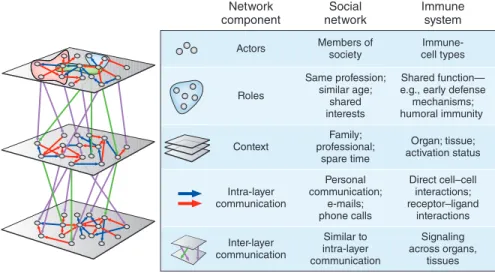
In the analogy of a social network, it is immediately clear that the same actor can play different roles in different contexts (for example, among family or friends or in a professional situation) and that many tasks require a collaborative effort by many actors. The study identifies such shared immuno-logical tasks and the participating actors (i.e., cell types) by extracting and function-ally characterizing modules of proteins whose expression profiles correlate across cell types. Again, the results reflect on the one hand many established relationships, such as Toll-like receptor–mediated inflam-matory response to microbe- and danger- associated molecular patterns within mono-cytes and dendritic cells. On the other hand, the authors also showcase various new hypotheses that can be generated from the wealth of data, such as a possible role for the transcription factor HOPX in the develop-ment of natural killer cells.
Together these analyses reveal a highly complex social structure among the immune-cell types in which both shared execution of tasks and specialized execution of tasks are pervasive. Such a highly diversified yet simultaneously cooperative division of labor relies on well-coordinated commu-nication among the different actors. The molecular basis for communication among immune-cell types is receptor–receptor or receptor–ligand interactions. The study identifies 180,000 high-confidence interac-tions between 460 receptors and 300 ligands and thus expands considerably the existing knowledge in the literature. A comparison of the variance between receptors and ligands in their expressionon the one hand and that between adaptors and transcription factors on the other suggests that immune cells are much more specialized intercellularly than intracellularly. As in social networks, precise assignment of who communicates with whom is essential for the effective execution of diverse and distributed tasks. The amount of Andreas Bergthaler and Jörg Menche are with the
CeMM Research Center for Molecular Medicine of the Austrian Academy of Sciences, Vienna, Austria. e-mail: [email protected]
T
he human body is constantly exposed to numerous and diverse challenges rang-ing from external pathogens, such as bac-teria and viruses, to internal threats, such as tumor cells. To meet and ultimately defeat these challenges, the immune system needs to orchestrate an exquisitely complex interplay of numerous cells with often highly specialized functions. In this issue of Nature Immunology, Rieckmann et al. present a map of this interplay that is unprecedented both in scale and level of detail1. Using mass spectrometry, they measure the proteomes of major human immune cell populations activated with variousstimuli. In contrast to previous large-scale transcriptom-ics efforts, such a proteomtranscriptom-ics approach allows direct assessment of intracellular proteins and secreted proteins. An integrative analy-sis and comparison of these two proteomes provides novel insights into the basic principles of intercellular communication in the immune system.Given the complexity of the communi-cation networks identified, the analogy between the immune system and a social network alluded to in the title of the study seems more than fitting (Fig. 1). The basic actors in this social network are immune cells, and interactions represent commu-nication through signaling molecules, such as cell-surface receptors or secreted mole-cules. First insights into the different ‘social roles’ of the immune-cell types within the network can be obtained from a functional characterization of the respective proteomes within them. As expected, the most strik-ing differences between cell types are related to the division of innate immunity versus adaptive immunity. Many examples of well-known similarities can also be recapitulated in this unbiased analysis, such as the close functional ties between T lymphocytes and natural killer cells or between myeloid den-dritic cells and monocytes. Novel results include previously unknown exclusive or
The immune system as a social network
Andreas Bergthaler & Jörg Menche
The
immune system employs a multitude of molecules, cells and organs that act together throughout the entire body
to guard human health. Much like in a social network, immune cells can exert full functionality only through effective
collaboration and communication.
communication is found to vary among dif-ferent cell types. In particular, lineages that are developmentally less related to each other tend to have a larger number of interactions, indicative of a requirement for greater com-munication among them. Different immune cells also exhibit pronounced differences in their communication patterns after being activated. Stimulated monocytes and den-dritic cells, for example, express more ligands, in terms of both quantity and diversity,while decreasing their receptor repertoire. Cytolytic cell types, in contrast, increase the quantity of their ligands and the diversity of their recep-tors. Such changes in the relative composition of incoming and outgoing communication— i.e., changing roles between ‘recruiters’ and ‘recruits’—indicate a highly dynamic social hierarchy among immune-cell types that depends on their activation status. Antigen-presenting cells, such as monocytes, are par-ticularly ‘socially mobile’ and, when activated, move from the bottom of the intercellular sig-naling cascade to the very top, which allows them to coordinate the actions of diverse cell types in the response.
Those and other results presented by Rieckmann et al. provide intriguing insights into the immune system’s dynamic and multi-layered architecture, which displays a considerably higher level of intercellular specialization than that of the brain or the liver1. The comprehensive data set also offers ample opportunity to move beyond the ini-tial results and conduct further systems- wide investigations, applying more-ad-vanced network-based methodologies. Indeed, over the past decade, tools and concepts from network science have been successfully applied to diverse biomedical questions. Detailed analyses of the topo-logical properties of cellular networks have helped to elucidate the molecular mecha-nisms of a broad range of diseases2, from rare Mendelian disorders3 and cancer4 to metabolic diseases5, and have helped to identify basic strategies by which viruses hijack the host interactome6. Given the results presented, concepts from the field of multi-layered networks7 seem particu-larly promising for further delineation of
N E W S A N D V I E W S
© 20
1
7 Nat
ur
e
Amer
ica,
Inc.,
par
t of Spr
ing
er Nat
ur
e
. All r
ights r
eser
v
4 8 2 VOLUME 18 NUMBER 5 MAY 2017 NATURE IMMUNOLOGY
the functioning of the immune system. Results in this emerging research area have highlighted the importance of a detailed, context-aware mapping of different types of interactions for full understanding of both the dynamics and the function of such complex networks8. The directed nature of intercellular communication signals also opens the possibility of applying concepts from network control theory. In biochemi-cal reaction networks, for example, the complete state of the entire system can in principle be inferred from a relatively small number of monitored actors9. In the context of the immune system, these results could lead to a more rational choice of monitored cell types and/or signaling molecules, or could aid in the design of novel combi-natorial biomarkers for disease states. An even more far-fetched application of net-work control principles would be to not only monitor the immune system in an efficient fashion but also manipulate it to drive a cell from a diseased state back to a healthy state10.
The present study also delineates many important experimental extensions and future developments. Given the complex communication architecture of signal transduction in the immune system, it is apparent that multiple parallel path-ways’ influencing and regulating each other is not the exception but is instead the norm. For delineation of this crosstalk and for the revelation of all essential compo-nents of signaling cascades downstream of the respective receptor, single-cell proteom-ics coupled with network-based approaches will be instrumental. Such experimental data would also allow unbiased cell-type identifi-cation. Another interesting extension of the concept presented would be systematic inves-tigation of the spatial heterogeneity and com-partmentalization of immune-cell activity within specific organs. Just as social networks are embedded into cities with distinct neigh-borhoods that may serve different purposes, it has been observed that the different tasks of hepatocytes are divided spatially within the liver11. Remaining with this analogy,
cities rely on critical infrastructure, such as power and water supply or waste disposal. In the context of the immune system, the transport of nutrients and other molecules in and out of the cell could be monitored by metabolomics linked with proteomics expression analysis to establish metabolite–receptor–transporter networks12. Ideally, future studies will also address the crosstalk among immune cells, stroma and parenychma to further delineate the emerging roles of, for example, fibroblastic reticular cells, hepatocytes and adipocytes in systemic immune responses13. Finally, inter-organ commu-nication (which can be viewed as analo-gous to communication and transport between cities), such as communication via secreted hormones or lipid metabolites, remains only poorly understood, despite its critical role in many physiological pro-cesses as well as disease states14. The study by Rieckmann et al. provides a treasure trove for investigating the intricate com-munication between immune cells, and points the way to future approaches to elucidate the multi-layered network archi-tecture of the immune system in homeosta-sis and disease1.
COMPETING FINANCIAL INTERESTS The authors declare no competing financial interests.
1. Rieckmann, J. C. et al. Nat. Immunol.18, 583–593 (2017).
2. Menche, J. et al.Science347, 1257601 (2015). 3. Smedley, D. et al.Am. J. Hum. Genet.99, 595–606
(2016).
4. Leiserson, M.D. et al.Nat. Genet. 47, 106–114 (2015).
5. Chen, Y. et al.Nature452, 429–435 (2008). 6. Pichlmair, A. et al.Nature487, 486–490 (2012). 7. Boccaletti, S. et al.Phys. Rep.544, 1–122 (2014). 8. De Domenico, M. et al.Nat. Phys.12, 901–906
(2016).
9. Liu, Y.-Y., Slotine, J.J. & Barabási, A.L. Proc. Natl. Acad. Sci. USA110, 2460–2465 (2013). 10. Liu, Y.-Y., Slotine, J.J. & Barabási, A.L. Nature473,
167–173 (2011).
11. Halpern, K.B. et al. Nature 542, 352–356 (2017).
12. Liu, S., Alexander, R.K. & Lee, C.H. Trends Endocrinol. Metab.25, 356–363 (2014).
13. Fletcher, A.L., Acton, S.E. & Knoblich, K. Nat. Rev. Immunol.15, 350–361 (2015).
14. Karsenty, G. & Olson, E.N. Cell164, 1248–1256 (2016).
Figure 1 The immune system as a multi-layered social network. The complex interplay among immune cells resembles in many ways a social network. Immune cells need to act in a highly cooperative and coordinated fashion when they respond to diverse external and internal threats. Communication is essential for this process. The large-scale proteomics analyses presented by Rieckmann et al.1
provide new insights into the basic architecture of these intricate communication networks among immune-cell types.
Actors
Intra-layer communication
Inter-layer communication
Context Roles Network component
Members of society
Same profession; similar age;
shared interests
Family; professional;
spare time
Personal communication;
e-mails; phone calls
Similar to intra-layer communication
Social network
Immune-cell types
Shared function— e.g., early defense mechanisms; humoral immunity
Organ; tissue; activation status
Signaling across organs,
tissues Direct cell–cell
interactions; receptor–ligand
interactions Immune
system