Genome-wide identification of pistil-specific
genes expressed during fruit set initiation in
tomato (
Solanum lycopersicum
)
Kentaro Ezura
1, Kim Ji-Seong
2, Kazuki Mori
3, Yutaka Suzuki
4, Satoru Kuhara
3,
Tohru Ariizumi
1,2*
, Hiroshi Ezura
1,2*
1Graduate School of Life and Environmental Sciences, University of Tsukuba, Tsukuba, Ibaraki, Japan, 2Faculty of Life and Environmental Sciences, University of Tsukuba, Tsukuba, Ibaraki, Japan,3Faculty of Agriculture, Kyushu University, Higashi-ku, Fukuoka, Japan,4Department of Computational Biology, Graduate School of Frontier Sciences, The University of Tokyo, Chiba, Japan
*[email protected](TA);[email protected](HE)
Abstract
Fruit set involves the developmental transition of an unfertilized quiescent ovary in the pistil
into a fruit. While fruit set is known to involve the activation of signals (including various plant
hormones) in the ovary, many biological aspects of this process remain elusive. To further
expand our understanding of this process, we identified genes that are specifically
exp-ressed in tomato (
Solanum lycopersicum
L.) pistils during fruit set through comprehensive
RNA-seq-based transcriptome analysis using 17 different tissues including pistils at six
dif-ferent developmental stages. First, we identified 532 candidate genes that are predif-ferentially
expressed in the pistil based on their tissue-specific expression profiles. Next, we compared
our RNA-seq data with publically available transcriptome data, further refining the candidate
genes that are specifically expressed within the pistil. As a result, 108 pistil-specific genes
were identified, including several transcription factor genes that function in reproductive
development. We also identified genes encoding hormone-like peptides with a secretion
sig-nal and cysteine-rich residues that are conserved among some
Solanaceae
species,
sug-gesting that peptide hormones may function as signaling molecules during fruit set initiation.
This study provides important information about pistil-specific genes, which may play
spe-cific roles in regulating pistil development in relation to fruit set.
Introduction
The pistil is a single reproductive organ that develops into a fruit after fruit set. The efficiency
of fruit set is one of the most important traits that determine yield in many fruit-bearing crops
such as tomato (Solanum lycopersicum
L.). Because of its worldwide production and
availabil-ity, tomato has been widely accepted as a model system for investigating fruit set. In general,
fruit set is induced after successful development of the pistil upon pollination and following
fertilization [
1
]. Through conventional molecular, genetic, and biochemical analyses of
tomato, plant hormones such as auxin and gibberellic acid (GA) have been shown to play
a1111111111
a1111111111
a1111111111
a1111111111
a1111111111
OPEN ACCESS
Citation:Ezura K, Ji-Seong K, Mori K, Suzuki Y, Kuhara S, Ariizumi T, et al. (2017) Genome-wide identification of pistil-specific genes expressed during fruit set initiation in tomato (Solanum lycopersicum). PLoS ONE 12(7): e0180003.
https://doi.org/10.1371/journal.pone.0180003
Editor:Hidenori Sassa, Chiba Daigaku, JAPAN
Received:March 4, 2017
Accepted:June 7, 2017
Published:July 6, 2017
Copyright:©2017 Ezura et al. This is an open access article distributed under the terms of the
Creative Commons Attribution License, which permits unrestricted use, distribution, and reproduction in any medium, provided the original author and source are credited.
Data Availability Statement:Genome sequences obtained from this study have been depositedat DDBJ/EMBL/GenBank under the accession DRA001876.
Funding:This work was funded by Program to Disseminate Tenure Tracking System,http://www. jst.go.jp/tenure/, Receipt: TA; JSPS Kakenhi,
important roles in various plant developmental processes, including inducing fruit set in the
pistil [
1
–
5
]. Mimicking fruit set signals by exogenous application of these hormones and
muta-tion of the genes related to hormone signaling or metabolism induce fruit set without
pollina-tion/fertilization, a process known as parthenocarpy [
6
]. Furthermore, endogenous induction
of auxin biosynthesis in ovules through genetic engineering is one of the most effective
approaches for inducing parthenocarpy [
7
]. However, the key mechanisms and signals that
induce fruit set in conjunction with plant hormones in the pistil remain largely unknown. To
investigate this issue, it would be useful to obtain transcriptome profiles in the pistil to uncover
genes regulated by signals related to fruit set.
Microarray and next generation sequencing of transcripts (RNA-Seq) are two major
tran-scriptome profiling systems that have been widely used in molecular biology [
8
]. One of the
benefits of transcriptome analysis is that it allows the global gene expression profiles of
thou-sands to nearly 40,000 genes to be investigated in a single experiment. Recently, RNA-seq has
become more popular than microarray analysis for obtaining transcriptome profiles and the
associated quantitative data. Comparative transcriptomics by RNA-seq produces massive
amounts of accurate information about differentially expressed genes between various
biologi-cal events and among related individuals, providing many clues about the mechanisms
under-lying plant development, growth, responses to various environmental signals, and the
evolution of plant species [
9
–
15
]. In studies investigating fruit development, RNA-seq-based
transcriptome analyses have revealed important biological pathways and gene sets associated
with fruit development and ripening [
16
,
17
–
22
]. However, only a limited number of
transcrip-tome studies have targeted pistils during fruit set in tomato [
20
,
23
–
25
]. These studies have
identified various gene sets that appear to be expressed during fruit set, such as genes related
to plant hormone metabolism and sensitivity, transcription factors regulating meristem
differ-entiation and floral organ development, and those involved in carbohydrate metabolism
[
20
,
26
]. Because of their multiple effects on various aspects of plant development, it is still
diffi-cult to narrow down candidate genes or biological pathways that directly influence the
induc-tion and compleinduc-tion of fruit set downstream of plant hormone signaling.
Pistil comprises a mixture of heterogeneous tissues consisting of ovules, style, placenta, and
pericarp (ovary wall), which often hinders the elucidation of the detailed mechanism of early
fruit development due to this inherent complexity. The development of each tissue may
directly influence the success of fruit set and subsequent fruit growth. After pollination, pollen
enters the ovule through the style. The fertilized ovules become seeds, which provide growth
signals to the entire fruit, while the rate of cell division in the ovary wall and placenta
deter-mines the final size of the fruit [
1
]. Recently, cell-type-specific transcriptomes of the pistil
dur-ing fruit set were uncovered by two independent groups usdur-ing wild tomato
S.
pimpinellifolium
and tomato cultivar ‘Moneymaker’, providing important information about cell type-specific
transcriptomes during fruit set [
23
,
27
]. In addition, several individual pistil-specific genes
(PSGs) were identified, which play important roles in processes such as pollen tube extension,
pollen-pistil interactions, and ovule development, highlighting the importance of PSGs in the
regulation of tissue-specific development in the pistil, including two polygalacturonase genes
(PG7
and
TAPG4) in tomato [
28
], one extensin-like glycoprotein gene (PELP3) in
Nicotiana
tabacum
[
29
–
31
], one endo-1,4-β-D-glucanase gene, and one MADS box transcription factor
gene (SEEDSTOCK/AGL11) in
Arabidopsis thaliana
[
32
,
33
]. Nonetheless, few studies have
focused on the isolation of PSGs due to technical difficulties such as the small size of the tissue.
Recently, anther-specific genes were identified in various species using a transcriptomic
approach, which play important roles in tissue differentiation and specification [
34
,
35
]. The
isolation of genes expressed in specific tissues not only provides new insights into the
develop-ment of each tissue, but it also provides genetic engineering tools for molecular breeding [
36
].
no. 26013A to H.E; and Sustainable Food Security Research supported by MEXT.
Therefore, to extend our understanding of the molecular mechanism underlying fruit set and
to generate new tools for pistil-specific regulation of fruit set-associated genes, it is important
to identify PSGs that are specifically expressed during fruit set initiation.
In this study, we conducted genome-wide analysis of PSGs in tomato by RNA-seq and
com-pared the results with publicly available data. As a result, we identified about one hundred of
PSGs including genes encoding signaling-related proteins, several transcription factors, and
peptide hormone-like proteins, in addition to many genes of unknown function. Further
anal-ysis of these mined genes would increase our understanding of the mechanisms underlying of
pistil development and fruit set and would be useful for generating genetic engineering tools,
such as tissue-specific promoters.
Material and methods
Plant materials, hormone treatment, and cDNA synthesis
Tomato cv ‘Micro-Tom’ was used in this study. The seeds were incubated on wet filter paper
in a Petri dish at 25˚C to stimulate germination, followed by growth in a cultivation room
under a 16 h/8 h light/dark cycle at 25˚C/22˚C (day/night). Total RNA was extracted using an
RNeasy Plant Mini Kit (Qiagen, USA) from 17 samples of different organs at different
develop-mental stages: pistil and fruit samples (#1–8): pistils of 2–2.5 mm buds (#1), 3–4 mm buds
(#2), 1 day before flowering (1 DBF) (#3), at anthesis (#4), 5 days after flowering (5 DAF) (#5),
5 mm ovaries of 7 days after flowering (7 DAF) (#6), mature green fruits at 33 days after
flow-ering (MG) (#7), red fruits at 44 days after flowflow-ering (RED) (#8); stamens and other floral
organ samples (#9–11): stamens of 3–4 mm buds (#9), 1 DBF (#10) and at anthesis (#11),
sepals at anthesis (#12), petals at anthesis (#13), vegetative organs (#14–17 samples):
3-week-old leaves (#14), mature leaves (#15), stems (#16), and roots (#17). The total RNA was treated
with DNase to remove contaminating DNA using a DNA-free RNA Kit (Zymo Research,
USA). The cDNA was synthesized with 2
μg of total RNA using SuperScript VILO MasterMix
(Thermo Fisher, USA) according to the manufacturer’s instructions. The cDNA libraries for
RNA-seq were prepared using a TruSeq RNA Sample Prep Kit v2 (Illumina) according to
manufacturer’s protocol.
RNA-seq, processing, mapping of Illumina reads, and detection of PSGs
The 35-nt and 100-nt single-end sequencing analysis was conducted on the Illumina Genome
Analyzer IIx system and Illumina HiSeq 2000, respectively. To identify the transcriptome of
each tissue, “direct-mapping method” was conducted.
Data mining of publically available RNA-seq data
To examine the expression patterns of the identified genes in tissues other than pistils,
publi-cally available data were downloaded from transcriptome analyses of tomato from the Tomato
Functional Genomics Database (
http://ted.bti.cornell.edu/cgi-bin/TFGD/digital/home.cgi
).
Data from nine different vegetative samples from tomato cv. Heinz and wild tomato species
S.
pimpinellifolium
were extracted and investigated to determine whether the candidate genes
were expressed in these tissues.
To estimate the regions in the pistil in which the candidate genes are expressed, tissue-specific
transcriptome data from the pistils of tomato wild relative
S.
pimpinellifolium
[
27
] were used to
identify genes with expression levels higher than RPM (reads per million mapped reads) = 2 in at
least one sample. The expression levels of the top-ten genes in each tissue were then examined. To
confirm the expression patterns of the candidate genes in the pistil, their expression levels were
also investigated using transcriptome data from tomato cv. ‘Moneymaker’ [
23
]. If the expression
level was higher than FPKM (Fragments Per Kilobase of exon per Million mapped fragments) 0.5
in at least one sample, it was judged to be an expressed gene. To investigate the responses of the
genes to plant hormone treatment, a publically available dataset from the transcriptomes of
polli-nated or parthenocarpic fruit induced by hormone treatment was utilized [
20
]. To compare the
list of differentially expressed genes with the candidate genes, unigene numbers were converted to
ITAG IDs using the Unigene converter in the SGN database.
Gene ontology analysis
ITAG IDs of the candidate PSGs were used as input with the AgriGO agricultural gene
ontol-ogy (GO) analysis tool (
http://bioinfo.cau.edu.cn/agriGO/analysis.php
) to elucidate enriched
GO terms. A false discovery rate (FDR; e-value corrected for list size) of
0.05 was used as the
criterion to obtain enriched GO terms.
Gene expression analysis by RT-PCR
To confirm the expression patterns of the candidate genes by RNA-seq analysis, RT-PCR was
performed using cDNA samples derived from vegetative and reproductive organs, including
young leaves, mature leaves, mature stems, mature roots, flower buds, and flower from
3-week-old plants. To analyze the expression patterns of the genes in ovaries or fruits before/after
pollina-tion, RT-PCR was performed using cDNA samples from tomato pistils and fruits at the
corre-sponding developmental stages: A, pistils from 2–2.5 mm flower buds at 10 days before flowering
(10 DBF); B, pistils from 3–4 mm flower buds at 7 days before flowering (7 DBF); C, pistils at 1
day before flowering (1 DBF); D, pistils at anthesis/pollination (0 DAF); E, pistils at 5 days after
flowering (5 DAF); F, 5 mm ovaries at 7 days after flowering (7 DAF); G, mature green fruits at
33 days after flowering (MG); H, red fruits at 44 days after flowering (RED). Semi-quantitative
reverse transcription polymerase chain reaction (RT-PCR) analysis was performed with
Master-cycler ProS (Eppendorf, Germany) using an ExTaq Kit (TaKaRa Bio, Japan) and the primer sets
listed in
S5 Table
. As an internal control for expression analysis in different organs,
SAND
expres-sion was monitored using the primers
SAND-F (
5’- TTGCTTGGAGGAACAGACG -3’
) and
SAND-R (
5’- GCAAACAGAACCCCTGAATC -3’
) [
41
].
Sequence analysis of genes with unknown functions
small proteins was investigated using SignalP 4.1 Server (
http://www.cbs.dtu.dk/services/
SignalP/
). The conserved domains and motifs within the identified proteins were searched
using NCBI’s Conserved Domain Database (CDD) (
https://www.ncbi.nlm.nih.gov/Structure/
cdd/wrpsb.cgi?
) [
42
].
Availability of RNA-seq dataset
Transcriptome data are available at the GEO database under accession number DRA005810.
Results and discussion
Transcriptome analysis of various tomato tissues
To obtain transcriptome profiles of various tomato organs in order to identify PSGs, we
per-formed RNA-seq analysis of 17 different floral and vegetative samples at different
developmen-tal stages (
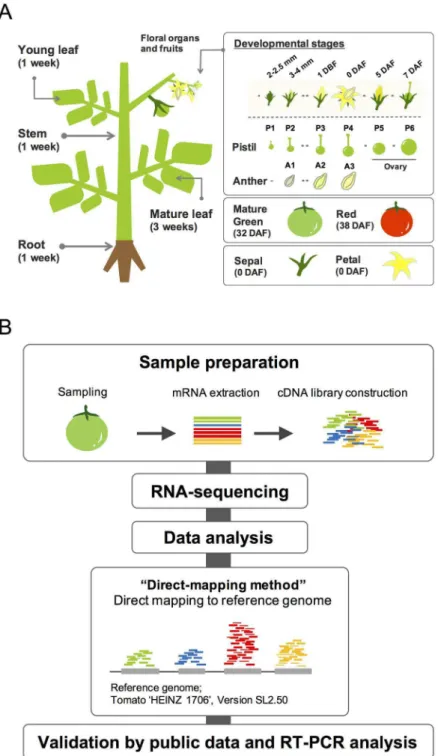
Fig 1A
). We initially selected six different stages for the pistil samples (P1 to P6) and
three different stages for the anther samples (A1 to A3). P1 to P3 and A1 to A2 represent
sam-ples at pre-anthesis; P1 corresponds to pistils in 2–2.5 mm flower bud, P2 and A1 correspond
to pistils and anthers, respectively, in 3–4 mm flower bud, and P3 and A2 correspond to those
in flower buds 1 day before flowering (1 DBF), while P4 and A3 correspond to those in flower
buds at anthesis (0 DAF). P5 and P6 represent samples from post-anthesis stages: P5 and P6
correspond to pistils/fruits in flowers at 5 days after flowering (5 DAF) and in 5 mm ovaries at
7 days after flowering (7 DAF) samples, respectively. In addition, we used eight samples from
different tissues. We conducted 35 nt and 50 nt single reads sequencing by Illumina GAIIx
and Hiseq 2000, respectively (
S1 Table
). We used the “direct-mapping method” to identify sets
of PSGs (
Fig 1B
). In the direct-mapping method, whole sequenced short reads were directly
mapped onto the tomato reference genome.
The direct-mapping method is a common approach for transcriptome analysis in which
sequence reads are mapped onto the reference genome of a target organism [
8
,
38
]. Our
RNA-seq generated different amounts of raw data ranging from 8.32 to 39.42 million reads. After
quality checking and trimming of low quality reads and adapter sequences, we obtained 7.28
to 35.23 million clean reads for mapping (
S1 Table
). We analyzed the reads using CLC
Geno-mic Workbench ver. 7.0.4, a user-friendly mapping tool; 82.3% to 90.5% of the clean reads
from each sample were mapped to the tomato genome SL2.40 [
43
] (
S1 Table
). An RPKM
cut-off value of 0.5 was utilized to declare a locus expressed, resulting in an average of
approxi-mately 25,000 genes above the expression threshold in 17 samples (
S2A Fig
).
Fig 1. Experimental design for RNA-seq analysis.(A) The 17 samples used for transcriptome analysis. For vegetative organs, four samples were collected, including mature leaves from 3-week-old plants and young leaves, stems, and roots from 1-week-old plants. For reproductive organs and fruits, 13 samples were collected, including pistils and anthers of 2–2.5 mm buds, pistils and anthers of 3–4 mm buds, pistils at 1 day-before-flowering (1 DBF), pistils and anthers at anthesis (0 DAF), ovaries of 5-days after flowering (5 DAF), 5 mm ovaries (7 DAF), sepals and petals at anthesis, mature green fruits (MG), and red fruits (RED). (B) Work flow of transcriptome analyses. For the direct-mapping method, whole transcriptome data from short reads were obtained, which were directly mapped onto the tomato reference genome, and expressed genes were identified.
(Solyc05g012050), and
SlINO
(Solyc05g005240), were specifically expressed in flower buds and
flower at the anthesis stage, which is consistent with the results obtained in a previous study
[
47
] (
S2B Fig
).
SlCRCa
was expressed in the early stage of pistil development, and
SlCRCb
and
SlINO
were expressed through all stages of pistil development, while they were barely
expressed in the other tissues (
S2B Fig
). These data support the quality of the transcriptome
dataset. Next, according to RPKM values, we narrowed down the list of genes to those with
RPKM values greater than 0.5 in at least one pistil sample and less than 0.5 in the other tissues,
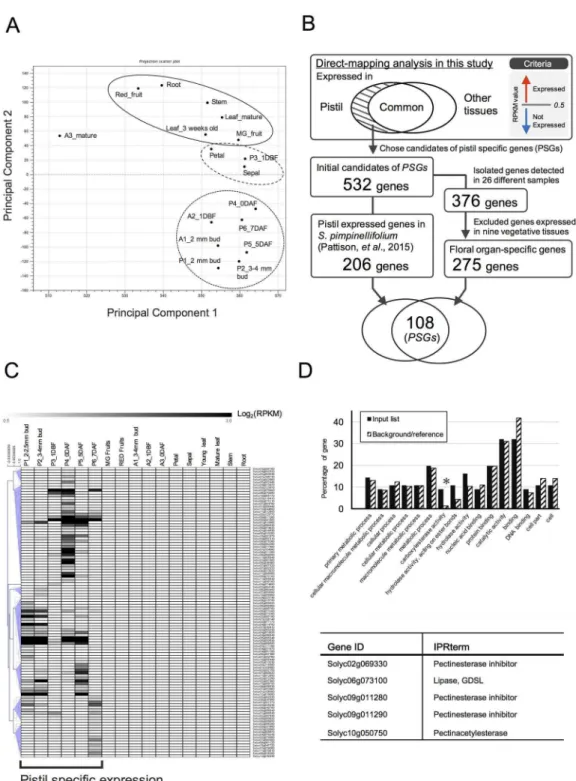
resulting in the identification of 532 of the initial candidate PSGs obtained by the
direct-map-ping method (
Fig 2B
).
Validation of the expression specificity of the candidate genes using
publically available datasets
To reconfirm the tissue-specific expression of the 532 candidate genes, we performed
compar-ative analyses between our transcriptome dataset and two publicly available transcriptome
datasets (Experiment 1 and Experiment 2) from 26 samples, including vegetative tissues and
floral tissues derived from tomato cv. Heinz and wild relative
S.
pimpinellifolium
(strain.
LA1589) available in the Tomato Functional genomics database (
http://ted.bti.cornell.edu/
);
Experiment 1 (Exp1; Tomato Genome Consortium, 2012), Experiment 2 (Exp2; accession no.
PRJNA179156). As a result, 376 of the 532 candidate genes were detected in at least one of the
26 samples from the public data, suggesting that these genes are most likely expressed in
tomato plants. We investigated the expression levels of the 376 genes in nine different
vegeta-tive samples. We then excluded genes whose RPKM values were
>
1 in any of nine vegetative
samples and identified 275 genes as “Floral organ-specific genes” (
Fig 2B
).
Alternatively, to obtain information about the cell types in which the candidate genes are
expressed, we investigated their expression patterns in cell-type-specific transcriptome data
from pistils of wild tomato (S.
pimpinellifolium) [
27
]. We then selected genes expressed in
pistils based on the criterion used by Pattison et al. [
27
]; genes with RPM values
>
2 in at
least one sample were chosen. In total, 206 genes were defined as “Pistil expressed genes”;
their expression was evident in the pistil, especially after anthesis, while the other 326 genes
excluded by this step may not be expressed in the pistil or may be expressed only at the
ear-lier stages than 1 DBF (
Fig 2B
).
We compared “Floral organ-specific genes” and “Pistil expressed genes” and selected
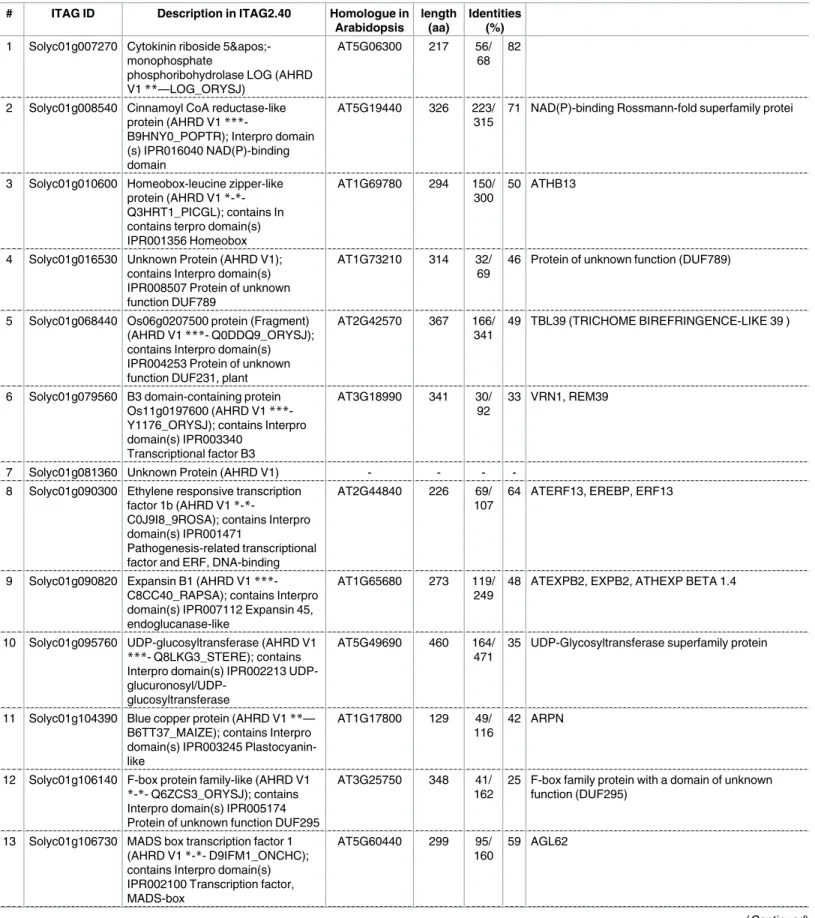
redundant genes, ultimately identifying 108 genes as PSGs by the direct-mapping method (
Fig
2B and 2C
,
Table 1
and
S2 Table
). Among these, 56 genes had not been characterized. Public
transcriptome data analysis provided information about both the organs and cell types in
which the 108
PSGs were expressed. Using cell-type-specific transcriptome dataset from pistils
of wild relative
S.
pimpinellifolium
[
27
], we obtained spatial information about the expression
of
PSGs
within the pistil (
S3 Table
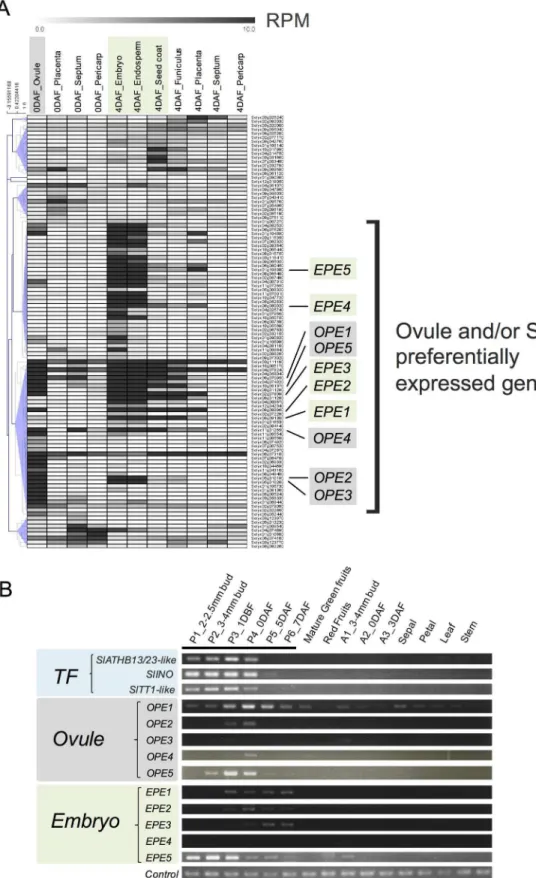
). Hierarchical heat mapping clearly showed their
cell-type-specific expression profiles (
Fig 3A
). Remarkably, roughly two-thirds of the genes appeared to
show highly tissue-specific expression in the ovule and/or seed tissues (embryo, endosperm,
seed coat). While many genes were preferentially expressed in the ovule and the seed tissues
except seed coat, several genes were preferentially expressed in the pericarp at anthesis, in the
placenta, and in the seed coat after pollination (
Fig 3A
). For example, five genes were
preferen-tially expressed in the pericarp before pollination: genes encoding cinnamoyl CoA
reductase-(GO:0004091), was significantly (FDR<0.05) represented in the gene set, while 56 genes were not annotated and were not assigned to GO terms. bottom table; Gene ID and functional annotation described in the SGN database.Table 1. List of 108 pistil-specific genes (PSGs) identified by the direct-mapping-based method. # ITAG ID Description in ITAG2.40 Homologue in
Arabidopsis
length (aa)
Identities (%) 1 Solyc01g007270 Cytokinin riboside
5'-monophosphate
phosphoribohydrolase LOG (AHRD V1**—LOG_ORYSJ)
AT5G06300 217 56/
68 82
2 Solyc01g008540 Cinnamoyl CoA reductase-like protein (AHRD V1***
-B9HNY0_POPTR); Interpro domain (s) IPR016040 NAD(P)-binding domain
AT5G19440 326 223/
315
71 NAD(P)-binding Rossmann-fold superfamily protei
3 Solyc01g010600 Homeobox-leucine zipper-like protein (AHRD V1*-* -Q3HRT1_PICGL); contains In contains terpro domain(s) IPR001356 Homeobox
AT1G69780 294 150/
300
50 ATHB13
4 Solyc01g016530 Unknown Protein (AHRD V1); contains Interpro domain(s) IPR008507 Protein of unknown function DUF789
AT1G73210 314 32/
69
46 Protein of unknown function (DUF789)
5 Solyc01g068440 Os06g0207500 protein (Fragment) (AHRD V1***- Q0DDQ9_ORYSJ); contains Interpro domain(s) IPR004253 Protein of unknown function DUF231, plant
AT2G42570 367 166/
341
49 TBL39 (TRICHOME BIREFRINGENCE-LIKE 39 )
6 Solyc01g079560 B3 domain-containing protein Os11g0197600 (AHRD V1*** -Y1176_ORYSJ); contains Interpro domain(s) IPR003340
Transcriptional factor B3
AT3G18990 341 30/
92
33 VRN1, REM39
7 Solyc01g081360 Unknown Protein (AHRD V1) - - -
-8 Solyc01g090300 Ethylene responsive transcription factor 1b (AHRD V1*-*
-C0J9I8_9ROSA); contains Interpro domain(s) IPR001471
Pathogenesis-related transcriptional factor and ERF, DNA-binding
AT2G44840 226 69/
107
64 ATERF13, EREBP, ERF13
9 Solyc01g090820 Expansin B1 (AHRD V1*** -C8CC40_RAPSA); contains Interpro domain(s) IPR007112 Expansin 45, endoglucanase-like
AT1G65680 273 119/
249
48 ATEXPB2, EXPB2, ATHEXP BETA 1.4
10 Solyc01g095760 UDP-glucosyltransferase (AHRD V1
***- Q8LKG3_STERE); contains Interpro domain(s) IPR002213 UDP-
glucuronosyl/UDP-glucosyltransferase
AT5G49690 460 164/
471
35 UDP-Glycosyltransferase superfamily protein
11 Solyc01g104390 Blue copper protein (AHRD V1**— B6TT37_MAIZE); contains Interpro domain(s) IPR003245 Plastocyanin-like
AT1G17800 129 49/
116
42 ARPN
12 Solyc01g106140 F-box protein family-like (AHRD V1
*-*- Q6ZCS3_ORYSJ); contains Interpro domain(s) IPR005174 Protein of unknown function DUF295
AT3G25750 348 41/
162
25 F-box family protein with a domain of unknown function (DUF295)
13 Solyc01g106730 MADS box transcription factor 1 (AHRD V1*-*- D9IFM1_ONCHC); contains Interpro domain(s) IPR002100 Transcription factor, MADS-box
AT5G60440 299 95/
160
59 AGL62
Table 1. (Continued)
# ITAG ID Description in ITAG2.40 Homologue in Arabidopsis
length (aa)
Identities (%) 14 Solyc01g106980 Endo-1 4-beta-xylanase (AHRD V1*
—B6SW51_MAIZE); contains Interpro domain(s) IPR013781 Glycoside hydrolase, subgroup, catalytic core
AT4G33840 576 276/
545
51 Glycosyl hydrolase family 10 protein
15 Solyc01g108380 Protease inhibitor protein (AHRD V1 -**- B3FNP9_HEVBR); contains Interpro domain(s) IPR000864 Proteinase inhibitor I13, potato inhibitor I
AT2G38900 88 27/
61
44 Serine protease inhibitor, potato inhibitor I-type family protein
16 Solyc02g022860 FAD-binding domain-containing protein (AHRD V1**—
D7MFI0_ARALY); contains Interpro domain(s) IPR006094 FAD linked oxidase, N-terminal
AT4G20820 532 243/
532
46 FAD-binding Berberine family protein
17 Solyc02g032150 Unknown Protein (AHRD V1) - - - -
-18 Solyc02g067630 Polygalacturonase 1 (AHRD V1*** -O22311_SOLLC); contains Interpro domain(s) IPR000408 Regulator of chromosome condensation, RCC1 IPR000743 Glycoside hydrolase, family 28
AT2G43860 384 232/
389
60 Pectin lyase-like superfamily protein
19 Solyc02g069330 Unknown Protein (AHRD V1); contains Interpro domain(s) IPR006501 Pectinesterase inhibitor
AT5G64620 180 26/
80
33 C/VIF2, ATC/VIF2
20 Solyc02g072280 Subtilisin-like protease (AHRD V1**
—Q9LWA3_SOLLC); contains Interpro domain(s) IPR015500 Peptidase S8, subtilisin-related
AT5G67360 757 335/
761
44 ARA12
21 Solyc02g077170 X1 (Fragment) (AHRD V1*— Q7FSP8_MAIZE); contains Interpro domain(s) IPR005379 Region of unknown function XH
AT1G15910 634 96/
259
37 XH/XS domain-containing protein
22 Solyc02g078090 Unknown Protein (AHRD V1) - - - -
-23 Solyc02g079080 F-box family protein (AHRD V1*** -B9GFH4_POPTR); contains Interpro domain(s) IPR001810 Cyclin-like F-box
AT5G02930 469 108/
440
25 F-box/RNI-like superfamily protein
24 Solyc02g084140 Unknown Protein (AHRD V1) - - - -
-25 Solyc02g085190 GATA transcription factor 19 (AHRD V1*-**B6TS85_MAIZE); contains Interpro domain(s) IPR000679 Zinc finger, GATA-type
AT3G50870 295 127/
292
43 MNP, HAN, GATA18
26 Solyc02g086290 Receptor serine/threonine kinase (AHRD V1***- Q9FF31_ARATH)
AT1G66940 332 76/
267
28 protein kinase-related
27 Solyc02g087490 Prolyl 4-hydroxylase alpha subunit-like protein (AHRD V1*** -Q9LSI6_ARATH); contains Interpro domain(s) IPR006620 Prolyl 4-hydroxylase, alpha subunit
AT3G28490 288 176/
265
66 Oxoglutarate/iron-dependent oxygenase
28 Solyc02g092030 Cbs domain containing protein expressed (Fragment) (AHRD V1*
—A6N095_ORYSI); contains Interpro domain(s) IPR002550 Protein of unknown function DUF21
AT2G14520 423 283/
423
67 CBS domain-containing protein with a domain of unknown function (DUF21)
Table 1. (Continued)
# ITAG ID Description in ITAG2.40 Homologue in Arabidopsis
length (aa)
Identities (%)
29 Solyc02g093540 Cytochrome P450 AT3G50660 513 193/
470
41 DWF4, CYP90B1, CLM, SNP2, SAV1, PSC1
30 Solyc03g020000 Pentatricopeptide repeat-containing protein (AHRD V1*-*
-D7L041_ARALY); contains Interpro domain(s) IPR002885
Pentatricopeptide repeat
AT2G22410 681 181/
487
37 SLO1
31 Solyc03g025240 Multidrug resistance protein mdtK (AHRD V1*—MDTK_YERP3); contains Interpro domain(s) IPR002528 Multi antimicrobial extrusion protein MatE
AT4G25640 514 273/
398
69 DTX35
32 Solyc03g031660 Unknown Protein (AHRD V1) - - - -
-33 Solyc03g058330 Unknown Protein (AHRD V1) AT5G06760 158 57/ 144
40 LEA4-5
34 Solyc03g096190 Receptor like kinase, RLK AT3G47570 1010 441/ 1003
43 Leucine-rich repeat protein kinase family protein
35 Solyc03g111190 Auxin-independent growth promoter-like protein (AHRD V1***
-Q9FMW3_ARATH); contains Interpro domain(s) IPR004348 Protein of unknown function DUF246, plant
AT5G63390 559 343/
557
62 O-fucosyltransferase family protein
36 Solyc03g115350 Expansin 2 (AHRD V1*** -C0KLG9_PYRPY); contains Interpro domain(s) IPR002963 Expansin
AT5G39280 259 146/
223
65 ATEXPA23, ATEXP23, ATHEXP ALPHA 1.17
37 Solyc03g116410 Zinc finger CCCH domain-containing protein 39 (AHRD V1***
-C3H39_ARATH); contains Interpro domain(s) IPR000571 Zinc finger, CCCH-type
AT3G19360 386 54/
199
27 Zinc finger (CCCH-type) family protein
38 Solyc03g123770 Unknown Protein (AHRD V1) - - - -
-39 Solyc03g123970 Lipid-binding serum glycoprotein family protein (AHRD V1*-* -D7LAX8_ARALY)
AT3G20270 722 26/
51
51 lipid-binding serum glycoprotein family
40 Solyc04g007310 Thaumatin-like protein (AHRD V1
***- C1K3P2_PYRPY); contains Interpro domain(s) IPR001938 Thaumatin, pathogenesis-related
AT4G38670 253 108/
252
43 Pathogenesis-related thaumatin superfamily protein
41 Solyc04g008670 Gibberellin 2-beta-dioxygenase 7 (AHRD V1****B6SZM8_MAIZE); contains Interpro domain(s) IPR005123 Oxoglutarate and iron-dependent oxygenase
AT4G21200 336 166/
302
55 ATGA2OX8, GA2OX8
42 Solyc04g014750 TNFR/CD27/30/40/95 cysteine-rich region (AHRD V1***
-Q2HT38_MEDTR)
AT1G12064 109 34/
73
47 Unkown protein
43 Solyc04g025740 Homeobox-leucine zipper protein ROC3 (AHRD V1***
-ROC3_ORYSJ); contains Interpro domain(s) IPR001356 Homeobox
AT1G73360 722 52/
125
42 HDG11, EDT1, ATHDG11
44 Solyc04g051070 Unknown Protein (AHRD V1) - - - -
-45 Solyc04g058040 Laccase (AHRD V1***
-Q9AUI3_PINTA); contains Interpro domain(s) IPR011707 Multicopper oxidase, type 3
AT5G09360 569 82/
212
39 LAC14
Table 1. (Continued)
# ITAG ID Description in ITAG2.40 Homologue in Arabidopsis
length (aa)
Identities (%) 46 Solyc04g072870 Beta-D-xylosidase (AHRD V1****
Q8W011_HORVU); contains Interpro domain(s) IPR001764 Glycoside hydrolase, family 3, N-terminal
AT1G78060 767 445/
756
59 Glycosyl hydrolase family protein
47 Solyc04g074320 Zinc finger protein (AHRD V1*— D7KHP2_ARALY); contains Interpro domain(s) IPR007087 Zinc finger, C2H2-type
AT1G34790 303 143/
200
72 TT1, WIP1
48 Solyc04g074890 Unknown Protein (AHRD V1) - - - -
-49 Solyc04g078240 Natural resistance associated macrophage protein (AHRD V1*— B3W4E1_BRAJU); contains Interpro domain(s) IPR001046 Natural resistance-associated macrophage protein
AT1G47240 530 73/
95
77 NRAMP2, ATNRAMP2
50 Solyc04g081180 Unknown Protein (AHRD V1) - - - -
-51 Solyc04g082520 Ring zinc finger protein (Fragment) (AHRD V1*—A6MH00_LILLO); contains Interpro domain(s) IPR008166 Protein of unknown function DUF23
AT4G37420 588 233/
500
47 Domain of unknown function (DUF23)
52 Solyc05g005240 YABBY-like transcription factor CRABS CLAW-like protein (AHRD V1**-*Q6SRZ7_ANTMA); contains Interpro domain(s) IPR006780 YABBY protein
AT1G23420 231 100/
184
54 INO
53 Solyc05g008320 Fasciclin-like arabinogalactan protein (AHRD V1***
-B9N201_POPTR); contains Interpro domain(s) IPR000782 FAS1 domain
AT5G40940 424 114/
328
35 FLA20
54 Solyc05g010190 Unknown Protein (AHRD V1) AT3G42565 119 48/ 121
40 ECA1 gametogenesis related family protein
55 Solyc05g010200 Unknown Protein (AHRD V1) - - - -
-56 Solyc05g013230 Unknown Protein (AHRD V1) AT3G23880 364 21/ 57
37 F-box and associated interaction domains-containing protein
57 Solyc05g052440 Os03g0291800 protein (Fragment) (AHRD V1**—Q0DSS4_ORYSJ); contains Interpro domain(s) IPR004253 Protein of unknown function DUF231, plant
AT2G40320 425 279/
411
68 TBL33
58 Solyc05g052530 Endoglucanase 1 (AHRD V1*** -B6U0J0_MAIZE); contains Interpro domain(s) IPR001701 Glycoside hydrolase, family 9
AT2G44550 490 292/
476
56 ATGH9B10
59 Solyc06g007380 Os08g0119500 protein (Fragment) (AHRD V1*-*- Q0J8C9_ORYSJ)
AT5G01710 513 258/
510
51 methyltransferases
60 Solyc06g048400 Unknown Protein (AHRD V1); contains Interpro domain(s) IPR008502 Protein of unknown function DUF784, Arabidopsis thaliana
AT3G30387 115 34/
97
35 Protein of unknown function (DUF784)
Table 1. (Continued)
# ITAG ID Description in ITAG2.40 Homologue in Arabidopsis
length (aa)
Identities (%) 61 Solyc06g060450 Transmembrane emp24
domain-containing protein 10 (AHRD V1*** -B6SSF8_MAIZE); contains Interpro domain(s) IPR000348 emp24/ gp25L/p24
AT1G2190 216 108/
210
51 emp24/gp25L/p24 family/GOLD family protein
62 Solyc06g070950 ATP-binding cassette (ABC) transporter 17 (AHRD V1*** -Q4H493_RAT); contains Interpro domain(s) IPR003439 ABC transporter-like
AT3G47780 935 503/
937
54 ATATH6, ATH6
63 Solyc06g073100 GDSL esterase/lipase At3g27950 (AHRD V1***- GDL54_ARATH); contains Interpro domain(s) IPR001087 Lipase, GDSL
AT3G27950 361 197/
375
53 GDSL-like Lipase/Acylhydrolase superfamily protein
64 Solyc06g074160 B3 domain-containing protein Os03g0212300 (AHRD V1*** -Y3123_ORYSJ); contains Interpro domain(s) IPR003340
Transcriptional factor B3
AT3G06160 374 38/
131
29 AP2/B3-like transcriptional factor family protein
65 Solyc06g075200 Unknown Protein (AHRD V1) AT5G37474 80 28/ 83
34 Putative membrane lipoprotein
66 Solyc07g007520 Unknown Protein (AHRD V1) - - - -
-67 Solyc07g032700 Unknown Protein (AHRD V1) - - - -
-68 Solyc07g043410 UDP-glucosyltransferase family 1 protein (AHRD V1****
C6KI43_CITSI); contains Interpro domain(s) IPR002213 UDP- glucuronosyl/UDP-glucosyltransferase
AT2G15480 484 166/
487
34 UGT73B5
69 Solyc07g053400 Unknown Protein (AHRD V1) - - - -
-70 Solyc07g054360 Unknown Protein (AHRD V1) - - - -
-71 Solyc07g062320 Unknown Protein (AHRD V1) - - - -
-72 Solyc07g064780 Unknown Protein (AHRD V1) - - - -
-73 Solyc08g015750 F-box family protein (AHRD V1*** -B9I6K2_POPTR); contains Interpro domain(s) IPR001810 Cyclin-like F-box
AT5G02920 469 58/
200
31 F-box/RNI-like superfamily protein
74 Solyc08g061120 Unknown Protein (AHRD V1) - - - -
-75 Solyc08g066400 Protein kinase (Fragment) (AHRD V1*-*- A2Q5N5_MEDTR)
AT2G25760 676 217/
333
65 Protein kinase family protein
76 Solyc08g074920 Aspartic proteinase nepenthesin I (AHRD V1**—A9ZMF9_NEPAL); contains Interpro domain(s) IPR001461 Peptidase A1
AT5G33340 437 206/
437
47 CDR1
77 Solyc08g080020 Serine protease inhibitor potato inhibitor I-type family protein (AHRD V1***- D7LT19_ARALY); contains Interpro domain(s) IPR000864 Proteinase inhibitor I13, potato inhibitor I
AT3G46860 85 32/
86
37 Serine protease inhibitor, potato inhibitor I-type family protein
78 Solyc08g082260 Integrin-linked kinase-associated serine/threonine phosphatase 2C (AHRD V1****ILKAP_RAT); contains Interpro domain(s) IPR015655 Protein phosphatase 2C
AT2G29380 362 134/
298
45 HAI3
Table 1. (Continued)
# ITAG ID Description in ITAG2.40 Homologue in Arabidopsis
length (aa)
Identities (%) 79 Solyc09g011280 Unknown Protein (AHRD V1);
contains Interpro domain(s) IPR006501 Pectinesterase inhibitor
AT3G17220 173 31/
131
24 ATPMEI2
80 Solyc09g011290 Invertase inhibitor homolog (AHRD V1***- O49603_ARATH); contains Interpro domain(s) IPR006501 Pectinesterase inhibitor
AT5G64620 180 52/
173
30 C/VIF2, ATC/VIF2
81 Solyc09g025200 Ribosomal protein L18 (AHRD V1
*-*- B7FMF5_MEDTR); contains Interpro domain(s) IPR000039 Ribosomal protein L18e
AT3G05590 187 31/
50
62 RPL18
82 Solyc09g042760 ZIP4/SPO22 (AHRD V1**— A5Y6I6_ARATH); contains Interpro domain(s) IPR013940 Meiosis specific protein SPO22
AT5G48390 936 527/
936
56 ATZIP4
83 Solyc09g047860 HAT family dimerisation domain containing protein (AHRD V1*-* -Q2R1C3_ORYSJ); contains Interpro domain(s) IPR008906 HAT dimerisation
AT5G33406 509 52/
173
30 hAT dimerisation domain-containing protein / transposase-related
84 Solyc09g056030 Unknown Protein (AHRD V1) AT4G12570 873 17/ 44
39 UPL5
85 Solyc09g056040 Ubiquitin-protein ligase 1 (AHRD V1
***- Q5CHN2_CRYHO); contains Interpro domain(s) IPR000569 HECT
AT4G12570 873 153/
413
37 UPL5
86 Solyc09g066050 Homeodomain-containing transcription factor FWA (AHRD V1
**-*B5BQ02_ARASU); contains Interpro domain(s) IPR002913 Lipid-binding START
AT1G73360 722 211/
587
36 HDG11, EDT1, ATHDG11
87 Solyc09g073020 Unknown Protein (AHRD V1) - - - -
-88 Solyc09g075110 Unknown Protein (AHRD V1) - - - -
-89 Solyc09g089590 Ramosa1 C2H2 zinc-finger transcription factor (AHRD V1*-* -D0UTY8_ZEAMM); contains Interpro domain(s) IPR007087 Zinc finger, C2H2-type
AT3G23130 204 78/
192
78 SUP, FON1, FLO10
90 Solyc09g089960 Unknown Protein (AHRD V1) - - -
-91 Solyc09g091300 Self-incompatibility protein (Fragment) (AHRD V1 -**
-C8C1B5_9MAGN); contains Interpro domain(s) IPR010264 Plant self-incompatibility S1
AT3G26880 161 35/
135
33 Plant self-incompatibility protein S1 family
92 Solyc10g005170 Purine permease (AHRD V1*—*
B6TET5_MAIZE); contains Interpro domain(s) IPR004853 Protein of unknown function DUF250
AT1G30840 382 208/
330
63 ATPUP4, PUP4
93 Solyc10g005440 Serine/threonine-protein kinase receptor (AHRD V1****
B6U2B7_MAIZE); contains Interpro domain(s) IPR002290 Serine/ threonine protein kinase
AT4G21390 849 440/
858
51 B120, S-locus lectin protein kinase family protein
Table 1. (Continued)
# ITAG ID Description in ITAG2.40 Homologue in Arabidopsis
length (aa)
Identities (%) 94 Solyc10g017990 Cytokinin oxidase/dehydrogenase 2
(AHRD V1*-**C0LPA7_SOLTU); contains Interpro domain(s) IPR015345 Cytokinin
dehydrogenase 1, FAD and cytokinin binding
AT2G41510 575 214/
525
41 ATCKX1, CKX1
95 Solyc10g044690 Annexin (AHRD V1***
-D2D2Z9_GOSHI); contains Interpro domain(s) IPR009118 Annexin, type plant
AT5G12380 316 173/
316
55 ANNAT8
96 Solyc10g047720 Unknown Protein (AHRD V1) AT5G26805 156 44/ 163
27 unknown protein
97 Solyc10g050750 Pectinacetylesterase like protein (Fragment) (AHRD V1*— Q56WP8_ARATH); contains Interpro domain(s) IPR004963 Pectinacetylesterase
AT4G19420 397 234/
381
61 Pectinacetylesterase family protein
98 Solyc10g051370 LRR receptor-like serine/threonine-protein kinase, RLP
AT2G16250 915 105/
198
53 Leucine-rich repeat protein kinase family protein
99 Solyc10g055600 S-phase kinase-associated protein 1A (AHRD V1**—
B2VUU5_PYRTR); contains Interpro domain(s) IPR001232 SKP1 component
AT4G34210 152 38/
47
81 ASK11, SK11
100 Solyc11g005500 ECA1 protein (AHRD V1*-* -Q53JF8_ORYSJ); contains Interpro domain(s) IPR010701 Protein of unknown function DUF1278
AT1G76750 158 63/
124
51 EC1.1
101 Solyc11g005540 ECA1 protein (AHRD V1*-* -Q53JF8_ORYSJ); contains Interpro domain(s) IPR010701 Protein of unknown function DUF1278
AT2G21750 125 61/
130
47 EC1.3
102 Solyc11g006840 Unknown Protein (AHRD V1) - - - -
-103 Solyc11g012650 TPD1 (AHRD V1*-* -Q6TLJ2_ARATH)
AT1G32583 179 66/
112
59 TPD1-like
104 Solyc11g043160 Endo-1 4-beta-xylanase (AHRD V1
***- B6SW51_MAIZE); contains Interpro domain(s) IPR013781 Glycoside hydrolase, subgroup, catalytic core
AT4G33840 576 217/
545
40 Glycosyl hydrolase family 10 protein
105 Solyc11g070010 F8A5.6 protein (AHRD V1**— Q9ZP57_ARATH)
AT1G60500 669 117/
391
30 DRP4C
106 Solyc11g072650 Trans-2-enoyl CoA reductase (AHRD V1**—C5MRG3_9ROSI); contains Interpro domain(s) IPR002085 Alcohol dehydrogenase superfamily, zinc-containing
AT3G45770 375 215/
335
64 Polyketide synthase, enoylreductase
107 Solyc12g019050 Exostosin-like (AHRD V1*** -A4Q7M8_MEDTR); contains Interpro domain(s) IPR004263 Exostosin-like
AT3G42180 470 203/
349
57 Exostosin family protein
108 Solyc12g042340 Genomic DNA chromosome 5 P1 clone MAC9 (AHRD V1*** -Q9FLS4_ARATH)
AT5G61865 417 136/
368
35 unknown protein
like protein (Solyc01g008540), Unknown Protein (Solyc04g074890), homeobox-leucine
zipper-like protein (Solyc01g010600), B3 domain-containing protein Os03g0212300–zipper-like protein
(Solyc06g074160), and Unknown Protein (Solyc03g123770). Furthermore, the gene encoding
cytokinin oxidase/dehydrogenase 8 (SlCKX8,
Solyc10g017990), TNFR/CD27/30/40/95
cyste-ine-rich region (Solyc04g014750), Unknown Protein (Solyc03g031660), Unknown Protein
(Solyc07g053400), and Ramosa1 C2H2 zinc-finger transcription factor (Solyc09g089590) were
preferentially expressed in the seed coat.
Solyc09g089590
encodes one of two homologous
pro-teins of Arabidopsis SUPERMAN (SUP), which regulates auxin biosynthesis [
48
]. In addition,
the expression of 63 out of 108 genes was detected also in the recently published ovary
tran-scriptome dataset derived from cultivated tomato ‘Moneymaker’ [
23
], in which RNA-seq
anal-yses against ovule and ovary wall tissue were conducted; their average expression levels were
over FPKM of 0.5 [
23
] (
S4 Table
). The 55 other genes were not detected in that dataset,
indi-cating that these 55 genes were barely expressed in cultivated tomato or were only expressed
in other type of tissues such as the placenta and septum, which were excluded from their
experiment.
Validation of gene expression patterns by RT-PCR
We then verified the expression patterns of the PSGs by RT-PCR analysis. Since many of these
genes were highly expressed in the ovule and/or seed, especially the embryo (
Fig 3A
), we
initially focused on genes specifically expressed in these tissues. Among the 108 PSG
candi-dates, the top-five PSGs highly expressed in 0 DAF ovules were designated Ovule
Preferen-tially Expressed genes 1–10 (OPE1–5) (
S5 Table
). We verified the tissue-specific expression
of five of these genes by RT-PCR analysis (
Fig 3B
).
OPE1
was preferentially but not
exclu-sively expressed in the pistil at anthesis,
OPE2
and
OPE5
were specifically expressed in the
pistil at both 1 DBF and 0 DAF, and the expression of
OPE3
in the pistil was not detected in
this experiment.
OPE4
was expressed in the pistil at 0 DAF and mature green fruits. We
also designated the top-five PSGs that were highly expressed in 4 DAF embryos as Embryo
Preferentially Expressed genes 1–5 (EPE1–5) (
S5 Table
).
EPE1, encoding a
self-incompati-bility protein-like protein according to SGN, might function in pollen-pistil interactions,
while most of the
EPEs
had not been functionally characterized or annotated in previous
studies. Like the
OPEs, we investigated the expression of the five
EPEs
(EPE1–5) by
RT-PCR to validate their tissue-specific expression patterns. Three genes,
EPE1-EPE3, were
specifically expressed in the pistil and EPE5 was preferentially expressed in the pistil
espe-cially before anthesis, although we failed to detect the expression of
EPE4
in our RT-PCR
analysis (
Fig 3B
).
EPE1
was specifically expressed in the pistil throughout pistil/fruit
devel-opment but was not expressed in mature red fruits.
EPE3
was also specifically expressed in
the pistil, but only after anthesis.
EPE2
was expressed exclusively during fruit set initiation
between 1 DBF and 0 DAF (
Fig 3B
). In summary, three
OPEs and four
EPEs were
specifi-cally expressed in pistils, confirming their tissue-specific expression in the pistil (
Fig 3B
).
Therefore, we confirmed the tissue-specific expression of
PSGs
in the pistil. These results
indicate that the direct-mapping method also successfully identified true PSGs.
embryo preferentially expressed genes. (B) Validation of the expression of ovule preferentially expressed (OPE) genes, embryo preferentially expressed (EPE) genes, and several transcription factor genes by RT-PCR. Most of the genes were specifically expressed in the pistil. Three pistil-specific transcription factor genes,SlATHB13/ 23-like(Solyc01g010600),SlINO(Solyc05g005240), andSlTT1(Solyc10g051370) showed pistil-specific expression before anthesis. Bottom one represents the expression of the internal control gene SAND [41].
GO analysis using AgriGO
To elucidate the enriched functional categories of the 108 identified PSGs, we performed GO
analysis using AgriGO. A false discovery rate (FDR; e-value corrected for list size) of
<
0.05 was
used as the criterion to obtain enriched GO terms. Consequently, only one category,
Carboxy-lesterase activity (GO:0004091), showed significant abundance (p-value = 0.0017, FDR = 0.037)
(
Fig 2D
). This category includes five genes (listed in
Fig 2D
), three of which (Solyc02g069330,
Solyc09g011280, and
Solyc09g011290) were assigned to the sub-term “Pectinesterase inhibitor”.
Even though
Solyc09g011290
was classified as a “Pectinesterase inhibitor”, it was labeled as an
“invertase inhibitor homolog” in the SGN database and has higher sequence homology with the
invertase inhibitor group that includes
invertase inhibitor 1
(INVINH1,
Solyc12g099200), which
specifically regulates cell wall invertase activity in early developing fruits [
49
].
Pectin, a major component of the primary cell walls of higher plants, is methyl-esterified by
pectin methyltransferase (PMT) before its transport to the cell wall following its biosynthesis in
Golgi bodies [
50
,
51
], whereas pectin methylesterase (PME) catalyzes the removal of methyl esters
from pectin [
52
–
54
]. The removal of methyl group from pectin allows carboxyl groups to form
Ca
2+- and Mg
2+-mediated linkages, leading to the hardening of pectin [
55
,
56
]. In addition,
pec-tin methylesterase inhibitors (PMEIs) directly interact with PME and inhibit its activity, affecpec-ting
pectin composition in the cell wall. Lionetti et al. [
57
] reported that overexpressing Arabidopsis
PMEI
increased the degree of pectin methylesterification by approximately 16%, resulting in
lon-ger roots due to the promotion of cell elongation. Therefore, the degree of methylation and
demethylation of pectin determines the balance between extensibility and rigidity, affecting
growth and cell shape. In tomato,
PMEU1, a ubiquitously expressed pectin methylesterase gene,
is expressed during early fruit development [
58
]. Terao et al. [
59
] recently reported the
occur-rence of rapid pectin metabolism during the early stage of fruit development in tomato:
immu-nolocalization analysis demonstrated that methyl-esterified pectin levels in the ovary increased
from 1 DBF to 3 DAF [
59
]. During fruit set, the transition of cell state from cell division to cell
expansion occurs during a short period of time, and the regulation of this process is important
for determining the size of the fruit. Therefore, it would be interesting to investigate whether
PMEI plays a role in the post-translational regulation of PME and cell wall state during fruit set.
In addition, the pectinesterase inhibitor protein family includes several enzyme inhibitors
such as invertase (Beta-fructofuranosidase) inhibitors, each of which has a specific target
[
60
,
61
].
Solyc09g011290
was annotated as an invertase inhibitor homolog in the SGN database.
Invertase inhibitors regulate specific invertases in a post-translational manner, negatively
affecting the enzyme activity of their targets [
49
,
61
]. We found that
Solyc09g011290was
specifi-cally and highly expressed in the ovule/seed (
S3 Table
). The expression of
Solyc09g011290
was
induced during anthesis and remained at high levels in the absence of pollination but was
down-regulated by pollination and hormone treatments (
S6 Fig
). Several studies on the cell
wall invertase (CWIN) and INVINH1 in tomato suggest that these proteins play important
roles in seed set and fruit set by regulating the unloading of sugar from the phloem during the
ovary-to-fruit transition [
4
,
49
,
62
,
63
]. Thus, the expression pattern of
Solyc09g011290, the
up-regulation during flowering and the down-up-regulation by the fruit-set stimulus (
S6 Fig
),
sug-gests that
Solyc09g011290may also participate in the modulation of the sugar unloading to
unpollinated pistil via post-translational inhibition of invertase activity.
Identification of pistil-specific transcriptional regulators
Solyc04g074320
(SlTT1-like) shares high homology (71.5%) with Arabidopsis zinc-finger
protein TRANPARENT TESTA1 (TT1) [
64
]. Arabidopsis
TT1
expression is restricted to
developing ovules and young seeds and functions in the accumulation of proanthocyanidin
pigments in the seed coat [
65
,
66
], while in the current study, tomato
SlTT1-like
transcripts
were exclusively detected in the ovule, embryo, and endosperm but not in the seed coat (
Fig
3B
). Mazzucato
et al. [
67
] provided evidence that higher anthocyanin content is associated
with increased early fruit growth in non-pollinated flowers. Furthermore, there is an evidence
that the alteration of the flavonoid pathway via the regulation of biosynthesis genes induces
seedless fruit development in both a pollination-dependent and pollination-independent
man-ner [
68
,
69
]. Further elucidation of the function of
SlTT1-like
in the control of flavonoid-related
genes may provide insight into the role of flavonoids during fruit set initiation.
SlINO
(Solyc05g005240) was identified as a pistil-specific
YABBY
transcription factor gene
(
S2B Fig
and
Fig 3B
). YABBY family proteins contain two conserved domains, i.e., a C2C2
zinc-finger-like domain in their N-termini and a helix-loop-helix domain known as the
YABBY domain [
70
]. In Arabidopsis, two YABBY genes,
INO
and
CRC, show tissue-specific
expression in the pistil and are involved in pistil and early fruit development [
44
–
46
]. Nine
YABBY genes were previously identified in tomato, three of which (SlCRCa,
Solyc01g0101240;
SlCRCb,
Solyc05g012050;
SlINO,
Solyc05g005240) are specifically expressed in the flower bud
and in open flowers at anthesis [
50
]. In the current study, we found that
SlCRCa,
SlCRCb, and
SlINO
were preferentially expressed in the pistil (
S2B Fig
).
SlCRCa
was expressed in the early
stage of pistil development, while
SlCRCb
and
SlINO
were expressed during all stage of pistil
development. Furthermore, we confirmed the tissue-specific expression of
SlINO
in pistils by
RT-PCR analysis (
Fig 3B
), suggests its role in the regulation of pistil development [
46
].
Solyc01g010600
(SlATHB13/23-like), which encodes a homeodomain leucine zipper 1
tran-scription factor (HD-Zip TF), shares similarity with
Arabidopsis
class-1 HD-Zip genes
AtHB13
and
AtHB23
and was specifically expressed in the pistil before anthesis (
Fig 3B
). The HD-Zip
TF family forms a large gene family that is divided into four classes; 58 HD-Zip proteins found
in both Arabidopsis and tomato are listed in PlantTFDB version 3.0 (
http://planttfdb.cbi.pku.
edu.cn
) [
71
,
72
]. Although the molecular functions of class-1 HD-Zip proteins in the regulation
of pistil development remain elusive, AtHB13 and AtHB23 were shown to play negative roles in
inflorescence stem elongation by affecting cell division, and AtHB13 also regulates pollen
hydration and development [
73
]. In tomato, class-1 HD-Zip SlHZ24 functions as a
transcrip-tional activator of
SlGMP3
(encoding GDP-
D-mannosepyrophosphorylase), which plays an
important role in the production of the antioxidant ascorbate [
74
]. In addition, virus-induced
gene silencing of class-1 HD-Zip
LeHB1
reduced the mRNA accumulation of
LeACO1
and
inhibited ripening [
75
]. Further, Lin et al. [
75
] also reported that ectopic overexpression of
LeHB1
led to the conversion of sepals into carpel-like structures. We also found that
SlATHB13/
23-like
was highly expressed in the ovary wall in the pistil at anthesis (
S3
and
S4
Tables),
suggest-ing its regulatory role in carpel and ovary wall development.
endosperm development after fertilization through transcriptional control in the central cells
[
79
–
82
].
AtAGL62
also plays important role in the endosperm and seed coat development [
83
–
85
]. Gene expression analysis using tissue-specific transcriptome data from wild tomato
S.
pim-pinellifolium
[
27
] revealed that the type-I MADS box gene
Solyc01g106730
is preferentially
expressed in the ovule (
S3
and
S4
Tables). In addition to the relationship between type-I MADS
box genes and seed development, there is an evidence that down-regulation or mutation in
type-II MADS box genes, such as
TM29,
TAP3,
TM8,
SlAGL11
or
SlAGL6, results in
partheno-carpy [
86
–
90
]. Thus, it would be important to investigate the roles of
Solyc01g106730
in pistil,
seed, and fruit development.
Pistil-specific peptide hormone-like small peptide genes and receptor-like proteins.
The role of peptide hormones in plant signaling pathways is a popular focus of study [
91
–
95
].
The peptide hormone signaling system involves two main components: (1) small ligand
pro-teins such as small cysteine-rich peptides (CRPs) and (2) receptor propro-teins such a leucine-rich
receptor-like kinases (LRR-RLKs) [
96
]. CRPs function as signaling molecules (peptide
hor-mones) in various plant species, which are required for many aspects of development including
antimicrobial defense, pollen tube guidance, stomatal patterning, and early embryo patterning
[
97
–
104
]. CRPs contain four, six, or eight conserved cysteine residues at their C-termini in
addition to a secretion signal at their N-termini. Interestingly, a substantial number of PSGs
identified in this study encode small proteins (44 out of 108 genes identified by the
mapping-based method [40%]) less than 200 amino acids in length (
Table 2
). Small proteins are defined
as proteins smaller than 200 amino acids according to previous reports [
94
,
97
,
105
]. Since
pep-tide hormone-like small proteins share a conserved structure, we performed a sequence
similar-ity search of the 44 identified small proteins and one TAPETUM DETERMINANT 1
(TPD1)-like protein (204 aa) by BLAST analysis and SignalP 4.1 server (
http://www.cbs.dtu.dk/services/
SignalP/
) manually to investigate whether they have conserved residues or functional domains.
Roughly half of these proteins also have a secretion signal in their N-termini (
Table 2
). Notably,
through subsequent sequence analysis of these small proteins, four tissue-specific CRPs
includ-ing an unknown gene (Solyc06g075200) and two LRR-RLK-like proteins were identified (Listed
in
Table 2
,
S5 Fig
).
OPE4
(Solyc11g012650) was homologous to Arabidopsis
TAPETUM DETERMINANT
(AtTPD1, AT4G24972) (6e-37), encoding a peptide hormone that functions as a ligand
mole-cule to regulate the specification of tapetum cells in coordination with receptor protein EMS/
EXS [
106
,
107
], while BLAST searches of the tomato genome identified three other homologs,
designated
SlTPD1L1
(Solyc03g097530),
SlTPD1L2/OPE4
(Solyc11g012650), and
SlTPD1L3
(Solyc11g006850), based on sequence similarity to
AtTPD1, with 59.4% (1e-49), 55% (6e-37),
and 50% (4e-33) sequence similarity, respectively. Like AtTPD1, we confirmed the presence of
a secretion signal in the N-terminal region and conserved cysteine residues at the C-terminus
among the three deduced proteins (
S3A Fig
). Although the sequence of N-terminal secretion
signal region varied among the three proteins, an alignment of each SlTPD1L compared to
amino acids 26–179 of AtTPD1 revealed a high degree of similarity (48–56%) (
S3B Fig
).
Although it is known that
AtTPD1
is also expressed in inflorescence meristems, floral
meri-stems, carpel primordia, and ovule primordia, its function in these tissues remains unknown
[
106
,
107
]. The notion that
SlTPD1L2/OPE4
(Solyc11g012650) showed pistil-specific expression
(
Fig 3B
), and that
OPE4
is shown to be preferentially expressed in the ovule both in
S.
pimpi-nellifolium
and tomato cultivar ‘Moneymaker’ (
S3
and
S4
Tables), it was suggested that
SlTPD1L2/OPE4
might play a tissue-specific role in ovule development.
# ITAG ID Description in ITAG2.40 length (aa) *Presence of predicted secreted signal (aa) Homologue in Arabidopsis length (aa) Identities (%)
Description "Expression in pistil of Moneymaker (Ovule
and/or ovary wall) from Zhang et al
(2016)[23]"
PSSP1 Solyc01g016530 Unknown Protein (AHRD V1); contains Interpro domain(s) IPR008507 Protein of unknown function DUF789
87 - AT1G73210 314 32/69 46 Protein of unknown function (DUF789) Ovule
PSSP2 Solyc01g081360 Unknown Protein (AHRD V1) 151 1–29 - - - Ovule
PSSP3 Solyc01g108380 Protease inhibitor protein (AHRD V1 -** -B3FNP9_HEVBR); contains Interpro domain(s) IPR000864 Proteinase inhibitor I13, potato inhibitor I
77 - AT2G38900 88 27/61 44 Serine protease inhibitor, potato inhibitor I-type family protein
Ovule
PSSP4 Solyc02g069330 Unknown Protein (AHRD V1); contains Interpro domain(s) IPR006501 Pectinesterase inhibitor
180 1–19 AT5G64620 180 26/80 33 C/VIF2, ATC/VIF2 Ovule
PSSP5 Solyc03g058330 Unknown Protein (AHRD V1) 108 - AT5G06760 158 57/144 40 LEA4-5 Ovule
PSSP6 Solyc04g081180 Unknown Protein (AHRD V1) 79 - - - Ovule
PSSP7 Solyc05g010200 Unknown Protein (AHRD V1) 115 1–25 - - - Ovule
PSSP8 Solyc06g048400 Unknown Protein (AHRD V1); contains Interpro domain(s) IPR008502 Protein of unknown function DUF784, Arabidopsis thaliana
155 - AT3G30387 115 34/97 35 Protein of unknown function (DUF784) Ovule
PSSP9 Solyc06g075200 Unknown Protein (AHRD V1) 81 1–22 AT5G37474 80 28/83 34 Putative membrane lipoprotein Ovule
PSSP10 Solyc07g062320 Unknown Protein (AHRD V1) 79 - - - Ovule
PSSP11 Solyc08g080020 Serine protease inhibitor potato inhibitor I-type family protein (AHRD V1*** -D7LT19_ARALY); contains Interpro domain(s) IPR000864 Proteinase inhibitor I13, potato inhibitor I
104 1–19 AT3G46860 85 32/86 37 Serine protease inhibitor, potato inhibitor I-type family protein
Ovule
PSSP12 Solyc09g011280 Unknown Protein (AHRD V1); contains Interpro domain(s) IPR006501 Pectinesterase inhibitor
178 1–23 AT3G17220 173 31/131 24 ATPMEI2 Ovule
PSSP13 Solyc09g089590 Ramosa1 C2H2 zinc-finger transcription factor (AHRD V1*-*
-D0UTY8_ZEAMM); contains Interpro domain(s) IPR007087 Zinc finger, C2H2-type
197 - AT3G23130 204 78/192 78 SUP, FON1, FLO10 Ovule
PSSP14 Solyc11g005500 ECA1 protein (AHRD V1*-* -Q53JF8_ORYSJ); contains Interpro domain(s) IPR010701 Protein of unknown function DUF1278
130 1–26 AT1G76750 158 63/124 51 EC1.1 Ovule
PSSP15 Solyc11g005540 ECA1 protein (AHRD V1*-* -Q53JF8_ORYSJ); contains Interpro domain(s) IPR010701 Protein of unknown function DUF1278
136 1–16 AT2G21750 125 61/130 47 EC1.3 Ovule
PSSP16 Solyc11g006840 Unknown Protein (AHRD V1) 126 - - - Ovule
PSSP17 Solyc09g025200 Ribosomal protein L18 (AHRD V1*-* -B7FMF5_MEDTR); contains Interpro domain(s) IPR000039 Ribosomal protein L18e
72 1–22 AT3G05590 187 31/50 62 RPL18 Ovary wall
PSSP18 Solyc09g056030 Unknown Protein (AHRD V1) 82 - AT4G12570 873 17/44 39 UPL5 Ovary wall
# ITAG ID Description in ITAG2.40 length (aa) *Presence of predicted secreted signal (aa) Homologue in Arabidopsis length (aa) Identities (%)
Description "Expression in pistil of Moneymaker (Ovule
and/or ovary wall) from Zhang et al
(2016)[23]"
PSSP19 Solyc01g007270 Cytokinin riboside
5'-monophosphate phosphoribohydrolase LOG (AHRD V1**—LOG_ORYSJ)
70 - AT5G06300 217 56/68 82 - Not detected
PSSP20 Solyc01g079560 B3 domain-containing protein Os11g0197600 (AHRD V1*** -Y1176_ORYSJ); contains Interpro domain(s) IPR003340 Transcriptional factor B3
109 - AT3G18990 341 30/92 33 VRN1, REM39 Not detected
PSSP21 Solyc02g032150 Unknown Protein (AHRD V1) 147 - - - Not detected
PSSP22 Solyc02g084140 Unknown Protein (AHRD V1) 132 - - - Not detected
PSSP23 Solyc03g116410 Zinc finger CCCH domain-containing protein 39 (AHRD V1*** -C3H39_ARATH); contains Interpro domain(s) IPR000571 Zinc finger, CCCH-type
117 - AT3G19360 386 54/199 27 Zinc finger (CCCH-type) family protein Not detected
PSSP24 Solyc04g025740 Homeobox-leucine zipper protein ROC3 (AHRD V1***- ROC3_ORYSJ); contains Interpro domain(s) IPR001356 Homeobox
148 - AT1G73360 722 52/125 42 HDG11, EDT1, ATHDG11 Not detected
PSSP25 Solyc04g051070 Unknown Protein (AHRD V1) 80 - - - Not detected
PSSP26 Solyc04g078240 Natural resistance associated macrophage protein (AHRD V1*-— B3W4E1_BRAJU); contains Interpro domain(s) IPR001046 Natural resistance-associated macrophage protein
161 - AT1G47240 530 73/95 77 NRAMP2, ATNRAMP2 Not detected
PSSP27 Solyc05g013230 Unknown Protein (AHRD V1) 118 - AT3G23880 364 21/57 37 F-box and associated interaction domains-containing
protein
Not detected
PSSP28 Solyc07g054360 Unknown Protein (AHRD V1) 142 - - - Not detected
PSSP29 Solyc08g061120 Unknown Protein (AHRD V1) 190 - - - Not detected
PSSP30 Solyc09g073020 Unknown Protein (AHRD V1) 50 - - - Not detected
PSSP31 Solyc09g075110 Unknown Protein (AHRD V1) 63 - - - Not detected
PSSP32 Solyc10g047720 Unknown Protein (AHRD V1) 172 - AT5G26805 156 44/163 27 unknown protein Not detected
PSSP33 Solyc10g055600 S-phase kinase-associated protein 1A (AHRD V1**—B2VUU5_PYRTR); contains Interpro domain(s) IPR001232 SKP1 component
51 - AT4G34210 152 38/47 81 ASK11, SK11 Not detected
PSSP34 Solyc01g104390 Blue copper protein (AHRD V1**— B6TT37_MAIZE); contains Interpro domain(s) IPR003245 Plastocyanin-like
122 1–27 AT1G17800 129 49/116 42 ARPN Both
PSSP35 Solyc02g078090 Unknown Protein (AHRD V1) 105 1–26 - - - Both
PSSP36 Solyc03g123770 Unknown Protein (AHRD V1) 112 - - - Both
PSSP37 Solyc03g123970 Lipid-binding serum glycoprotein family protein (AHRD V1*-*
-D7LAX8_ARALY)
116 1–17 AT3G20270 722 26/51 51 lipid-binding serum glycoprotein family Both
# ITAG ID Description in ITAG2.40 length (aa)
*Presence of predicted
secreted signal (aa)
Homologue in Arabidopsis
length (aa)
Identities (%)
Description "Expression in pistil of Moneymaker (Ovule
and/or ovary wall) from Zhang et al
(2016)[23]"
PSSP38 Solyc04g014750 TNFR/CD27/30/40/95 cysteine-rich region (AHRD V1***
-Q2HT38_MEDTR)
105 1–32 AT1G12064 109 34/73 47 Unkown protein Both
PSSP39 Solyc05g005240 YABBY-like transcription factor CRABS CLAW-like protein (AHRD V1**-*
Q6SRZ7_ANTMA); contains Interpro domain(s) IPR006780 YABBY protein
192 - AT1G23420 231 100/ 184
54 INO Both
PSSP40 Solyc05g010190 Unknown Protein (AHRD V1) 138 1–23 AT3G42565 119 48/121 40 ECA1 gametogenesis related family protein
Both
PSSP41 Solyc07g032700 Unknown Protein (AHRD V1) 120 - - - Both
PSSP42 Solyc07g053400 Unknown Protein (AHRD V1) 97 - - - Both
PSSP43 Solyc09g011290 Invertase inhibitor homolog (AHRD V1
***- O49603_ARATH); contains Interpro domain(s) IPR006501 Pectinesterase inhibitor
188 1–24 AT5G64620 180 52/173 30 C/VIF2, ATC/VIF2 Both
PSSP44 Solyc09g091300 Self-incompatibility protein (Fragment) (AHRD V1 -**- C8C1B5_9MAGN); contains Interpro domain(s) IPR010264 Plant self-incompatibility S1
148 1–23 AT3G26880 161 35/135 33 Plant self-incompatibility protein S1 family
Both
PSSP45 Solyc11g012650 TPD1 (AHRD V1*-*- Q6TLJ2_ARATH) 204 1–28 AT1G32583 179 66/112 59 TPD1-like Ovule
*Presence of secreted signal sequence in each protein was predicted by SignalP 4.1 Server with default setting.
https://doi.org/10.1371/journal.pone.0180003.t002
Identificati
on
of
pistil
specific
genes
ONE
|
https://doi.or
g/10.137
1/journal.po
ne.01800
03
July
6,