sustainability
ISSN 2071–1050 www.mdpi.com/journal/sustainability Review
The Search for Sustainable Subsurface Habitats on Mars, and
the Sampling of Impact Ejecta
Magnus Ivarsson 1,* and Paula Lindgren 2
1 Department of Palaeozoology, Swedish Museum of Natural History, Svante Arrheniusväg 9, P.O. Box 50007, SE-104 05 Stockholm, Sweden
2 Department of Geographical and Earth Sciences, University of Glasgow, Gregory Building, Lilybank Gardens, Glasgow, G12 8QQ, UK; E-Mail: [email protected]
* Author to whom correspondence should be addressed; E-Mail: [email protected]; Tel.: +46-8-51955133; Fax: +46-8-51954184.
Received: 20 May 2010 / Accepted: 22 June 2010 / Published: 5 July 2010
depths up to the surface. Several studies of terrestrial impact deposits show the preservation of pre-impact biosignatures, such as fossilized organisms and chemical biological markers. Therefore, if the Martian subsurface contains a record of life, it is reasonable to assume that biosignatures derived from the Martian subsurface could also be preserved in the Martian impact ejecta.
Keywords: subsurface biosphere; hydrothermal systems; impact ejecta; life on Mars
1. Introduction
Life is a strong force on our planet, and it has endured for billions of years despite global catastrophies, such as meteorite impacts, global glaciations, mass extinctions, and climate changes. From the fossil record, we know that microbial life has been present on Earth since at least 3.5 Giga annum (Ga) [1-3] and perhaps as early as 3.8 Ga [4]. Eukaryotes have been present since ~1.8 Ga [5,6], and the atmosphere has been oxygenated due to photosynthesis since ~2.4 Ga [7]. Life is intimately involved with most of the processes that shape the surface of our planet, like weathering and the distribution of vegetation on the continents, as well as the influence on the chemical composition of the atmosphere. Earth’s appearance from space is highly characterized by the presence of life, and from an alien perspective, it would not be difficult to detect life on our planet. Spectral signatures that indicate habitability, and that would be detectable from the other side of our galaxy, are, for example, atmospheric spectra of O2, O3, CH4, and N2O gases, and spectra from surface reflections indicating absorptions by pigments [8]. From such a remote perspective, Earth is the only planetary body in our solar system that harbors life. Nevertheless, it is possible that other planets harbored life earlier in their history, but that this life later went extinct. It could also be a possibility that life still exists on other planets, but that it has been forced to abandon the surface, or never inhabited the surface due to environmental reasons, and now only exists in isolated subsurface havens, where it is not detectable from Earth [9].
The last two decades have involved a change of view regarding the distribution of life on Earth, which may have consequences for our understanding of habitability on other terrestrial bodies. The knowledge of a deep subsurface biosphere that thrives at depths of as much as ~5 km in continental settings [10], as well as in the sub-seafloor crust [11], is constantly growing. This biosphere is not directly exposed to sun radiation and exists at conditions that previously were thought of as hostile for life. The subsurface communities are composed of extremophiles that can survive at high and low temperatures, high pressures, and extreme pHs. This life is more or less independent of the sun’s radiation as an energy source (even though some oxidants used by the microorganisms may be due to photosynthesis at the surface). Instead, the microorganisms gain energy from inorganic sources, like minerals or volcanic gases, and extract carbon from inorganic carbon sources, like carbon dioxide.
The knowledge of life’s capability to inhabit the terrestrial subsurface also displays new niches of where to search for life on other terrestrial planets, like Mars [15]. Hopefully, a world does not necessarily need to be lifeless just because its surface appears to be sterile and inhospitable. Life can survive at depths for long periods of time, and thus be out of reach for our detection. The current conditions on the Martian surface are extremely hostile to life. The subsurface, on the other hand, provides a more hospitable environment and stimulates speculation on possible life on Mars. Future Mars Sample Return (MSR) missions will be targeted to areas with great potential to detect present, or perhaps, more likely, fossil life. Potential subsurface settings, where water can be liquid and life can survive would be at depths of several km and out of reach for future MSRs. However, the current goal of the MSR missions is to reach areas unaffected by radiation and oxidation, and where organic molecules indicative of life or fossilized microorganisms might have been preserved. To reach areas unaffected by the radiation and oxidation at the Martian surface, the missions need to drill between 2 and 5 metres [16-18]. This need exceeds their capabilities. The payload of European Space Agency (ESA)’s planned 2018 Exomars rover is restricted to a drill with the capacity of 2 m [19]; that is why alternative ways to reach the subsurface are discussed. Areas with recent hydrothermal outflow due to impacts or volcanic activity have been suggested for sampling [20]. Another way to reach the Martian subsurface without drilling is by sampling from impact ejecta [9]. Examination of impact ejecta might be the best alternative way of reaching the fossil record of the subsurface. Impact ejecta are composed of material excavated from great depths below the surface. Impact cratering is a high energy event, but several studies show that fossil biomarkers can survive a hypervelocity impact [21,22]. Therefore, the study of impact ejecta on the Martian surface in future missions would enable a search for a fossil record of a sustainable Martian deep biosphere without using heavy drilling equipment.
In this paper, we review the current knowledge of sustainable subsurface ecosystems on Earth and their analogous nature to possible Martian counterparts. We also give suggestions of how to search for a putative Martian subsurface biosphere, and how to access the subsurface in future missions, through the sampling of Martian impact ejecta.
The Subsurface as a Protected Haven for Life
Subsurface settings, usually associated with hydrothermal activity, have been suggested by several authors to serve as protected havens for life on planetary bodies with less favorable surface conditions for life [9,14,15,23]. There are mainly two reasons for this. The first reason is that subsurface environments can supply a deep biosphere with the important prerequisites for sustaining life: water and accessible nutrients. This has led several authors to suggest subsurface or subseafloor hydrothermal settings as the most plausible environment where life originated on the early Earth [24,25]. However, we will not go into detail regarding biogeochemical conditions for the origin of life.
only on the early Earth that subsurface environments could have acted as protected havens for life. The evolution of life has been punctuated by mass extinction events throughout Earth’s history due to impacts or global glaciations like the Snowball Earth [26-31]. During such catastrophic events, deep subsurface settings could have acted as refuges for microscopic life on Earth. Even if the impacts wiped out substantial portions of the surficial fauna and flora, fossil signatures of life could still be preserved in impact ejecta derived from the subsurface. These ejecta will be discussed later on in this article.
Mars is substantially different from Earth, and the conditions for a possible Martian subsurface biosphere would be markedly different. Even though oceans may have existed on Mars early in its history, the Martian surface has been dry for the majority of the planet’s history. The current conditions on the Martian surface are extremely hostile to life. The low atmospheric pressure (~6 hPa), low surface temperature (average of ~240 K), lack of liquid water, UV radiation fluxes three orders of magnitude more damaging to DNA than those on Earth, and the oxidized soil chemistry, make the Martian surface uninhabitable for life as we know it. The subsurface is, on the other hand, much more hospitable for biota, and, in fact, the Martian subsurface might be more hospitable and protective than the Earth’s subsurface. First of all, Mars’ lower background heat flow and lower gravity allow deeper colonies [14]. Secondly, the thermal heat pulse from a major impact is briefer. On Earth, much of the thermal radiation from minor impacts is absorbed by boiling the oceans: Global thermal excursions are buffered by the heat capacity of the oceans, but at impacts large enough to vaporize the oceans, the thermal buffering serves only to prolong the disaster for thousands of years, while the oceans rain out. Without oceans, thermal buffering does not occur on Mars, but on the other hand, the low Martian escape velocity results in the fact that most of the energetic ejecta escape more easily into space, while massive quantities of less energetic ejecta are globally distributed.
2. Earth
2.1. The Deep Subsurface Biosphere on Earth
carbonates, zeolites, or clays. The fossilized microorganisms usually occur as Fe/Mn-hydroxide filaments upon which later oxides are precipitated [42-44].
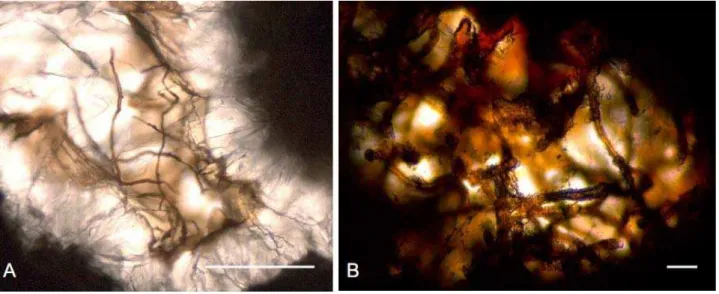
The sub-seafloor biosphere is much less well-known than its continental counterpart due to obstacles involved in the sampling. It is only during the last two decades that this biosphere has been explored extensively. Sub-seafloor sediments [45,46], as well as hydrothermal vent areas [11,47,48], are known to harbor a vast biosphere of bacteria and archaea, and microorganisms have been found in sediments from depths of 10,897 meters below sea level in the Mariana Trench [49]. Our knowledge of the sub-seafloor biosphere of the basaltic crust, on the other hand, is still today more or less based on a fossil record. Drilled samples of basalt have been shown to contain two types of microfossils: ichnofossils (tracefossils) in volcanic glass [12,50] (Figure 1) and body fossils (fossilized microorganisms) in carbonate filled veins and vesicles [51-53] (Figure 2). Fossilized microorganisms have been found at depths of as much as ~950 meters below the seafloor (mbsf). Both ichnofossils in volcanic glass and fossilized microorganisms in the carbonate-filled vugs of basalts are interesting within an astrobiological context. This is because, in the future, they present potential features to search for in rock samples returned from Mars [51,54].
Figure 2. Microphotographs of microfossils in carbonate-filled veins and vesicles in basalts. (A) Microfossils at the interface between zeolites and carbonates in the Ocean Drilling Program (ODP) sample, 1206A-37R-3,72. Scale bar: 100 µm. From [52]. (B) microfossils in carbonate filled veins in basalts from the ODP sample, 1206A-18R-1,104. Scale bar: 10 µm. From [51]. See references [51,52] for more information and discussion regarding the biogenicity of the microfossils.
The concept of the deep subsurface biosphere can be problematic when it comes to distinguishing between the ground-surface biosphere, and the subsurface or subterranean biosphere, and there is no general consensus. In our opinion, there is no obvious boundary between the ground-surface biosphere and the subsurface biosphere. Instead, there is merely a gradual transition from the surface biosphere to the subsurface biosphere, such that the influence of the surface decreases with depth. Due to the main focus of this paper on the potential microbial life in deep Martian rocks, we will mainly refer to the subsurface biosphere as microbial life that occurs in the crystal basement or oceanic crust, and not in the overlying sediments. On Earth, subsurface microbial life occurs in most rock types from sedimentary rock to volcanic rock and crystalline granitic rock. On Mars, however, the basement consists of basalt, and we will focus mostly on terrestrial subsurface environments that can be used, more or less, as analogous environments to Martian conditions.
mostly associated with highly reduced volcanic glass (e.g., [57-59]). In contact with oxidized seawater, volcanic glass is out of equilibrium, and redox reactions favorable for microorganisms may occur. The reactions are relatively slow at low temperatures, and the microorganisms take this opportunity to catalyze the reactions and gain metabolic energy in the process. The most accessible compounds for chemolithoautotrophs in subsurface settings would be Fe2+, H2, H2S, S, CO, CH4, and Mn2+, and electron acceptors could be O2,NO3–, Mn4+, Fe3+, SO42–, S, and CO2. Heterotrophs do occur as well, and use organic C in various constellations, like CH4, as an energy source.
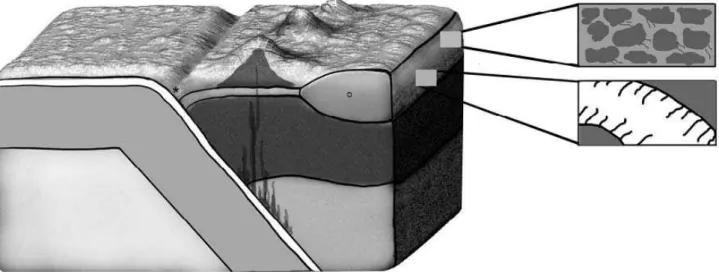
Figure 3. Schematic drawing of the occurrence of microorganisms in the pore spaces of sediments or sedimentary (upper box) rocks, as well as fractures and veins in crystalline rock (lower box). The drawing also indicates the greatest depths at which microorganisms have been observed in the oceanic and continental lithospheres, respectively. * indicates the maximum depth where microorganisms have been found in marine settings: the Mariana Trench at 10,897 meters below sea level. ◦ indicate s the maximum depth where microorganisms have been found in continental settings at ~5 km depths.
The Äspö Hard Rock Laboratory (HRL), Sweden, is an underground laboratory focused on the geological and biological issues associated with nuclear waste storage. This underground laboratory is situated 450 m underground, and is a unique location to study the subsurface biosphere, and is probably one of the places on Earth where the subsurface biosphere has been explored most extensively. At Äspö HRL, iron-, sulfide-, manganese-, and methane-oxidizing bacteria have been found in large numbers, as well as nitrate-, iron-, manganese- and sulfate-reducing bacteria, acetogens, and methanogens [41,60].
and 17 filamentous fungal strains at depths between 201 and 448 m below sea level at Äspö HRL (Hard Rock Laboratory). Phylogenetic analysis of the 18S rDNA of the five yeasts’ isolates revealed their relationships to Rhodotorula minuta and Cryptococcus spp.
2.2. Sustainability of the Deep Biosphere
The metabolic pathways of chemolithoautotrophs show how well adapted the microorganisms of the subsurface biosphere are to their environment. It is the geochemical conditions of the habitats that define the environmental limitations that the microorganisms have to adapt to. The conditions, at which the subsurface biosphere exists, are normally thought of as extreme, and the microorganisms are often referred to as extremophiles. This is a term that includes a wide array of different microorganisms adapted to certain extreme conditions. Thermophiles are microorganisms with an optimum growth temperature of ~50 °C or above, but with a maximum of 80 °C. Hyperthermophiles are microorganisms with optimum growth temperatures above 80 °C, with a maximum of ~120 °C. Psychrophiles are the opposite, and represent microorganisms that thrive at low temperatures, preferably below 15 °C. Barophilic microorganisms thrive at high pressures, acidophiles at low pHs (preferably below pH 3), and alkaliphiles thrive at high pHs (above pH 9). Combinations of different extremophilic abilities occur. For instance, thermoacidophiles prefer temperatures of up to 80 °C and pH levels below 3.
Adaptation is crucial for the survival and sustainability of the subsurface biosphere, since these organisms are restricted to the subsurface conditions, and are more or less isolated from the surface biosphere. Environmental stress forces the microorganisms to adapt as geochemical conditions change over time in the subsurface settings due to, for example, rock weathering, alterations in fluid flow, or increases in temperature. Microorganisms cope with environmental stress in different ways. Some microorganisms are mixotrophic, which means that they can use a mix of different energy and carbon sources. Shewanella spp, for example, a marine bacterium commonly occurring in seafloor basalts, is capable of iron-, manganese- and sulfate reduction [48]. There are also mixotrophs that can alternate between photo- and chemotrophy, litho- and organotrophy, or auto- and heterotrophy. In subsurface settings, microbial communities are forced to adapt to microenvironments with varying redox potentials within a limited spatial scale. The establishment of local niches with varying metabolic pathways increases the enrichment of taxa from diverse metabolic groups, but also the capability of mixotrophy [11].
If the microorganisms are subject to unfavorable conditions for a long period of time, they can go into dormancy, which is an inactive period when growth and metabolic activity slows down or completely ceases. This helps an organism to conserve energy. When the environmental conditions are favorable again, the organism can resume from its dormant state and increase its growth rate and metabolic activity. The dormant state can last for very long periods of time. Microorganisms as old as eight million years have been retrieved and grown in a laboratory from ice core samples from Antarctica [66]. However, the sustainability of a biosphere is not maintained by frequent dormant periods. Even if the conditions are considered extreme and the nutrient supply is low in subsurface environments, a stable ecosystem is needed to achieve a steady growth rate. Microorganisms in subsurface environments are known to adapt their growth rate to the supply of nutrients, and thus their metabolic activity is relatively low [67].
Microbial communities can also adapt to dynamic physical and chemical conditions in other ways, such as biofilm formation or motility [68]. Biofilm formation ensures robust stable communities to resist environmental stress. In fact, the production of exopolysaccharides is increased under conditions of stress. Motility, on the other hand, provides a mechanism for microorganisms under environmental stress to find new habitable environments.
2.3. Endoliths
Microorganisms living in the interior of rocks are referred to as endoliths. The microorganisms attached to the external surfaces of rocks are termed epiliths. Endoliths are divided into euendoliths, cryptoendoliths, and chasmoendoliths, depending on their occurrence and interaction with the host rock [69]. Euendoliths are organisms that actively bore in the rock and create etched pits or microtubular cavities. Cryptoendoliths are organisms that inhabit pre-existent cracks and fractures in the rock, and interact with the host rock in the area that they inhabit. Chasmoendoliths are organisms that inhabit pre-existent cracks and fractures without interacting with the host rock.
changed. Palagonitization is the process in which volcanic glass is altered to palagonite (a gel-like, amorphous, yellowish material that replaces glass) and secondary phases like zeolites and smectites. Palagonitization has been described differently by various authors, but according to Honnorez [73], palagonitization takes place in three stages that are distinguished by the presence or absence of glass or secondary minerals. Ichnofossils or fossilized microorganisms are observed in each of the three stages of the palagonitization process [72]. Microbially etched ichnofossils are found in the fresh, unaltered volcanic glass, which represents the first stage. As the alteration proceeds, and the glass, as well as the rest of the basalt, is subject to fluid circulation and related hydrothermal alteration, fossilized filaments are found attached to both altered basalt and altered volcanic glass in the second stage. In samples that represent the third and final stage of palagonitization, and in which the veins are characterized by palagonite, smectite and phillipsite materials, fossilized filamentous microorganisms, as well as globular fossilized microbial cells and fossilized biofilms are found. Considering the microbial interaction with the host rock, the first stage is thus dominated by euendoliths, compared to the second and third stages. These latter stages are dominated by crypto- and chasmoendolithic microorganisms. It appears as if the alteration of the oceanic crust creates micro-habitats for the microorganisms to dwell in, and it is apparent that the microorganisms, by adapting to these new niches, can survive in the systems while their living conditions change with time [72].
3. Mars
3.1. The Martian Subsurface
Theoretically, subsurface life is as plausible on Mars as it is on Earth. The Martian lithosphere consists of basalts, with a high amount of reduced minerals that, when in contact with oxidized fluids, offer conditions with high redox potentials that microorganisms can take advantage of to gain energy. As we have seen in previous sections of this article, basalt systems on Earth harbor extensive microbial ecosystems. Carbon accessible for microorganisms is also present on Mars; the most common form of carbon is probably CO2 or CH4 [74,75]. The most plausible source of carbon are volcanic gases from the planet’s interior.
The habitability of Martian rocks for endolithic communities is probably comparable to the habitability of rocks on Earth. In fact, Martian rocks may be better suited to host endolithic communities than terrestrial rocks. On Earth, fracturing and the production of micropores where endolithic communities may thrive are a result of cooling and, above all, processes related to plate tectonics. The Martian lithosphere has not been subject to plate tectonics as the terrestrial lithosphere has. However, the present Martian lithosphere has been subject to more impacts than the present terrestrial basement. The terrestrial basement has been recycled many times through plate-tectonics. Fracturing caused by impacts can create new habitats for crypto- and chasmoendoliths and can substantially increase the possibilities for fluid flow and microbial growth in subsurface environments [76-78].
but the current situation on Mars is the opposite. At the moment, Mars is a dry planet and water mostly occurs as ice. However, liquid water can occur at great depths, and recent observations indicate that occasional outflows occur on the Martian surface.
3.2. Hydrothermal Activity on Mars
Hydrothermal systems develop wherever a fluid phase coexists with a heat source to drive convective energy. On Earth today, the heat that drives hydrothermal processes originates from internal radioactive decay and core crystallization. Such heat dissipates by mantle convection from the interior of Earth and is finally released by surficial volcanism. Most volcanism on Earth is concentrated in the plate margins, and this is also where the most abundant hydrothermal activity is found. Mars differs fundamentally in this respect, since it never developed plate tectonics [79]. However, crustal volcanism has played an important role in the thermal evolution of the planet. Abundances of radiogenic isotopes (K, U, Th) in Martian meteorites are similar to terrestrial igneous rocks, and it is most likely that radioactive decay provided a long-term heat source to sustain magmatism [80]. Furthermore, morphological evidence of shallow magmatism and volcanism is widespread over the red planet.
Water on Mars in the form of ice is known to exist at the polar caps, in the ground, locally on the surface, and in the atmosphere [74,81-84]. We also know that liquid water has been abundant both on the surface and as groundwater earlier in Mars’ past [85,86]. Thus the conditions, heat and water, that are required for hydrothermal activity exist on Mars.
A number of observations on Mars and of Martian meteorites have been suggested to be the result of hydrothermal processes. Martian meteorites indicate that there has been an active and ongoing process of crustal atmosphere exchange on Mars [87], and hydrothermal convection provides the most compelling mechanism for such exchanges [88]. Martian meteorites also contain trace quantities of minerals like clays, sulfates, carbonates, halides, and ferric oxides that have formed through interactions with aqueous solutions [89]. Another feature that has been assigned to hydrothermal activity is the loss of the early atmosphere. Thermodynamic models indicate that hydrothermal mineralization could have sequestered atmospheric CO2 in the Martian crust [90]. Furthermore, several authors have suggested that the occurrence of iron and sulfur rich minerals, like hematite and jarosite, indicates aqueous and hydrothermal processes (e.g., [20,91-95]). The origin of some of these minerals is still debated, and alternative interpretations have been presented that involve more surficial processes, such as deposition in stagnant water [96].
are widespread in terrestrial impact craters [98-100], and an alternative heat source that could have given rise to hydrothermal activity on ancient Mars is the heat generated by impact cratering [15,101,102].
Recent observations by Mars missions are even more compelling and support the idea of past hydrothermal activity on Mars. The rover, Spirit, discovered silica-rich deposits in the Gusev crater. These have been interpreted to be of hydrothermal origin [103]. The silica-rich deposits were found in close association with volcanic materials and ferric sulfates, which are probably also of hydrothermal origin. The deposits resemble the silica deposits sometimes found in the vicinity of fumaroles or hot springs on Earth. No evidence of standing or flowing surface water were observed at the site. This further supports the idea of hydrothermal origin.
Observations of phyllosilicates by the Mars Express spacecraft and the Mars Reconnaissance Orbiter at several sites on Mars have also been used to argue for past hydrothermal activity on the planet [104-106]. The presence of minerals, such as nontronite, chamosite, montmorillonite, saponite, kaolinite, chlorite, and illite are indicative of the long-term presence of liquid water and of the alteration of mafic rocks like basalts. These minerals could have been formed on a surface with a warm and humid climate similar to the climate on Earth. However, the most probable explanation is that the minerals originate from hydrothermal processes in the shallow crust.
While hydrothermal systems appear to have existed on the ancient Mars, it is difficult to determine whether hydrothermal activity still exists on the planet or if it has ceased. Liquid water is presently unstable at the surface of Mars today, but extensive groundwater environments may exist at a depth of several km [107]. As a result of overburden pressure and the geothermal gradient, subsurface ice can melt at a given depth, and water can occupy rock pore spaces, forming aquifers. Subsurface zones of liquid water may also exist at more shallow depths in the vicinity of young volcanic centers that have recently erupted through the cryosphere on the high northern plains of Mars. Recent observations of repeated volcanic activation with phases of activity as young as two million years suggest that volcanoes are potentially still active today [97]. The contemporary accumulation and resurfacing of ice caps show that liquid water, possibly a hydrothermal fluid, has been involved. However, no major aquifers have been found at shallow depths by orbiters.
Active hydrothermal systems can be detected by localized anomalies in surface temperature or atmospheric composition [20]. Recently, seasonal concentrations as high as tens of ppb of methane have been detected by Earth-based observations of some localized regions on Mars [75]. The origin of the methane is unclear since the residence time of methane in the Martian atmosphere is expected to be hundreds of years, and appears to be seasonal. This suggests mechanisms of actively releasing, capturing, or breaking-down methane. This can be explained by biological processes. However, further studies of the distribution of methane and the environment of release on Mars are necessary in order to assess the scenarios for methane’s formation.
3.3. Sustainability of a Potential Subsurface Biosphere on Mars
daily temperature variations, UV-radiation, oxidized soil chemistry, low atmospheric pressure (~6 hPa) and impacts. Additionally, the systems can offer heat, liquid water, and nutrients. The redox conditions of basalts with high amounts of reduced elements, like iron and manganese, in combination with the presence of oxidized liquid water, can provide energy to the base of the ecosystems and carbon can be scavenged from volcanic gases. Basalt is known from Earth to support microbial ecosystems for long periods of time and it has been shown that microorganisms can adapt to changing geochemical conditions as the basalt is subject to alteration [72,108,109]. The lower background heat flow and lower gravity on Mars allows for deeper colonies. Thus, the spatial distribution of a subsurface biosphere may be more extended on Mars than on Earth [14].
Another factor that is of interest, concerning a potential Martian subsurface biosphere, is the lack of active plate tectonics. On Earth, volcanic and hydrothermal active areas constantly move and the plate tectonics recycle the crust. It is a dynamic system that constantly causes non-equilibrium conditions in the crust and on the surface. Mars, on the other hand, is characterized by the opposite. No plate tectonics are present to recycle the crust and the volcanic centers are fixed, much like intra-plate volcanism on Earth (except where the plate moves above the active center). This means that a volcanic area on Mars associated with a potential hydrothermal system, as well as a potential subsurface biosphere, would be fixed and spatially isolated. Hydrothermal circulation would be concentrated around the volcanic active area, and probably would not be in contact with another active hydrothermal system. It could have been different on the young Mars, with its warmer climate and liquid water, both on the surface and in the ground. However, today, there is a risk that sporadic hydrothermal systems are isolated. This would have an effect on a potential biosphere: despite the subsurface’s capacity to sustain life for long periods of time, eventually, the biosphere would suffer from lack of external contact. Survival of a closed system over billions of years is hard to imagine. However, the present state of Mars may not be a permanent state. The occurrence of water is strongly obliquity-driven and the stability of water has changed periodically [110]. Near-equatorial regions are especially sensitive to obliquity-driven periodicities of water stability, and it has been shown that much of the equatorial regions of Mars had periglacial landscapes indicating surface ice with melt water within the past few million years [111]. Such periods of water stability probably influence the subsurface as well and isolated regions of hydrothermal activity might experience contact with other hydrothermal environments by subsurface throughflow.
4. Impact Deposits: A Window to the Subsurface
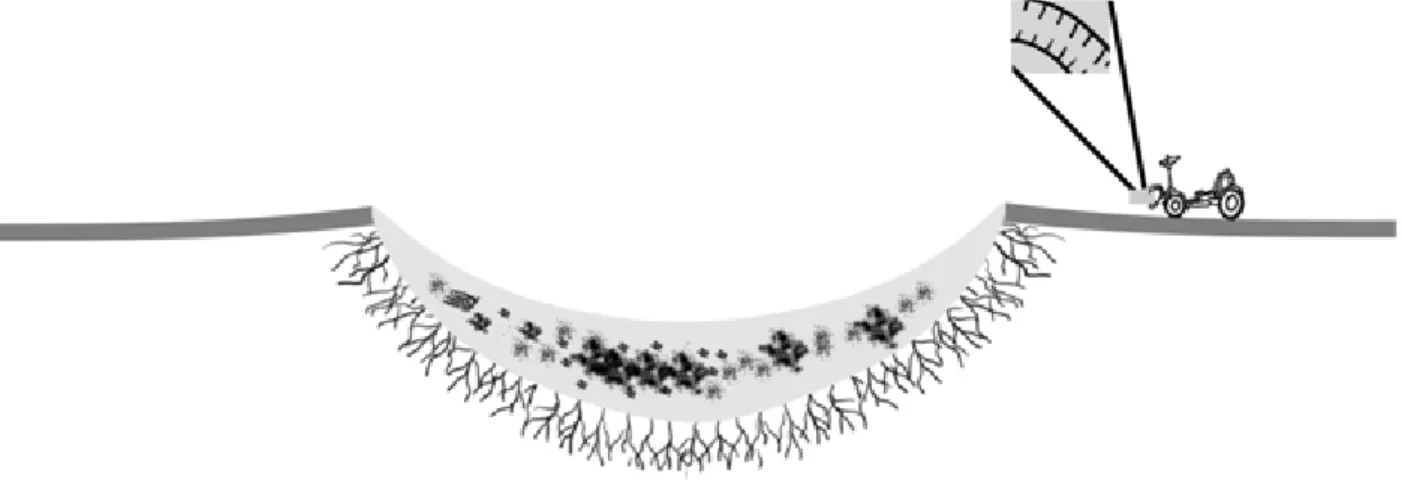
As previously discussed, on Mars, the subsurface is a suitable target to search for life in. However, the sampling and analysis of the Martian subsurface is a tricky business for future planetary missions, due to the heavy drilling equipment needed in order to reach down into the subsurface. Therefore, it has been suggested that sampling and analysis of impact ejecta is one alternative way of studying the subsurface [9]. Impact ejecta are available for sampling at the Martian surface, but they represent geological units from the subsurface (Figure 4). Obviously, the extent and nature of the ejecta depend on the size of impact, but impact cratering is able to excavate large amounts of material from the deep subsurface. For example, in the Haughton impact crater of Canada, material from the crystalline basement, which is located more than 1,880 m below the surface sedimentary rocks, is exposed as crystalline clasts in impact deposits are available today at the surface [112]. It is only through the Haughton impact event that material from the crystalline basement is exposed at the surface. Outside the crater, the basement is buried by almost 2 km of sedimentary rocks.
Figure 4. Schematic drawing illustrating a rover at an impact site sampling ejecta that have been excavated from great depths.
Estimates of terrestrial impact frequencies are compiled by French [113]. Based on these impact frequency calculations (references within French [113]), about 1–5 craters of a size >20 km should be produced every million years. These impact frequencies are based on data from the terrestrial record (in stable and well-preserved regions), but also from the cratering record on the moon and on asteroids. It is very hard to estimate impact frequencies, but it is evident that cratering is widespread in our solar system, through, for example, looking at the scarred surface of our moon. The Earth has been reworked by plate tectonics, and many craters are now wiped out. The impact frequency was much higher in the early history of our solar system, but large impacts still happen today, as is evident from, for example, the comet Shoemaker-Levy colliding with Jupiter in 1994. On planetary bodies with little or no crustal-reworking, such as Mars, impact-processed rocks can cover a significant proportion of the surface. This means that impact deposits would be readily available for sampling on the Martian surface.
created craters 2–150 meters in diameter on Mars [114]. These craters are accompanied by vast ejecta blankets and recent observations further show that the ejecta not only include excavation of rock debris, bui also of ice [115]. The sampling of excavated ice would be highly interesting in an astrobiological context.
Impact cratering is a high-energy event, and involves extremely high pressures and temperatures which could wipe out any pre-impact signatures of life, but the physical and chemical reactions during an impact are far from equilibrium, and the extreme conditions will not apply to all the materials involved in the impact. This gives rise to disordered material next to highly crystalline and shock metamorphosed material [113]. There are several examples of fossil biological signatures which are preserved in impact deposits after an impact event. Organic matter does not necessarily oxidize or change in to highly crystalline forms during an impact event, but substantial amounts can be preserved in a disordered form. For example, Blank et al. [116] showed that significant concentrations of organic compounds survived in the shock experiments of amino acids. Fossil biological markers are preserved within lithic clasts of the Haughton impact melt breccia [22], as well as in the carbonate bedrock of the Haughton impact crater [117]. Pre-impact biological markers are also preserved in shale fragments of impact breccias from the Ries impact crater in Germany [118]. Also, experimental impacts show the preservation of fossil biological markers [21].
The examples of the preservation of life from terrestrial impacts all concern a fossil record of life. But since the conditions on Mars today are rather harsh, with an unstable climate, a thin atmosphere, strong irradiation at the surface, and possibly no liquid water, it is more likely that any evidence of life on Mars would occur in the subsurface, and is more likely to be a fossil, which nevertheless would be of a great significance. Therefore, a strong emphasis in Mars exploration is on the search for a fossil record of life [15].
Acknowledgement
We acknowledge Javier Herbozo at the Swedish Museum of Natural History for the illustrations in Figures 3 and 4. Nicola McLoughlin at the Bergen University is acknowledged for permission to use Figure 1. Anna Neubeck at the Stockholm University is acknowledged for extensive discussions of the manuscript and three anonymous reviewers are acknowledged for constructive comments that greatly improved this paper. Part of this work was funded by the Swedish National Space Board.
References
1. Allwood, A.C.; Walter, M.R.; Kamber, B.S.; Marshall, C.P.; Burch, I.W. Stromatolite reef from the Early Archaean era of Australia. Nature 2006, 441, 714–718.
2. Furnes, H.; Banerjee, N.R.; Muehlenbachs, K.; Staudigel, H.; de Wit, M. Early life recorded in Archean pillow lavas. Science 2004, 304, 578–581.
3. Ueno, Y.; Yamada, K.; Yoshida, N.; Maruyama, S.; Isozaki, Y. Evidence from fluid inclusions for microbial methanogenesis in the early Archaean era. Nature 2006, 440, 516–519.
4. Rosing, M.T. C-depleted carbon microparticles in >3700-Ma sea-floor sedimentary rocks from west Greenland. Science 1999, 283, 674–676.
6. Schneider, D.A.; Bickford, M.E.; Cannon, W.F.; Schulz, K.J.; Hamilton, M.A. Age of volcanic rocks and syndepositional iron formations, Marquette Range Supergroup: Implications for the tectonic setting of paleoproterozoic iron formations of the Lake Superior region. Can. J. Earth Sci. 2002, 39, 999–1012.
7. Holland, H.D. The oxygenation of the atmosphere and oceans. Phil. T. Roy. Soc. B. 2006, 361, 903–915.
8. Cockell, C.S.; Kaltenegger, L.; Raven, J.A. Cryptic photosynthesis-extrasolar planetary oxygen without a surface biological signature. Astrobiology 2009, 9, 623–636.
9. Cockell, C.H.; Barlow, N.G. Impact excavation and the search for subsurface life on Mars. Icarus 2002, 155, 340–349.
10. Trimarco, E.; Balkwill, D.; Davidson, M.; Onstott, T.C. In situ enrichment of a diverse community of bacteria from 4–5 km deep fault zone in South Africa. Geomicrobiol. J. 2006, 23, 463–473.
11. Santelli, C.M.; Orcutt, B.N.; Banning, E.; Bach, W.; Moyer, C.L.; Sogin, M.L.; Staudigel, H.; Edwards, K.J. Abundance and diversity of microbial life in ocean crust. Nature 2008, 453, 653–657.
12. Furnes, H.; McLoughlin, N.; Muehlenbachs, K.; Banerjee, N.; Staudigel, H.; Dilek, Y.; de Wit M.; Van Kranendonk, M.; Schiffman, P. Oceanic pillow lavas and hyaloclastites as habitats for microbial life through time—A review. In Links between Geological Processes, Microbial Activities and Evolution of Life; Dilek, Y., Furnes, H., Muehlenbachs, K., Eds.; Springer: Berlin, Germany, 2008; pp. 1–68.
13. Rasmussen, B. Filamentous microfossils in a 3,235-million-year-old volcanogenic massive sulphide deposit. Science 2000, 405, 676–679.
14. Sleep, N.H.; Zahnle, K. Refugia from asteroid impacts on early Mars and the early Earth. J. Geophys. Res. 1998, 103, 28529–28544.
15. Farmer, J.D.; Des Marais, D.J. Exploring for a record of ancient Martian life. J. Geophys. Res. 1999, 104, 26977–26995.
16. Kminek, G.; Bada, J.L. The effect of ionizing radiation on the preservation of amino acids on Mars. Earth Planet Sci. Lett. 2006, 245, 1–5.
17. Dartnell, L.R.; Desorgher, L.; Ward, J.M.; Coates, A.J. Martian sub-surface ionising radiation: Biosignatures and geology. Biogeosciences 2007, 4, 545–558.
18. Lammer, H.; Lichtenegger, H.I.M.; Kolb, C.; Ribas, I.; Guinan, E.F.; Abart, R.; Bauer, S.J. Loss of water from Mars: Implications for the oxidation of the soil. Icarus 2003, 165, 9–25. 19. Zacny, K.; Bar-Cohen, Y.; Brennan, M.; Briggs, G.; Cooper, G.; Davis, K.; Dolgin, B.;
Glaser, D.; Glass, B.; Gorevan, S.; Guerrero, J.; McKay, C.; Paulsen, G.; Stanley, S.; Stoker, C. Drilling systems for extraterrestrial subsurface exploration. Astrobiology 2008, 8, 665–706. 20. Farmer, J.D. Hydrothermal systems on Mars: An assessment of present evidence. In Evolution of
Hydrothermal Ecosystems on Earth (and Mars?); Bock, G.R., Goode, J.A., Eds.; Wiley and Sons: Chichester, UK, 1996.
22. Lindgren, P.; Parnell, J.; Bowden, S.A.; Taylor, C.; Osinski, G.; Lee, P. Preservation of biological markers in clasts within impact melt breccias from the Haughton impact structure, Devon Island. Astrobiology 2009, 9, 391–400.
23. The MEPAG next decade science analysis group. Science priorities for Mars sample return. Astrobiology 2008, 8, 489–535.
24. Holm, N.G. Why are hydrothermal systems proposed as plausible environments for the origin of life? Origins. Life. Evol. B. 1992, 22, 5–14.
25. Russel, M.J.; Hall, A.J.; Boyce, A.J.; Fallick, A.E. 100th anniversary special paper: On hydrothermal convection systems and the emergence of life. Econ. Geol. 2005, 100, 419–438. 26. Sleep, N.H.; Zahnle, K.J.; Kasting, J.F.; Morowitz, H. Annihilation of ecosystems by large
asteroid impacts on the early Earth. Nature 1989, 342, 139–142.
27. Rampino, M.R. Role of the galaxy in periodic impacts and mass extinctions on the Earth. In Catastrophic Events and Extinctions: Impacts and Beyond; Koeberl, C., MacLeod, K.G., Eds.; GSA Special Paper 356; Geological Society of America: Boulder, CO, USA, 2002; pp. 667–678.
28. Schultz, P.H.; D’Hondt, S. Cretaceous-Tertiary (Chicxulub) impact angle and its consequences. Geology 1996, 11, 963–967.
29. Erwin, D.H.; Bowring, S.A.; Yugan, J. End-Permian mass extinctions: A review. In Catastrophic Events and Extinctions: Impacts and Beyond; Koeberl, C., MacLeod, K.G., Eds.; GSA Special Paper 356; Geological Sociaety of America: Boulder, CO, USA, 2002; pp. 363–384.
30. Berry, W.B.N.; Ripperdan, R.L.; Finney, S.C. Late Ordovician extinction: A Laurentian view. In Catastrophic Events and Extinctions: Impacts and Beyond; Koeberl, C., MacLeod, K.G., Eds.; GSA Special Paper 356; Geological Sociaety of America: Boulder, CO, USA, 2002; pp. 463–472.
31. Hoffman, P.F.; Kaufman, A.J.; Halverson, G.P.; Schrag, D.P. A neoproterozoic snowball Earth. Science 1998, 281, 1342–1346.
32. Bastin, E.S. Microorganisms in oil fields. Science 1926, 63, 21–24.
33. Bastin, E.S.; Greer, F.E. Additional data on sulfate-reducing bacteria in soils and waters of Illinois oil fields. Bull. Amer. Assoc. Petrol. Geol. 1930, 14, 153–159.
34. Lieske, R.; Hoffmann, E. Untersuchungen über den Bakteriengehalt der Erde in grossen Tiefen. Centralbl. F. Bakt, II. Abt. 1929, 77, 305–309.
35. Emery, K.O.; Dietz, R.S. Gravity coring instrument and mechanics of sediment coring. Bull. Geol. Soc. Am. 1941, 52, 1685–1714.
36. Chapelle, F.H.; Zelibor, J.L.J.; Grimes, D.J.; Knobel, L.L. Bacteria in deep coastal plain sediments of Maryland: A possible source of CO2 to groundwater. Water Resour. Res. 1987, 23, 1625–1632.
37. Sinclair, J.L.; Ghiorse, W.C. Distribution of aerobic bacteria, protozoa, algae and fungi in deep subsurface sediments. Geomicrobiol. J. 1989, 7, 15–31.
38. Pedersen, K. Preliminary investigations of deep ground water microbiology in Swedish granitic rock. SKB Tech. Rep. 1987, 88, 1–22.
40. Pedersen, K. The deep subterranean biosphere. Earth-Sci. Rev. 1993, 34, 243–260.
41. Pedersen, K. Exploration of deep intraterrestrial microbial life: Current perspectives. FEMS Microbiol. Lett. 2000, 185, 9–16.
42. Hofmann, B.A.; Farmer, J.D.; von Blanckenburg, F.; Fallick, A.E. Subsurface filamentous fabrics: An evaluation of modes of origins based on morphological and geochemical criteria, with implications for exopalaeontology. Astrobiology 2008, 8, 87–117.
43. Kretzschmar, M. Fossile pilze in eisen-stromatolithen von warstein (rheinisches schiefergebirge). Facies 1982, 7, 237–260.
44. Trewin, N.H.; Knoll, A.H. Preservation of devonian chemotrophic filamentous bacteria in calcite veins. Palaios 1999, 14, 288–294.
45. D’Hondt, S.; Jørgensen, B.B.; Miller, J.; Batzke, A.; Blake, R.; Cragg, B.A.; Cypionka, H.; Dickens, G.R.; Ferdelman, T.; Hinrichs, K.U.; Holm, N.G.; Mitterer, R.; Spivack, A.; Wang, G.; Bekins, B.; Engelen, B.; Ford, K.; Gettemy, G.; Rutherford, S.D.; Sass, H.; Skilbeck, C.G.; Aiello, I.W.; Guerin, G.; House, C.H.; Inagaki, F.; Meister, P.; Naehr, T.; Niitsuma, S.; Parkes, R.J.; Schippers, A.; Smith, D.C.; Teske, A.; Wiegel, J.; Naranjo Padilla, C.; Solis Acosta, J.L. Distributions of microbial activities in deep subseafloor sediments. Science 2004, 306, 2216–2221. 46. Parkes, R.J.; Cragg, B.A.; Wellsbury, P. Recent studies on bacterial populations and processes in
subseafloor sediments: A review. Hydrogeol. J. 2000, 8, 11–28.
47. Toner, B.M.; Santelli, C.M.; Marcus, M.A.; Wirth, R.; Chan, C.S.; McCollom, T.; Bach, W.; Edwards, K.J. Biogenic iron oxyhydroxide formation at mid-ocean ridge hydrothermal vents: Juan de Fuca Ridge. Geochim. Cosmochim. Ac. 2009, 73, 388–403.
48. Lysnes, K.; Thorseth, I.H.; Steinsbu, B.O.; Øvreås, L.; Torsvik, T.; Pedersen, R.B. Microbial community diversity in seafloor basalt from the Arctic spreading ridges. FEMS Microbiol. Ecol. 2004, 50, 213–230.
49. Takami, H.; Ioue, A.; Fuji, F.; Horikoshi, K. Microbial flora in the deepest sea mud of the Mariana Trench. FEMS Microbiol. Lett. 1997, 152, 279–285.
50. Staudigel, H.; Tebo, B.; Yayanos, A.; Furnes, H.; Kelley, K.; Plank, T.; Muehlenbachs, K. The oceanic crust as a bioreactor. In The Subseafloor Biosphere at Mid-Ocean Ridges; Geophysical Monograph Series 144; Wilcock, W.S.D., DeLong, E.F., Kelley, D.S., Baross, J.A., Cary, S.C., Eds.; American Geophysical Union: Washington, DC, USA, 2004; pp. 325–341.
51. Ivarsson, M.; Lausmaa, J.; Lindblom, S.; Broman, C.; Holm, N.G. Fossilized microorganisms from the Emperor Seamounts: Implications for the search for a sub-surface fossil record on Earth and Mars. Astrobiology 2008, 8, 1139–1157.
52. Ivarsson, M.; Lindblom, S.; Broman, C.; Holm, N.G. Fossilized microorganisms associated with zeolite-carbonate interfaces in sub-seafloor hydrothermal environments. Geobiology 2008, 6, 155–170.
53. Peckmann, J.; Bach, W.; Behrens, K.; Reitner, J. Putative cryptoendolithic life in Devonian pillow basalt, Rheinisches Schiefergebirge, Germany. Geobiology 2008, 6, 125–135.
54. McLoughlin, N.; Brasier, M.D.; Wacey, D.; Green, O.R.; Perry, R.S. On biogenicity criteria for endolithic microborings on early Earth and beyond. Astrobiology 2007, 7, 10–26.
56. Ehrlich, H.L. Geomicrobiology, 3rd ed.; Marcel Dekker: New York, NY, USA, 1996; p. 719. 57. Furnes, H.; Thorseth, I.H.; Tumyr, O.; Torsvik, T.; Fisk, M.R. Microbial activity in the alteration
of glass from pillow lavas from hole 896A. Proc. Oc. Drill. Prog. Sci. Res. 1996, 148, 191–206. 58. Furnes, H.; Staudigel, H. Biological mediation in ocean crust alteration: How deep is the deep
biosphere? Earth Planet Sci. Lett. 1999, 166, 97–103.
59. Thorseth, I.H.; Pedersen, R.B.; Christie, D.M. Microbial alteration of 0–30-Ma seafloor basaltic glasses from the Australian Antarctic Discordance. Earth Planet. Sci. Lett. 2003, 215, 237–247. 60. Hallbeck, L.; Pedersen, K. Characterization of microbial processes in deep aquifers of the
Fennoscandian Shield. Appl. Geochem. 2008, 23, 1796–1819.
61. Gadd, G.M. Geomycology: Biogeochemical transformations of rocks, minerals, metals and radionuclides by fungi, bioweathering and bioremediation. Mycol. Res. 2007, 111, 3–49.
62. Hirsch, P.; Rades-Rohkohl, E.; Kölbel-Boelke, J.; Nehrkorn, A. Morphological and taxonomic diversity of groundwater micro-organisms. In Progr Hydrogeochem; Matthess, G., Frimmel, F.H., Hirsch, P., Schulz, H.D., Usdowski, E., Eds.; Springer-Verlag: Berlin, Germany, 1992. 63. Krauss, G.; Sridhar, K.R.; Jung, K. Aquatic hyphomycetes in polluted groundwater habitats of
central Germany. Microbial. Ecol. 2003, 45, 329–339.
64. Pedersen, K.; Arlinger, J.; Ekendahl, S.; Hallbeck, L. 16S rRNA gene diversity of attached and unattached bacteria in boreholes along the access tunnel to the Äspö Hard Rock Laboratory. FEMS Microbiol. Ecol. 1996, 19, 249–262.
65. Ekendahl, S.; O’Neill, A.H.; Thomsson, E.; Pedersen, K. Characterisation of yeasts isolated from deep igneous rock aquifers of the Fennoscandian Shield. Microb. Ecol. 2003, 46, 416–428. 66. Bidle, K.D.; Lee, S.; Marchant, D.R.; Falkowski, P.G. Fossil genes and microbes in the oldest ice
on earth. PNAS 2007, 104, 13455–13460.
67. Teske, A.P. The deep subsurface biosphere is alive and well. Trends Microbiol. 2005, 13, 402–404.
68. Edwards, K.J.; Bach, W.; McCollom, T.M. Geomicrobiology in oceanography: Microbe-mineral interactions at and below the seafloor. Trends Microbiol. 2005, 13, 449–456.
69. Golubic, S.; Friedmann, I.; Schneider, J. The lithobiontic ecological niche, with special reference to microorganisms. J. Sediment. Petrol. 1981, 51, 475–478.
70. Fisk, M.R.; Popa, R.; Mason, O.U.; Storrie-Lombardi, M.C.; Vicenzi, E.P. Iron-magnesium silicate bioweathering on Earth (and Mars?). Astrobiology 2006, 6, 48–68.
71. Eickmann, B.; Bach, W.; Kiel, S.; Reitner, J.; Peckmann, J. Evidence for cryptoendolithic life in Devonian pillow basalts of variscan orogens, Germany. Palaeogeogr. Palaeocl. Palaeoecol. 2009, 283, 120–125.
72. Ivarsson, M.; Holm, N.G. Microbial colonization of various habitable niches during alteration of oceanic crust. In Links between Geological Processes, Microbial Activities and Evolution of Life; Dilek, Y., Furnes, H., Muehlenbachs, K., Eds.; Springer: Berlin, Germany, 2008; pp. 69–111. 73. Honnorez, J. Generation of phillipsites by palagonitization of basaltic glass in sea water and the
74. Boynton, W.V.; Ming, D.W.; Kounaves, S.P.; Young, S.M.M.; Arvidson, R.E.; Hecht, M.H.; Hoffman, J.; Niles, P.B.; Hamara, D.K.; Quinn, R.C.; Smith, P.H.; Sutter, B.; Catling, D.C.; Morris, R.V. Evidence for calcium carbonate at the Mars Phoenix landing site. Science 2009, 325, 61–64.
75. Mumma, M.J.; Villanueva, G.L.; Novak, R.E.; Hewagama, T.; Bonev, B.P.; DiSanti, M.A.; Mandell, A.M.; Smith, M.D. Strong release of methane on Mars in northern summer 2003. Science 2009, 323, 1041–1045.
76. Cockell, C.S.; Lee, P.; Broady, P.; Lim, D.S.S.; Osinski, G.R.; Parnell, J.; Koeberl, C.; Pesonen, L.; Salminen, J. Effects of asteroid and comet impacts on habitats for lithophytic organisms—A synthesis. Meteorit. Planet. Sci. 2005, 40, 1901–1914.
77. Cockell, C.S. The origin and emergence of life under impact bombardment. Phil. T. Roy. Soc. B. 2006, 361, 1845–1856.
78. Cockell, C.S.; Osinski, G.R. Impact-induced impoverishment and transformation of a sandstone habitat for lithophytic microorganisms. Meteorit. Planet. Sci. 2007, 42, 1985–1993.
79. Sleep, N.H. Martian plate tectonics. J. Geophys. Res. 1994, 99, 5639–5655.
80. McSween, H.Y.J. What we have learned about Mars from SNC meteorites. Meteoritics 1994, 29, 757–779.
81. Carr, M. Water on Mars; Oxford University Press: New York, NY, USA, 1996.
82. Smith, P.H.; Tamppari, L.K.; Arvidson, R.E.; Bass, D.; Blaney, D.; Boynton, W.V.; Carswell, A.; Catling, D.C.; Clark, B.C.; Duck, T.; DeJong, E.; Fisher, D.; Goetz, W.; Gunnlaugsson, H.P.; Hecht, M.H.; Hipkin, V.; Hoffman, J.; Hviid, S.F.; Keller, H.U.; Kounaves, S.P.; Lange, C.F.; Lemmon, M.T.; Madsen, M.B.; Markiewicz, W.J.; Marshall, J.; McKay, C.P.; Mellon, M.T.; Ming, D.W.; Morris, R.V.; Pike, W.T; Renno, N.; Staufer, U.; Stoker, C.; Taylor, P.; Whiteway, J.A.; Zent A.P. H2O at the Phoenix landing site. Science 2009, 325, 58–61.
83. Whiteway, J.A.; Komguem, L.; Dickinson, C.; Cook, C.; Illnicki, M.; Seabrook, J.; Popovici, V.; Duck, T.J.; Davy, R.; Taylor, P.A.; Pathak, J.; Fisher, D.; Carswell, A.I.; Daly, M.; Hipkin, V.; Zent, A.P.; Hecht, M.H.; Wood, S.E.; Tamppari, L.K.; Renno, N.; Moores, J.E.; Lemmon, M.T.; Daerden, F.; Smith, P.H. Mars water-ice clouds and precipitation. Science 2009, 325, 68–70. 84. Byrne, S.; Dundas, C.M.; Kennedy, M.R.; Mellon, M.T.; McEwen, A.S.; Cull, S.C.; Daubar, I.J.;
Shean, D.E.; Seelos, K.D.; Murchie, S.L.; Cantor, B.A.; Arvidson, R.E.; Edgett, K.S.; Reufer, A.; Thomas, N.; Harrison, T.N.; Posiolova, L.V.; Seelos, F.P. Distribution of mid-latitude ground ice on mars from new impact craters. Science 2009, 325, 1674–1676.
85. Kerr, R.A. On Mars, a Second Chance for Life. Science 2004, 306, 2010–2012.
86. Bibring, J.P.; Langevin, Y.; Mustard, J.F.; Poulet, F.; Arvidson, R.; Gendrin, A.; Gondet, B.; Mangold, N.; Pinet, P.; Forget, F.; The OMEGA Team. Global mineralogical and aqueous mars history derived from Omega/mars express data. Science 2006, 312, 400–404.
87. Jakosky, B.M. Mars volatile evolution: Evidence from stable isotopes. Icarus 1991, 94, 14–31. 88. Jakosky, B.M.; Jones, J.H. Evolution of water on mars. Nature 1994, 370, 328–329.
89. Gooding, J.L. Soil mineralogy and chemistry on Mars: Possible clues from salts and clays in SNC meteorites. Icarus 1992, 99, 28–41.
91. Catling, D.C.; Moore, J.M. The nature of coarse-grained crystalline hematite and its implications for the early environment of mars. Icarus 2003, 165, 277–300.
92. Wyatt, M.B.; McSween, H.Y.J. Spectral evidence for weathered basalt as an alternative to andesite in the northern lowlands of mars. Nature 2002, 417, 263–266.
93. Christensen, P.R.; Morris, R.V.; Lane, M.D.; Banfield, J.L.; Malin, M.C. Global mapping of martian hematite mineral deposits: Remnants of water-driven processes on early mars. J. Geophys. Res. 2001, 106, 23873–23885.
94. Klingelhöfer, G. Mössbauer In Situ Studies of the Surface of Mars. Hyperfine Interact. 2005, 158, 117–124.
95. Minitti, M.E.; Rutherford, M.J. Genesis of the mars pathfinder “sulfur-free” rock from SNC parental liquids. Geochim. Cosmochim. Ac. 2000, 64, 2535–2547.
96. Christensen, P.R.; Ruff, S.W. Formation of the hematite-bearing unit in Meridiani Planum: Evidence for deposition in standing water. J. Geophys. Res. 2004, 109, E08003, doi:10.1029/2003JE002233.
97. Neukum, G.; Jaumann, R.; Hoffmann, H.; Hauber, E.; Head, J.W.; Basilevsky, A.T.; Ivanov, B.A.; Werner, S.C.; van Gasselt, S.; Murray, J.B.; McCord, T.; The HRSC Co-investigator Team. Recent and episodic volcanic and glacial activity on Mars revealed by the high resolution stereo camera. Nature 2004, 432, 971–979.
98. Ames D.E.; Watkinson D.H.; Parrish R.R. Dating of a regional hydrothermal system induced by the 1850 Ma Sudbury impact event. Geology 1998, 26, 447–450.
99. Naumov, M.V. Impact-generated hydrothermal systems: Data from Popigai, Kara, and Puchezh-Katunki impact structures. In Impacts in Precambrian Shields; Plado, J., Peasonen, L.J., Eds.; Springer: Berlin, Germany, 2002; pp. 117–171.
100. Osinski, G.R.; Spray, J.G.; Lee P. Impact induced hydrothermal activity within the Haughton impact structure, arctic Canada: generation of a transient, warm, wet oasis. Meteorit. Planet. Sci. 2001, 36, 731–745.
101. Newsom, H.E. Hydrothermal alteration of impact melt sheets with implications for Mars. Icarus 1980, 44, 207–216.
102. Pope, K.O.; Kieffer, S.W.; Ames, D.E. Impact melt sheet formation on Mars and its implication for hydrothermal systems and exobiology. Icarus 2006, 183, 1–9.
103. Squyres, S.W.; Arvidson, R.E.; Ruff, S.; Gellert, R.; Morris, R.V.; Ming, D.W.; Crumpler, L.; Farmer, J.D.; Des Marais, D.J.; Yen, A.; McLennan, S.M.; Calvin, W.; Bell, J.F., III; Clark, B.C.; Wang, A.; McCoy, T.J.; Schmidt, M.J.; de Souza, P.A., Jr. Detection of silica-richdeposits on mars. Science 2008, 320, 1063–1067.
105. Mustard, J.F.; Murchie, S.L.; Pelkey, S.M.; Ehlmann, B.L.; Milliken, R.E.; Grant, J.A.;
Bibring, J.P.; Poulet, F.; Bishop, J.; Noe Dobrea, E.; Roach, L.; Seelos, F.; Arvidson, R.E.; Wiseman, S.; Green, R.; Hash, C.; Humm, D.; Malaret, E.; McGovern, J.A.; Seelos, K.; Clancy, T.; Clark, R.; Des Marais, D.; Izenberg, N.; Knudson, A.; Langevin, Y.; Martin, T.; McGuire, P.; Morris, R.; Robinson, M.; Roush, T.; Smith, M.; Swayze, G.; Taylor, H.; Titus, T.; Wolff, M. Hydrated silicate minerals on Mars observed by the mars reconnaissance orbiter CRISM instrument. Nature 2008, 454, 305–309.
106. Poulet, F.; Bibring, J.P.; Mustard, J.F.; Gendrin, A.; Mangold, N.; Langevin, Y.; Arvidson, R.E.; Gondet, B.; Gomez, C.; The Omega Team. Phyllosilicates on mars and implications for early martian climate. Nature 2005, 438, 623–627.
107. Clifford, S.M. A model for the hydrologic and climatic behavior of water on mars. J. Geophys. Res. 1993, 88, 2456–2474.
108. McKinley, J.P.; Stevens, T.O.; Westall, F. Microfossils and paleoenvironments in deep subsurface basalt samples. Geomicrobiol. J. 2000, 17, 43–54.
109. Herrera, A.; Cockell, C.S.; Self, S.; Blaxter, M.; Reitner, J.; Thorsteinsson, T.; Arp, G.; Dröse, W.; Tindle, A.G. A cryptoendolithic community in volcanic glass. Astrobiology 2009, 9, 369–381. 110. Laskar, J.; Correia, A.C.M.; Gastineau, M.; Joutel, F.; Levrard, B.; Robutel, P. Long term
evolution and chaotic diffusion of the insolation quantities of Mars. Icarus 2004, 170, 343–364. 111. Balme, M.R.; Gallagher, C. An equatorial periglacial landscape on Mars. Earth Planet. Sci. Lett.
2009, 285, 1–15.
112. Osinski, G.R.; Spray, J.G.; Lee, P. Impactites of the Haughton impact structure, Devon island, Canadian high Arctic. Meteorit. Planet. Sci. 2005, 40, 1789–1812.
113. French, B.M. Traces of catastrophe: A handbook of Shock-Metamorphic Effects in Terrestrial Meteorite Impact Structures. In LPI Contribution No. 954; Lunar and Planetary Institute: Houston, TX, USA, 1998; p. 120.
114. Malin, M.C.; Edgett, K.S.; Posiolova, L.V.; McColley, S.M.; Noe Dobrea, E.Z. Present-day cratering rate and contemporary gully activity on Mars. Science 2006, 314, 1573–1577.
115. Byrne, S.; Dundas, C.M.; Kennedy, M.R.; Mellon, M.T.; McEwan, A.S.; Cull, S.C.; Daubar, I.J.; Shean, D.E.; Seelos, K.D.; Murchie, S.L.; Cantor, B.A.; Arvidson, R.E.; Edgett, K.S.; Reufer, A.; Thomas, N.; Harrison, T.N.; Posiolova, L.V.; Seelos, F.P. Distribution of mid-latitude ground ice on Mars fromnew impact craters. Science 2009, 325, 1674–1676.
116. Blank, J.; Miller, G.H.; Ahrens, M.J.; Winans, R.E. Experimental shock chemistry of aqueous amino acid solutions and the cometary delivery of prebiotic compounds. Origins. Life. Evol. B. 2001, 31, 15–51.
117. Parnell, J.; Lee, P.; Osinski, G.R.; Cockell, C.S. Application of organic geochemistry to detect signatures of organic matter in the Haughton impact structure. Meteorit. Planet. Sci. 2005, 40, 1879–1885.
118. Hofmann, P.; Leythaeuser, D.; Schwark, L. Organic matter from the Bunte Breccia of the Ries Crater, southern Germany: Investigating possible thermal effects of the impact. Planet. Space Sci. 2001, 49, 845–851.