http://ebooks.cambridge.org/
The Cambridge Handbook of Sociocultural Psychology Edited by Jaan Valsiner, Alberto Rosa
Book DOI:http://dx.doi.org/10.1017/CBO9780511611162 Online ISBN: 9780511611162
Hardback ISBN: 9780521854108 Paperback ISBN: 9780521670050
Chapter
4 - Sampling Reconsidered: Idiographic Science and the Analysis of Per sonal Life Trajectories pp. 82-106
Chapter DOI: http://dx.doi.org/10.1017/CBO9780511611162.007 Cambridge University Press
Sampling Reconsidered
Idiographic Science and the Analyses
of Personal Life Trajectories
Tatsuya Sato, Yuko Yasuda, Ayae Kido, Ayumu Arakawa,
Hazime Mizoguchi, and Jaan Valsiner
Our knowledge, our attitudes, and our actions are based to a very large extent on samples. This is equally true in everyday life and in scientific research. . . . In science and human affairs alike we lack the resources to study more than a frag- ment of the phenomena that might advance our knowledge.
Cochran, 1963 , p. 1
What is sampling? And why do we need to pay attention to it? Sampling is an inevitable operation in any research project – involving selection of some specimens of a class from the whole class. Yet there is more than mere decision of “whom to select” at stake here – sampling is predicated upon the realities of accessibility of the phenomena for investi- gation. After deciding what to investigate, researchers plan to how to access the phe- nomena what they want to know. Social sci- entists may focus on states, biologists may focus on bushes or animals, and psycholo- gists most likely focus on human beings or their nearest phylogenetic relatives.
Furthermore – psychologists’ real inter- est may be in some special aspect of those
human beings – their mental properties for instance. Here is the access limitation involved in sampling – these properties can- not be selected independently of the coop- eration by the whole – the real persons who decide to participate in a study (or decline to do so), who cooperate with the procedures (or – undermine those by lukewarm or dis- ruptive participation strategies). Thus, the researcher faces a difficult task – for knowing the selected properties, psychologists should select a particular human being as a whole (because mental properties never appear by themselves) – yet the interests of research are a part of the whole.
Two Ways to Generalized Knowledge In any research project we have a problem – we can only study some of the members of the set of all of the phenomena – yet we want to arrive at conclusions that cover the whole set. Hence, the issue of how we select what we study is crucial for our knowledge. This issue is subsumed under the general question of sampling. We locate and select
82
GENERALIZED KNOWLEDGE: the obtained models are considered to be fitting to all individual cases in the set X IDIOGRAPHIC SCIENCE:
Select specimen A from X
POOL OF PHENOMENA
CLASSIFYING SCIENCE: Select N specimens from X by some tactic (Table 4.1.)
BUILD GENERAL MODEL: based on specimen
Find inductively adequate generalized features of sample of N and consider those properties of
“population X”
TEST THE MODEL on the basis of specimen B from X
TEST THE RESULT on another sample of specimens from X
CORRECT THE MODEL based on data from B
Add to the set of properties of “population X” based on re-testing
Unwarranted projection
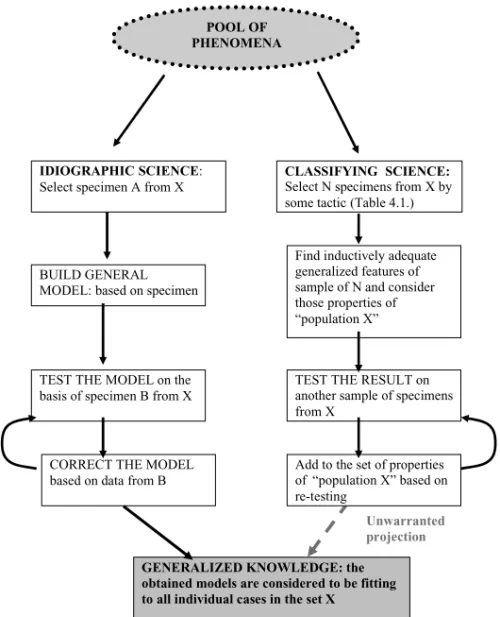
Figure 4.1. Two trajectories of creating generalized knowledge.
a specimen – a sample (a singular exam- ple) – from the whole multitude of the phe- nomenological field we want to study. Yet the reasons for selection of any specimens are not in the nature of such individual case. Instead, we use the individual case – or a selected group of individual cases – for creat- ing generalized knowledge (Molenaar, 2004; Molenaar & Valsiner, 2005 ). Cultural psy- chology uses ways of generalization that are based on systemic analyses of singular phe- nomena (Valsiner, 2003 a). It therefore leaves aside the set of methodological axioms of classificatory, inductively accumulative ways of arriving at generalization. That latter logic of generalization is inductive in its nature, and requires the creation of collection of specimens (“a sample” – a sub-set of N spec- imens of all N+N’ cases that make up the class X). On the basis of such collections,
formal rules of generalization are set to make claims that are considered to apply to the full class X (“the population”). Hence, we have two lines of thought involved in the process of generalization (Figure 4.1).
The two trajectories make different use of the selections from their common phe- nomenological field. The trajectory of Idio- graphic Science (IS) is based on the selec- tion of single cases – together with their structural and/or temporal context – devel- oping a general model that fits the systemic nature of a single case, testing that model on other single cases, and arriving at a general- ized model that fits the generic organization of the selected aspect of phenomena. Many sciences are by default limited to this trajec- tory of knowledge construction – the object of investigation may be present in a singular form (e.g., the Moon that circles the Earth),
yet their goal is to generate knowledge about processes that fits phenomena beyond the single case (e.g., empirical “Moon science” is expected to provide generalized knowledge about processes of the formation of the uni- verse, or general geological processes on the Earth).
The second trajectory – we call it that of
“Classifying science” (CS) – is built on the assumption that multiple specimens of the same class (category) are needed to arrive at trustable knowledge (and, conversely, a sin- gle case does not allow generalization). CS creates collections of specimens – selecting cases from the phenomenological field and treating such sub-set as “a sample.”
This tactic of CS leads to the de-focusing of the systemic connections of each of the sampled specimens from the original phe- nomenological field (Valsiner, 2005 ). If such connection is irrelevant for the kind of research tasks of a study, this tactic may afford new generalized knowledge about the full set (“population”) of the specimens. Yet the critical issue is if the knowledge about the full set is applicable to each and every individual member of that set. This is pos- sible only if the full set is a crisp set (i.e., all its members are of the same quality). If, however, the full set is a fuzzy set – a set where its members belong to it by varying degrees of membership – then the transfer of generalization from population to a generic individual case (see Figure 4.1) constitutes an unwarranted projection.
The trajectory of IS follows the line of classical tactics of generalization in psychol- ogy. Wilhelm Wundt is usually credited with being the principal representative of experi- mental psychology in Germany. As the suc- cessor to Herbart and Fechner, and the first to bring the new scientific psychology to real fruition (Wozniak, 1998), Wundt’s voice has been historically prominent in the shaping of the discipline. Researchers’ aims are to clarify the nature of mental phenomena and they turned adults into objects of psycholog- ical analysis quite naturally. The problem of specimen selection would never be focused under such intellectual situation. Phenom- ena and specimens are inseparable at the
start point of scientific psychology – in the course of the whole sequence of study.
Wundt stressed the distinction between psychology and natural science. He pointed out that “two directions for the treatment of experience,” should be divided. And he continued:
. . . one is that of the natural sciences, which concern themselves with the objects of expe- rience, thought of as independent of the sub- ject. The other is that of psychology, which investigates the whole content of experience in its relations to the subject and in its attributes derived directly from the subject. (Wundt, 1896/1897, p. 3 )
According to Wundt, the discrepancy between investigation theme and subject was completely alien to psychology such a science. But on the other hand, Wundt’s plan of mental phenomena supposed the two lev- els – the lower and higher mental functions. Wundt claimed that the higher mental pro- cesses, involving the truly human, symbolic aspects of experience, can only be under- stood within a social context, using a non- experimental methodology (Leary, 1982). For the latter, Wundt emphasized a non- experimental methodology and wrote the ten-volume work ofV¨olkerpsychologie. How- ever, to say the least, this program was not followed by psychologists including his stu- dents. Experimental methodology won psy- chologists’ affections.
However, a parallel epistemological framework arose from experimental psy- chology – by taking experimentation out of the laboratory and transforming it into large- scale questionnaire studies. In the U.S. con- text of late 19th century, it was called “child study movement.” It found an enthusiastic audience among scientists and professionals as well as the lay public (Drunen and Jansz, 2004). Taine (1876) and Darwin (1877) were pioneers who described the development of their own children using observation methods. But the most influential work was done by the German developmentalist William Preyer (1882).
The usage of the biographical method allowed for the analysis of the development
of the individual as well as the institu- tional and social conditions that influenced the developments (Bergold, 2000). Pioneers tried to describe and understand the devel- opmental phenomena of children. Because they observed only a few children, they were still working within the IS trajectory. Yet the social demands upon psychology led to the proliferation of the second – CS – trajectory. The applied practice of mental testing in France in the 1890s (Alfred Binet) and its parallel focus on “child study” in the United States were building their general- izations upon the CS trajectory. This was put into practice by G. Stanley Hall. Hall learned experimental psychology in Germany and was one of the founders of American psy- chology. Much of his professional life was dedicated to the area of child study. Within the “child study movement,” studies were performed in which parents and teachers acted as researchers’ allies.
creating norms: the child becomes a classificatory object
Developmental psychology has developed in parallel with child psychology – yet the two areas differ substantively (Valsiner & Connolly, 2003 ). Child psychology is non- developmental in its nature – it compares children of different ages as homogeneous groups. Educational psychology and exper- imental pedagogy might also tend to treat children as specimens who form similarity groups (e.g., age sets, school grade grouping:
“first-graders,” “fifth-graders,” etc.). By creat- ing such similarity categories, psychologists moved away from careful look at phenom- ena and replaced it by comparison of out- comes of psychological functions as those appear in comparison of similarity groups. Thus, the focus on phenomena disappeared. Child psychology started to treat children as a social classificatory object – whose “fit into a category” explained the particular phe- nomena that were the basis for such fit. History of psychology tells us child psychol- ogy established the normative data of devel- opment of childhood. Yet the processes of development were no longer in focus of child psychology – a characteristic of the area that
remains this way to our present day (Cairns, 1998; Valsiner, 2006).
In contrast, developmental psychology has concentrated on processes. For example, Arnold Gesell – one of the students of G.S. Hall, was eminently involved in describing ontogenetic progression in children. In his introduction chapter of The first five years of life, Gesell (1940) emphasized that con- cepts such as habit, intelligence, and mental abilities can never explain the ever-changing organization of child. He suggested that the notion of growth be made into the key con- cept for the interpretation of development. He didn’t intend to regard inter-individual differences as static state.
There are laws of sequence and of matura- tion which account for the general similari- ties and basic trends of child development. But no two children (with the partial excep- tion of identical twins) grow up in exactly the same way. Each child has a tempo and a style of growth which are as characteris- tic of individuality as the lineaments of his countenance. (Gesell, 1940, p. 7)
Thus, Gesell himself tried to depict the normative process of behaviors changes for understanding the determinants of growth. Though Gesell recognized the trajectories of infant development, he proceeded to depict the normative development pattern. His interest of infant hygiene made him con- sider the normative data rather than differ- ence of trajectories.
Danziger (1990, p. 65 ) undertook an anal- ysis of major American and German psycho- logical journals to show the percentage of empirical studies in which “an exchange of experimenter and subjects roles” occurred. More than 3 0% of psychological research (1894–1896) in American Journal of Psychol- ogy, Philosophische Studien and Psychological Review, the roles of experimenter and sub- jects were exchange-possible. Though the percentage declined from 3 1 to 8 over a 40-year period, it still remained in 193 0s. One the other hand, in late-coming jour- nals such asJournal of Educational psychology (founded in 1910) and Journal of Applied psy- chology (founded in 1917), there were few
(almost no) studies in which an exchange of experimenter and subject roles appeared. Danziger (1990) pointed out that individuals were treated as an object of invention rather than as the subjects of experience. His point of view resonates with our view of disso- ciation of specimens and phenomena. Our look at sampling emphasizes the organism- centered experiences of growth.
What Is a Sample?
The reason researchers want to know about the properties of samples – is for the sake of generalizing to another abstract unit – population. Sampling means a procedure choosing sub-groups or elements from a population according to some criteria. Once the criteria are set, the sampling procedure treats all the sampled specimens as members of a qualitatively homogeneous class.
However, the nature of autopoietic sys- tems – their self-regulation that leads to reproduction – acts in ways contrary to the simple image of taking a number of similar objects out of an urn. At the first glance, a selection of biological materials from biolog- ical world seems to be a kind of sampling as well. The selection of materials leads to criti- cal impact to the progress of biological inves- tigation of the transformation of the mate- rials. The typical case of this situation has been shown in the field of genetics at its very beginning. The pioneer of genetics, Gregor Mendel, chose seven characters of garden peas as biological materials during the late 185 0s and early 1860s. Yet these were sam- pled not for the sake of identifying some
“essential cause” that remains behind the varieties of peas. He needed to demonstrate the specific ratio of segregation by hybridiza- tion – and revealed the duality of genetic encoding through crossing different kinds of peas with one another. He did not find out what the “prototypic” or “true” pea is like – as is the case of much of psychology’s sample- to-population generalization effort (see also General Conclusion – on the semiotic exper- iment). The search for a “true pea” – or for
“the true score” in psychological testing – presumes that such “true” and static abstract entity exists. That assumption itself is unten- able in the case of all living systems that exist only through their exchange relations with the environment.
The research directions in genetics since Mendel have concentrated on the sampling of theoretically relevant structured varieties of the biological materials that were selected for investigation. Following along the same lines of thought, the discovery of the struc- ture of DNA by James Watson and Francis Crick in 195 3 became possible. It would have been a very different matter if these two youngsters had tried out to randomly sample the different base pairs for their model. The structure of the DNA may be a long chain of base pairs the location and function of many of the sub-sequences may be obscure – but by no means is that structure random. Nor is it possible to study the human genome through assuming that all base pairs make up the “population.”
The Meaning of “Population”
Population is a collection of specimens of a particular category – be these people, or organisms of a particular species – that are located within some universe. Usually it is defined as a crisp set (where each mem- ber of the set belongs to it with full extent of membership). Given the inter-specimen variation2 within each grouping of biologi- cal, sociological, anthropological, or psycho- logical specimens it would be more adequate to define a population in terms of a fuzzy set – where each member of the set belongs to it by some measure of extent of mem- bership (membership function). Populations are heterogeneous classes.
The concept of population eliminates the systemic qualities of the whole. As any col- lection it is devoid of structure – the spec- imens belong to a population if the inher- ent systemic connections between them are eliminated, or de-emphasized. Thus, all the leaves of a given tree form a “population” (of leaves of that tree) only if they are taken
separately from their location on the tree. In other terms – a full tree is a tree ( = a system uniting all leaves), not a “popula- tion of leaves of the tree.” The quintessential example of a population of the leaves of the given tree is the collection of fallen leaves in the autumn – leaves can be collected (as a sample that approaches the full population) independently of their history (of locations on the tree). Such leaves become statisti- cal population – an abstraction that approx- imates the “real” population, but is not the same (nor is it representing the original sys- tem). In an example from the human level – a military unit in a war situation (consist- ing of soldiers of various ranks and roles, all operating as one unit) becomes a “popula- tion” after all of its members end up buried in separate graves in a cemetery. All the graves in the cemetery are the “population of the cemetery” – that can be studied in full (i.e., listing each and every member of the pop- ulation) or by generalizing from a “random sample” of graves to the whole of the ceme- tery. One can see that the history of the whole – the actions of the military unit – cannot be restored from any version of sam- pling of the outcomes of their action (i.e., their distribution in the cemetery).
logic of generalization based on the homogeneity assumption
The basis for using the sample-to-popu- lation generalization is the assumption of
“homogeneity” of the phenomena under study in their basic essences. If one can believe in the homogeneity of a class, the arbitrary sampling is enough to do any research. But, in fact, un-ignorable varia- tion within the sample (inter-individual or intra-individual) needs to be recognized. For integrating two contradicting concepts – homogeneity and variation – another inter- vening concept is needed. Usually the vari- ation becomes regarded as “noise” that obscures the “pure essences” of the proper- ties. This look at the reality of phenomena is built on static, a-historical, and essentialist philosophical grounds that are challenged in contemporary psychology (Hermans, 2001,
2002; Valsiner, 1986). Here the “noise” becomes the “essence” of the phenomena – and instead of static ontology researchers begin to look at dynamic equilibria and dis- equilibria.
The focus on interdependency of persons and environments does not fit well with the notion of random sample. Looking back to the history of science, random sampling is discussed on the context of logical inference. The American semiotician Charles Sanders Peirce insisted that
The truth is that induction is reasoning from a sample taken at random to the whole lot sampled. A sample is a random one, pro- vided it is drawn by such machinery, arti- ficial or physiological, that in the long run any one individual of the whole lot would get taken as often as any other. (Peirce, 1896/195 7, p. 2 17)
Yet it is precisely Peirce who repeatedly demonstrated how science cannot be built solely through the inductive techniques (see Rosa, Chapter 10 of this Handbook), and actually operates through the unity of induc- tion and deduction in the form of abduc- tive inference (Wirth, 1997). It involves the selection of phenomena, formation of hypotheses, and creation of new knowledge at the intersection of deduction and induc- tion through a “leap” of inference.
Randomization is thus a product of an atomistic axiom as applied to complex world. It presumes the independence of each randomized object from one another. If that assumption is applicable, randomization is necessary because the quality of inference should be guaranteed through minimizing imbalances of selection of the specimens. Such inference has aim to understand not sample itself but population. Applicability of this axiomatic may depend upon approx- imation. For instance, its applicability to the grain growing on various agricultural plots (i.e., the basis of R.A. Fisher’s development of variance-oriented statistics) may possibly be claimed. Yet it is an unfeasible assump- tion when human beings, social groups, or societies are concerned.
The Notion of Sampling in the Natural Sciences
In various biological fields, ecological re- search has been using sampling frequently. Recently, its importance is noticed in rela- tion to with views of nature preservation, biological resources, and biomass energy. Sampling as well as experimental design has been based on Fisher’s “three principles” – local controls, randomization, and replica- tion. A major problem of data sampling in biological field can be explained by how to apply the Fisher’s principles.
Selecting a number of individuals of organisms in some areas is an essence of eco- logical research. Then, the mass of organ- isms, their growth rate and death rates are needed. However, biological population produces descendants – who are needed for maintenance of the species. Hence, sta- ble living environment causes population to reproduce the stable number of descen- dants. What matters for our knowledge of the ecological system is the relative balance of individuals who exit the system (hence the need to know the death rate, or emigra- tion rate) with those who enter (by birth, or by immigration). The most popular method of understanding death rate is “mark release.” That is, marked individuals are “released” to living environment. Afterwards, they are
“re-caught.” The death rates are estimated from these individuals. This method is applied to marine and freshwater animals and birds and other animal species.
The practices of the fishing industry can be seen as depending upon the practice of sampling. As it is a productive industry, its well-being is dependent upon controlled catching of fish as well as the affording of the remainder of the fish populations to repro- duce themselves. Knowledge of the nature of the fish populations – through sampling – makes it possible to decide upon quotas on catching the fish so that the popula- tion would not become extinct – nor grow beyond the conditions afforded by the envi- ronment. Yet it is very difficult to estimate the death rate. It is done on the basis of measuring the samples of living organisms
over time – as in case of observations of the whale population. Yet the socio-political decisions – establishing hunting quota on one or another species by representatives of Homo sapiens – depend on the values give to one or another population size estimate in relation to its decline ( = death of numbers of specimens).
Sampling in the Behavioral Sciences Looking at history of psychology at its inde- pendent starting point of scientific study of psychology, random sampling was never taken into account. For example, in Fech- nerian psychophysics it wasn’t necessary to consider a human being as a sampling unit. Fechner only needed to define the concept of sensation and stimulus. Likewise, Wundt’s psychology succeeded with this basic atti- tude. The focus on the phenomena of the psyche in general did not need the notion of sampling at all.
In the early period of psychology, psy- chologists focused on the mental states such as consciousness – or on behavior. In either the psychological traditions of Wundt, K ¨ulpe, Vygotsky on the one hand, or Pavlov, Bekhterev, Watson, and Skinner on the other, sampling was an unnecessary operation to be performed by a researcher. However, as the subject matter of psychol- ogy gradually became to have interests in groups of people – such as school classrooms filled with pupils or army recruits in mil- itary training – sampling came into focus (Danziger, 1990). Danziger outlines how temporal trends exist in the use of different categories of research subjects. Academic psychologists are at first the most important group of subjects for psychological research in the 1890s and then show a progressive decline in the next decade (Danziger, 1990). Human beings were replaced by rats and army men – all treated as homogeneous classes rather than individualities. A mili- tary unit is a “sample” from the population of the given army as a whole – representing the latter precisely because of its homogene- ity. In contrast – a writer, poet, or a pain- ter do not represent any population – their
creativity stems from their immediate per- sonal experiences.
Expansion of the areas of research for psy- chologists into the public domains changed the sampling method of psychology and led to random sampling. The idea of ran- dom sampling seems to be imported from social survey. At the U.S. presidential elec- tion in 193 6, a then-unknown pollster named George Gallup predicted that Roosevelt would win the election, based on a random sample of 5 0,000 people. On the other hand, theLiterary Digest poll, which was based on 10 million questionnaires mailed to readers and potential readers (over 2 million were returned) failed to predict the winner. The success of Gallup and the failure ofLiterary Digest highlight random sampling as a proper method for prediction of pubic opinions.
Sampling and Statistical Theories Sampling theory can be traced to the late nineteenth century. Basic statistical tech- niques for probability sampling were first proposed by Jerzy Neyman (D’Onofrio and Gendron, 2001). Neyman’s seminal work On the Two Different Aspects of Representative Methods: The Method of Stratified Sampling and the Method of Purposive Selection was such landmark work (Neyman, 193 4). Nev- ertheless, the importance of representative- ness of data wasn’t considered before World War II. Although there were some statisti- cians such as Yule (1929) and Neyman (193 4) discussing the random sampling, McNemar (1940, p. 3 3 1) lamented that “the sam- pling inadequacy of so many researches” was “a reflection of the scanty treatment of sampling” in the textbooks on statistical method in United States. He insisted that “a large amount of psychological research must depend upon sampling for the simple reason that human variation exists.”
Here we can note that sampling is the method for dissipating the idea of the existence of variation within a population. McNemar (1940) pointed out that at least 90% of the researches in psychology are interested in making an inference about
the similarity or difference of two groups. Sampling theory has been valued because the biased interpretation easily occurred in research using hypothetical tests (Marks, 1947). Therefore, McNemar (1940) insisted that the validity of a scientific inference must depend upon the precision of data on which it is based. Interestingly, he used the word “the universe” in spite of “population” so that psychologists’ concerns might focus on understanding the universal mental state (not human being or organisms). Securing a representative sample was easily attached to systematic sampling procedures, includ- ing random sampling.
In his 193 4 paper, Neyman claimed that the method of stratified sampling was prefer- able to the method of purposive selection. As Smith (1976) notes the importance of the paper to statistical sampling is enormous especially in the area of social survey within a period of 10 years. These 10 years approx- imately match the age of “inference revo- lution.” The “inference revolution” (dated approximately to 1940–195 5 ; Gigerenzer & Murray, 1987) created a mono-vocal ortho- doxy of the inferential techniques and intro- duced it as standard scientific practice in psy- chology. Within that orthodoxy, the notion of random sampling occupied a central place. It is interesting to have a look at how methodology of sampling had attracted psy- chologists’ interest over time. Figure 4.2 shows the number of journal papers include
“sampling” in the title before World War II.3 Interestingly, journals on educational psy- chology were the places where sampling issues were discussed very often during this period. Spearman published his “The Sam- pling Error in the Theory of Two Factors” on theBritish Journal of Educational Psychol- ogy in 1924. This paper was one of the ear- liest papers that use the term of sampling in the title. The period of the 1920s was precisely the time when psychology moved from being a primarily laboratory science to becoming a discipline that tries to be rel- evant in the public and applied areas of society. As a result, the questions of selec- tion of persons by some criteria became emphasized.
0 1 2 3 4 5 6 7
1924 1926 1928 1930 1932 1934 1936 1938 1940 1942 1944 Figure 4.2 . Referencing the topic sampling in 1924–1944.
steps in sampling
Usually, the word “sampling” means “sam- pling the specimen as a unit.” Sampling always implies “to sample” – that is, to take – the specimen (a person, an organism, a mar- ble out of an urn) to investigate it for the sake of a general goal. Although we insist that phenomena-oriented sampling is bet- ter than specimen-oriented sampling, this distinction is vague and many researchers seem to be familiar with the specimen- oriented sampling, it may be useful to con- sider the sampling from the prevailing view. Under such assumption, we know there are three steps in the psychological sampling and investigation:
Step 1 – Focus on selected properties (basis for sampling)
Step 2 – Sampling of the human partici- pants
Step 3 – Measuring the selected proper- ties through the cooperation of the par- ticipants
Step 2 is critical for sampling – it is here that the focus changes from psychological phenomena of individuals to that of the amorphous character of “the sample.” At Step 2, the size and the representativeness of the sample of research participants in relation to “population” – rather than their representativeness as to how well the tar- geted phenomena are present in each individ- ual – becomes an issue. It is here where the quality of the target phenomena easily gets lost in the discourse of samples → popu-
lation generalization narrative. Comparison of samples leads to comparative statements about populations – which cannot easily be translated back to each and every individual case in each of the compared populations (Valsiner, 1986). The notion of samples – and of sampling – is an example of the utilization of elementaristic linear causality schemes (Valsiner, 2000, p. 73 ). As we will show in this chapter, in the case of socio- cultural psychology that scheme of causal- ity is not applicable. Correspondingly, the notion of sampling needs to be transformed.
Changing the Axiomatic Base: Historicity of Life Courses
If psychology tries to understand the indi- vidual in her/his generic form(s), we should apart from the philosophy of randomization. If there is anything random in human con- duct it is not the position of a particular person within a social structure, but specific features of conduct in the person’s move- ment from the present setting to the next anticipated future state. Even there the ran- domness is bounded by limits of past his- tory (Valsiner, 1997) and future anticipation (Valsiner, 2003 b). At most, we act in quasi- random ways in our search for non-random forms of conduct that grant our adaptation to the not-yet-known future.
We can find it there was a bifurcation point of our concerns on the sampling meth- odology. Researchers in psychology (espe- cially social psychology) have taken a course to random sampling in the past 5 0 years.
Other scientists moved along on a differ- ent trajectory. According to Egon Brunswik, proper sampling of situations is more impor- tant than that of persons (Brunswik, 1947). Brunswik was a fighter against statisticians in those days (see Hammond, 1948). His Viennese background (see Benetka, 1995 ) made him competently skeptical of the
“dust-bowl” statistical empiricism that began to dominate the United States after World War II. Brunswik is one of the eminent pio- neers of ecological validity. Recognizing the unity of person-environment relations leads to the understanding of inevitability of sam- pling of actor<>environment units.
Hence we can see that sampling is a topic with venerable – yet ideologically situated – history in the social sciences. What contem- porary science of psychology needs is clar- ity about how to construct adequate meth- ods for specific research purposes – and not a discussion about whether one or another category of methods is better (or worse) by virtue of their ontology (Valsiner and Diriw¨achter, 2005 ).
Types of Sampling
Although the methodology of psychology has been dominated by the principle of ran- dom sampling, other sampling methods are being designed. We once considered the dif- ferent notions of sampling in the social sci- ences (Table 4.1).
In general, random sampling is regarded as one of the probabilistic sampling tech- niques. But we want to emphasize here that
“random” and “representative” are not same concepts. In purposive sampling, subjects are selected because of some pre-set char- acteristics. In other words, the selection of participants is made by human choice rather than at random. Purposive sampling is popu- lar in qualitative research. Patton (2002) has proposed the following cases of purposive sampling (Table 4.2).
Here we add the explanations of some of Patton’s sampling methods. “Intensity” is a method of picking information-rich cases that manifest the phenomenon intensely, but not extremely. “Politically Important
Cases” is a method of picking cases that are important for political reasons. Of course, the scientific and political aspects of researches (especially ones of cultural psy- chology) are interdependent but are hoped to be reciprocally reinforcing. “Confirming or Disconfirming” is a method of picking cases to seek out confirming or disconfirming evidence. So this may be used second stage of researches. Both taxonomies are orga- nized from the perspective of sampling – it is assumed that the researchers are “drawing a sample” from “a population.” So these tax- onomies lack a consideration of the nature of human lives – including those of researchers. The sampling rhetoric implies that the researcher is an omnipotent “boss” of the population – like a Napoleon as general of large armies – who can by select a sample from the whole set of available and equally willing subjects. We know that this is almost never the case – the researcher is not “in con- trol” (but needs to go through complex per- suasion techniques to secure subjects’ coop- eration – G ¨unther, 1998), and the selection process is sequential so that the previously selected subjects may be known to the lat- ter ones. Last but not least – different sub- jects have their own active reasons for (or against) participation. Sampling is thus a cul- tural negotiation process. Here, we see cul- ture as the key to any research encounter, and consider human beings as open systems.
Sampling in Socio-Cultural Psychology Adoption of culture as a central concept in psychology leads to the necessity of taking a new looks at some of the key method- ological problems in the discipline (Valsiner, 2001, 2003 a). Among those is the systemic nature of human psychological processes that becomes highlighted by the re-insertion of cultural or higher psychological processes into our models of the mind (Sato and Valsiner, 2006).
Cultural psychology is the new synthetic direction in contemporary psychology that emerges from the developmental traditions of Lev Vygotsky, Karl B ¨uhler, and Heinz Werner. It brings back to psychology the
Table 4.1: Different notions of Sampling in the social sciences
Random A sample of objects is selected for study from a larger group (called population). Each object is chosen by procedures that are designated to be random- it is “by chance” that the objects are selected. Each object in the population has an equal chance of being selected into the sample. Within that sampling mode sub-types exist: cluster sampling (population is divided into clusters, followed by random selection of the clusters), or independent sampling (samples selected from population are mutually free of affecting one another).
Representative The act of selection is based on the proportional representativeness of the objects in the population. The sample includes a
comparable cross-section of varied backgrounds that are present in the population. Sub-types are stratified sampling (first divide the population into sub-groups, then select from these groups) and matched sampling (each object in one group is matched with a counterpart in another)
Theoretical The underlying theory if the researcher determines whom to select for the study. Our new introduction (HSS) belongs here.
Practice based A practitioner – a clinical psychologist, teacher, nurse – who wants to do research on their field and experience treats his or her clients as research subjects. Ethical protections of subjects’ rights are in place, but the agreement by persons to participate is set up within the field of their indebtedness to the researcher as the provider of some other practically needed services.
One-point breakthrough Even if researchers hope to access the ideal kinds of subjects, exceptional circumstances and/or special conditions may prohibit that. In such case, the researchers struggle to access anyone who accepts the research proposal-literally fighting against tight access barriers. Undoubtedly such sampling is far from being “non-biased” or “random” yet there is no need to criticize such a sampling as
“biased.” Depending on the research theme, it’s preferable to do something rather than nothing. And it may develop into a version of relational network based sampling as below.
Relational network based (i.e., the “Snowball Method”): The researcher engages the members of the first selected (and agreeing) participants to bring to the sample the members of their relationships networks. A crude sub-type is quote sampling (researcher may be given a
“quota” of how many and what kinds of objects s/he needs to bring into the study.
Convenient Researchers in University ask students to participate into their research. Cognitive Psychologists like to regard them as adults and developmental psychologists like to regard them as adolescent. And comparative psychologists like to regard them human being. So university students are convenient samples of psychology studies.
Capricious The researcher takes whoever happens to agree to participate.
Table 4.2 : Purposive sampling (from Patton, 2 002 ; p. 2 43–2 44)
Extreme or Deviant Case Intensity
Maximum Variation Homogeneous Typical Case Stratified Purposeful Critical Case Snowball or Chain Criterion
Theory-Based or Operational Construct Confirming or Disconfirming
Opportunistic Random Purposeful Politically Important Cases Convenience
Combination or Mixed Purposeful
crucial role of history. Vygotsky similarly maintained that psychological functions are internalized relations of a social order and are structured by this order. Vygotsky explained that in modern society,
. . . the influence of the [technological and social] basis on the psychological super- structure of man turns out to be not direct, but mediated by a large number of very complex material and spiritual factors. But even here, the basic law of historical human development, which proclaims that human beings are created by the society in which they live and that it represents the determin- ing factor in the formation of their person- alities, remains in force. (Vygotsky, 193 0, cited in van der Veer & Valsiner, 1994, p. 176)
Cultural psychology requires a theoretical perspective and a rigorous methodology. Focusing on the sampling method, sampling the specimens together with their contex- tual and historical surroundings is needed. This indicates a return to the practice of sam- pling of the phenomena – and a move away from the tradition of sampling of specimens. Cultural psychology uses the individual- socioecological reference frame (Valsiner, 2000, p. 73 – see General Conclusions of this Handbook) where the idea of separating
the object of investigation from its contex- tual surroundings equals elimination of the phenomena one wants to study.
This is the good starting point to inno- vate new methodology in psychology. To begin with, if not the individual but the process is understood, a new methodology concerning a new sampling is needed. It presumes that the definitive database for any scientific generalization in developmen- tal and cultural psychology is a single case (rather than a sample – Molenaar, 2004; Molenaar & Valsiner, 2005 ). This is in con- trast to the usual sample-to-population gen- eralization in which the systemic nature of the single case is irreversibly lost in the pro- cess of generalization. What contemporary science of psychology needs is clarity about how to construct adequate methods for spe- cific research purposes rather than a discus- sion about whether one or another category of methods is better (or worse) by virtue of their ontology (Valsiner and Diriw¨achter, 2005 ).
To summarize, sampling is an inevitable operation in any research project. Any research effort, unless it analyzes the whole realm of the given phenomena, requires some way of sampling. Some specimens of the existing (known) pool of all specimens are selected, which means others are left out. That selection is best accomplished on the basis of the history of the objects of investigation (Valsiner and Sato, 2006). It is the processes of development that result in a variety of histories of the same class of phenomena.
Generalization – Knowing About What? Population or Generic Models?
The issue of generalization is another side of the coin when we consider sampling. Sam- pling is a tool for generalization – and not a goal in itself. As has been pointed out else- where (Valsiner, 2003 , 2007), there are two trajectories for generalization – from sam- ples to populations, and from a single case to a generic model (which is further tested on other selected single cases).
Size and representativeness of sample are taken into account for good generalization. Usually one might consider that small size of sample inevitably mean non-representative. But Yin (2003 ) insists that small sample size doesn’t lead to biased sampling.
A common complaint about case studies is that it is difficult to generalize from one case to another. Thus, analysts fall into the trap of trying to select a “representative” case or set of cases. Yet no set of cases, no matter how large, is likely to deal with the com- plaint.
The problem lies in the very notion of generalizing to other case studies. Instead, an analyst should try to generalize findings to “theory”, analogous to the way a sci- entist generalizes form experimental results to theory. (Note that the scientist does not attempt to select “representative” experi- ments.)” (Yin 2 003 , p. 3 8)
Yin (2003 ) proposes to distinguish bet- ween “statistical generalization” and “analyt- ical generalization.” Statistical generalization refers to the ability to make statistical infer- ences about a population based on research on a small sample of that population.
Socio-cultural-historical phenomena in cultural psychology are studied with a dif- ferent type of universality in focus that is available to researchers through analytic generalization. In this sense, our contem- porary socio-cultural psychology continues the general traditions of Fechner, Wundt, K ¨ulpe, Skinner, and modern cognitive sci- ence based on the early mental experimenta- tion (Simon, 1999). The generalization from population to sample trajectory is limited in its knowledge construction power because of its hidden assumption of the average (or prototypic) phenotype allowing us to infer the causality for its generation. This assump- tion is untenable (Valsiner, 1984, 1986).
Socio-cultural psychology deals with higher psychological functions that are mediated by signs (see Rosa – Chapter 10). Hence the elementaristic forms of causal- ity are not applicable in this area – and we need to return to the historical traditions in the discipline to find alternatives (Valsiner, 2000; Capezza & Valsiner, 2006). As was
mentioned above, Wundt accepted the dis- tinction between cultural studies and natu- ral science (Nerlich, 2004). As Diriw¨achter (2004) suggested, in order to understand higher psychological processes, only histor- ical comparisons, the observation of our
“mind’s” creations (Beobachtung der Geiste- serzeugnisse), could be looked at. So, a trajec- tory of non-experimental and non-statistical psychology is needed. Assumptions of the statistical paradigm do not afford this kind of approach, and need to be abandoned (Bald- win, 193 0). In the first place, the aim of statistical work is to assume a priori sepa- rate status for objects that are actually held together by systemic links, thus replacing the real systemic order by a statistically reconstructed artifact (Valsiner, 1986). The statistical route of inductive generalization constructs a reality and consistency in the form of larger, more abstracted and homo- geneous objects (Desrosi`eres, 1993 , p. 23 6). The “population” becomes a new created object – to which generalizations are legit- imately made. Yet it is impossible to take such constructed sign – “population” – as an equivalent to a structured order of a soci- ety. A step further- back projection of gen- eralizations about “population” as if those were generic models that work within each and every individual case within the pop- ulation is a theoretically unwarranted move (Valsiner, 1986). So it isn’t necessary for us to critically examine the premises of statistical methodology in socio-cultural psychology.4 Changing the axiomatic is needed and is in the process of happening these days. Cul- tural psychology might be a promising pro- gram because cultural psychology, especially socio-cultural approach, regards persons as systems rather than units. And cul- tural psychology is one of orthodox (legiti- mate) heritages of Wundt’sV¨olkerpsychologie which study (the products of) the higher processes.
Development as a Process: Constructing Histories
There has been much inconsistency in main- taining a developmental focus in psychology
(Cairns, 1998; Valsiner & Connolly, 2003 ). However, that focus is inevitable if one deals with socio-cultural phenomena in their basic form – that of open systems. In the most gen- eral sense, the developmental perspective is based on the axiom of becoming which takes two forms:
X −−[becomes] −−> Y X −−[remains] −−> X
The axiom X −−[remains] −−> X is not the same as the identity axiom of non- developmental perspectives —X = [is] = X. Being is conceptualized as an ontolo- gical entity, while remaining is a process of maintaining an emerged state of a system is implied. Both becoming and remaining are processes that guarantee both relative stability and change in the case of devel- opment. Epistemology of psychology tends to overemphasize the stability of human nature. Here we’d like to appreciate the pos- sibility of change and regard the stability as the result of remaining. If one can find the stability, we ought to seek the conditions that interfere with the process of becoming. All human development is contingent on the encounters with the world – events influence persons’ life. We mean “contin- gent” as unexpected and/or uncontrollable. It doesn’t necessarily mean that contingent life is uncertain life – yet it is life filled with phenomena of ambivalence (Abbey, Chap- ter 23 in this Handbook). For example, the meaning of events related to reproduction is by no means warrantable. The notions of “love,” “justice,” and so on are culture- bound, as well as systems of marriage (and notions of concubinage, levirate, etc.), fam- ily, and economics (Escobar, 1995 ; Radaev, 2005 ). At different age periods the partic- ular features of the relations with the envi- ronment differ. The more one ages, the more he/she comes to meet various experiences. Personal life history is constructed through semiotic means and leads to the wisdom of human living.
Furthermore, no one experienced same events similarly to one another. Many dra-
matic events (viral infections, etc.) may selectively capture one person, but not oth- ers. And even if such events occur in some persons, the influences of such events are different for each person. A boy/girl who has to be taken to a hospital may begin to aim in life to become a medical pro- fessional, while another might try to avoid any encounter with medical settings. A psy- chologist who experiences a similar situation reminded him/her of the fact that one lives only once. Someone (e.g., a successful pick- pocket) may encounter a happy event (of success in his activity), and the other (the
“donor” of the stolen purse) would not con- sider the same event happy. Clearly there are many life events – each of which may, or need not, happen. Life is contingent on the conditions of living. Medical sociologist Arthur Frank claims that the patients’ onset of illness is somewhat contingent but expe- rience of illness influenced the patients life course (Frank, 1995 ).
Socio-Cultural Experiences on the Trajectories of Living
Contingent experiences such as illness inevitably play some role in the person’s life. It’s not a developmental task and of course it’s not pure biological necessity. Rather, it is socio-cultural experience within which all persons are guided by the internalized cul- tural meaning systems. Here, we can regard the socio-cultural events as contingent ones. Even illness isn’t eternal. Some contagions are completely eradicated, and new conta- gion such as AIDS appears. And HIV infec- tion rates are varying in time and place. So being affected by a contagion is principally a socio-cultural experience. Another example is an Amyotrophic Lateral Sclerosis (ALS). ALS, also known as Lou Gehrig’s Disease, is a progressive and ultimately fatal neuromus- cular disease. So if one would suffer from the ALS, the ALS would severely influence one’s life. The person suffering from ALS needs to live in the different way.
Besides medical events like illness, our life events are contingent and no one is in
control. For example we cannot control our parents’ lives. One child’s parents might die when s/he was one year old. The other child’s parents would move to a foreign country. Alternatively, we cannot control a relative position of an academic achieve- ment. Suffering from AIDS or ALS influ- enced one’s life. Parents’ deaths influence one’s life too. However, the developmental theory tends to disregard such contingent events. So we need the new methodology to understand human life from the perspec- tive of contingent events as socio-cultural experiences.
It is important that the event has the historicity in the double meaning that the individual experiences the contingent event. Such events are embedded in historical con- text and individuals have their own historic- ity. Socio-cultural psychology is therefore necessarily historical. A sampling method such as random sampling doesn’t treat these contingent events. Thus there is a need to create a new way to consider the act of sampling.
It’s difficult to sample randomly contin- gent events because they are just “contin- gent.” We should devise the new sampling methodology so that we might treat the con- tingent experience as a socio-cultural expe- rience. Suppose one person happened to know (s)he was stricken with mortal illness and researchers should know his/her expe- rience. Handing a questionnaire to fill in is one of the representative methods. We can get the scores on scales such as fear of death. We even compare the scores of the mortal illness and the healthy, if pos- sible. Yet such comparisons tell us nothing about the real transformation of persons over their particular life course trajectories. Con- tingent events such as suffering deadly dis- ease influence one’s total life and transform the structures of human existence. The basic notion of psychological science needs to be built upon idiographic assumptions (Mole- naar, 2004; Molenaar & Valsiner, 2005 ). Sampling should be dependent of the the- ory and the methodology derived from the method, rather than a direct import from
manuals on methodology. The theory we use here is that of development – looking at human lives not as “variables” but as trans- forming structures (Valsiner and Connolly, 2003 ).
A New Philosophy of Method: HSS (Historically Structured Sampling) Historically Structured Sampling (HSS) is a method of sampling individual cases based on their previous (up-to-now) knowable life course histories analyzed as a series of bifur- cation points. It makes it possible to contrast individuals who have arrived at the present state (equifinality point) through vastly dif- ferent life course trajectories. The notion of HSS relies heavily upon the notion of equifi- nality that originated in the general systems theory (GST) of von Bertalanffy (1968) and is rooted in the early work of Hans Driesch (1908).
Human psychological structure functions as an open system, not as closed system. A central place in it is given to the notion of equifinality. The notion of equifinality orig- inates in Driesch’s biological work. Driesch performed a series of experiments agitating sea urchin cells during division and caus- ing them to fragment. Instead of forming a partial embryo, Driesch found that the cells formed an entire one. Here, the same final state may be reached from the different ini- tial conditions and from different ways. This is what Von Bertalanffy (1968) called equifi- nality. Despite Driesch’s vitalist general phi- losophy, von Bertalanffy built his organis- mic perspective on the basis of multi-linear developmental model along similar direc- tions. Equifinality is the basic characteristic of open systems, and unilinearity is merely a special case of multilinearity (within which equifinality dominates).
Von Bertalanffy pioneered the organis- mic conception of biology from which the GST developed. He regarded living organ- isms including human beings as not closed systems but open systems (Valsiner and Sato, 2006). Von Bertalanffy (1968) outlined the
Irreversible time
A
B C
E
D F
G
H
I
J
K
Bifuracation L Points Equifinality
Points
Figure 4.3. Actual life course trajectory and its crucial change possibilities.
principle of the equifinality as crucial for the open systems:
In any closed system, the final state is unequivocally determined by the initial condition: e.g., the motion in a planetary system where the positions of the planets at a time t are unequivocally determined by their positions at a time to. . . . If either the initial conditions and or the process are altered, the final state will also be changed. This is not so in open systems. Here same final state may be reached from initial con- ditions and in different ways. This is what is called equifinality, and it has a signif- icant meaning for the phenomena of bio- logical regulation. (von Bertalanffy, 1968, p. 40)
HSS intends to select individual cases for the study through consideration of their his- torical trajectories moving through a com- mon temporary state (equifinality point). In other words, HSS focus on the individual events and/or states considered as equifinal- ity points (EFP). Equifinality means that the same state may be reached from different initial conditions and in different ways in the course of time. Then researches try to depict multi linearity, that is, trajectories to such EFP. It plays the central role in the selection of cases of developing systems in case of HSS. Any psychological states and/or life events in what researchers have interest are structured historically. The researcher decides which aspects of the historically organized system
are the objects of investigation – the EFP becomes a part of the conceptual scheme in the researchers’ thinking (Valsiner and Sato, in press).
Trajectory Equifinality Model (TEM)-Based on HSS
Trajectory Equifinality Model (TEM) is a new proposal to describe human develop- ment from the perspective of cultural histor- ical approach. It is important to emphasize that equifinality does not imply sameness – which is an impossible condition in any his- torical system. Rather, it entails a region of similarity in the temporal courses of different trajectories. After establishing the equifinality point, trajectories should be traced. Depicting the TEM makes it possi- ble to grasp the trajectory with irreversible time (Figure 4.3 ).
In Figure 4.3 , the rectangle J is the supposed equifinality point (EFP) on what researchers focus in their researches. For this EFP, there are many pathways to pass. Seven ellipses “B thorough H” are bifurca- tion points (BFPs) in this TEM. We can call them passage points. Of course, many pas- sage points are both EFP and BFP, but main EFP should be focused along researches’ interests. Researchers may find many pas- sage points. But no matter how many points we can find, the natures of all points are not equal. Some points are trivial, and the others
are crucial. Some are inevitable, others sug- gested these points were inevitable.
TEM is the method to describe persons’ life courses within irreversible time after researchers’ focusing important events as EFPs. We propose some notions for practic- ing TEM to construct models. The first one is notion of irreversible time and this notion originates in Henri Bergson. Next, bifurca- tion point (BFP) is a point that has alterna- tive options to go. Last but not least,Oblig- atory passage point (OPP) originated in the context of the sociology of science (Latour, 1988). OPP is a phase and/or event persons inevitably experience. There are two types of OPP, indigenous and exogenous. The former includes species-specific biological transition points – such as cutting of teeth in infancy, menarche, or menopause. The exogenous OPP is set up by the environment and/or custom.
The act of using the HSS and TEM involves the following steps (Valsiner and Sato, 2006):
A) locating the relevant equifinality point (EFP) – as well as all relevant OPPs – in the generic map of trajectories necessar- ily present for the generic system of the processes under investigation (theoreti- cally based activity),
B) empirical mapping out all particular cases – systems open to study that move through these points, and
C) comparison of different actual trajecto- ries as these approach to the equifinality point by superimposing onto each tra- jectory a pattern of theoretically mean- ingful “range measure” – derived from (A) – that specifies whether the given trajectory fits into the realm of selectable cases.
Since EFP depends on the researcher’s focus and/or research questions, we set up polar- ized equifinality points (PEFP) for neutral- izing implicit value system of researchers. PEFP makes researchers notice the possibil- ity of invisible trajectories.
Examples of HSS: Three Studies that Explicate the TEM
We introduce here three studies using the TEM model that is the basis for the HSS method of sampling. In the case of each of the three – on adolescents’ abortion experi- ence, girls’ decisions to start making cosmet- ics, and infertile wives to abandon to con- tinue receiving reproductive treatments – we outline the structures of personal life- decision histories through an analysis of var- ious bifurcation points.
infertility in japan
Infertility is a phenomenon that is strongly influenced by the cultural and social context. All over the world, as well as historically, societies have oriented young generations, i.e., married couples, towards childbearing. The inability to bear children has always been marked with negative connotations. This situation is the same in Japan. Couples suffering from infertility have diverse experi- ences. They select a behavior based on these experiences, which is linked to their goal – such as undergoing fertility treatment. It is important to understand the trajectory of infertile experiences from the viewpoint of persons who have chosen fertility treatment and have also considered adoption. Both, being “conscious of infertility” and “consider- ing adoption” are not merely personal expe- riences and/or life-course options, but they are historically structured experiences.
Yasuda (2005 ) interviewed nine couples that had continued to be unable to have chil- dren after fertility treatment and who had been considering adoption, in order to eval- uate their experiences with infertility. She described the diversity of infertility expe- riences after fertility treatment along the passage of time, using the descriptive TEM developed in the process of her research. From the interviews, she was able to extract the participants’ views on how to deal with the social systems of fertility treatment and adoption.
In this research, trajectories start from the point of beginning fertility treatment. People
Table 4.3: Couples categorized by the transition processes of conduct selection
Type 1 Had become conscious of adoption before ending fertility treatment (Turning Point 1), and had changed over to the adoption option from fertility treatment.
Type 2 Had become conscious of adoption after fertility treatment, but had not attempted adoption because of disagreement between the couple. They had ended fertility treatment (Turning Point 1) and had decided to live without children.
Type 3 Had ended fertility treatment deciding to live without children (Turning Point 1), but later, they had become aware of the possibility of adoption (Turning Point 2), and had tried it. Type 4 Had ended fertility treatment (Turning Point 1) and later they had become aware of
adoption (Turning Point 2). However, they had not been able to realize it. So they had given up trying adoption (Turning Point 3 ), and had decided to live without children.
continue to have fertility treatment so long as infertility does not end. Some may be aware of adoption. Some others continue to have fertility treatment, whereas others may end treatment and try adoption. In the latter case, Turning Point 1 is observed (Some women end fertility treatment with- out being conscious of the possibility of adoption. Most may consider adopting chil- dren, but some do not select this option because they do not recognize it as a social system for having children). Type 1 indi- viduals become aware of adoption before they end fertility treatment and as a result, they change over from fertility treatment and try this option. This suggests that it is important to let people suffering from infertility know that adoption is one social system for having children. It is also essen- tial to inform the options that are avail- able to them. In fact, most couples said that they wanted help in getting to know methods of adoption that were available to them, because they could not have chil- dren, in spite of continuing fertility treat- ment. They realized that adoption was an option and have persevered with it. Type 2 people were conscious of adoption while undergoing fertility treatment but did not try it. These couples could not agree regard- ing adoption between the couple, though they continued to live together after end- ing fertility treatment. Few Type 2 couples considered adoption after they ended fertil- ity treatment. That is to say, the appearance
of Turning Point 2 happens within a wide range of time. Type 3 people had ended fer- tility treatment, and afterwards they became aware of adoption and have persevered with adoption. Adoption cannot necessarily pos- sible just because the couple wish to do it. Type 4 people did not realize the possibility of adoption and have given up. Giving up adoption is regarded as Turning Point 3 in Yasuda’s study.
Three basic experiences were revealed in the interview: “stopping fertility treatment,”
“considering the possibility of adoption” and
“deciding not to adopt.” In this study, the nine couples were classified into four types (see Table 4.3 ).
Obviously, the four categories described above are not static,a priori ones. They are the results of dynamic trajectories of nine couples. Therefore, the trajectories could be defined using the TEM. With the intent of understanding the experiences of the cou- ples, including those after stopping fertility treatment, Yasuda focused on the experi- ence of stopping fertility treatments as an EFP, and decided the experiences of consid- ering the possibility of adoption as an OPP and those of deciding not to adopt as a BFP. Yasuda depicted the diversities of their expe- riences that converged into and diverged from EFP (Figure 4.4, which refines TEM by Sato, Yasuda, and Kido (2004) and TEM by Yasuda (2005 ), which are derived from the same data. By depicting the data with TEM, they set the EFP as the condition of
irreversible time
not trying adoption
II
not trying adoption trying adoption
trying adoption having
fertility treatment not having fertility treatment
continuing fertility treatment
EFP :
stopping fertility treatment having children /
not having children OPP :
cosidering the possibility of adoption BFP :
deciding not to adopt
considering the possibility of adoption not cosidering the possibility
of adoption
continuing fertility treatment
stopping fertility treatment
stopping fertility treatment
O P P
E F P
B F P considering the possibility
of adoption
not considering the possibility of adoption
not having children having children
persevering with adoption (the conclusion of adoption)
I
persevering with adoption (the conclusion
of adoption) III
deciding not to adopt
deciding not to adopt
IV
Figure 4.4. Life decision trajectories for infertility issues.
couples that either became parents or not. In other words, they consider a “couple with children” and a “couple without children” as polarized EFPs. Either one of these condi- tions is neither superior nor inferior to the other, but is considered equal.
Naturally, the decision not to have chil- dren should be considered equal to the deci- sion to have children. Namely, the decision not to have fertility treatment and adoption should be equal to the decision to have fer- tility treatment and adoption. It is important not only to present choices, but also to guar- antee the choice of trying nothing.
Figure 4.4 shows the life histories that were told by the couples or the wives. The four heavy circles represent the four categories. However, logically there should be more categories. In this study, Yasuda could identify only four categories partly because of restrictions in participant recruit- ment method that resulted in a small sam- ple. However, this small sample size did not cause a sampling error. From a different per- spective, we can say that we have envisioned the diversity of infertility experiences with- out participants. There could be many infer- tility experiences that cannot be understood by certain research techniques. TEM is a method of describing experiences that facili-
tates understanding of the diversity of expe- riences that cannot be perfectly grasped, but must exist.
In her study, Yasuda (2005 ) was able to explain the diversity of infertility experi- ences along the flow of time with TEM that was developed in the process of this study. It sets the stage for potential use of HSS – for further investigation of the infertility-related decisions. By using TEM, she will be able to select participants and adjust the focus of analyses according to the research question:
“How do people select fertility treatment?” and “How do people select the social sys- tem of adoption as a way of having chil- dren?” among others. In fact, the couples could change their mind at any time, and she explained the importance of the sincerity in making these selections. At no time, was it necessary to make a choice, and all possible choices were to be equally respected.
Later she asserts that making choices is not necessarily perfect. For example, adop- tion cannot be considered as merely a way to have children. To begin with, adoption is basically a social system to ensure chil- dren’s happiness. Therefore, people trying adoption need to consider not only them- selves, but also the children. Further this presents the important consideration even